


Badolato
 Mountain
What to see in Badolato, Calabria, Italy: Byzantine churches, a 17th-century castle, and olive oil production 30 km from Catanzaro. Discover the complete guide.
Discover Badolato
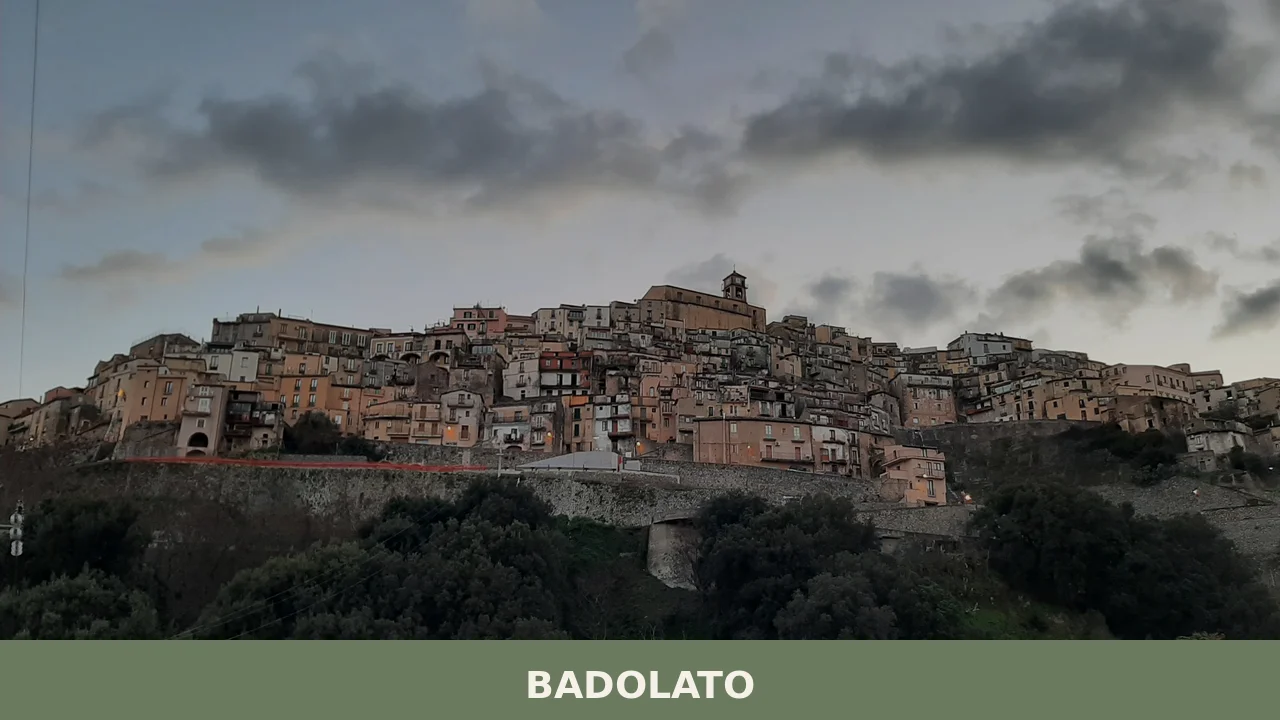
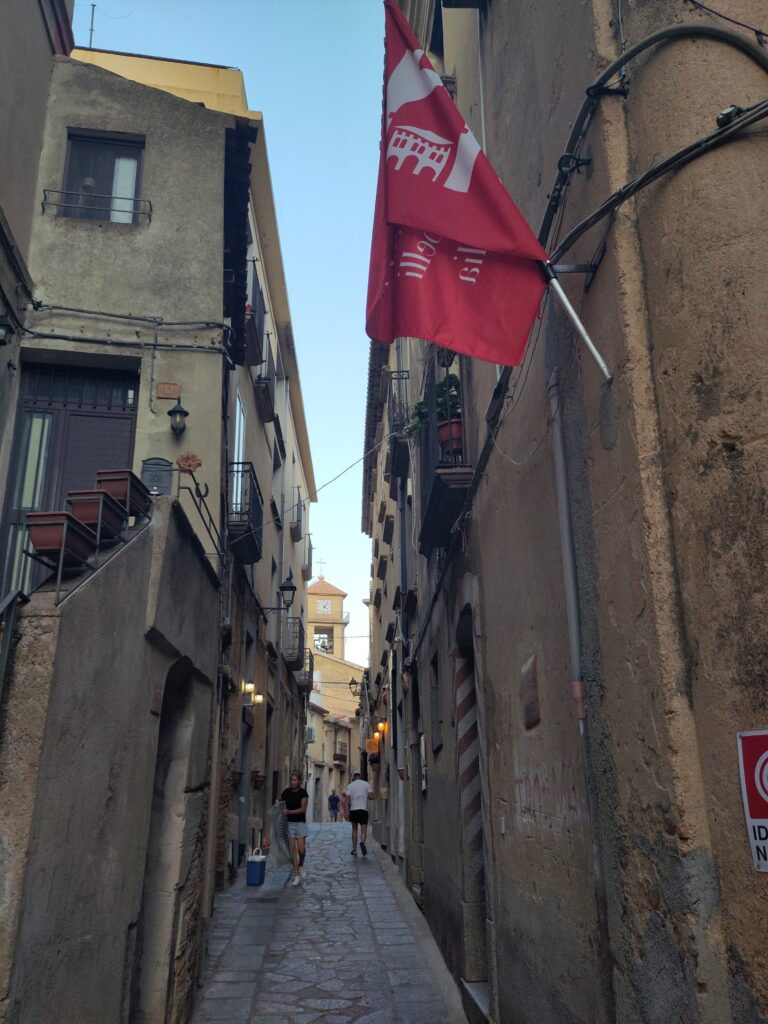
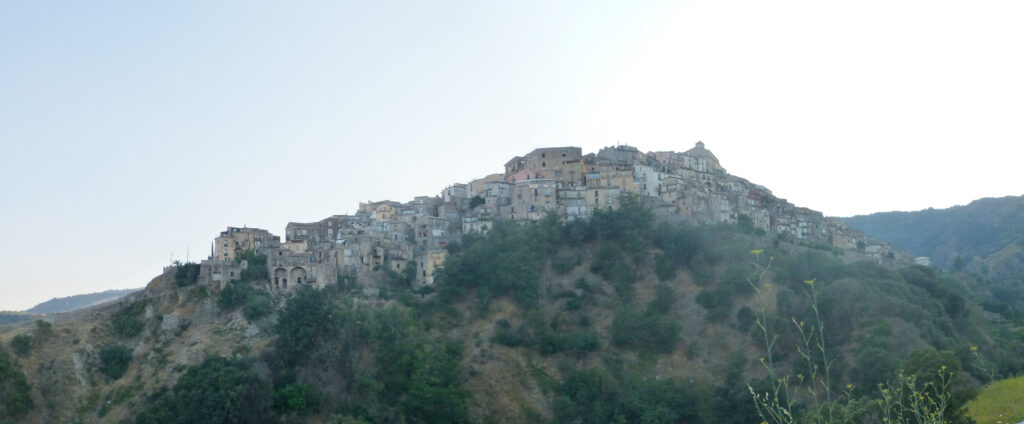
Two valleys converge below a limestone spur on Calabria’s Ionian flank, and at the top of that spur sits a cluster of narrow alleyways, Byzantine church walls and the broken outline of a 17th-century castle. At 240 metres (790 ft) above sea level, the village occupies a position that once served a clear defensive purpose: commanding sight lines over the coastal plain and the slopes of Mount St. Nicholas in every direction. The vicoli, the tight pedestrian lanes characteristic of southern Italian medieval towns, run between stone buildings that have survived earthquakes in 1640, 1659 and 1783.
Deciding what to see in Badolato is a practical matter: the village packs a notable concentration of religious architecture, a ruined noble castle and a documented craft and agricultural tradition into a compact walkable area.
With an estimated population of 3,152, Badolato, Calabria, Italy sits 30 km (18.6 mi) from Catanzaro and has been recognised as one of I Borghi più belli d’Italia, the national association of Italy’s most beautiful villages. In April 2024 a RAI television series ranked it second most beautiful village in the entire country. Visitors come primarily for the churches — several of which retain Byzantine frescoes and 15th-century altarpieces — and for the olive oil and wine production that still defines the local economy.
History of Badolato
Badolato’s documented history begins in the medieval period, when the settlement formed part of the political landscape of the Kingdom of Naples. During the Angevin era, control of the territory passed through the hands of local lords following the decline of Pietro Ruffo, Count of Catanzaro, whose authority had extended across much of this part of Calabria. The transition marked the beginning of a long sequence of feudal ownership that would shape the town’s physical fabric and institutional life over the following centuries.
In 1454 Badolato became a barony under the Toraldo family, who held it until 1596.
Ownership then transferred to the Ravaschieri, who are associated with the construction of the castle whose ruins still stand above the village. By 1658 the Pinelli and Gallelli families had taken possession, and from 1779 to 1806 the Pignatelli of Belmonte administered the barony. This succession of noble houses left its mark on the village’s churches and civic buildings, with commissions and donations funding the sacred furnishings now visible in several of the main religious sites.
The 17th and 18th centuries brought recurring seismic destruction. Earthquakes struck in 1640, 1659 and 1783, each time damaging or partially destroying structures across the town. Despite this, core elements of the medieval urban plan — the spur layout, the Latin-cross arrangement of the Byzantine churches, the alleyway network — survived and are still legible today. The 20th century brought a different kind of disruption: floods in 1951 caused significant damage to the lower settlement areas. In more recent decades, depopulation has been offset in part by renovation activity, with a number of properties converted into second homes and bed-and-breakfast operations opening in the upper village.
What to see in Badolato, Calabria: top attractions
Ruins of the Ravaschieri Castle
The remaining sections of the perimeter walls stand on the highest point of the spur, their stone courses interrupted by centuries of seismic activity.
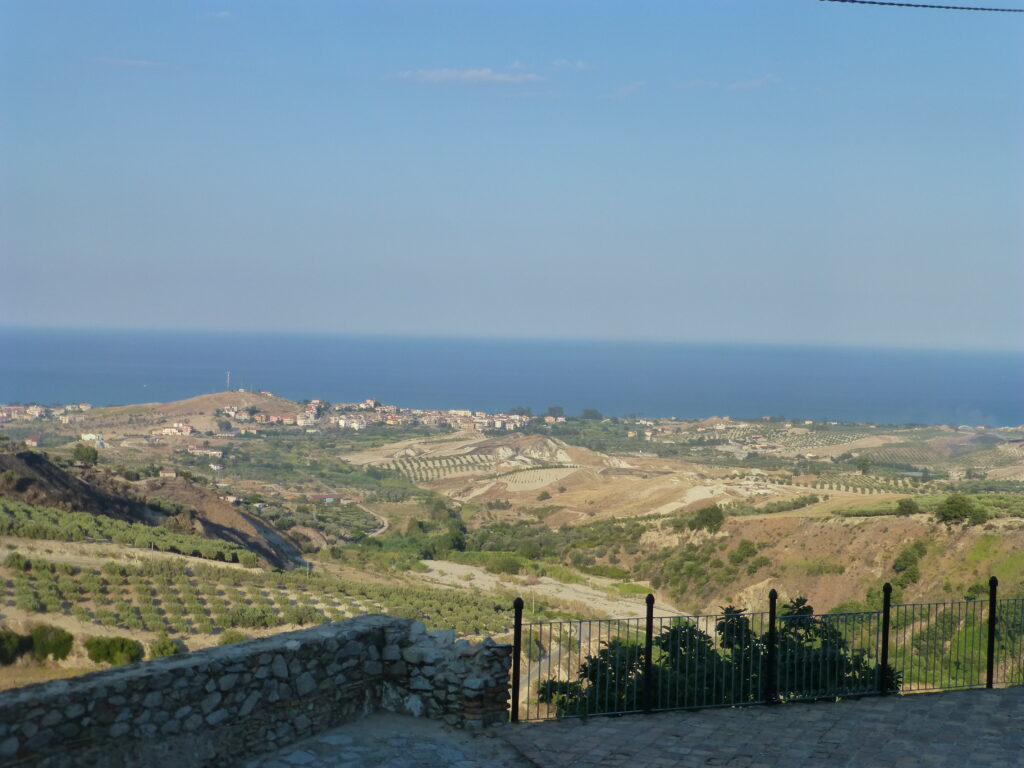
The structure is associated with the Ravaschieri family, who took possession of Badolato in 1596 and are credited with its construction during the 17th century. Standing at the wall line, the visitor looks directly over the two valleys that flank the spur and down toward the coastal plain where Badolato Marina sits on the SS106 Ionica highway. The ruins do not admit interior access but the exterior circuit, with its surviving masonry, gives a clear read of the original defensive perimeter. Visit in the morning when the light falls directly on the stone facing.
Church of Sant’Andrea Avellino
Inside this church, two carved wooden busts represent St. Andrew and St. Francis of Paola, both dateable to the 17th and 18th centuries based on stylistic and documentary evidence. The sacred furnishings — altar cloths, reliquaries, liturgical objects — belong to the same period and form one of the more complete ensembles of post-Renaissance decorative art in the village. The church’s interior is compact but densely furnished, which means individual pieces reward close attention rather than a quick pass through the nave. The wooden busts in particular show a level of craftsmanship consistent with the patronage networks of the noble families who controlled Badolato in this era.
Check opening hours locally before visiting, as access may be restricted outside of religious services.
Church of Santa Caterina
Two works of particular documentary interest survive inside Santa Caterina: an ornate altar and a painted panel depicting the Madonna and Child, both attributed to the 15th and 16th centuries. The panel painting is one of the older datable artefacts still in situ in Badolato, predating the period of Ravaschieri ownership. Its presence in a relatively small village church suggests the site had established religious importance well before the later noble commissions of the 17th and 18th centuries. The altar’s ornamentation follows formal ecclesiastical conventions of the late medieval and early Renaissance period. For those who want to understand what to see in Badolato in a broader art-historical context, this church provides the earliest surviving visual layer.
Chiesa dei Riformati
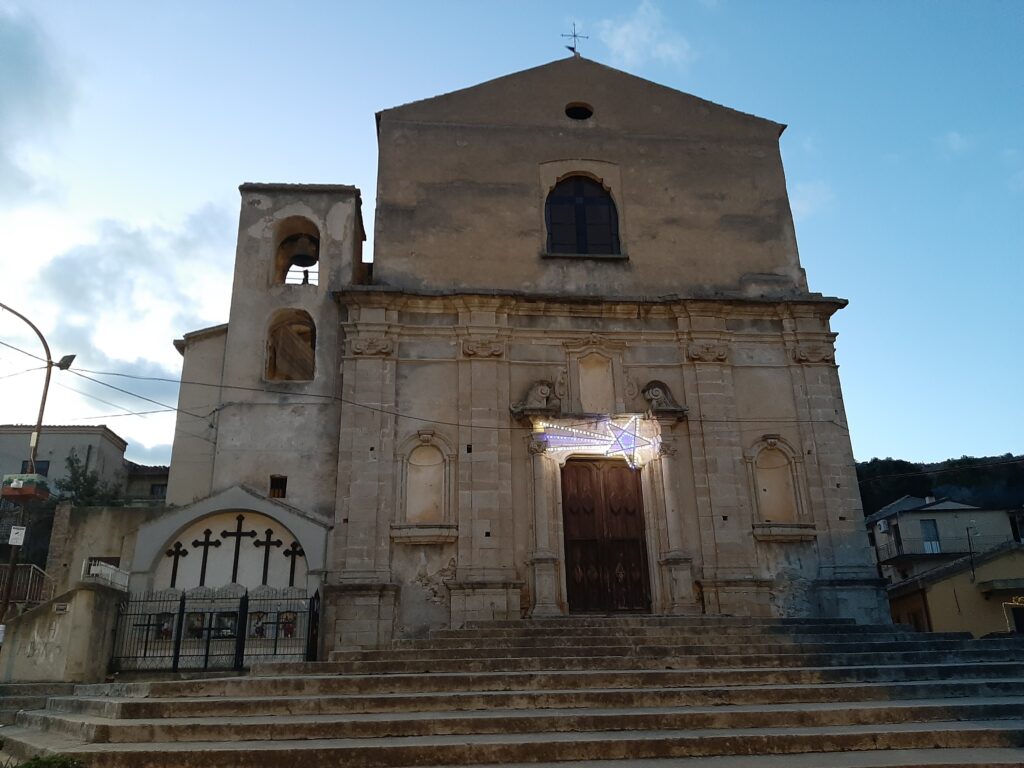
This church holds works directly associated with the friar-painter frà Diego de’ Careri, whose documented activity in Badolato is dated to 1644. The official altar attributed to de’ Careri is present alongside a crucifix from the same hand, making this one of the few sites in the village where a single identified artist’s work can be examined across multiple pieces. Additional major works of art from the 18th century complete the interior. The building itself reflects the Franciscan reformist tradition in its architectural sobriety, which throws the decorative programme of the altarpiece into sharper relief. The church is part of the Latin-cross arrangement of Byzantine and later religious structures that defines Badolato’s ecclesiastical geography.
Church of Santa Maria degli Angeli and Friars Minor Convent
The church and its adjoining convent form the most architecturally coherent Baroque ensemble in Badolato, distinguished from the earlier medieval and Renaissance religious buildings by their curved mouldings, decorative façade treatment and the spatial relationship between the conventual buildings and the church volume.
The Friars Minor — the Franciscan order founded by St. Francis of Assisi — operated from this convent, and the compound reflects the order’s established pattern of combining a public church with enclosed residential and working spaces. The Baroque design places this complex in the late 17th or 18th century, consistent with the period of Pinelli, Gallelli and Pignatelli patronage. The Church of Sant’Isidoro, located in the hamlet of the same name just outside the main village, also carries traces of Byzantine frescoes and is worth the short detour for anyone documenting the older stratum of religious art in the area.
Local food and typical products of Badolato
Badolato sits within an agricultural zone on the Ionian side of the Calabrian mountain range, and its food economy reflects that geography directly. The village is documented as a centre of olive oil and wine production, with both products largely exported from the area. Grain and fruit farming also contribute to the local agricultural output, and a significant livestock sector — cattle, sheep and goats — supports dairy processing. This combination of arable and pastoral farming has shaped the food traditions of the town over generations, giving local cooking a base of olive oil, cured meats, aged cheeses and cereal-derived preparations that is consistent with the broader Calabrian culinary pattern.
Olive oil produced in the area tends toward a medium-to-robust fruitiness with detectable bitter and peppery finish, characteristics associated with the native Calabrian olive varieties grown on the Ionian slopes.
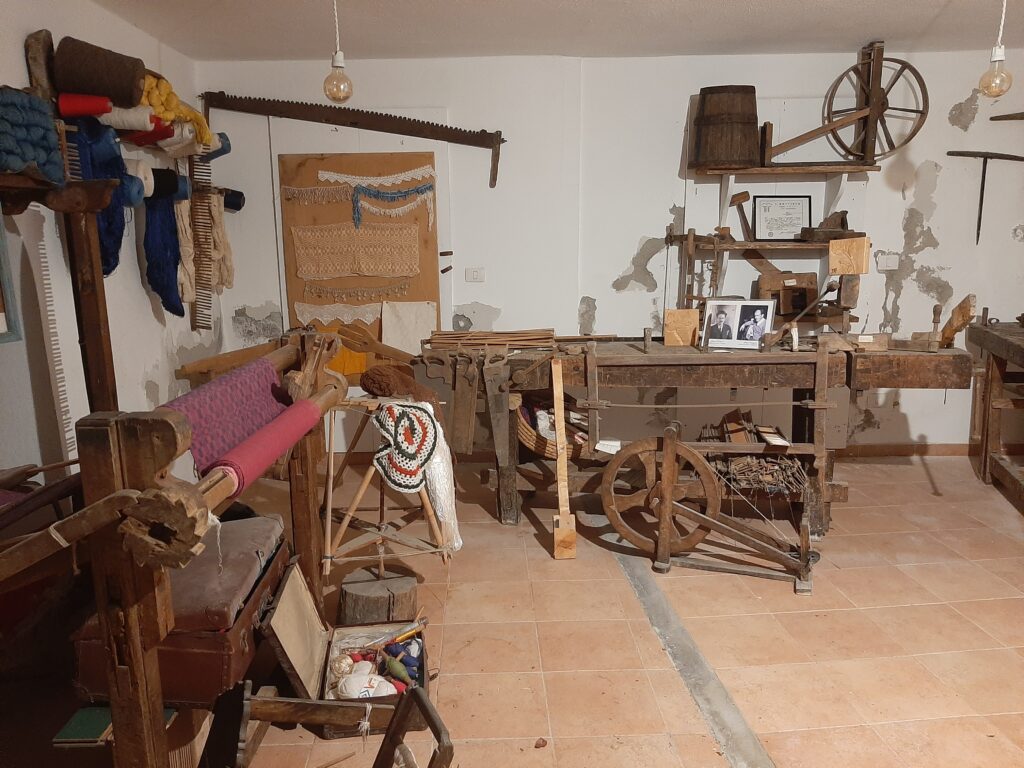
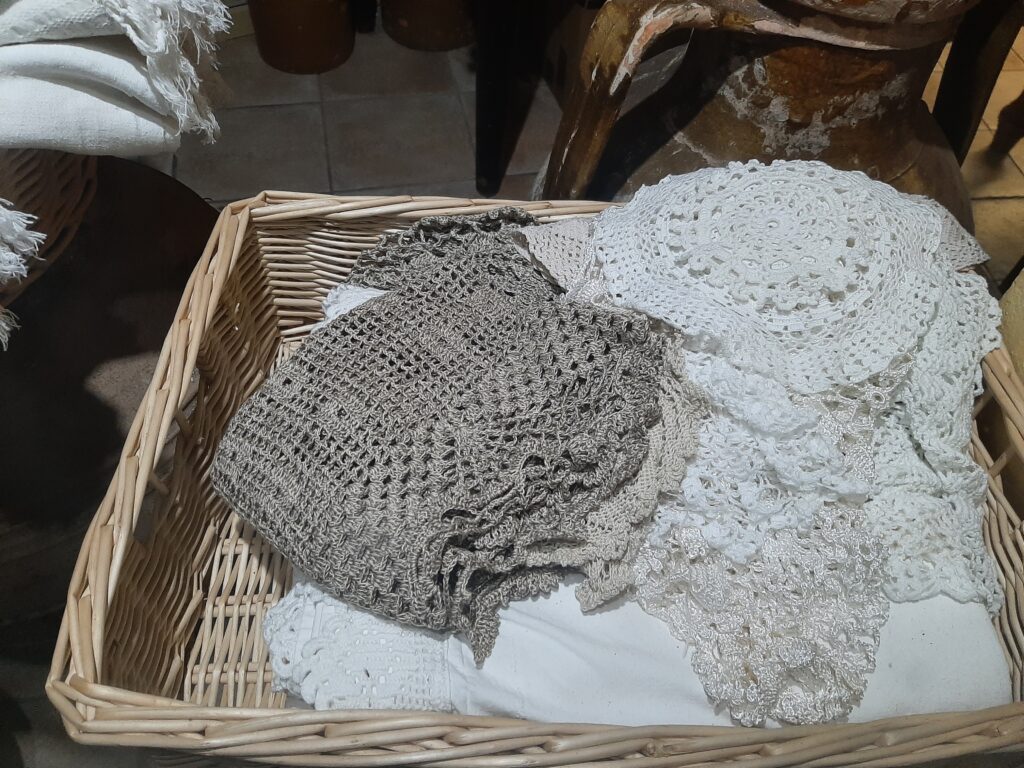
Pasta e fagioli, a thick bean and pasta dish finished with a pour of raw olive oil, is a standard preparation in this part of Catanzaro province, where the oil’s intensity is a flavour component rather than a background note. Caciocavallo, a semi-hard stretched-curd cheese produced from the milk of locally grazed cattle, is another staple: the paste is smooth and pale when young, becoming firmer and more pungent with extended aging. Sheep and goat milk cheeses from the same farming operations are consumed fresh or lightly pressed and salted. The wool-and-silk textile tradition documented in the village — families using hand looms to produce blankets and scarves until relatively recently — points to a domestic economy in which animal husbandry supplied both food and raw material.
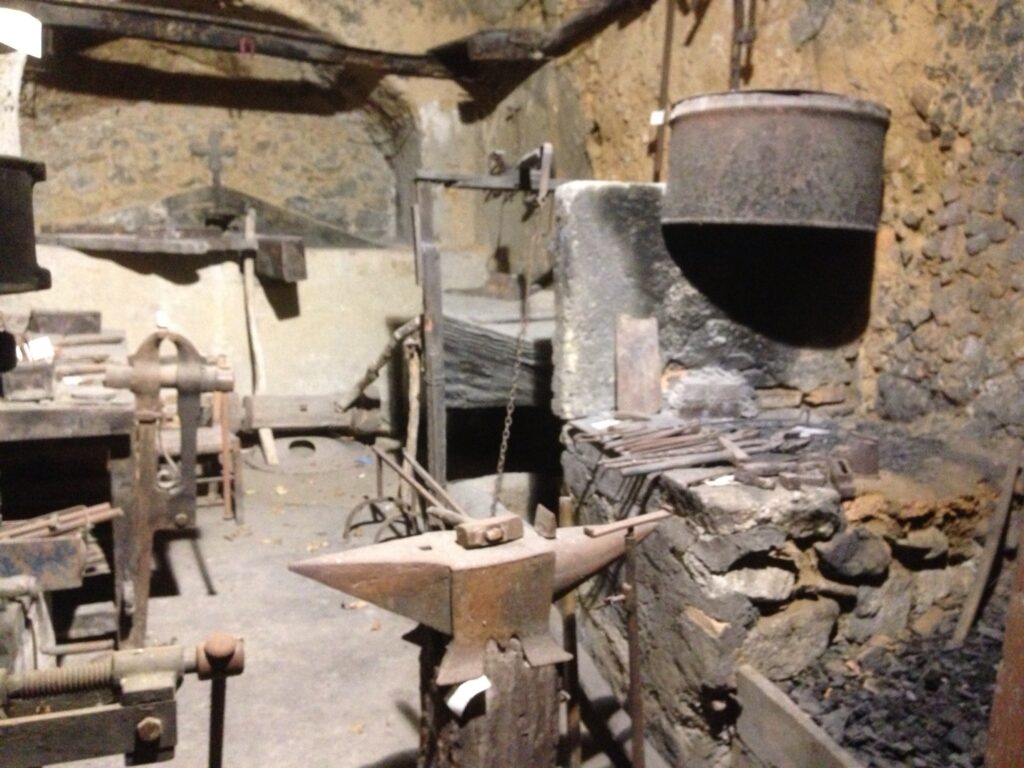
Badolato also has a documented history of turpentine distillation, a resin-processing activity that once ran alongside the food economy in local households. While this is no longer an active practice, it confirms the density of small-scale processing that characterised village life. Oil mills continue to operate in Badolato, and their autumn pressing season — typically running from October through December as the olives reach harvest maturity — is the period when fresh olio novo, new-press oil with its characteristic green colour and grassy intensity, is available directly from producers.
Wine production from the area is similarly export-oriented.
Calabrian viticulture in the Catanzaro hinterland relies primarily on native varieties, and local wine tends toward structure and colour depth rather than delicacy. For visitors, the most direct point of contact with Badolato’s food production is through the agriturismi and bed-and-breakfast operations in the upper village, where seasonal produce and locally pressed oil appear regularly on the table. Shirt factories also operate in Badolato, reflecting a broader manufacturing tradition alongside the agricultural base.
Festivals, events and traditions of Badolato
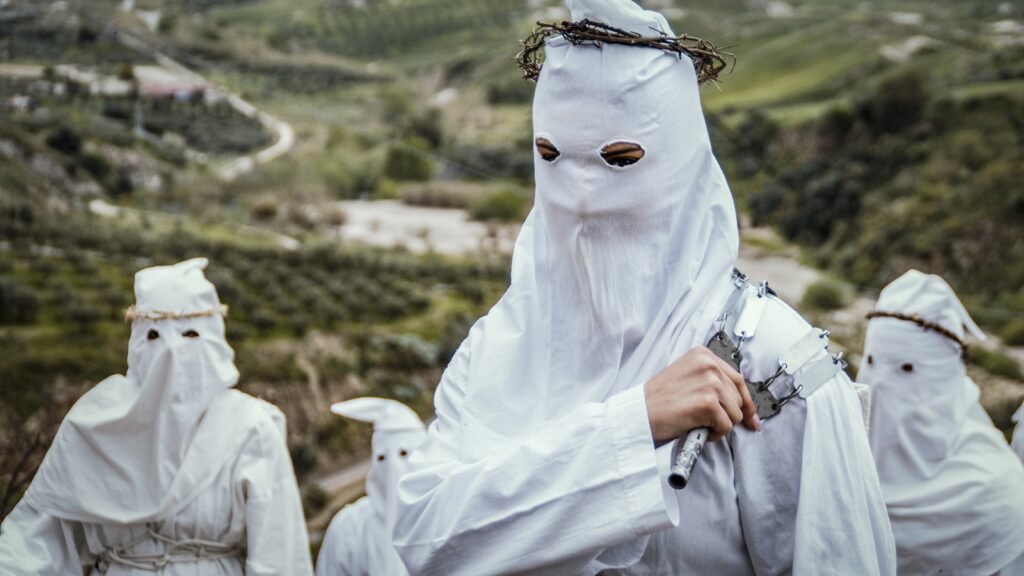
The religious calendar organises public life in Badolato as it does across most of Calabrian mountain and coastal villages. The Church of Sant’Andrea Avellino, which houses the carved wooden busts of St. Andrew and St. Francis of Paola, is the focal point for devotional observance associated with these two saints. St. Andrew’s feast day falls on 30 November and is marked by religious ceremony. St. Francis of Paola, patron saint of Calabria, is celebrated on 2 April, a date that draws significant participation across the region.
Processions through the vicoli of the upper village, with the wooden busts carried in public display, form the core of these observances.
The Association La Radice, which publishes a magazine documenting local culture and memory, has been active in preserving the oral and material traditions of the village. This kind of community documentation activity — recording craft techniques, dialect vocabulary, local historical memory — is itself a form of cultural practice that visitors with an interest in Calabrian social history can engage with through the association’s publications. The textile tradition of hand-loom weaving, in which local families produced wool and silk blankets and scarves, represents a craft lineage that has largely passed out of active practice but remains part of the documented cultural record of Badolato.
When to visit Badolato, Italy and how to get there
The best time to visit Badolato in terms of climate and visitor experience is the period from late April through June and again from September through October. Summer months bring intense heat to the Ionian coast and the slopes above it, while the main tourist season concentrates visitors in July and August. Spring visits allow access to the upper village on foot without the thermal stress of high summer, and the surrounding agricultural land is in active growth.
Autumn is the olive harvest season, when the oil mills operate and fresh-press oil is available locally. For those specifically interested in the Danish second-home development at Badolato Marina or the coastal facilities, July and August are the operational peak, but the upper village is considerably quieter in spring and early autumn.
Badolato sits 30 km (18.6 mi) from Catanzaro. By car, the most direct approach follows the SS106 Ionica coastal highway, which runs along the base of the spur and serves Badolato Marina directly. From the marina, the road climbs to the upper village. From Catanzaro, the drive takes approximately 35 to 40 minutes depending on traffic on the coastal road. For those arriving by train, Trenitalia operates services along the Ionian line, with a stop at Badolato-Guardavalle station near Badolato Marina.
From the station, the upper village requires either a car or local taxi transfer, as the climb is steep. The nearest major airport is Lamezia Terme International Airport, located approximately 70 km (43.5 mi) to the north-west, with road transfer taking roughly one hour. From Reggio Calabria the drive covers approximately 150 km (93.2 mi) along the SS106, making Badolato a feasible day trip from the southern tip of the region. International visitors should be aware that English is not widely spoken in smaller shops and services in the upper village, and carrying cash in euros is advisable as card payment infrastructure can be limited outside the main tourist season.
Where to stay near Badolato
Accommodation options in Badolato divide between the upper village and the coastal settlement. Bed-and-breakfast services operate in Badolato Superiore, the historic upper village, offering direct access to the churches, alleyways and castle ruins on foot. At Badolato Marina, a development of second homes aimed primarily at the Danish market sits alongside existing hotels and tourist facilities on the SS106 Ionica corridor.
The coastal location makes the marina suitable as a base for beach access combined with day visits to the upper village. Visitors planning a longer stay in the area can also look toward Ardore, a comparable Ionian-coast village in the neighbouring province, which offers additional accommodation options along the same coastal strip.
Those arriving from the north who want to extend their trip through the Catanzaro hinterland will find that Amato, a small inland comune in Catanzaro province, sits within the same general travel corridor and can be combined with a visit to Badolato on a two-day circuit.
The concentration of religious architecture in Badolato and the accessibility of what to see in Badolato on foot make the upper village practical for a half-day visit even for those basing themselves along the coast. For visitors exploring the wider region, Aiello Calabro on the Tyrrhenian side of the Calabrian range offers a contrasting perspective on the province’s medieval village heritage within a manageable driving distance.
Frequently asked questions about Badolato
How far is Badolato from Catanzaro and how do I get there by car?
Badolato is located 30 kilometres (18.6 miles) from Catanzaro in the province of Catanzaro, Calabria. The village sits at 240 metres elevation on the Ionian side of Calabria. By car, the journey takes approximately 40-50 minutes depending on road conditions. The SS106 Jonica coastal highway provides the main access route to the area. Parking is available in the lower town, with pedestrian access to the historic centre via the characteristic medieval alleyways.
When is the best time to visit Badolato?
Badolato's patron saint is Sant'Andrea Avellino, whose feast day in November marks a significant local celebration. Spring (April-May) and autumn (September-October) offer pleasant Mediterranean weather ideal for exploring the narrow vicoli and castle ruins without summer heat. Winter months are mild but can be rainy. The village gained international recognition in April 2024 when a RAI television series ranked it Italy's second most beautiful village, suggesting spring as an excellent visiting period.
What is the population and how long should I spend in Badolato?
Badolato has a population of approximately 2,813 residents. As a compact medieval village with concentrated religious architecture, a ruined 17th-century castle, and narrow pedestrian lanes (vicoli), a thorough visit typically requires 3-4 hours. This allows time to explore the Byzantine churches, walk the defensive position overlooking the coastal plain and Mount St. Nicholas slopes, and appreciate the stone buildings that have survived major earthquakes in 1640, 1659, and 1783.
What historical earthquakes affected Badolato's buildings?
Badolato's stone structures have withstood three major earthquakes: 1640, 1659, and 1783. These seismic events were catastrophic across southern Italy, yet the village's medieval architecture, built into the limestone spur and designed with defensive purposes, proved remarkably resilient. The surviving Byzantine church walls and 17th-century castle ruins visible today testify to both the severity of these earthquakes and the robustness of local medieval construction techniques adapted to the mountainous Calabrian terrain.
Why was Badolato built at 240 metres elevation on a limestone spur?
Badolato's elevated position on a limestone spur served critical defensive purposes in medieval times. The 240-metre altitude provided commanding sight lines over the coastal plain and Mount St. Nicholas slopes in all directions, allowing early warning of approaching threats from the sea and interior. Two converging valleys below the spur offered strategic geographic advantages. This hilltop placement was typical of southern Italian medieval towns designed to protect against coastal raids and invasions during periods of significant maritime insecurity.
📷 Photo Gallery — Badolato
In Calabria More villages to discover
Anoia
 Plains
What to see in Anoia? Explore the 5 main attractions of this Calabrian village. The complete guide awaits to help plan your visit. Learn more!
Albi
Mountain
Discover what to see in Albi, a 735-person village at 710m in the Parco Nazionale della Sila, Catanzaro. History, food, access and where to stay.
Vibo Valentia
 Sea
Sea
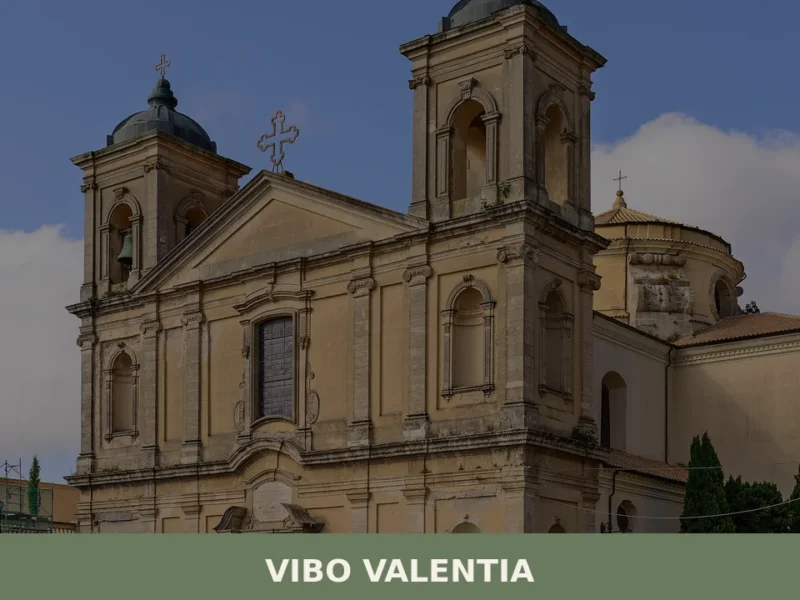
What to see in Vibo Valentia, Italy: Discover the ancient city walls spanning 7 km and the Norman-Hohenstaufen Castle. Explore its rich history and vibrant local culture.
Stilo
Sea
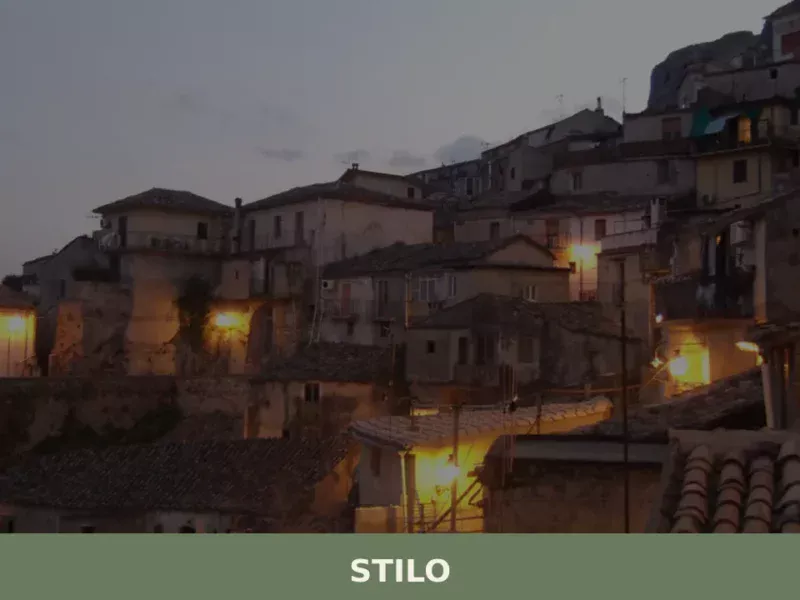
The Cattolica church occupies a spur of rock above the rooftops, its five small domes visible from the valley floor before the rest of the village comes into focus. Below the church, the streets narrow and the stone deepens in colour, shifting from pale grey to near-black where the walls absorb the shadow. Iron and […]
Morano Calabro
Sea
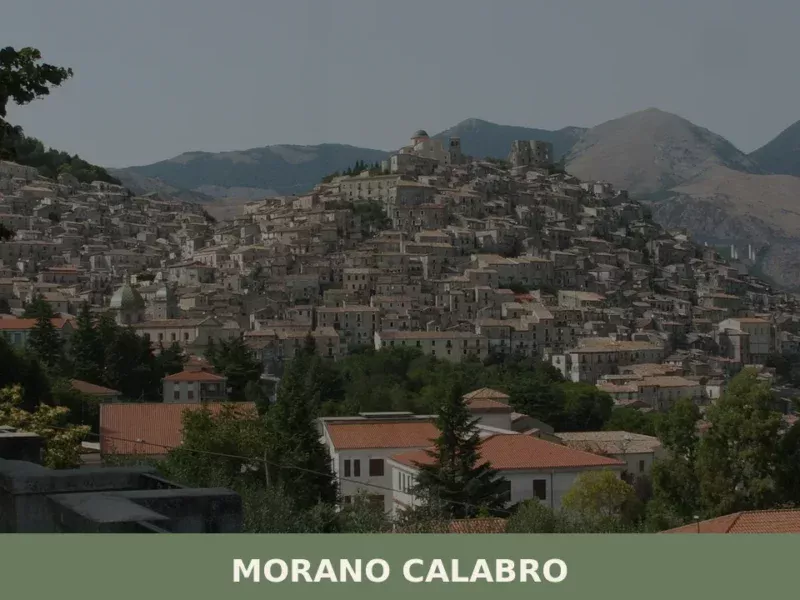
What to see in Morano Calabro, Italy: a village at 680 m altitude, listed among I Borghi più belli d'Italia. Discover top attractions, local food and how to get there.
Acri
Mountain
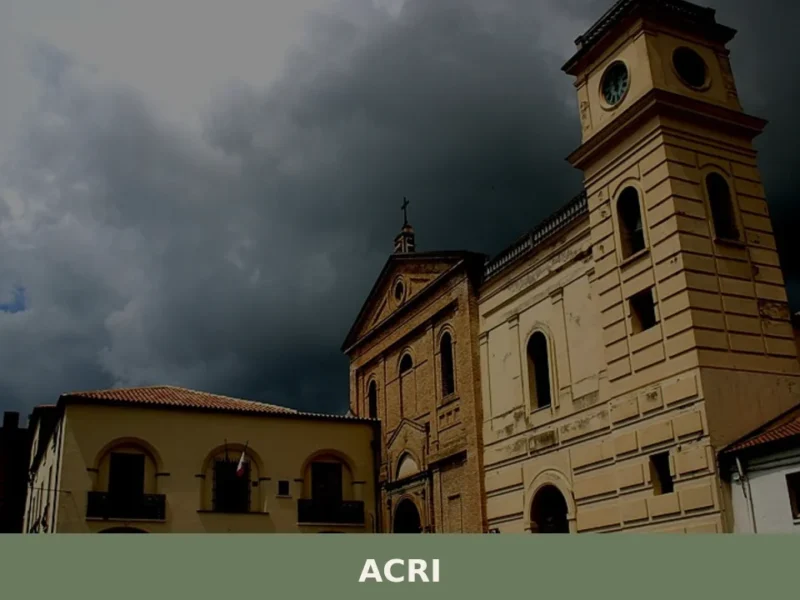
Acri is a town in the province of Cosenza with over 21,000 inhabitants, located in the Calabrian interior of the Sila Greca area, on a territory that passed through Norman, Swabian and Aragonese rule, leaving concrete traces in the local architecture and culture. For anyone approaching this corner of the province of Cosenza, the question […]
Belcastro
 Hills
Hills
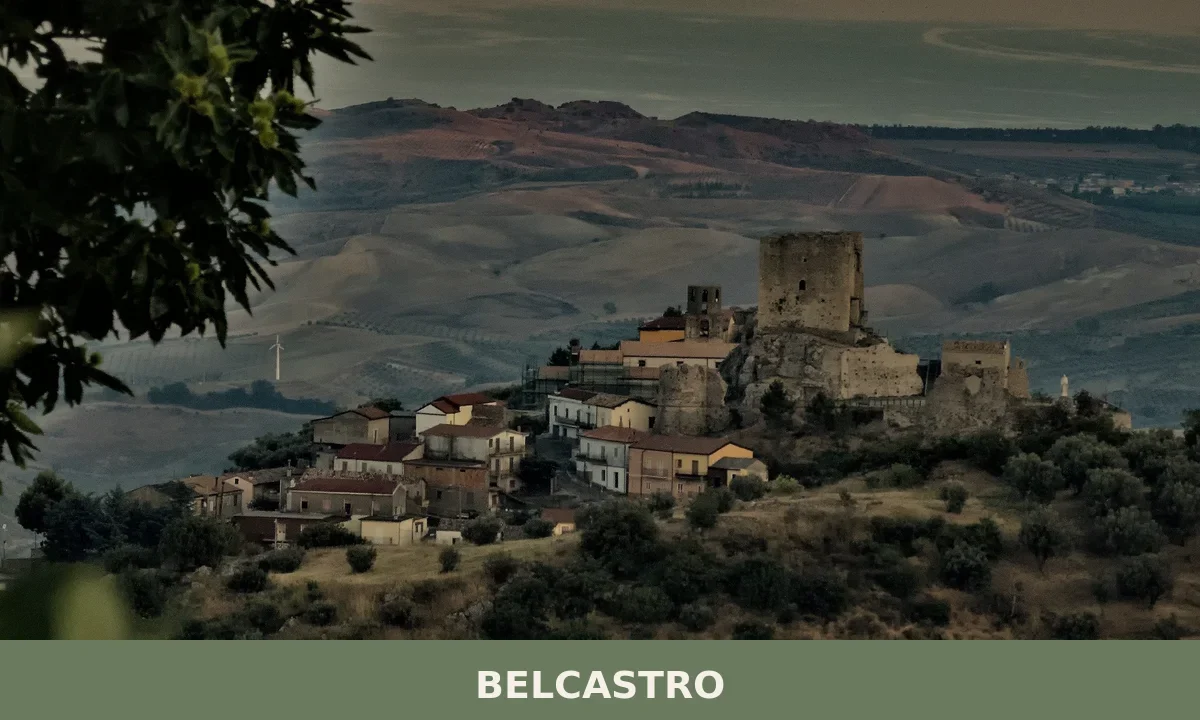
What to see in Belcastro, Calabria, Italy: Norman castle, Aquinas connection, population 1,400. Discover top attractions, local food and how to get there.
Altilia
Hills
A quiet hill village of 677 people in Calabria's Savuto valley. Discover what to see in Altilia — its stone lanes, parish church, and deep agrarian roots.
Albidona
Sea
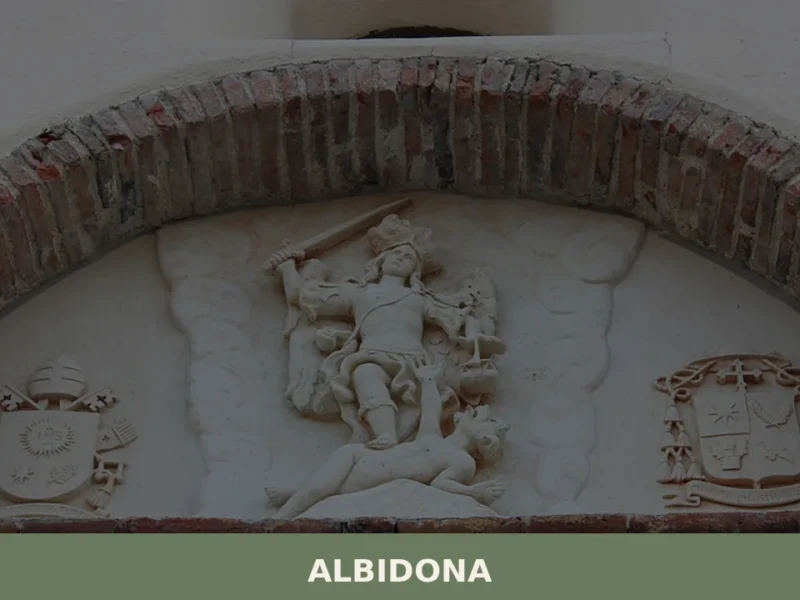
Albidona has 1,142 inhabitants and sits at 810 metres above sea level on the eastern slope of the Pollino massif, in the province of Cosenza. The old town preserves an urban layout arranged in parallel bands, developed along the ridge that separates the Saraceno stream valley from the Caldanello valley. Asking what to see in […]
Antonimina
Hills
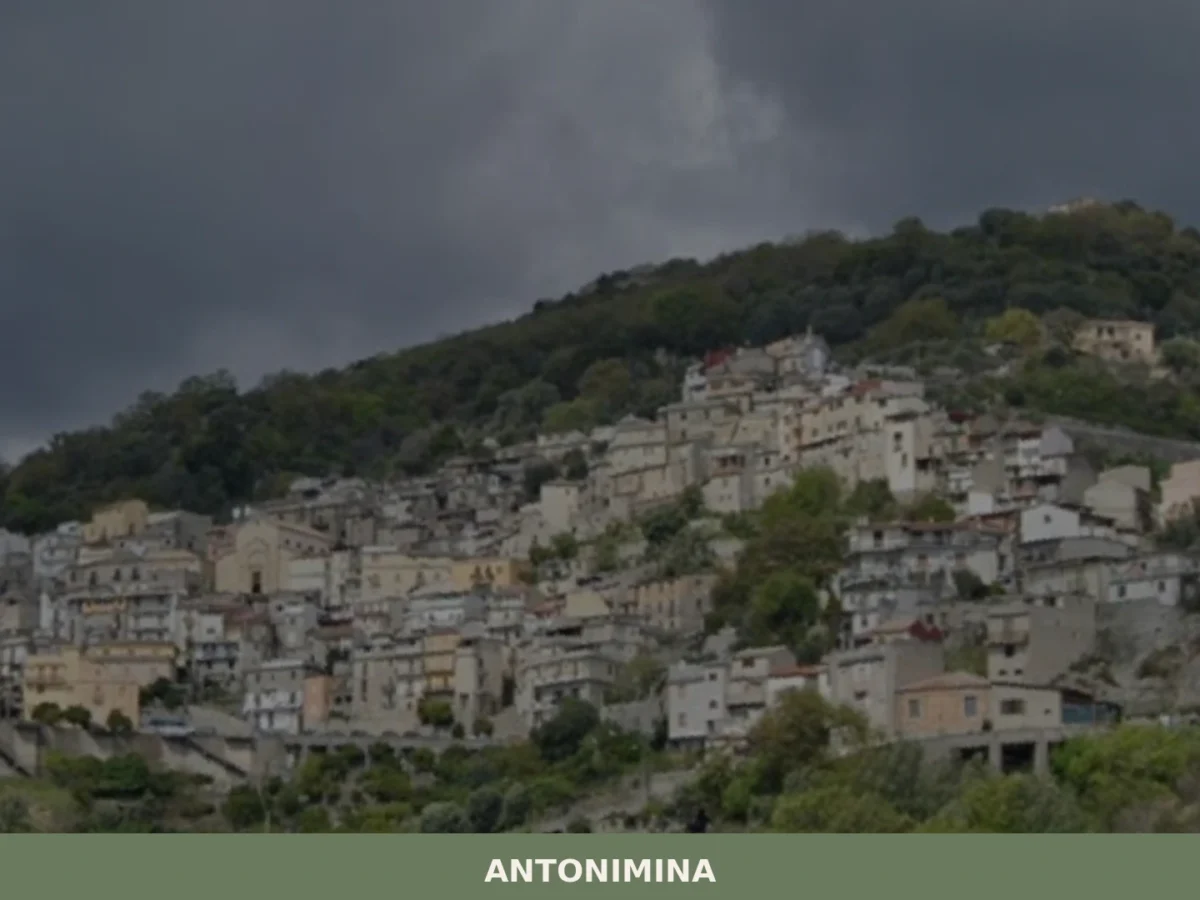
What to see in Antonimina, Italy, at 327 m: Discover stone alleys and patron feast. Explore Calabria's culture.


🏡 Know Badolato better than we do?
If you’re a local or have been there, your knowledge matters: add what’s missing or fix a detail on this page.