 Mountain
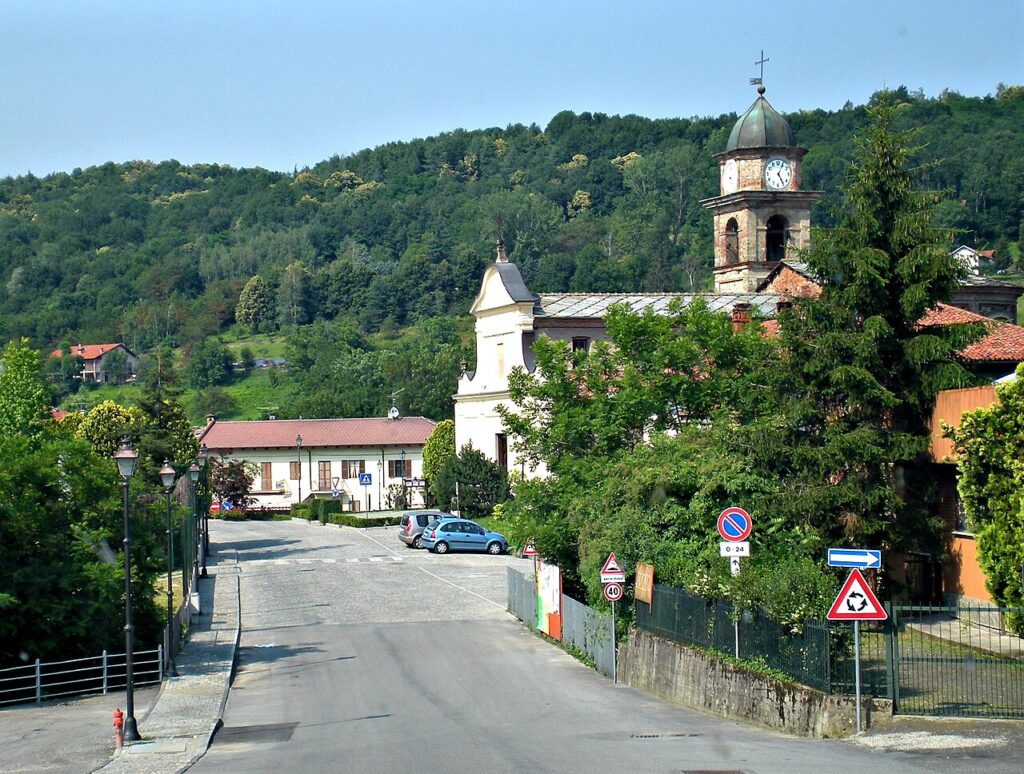
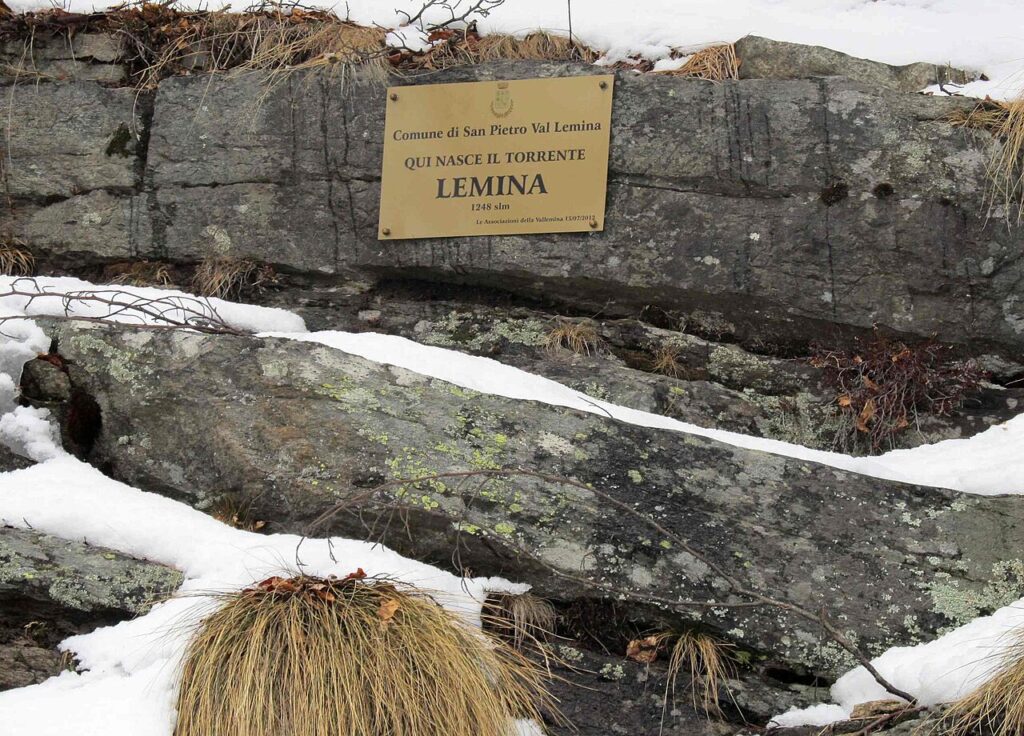
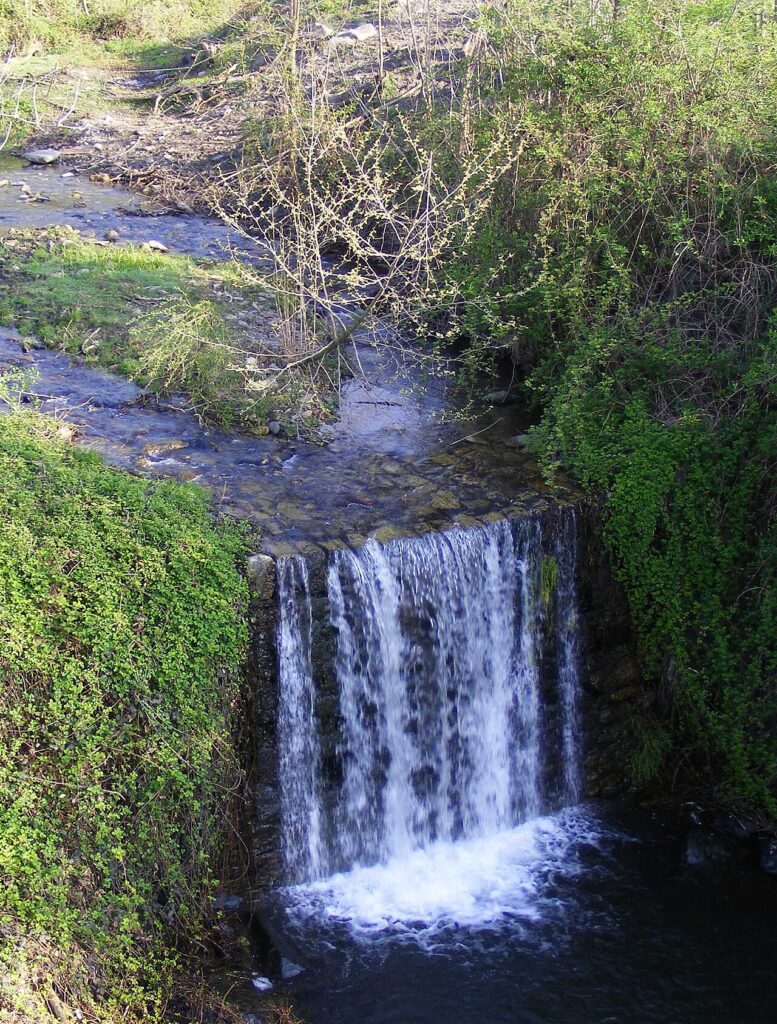
 The Lemina torrent runs clear and swift through a fold of the Piedmont hills, carving its valley between stone and green pasture. The name of the village follows the water: San Pietro Val Lemina takes its identity from this stream, nestled at 451 metres above sea level in the province of Torino.
San Pietro Val Lemina village in Piedmont sits at the geographical centre of its small valley, a small commune of 1,427 inhabitants shaped by quiet rhythms and deep territorial roots. Visitors come to see the parish church dedicated to the apostles, and to stand before a bronze monument that speaks to the diaspora of Piedmontese people across the world.
Territory and the Valley’s Character
The Val Lemina is a narrow corridor of land, defined entirely by the river that flows through it. Water shapes everything here: the contours of settlement, the rhythm of agriculture, the old paths that connect one hamlet to another. San Pietro occupies the heart of this small basin, surrounded by neighbouring comuni in the Torino area.
The altitude of 451 metres places the village in the lower Piedmont foothills, where the plains begin to rise toward the Alpine rim. This elevation gives San Pietro a moderate climate and access to the agricultural rhythms of the region. The Lemina torrent remains the primary geographical feature, its name permanently inscribed in the village’s official identity.
The Val Lemina takes its name from the stream that flows through it—a simple fact that reflects how closely villages in this region are bound to the water and stone beneath them.
History and Identity
The written record of San Pietro Val Lemina is spare. The village carries the name of its patron apostles, Pietro and Paolo, and sits within the broader ecclesiastical and civil geography of the Turin area. Like many small communes in Piedmont, it has evolved through centuries of agricultural life, tied to the land and the valley’s modest resources.
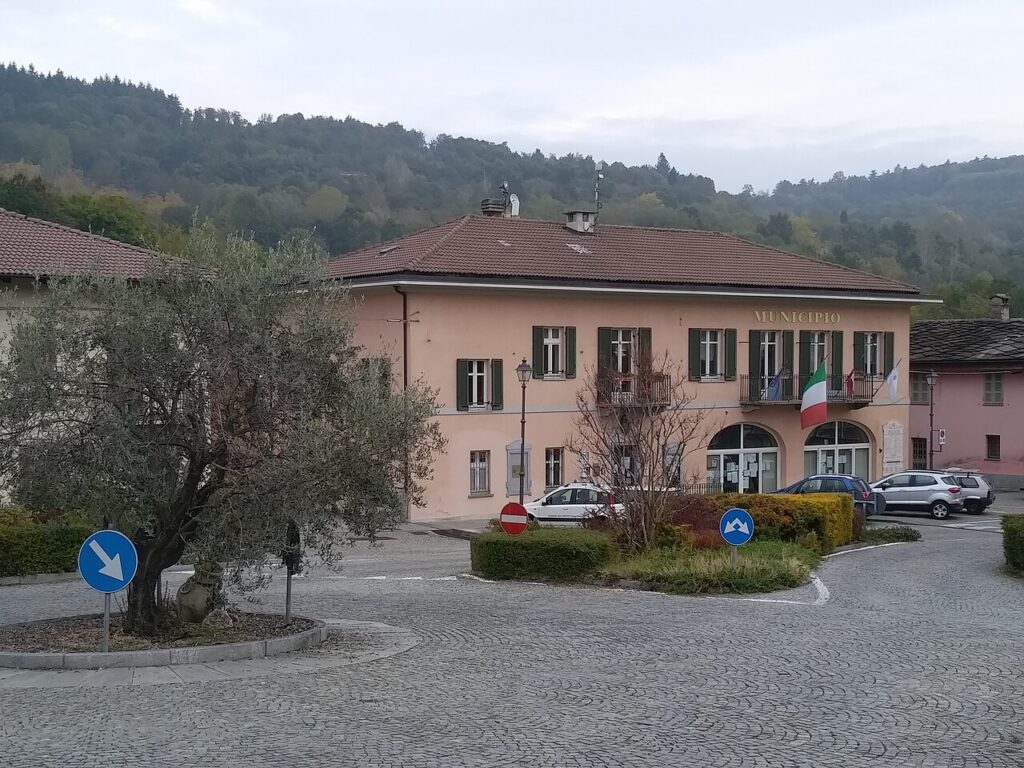
The modern municipal symbol, the stemma (coat of arms), was officially granted by decree of the President of the Republic on 12 January 2007, marking a formal recognition of the commune’s heraldic identity. This administrative formality reflects the village’s place within contemporary Italian governance, though the human continuity of settlement in the valley extends far beyond any single date.
Sacred Spaces and Public Memory
The Parish Church of Santi Pietro e Paolo
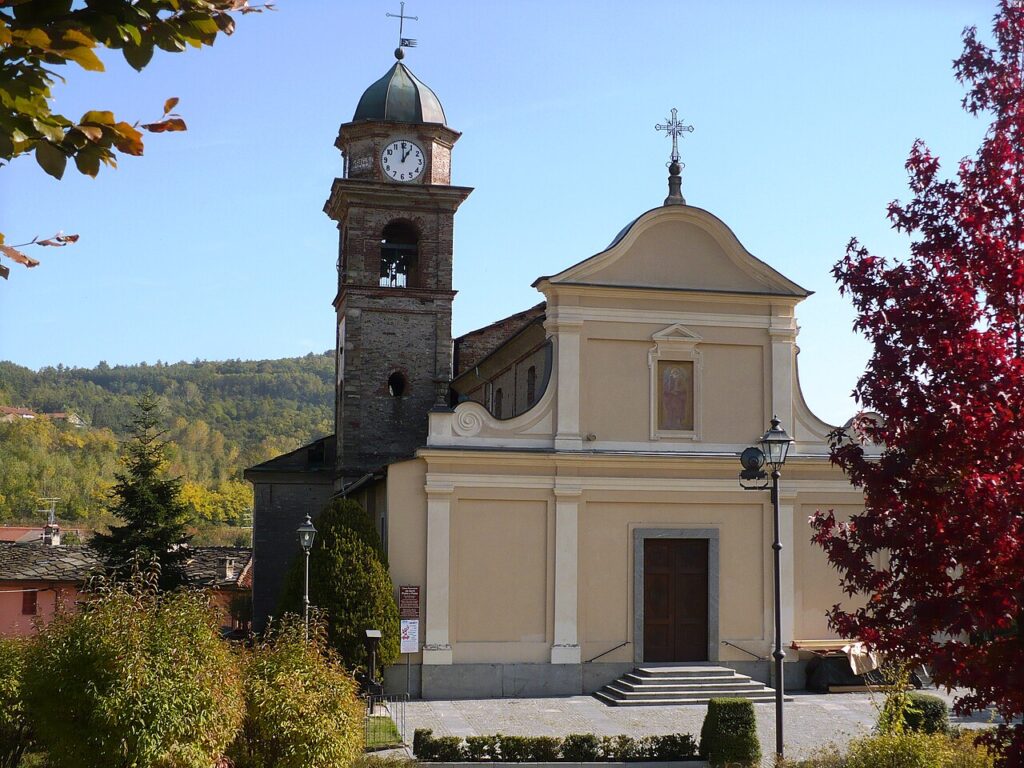
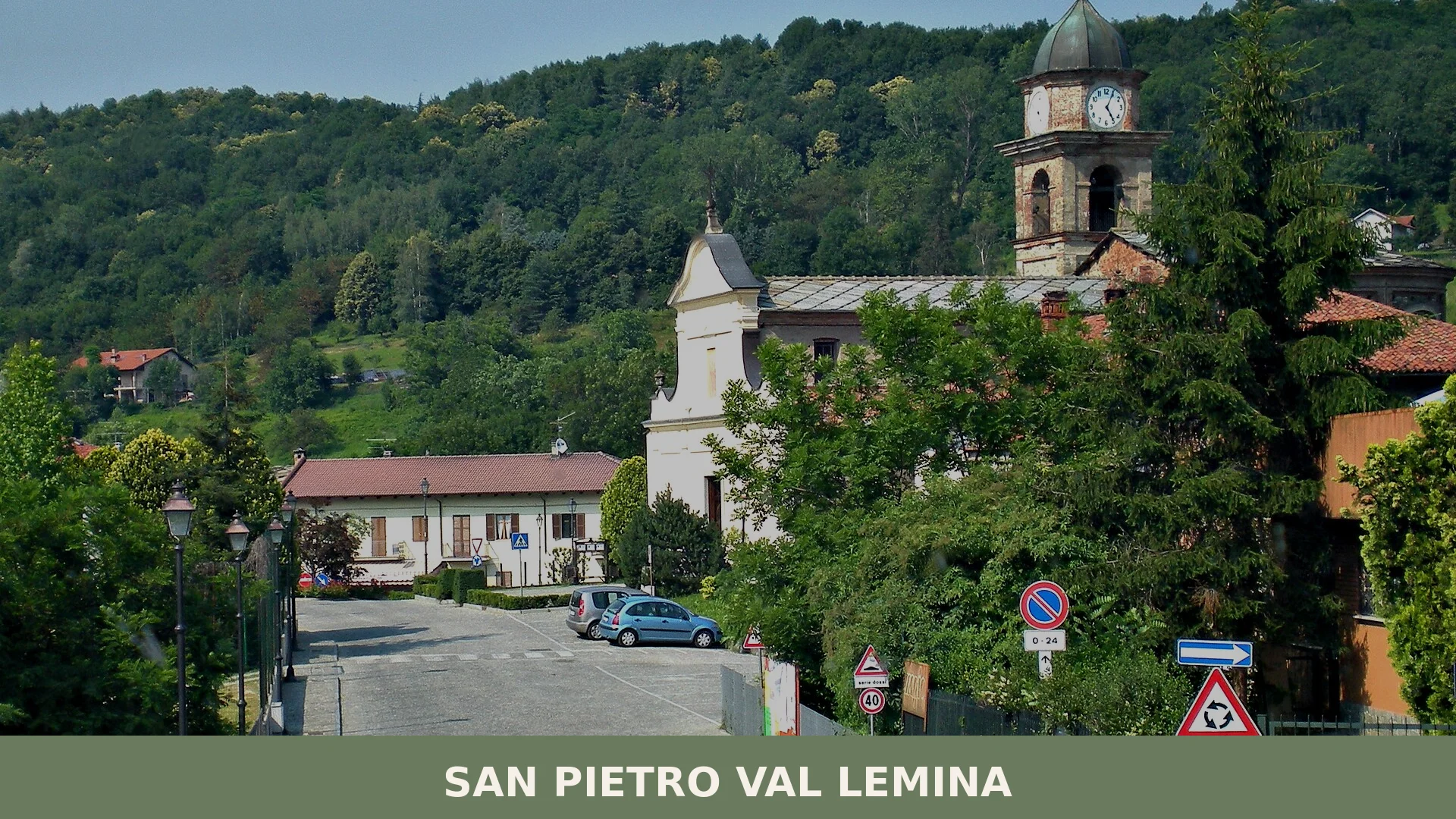
The parochial church dedicates itself to Saint Peter and Saint Paul the Apostles, a dual patronage reflected in the village’s official name. The church serves as the spiritual centre of San Pietro Val Lemina and the focal point of the annual feast day on 29 June, when locals and visitors honour the two apostles. The building stands as a physical anchor of faith and community within the small settlement.
Monument to Piedmontese in the World
In Piazza Piemonte, a bronze monument rises in memory of Piedmontese emigrants who left the region to build lives across the globe. Inaugurated in July 1974, the work was created by sculptor Gioachino Chiesa. The monument acknowledges the historical reality of migration from Piedmont—a demographic and cultural phenomenon that shaped the identity of countless families. Standing before it, visitors encounter a tangible expression of how small valleys like the Lemina contributed to global migration networks, and how those who departed remain part of the village’s collective memory.
Food and Agricultural Traditions
San Pietro Val Lemina sits within the broader agricultural economy of the province of Torino, a region celebrated for distinctive food products. The Piedmont region protects numerous denominazioni and traditional specialities—among them Nocciola Piemonte (Piedmont hazelnut, with IGP status), Toma Piemontese cheese, and various cured meats such as Salame Piemonte. These products emerge from the shared agricultural heritage of the lower foothills and plains.
The small size of San Pietro means it does not produce its own exclusive food name; rather, it participates in the regional food culture that surrounds it. Visitors may encounter these regional products at local tables and markets, connecting them to the broader culinary identity of Piedmont and the province of Torino.
Planning Your Visit
San Pietro Val Lemina is best reached by car from Turin, following regional roads south toward Pinerolo. The village lies within the province of Torino. Access is straightforward from the main transport corridors of the province. If you arrive in summer or early autumn, the valley’s moderate altitude offers pleasant walking conditions. The feast of Santi Pietro e Paolo in late June brings added activity to the village calendar.
The commune is small and intimate; most visits centre on the church, the piazza with its monument, and the quiet streets of the settlement. There are no large museums or major commercial attractions. The value of a visit lies in understanding how a minor valley village functions, how water and history shape identity, and how Piedmontese emigrants are remembered in stone and bronze. Allow several hours for leisurely exploration.
| Departure | Distance | Estimated Time |
|---|---|---|
| Turin (Torino) | ~40 km | 45–55 minutes by car |
| Pinerolo | ~8-10 km | by car |
| Porte | ~6 km | 12 minutes by car |
Nearby villages such as Cantalupa, Porte and Prarostino can be visited as part of a broader exploration of the lower Pinerolo area. The regional tourism office in Pinerolo provides detailed maps and guides to the valleys and minor settlements of the district.
For official information, visit the commune’s website at https://www.comune.sanpietrovallemina.to.it/.