


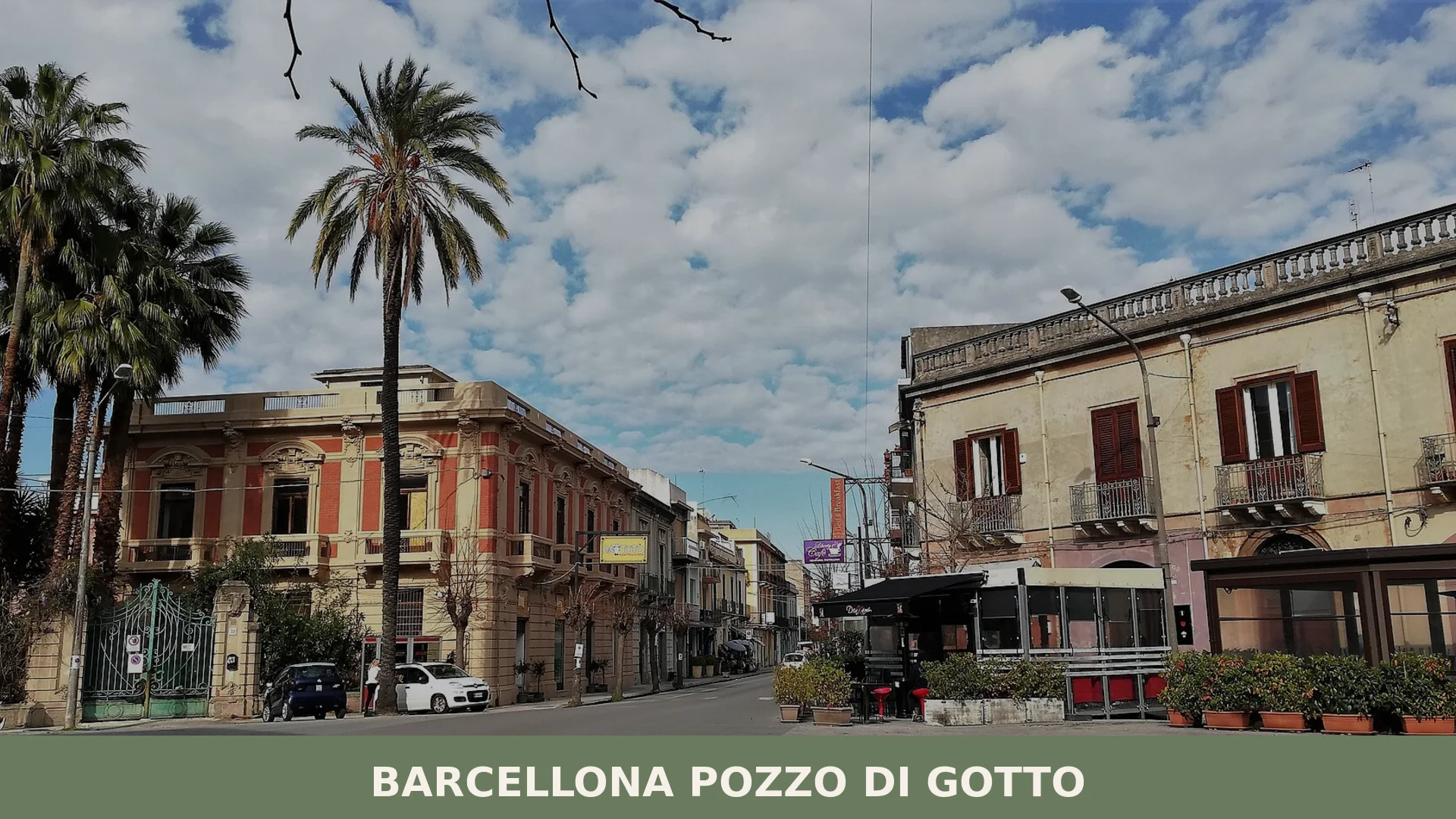

Barcellona Pozzo di Gotto is a town of nearly forty thousand inhabitants in the province of Messina, Sicily, where the plain of the torrente Longano meets the Tyrrhenian shore.
Discover Barcellona Pozzo di Gotto
Barcellona Pozzo di Gotto is a town of nearly forty thousand inhabitants in the province of Messina, Sicily, occupying roughly 58.89 square kilometres of coastal hill terrain at about 60 metres above sea level, where the plain formed by the torrente Longano meets the Tyrrhenian shore. It is the most populous municipality in the city of Messina after Messina itself, connected to the rest of the island by the A20 motorway, the SS 113 state road, and the Messina–Palermo railway line.
Two distinct place names grew side by side here before merging by royal decree in 1836: Pozzo di Gotto, documented as early as 1463, and Barcellona, first recorded in notarial acts of 1522. Their administrative union, confirmed by King Ferdinando II of the Two Sicilies, gave rise to the compound name that still identifies the Barcellona Pozzo di Gotto village in Sicily today — a settlement whose layered past, ethnographic collections of national importance, and position between the Peloritani mountains and the Tyrrhenian coast make it one of the most substantial urban centres along this stretch of the Sicilian north coast.
Barcellona Pozzo di Gotto village in Sicily: history and origins
Barcellona Pozzo di Gotto traces its recorded history from at least the mid-fifteenth century, when a Latin-vernacular document of 1463 first named the locality as Puzzo de Gotho, referring to lands belonging to the Messina nobleman Nicolò Gotho situated between the torrents Idria and Longano. Nicolò Gotho was the eldest son of Leonardo Gotho, baron of the Floresta, and took investiture of that barony in 1464; he also served as a member of the Senate of Messina between 1478 and 1480 and held the captaincy of the territories of Milazzo and Castroreale. His testament, drawn up by the notary Giacomo Donato, dates to 22 August 1488. A separate strand of documentation records the name Barsalona in notarial acts drawn up at Castroreale in 1522, and the baptismal registers of Pozzo di Gotto preserve the name Graziosa Barsalona as one possible thread in the settlement’s naming history.
The broader political frame stretches further back. From 1282 to 1556, successive rulers of the Crown of Aragon — among them Federico III of Sicily, Pietro II of Sicily, and later members of the Trastámara line including Ferdinando II of Aragon and Carlo V of Habsburg — held the title of counts of Barcelona while simultaneously governing Sicily, binding the island to Iberian influence for close to five centuries. This prolonged connection is generally considered the most credible background for the toponym Barcellona. In 1571 the community of Pozzo di Gotto obtained from the Archiepiscopal Court of Messina the right to appoint its own chaplain at San Vito, independent of the archpriesthood of Milazzo, a cause championed by Antonino Sanginisi, a juror of Castroreale. Full separation from Milazzo came definitively on 22 May 1639, when Viceroy and cardinal Giannettino Doria issued a royal decree under King Philip IV of Spain, conferring on the centre the title Libera et Realis Civitas Putei de Gotho.
The two settlements that today form the municipality followed distinct administrative paths before their union. On 15 May 1815 the Sicilian Parliament recognised the autonomy of the casale of Barcellona, a resolution ratified by King Ferdinando I of the Two Sicilies during his reign (1816–1825). The administrative merger of Barcellona and Pozzo di Gotto was decreed on 5 January 1835 and entered into force on 1 June 1836 by order of King Ferdinando II of the Two Sicilies, giving the unified municipality the name it still carries. The torrential Longano, the watercourse that historically divided the two centres and whose alluvial plain underlies much of the modern town, has periodically reasserted its force: its banks broke in multiple points on 11 December 2008 and again on 22 November 2011, when flooding also brought down a bridge between the coastal hamlets of Calderà and Spinesante.
Craft, Devotion and the Longano: What Barcellona Pozzo di Gotto Preserves
Barcellona Pozzo di Gotto offers two major ethnographic museum complexes, four named churches, and a historic urban fabric divided by the torrente Longano — the watercourse that has long separated the Barcellona and Pozzo di Gotto sides of the town.
Museo Etno-Antropologico “Nello Cassata”
This private non-profit museum is dedicated to the Barcellona-born poet and historian Nello Cassata. Its core consists of forty-five reconstructed workshops representing traditional trades and crafts, housing around twenty thousand period artefacts catalogued and placed under a preservation bond by the Soprintendenza ai Beni Culturali ed Ambientali di Messina. A garden adjoining the building contains rare plants native to Sicily and the broader Mediterranean region, and a restoration laboratory operates on the premises. The collection is described in the sources as one of the most significant generalist ethno-anthropological sites of its kind in Italy.
Parco Museo Jalari
Jalari takes a different approach from conventional museum display. Its roughly fifteen thousand artefacts are arranged within forty-two reconstructed artisan workshops without the decontextualisation typical of most collections: objects remain positioned as they would plausibly have been found in a working bottega, with the aim of recreating the atmosphere of daily neighbourhood life from an earlier period.
Churches
Four churches are documented within the town: the Duomo — also identified as the Duomo di Santa Maria Assunta — the chiesa di Sant’Antonio di Padova, the chiesa del Santissimo Crocifisso, and the chiesa dell’Immacolata. The sources do not provide further detail on their construction periods or architectural features.
The Longano and the Town’s Two Halves
The torrente Longano runs through the urban centre, physically dividing the Barcellona and Pozzo di Gotto districts, and has historically given rise to the alluvial plain on which the town stands. Its Bourbon-era embankments still define the watercourse through the built area. In November 2011 the river overflowed at several points during an exceptional rainfall event, bringing down a bridge between the coastal localities of Calderà and Spinesante — a visible reminder that the torrent remains an active presence in the life of the town.
Casa Circondariale “Vittorio Madia”
Barcellona Pozzo di Gotto is also the seat of the prison known as the Casa Circondariale “Vittorio Madia”, housed in the former forensic psychiatric hospital — a building whose institutional history has left a distinct mark on the town’s recent past.
Certified Tastes of the Messina Coast and the Nebrodi Hinterland
Barcellona Pozzo di Gotto sits within a provincial territory rich in certified products, from the Limone Interdonato Messina IGP and the Cappero delle Isole Eolie DOP to the Provola dei Nebrodi DOP, the Pecorino Siciliano DOP and the Salame S. Angelo IGP — none of these are exclusive to the town itself, but all reflect the broader food culture of the Messina province that surrounds it.
The wine landscape belongs to a similarly wide arc of Sicilian production. The DOC closest to the town is Faro, a red grown in the area of Messina. Alongside it, the Malvasia delle Lipari DOC and the Salina IGT express the volcanic character of the Aeolian Islands visible on the horizon. Further afield, the denomination list extends to Etna DOC, Alcamo DOC, and the DOCG Cerasuolo di Vittoria, among others — wines that belong to the island’s broader identity rather than to this municipality in particular.
Among spirits and liqueurs listed as regional traditional agri-food products, the area is associated with distillates such as acquavite di miele iblea, liquore al mandarino and liquore fuoco dell’Etna, alongside cured meats and fresh cuts of beef, pork, sheep and goat. The Monte Etna DOP olive oil rounds out a pantry that is genuinely Sicilian in character, rooted in the landscape between the Peloritani mountains and the Tyrrhenian coast.
Planning your visit and getting there
Barcellona Pozzo di Gotto can be reached easily from the lower Val Pellice and the Turin area. The practical distances and journey times below are kept concise on purpose, so the access information stays clear and consistent.
| Departure | Distance | Time |
|---|---|---|
| Messina | approx. 39 km | approx. 30–40 min |
| Palermo | approx. 190 km | approx. 2 h |
| Milazzo | approx. 10 km | approx. 15 min |
These practical reference points are enough to plan the journey without overloading the text with unstable logistics. Once on site, the village is best understood slowly, on foot and in relation to the surrounding landscape.
Frequently asked questions about Barcellona Pozzo di Gotto
How do I reach Barcellona Pozzo di Gotto by car from Messina?
From Messina, take the A20 motorway southbound towards Palermo. Barcellona Pozzo di Gotto is approximately 40 kilometres away, requiring roughly 45 minutes of driving. The SS 113 state road offers an alternative scenic coastal route. The town's position between the Peloritani mountains and the Tyrrhenian coast makes it easily accessible via both major highways serving Sicily's northern coastline.
When is the best time to visit Barcellona Pozzo di Gotto?
Visit between April and October for pleasant Mediterranean weather and coastal swimming. The patron saint feast of San Sebastiano occurs on January 20th, featuring traditional celebrations. Spring offers mild temperatures and wildflowers along the Longano plain, while summer provides warm conditions perfect for beach activities. Autumn brings fewer crowds and comfortable exploring conditions for the town's historical and ethnographic attractions.
What is the historical significance of the town's double name?
Barcellona Pozzo di Gotto combines two historically distinct settlements: Pozzo di Gotto (documented from 1463) and Barcellona (first recorded in 1522). King Ferdinando II of the Two Sicilies officially merged them by royal decree in 1836, creating the compound name still used today. This administrative union reflects the town's complex medieval origins and represents a unique example of Sicilian municipal development.
Which train station serves Barcellona Pozzo di Gotto?
The Messina–Palermo railway line connects directly to Barcellona Pozzo di Gotto, with regular regional and intercity trains serving the station. This rail connection integrates the town into Sicily's primary transport network, offering convenient access from Messina (approximately 40 kilometres north) and Palermo (approximately 160 kilometres west), alongside motorway and state road alternatives.
What makes Barcellona Pozzo di Gotto significant along the Messina coast?
With nearly 40,000 inhabitants, it is the second-largest municipality in the Messina province after Messina itself. The town preserves ethnographic collections of national importance and occupies strategic coastal-hill terrain spanning 59 square kilometres. Its position between the Peloritani mountains and the Tyrrhenian shore, combined with its layered historical past, establishes it as one of the most substantial urban centres along Sicily's northern coastline.
📷 Photo Gallery — Barcellona Pozzo di Gotto



In Sicily More villages to discover
Ragusa
 Sea
Sea
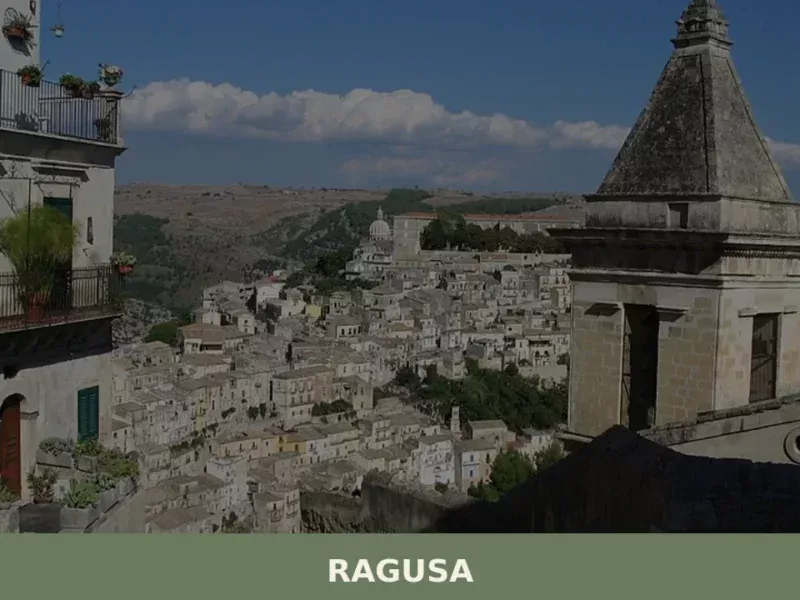
What to see in Ragusa, a UNESCO city at 520m with 70,000 residents: explore Ibla, San Giorgio, Giardino Ibleo and Cotognata PAT. Plan your visit now.
Campofelice di Fitalia
 Mountain
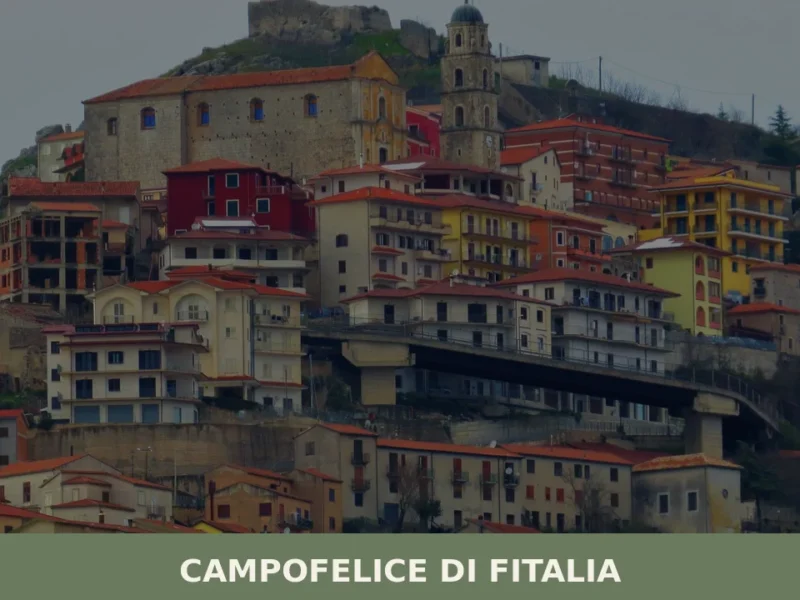
Discover what to see in Campofelice di Fitalia: history, rural architecture, local food, and the quiet beauty of inland Sicily at 734m altitude.
Gratteri
Mountain
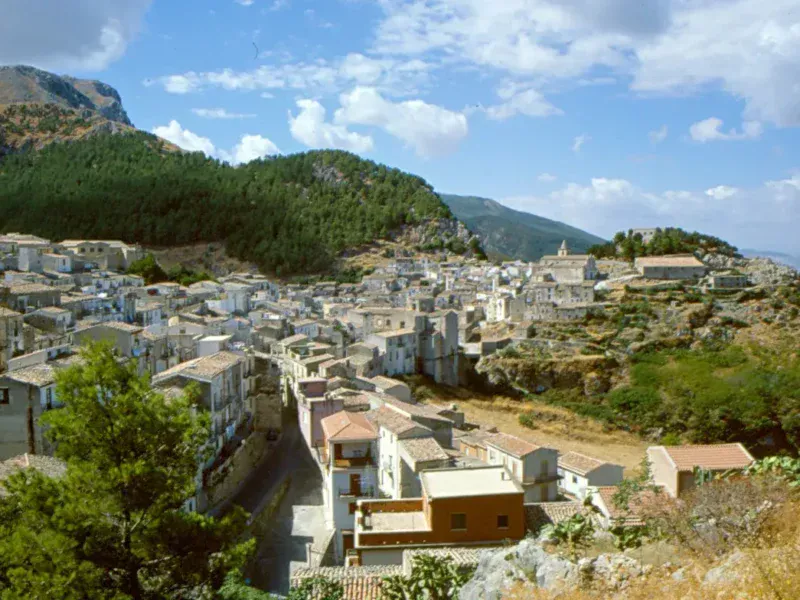
Gratteri, a medieval village in the province of Palermo: history, mother church and stone streets. Discover how to visit it and how to get there from the Madonie.
Messina
Sea
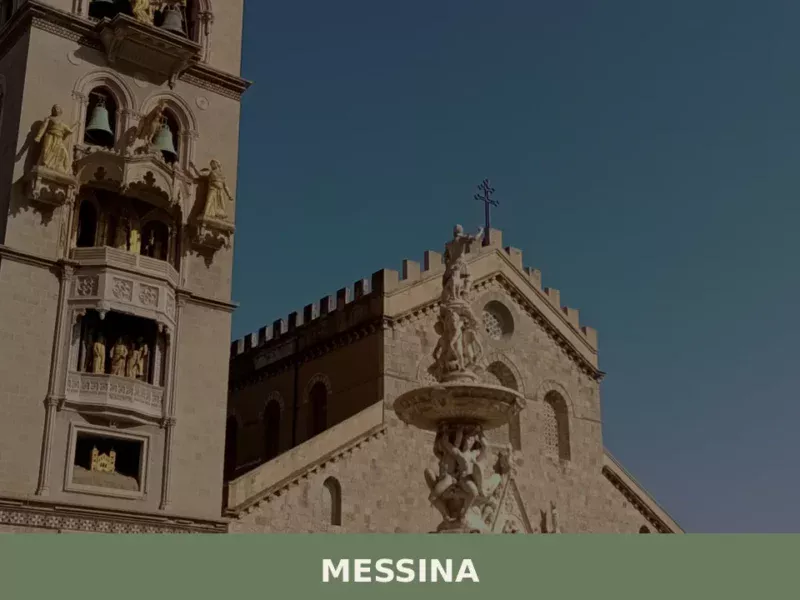
What to see in Messina: 242,267 inhabitants, the astronomical clock tower, two Caravaggios and the Norman Cathedral. Plan your visit and discover how to get there.

Rodì Milici
 Hills
Hills
Two urban nuclei, one Knights of Malta palazzo and the ruins of ancient Longane: Rodì Milici rewards visitors who look beyond the Sicilian coast.
Isnello
Hills
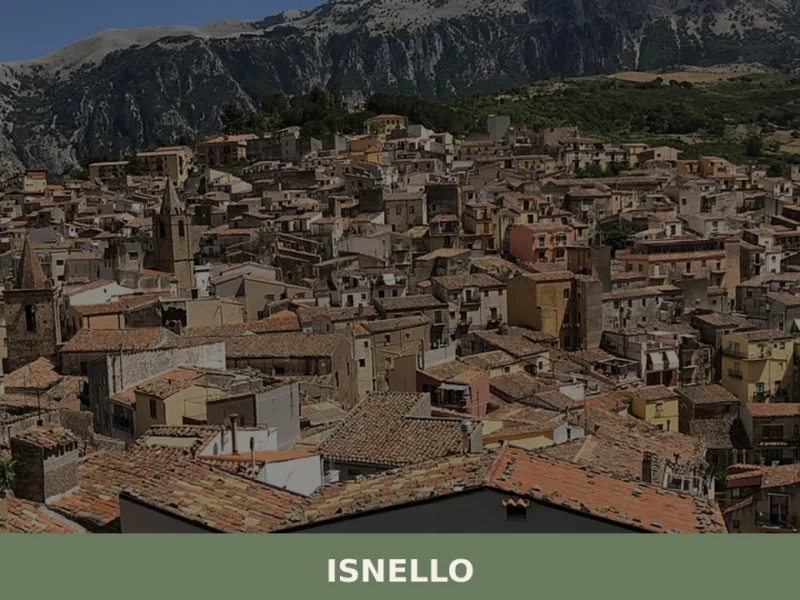
What to see in Isnello, Italy: Explore this 583 m (1,913 ft) altitude village near Palermo. Discover its historic center and panoramic views. Read our guide.
Cefalà Diana
Hills
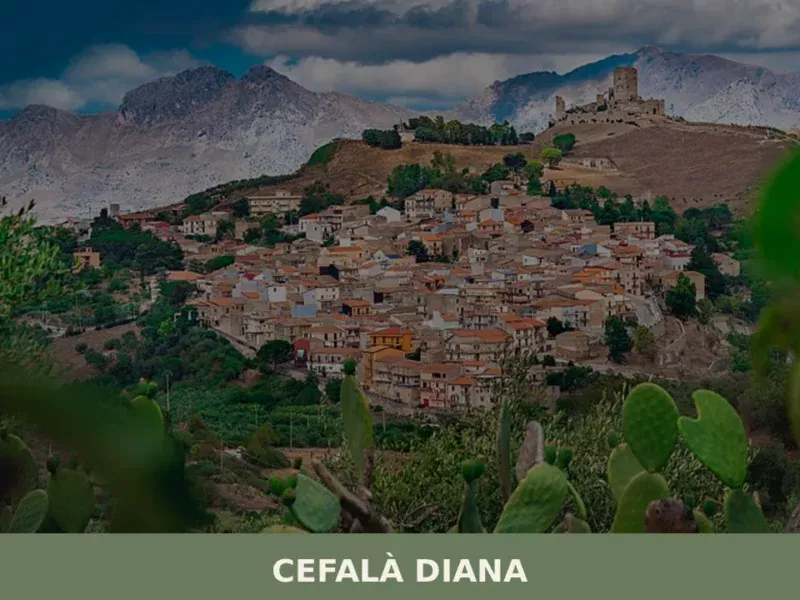
Discover what to see in Cefalà Diana, Sicily: Arab-Norman baths, castle ruins, local food, best season to visit, and how to get there from Palermo.
Campofiorito
Mountain
Campofiorito sits at 660 metres above sea level in the province of Palermo, a small agricultural commune of 1,321 inhabitants whose name translates literally as “field of flowers.” Founded as a feudal settlement in the early eighteenth century, the village occupies a limestone ridge in the upper Belìce valley, surrounded by wheat fields and grazing […]

Belpasso
Hills
A town rebuilt three times from volcanic catastrophe. Belpasso village in Sicily embodies resilience through its geometric urban grid and living festival traditions.
Bompietro
Mountain
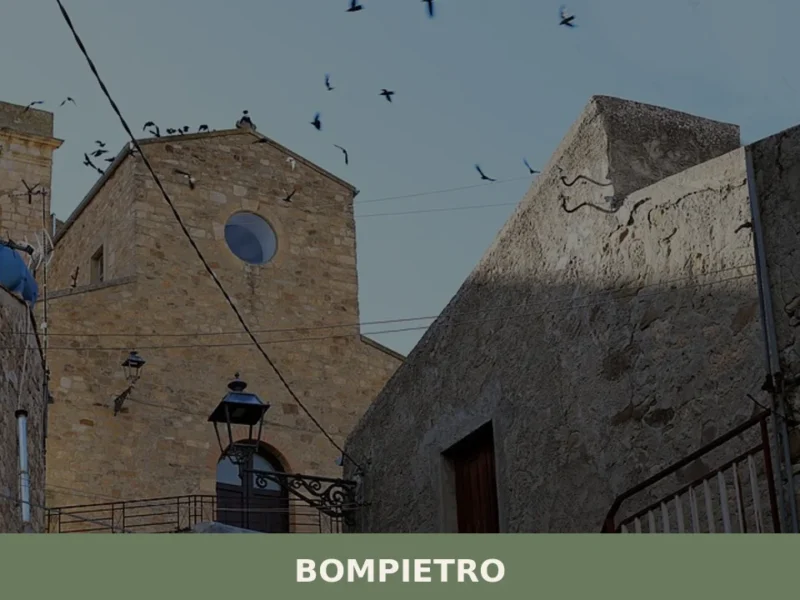
Morning light reaches Bompietro slowly, climbing over the Madonie range before it pours across the rooftops and into the narrow streets where older residents already occupy doorstep chairs. At 685 metres above sea level, the air carries a sharpness absent from the coast — part wild oregano, part cold stone. Fewer than 1,200 people live […]

🏡 Know Barcellona Pozzo di Gotto better than we do?
If you’re a local or have been there, your knowledge matters: add what’s missing or fix a detail on this page.