


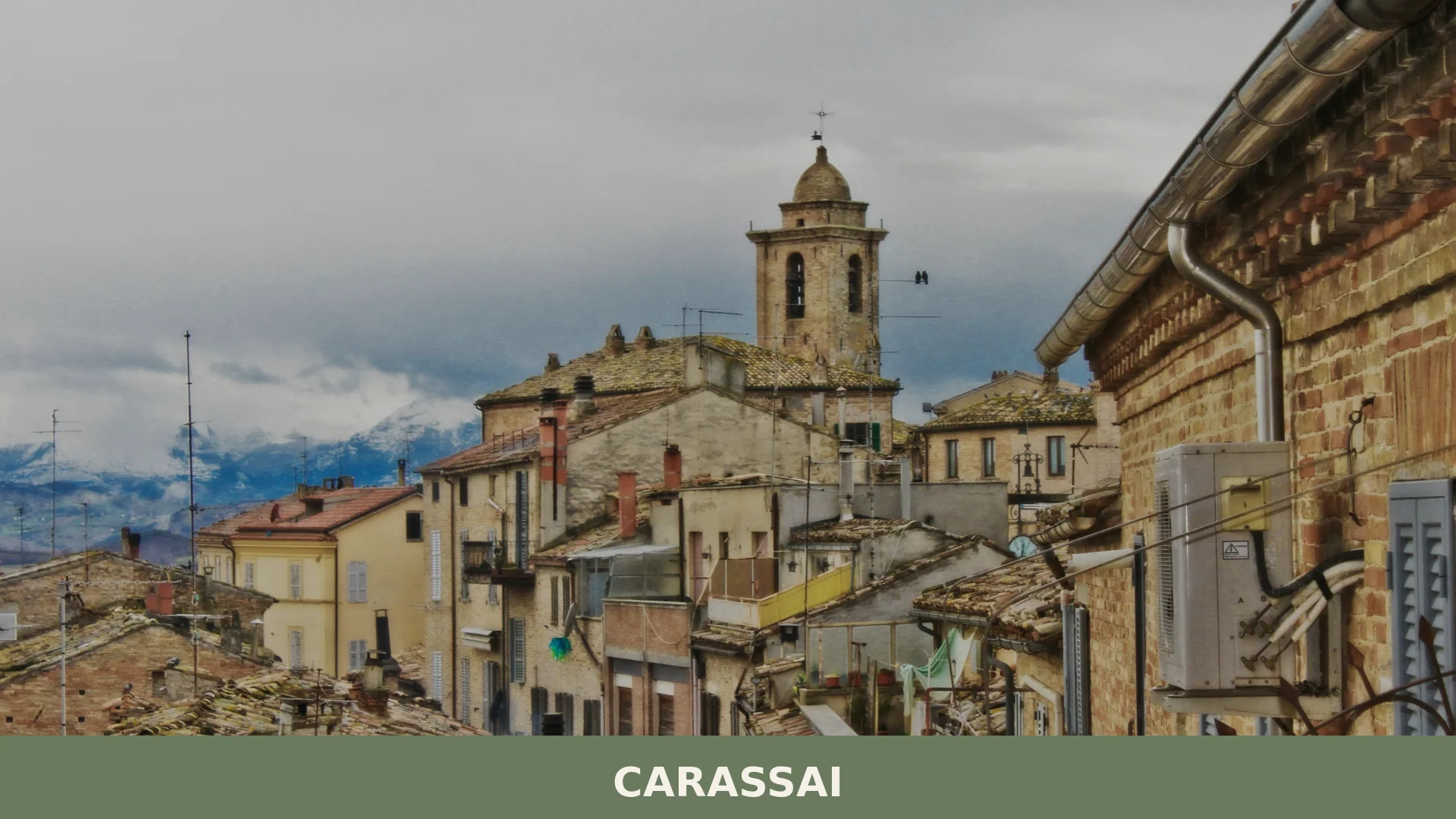

Carassai is a hilltop comune at 354 metres in the province of Ascoli Piceno, Marche, preserving medieval walls, an Antiquarium with finds from the Neolithic to the Middle Ages, and a cluster of histor
Discover Carassai
Carassai is a hilltop commune in the province of Ascoli Piceno, Marche, sitting at 365 metres above sea level on the crest dividing the valleys of the Aso and the Menocchia rivers, with a municipal area of roughly 22.33 square kilometres and a resident population of 1009 inhabitants. The settlement stands on the summit of three hills between the Monti Sibillini and the Adriatic coast, a position that gave it strategic value across successive centuries of occupation, from Neolithic communities who left behind arrowheads, blades and scrapers, through the Roman period and the medieval lords who built the fortified walls and towers still visible today.
Carassai village in Marche rewards visitors who come looking for layered history in a compact space: a walled old town with merlations and eight watch-towers, an Antiquarium displaying finds from the Bronze Age to the Middle Ages, a cluster of churches including the early Renaissance Santa Maria del Buon Gesù, and two castle sites at Castelvecchio and Rocca di Monte Varmine. The nearest reference points for travellers are San Benedetto del Tronto, approximately 20 km away and reachable in about 25 minutes, Fermo at approximately 30 km and about 35 minutes, and Ascoli Piceno at approximately 35 km and about 40 minutes.
Carassai village in Marche: history and origins
Carassai is a hilltop settlement in the province of Ascoli Piceno whose documented human presence reaches back to the Neolithic period, as shown by stone artefacts — arrowheads, blades and scrapers — recovered from the local museum collection, while the surrounding territory was later absorbed into the Roman world following the romanisation of the Piceno region that began in the third century BC. Plinio the Elder, in his Naturalis Historia, mentions a city called Novana on the hills close to the sea; one hypothesis places it within the territory of present-day Carassai.
Around the year one thousand the area supported several fortified centres — among them Monte Varmine, Camporo and Carassai itself — then known under the names Guardia, Castrum Guardiae or Castrum Carnassalis. At the beginning of the thirteenth century the land passed to the Brunforte family, lords of Massa. In August 1321, Lino di Guglielmo di Massa and the community’s syndic Matteo Benvenuti formally sold the castle of Carassai to the city of Fermo, an act recorded in documents still held in the Archivio Comunale of Fermo. The castle was subsequently burned and destroyed during the rebellion of Petrocco da Massa, then rebuilt; a document of 1373 authorised the construction of new walls. Between 1377 and 1387 Carassai became a small lordship on the border between the states of Fermo and Ascoli Piceno under the condottiere Boffo da Massa, also known as Filippo Tibaldeschi di Massa, who had likewise subjugated Castignano, Cossignano and Porchia.
Walls, Towers, Churches and an Antiquarium: Carassai’s Built Heritage
Carassai preserves a circuit of medieval walls with eight watch towers, three historic gateways, a pentagonal fifteenth-century tower, several churches spanning a thousand years of building, two castle sites, and a municipal antiquarium containing finds from the Neolithic through to the medieval period.
The Medieval Walls and Towers
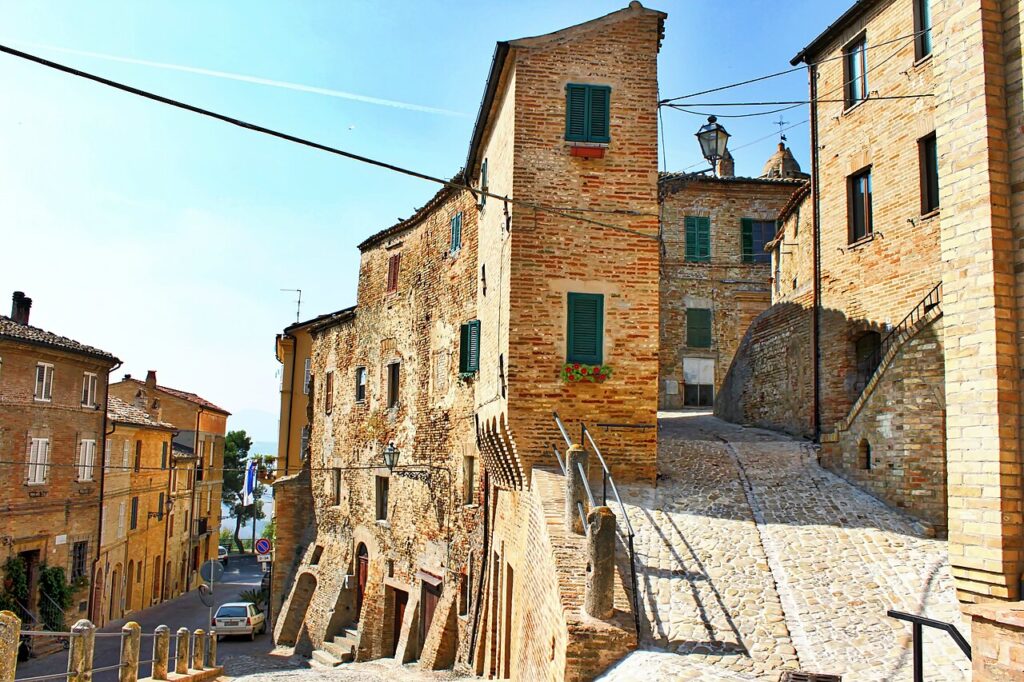
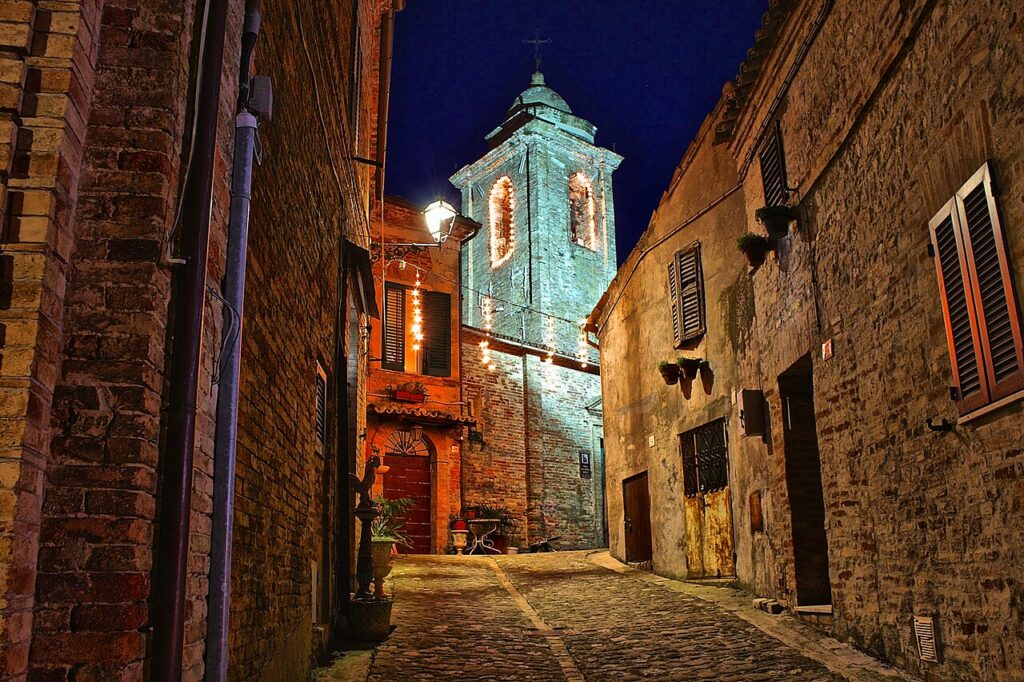
The fortifications that still partly surround the old nucleus stand roughly eight to nine metres high and date from the thirteenth and fourteenth centuries. The masonry is battered stonework with buttresses, string courses, traces of corbelling, and Ghibelline merlons. Eight interval towers punctuate the circuit. Three gateways survive: the Porta da Bore to the north, the Porta dello Sportello, and the Porta Marina, also called Porta da Sole. The covered military walkways were built between the fourteenth and fifteenth centuries; the form visible today largely reflects changes authorised in the sixteenth century, when houses were permitted to be built directly against the walls.
The Torrione Mariucci
One tower stands apart from the rest: the Torrione Mariucci, a pentagonal bastion dating from the fifteenth century, equipped with large circular cannon embrasures.
Castello Vecchio
The oldest nucleus of Carassai is the Castello Vecchio, which has a circular plan. The church of San Lorenzo Martire, built in 1424, stands within this enclosure.
Church of Santa Maria del Buon Gesù
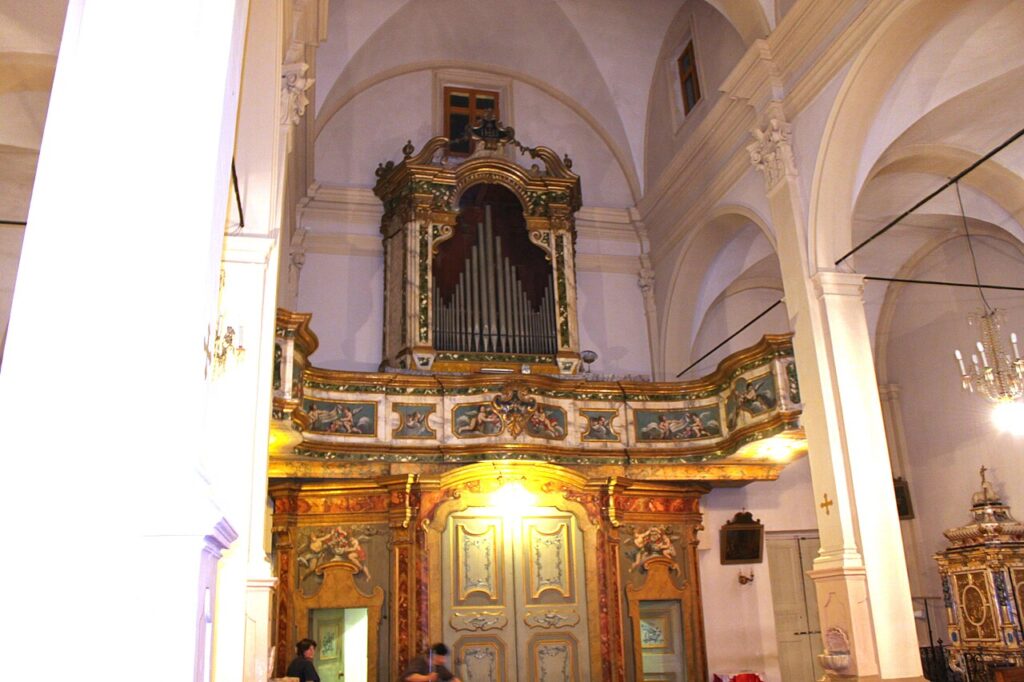
The original building outside the walls dates from around 1470, proposed by San Giacomo della Marca to mark a reconciliation between Carassai and neighbouring communities, and he placed there a polychrome wooden statue of the Madonna. The church was rebuilt in 1532 on a three-nave plan. Further modifications followed in the eighteenth century, with the central nave raised to its current height, a process completed in 1742. The interior contains a canvas depicting the Crucifixion, painted by Andrea Boscoli in 1601.
Church of Sant’Angelo in Piano
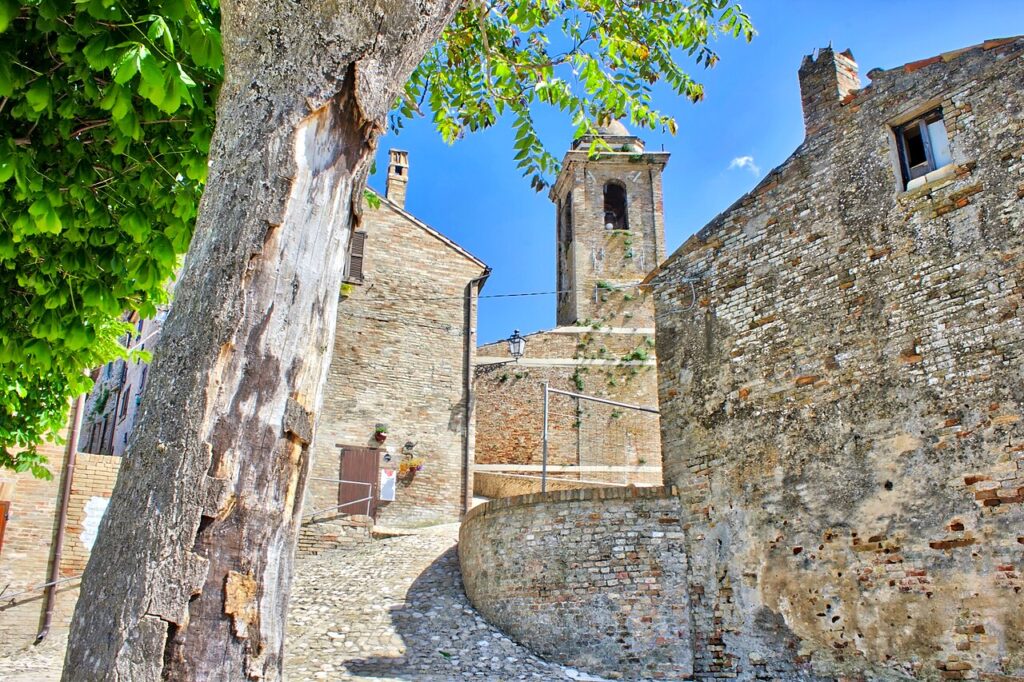
The origins of Sant’Angelo in Piano are monastic: a date around the year one thousand is associated with the building, and from 1055 it was home to a community of Benedictine monks. The church has a single nave; the western façade features brick arches with a Gothic character, and a two-bell wall campanile. Remains of a crypt with passages survive beneath the building. The church was restored in 1997.
Oratorio di Santa Monica
The oratory in Piazza Matteotti is dated 1699 and represents the late Baroque phase of Carassai’s religious building. It has been recently restored.
Church of Santa Maria delle Grazie
Known locally as La Madonnetta, this church stands about one kilometre from the village. It was built in 1850 through donations from local parishioners and has a wall campanile. It too has been recently restored.
Churches within the Rocca di Monte Varmine
Two churches are associated with the Rocca di Monte Varmine site. The church of San Pietro is inside the castle and is not currently open to visitors. The church of San Luca stands within the rural cemetery of Rocca Monte Varmine; it was already recorded in 1473 and was rebuilt in 1718. The cemetery itself was laid out in 1900.
Antiquarium Comunale
The municipal antiquarium holds a collection ranging from the Bronze Age to the medieval period. The finds include material of Picene, Roman, medieval, and post-medieval origin. Among the objects on display is an Egyptianising figurine — an ushabti of imperial Roman date, made by a local Greek craftsman.
Food and Wine of Carassai and the Ascoli Piceno Territory
Carassai sits within a stretch of the Ascoli Piceno province that produces several certified foods, including Oliva Ascolana del Piceno DOP, Ciauscolo IGP, Agnello del Centro Italia IGP, and Formaggio di Fossa di Sogliano DOP, alongside regional wines from the Offida DOCG, Rosso Piceno DOC, and Falerio DOC appellations. These are territorial products tied to the broader Piceno area rather than exclusive specialities of the commune itself, but they define the flavours a visitor encounters in and around the village.
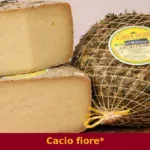
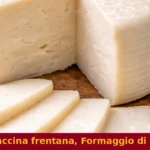
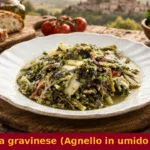
The stuffed and fried olive known as Oliva Ascolana, protected since 2005 under DOP status, is arguably the most recognisable product from this corner of the Marche. The cured pork spread Ciauscolo IGP, soft enough to be spread on bread, is equally characteristic of the inland hill country. Local table traditions also draw on Formaggio di Fossa, a sheep’s-milk cheese aged in underground pits, and on lamb raised under IGP rules across central Italy.
On the wine side, the Offida DOCG designation covers both a Pecorino white and a Rosso made predominantly from Montepulciano grapes, produced in vineyards across the hills south of Fermo. Falerio DOC and Rosso Piceno DOC complete the picture of wines that pair naturally with the cured meats and cheeses of the territory. Among traditional preparations cited for the wider region, fermented grape-based products such as sapa and vino cotto appear in the local food heritage, alongside fruit liqueurs in the PAT register.
Planning your visit and getting there
Carassai can be reached easily from the lower Val Pellice and the Turin area. The practical distances and journey times below are kept concise on purpose, so the access information stays clear and consistent.
| Departure | Distance | Time |
|---|---|---|
| Ascoli Piceno | approx. 35 km | approx. 40 min |
| San Benedetto del Tronto | approx. 20 km | approx. 25 min |
| Fermo | approx. 30 km | approx. 35 min |
| Ancona | approx. 95 km | approx. 1 h 15 min |
These practical reference points are enough to plan the journey without overloading the text with unstable logistics. Once on site, the village is best understood slowly, on foot and in relation to the surrounding landscape.
Frequently asked questions about Carassai
What is the best time to visit Carassai?
Late spring through early autumn (May–September) offers pleasant weather for exploring the hilltop village and surrounding countryside. The patron saint feast of San Barnaba on June 11th brings traditional celebrations and local festivities. Summer temperatures in the Marche region are warm and ideal for visiting medieval towns, though early autumn provides fewer crowds and comfortable conditions for walking the village's narrow streets and walls.
How do I reach Carassai by car from major cities?
From San Benedetto del Tronto (approximately 20 km away, 25 minutes): head inland via the SS16 toward Ascoli Piceno. From Ascoli Piceno (approximately 35 km, 40 minutes): take the SR78 toward the Sibillini Mountains area. From Fermo (approximately 30 km, 35 minutes): drive via the SR210. The nearest motorway connections are the A14 (Bologna–Taranto), with exits near San Benedetto del Tronto.
How long should I spend visiting Carassai village?
Two to three hours allows a comprehensive visit: explore the walled old town with its eight watch-towers and merlated walls, visit the Antiquarium displaying Bronze Age and medieval finds, and tour the churches including Santa Maria del Buon Gesù. Those interested in archaeology and medieval architecture may dedicate additional time to the Castelvecchio and Rocca di Monte Varmine castle sites accessible in the surrounding area.
What historical periods are represented in Carassai's archaeology?
Carassai's settlement spans thousands of years: Neolithic communities left arrowheads, blades, and scrapers; Bronze Age artifacts are displayed in the Antiquarium; Roman occupation followed; and medieval lords built the fortified structures still visible, including the eight towers and defensive walls. The strategic hilltop position between the Monti Sibillini and Adriatic coast made it valuable throughout successive occupations, from ancient times through the Middle Ages.
📷 Photo Gallery — Carassai
In Marche More villages to discover
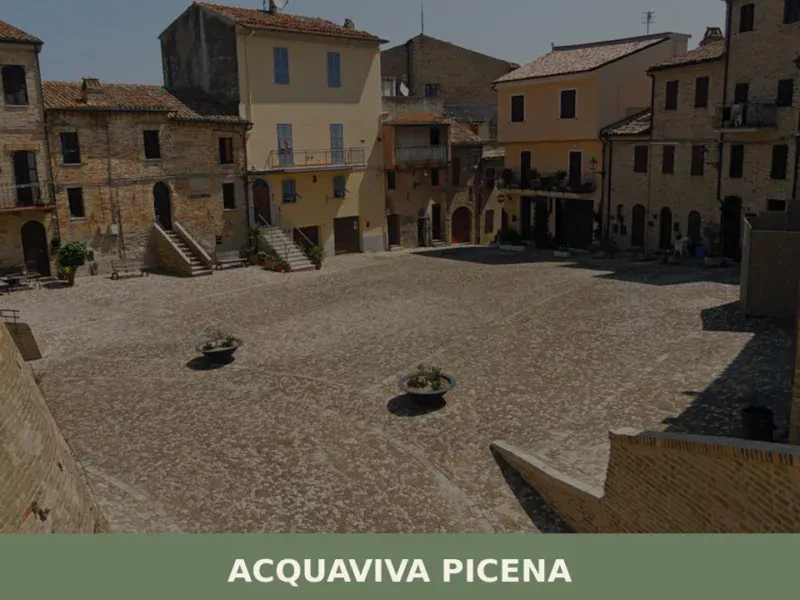
Acquaviva Picena
 Sea
Sea
Discover what to see in Acquaviva Picena: medieval fortress, town walls, local food and travel tips for this hilltop village in Ascoli Piceno, Marche.
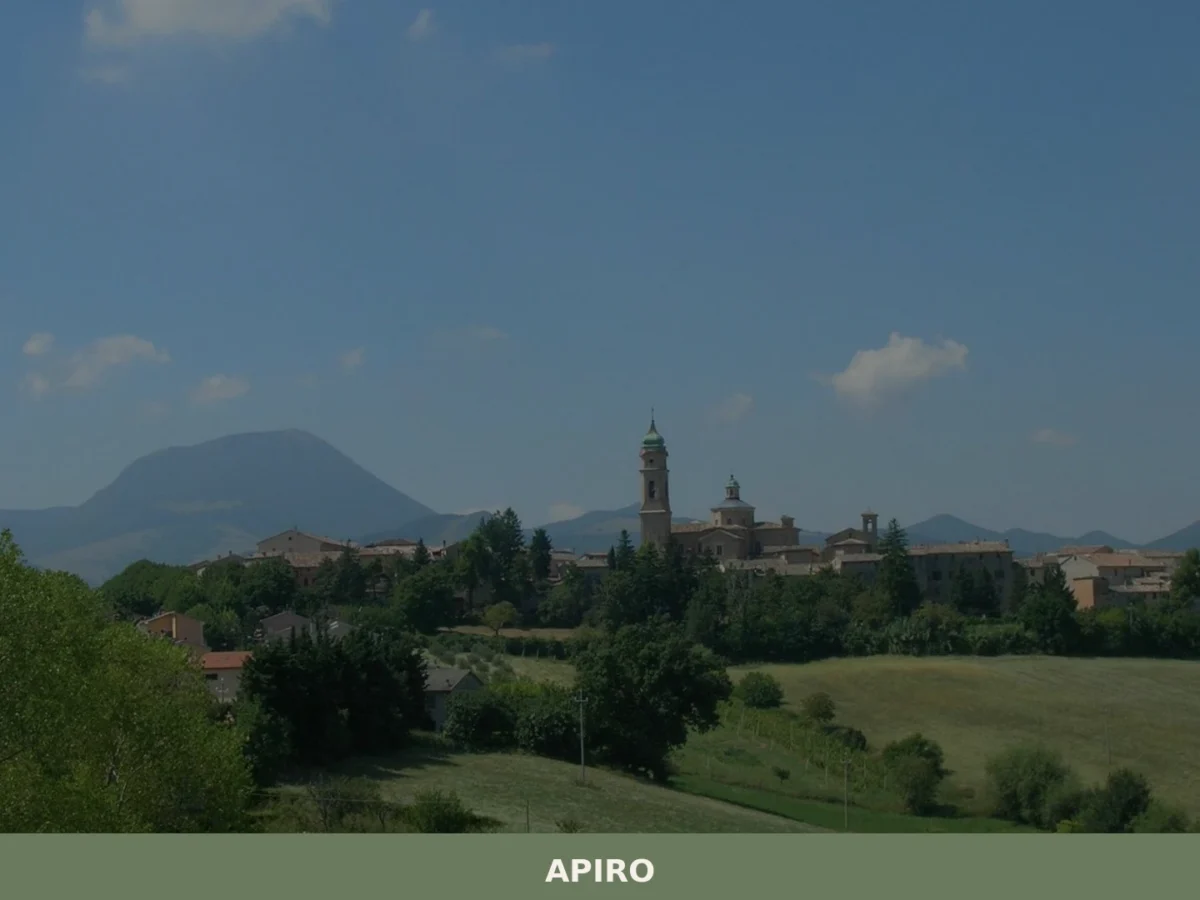
Apiro
 Hills
Hills
What to see in Apiro, Marche, Italy: discover the Sant'Urbano museum, a 14th-century church, and local cuisine 40 km from Ancona. Explore the full guide.
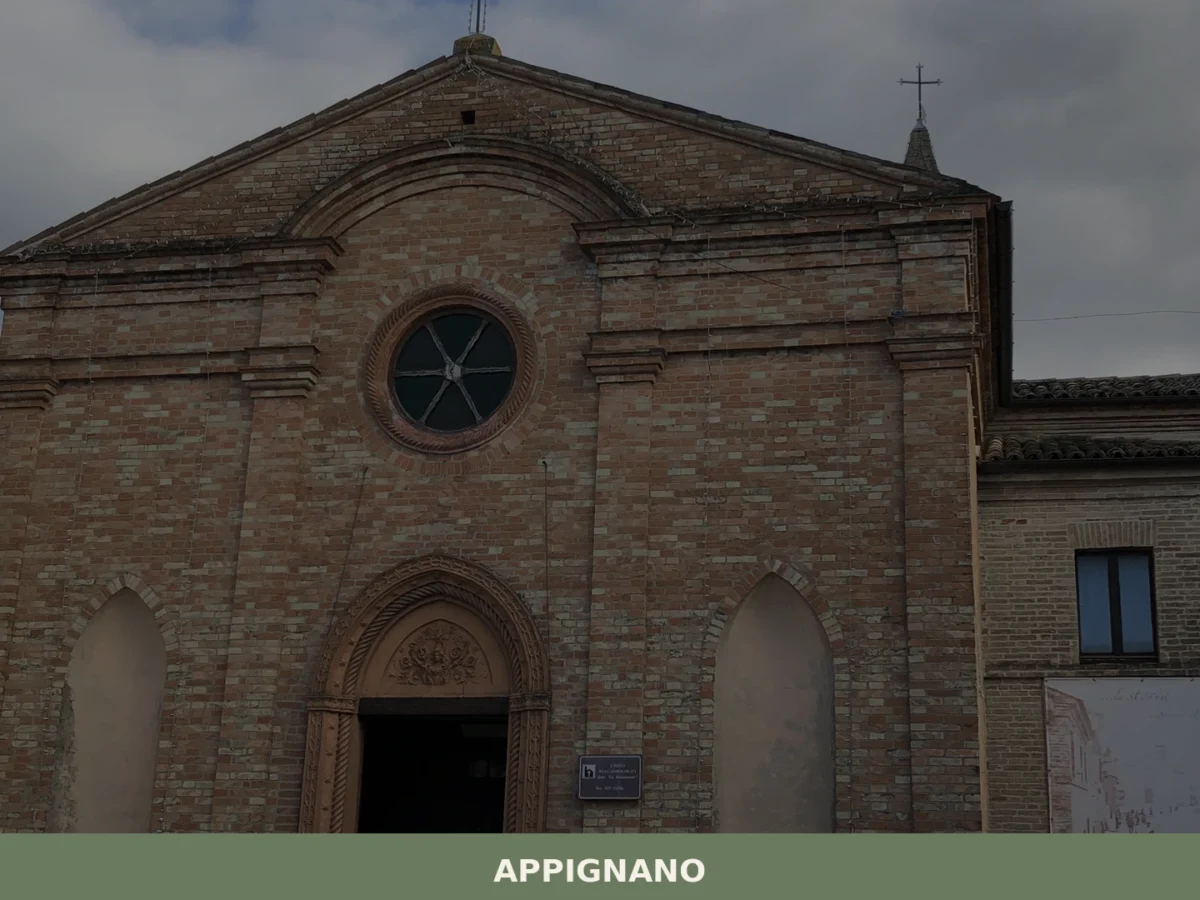
Appignano
 Plains
What to see in Appignano, Marche, Italy: discover the church of San Giovanni, local food traditions, and a village 35 km from Ancona. Explore the full guide.

Camerata Picena
 Mountain
Discover Camerata Picena, a charming hilltop village in Ancona province with medieval churches, scenic views, and authentic Marche countryside.
Fratte Rosa
Hills
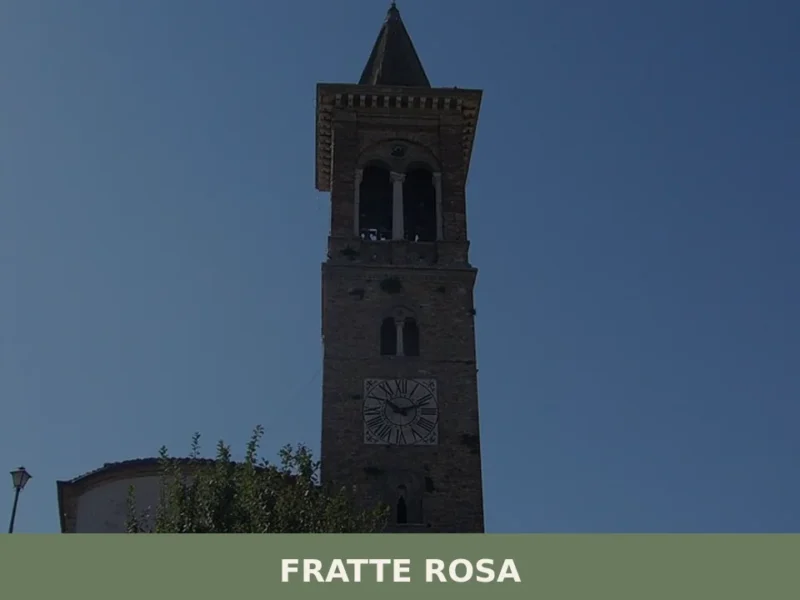
With its 847 inhabitants and an altitude of 419 meters above sea level, Fratte Rosa is located in the province of Pesaro and Urbino, a hilly area of the Marche region. The village’s name “Rosa” is historically linked to the color of a local clay, an essential component for the practice of pottery, documented in […]
Appignano del Tronto
Plains
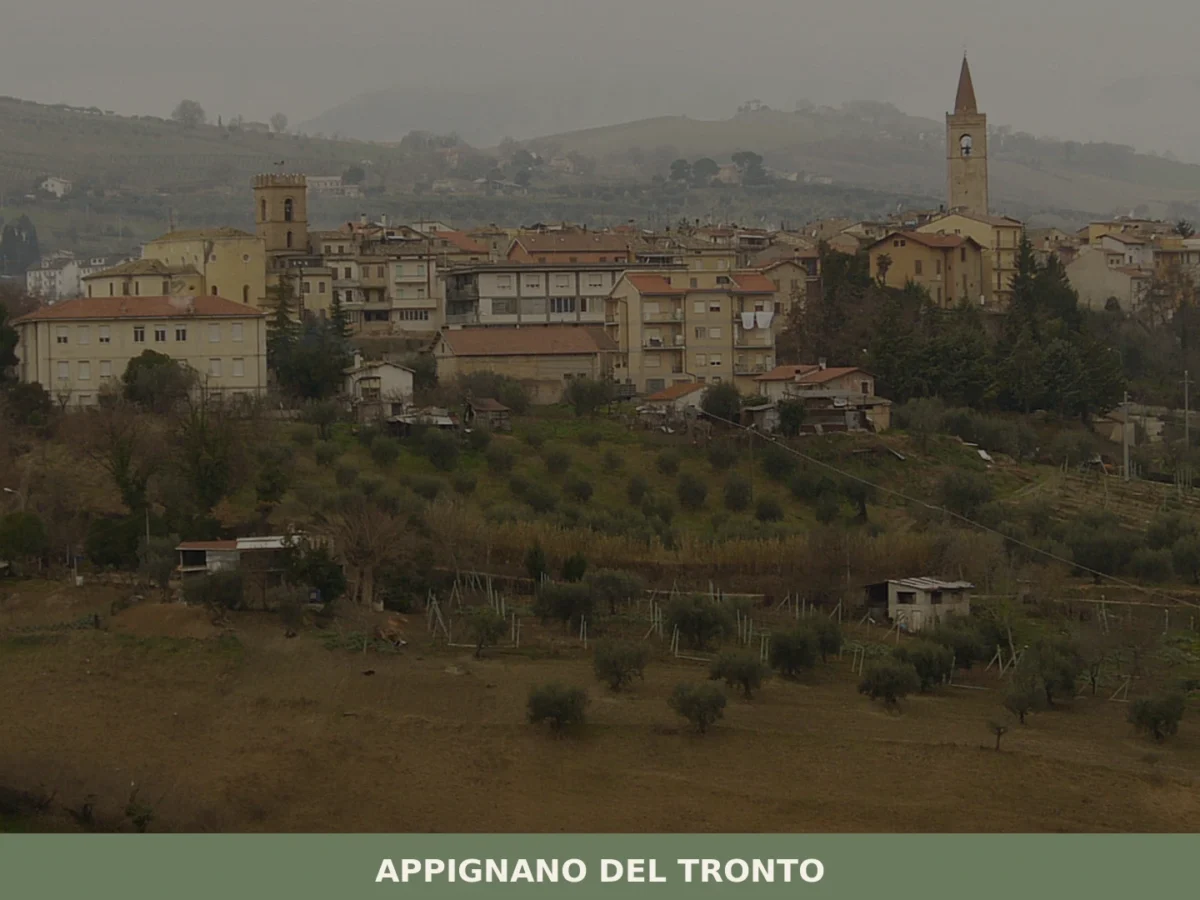
What to see in Appignano del Tronto, Italy: 9 km from Ascoli Piceno, discover top attractions, local food, and travel tips for this Marche village. Explore now.
Frontone
Hills
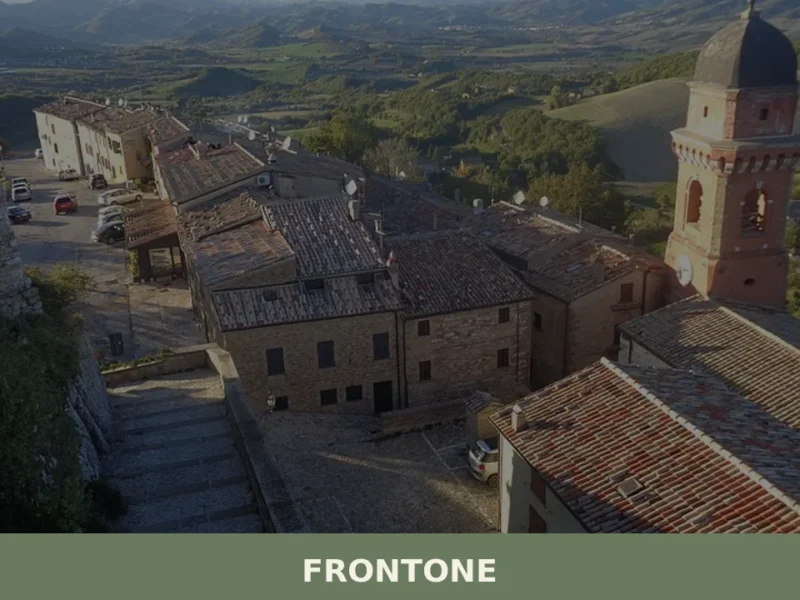
Frontone Castle, whose original structure dates between the 11th and 12th centuries, overlooks the village of the same name, a municipality of 1,218 inhabitants in the province of Pesaro and Urbino. Situated at 412 meters above sea level, Frontone extends along the slopes of Mount Catria, offering a view of the surrounding hilly landscape. Its […]
Castelplanio
Hills
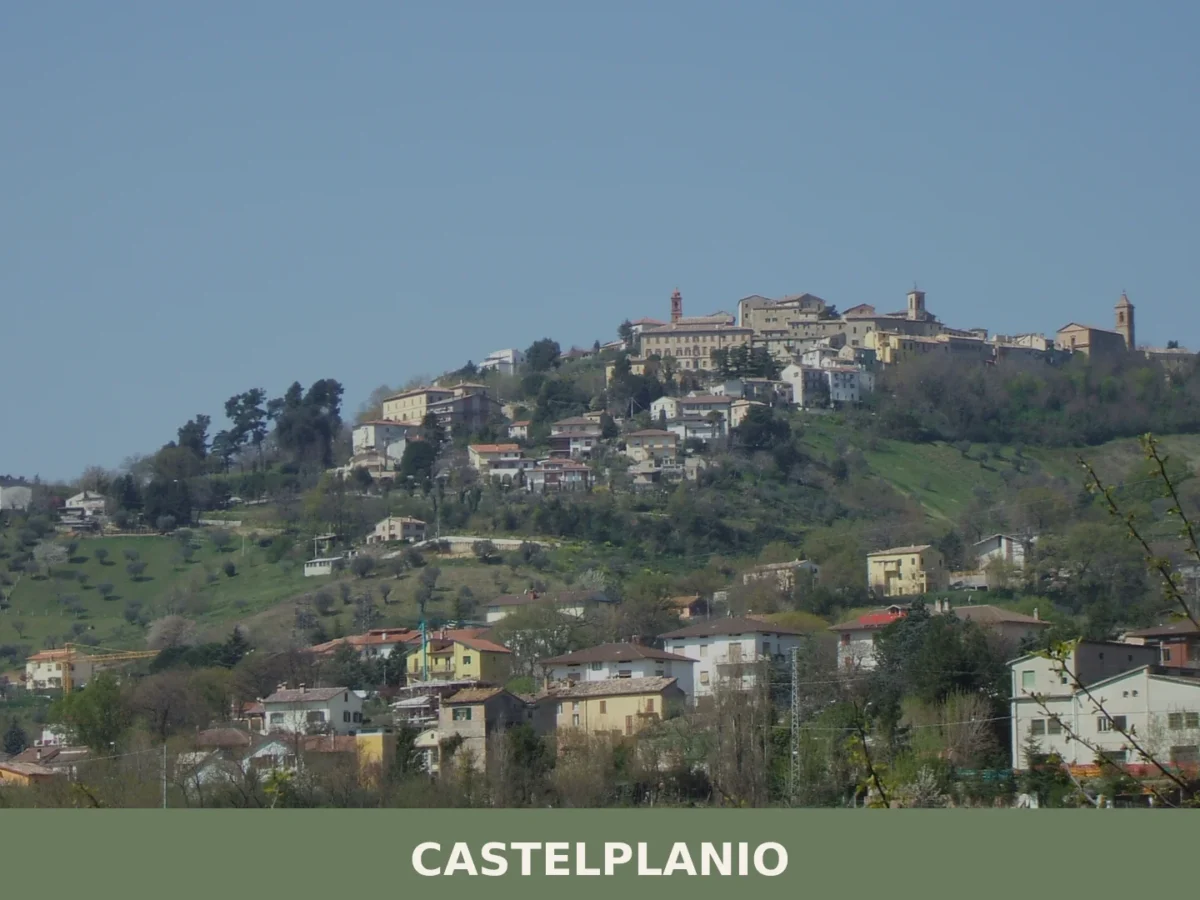
Home to 3,579 residents, Castelplanio rewards visitors with a medieval abbey, a civic art collection and a museum dedicated to a pioneering physician.
Isola del Piano
Hills
Discover Isola del Piano, a charming village in Marche, Italy. Explore its rich history, organic traditions, stunning landscapes, and authentic Italian culture.
Castelraimondo
Hills
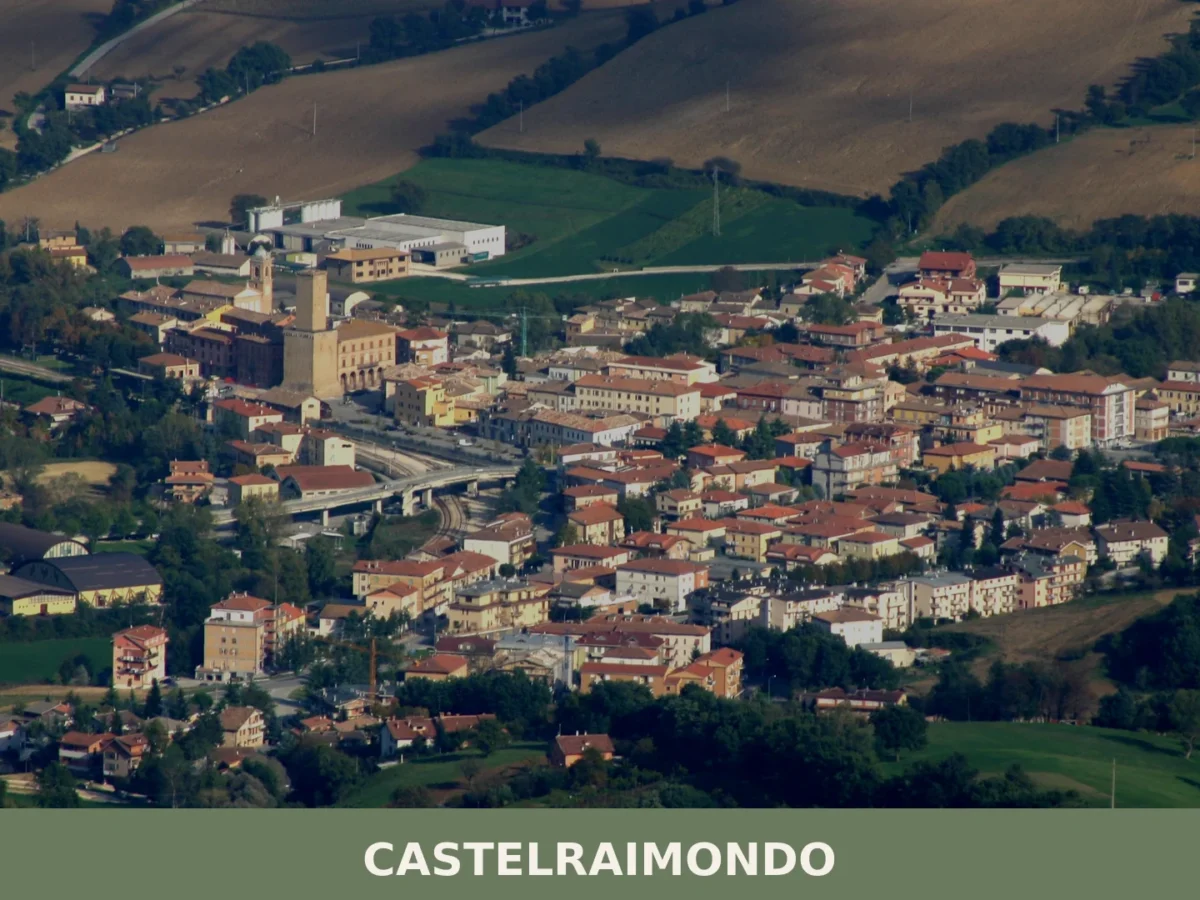
4,280 residents and a 38.3-metre tower that still dominates the skyline. Castelraimondo rewards visitors with medieval architecture, a fine-arts castle museum and one of the Marche's most vivid Corpus Domini traditions.
🧀 Italian traditional products
🏡 Know Carassai better than we do?
If you’re a local or have been there, your knowledge matters: add what’s missing or fix a detail on this page.