


Appignano
 Plains
What to see in Appignano, Marche, Italy: discover the church of San Giovanni, local food traditions, and a village 35 km from Ancona. Explore the full guide.
Discover Appignano
The road from Macerata narrows as it climbs northwest, passing through a rolling landscape of pale clay hills and wheat fields that shift color with the season. Appignano announces itself without drama: a cluster of stone buildings rising above the surrounding countryside of the Marche interior, roughly 20 km (12 mi) from the provincial capital.
The church bell carries across the rooftops in the morning stillness, and the streets in the older part of the village retain a geometry defined by the logic of medieval construction rather than modern planning.
For those researching what to see in Appignano, the answer begins with the church of San Giovanni — the most documented religious structure in the village — and extends outward into the surrounding landscape shared with six bordering municipalities. Appignano, Marche, Italy sits about 35 km (22 mi) southwest of Ancona, within the Province of Macerata. Visitors to Appignano find a compact settlement whose borders touch Cingoli, Filottrano, Macerata, Montecassiano, Montefano, and Treia, placing it at the center of a historically dense network of small Marche communes.
History of Appignano
The name Appignano derives from the Latin fundus Appinianus, a landholding designation common in central Italy that points to Roman-era agricultural organization. This naming pattern, in which a settlement took on the name of a Roman landowner — here, a figure called Appinius or similar — was widespread across the Marche interior during the late imperial period and the subsequent reorganization of the territory under Lombard and later Frankish administration. The transition from a rural estate to a recognizable settlement was gradual, following the pattern of many communes in the Province of Macerata.
During the medieval period, Appignano developed within the political and ecclesiastical orbit of Macerata, which lies 20 km (12 mi) to the southeast.
The village was subject to the shifting alliances and territorial contests that characterized the inland Marche throughout the twelfth and thirteenth centuries, when local signorie and the Church competed for control over rural communities. Its position among six neighboring municipalities reflects the dense subdivision of territory that resulted from that period of fragmentation, each settlement maintaining its own administrative identity while remaining economically dependent on the roads connecting them to larger centers. The nearby fortified village of Gradara, further north in the same region, underwent similar processes of medieval territorial definition, illustrating how broadly this pattern extended across Marche.
In the modern period, Appignano was formally constituted as a comune — the basic unit of Italian local government — within the Province of Macerata, an administrative arrangement that has remained stable through the unification of Italy in the nineteenth century and the subsequent reorganization of Italian regions in the twentieth. The village’s administrative continuity is consistent with the broader pattern of Marche communes, many of which maintained their medieval boundaries even as their economic base shifted from subsistence agriculture to small-scale industry and, eventually, to services.
Today the municipality functions as an independent administrative unit, bordered by neighbors whose own histories intersect closely with Appignano’s at every period.
What to see in Appignano, Marche: top attractions
Church of San Giovanni
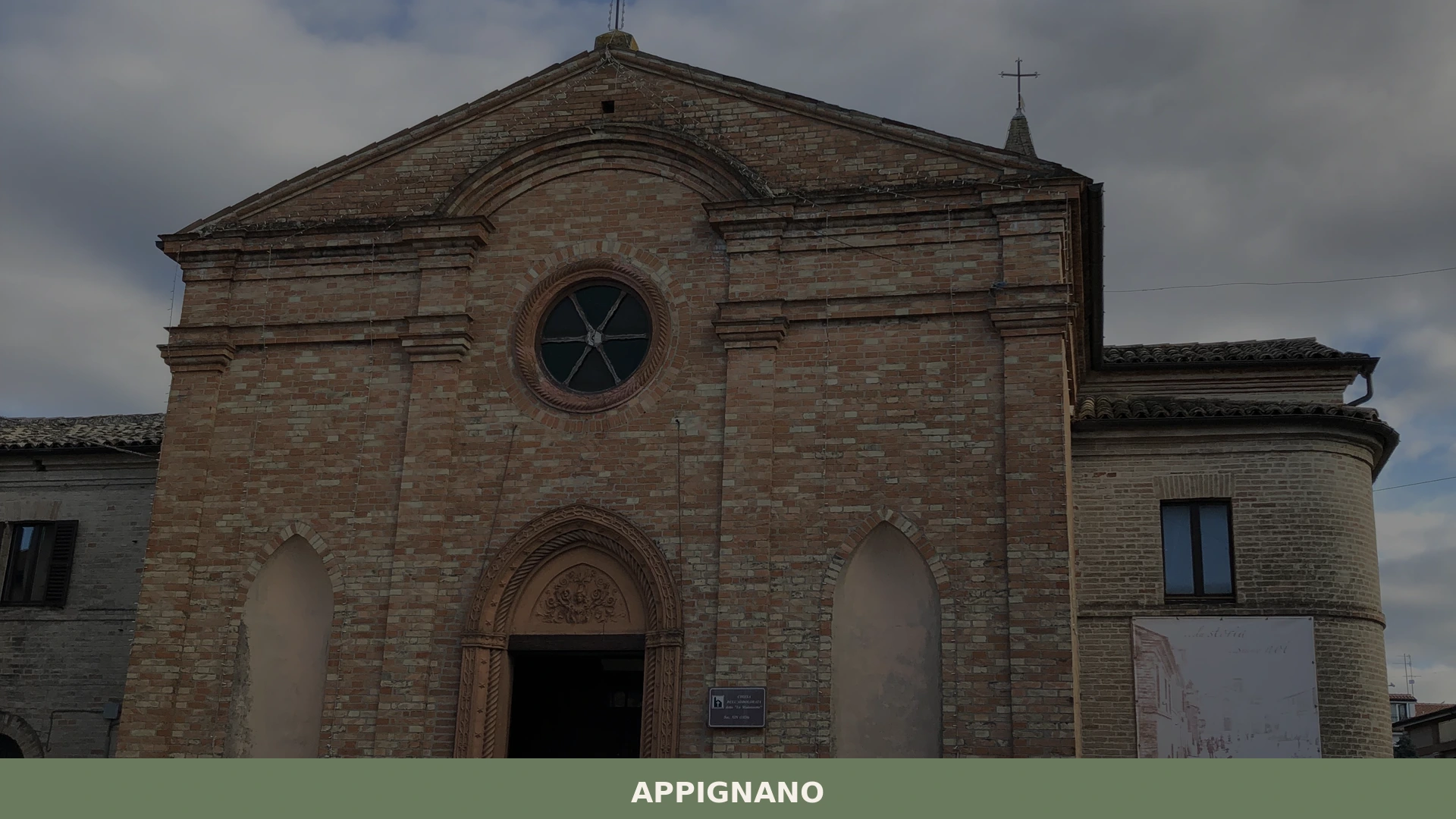
The church of San Giovanni is the primary documented religious monument in Appignano and the structure most consistently cited in sources relating to the village’s built heritage. Its dedication to Saint John places it within a tradition of parish churches common throughout the Marche interior, where the cult of San Giovanni Battista held particular importance in rural communities during the medieval and early modern periods. Standing inside, visitors can observe the spatial logic of a village church that has served its community across several centuries of continuous use. The best time to examine the exterior facade closely is in morning light, when the stone surface shows its full texture.
The Historic Village Core
The built fabric of Appignano’s older sections follows a layout determined by the natural topography of the site and the construction practices of the medieval and post-medieval periods. Streets in the upper part of the settlement run along contour lines, producing a horizontal grain interrupted by short vertical connections between levels. The construction materials visible in the walls — local stone and brick used in combination — are consistent with building traditions across the Province of Macerata, where the availability of clay soils made brick production economically viable from the medieval period onward. Walking through the village core takes no more than 30 to 40 minutes at an unhurried pace, making it a practical stop even on a tighter schedule.
The Surrounding Municipal Territory
Appignano’s territory borders six other municipalities: Cingoli, Filottrano, Macerata, Montecassiano, Montefano, and Treia.
This configuration is not incidental — it reflects a density of settlement in this part of the Marche interior that goes back to the Roman period, when the land was organized around agricultural estates and road networks connecting the Adriatic coast to the Apennine foothills. The countryside between these municipalities covers gentle hill terrain, reaching elevations typical of the sub-Apennine zone. Visitors who explore the roads connecting Appignano to its neighbors pass through working agricultural land, with views extending east toward the coastal plain on clear days. A short drive of 10 to 15 km (6 to 9 mi) in any direction reaches a neighboring commune.
Views Toward the Marche Interior
From the elevated parts of Appignano, the visible landscape extends across a section of the Marche interior characterized by the rounded profiles of clay hills that geologists classify as calanchi terrain — deeply eroded badland formations that appear in several areas of central Marche. The visual field to the west opens toward the sub-Apennine zone, while to the east the land flattens progressively toward the Adriatic coastal plain, approximately 40 km (25 mi) distant at its nearest point.
This orientation — open to both the mountains and the sea — is a consistent geographical feature of the Province of Macerata and gives the village its place in a landscape that changes character across a relatively short distance. Early morning in spring or autumn provides the clearest long-distance visibility.
Connections to Cingoli and the Sub-Apennine Zone
Appignano’s northern border touches the municipality of Cingoli, a larger commune known within Marche for its elevated position and its historic center. The road connecting the two communities crosses terrain that rises noticeably, and the change in elevation between Appignano and Cingoli — the latter sitting at approximately 631 m (2,070 ft) above sea level — is perceptible within a drive of roughly 15 km (9 mi). This geographic proximity makes a combined visit to both centers a practical option for visitors based in Macerata or Ancona.
The route between the two communes passes through agricultural landscapes representative of the inland Marche at the transition between the lowland and the hill zones.
Local food and typical products of Appignano
The gastronomic tradition of Appignano belongs to the broader culinary culture of the Province of Macerata, which sits at the intersection of several distinct food-producing zones: the cereal-growing plains to the east, the hill territories suitable for vines and olives in the middle band, and the pastoral economy of the Apennine foothills to the west. This layered geography has historically produced a cuisine built around a small number of base ingredients used with technical precision rather than variety. The village’s position 20 km (12 mi) from Macerata places it within reach of the markets and supply networks that have structured local food production for centuries.
Dishes typical of this part of Marche tend to follow the logic of the agricultural calendar. Vincisgrassi, a baked pasta construction made with layers of fresh egg pasta, a meat ragù that traditionally incorporates offal alongside ground pork or veal, and a béchamel sauce, is considered a defining preparation of the Macerata area and appears regularly at family tables and local restaurants throughout the province.
Vincigrassi al tartufo, a variation incorporating truffle shaved over the finished dish, reflects the importance of the black truffle found in the wooded zones of the sub-Apennine territory. Brodetto di pesce, a fish stew built from the Adriatic catch and thickened with tomato and local wine, arrives at inland tables from the coast, demonstrating the short supply chain that connects Appignano’s territory to the sea 40 km (25 mi) east.
Bread and grain products remain central to the local diet. The crescia — a flatbread made from wheat flour, eggs, lard, and black pepper, cooked on a flat iron pan — is eaten throughout the year in Marche and appears at most communal meals as an accompaniment to cured meats and local cheeses. Pecorino produced in the hill zones surrounding Appignano, aged in the manner traditional to inland Marche, provides the sharp, fat-rich counterpoint to the relative neutrality of the bread.
No certified designation of origin product (DOP or IGP) is confirmed specifically for Appignano in the available documentation, though the village falls within zones associated with several regional products whose production areas encompass the broader Province of Macerata.
Local food purchasing is most practical at the weekly market held in Macerata, 20 km (12 mi) to the southeast, where producers from across the province bring cured meats, cheeses, seasonal vegetables, and olive oil. In Appignano itself, small alimentari — traditional Italian grocery shops — stock locally produced goods, particularly during the autumn months when the olive harvest and the truffle season overlap.
Festivals, events and traditions of Appignano
The liturgical calendar of San Giovanni Battista, to whom the principal church of Appignano is dedicated, places the patron saint’s feast day on the 24th of June — a date that falls at the summer solstice period and has been observed with religious and civic ceremony in Italian villages since the medieval period. The feast day in a village of this size typically involves a solemn Mass in the church, followed by a procession through the main streets of the historic core. The evening of the 23rd of June — the vigil of the feast — traditionally includes outdoor gatherings and, in many Marche communes, bonfires lit in the fields, a custom with pre-Christian roots absorbed into the Catholic observance of the Baptist’s nativity.
The agricultural calendar also marks the rhythm of collective life in Appignano.
Autumn, covering October and November, concentrates the most active period of food-related activity: the olive harvest, the truffle season, and the slaughter of pigs for cured meat production all fall within this window. These activities, while no longer organized as formal public festivals in many small communes, continue to structure the informal social life of the village and provide the occasion for communal meals. The broader Marche region hosts numerous documented sagre — traditional food festivals — during this season, and visitors based in Appignano can reach several within a 30 km (19 mi) radius during October and November.
When to visit Appignano, Italy and how to get there
The best time to visit Appignano depends on the type of experience a traveler is seeking. Late spring — specifically May and early June — combines mild temperatures averaging 18 to 22°C (64 to 72°F) with the landscape at its most visually productive: cereal crops still green, wildflowers on the clay hillsides, and long daylight hours.
The period from late September through October offers cooler conditions, the olive harvest in progress, and the clearest atmospheric visibility for long-distance views toward the coast. Summer, particularly July and August, brings heat to the Marche interior, with temperatures regularly reaching 32 to 35°C (90 to 95°F) during the afternoon, making early morning the practical window for outdoor exploration. Winter is quiet and cold, with morning frost common from December through February.
Reaching Appignano from major Italian cities is straightforward by car. From Ancona, the route southwest via the SS16 and connecting provincial roads covers approximately 35 km (22 mi) and takes around 40 minutes. From Rome, the A24 motorway to L’Aquila and then the A25 and connecting routes to Macerata covers roughly 250 km (155 mi), with a total drive time of approximately 2 hours and 45 minutes, making Appignano viable as a destination on a longer day trip from the capital. The nearest major railway station is in Macerata, 20 km (12 mi) to the southeast; Trenitalia operates connections to Macerata from Ancona and other Adriatic corridor cities.
From Macerata station, a car or taxi is necessary to cover the remaining distance to Appignano, as direct bus service to the village is limited. The nearest international airport is Ancona Falconara Airport (AOI), approximately 45 km (28 mi) to the northeast, with connections to several European cities. Car hire at the airport is the most practical option for reaching Appignano independently. International visitors should note that English is not widely spoken in smaller shops and local establishments in this part of inland Marche; carrying euro cash is advisable, as card payment infrastructure in very small communes can be limited.
Appignano also functions well as a stopping point on a circular route through the Province of Macerata. The six municipalities that border it — Cingoli, Filottrano, Macerata, Montecassiano, Montefano, and Treia — are each reachable within 20 km (12 mi), making it possible to visit two or three settlements in a single day without significant driving. Travelers arriving from the Adriatic coast might consider combining Appignano with a stop in Ancona, the regional capital 35 km (22 mi) to the northeast, which offers ferry connections, a Roman arch, and a cathedral occupying a headland above the port.
Those who approach what to see in Appignano as part of a wider Marche itinerary will find that the village connects naturally with the hill country to the north and west.
Lunano, a smaller commune in the northern Marche near the border with Emilia-Romagna, represents a different topographic and historical context within the same region, useful for travelers wishing to understand the full range of the Marche interior over several days. For those specifically interested in the northern stretches of the region, the walled village of Carpegna in the Montefeltro area sits within the same administrative region and offers a different reading of how Marche hill settlements were organized, making it a logical extension of any itinerary that begins in the Macerata area.
Frequently asked questions about Appignano
What is the best time to visit Appignano?
The ideal times to visit Appignano are spring and autumn. During these seasons, the weather is pleasantly mild for exploring the historic village core and walking through the surrounding agricultural landscapes. Early mornings in spring or autumn offer the clearest long-distance visibility for panoramic views of the Marche interior, including the distinctive 'calanchi' hills. While specific dates for the patronal feast of San Giovanni Battista are not detailed, the traditional celebration falls on June 24th, which might be a period of local festivities. Summer can also be appealing for enjoying the vibrant colors of the wheat fields.
What to see in Appignano? Main monuments and landmarks
The primary documented religious monument in Appignano is the Church of San Giovanni, dedicated to the village's patron saint. Visitors can explore its interior and appreciate its exterior facade, which is best observed in the morning light to highlight its stone texture. A leisurely walk through the Historic Village Core, characterized by its medieval construction and traditional local stone and brick architecture, typically takes about 30-40 minutes. From the elevated parts of the village, you can also enjoy expansive views across the Marche interior, encompassing the unique 'calanchi' terrain and, on clear days, stretching towards the Adriatic coast.
Where to take the best photos in Appignano?
For architectural photography, the facade of the Church of San Giovanni is best captured in the morning light, which accentuates its stone details. For panoramic landscape shots, head to the elevated sections of Appignano. From these points, you can photograph the rolling clay hills and the 'calanchi' terrain of the Marche interior. Early morning during spring or autumn provides the clearest visibility for these long-distance views, occasionally extending towards the Adriatic coastal plain. The changing colors of the wheat fields throughout the seasons also offer picturesque opportunities.
What can you do in Appignano? Activities and experiences
In Appignano, visitors can enjoy a relaxed stroll through the historic village core, which takes approximately 30-40 minutes, to appreciate its medieval layout and traditional architecture. The surrounding agricultural landscape is perfect for scenic drives or gentle walks, offering views of the Marche interior and connecting Appignano to its six neighboring municipalities. A popular activity is combining a visit with the nearby town of Cingoli, just a 15 km drive away, known for its elevated position. Additionally, exploring the local gastronomy, with dishes like Vincisgrassi and Crescia, provides an authentic taste of the Macerata culinary tradition.
Who is Appignano suitable for? Families, couples, hikers, solo travelers?
Appignano is well-suited for travelers seeking a peaceful and authentic Italian village experience. Its compact size and easy-to-navigate historic core make it ideal for couples, solo travelers, and families looking for leisurely exploration rather than strenuous activities. Those interested in local history, traditional architecture, and the rich culinary heritage of the Marche region will find it particularly appealing. It's also a great base for visitors who enjoy scenic drives through rolling hills and wish to explore the network of small, historic communes in the Macerata province, offering a blend of cultural immersion and natural beauty.
What to eat in Appignano? Local products and specialties
Appignano's culinary offerings are deeply rooted in the gastronomic traditions of the broader Macerata area. Signature dishes include Vincisgrassi, a rich baked pasta featuring fresh egg pasta, a hearty meat ragù (often with offal), and béchamel, sometimes enhanced with black truffle (Vincisgrassi al tartufo). From the nearby coast, Brodetto di pesce, a flavorful fish stew, is also enjoyed. Staple grain products include Crescia, a savory flatbread, while Pecorino cheese, aged in the traditional manner of inland Marche, provides a sharp complement to meals. These specialties showcase the region's diverse agricultural and coastal influences.
📷 Photo Gallery — Appignano
Nearby Villages near Appignano
In Marche More villages to discover
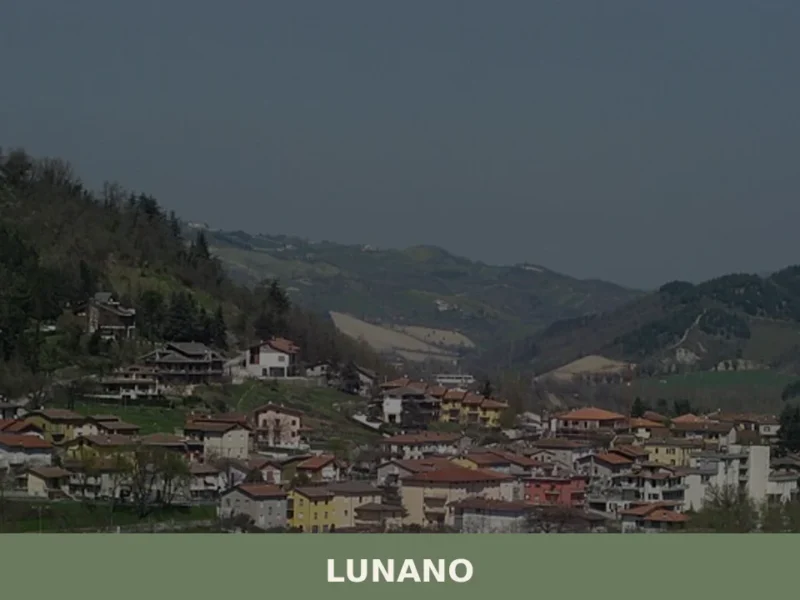
Lunano
 Hills
Hills
what to see in lunano, Italy: Discover its 297-meter altitude, ancient castle, and unique Chestnut Festival. Explore this Montefeltro village.
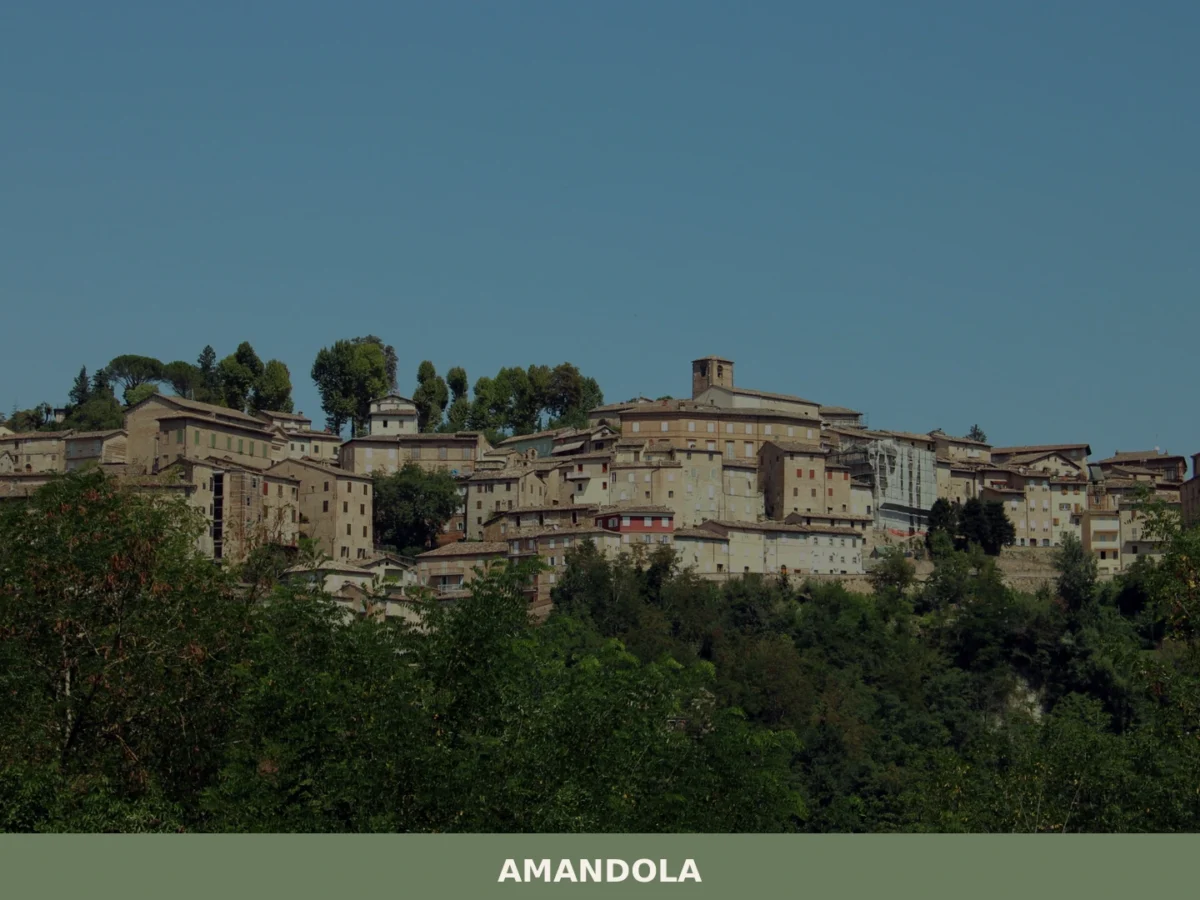
Amandola
Hills
What to see in Amandola: 5 attractions in this Marche village, from the historic centre to the Sibillini Mountains. Discover the complete guide and plan your visit.
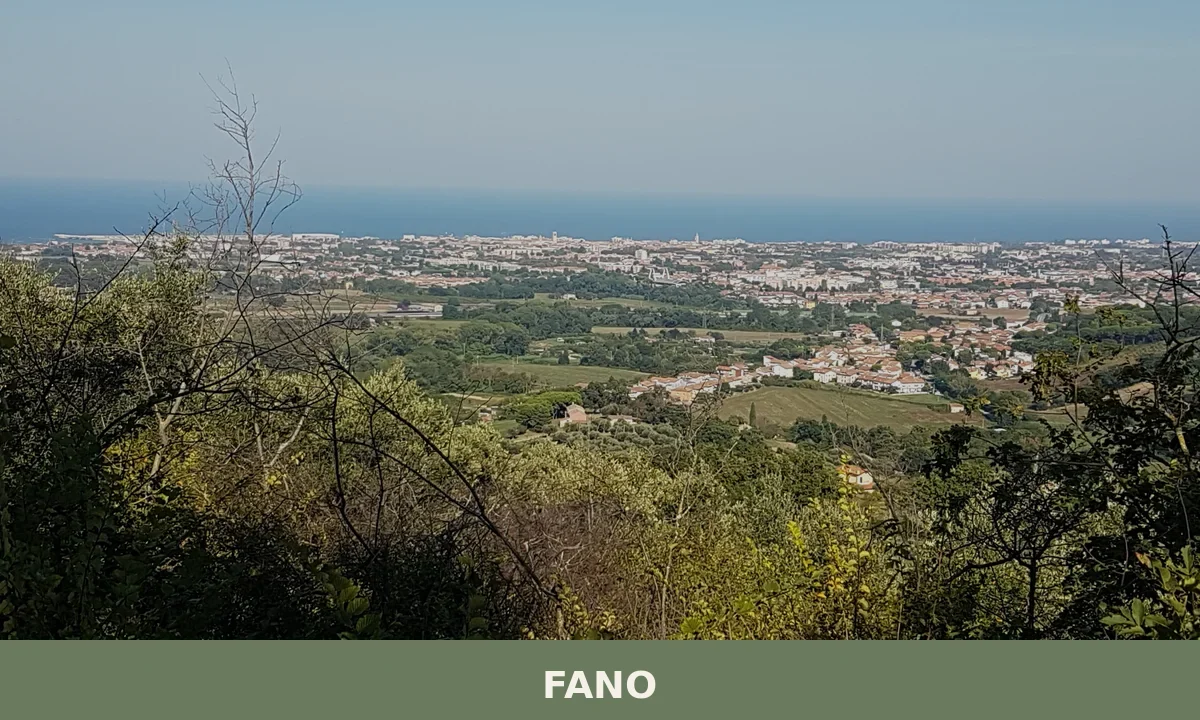
Fano
 Sea
Sea
Fano holds one of Italy's oldest carnivals and a Roman triumphal arch dating to 9 AD. Two thousand years of layered history await on the Adriatic coast.
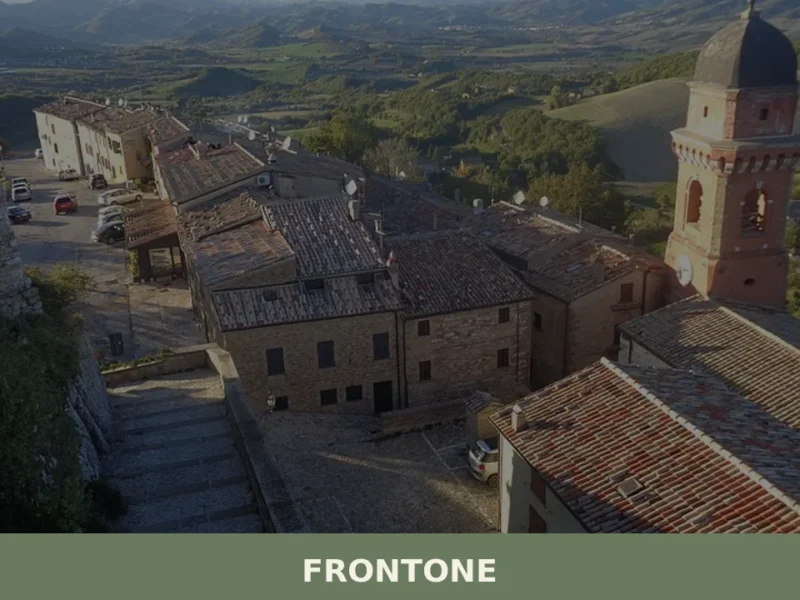
Frontone
Hills
Frontone Castle, whose original structure dates between the 11th and 12th centuries, overlooks the village of the same name, a municipality of 1,218 inhabitants in the province of Pesaro and Urbino. Situated at 412 meters above sea level, Frontone extends along the slopes of Mount Catria, offering a view of the surrounding hilly landscape. Its […]
Auditore
Hills
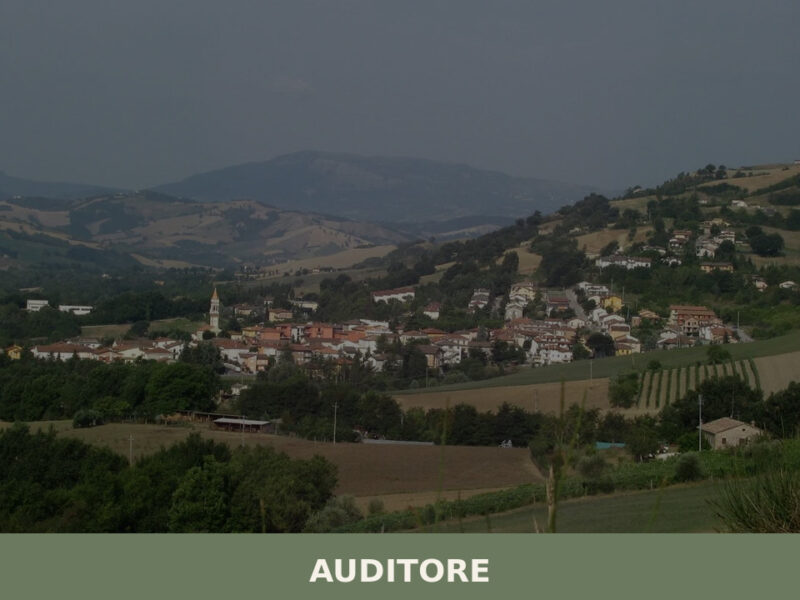
Morning light falls across a line of stone houses the colour of dry wheat, and somewhere below the rooftops a church bell marks the hour with a single, unhurried stroke. Auditore sits in the hill country of the province of Pesaro e Urbino, a settlement of 1,631 people where the Foglia river valley opens toward […]
Monteciccardo
Hills
Monteciccardo first appears in a document from 1233 under the name Mons Sicardi, referring to a Lombard lord of whom no other trace survives. Standing at 384 metres above sea level, with its 1,643 inhabitants spread between the historic centre and scattered hamlets, the village commands a stretch of the Pesaro hills sloping down towards […]

Barbara
Hills
What to see in Barbara, Marche, Italy: 5 top attractions, local food, festivals and how to get there. Population 1,484. Discover this Ancona province comune.
Petritoli
Hills
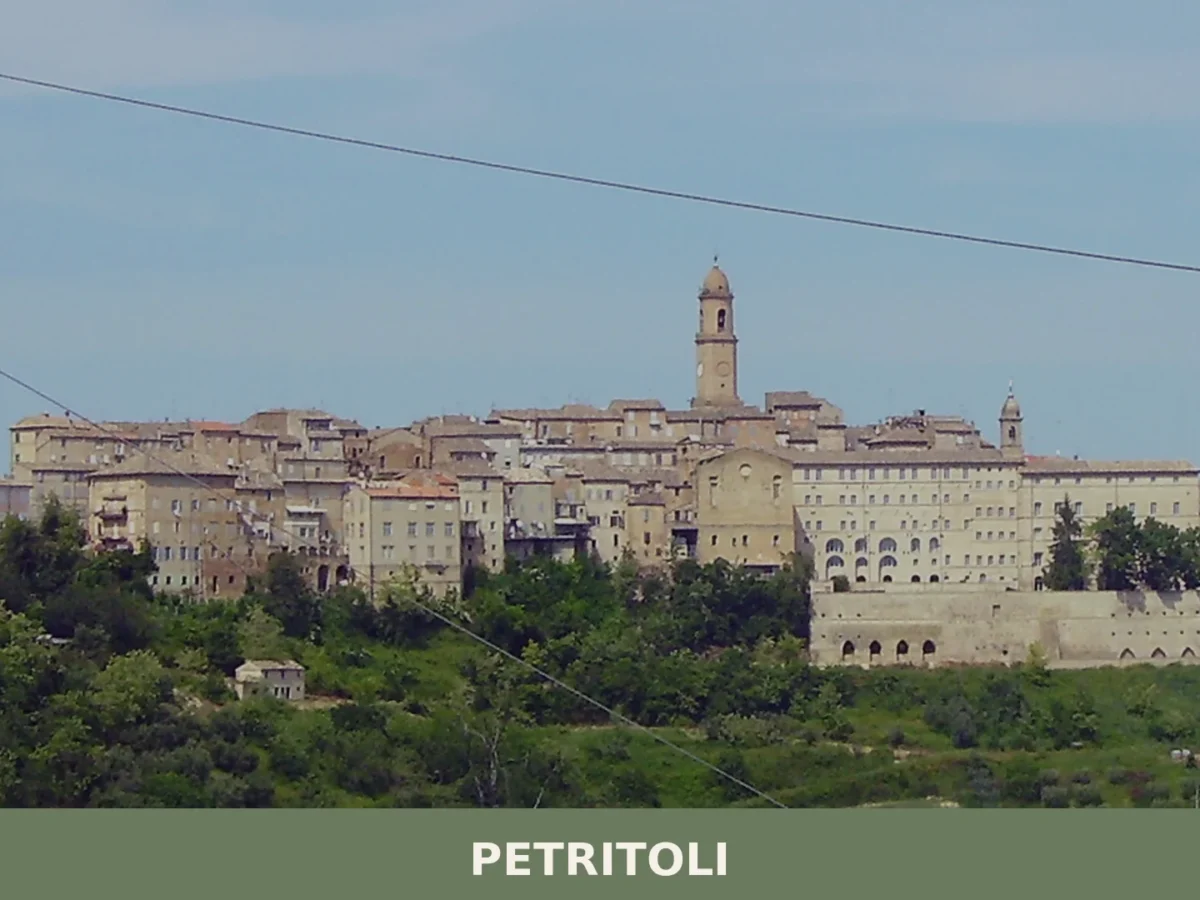
Petritoli is a hill town of around 2,100 inhabitants in the province of Fermo, Marche, set at 335 metres above sea level across seven hills on the left bank of the river Aso.
Appignano del Tronto
Plains
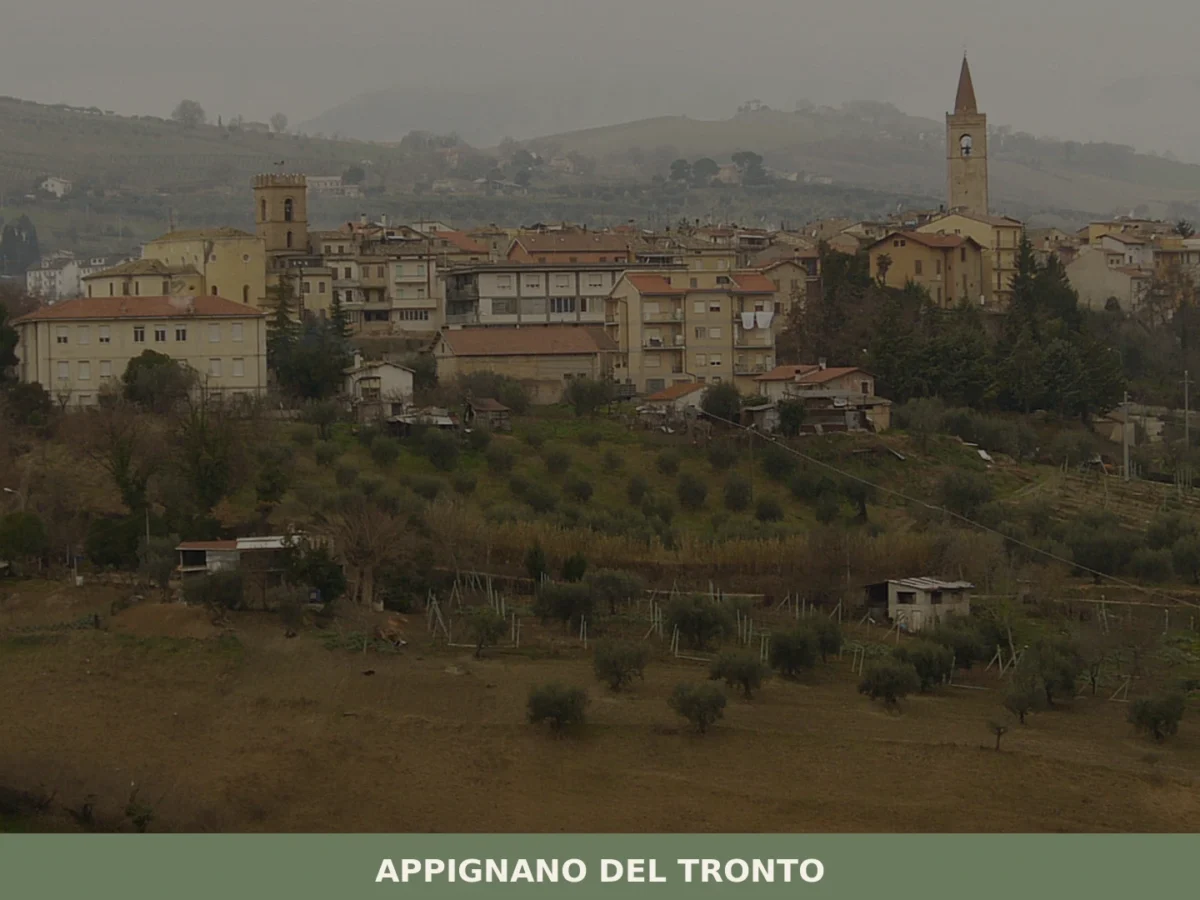
What to see in Appignano del Tronto, Italy: 9 km from Ascoli Piceno, discover top attractions, local food, and travel tips for this Marche village. Explore now.

Grottammare
Sea
Home to a perfectly preserved medieval borgo and 15,924 residents, Grottammare offers a rare meeting of Adriatic beaches and Renaissance history on the Marche coast.





🏡 Know Appignano better than we do?
If you’re a local or have been there, your knowledge matters: add what’s missing or fix a detail on this page.