


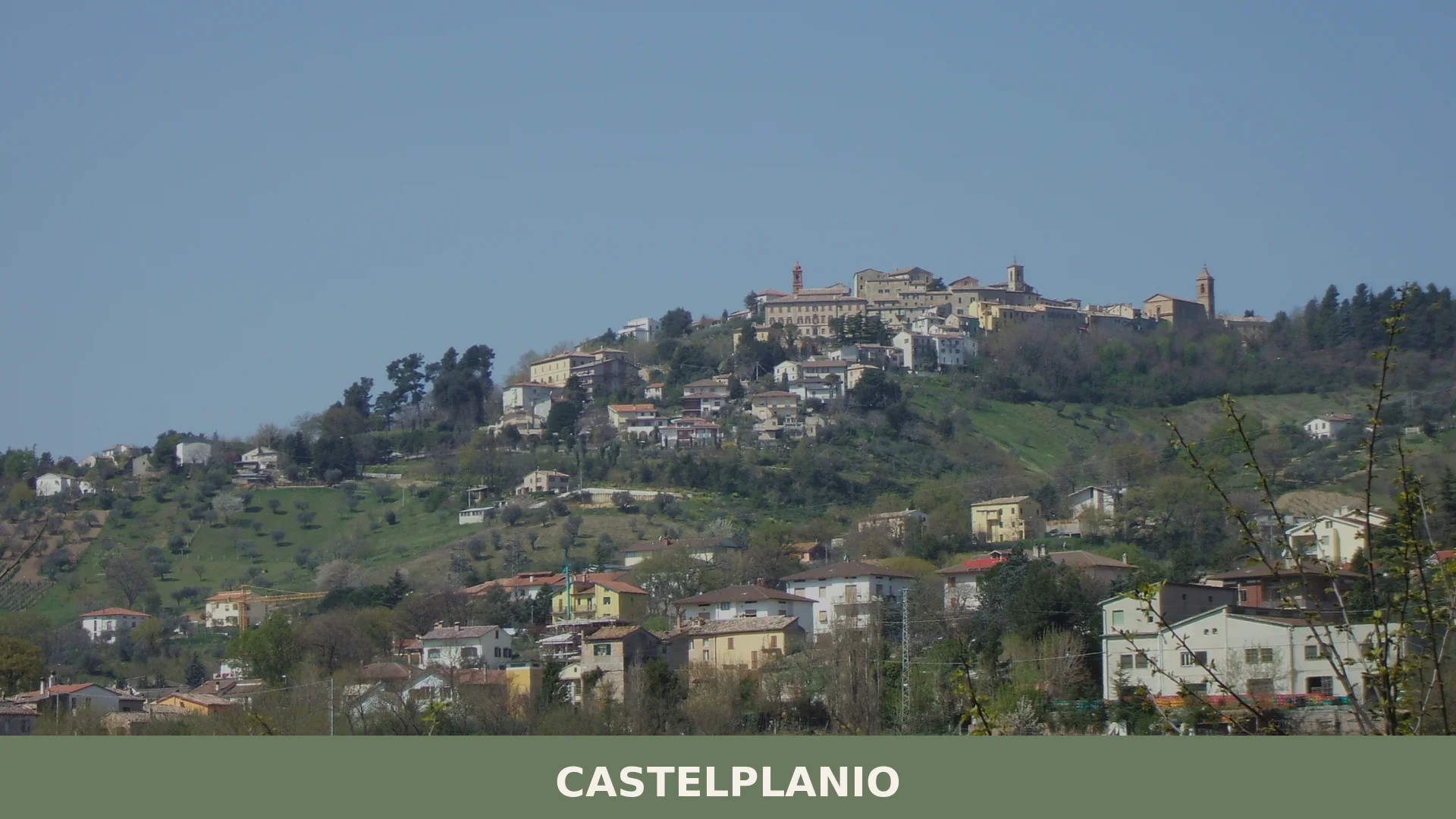

Home to 3,579 residents, Castelplanio rewards visitors with a medieval abbey, a civic art collection and a museum dedicated to a pioneering physician.
Castelplanio: Identity, History and Landscape in the Esino Valley
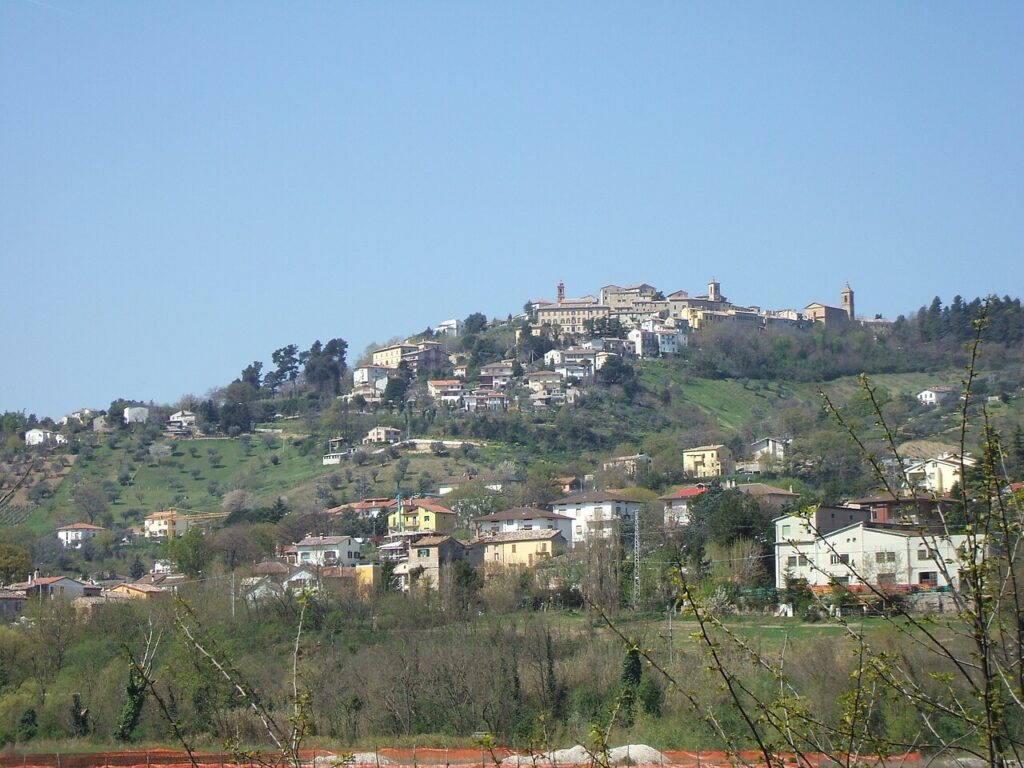
A ridge of sandstone rises above the left bank of the Esino river, and on it the old walled centre of Castelplanio has stood since the Middle Ages. The main street follows the crest of the hill, the houses pressing close on either side, and from the higher end the valley floor stretches out far below, where the hamlets of Macine, Borgo Loreto and Pozzetto lie along the river’s edge at roughly 305 metres above sea level — nearly two hundred metres lower than the hilltop centre.
Castelplanio village in Marche sits in the province of Ancona, around 15 kilometres from Jesi and about 45 kilometres from the regional capital. With 3,579 residents distributed across the hilltop centre and the valley hamlets, it draws visitors with two distinct assets: a civic collection housed in an eighteenth-century palazzo and a museum dedicated to one of Italy’s most significant figures in modern medicine.
Centuries of Dispute and Resilience: the History of Castelplanio
The oldest material traces on the municipal territory are Roman: fragments of pottery found at Macine, the remains of a settlement at Borgo Loreto, and mosaic floors and villa ruins discovered further uphill near an old road. A Roman inscription signed by a landowner from the ancient city of Ostra now rests in the municipal palazzo, a tangible link to the valley’s pre-medieval past. Local tradition holds that the hilltop settlement grew from refugees of a Roman town called Planina, who crossed the river seeking higher, more defensible ground — a legend that some historians have taken seriously, though it cannot be stated as established fact.
Written records use the name Castra Plani for the first time in 1283, in a document listing the castles dependent on Jesi. The community probably formed around a Benedictine abbey known as San Benedetto de’ Frondigliosi, itself documented before the year 1200. Through the fifteenth and sixteenth centuries the settlement changed hands repeatedly: it passed to the Malatesta of Rimini, then to Francesco Sforza, then to papal forces who largely destroyed it in 1447, requiring decades of reconstruction. Cesare Borgia arrived in the Cinquecento under orders from his father Pope Alexander VI, bringing the territory back under Church control, but his grip lasted only until a new pope reversed his gains. In 1517 the Vallesina valley was devastated again, this time by the forces of Francesco Maria I della Rovere during his conflict with the papacy. Subsequent generations lived more quietly within the Papal States, troubled mainly by recurring famines and outbreaks of plague rather than open warfare.
The eighteenth century brought foreign armies through the valley as European powers fought their succession wars, but the event that left the deepest mark on local identity was not military. On 24 April 1741 a severe earthquake damaged virtually every building in the hilltop centre, yet caused no loss of life. The people of Castelplanio interpreted this as a miracle and adopted San Giuseppe, whose feast the Church celebrates on that date, as the town’s patron saint. The modern era brought the Napoleonic occupation of the late eighteenth century, incorporation into the Republic of Ancona and later the Kingdom of Italy, a brief moment of constitutional engagement when a local citizen, Vincenzo Sabatucci, took part in the constituent assembly of the short-lived Second Roman Republic, and finally, in 1860, the decisive annexation of the Marche into the unified Italian Kingdom following the battle of Castelfidardo.
Monuments, Museums and the Abbey on the Hill
The physical evidence of these layered centuries survives in the fabric of the town and in the surrounding countryside, from the medieval walls to an eighteenth-century nobleman’s residence now given over entirely to public culture.
Abbazia di San Benedetto de’ Frondigliosi
Founded before the year 1200, this Benedictine abbey is one of the most substantial historical structures on the municipal territory. Parts of the original cloister and a loggia in Romanesque style have survived. The rest reflects interventions carried out between the fifteenth and eighteenth centuries, including work associated with Tommaso Ghislieri, bishop of Jesi in the late fifteenth century, and with Camillo Borghese, who served as bishop of Jesi in the late sixteenth century before becoming Pope Paul V. The interior preserves paintings and frescoes from the Cinquecento, making it a reference point for anyone interested in the religious history of the Esino valley.
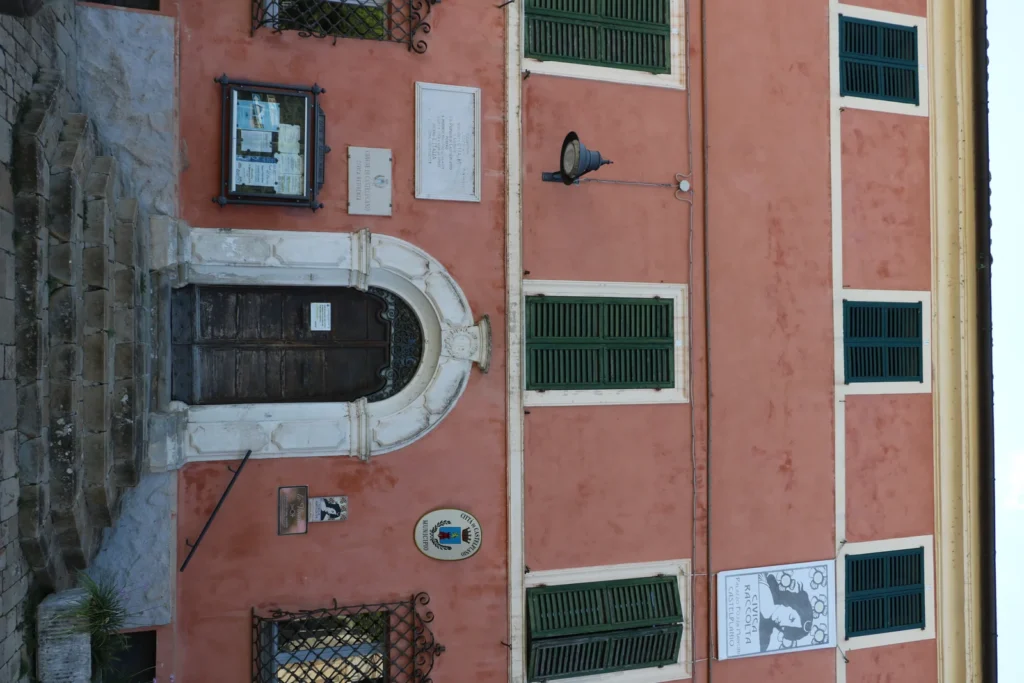
Civica Raccolta d’Arte, Storia e Cultura — Palazzo Fossa Mancini
Palazzo Fossa Mancini is the eighteenth-century noble residence that now serves as the municipal building and home to Castelplanio’s civic collection of art, history and culture. Visitors move through the piano nobile (the main reception floor), where decorated ceilings, stucco work, period frescoes and a Roman inscription share space with paintings and objects gathered over centuries. The museum opened in May 2003, and the itinerary it offers is as much about the building itself as about the individual objects on display.
Museo Carlo Urbani
Born in Castelplanio in 1956, Carlo Urbani was the physician and infectious disease specialist who played a pivotal role in identifying and alerting international health authorities to SARS — the severe acute respiratory syndrome that spread rapidly in the early 2000s. He died in Bangkok in March 2003, having contracted the illness himself. The museum dedicated to him documents both his life and the broader scientific and humanitarian significance of his work. For visitors with an interest in medical history or global public health, it provides a grounded, specific account rooted in a local story with worldwide consequences.
The Medieval Castle Remains and the Romanesque Tower
Of the original fortified castle that gave the settlement its name, two towers and sections of the sloping base wall remain visible. Separately, between the river and the hilltop centre, the stub of a Romanesque watchtower survives in partial ruin. Its square plan and rough stone blocks suggest it once served as a lookout post over the road below. An upper section collapsed during an eighteenth-century earthquake, and a barrel-vaulted chamber is still visible at the base. Both remnants are modest in scale but legible as markers of the medieval defensive landscape.
Fonte Vecchia and the Sentiero del Granchio Nero
Near the main road stands Fonte Vecchia, an old public fountain datable to around the fourteenth century and recorded in a late eighteenth-century historical text. For those who prefer time outdoors, the Sentiero del Granchio Nero — the Black Crab Trail — runs from the valley hamlet of Macine up along a stream bed to the hilltop centre. The path takes its name from a freshwater crustacean endemic to this particular watercourse, and it offers a direct physical encounter with the geology and vegetation of the hill before reaching the walled centre above.
The Table at Castelplanio: Flavours of the Esino Valley
The food culture of Castelplanio is inseparable from its agricultural surroundings. The valley floor and the lower slopes support cereal crops, olives and vineyards, while the higher terrain lends itself to livestock grazing. Cured meats typical of the broader Marche tradition — including ciauscolo IGP, the soft spreadable salume of the inland hills — appear on local tables alongside aged cheeses from the area. The most enduring public expression of local food culture is the Sagra della Crescia sul Panàro, held annually in July or August since 1977: a festival celebrating crescia, a flatbread cooked on a traditional griddle that has long been a staple of the Marche countryside.
The vineyards of the surrounding zone fall within the Castelli di Jesi Verdicchio DOCG denomination, and the crisp white wines produced nearby are a natural companion to the area’s cured meats and grain-based dishes. These are wines of the broader Vallesina territory rather than exclusive to Castelplanio itself, but they form part of the everyday rhythm of the table here.
The Vallesina has been inhabited since the Palaeolithic, as excavations at nearby sites confirm, yet Castelplanio’s own written history begins only in 1283 — a reminder that centuries of continuous life do not always leave a paper trail.
Planning your visit and getting there
Castelplanio can be reached using the practical reference points below. Distances and journey times are kept concise so the access information stays clear and consistent.
| Departure | Distance | Time |
|---|---|---|
| Jesi | approx. 15 km | approx. 20 min |
| Ancona | approx. 45 km | approx. 45 min |
| Fabriano | approx. 30 km | approx. 35 min |
These practical reference points are enough to plan the journey without overloading the text with unstable logistics. Once on site, the village is best understood slowly, on foot and in relation to the surrounding landscape.
Frequently asked questions about Castelplanio
How do I get to Castelplanio by car or train?
By car, take the A14 Adriatic motorway and exit at Ancona Nord or Castelplanio-Staffolo, then follow the SS76 Vallesina road westward toward Jesi; Castelplanio is approximately 15 kilometres from Jesi and 45 kilometres from Ancona. The nearest railway station is Castelplanio-Staffolo, served by regional trains on the Ancona–Foligno line, making the village accessible without a car for day-trippers travelling from Ancona or Fabriano.
When is the best time to visit Castelplanio?
Spring is widely considered the finest season: mild temperatures, green hillsides above the Esino valley, and the patronal feast of San Giuseppe on 24 April, which brings local celebrations to the hilltop centre. Early autumn is equally pleasant, with harvest activities across the surrounding countryside. Summer visits are possible but July and August can be warm at 305 metres altitude; the valley hamlets of Macine and Borgo Loreto tend to be slightly cooler given their lower elevation near the river.
Is there parking available in the hilltop village centre?
Castelplanio's historic centre sits on a narrow sandstone ridge where the main street follows the hilltop crest, leaving limited space for vehicles. Visitors are advised to use the public parking areas at the edges of the walled centre before exploring on foot. The valley hamlets of Macine, Borgo Loreto and Pozzetto, located nearly 180 metres below along the Esino river, have easier road access and additional parking, and are conveniently reached via the provincial roads connecting the two levels of the municipality.
How long should I plan for a visit to Castelplanio?
A focused half-day is sufficient to walk the hilltop centre, visit the civic collection housed in the eighteenth-century palazzo, and tour the museum dedicated to a major figure in modern Italian medicine. Adding a short drive down to the valley hamlets of Macine, Borgo Loreto and Pozzetto, where Roman-era traces have been documented, extends the visit to a comfortable full day. Combining Castelplanio with nearby Jesi, roughly 15 kilometres away, makes for a well-rounded itinerary in the Esino valley.
Are there agriturismos or accommodation options near Castelplanio?
The Esino valley and the hills around Jesi host several agriturismos and rural B&Bs within a short drive of Castelplanio, reflecting the wider agritourism offer typical of the Marche inland countryside. For verified current listings with availability and pricing, consulting the official Marche tourism portal (turismo.marche.it) or platforms such as Agriturismo.it is recommended, as specific properties and their services change seasonally. Jesi, 15 kilometres away, also offers a broader range of hotels suitable as a base for exploring the area.
📷 Photo Gallery — Castelplanio
In Marche More villages to discover
Isola del Piano
 Hills
Hills
Discover Isola del Piano, a charming village in Marche, Italy. Explore its rich history, organic traditions, stunning landscapes, and authentic Italian culture.
Arcevia
Hills
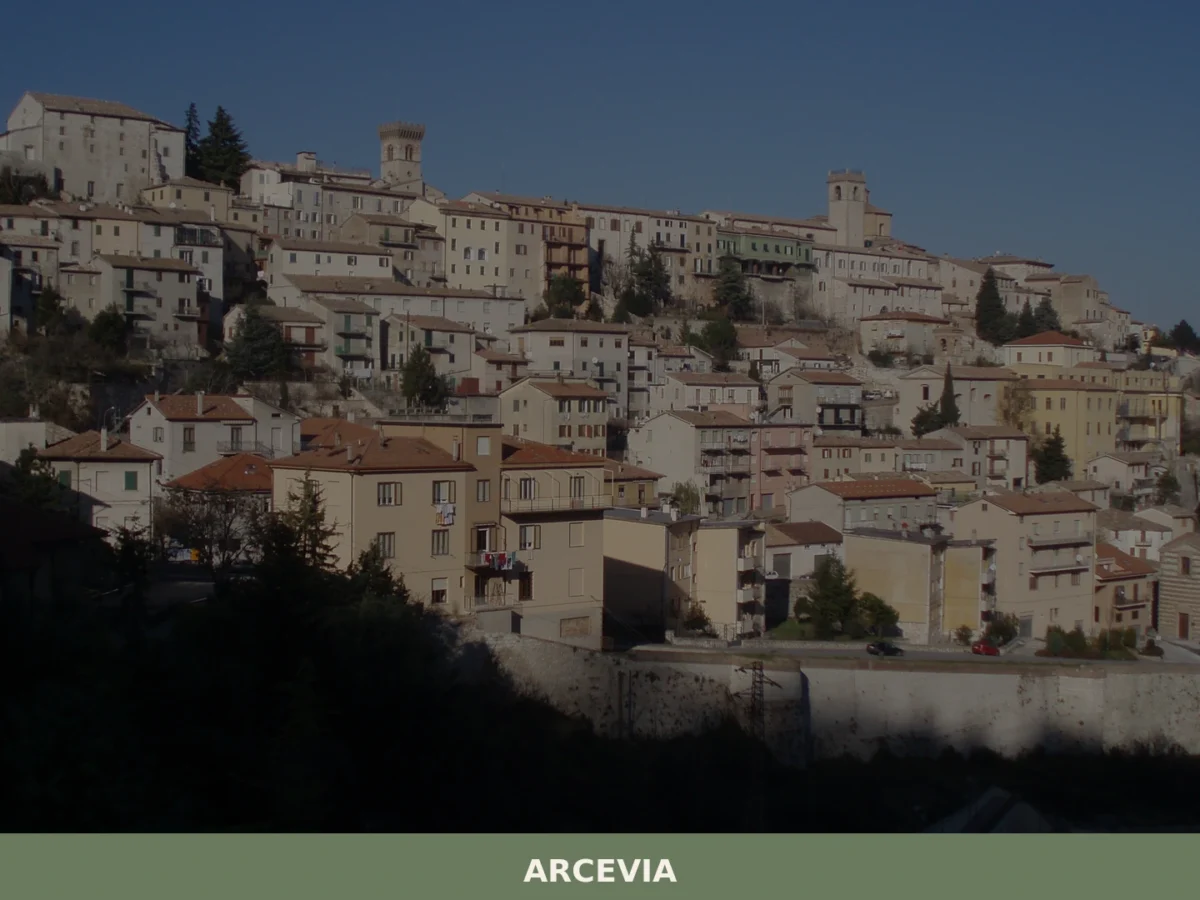
A hill at 535 metres (1,755 ft) above the Misa and Nevola river valleys: this is where Arcevia stands, its streets running along a ridge in the province of Ancona, roughly 50 kilometres (31 mi) south-west of the regional capital. The town was fortified by Pippin the Younger, fought over by condottieri, renamed by a […]
Vallefoglia
Hills
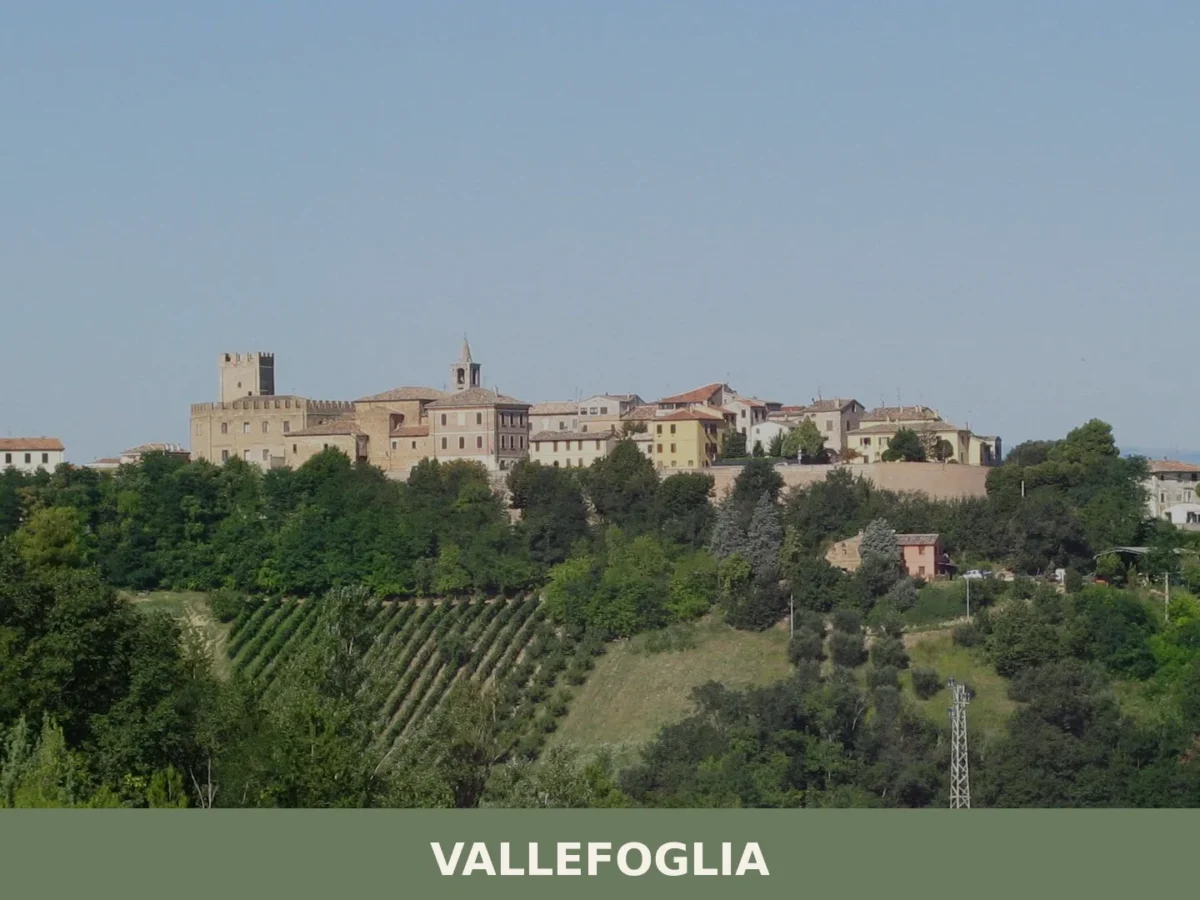
Vallefoglia is a hillside municipality of about 15,000 inhabitants in the province of Pesaro e Urbino, born in 2014 from the merger of Colbordolo and Sant'Angelo in Lizzola, and named after the river
Castel di Lama
Hills
Castel di Lama is a commune of roughly 8,400 inhabitants in the province of Ascoli Piceno, Marche, whose hilltop quarter, Roman vestiges and contemporary art collection make it a quietly rewarding sto
Belforte all’Isauro
Hills
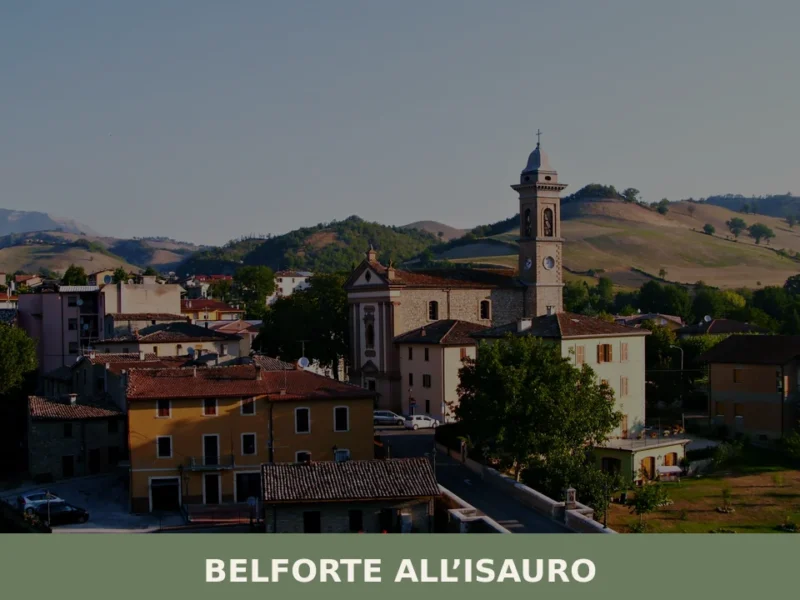
Morning light catches the stone walls of the old borgo before it reaches the valley floor, warming the façades to a pale amber. Below, the Isauro river — a modest tributary of the Foglia — moves quietly between wooded banks. With fewer than 800 inhabitants, Belforte all’Isauro occupies a stretch of the upper Montefeltro where […]
Fano
 Sea
Sea
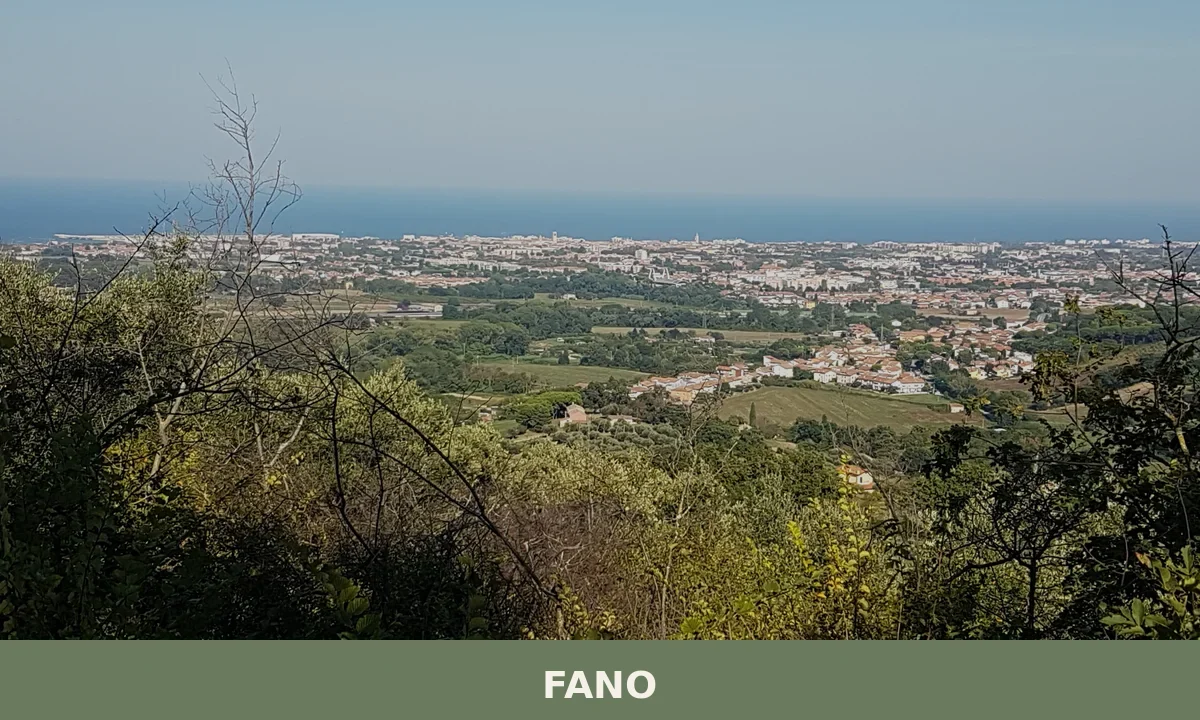
Fano holds one of Italy's oldest carnivals and a Roman triumphal arch dating to 9 AD. Two thousand years of layered history await on the Adriatic coast.
Agugliano
Sea
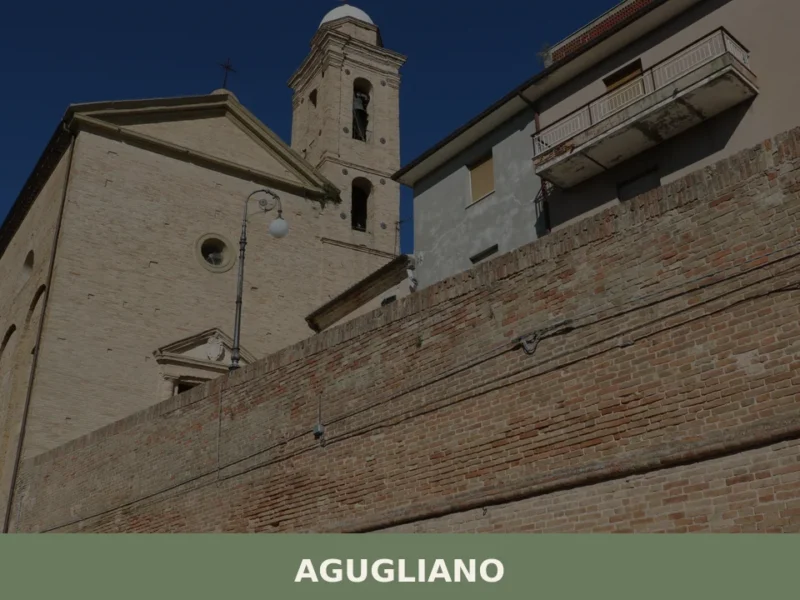
Discover what to see in Agugliano, a hill comune near Ancona in Marche. History, food, attractions, travel tips and where to stay.
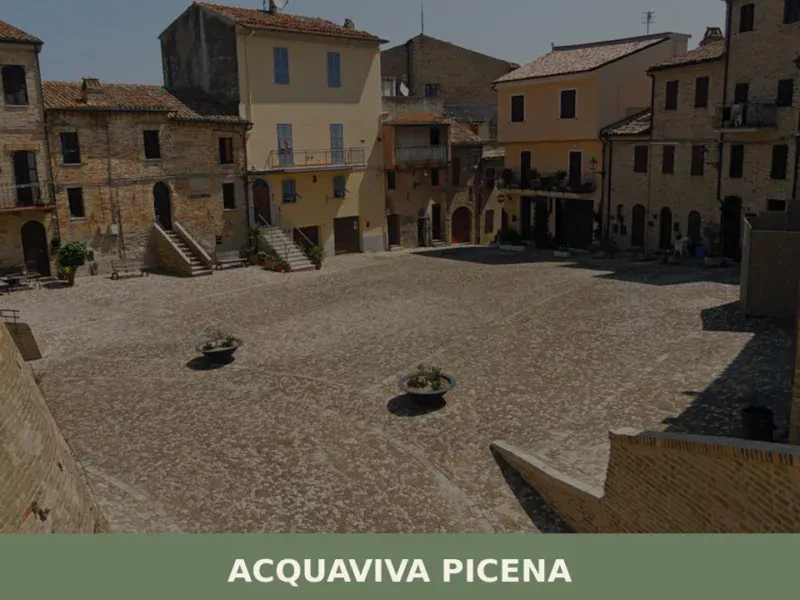
Acquaviva Picena
Sea
Discover what to see in Acquaviva Picena: medieval fortress, town walls, local food and travel tips for this hilltop village in Ascoli Piceno, Marche.
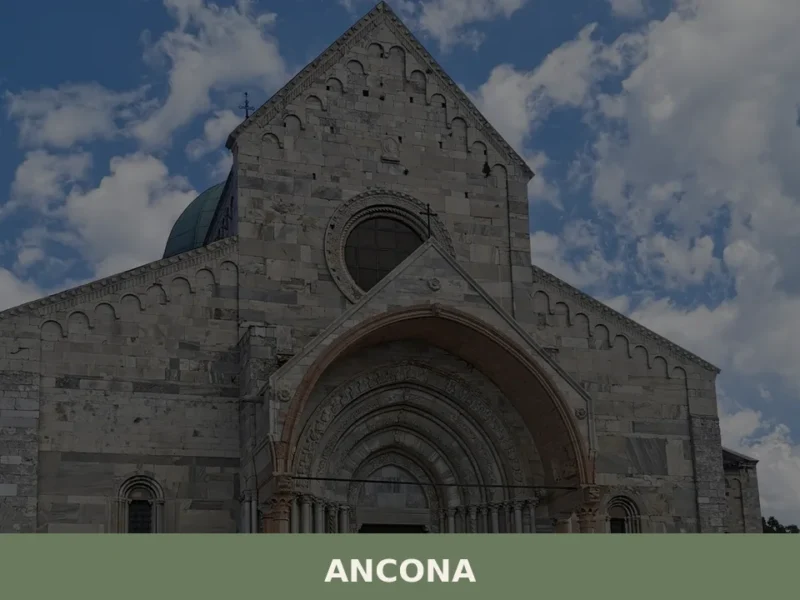
Ancona
Sea
what to see in ancona, a city with 99,000 inhabitants. Discover 5 main attractions like the Duomo di San Ciriaco and Trajan's Arch. Plan your visit.
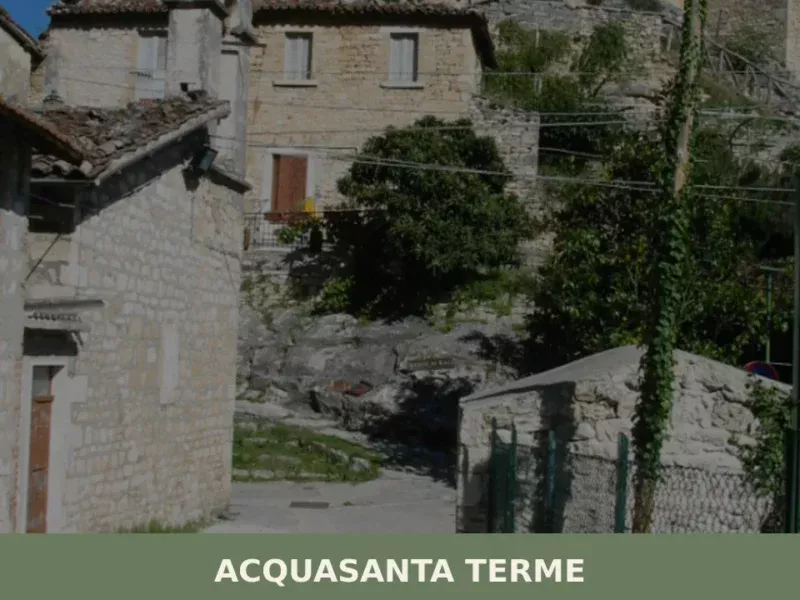
Acquasanta Terme
 Mountain
Discover what to see in Acquasanta Terme: Roman thermal baths, Tronto gorge, medieval hamlets and Apennine landscapes in Marche's Ascoli Piceno province.




🏡 Know Castelplanio better than we do?
If you’re a local or have been there, your knowledge matters: add what’s missing or fix a detail on this page.