


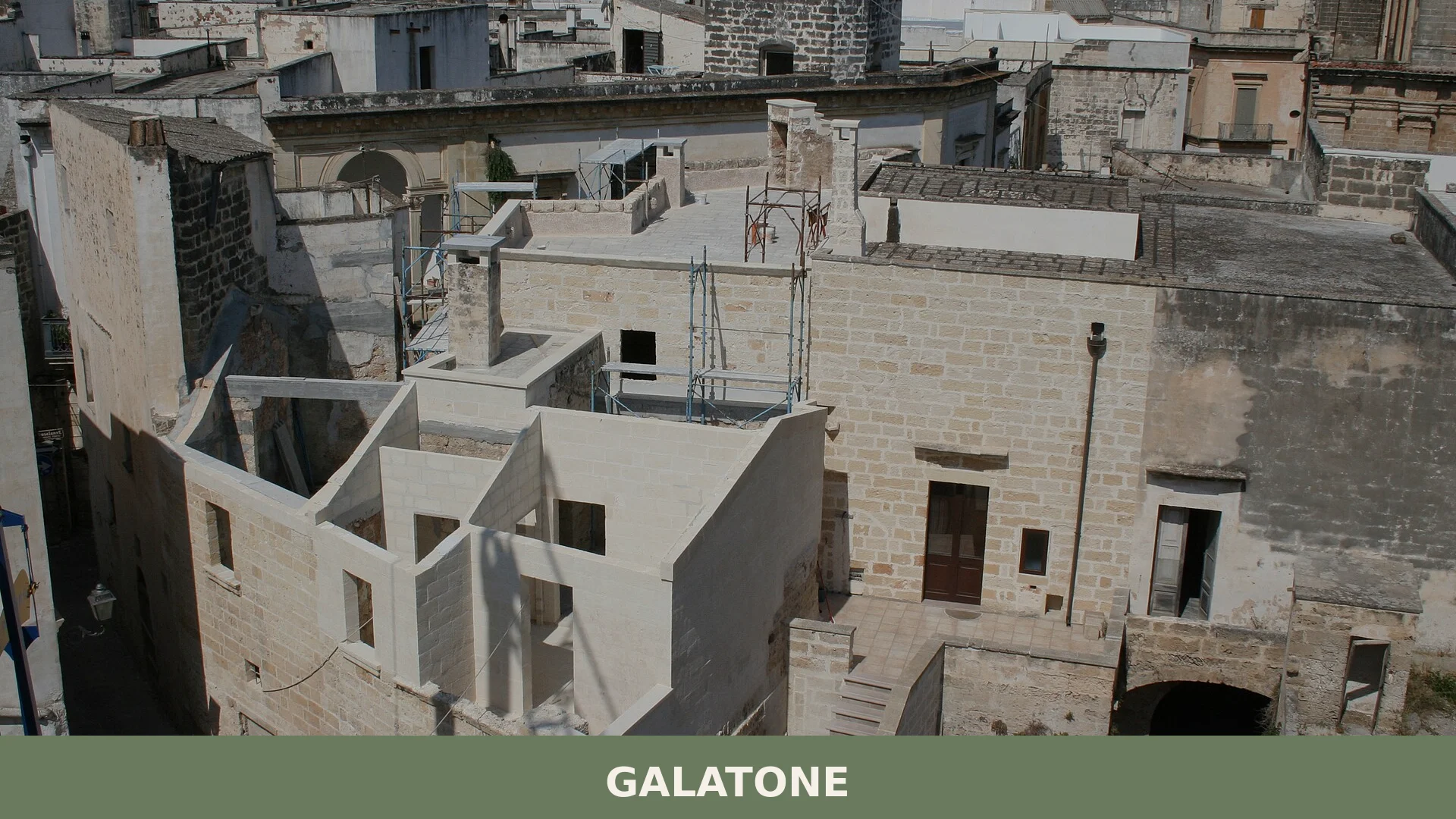
Galatone
 Sea
Sea
A medieval settlement of 14,800 inhabitants on the Ionian shore. Known for three baroque sanctuaries and the birthplace of Antonio De Ferrariis, a leading Renaissance humanist.
Galatone: Ionian Coast, Byzantine Roots and Baroque Stone
Galatone rises above the Salento plain, its limestone facades worn by the salt winds that move off the Ionian Sea. The village sits at a crossroads of medieval history and Mediterranean light, a compact settlement where baroque bell towers break the horizon and streets follow patterns laid down when this corner of Puglia passed between Byzantine and Norman rulers.
Galatone village in Apulia claims just under 15,000 residents across 46 square kilometres of agricultural territory that slopes toward the coast. Two focal points draw the visitor: the baroque religious architecture concentrated in the town centre, and the natural shoreline at La Reggia and Montagna Spaccata, where limestone cliffs meet water. Located 24 kilometres south of Lecce and 13 kilometres from Gallipoli, it occupies a position along the coastal road that has shaped its economic and cultural rhythm for centuries.
Origins and Medieval Development
Human presence in the territory reaches back to the Neolithic period. Stone tools and pottery scattered across sites including Villaggio Costante, Grotta Pinnella, and the settlements of Rizzi and Spisari confirm occupation in pre-classical times. The settlement itself likely emerged during the Byzantine era, when its strategic location on the Ionian coast made it valuable as a fortified point—a kàstron in the Greek administrative language of the empire.
The etymology of Galatone reflects two competing scholarly traditions. Linguist Gerhard Rohlfs traced the name to the Galatians, a Celtic people associated in Greek with white complexion and milk—gála—proposing “city of milk” as the meaning. Humanist Antonio De Ferrariis (1444–1517), born in Galatone itself, argued instead that refugees from the Thessalian city of Galatana, defeated by Roman forces in 197 BC, had fled here to establish a new settlement bearing their homeland’s name. The first documentary mention appears in a record of 1270, when Galatone was noted as a rural holding.
Medieval life brought raids and occupation—Saracens and Hungarians left marks on the landscape and population, while Byzantine administrators shaped settlement patterns. Byzantine rule fostered agriculture and herding; settlements multiplied across the surrounding countryside, at sites now abandoned such as Tabelle, Fulcignano, San Cosma and Renda. In the fifteenth century, feudal power shifted constantly. Giovanni Antonio Orsini Del Balzo besieged the town and damaged its walls, his death in 1463 followed by a period of relative stability broken by Turkish raid in 1480 and Venetian incursion four years later.
The Castriota family—descendants of the Albanian military line—established themselves as lords. On 4 February 1497, Branai (Bernardo) Castriota received appointment as first Baron of Galatone from Federico I, King of Naples, in reward for military service against the French. His family administered the fief until 1549, after which Genoese merchants acquired the holding and the Squarciafico family took control by 1556. In 1570, the Squarciafico built a hospital for the poor, managed by the clergy—a mark of Renaissance urban ambition.
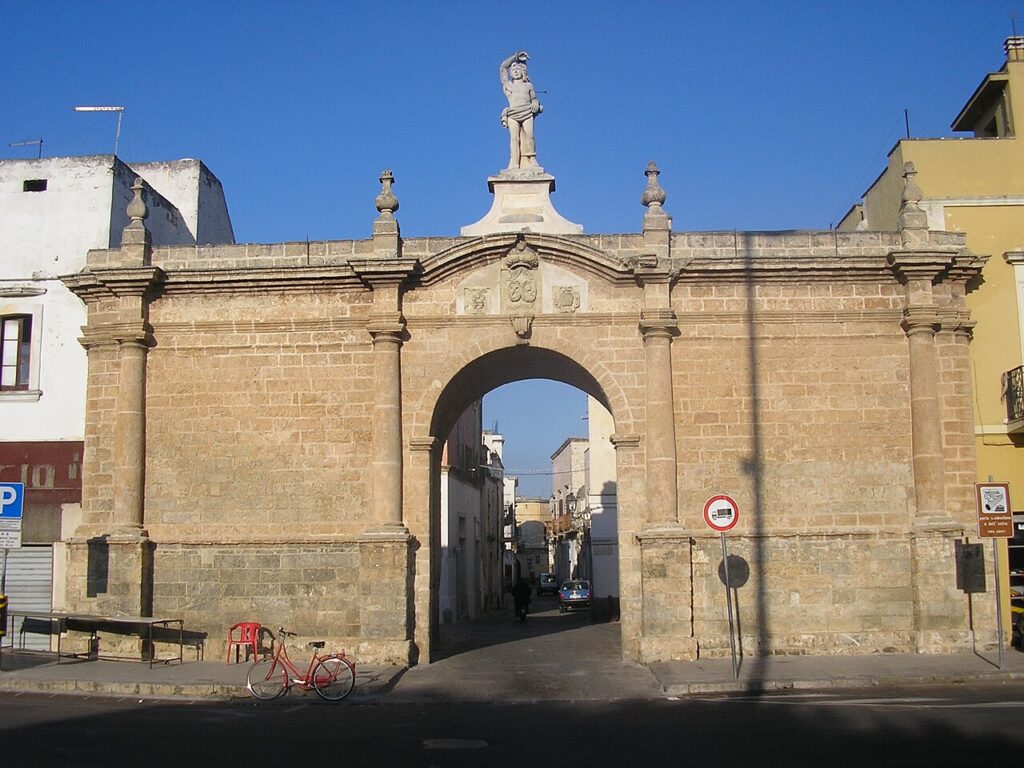
The seventeenth century brought the Pinelli family to power. In 1743, an earthquake struck with violent force, collapsing portions of the fortification walls, the gate of San Sebastiano, the noble palazzo and many dwellings. The disaster, however, prompted vigorous rebuilding that gave the town much of its surviving baroque architectural fabric. In 1925, a private bank, Banca Leuzzi & Megha, opened in Galatone and became an economic anchor for the region. The town received the formal title of city by presidential decree on 24 February 2005.
Sacred Architecture and Baroque Stone
Collegiata dell’Assunta
The Collegiate Church of the Assumption was constructed between 1591 and 1595 on the ruins of an earlier chapel. Its three-storey façade employs local stone in a rhythmic pattern, each level defined by projecting mouldings and framed by pilasters. The ground floor holds the entrance portal; the middle section features a central two-light window topped with a broken pediment; the third opens two niches with stone balustrades. The separate bell tower, built over more than a century from 1599 to 1750, rises in three stacked prismatic stages. Inside, the cruciform layout hosts altars painted by Donato Antonio D’Orlando, and a chapel of San Sebastiano preserves a seventeenth-century copy of the Martyrdom of San Sebastiano by Mattia Preti, along with carved reliquaries. A wooden Christ figure of the seventeenth century dominates the high altar.
Santuario del Santissimo Crocifisso della Pietà
This sanctuary combines the decorative effort of multiple regional stonemasons. The baroque façade divides into three tiers enriched with stone niches and statuary, and presents at its portal a crucifix sculpture attended by four cherubs. The interior unfolds as a Latin cross with a central octagonal dome that bears an eighteenth-century fresco of Saint Helena discovering the True Cross. The sanctuary became a centre of pilgrimage within the Salento region.
Chiesa di San Sebastiano e San Rocco
Standing beside a Dominican convent, this church was redesigned in baroque style during 1712. The façade, carved entirely in local stone, rises in three storeys articulated by Ionic pilasters. The entrance preserves a sixteenth-century portal crowned with a stone relief of San Sebastiano and flanked by two stone lions. Four baroque altars inside honour the Presentation of Jesus, the Immaculate Madonna, the Madonna of the Rosary—a canvas by Donato Antonio D’Orlando—and Saint Anthony of Padua. The altars themselves, completed in 1732 from local limestone and tufa, stand as examples of regional craftsmanship.
Chiesa di San Giovanni Battista
Completed between 1635 and 1653 by master builders Ortensio and Cesare Pugliese, this church was originally intended to connect to a convent for Poor Clare nuns, a plan abandoned for lack of funds. The façade frames a modest portal beneath a semicircular fresco, with a central mullioned window above. A niche on the left flank holds a stone statue of John the Baptist. The single rectangular nave contains a high altar in pietra leccese (a golden-toned local limestone) carved in the second half of the seventeenth century. An organ of wood, dated 1877, adds a later liturgical element to the interior.
Territory and Coastal Character
The municipality stretches across 46.54 square kilometres of the southwestern Salento peninsula, bordered to the north by Nardò and Galatina, to the east by Seclì and Neviano, to the south by Gallipoli and Sannicola, and to the west by the Ionian Sea. A small stream, the Torrente Asso, marks the northern boundary, an ancient watercourse that once fed larger river systems. The landscape is classified in seismic zone 4—essentially stable, with minimal earthquake risk—and benefits from a Mediterranean climate: mild winters averaging 9°C in January, warm summers near 25°C in August, and modest annual rainfall of 676 millimetres concentrated in autumn and winter months.
Two natural coastal localities define the village’s maritime identity. La Reggia and Montagna Spaccata, both facing the Ionian waters, draw visitors for their limestone formations and sea views. The flat terrain and southern exposure support traditional Salento agriculture—vegetables, olives, wine grapes—and the proximity to the sea has historically supported fishing and small maritime trade. The town itself stands on the Strada Statale 101, the road that links Lecce to Gallipoli and serves as the economic spine of the region.
Flavours of the Ionian Coast
Galatone sits within the broader food traditions of the Lecce province and Apulian region. Local agricultural output includes vegetables ripened by strong sunlight, olives pressed for oil, and wine grapes. Among regional protected products, the province produces Patata Novella di Galatina (a PGI potato), Terra d’Otranto wine, and Olio di Puglia. Salento cooking emphasises seasonal vegetables, preserved preparations such as pickled capers, and slow-cooked meat dishes. The proximity to the sea brings fish and seafood into local cooking rhythms, particularly in coastal hamlets and during feast periods.
Food traditions remain embedded in calendar and ritual. The patronal feast of San Sebastiano on 20 January draws community gatherings, though the specific dishes associated with modern Galatone celebrations rest within lived village experience rather than published culinary records. What travels through regional cookbooks—fried bread, pasta shapes, braised vegetables—reflects the larger Salento identity that Galatone shares with neighbouring communes.
Planning Your Visit
Galatone is best reached by car along the Strada Statale 101, which connects Lecce directly to the coastal belt. The town sits within reach of several other villages of architectural interest: Aradeo, Seclì, and Alezio lie nearby, making a multi-village tour feasible within a day. The coast—including the natural sites at La Reggia and Montagna Spaccata—invites a stop between the baroque churches and the Ionian shore.
The village itself feels most alive in cooler months, from October through May, when the Mediterranean sun is less intense and walking through the limestone streets becomes comfortable. Summer brings swimmers to the coastal zones but also crowds and heat. The feast of the patron saint, celebrated on 20 January, is a natural occasion to experience village rhythms, though access and accommodation should be arranged in advance.
| Departure | Distance | Approximate Time |
|---|---|---|
| Lecce | 24 km | 30 minutes by car |
| Gallipoli | 13 km | 20 minutes by car |
| Brindisi Airport | 85 km | 1 hour 10 minutes by car |
Galatone offers modest but sufficient services: a town hall, bank branches, a small medical clinic and pharmacies. Restaurants and bars cluster around the central piazza. For longer stays or special interests—hiking to the coast, visiting nearby villages, exploring baroque architecture systematically—nearby Lecce and Gallipoli provide more extensive lodging and dining choice, with Galatone serving as a quieter base or a day-visit destination for those wanting to step beyond the larger towns.
Frequently asked questions about Galatone
What is the best time to visit Galatone?
Late spring through early autumn (May–September) offers warm Mediterranean weather ideal for coastal exploration. The patron saint feast of San Sebastiano occurs on 20 January, drawing local pilgrims. Summer months are warmest but busiest. Winter brings milder temperatures suitable for walking the Salento plains. Avoid peak August heat if you prefer cooler conditions for sightseeing.
How do I reach Galatone by car from Lecce?
Galatone lies 24 kilometres south of Lecce via the coastal road (SS275). Journey time is approximately 30–40 minutes. From Gallipoli, it is 13 kilometres north. The village sits along established coastal routes with standard road signage. Parking is available in the town centre near the baroque churches and main piazza.
What natural coastal attractions are near Galatone?
Two principal locations anchor coastal visits: La Reggia and Montagna Spaccata, both featuring limestone cliffs meeting the Ionian Sea. These sites showcase the dramatic geology of the Salento peninsula and offer swimming and photography opportunities. Access is via minor roads from the village centre; local maps and tourist information provide precise directions.
What is the main religious architecture to see in Galatone?
The town centre concentrates baroque religious structures, including bell towers that punctuate the skyline. These reflect centuries of Byzantine and Norman influence on Puglia's architecture. Specific churches and opening hours are best confirmed at the local tourist office or municipality, as restoration work may affect access seasonally.
How long should I plan to spend visiting Galatone?
A half-day visit (3–4 hours) covers the baroque town centre and main piazza comfortably. A full day (6–8 hours) allows exploration of coastal sites at La Reggia and Montagna Spaccata, plus lunch at local restaurants. Multi-day stays suit those combining visits with nearby Lecce and Gallipoli within the wider Salento region.
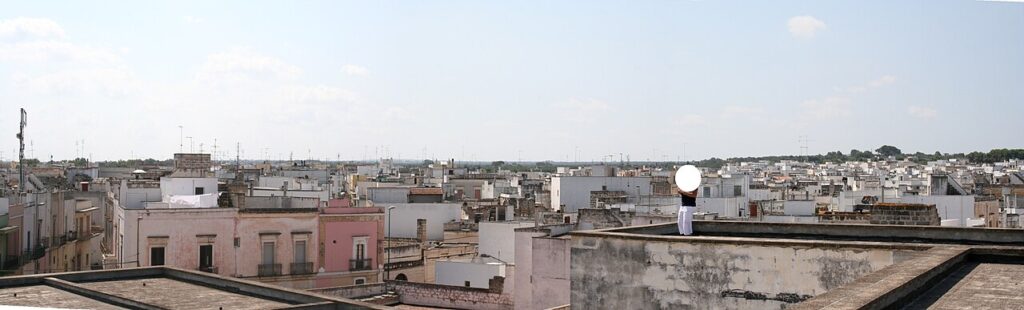
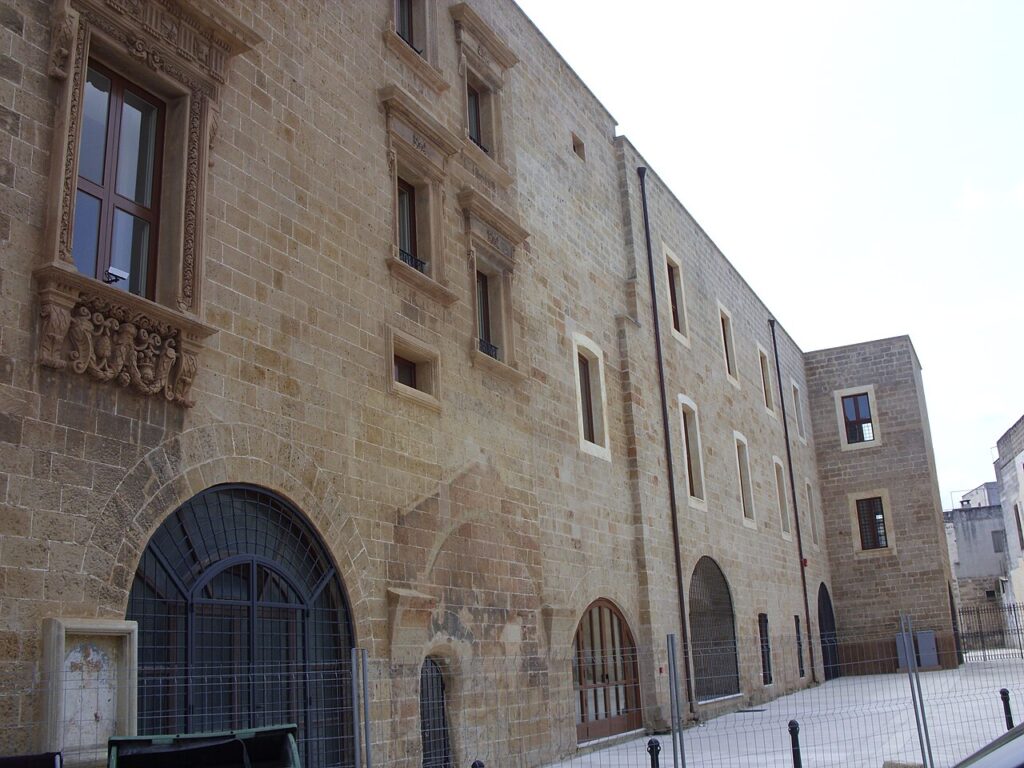
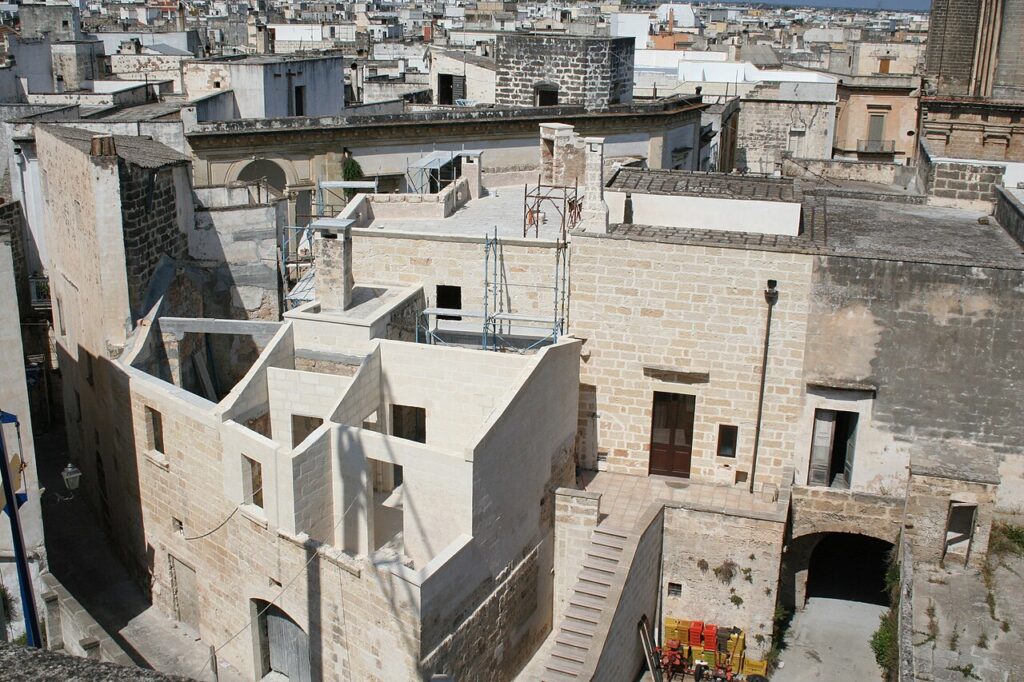
📷 Photo Gallery — Galatone


In Apulia More villages to discover
Alezio
 Plains
Discover what to see in Alezio, a Salento village with Messapian roots, a national archaeology museum, and ancient olive groves near Gallipoli in Puglia.
Peschici
Sea
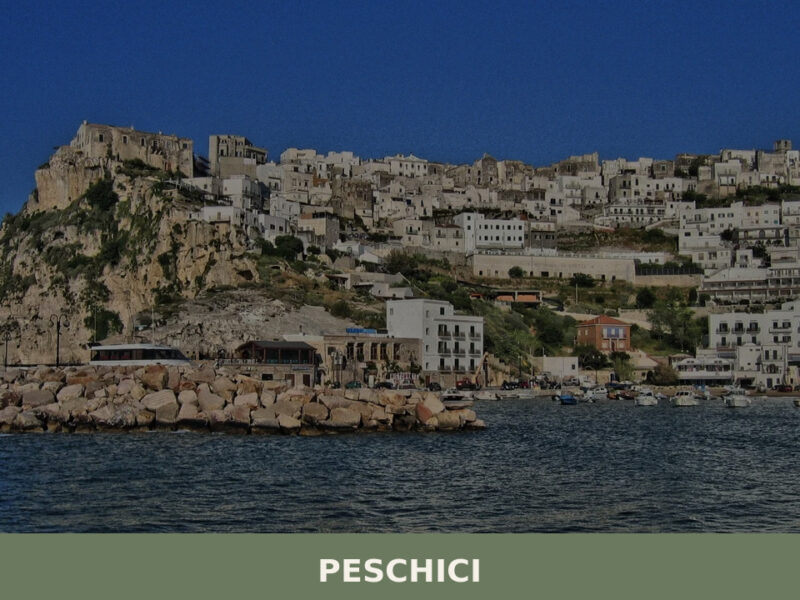
A settlement of 4,276 souls on the Gargano coast. Medieval core, Adriatic light and deep roots in Apulian food and faith.
Monopoli
Sea
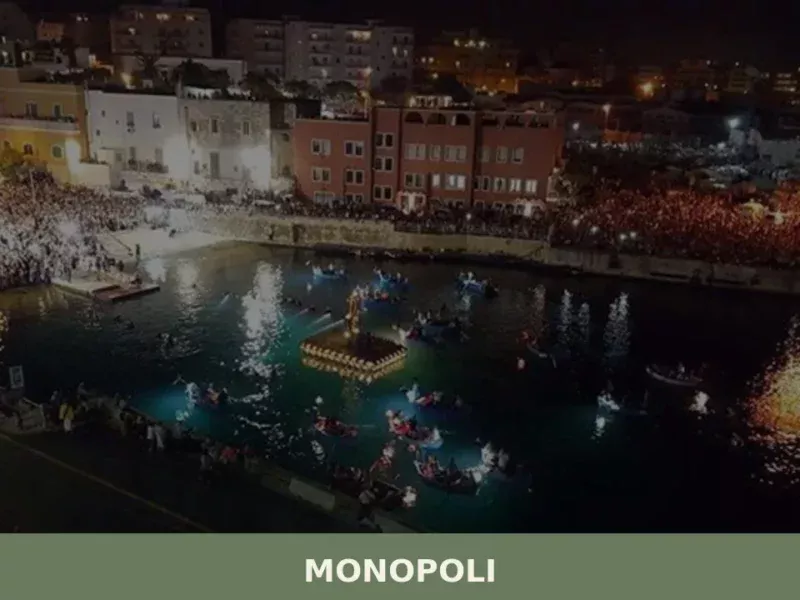
From the promontory where the Castle of Charles V stands, the view sweeps across the Adriatic, a horizon of waters that have shaped Monopoli’s identity for centuries. This port city, whose name evokes the idea of a “unique city,” reveals itself through its architecture, which tells of historical layers, from Messapian walls to Spanish fortifications. […]
Torremaggiore
Plains
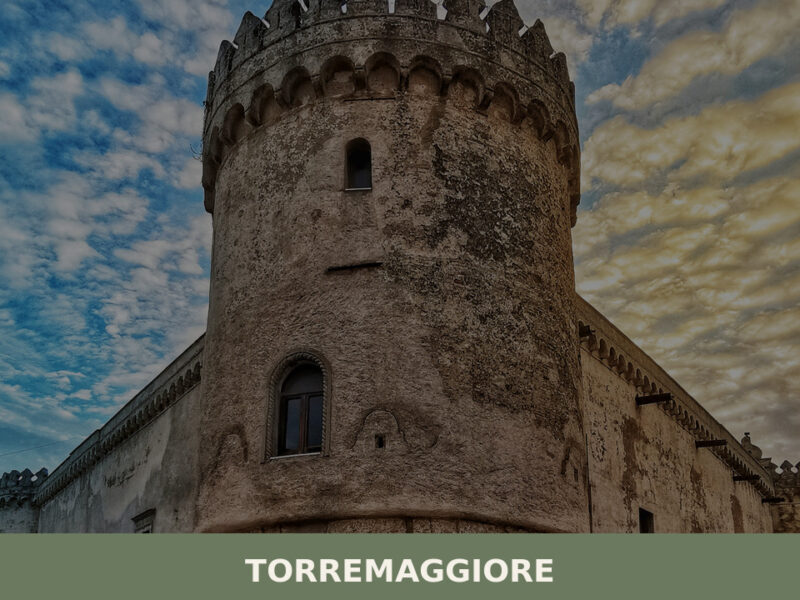
A complete guide to Torremaggiore in northern Puglia — its medieval castle, the ruins of Fiorentino, local food traditions, and practical travel information.
Bovino
 Mountain
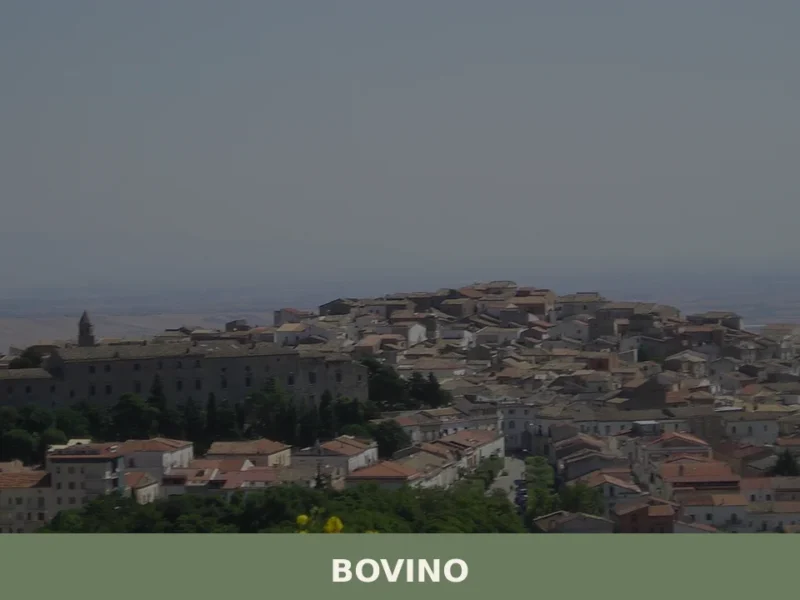
What to See in Bovino: discover 5 must-see attractions and savor the taste of Acquasale. Visit the historic village and the magnificent Ducal Castle.
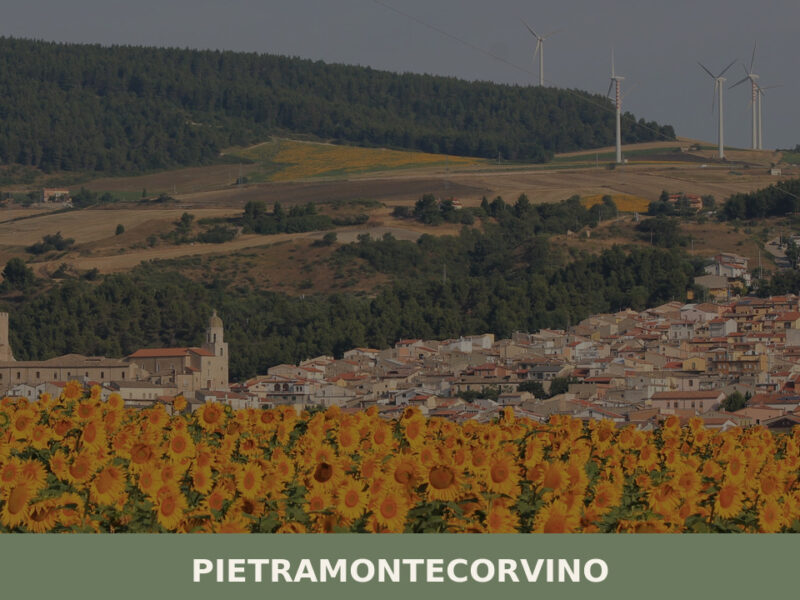
Pietramontecorvino
 Hills
Hills
A medieval hill village at 456 metres above the Tavoliere plain, Pietramontecorvino preserves a rock-carved old quarter, Norman tower, and the quiet rhythms of Daunia's agricultural past.
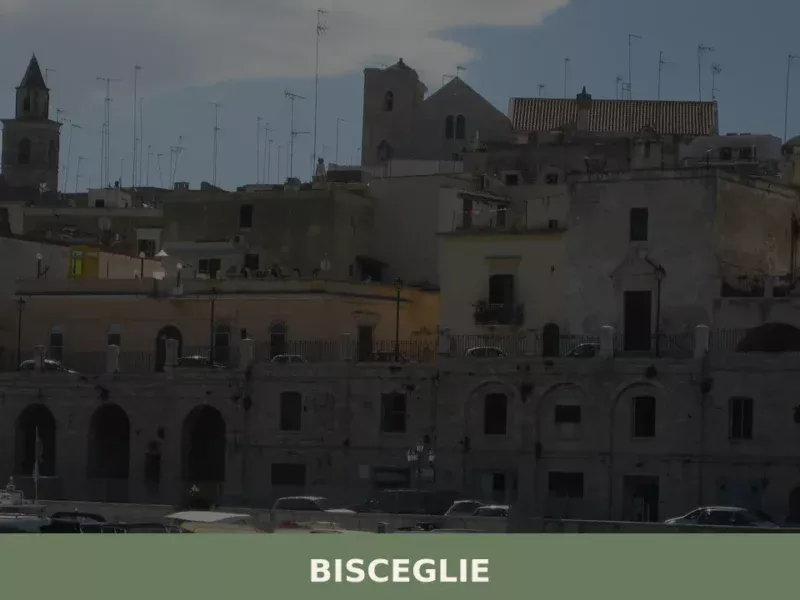
Bisceglie
Sea
Discover what to see in Bisceglie, Puglia: Bronze Age dolmens, a Norman cathedral, Swabian castle, local food and practical travel tips for the Adriatic coast.
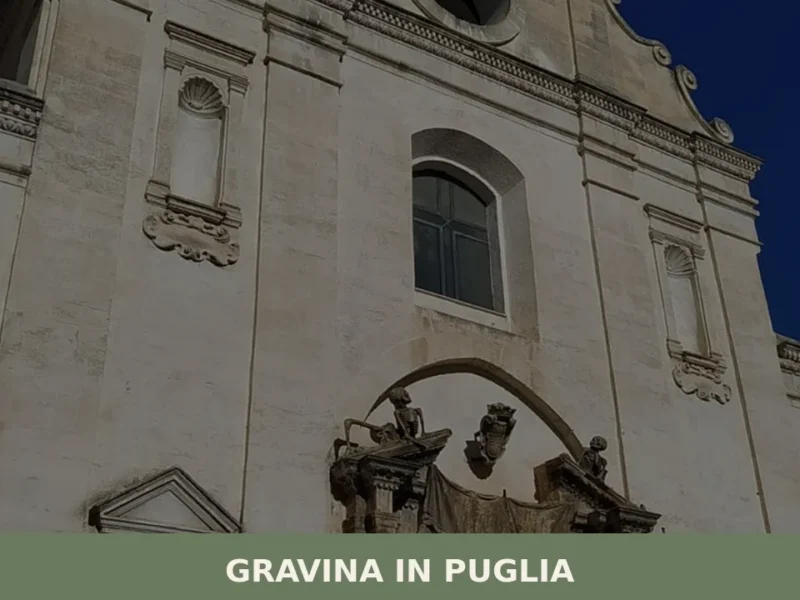
Gravina in Puglia
Hills
In 1092, Humfred of Hauteville confirmed the privileges of the cathedral dedicated to Santa Maria Assunta, a document that fixes in the historical record the ecclesiastical rank of Gravina in Puglia well before Frederick II chose it as an imperial hunting reserve. Today, anyone walking along the edge of the gravina — the karstic canyon […]
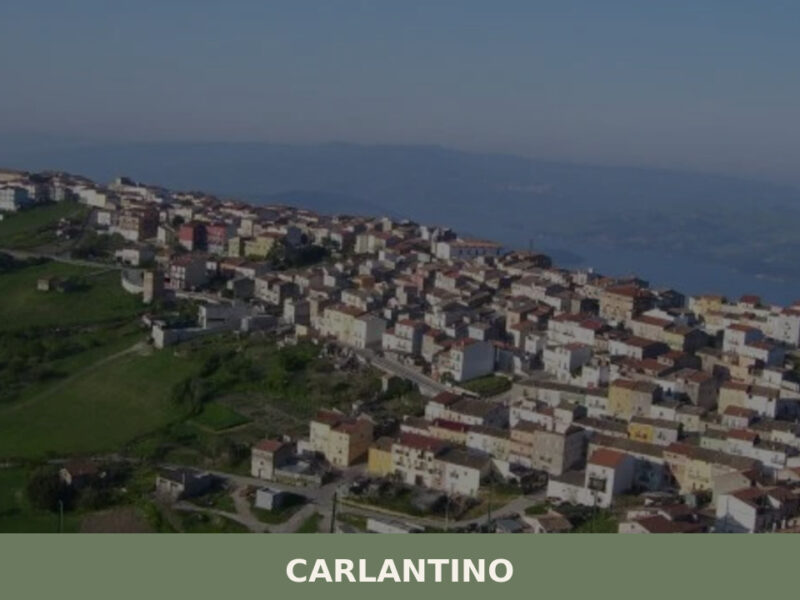
Carlantino
Plains
Discover Carlantino, a tiny hilltop village overlooking Lake Occhito in Puglia's Daunia hills. Explore its history, nature trails, and renowned black truffles.
Manduria
Sea
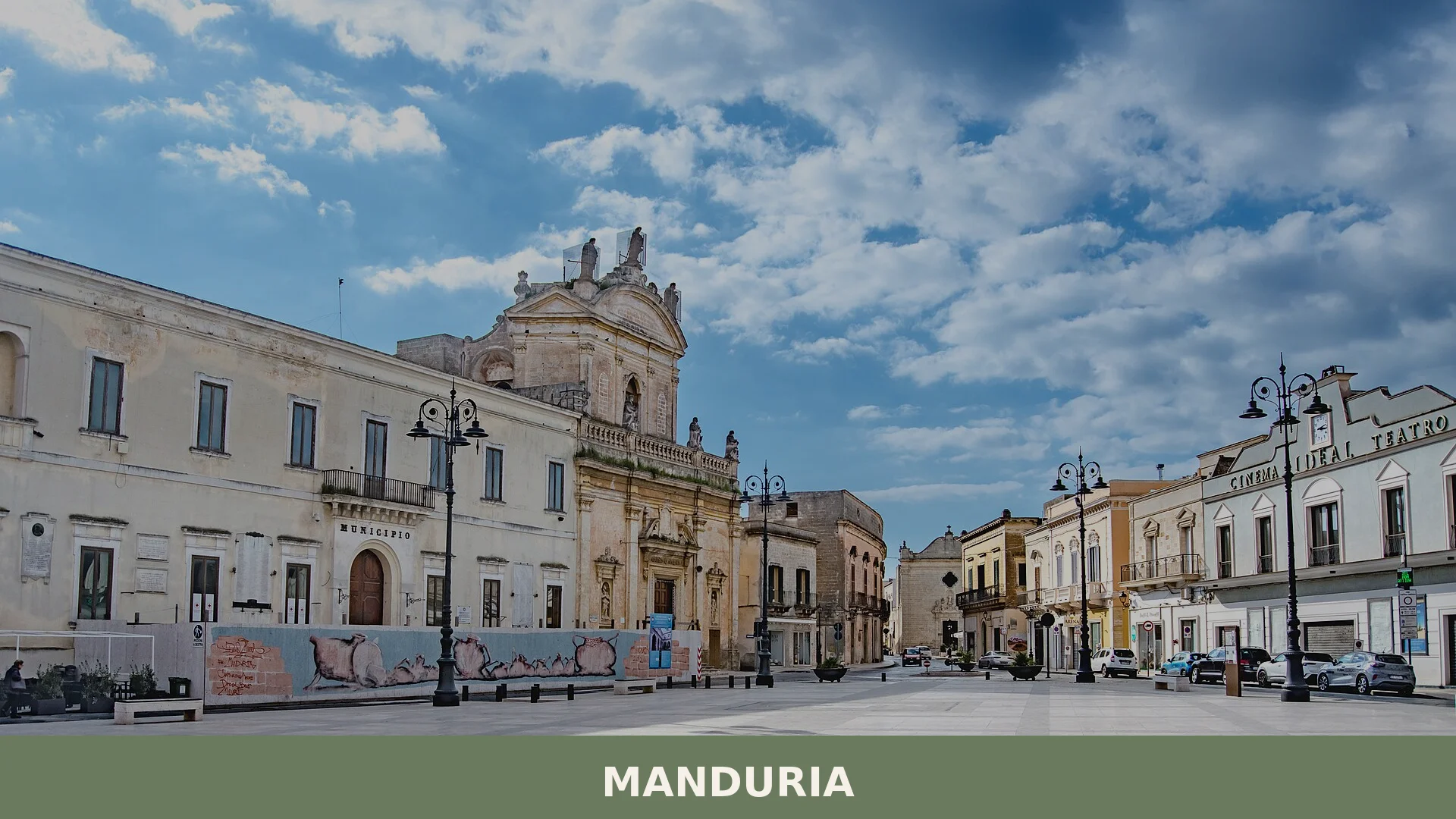
A territory where Messapic walls still stand and Roman roads connect to the coast. Manduria earned its title as a City of Art through centuries of layered stone and faith.



🏡 Know Galatone better than we do?
If you’re a local or have been there, your knowledge matters: add what’s missing or fix a detail on this page.