


Maruggio
 Sea
Sea
A 5,100-soul village in Taranto province, hidden in a natural depression and rebuilt by military monks. Medieval stone, salt ponds, Greek shipwrecks offshore.
Maruggio: Where Medieval Apulia Meets the Ionian Coast
A Medieval Hollow Facing the Ionian Sea
Maruggio lies in a shallow natural depression, invisible from the sea—a deliberate choice. Stone houses cluster in narrow lanes where the medieval core, largely built by the Knights of Malta, still stands. The village spreads across 48 square kilometres of flat Salentine terrain, with a 9-kilometre coastline of sand and limestone, and a population of 5,124 inhabitants. To the north, the soft hills of the Murge Tarantini rise barely beyond 100 metres, sheltering the town from winter winds while funnelling summer heat through the valleys.
Maruggio village in Apulia The village sits roughly 45 kilometres east of Taranto, at an altitude of 26 metres above sea level, within the north-western corner of the Salento peninsula. The frazione (hamlet) of Campomarino extends the municipality’s reach to the coast, where dunes reach 12 metres high and a Greek shipwreck rests in the shallow Ionian waters.
Between the fifth and third millennia before Christ, these lands held a village. Greeks sailed past and left their dead in the seabed. Knights built a castle to shield themselves from Saracen sails. And the people stayed, generation after generation, in their hidden valley.
Foundation in Stone and Refuge
The origins of Maruggio lie in survival. Refugees sought shelter in this natural depression, fleeing Saracen raids that had swept across the Salentine coast. The valley’s concealment from the sea was essential; visibility meant vulnerability. These survivors built the first nucleus of the village, choosing depth over exposure.
When Ruggero II of Sicilia unified Puglia with Calabria to form the Kingdom of Sicily, feudal lords—first the Cateniano family, then the De Marresio—held the settlement. This labour transformed the landscape and brought wealth. Their Maruggio assets passed to the Johannites (Knights of Malta), consolidating control in 1317. For the next five centuries, these warrior-monks shaped every stone and policy of the village.
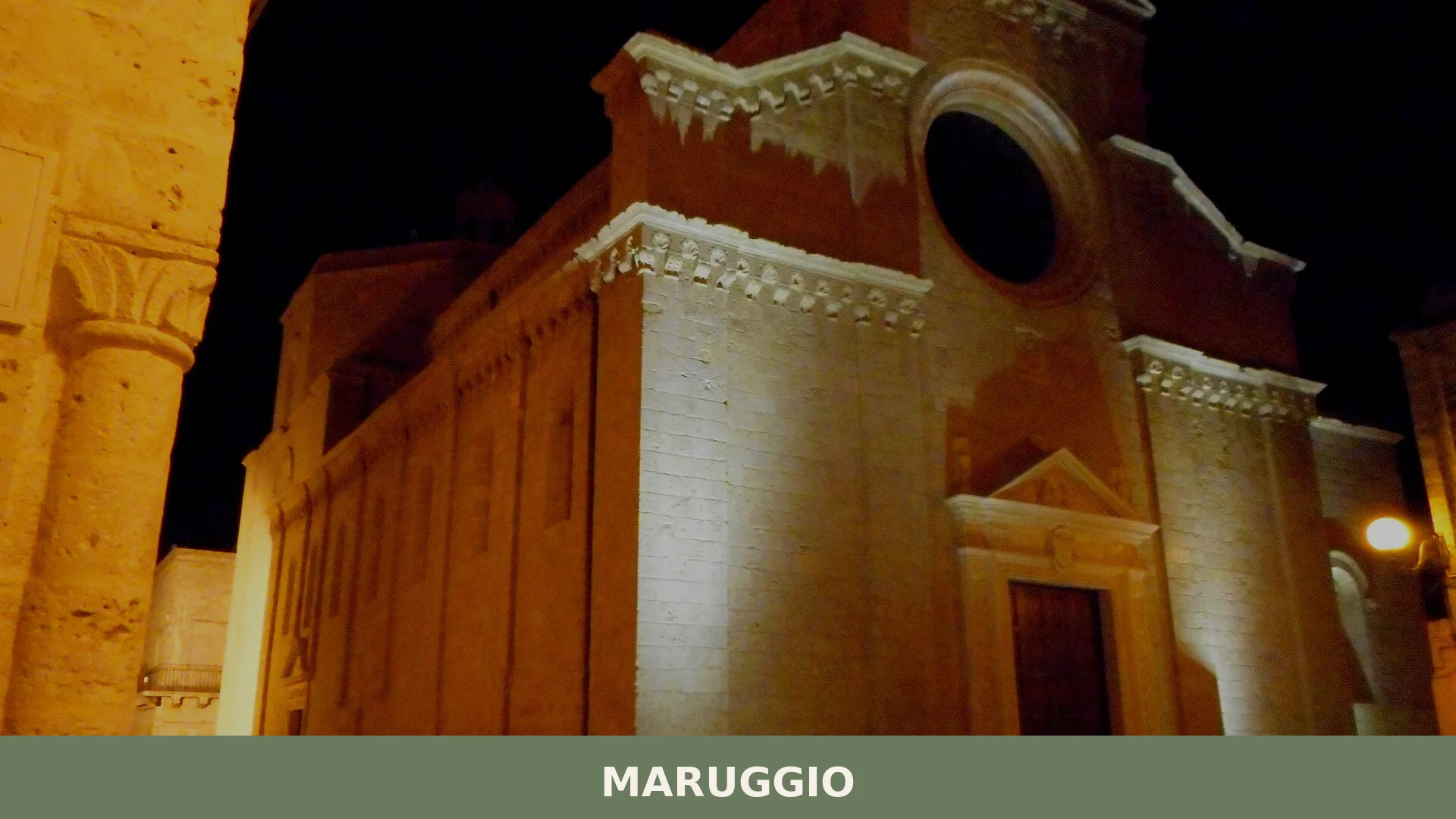
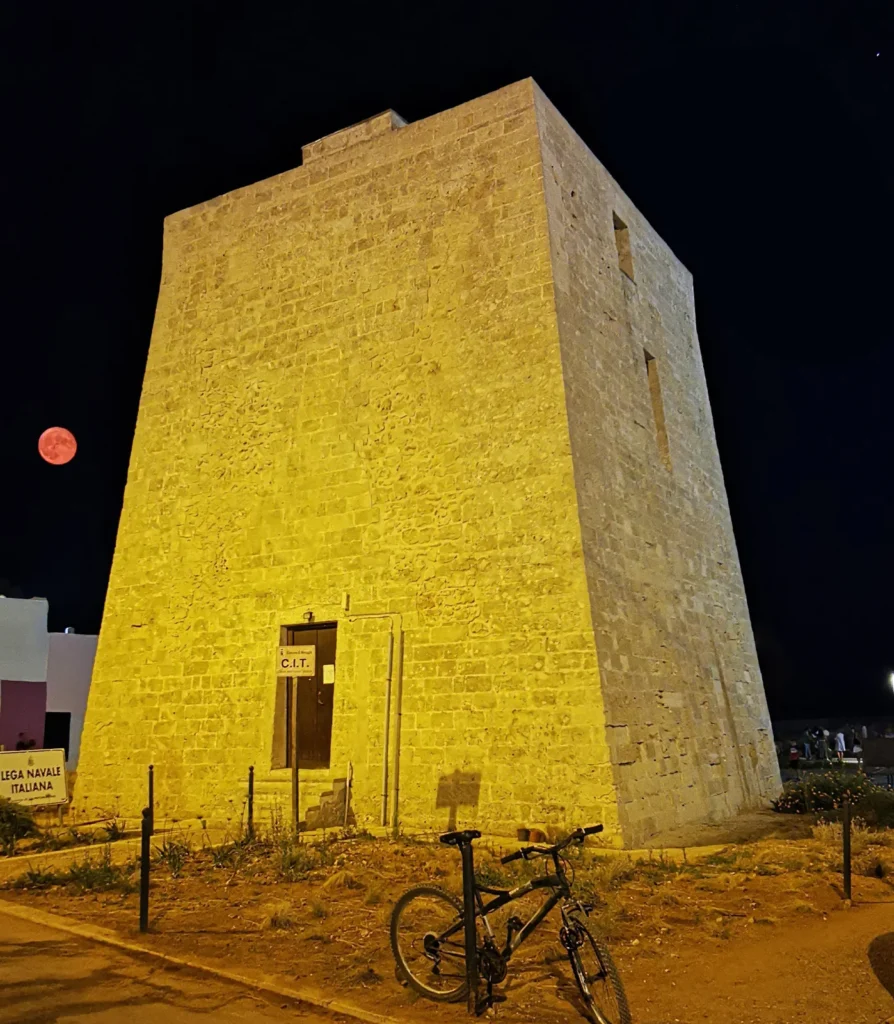
The Knights built the castle, fortified walls and coastal towers to defend against Turkish piracy. They elevated Maruggio to a commenda magistrale (a high administrative rank) during the sixteenth century, granting it unusual autonomy and prosperity. The Knights’ architectural and commercial imprint remained absolute throughout this period. In the second half of the seventeenth century, under commendatore Gregorio Carafa, the village expanded beyond its walls into a new quarter called the Borgo, where two-storey manor houses rose above older dwellings. A 1743 earthquake damaged Maruggio’s mother church, destroying its Romanesque rose window and forcing its replacement with a Baroque opening.
The Knights governed Maruggio from 1317 until 1819, when their rule ended and full municipal autonomy arrived with the dissolution of the commenda. By 1861, the village counted 1,644 inhabitants. In 1953, President Luigi Einaudi formally recognised the village’s coat of arms and civic standard.
The Medieval Centre and Coastal Landscape
The Mother Church and Sacred Heart
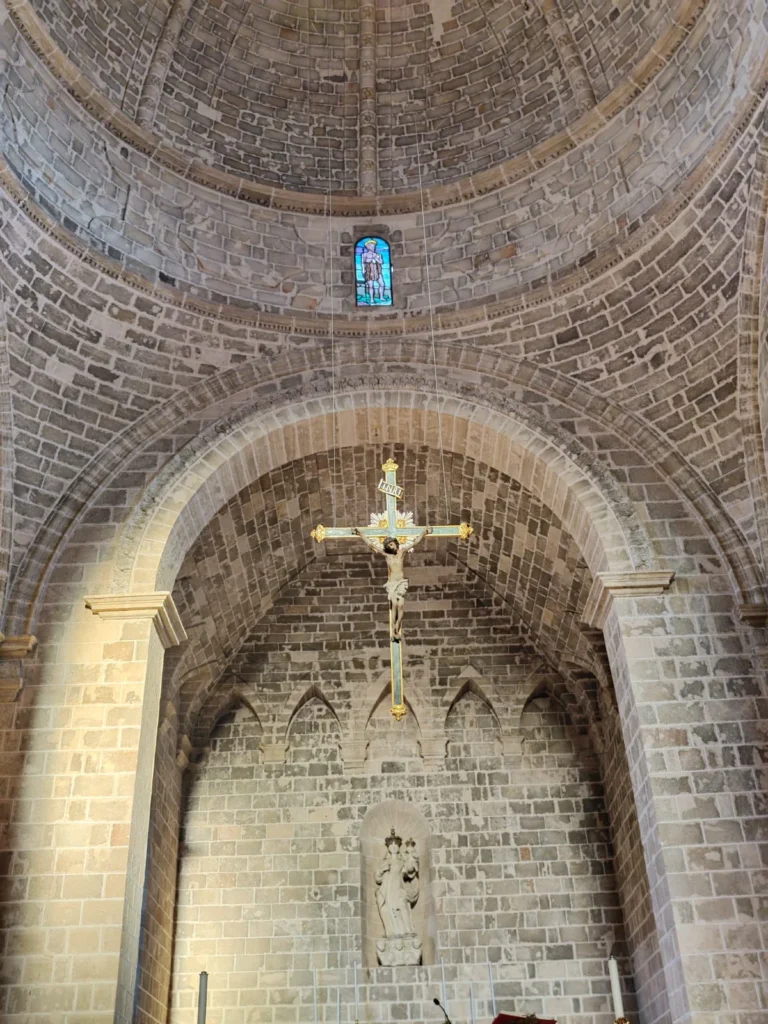
The church of the Nativity of the Virgin Mary dominates the medieval nucleus. Built during the fifteenth century, its interior spans three naves and crowns the presbiterium with a cupola. A 1743 earthquake forced substantial reconstruction of the façade and other interior elements. Beneath the church, a crypt shelters the reliquary of San Costanzo. This sacred deposit anchors the village to an older martyrdom tradition, though the saint’s own story remains sparse in local chronicles.
San Giovanni Battista Fuori le Mura
Just beyond the old fortifications stands the church of San Giovanni Battista Penitente, erected on the Knights’ orders. Its linear, austere façade is framed by pilasters and topped with a pitched gable. Three sculpted shields of the Knights of Malta adorn the central window. Originally, a hospice adjoined the church to lodge the sick and pilgrims; later it became a hospital for the wounded and for those afflicted with plague and cholera. The church closed to worship in the nineteenth century and passed to private hands.
Campomarino and the Dunes
Campomarino, the coastal fraction of Maruggio, commands nine kilometres of shoreline where sand dunes climb up to 12 metres and constitute a European site of biological interest. The seabed here holds layers of history. A Greek shipwreck has been identified off the contrade Capoccia and Scorcialupi. At the santuario della Madonnina dell’Altomare, on a seaward promontory, evidence suggests Greek religious practices may have occurred millennia before the medieval village took shape.
The Low Hilltops and Karst Phenomena
North of the centre, Monte Furlano (90 metres) and Monte Specchiuddo (72 metres) rise gently, marking the boundary with Manduria and Sava. Monte Specchiuddo bears a specchia (a stone watchtower) on its crest. These modest heights break the winter north wind, moderating the coastal cold. Inland, karst phenomena dominate, with limestone sinks created by subsurface dissolution. The Ora, a natural sinkhole in the countryside north of Fabbriche, exemplifies the underground water dynamics that shape the terrain silently.
Archaeological Layers
In contrada Castigno, subsurface deposits reveal habitation from the fifth to third millennia before Christ, followed by a Greco-Roman settlement that endured through the fifth and sixth centuries after Christ. Pottery shards and structural remnants scattered across contrade Roselle, Curso, Cravara, Cirenaica and Commenda speak to a populated landscape long before the medieval refuge took form. These fragments form an invisible palimpsest beneath the modern village.
Terroir and Wine
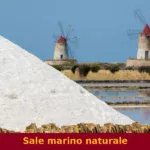
Maruggio is known for its Primitivo wine, a red variety rooted in the local calcareous and clay soils and Mediterranean climate. The vine has flourished here for centuries, adapted to the summer heat and the seasonal rains that concentrate flavour in the grape. Oliveti (olive groves) and vineyards dominate the interior, with scattered pinewoods and wild olive thickets in the zones of Maviglia, Pindini and Sferracavalli. The coastal marshes, once salt ponds managed by the Knights, are now largely naturalized into wetland habitat, though the memory of salt extraction persists in place names and family trades.
When to Visit and How to Arrive
Maruggio enjoys a Mediterranean climate with mild, variable springs and autumns. Winters are cool and damp but rarely freeze, thanks to the Ionian’s moderating influence; the Murge hills shield the town from severe north winds. Summers are hot, sometimes reaching 40°C on days when the tramontana (north wind) blows, though the scirocco (south wind) brings moisture and humidity. Autumn is the wettest season. The village is accessible by car via provincial roads from Taranto; the nearest railway station is at Manduria, 10 kilometres away. Public transport connects Maruggio to surrounding towns hourly during the day.
The feast of San Giovanni Battista, the village’s patron saint, falls on 24 June each year. Sant’Antonio di Padova is commemorated on 13 June. The village also recalls a Saracen raid in 1637 that caused damage. Many visitors time their stay to these celebrations, when processions and religious rites fill the medieval streets.
| Departure Point | Distance | Journey Time |
|---|---|---|
| Taranto (city centre) | 45 km | 50 minutes by car |
| Manduria (railway station) | 10 km | 12 minutes by car |
| Brindisi airport | 85 km | 1 hour 20 minutes by car |
| Bari (city centre) | 160 km | 2 hours by car |
The nearby villages of Avetrana, Faggiano, and Crispiano Maruggio’s maritime character—its salt history, Greek shipwrecks and coastal dunes—distinguishes it from the purely inland villages of the interior.
Frequently asked questions about Maruggio
How do I reach Maruggio by car from Taranto?
Maruggio lies approximately 45 kilometres east of Taranto. From Taranto, take the SS7 state road heading southeast toward the Salento peninsula. The drive takes roughly 50–60 minutes depending on traffic. The village sits at only 26 metres elevation on flat Salentine terrain, making navigation straightforward. Parking is available in the central areas near the medieval core, though narrow lanes in the historic centre may require careful driving.
What is the best time to visit Maruggio?
Summer months (June–September) offer warm weather ideal for beach access at Campomarino's 9-kilometre coastline. June 24th celebrates the Feast of Saint John the Baptist, the village patron saint, featuring traditional religious and cultural events. However, summer heat intensifies through inland valleys. Spring (April–May) and autumn (September–October) provide milder temperatures, fewer crowds, and pleasant conditions for exploring the medieval centre and coastal dunes.
What historical period shaped Maruggio's medieval core?
The Knights of Malta ruled Maruggio from 1317 to 1819, constructing the castle and engineering much of the medieval stone architecture that defines the village centre today. They deliberately positioned the settlement in a shallow natural depression, invisible from the sea—a strategic defensive choice against Saracen raids. This medieval layout remains largely intact, with narrow lanes and clustered stone houses reflecting the Knights' original urban design and fortification strategy.
Are there archaeological sites or shipwrecks to explore near Maruggio?
The frazione of Campomarino extends Maruggio to the coast, where ancient Greek shipwrecks rest in shallow Ionian waters. Between the fifth and third millennia before Christ, early settlements occupied these lands. Greeks sailed these waters and left their dead in the seabed. While underwater archaeology requires specialized diving, the coastal dunes reaching 12 metres high and limestone formations offer accessible geological and historical landscape exploration suitable for most visitors.
How long should I plan to spend in Maruggio?
A half-day visit suffices to explore the medieval core's narrow lanes and stone architecture. A full day allows leisurely exploration of the historic centre, lunch in local restaurants, and a coastal excursion to Campomarino's beaches and dunes. Visitors interested in wine tasting at Primitivo vineyards or longer beach stays should allocate 1–2 days. The village's compact 48-square-kilometre municipality and modest population of 5,100 create an intimate, unhurried atmosphere ideal for cultural and coastal tourism.
📷 Photo Gallery — Maruggio
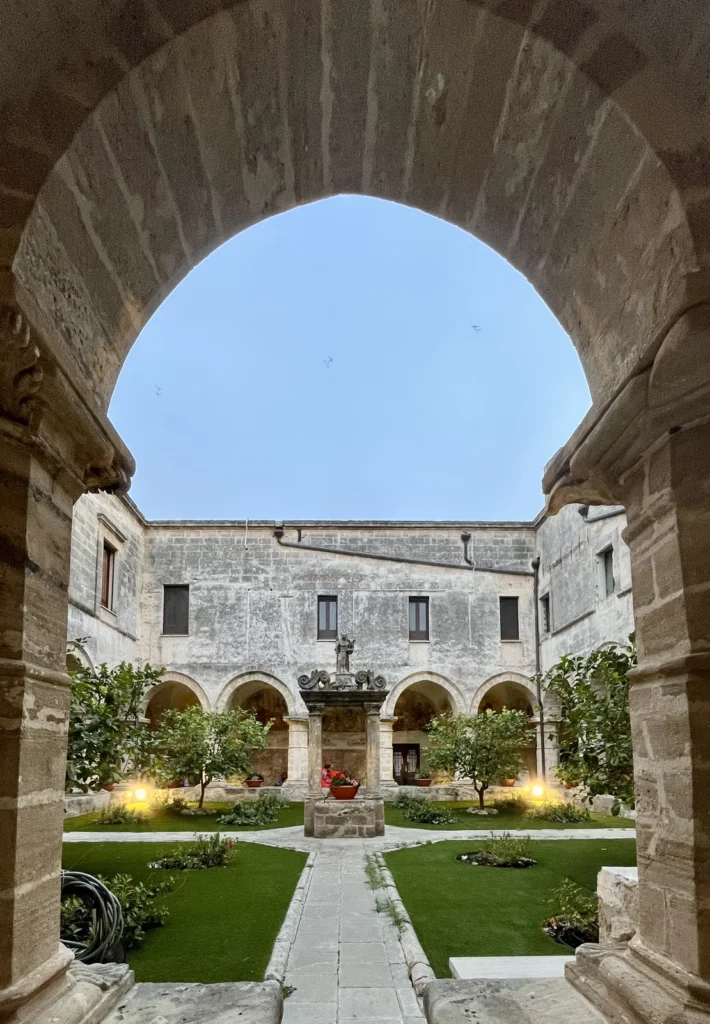
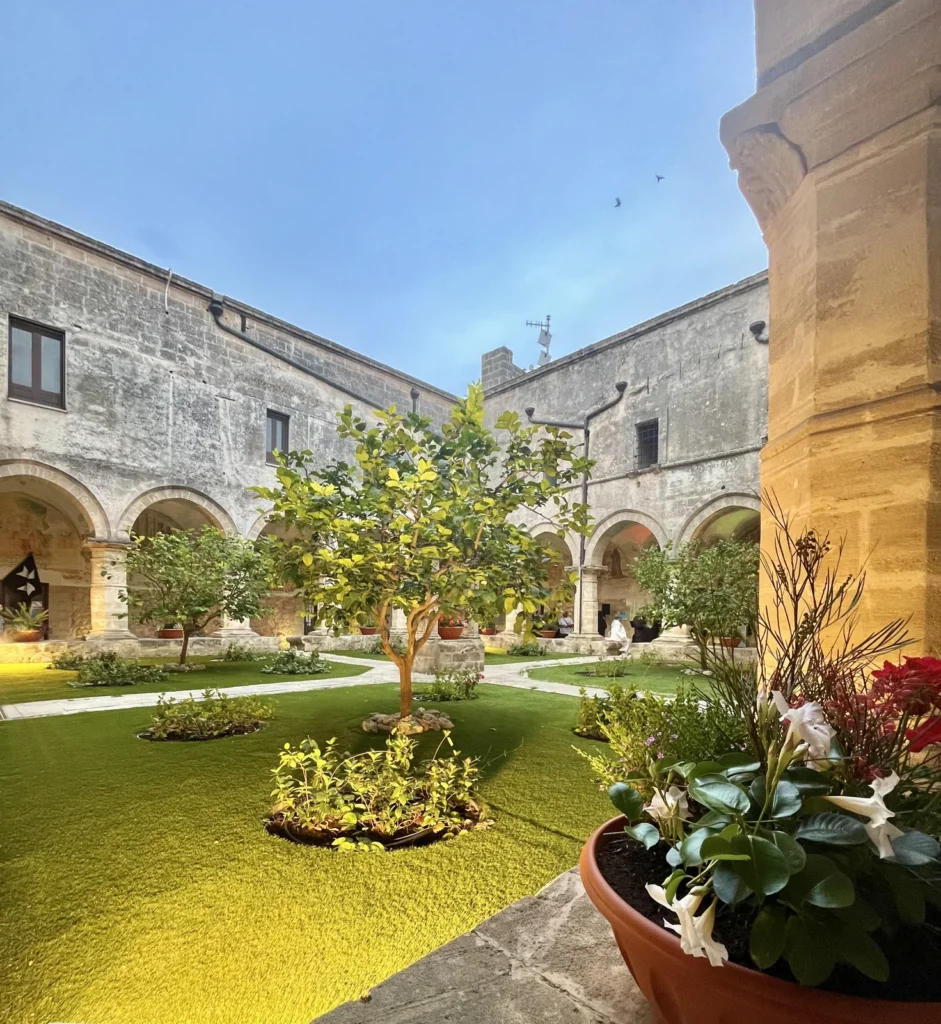
In Apulia More villages to discover
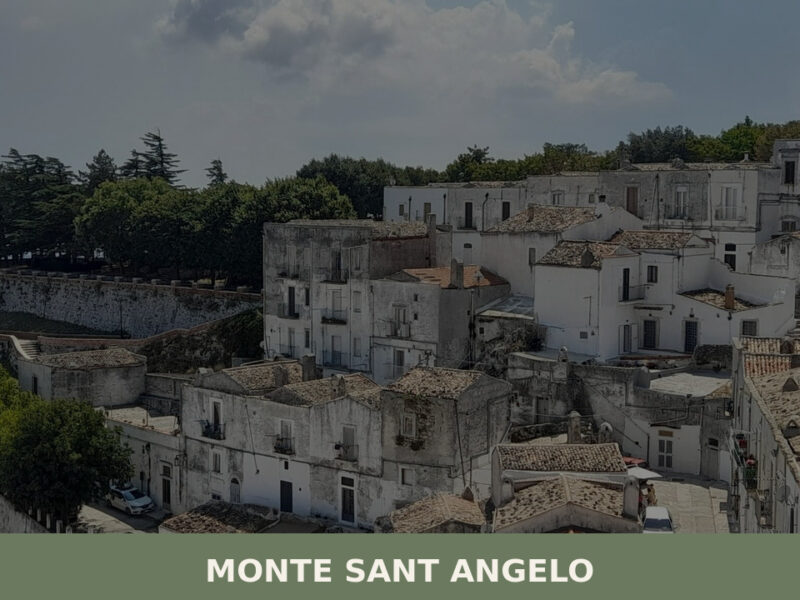
Monte Sant’Angelo
 Mountain
Discover what to see in Monte Sant'Angelo, Puglia: UNESCO sanctuary, Norman castle, Foresta Umbra and local food. Practical travel guide with tips.
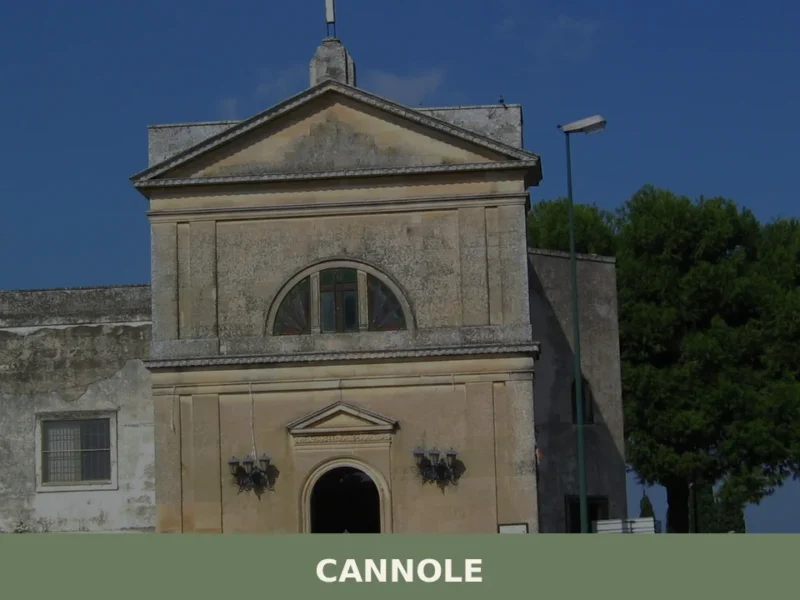
Cannole
 Plains
With its 1,631 inhabitants spread across a plateau at 100 metres above sea level in the interior of the Salento, Cannole is one of the smallest municipalities in the province of Lecce. The settlement is organised around a compact core of Lecce stone houses, with a central square that still serves as a daily point […]
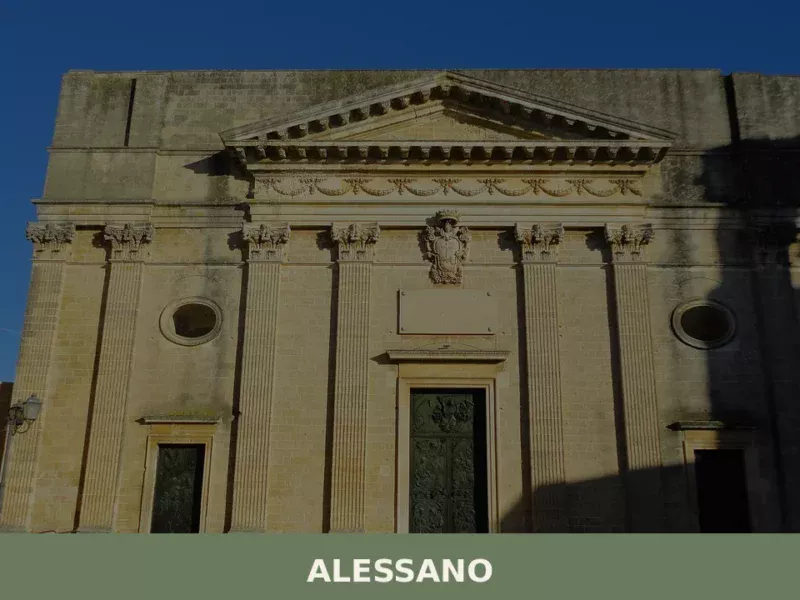
Alessano
Sea
Until 1818, Alessano was the seat of its own diocese — a fact that explains the density of sacred architecture concentrated in a village of fewer than 6,000 inhabitants. Located in the basso Salento, the southernmost stretch of Puglia’s heel, the comune includes the hamlet of Montesardo and the coastal locality of Marina di Novaglie. […]
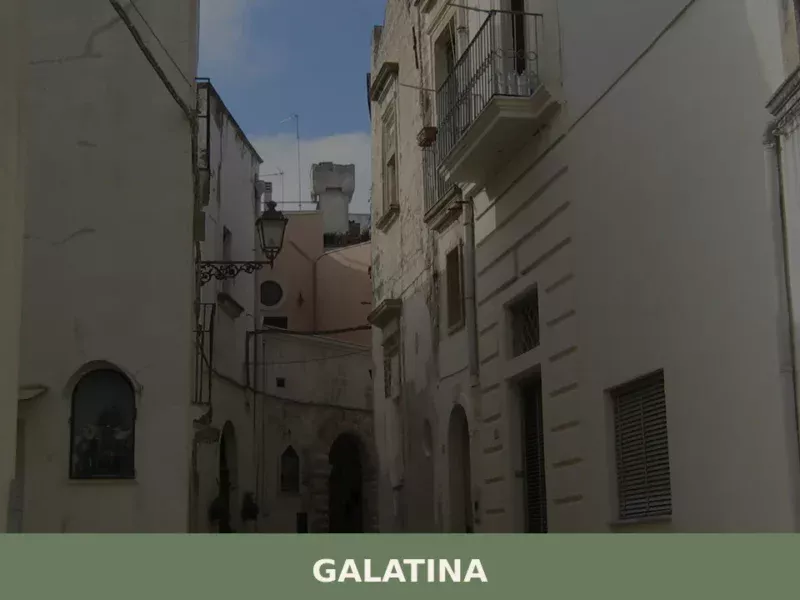
Galatina
Plains
Discover what to see in Galatina, Puglia: Gothic frescoes, tarantismo history, local food and practical travel tips for this Salento city near Lecce.
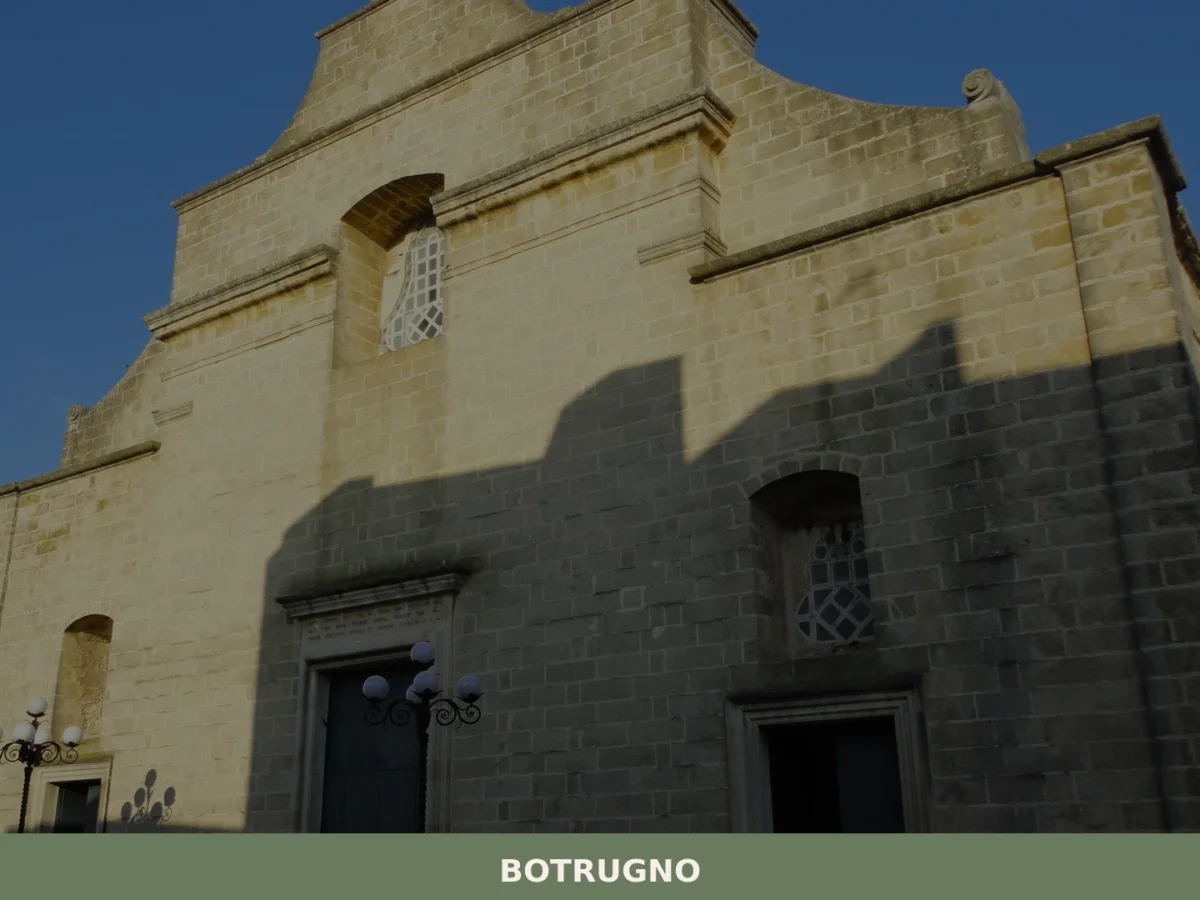
Botrugno
Plains
Discover what to see in Botrugno, a Salentine village of 2,556 inhabitants in the Lecce province: churches, olive groves, local food and practical travel tips.
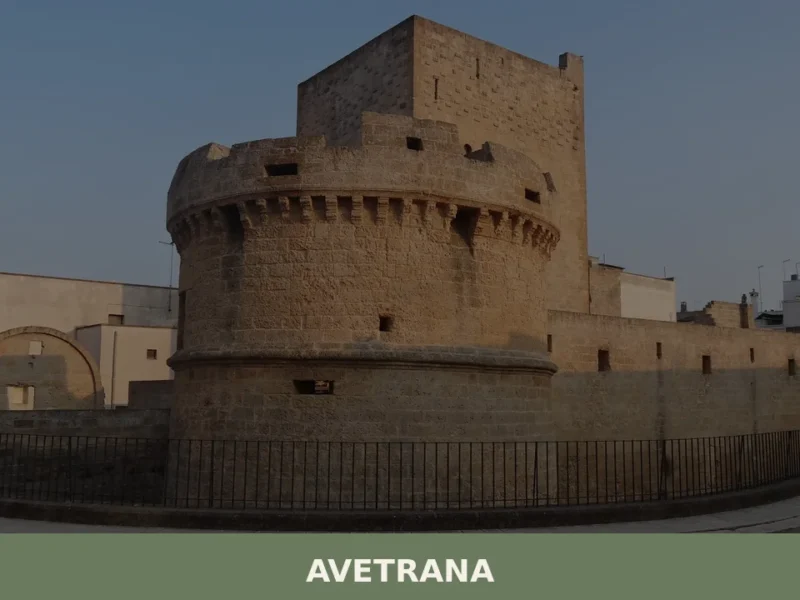
Avetrana
Plains
What to see in Avetrana, Italy: explore a 13th-century castle, the Chiesa Madre and Palazzo Imperiali. Population 6,277. Discover festivals, food and how to get there.
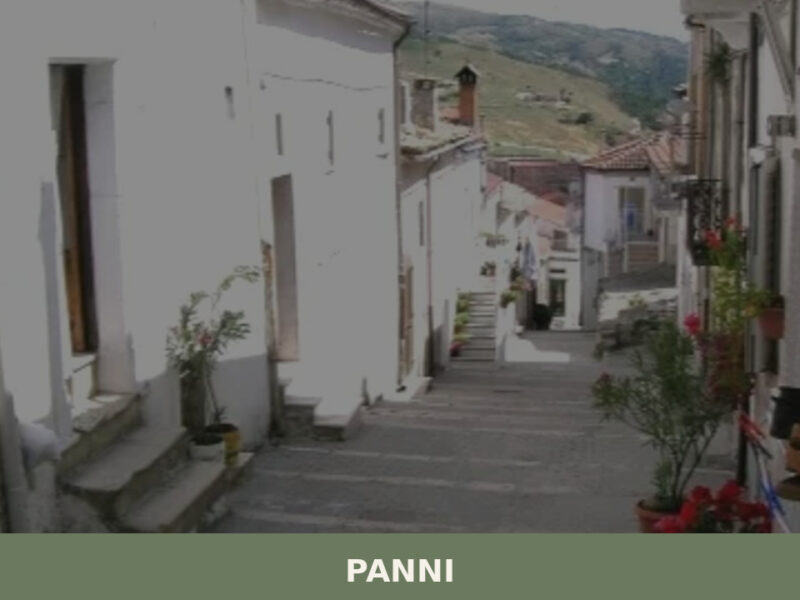
Panni
Mountain
Panni stands at 801 metres in the Daunian Sub-Apennines, a wind-swept village of 693 people in the province of Foggia. A guide to its history, sights, and food.
Brindisi
Sea
From the port of Brindisi, at a strategic point where the Adriatic opens towards the East, stands the Monument to the Italian Sailor, an imposing structure that since 1933 has watched over the city and its maritime routes. This city, overlooking a natural inlet that for centuries has welcomed fleets and trade, has historically been […]
San Marco in Lamis
 Hills
Hills
A highland town on the western Gargano, San Marco in Lamis holds ancient monasteries, a dramatic Good Friday fire procession, and the quiet intensity of inland Puglia.
Corato
Hills
What to see in Corato, a city at 232 m in Puglia. 5 attractions, underground olive presses, Castel del Monte 18 km away, PAT dishes. Plan your visit now.


🏡 Know Maruggio better than we do?
If you’re a local or have been there, your knowledge matters: add what’s missing or fix a detail on this page.