


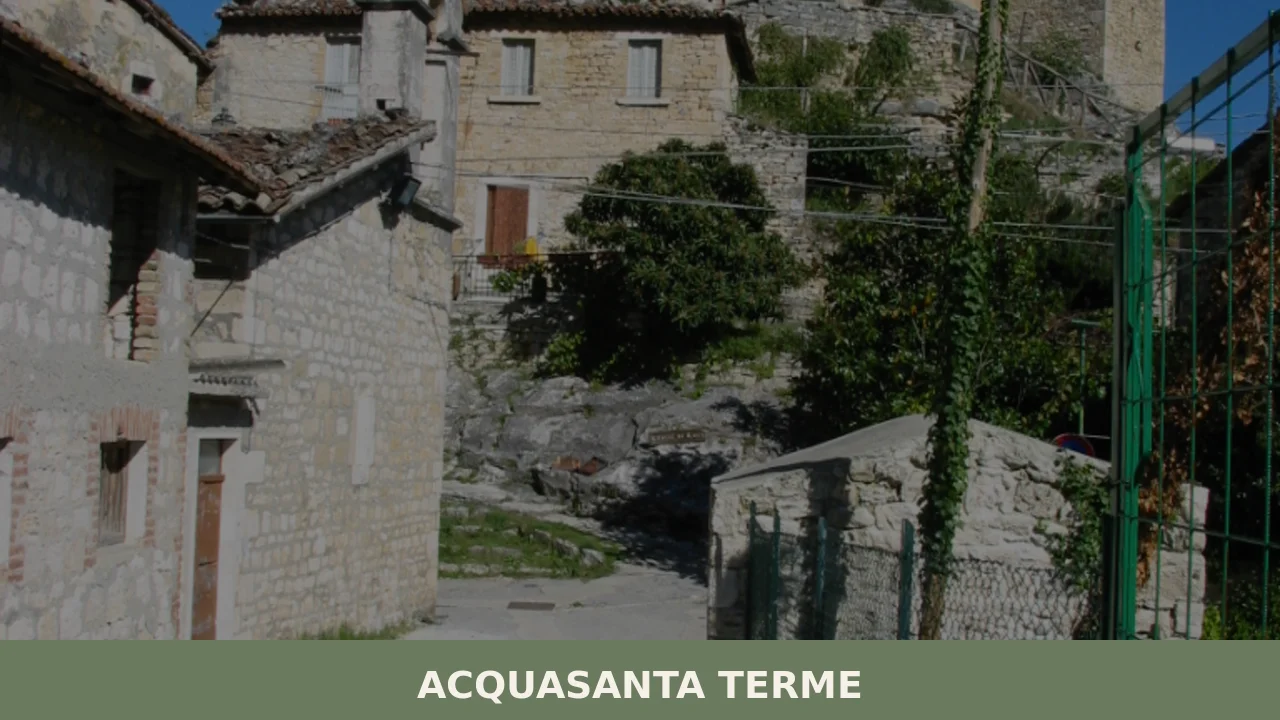
Acquasanta Terme
 Mountain
Discover what to see in Acquasanta Terme: Roman thermal baths, Tronto gorge, medieval hamlets and Apennine landscapes in Marche’s Ascoli Piceno province.
Discover Acquasanta Terme
Acquasanta Terme sits in the Tronto river valley of the Ascoli Piceno province, Marche, at roughly 392 metres above sea level. With a registered population of around 2,400 people, it holds the second-largest municipal territory in the province after Ascoli Piceno itself — a sprawling, predominantly mountainous area divided into numerous hamlets. The thermal springs that give the village its name have drawn visitors since Roman times, making the question of what to see in Acquasanta Terme one that rewards careful, unhurried attention.
History of Acquasanta Terme
The name itself is the starting point. Acquasanta — holy water — refers directly to the sulphurous thermal springs that bubble up along the Tronto valley floor. Roman engineers were the first to exploit these waters systematically: excavations in the area have uncovered traces of ancient bathing structures, confirming that the springs were in use well before the medieval period. The Romans’ interest in the site was practical rather than devotional — sulphurous waters at a consistent temperature offered a reliable resource for both bathing and minor therapeutic use along a valley route that connected the Adriatic coast with the Apennine interior.
During the medieval period, the territory of Acquasanta passed through the hands of various feudal powers typical of this corner of the Marche. The comune belonged, at different points, to the ecclesiastical sphere of influence radiating from Ascoli Piceno, one of the dominant urban centres of the central Apennine foothills. The scattered settlement pattern — a central nucleus surrounded by numerous satellite hamlets — reflects the typical defensive and agricultural logic of mountain communities in this part of medieval Italy, where controlling high ground and river crossings mattered as much as proximity to arable land.
The administrative identity of Acquasanta Terme as a recognised municipality solidified during the nineteenth century, following the broader reorganisation of local governance under the unified Italian state. The thermal establishment itself was formalised and expanded in the modern era, transforming what had been an informal bathing site into a regulated spa facility. The comune is also the legal seat of the Comunità Montana del Tronto, a designation that reflects its centrality to the broader mountain territory it administers — a role that gives it administrative weight disproportionate to its modest population.
What to see in Acquasanta Terme: 5 must-visit attractions
The Thermal Baths (Terme di Acquasanta)
The thermal establishment is the village’s defining institution. The springs deliver sulphurous water at a constant temperature of around 38–40°C directly from the hillside. The current bathing complex is a twentieth-century structure built over ancient foundations, offering therapeutic treatments recognised by the Italian national health system for respiratory and musculoskeletal conditions.
The Gorge of the Tronto River
Below the village, the Tronto river has carved a narrow limestone gorge over millennia. The rock walls rise sharply on both sides, and the path running alongside the water offers views of the geological strata laid bare by erosion. The gorge also marks a natural boundary between Marche and the territories that rise toward Lazio and Abruzzo to the south.
The Parish Church of Sant’Angelo
The main parish church of the village centre is dedicated to Sant’Angelo and retains structural elements dating to the medieval period, though it has undergone modifications across several centuries. Its position at the heart of the main settlement makes it the architectural anchor of the old village nucleus, with a stone facade characteristic of Apennine ecclesiastical building in the Ascoli Piceno province.
The Hamlets of the Municipal Territory
The municipal area encompasses a large number of scattered hamlets — frazioni — set at varying altitudes across the surrounding mountains. Several of these retain medieval stonework, small Romanesque chapels, and the narrow lane patterns of pre-modern settlement. Exploring them requires a vehicle but reveals the full geographic scale of what is legally a single comune.
The Tronto Valley Landscape and Apennine Ridgeline
The broader landscape around Acquasanta Terme — the Tronto valley floor, the beech and oak woodland of the mid-slopes, and the bare Apennine ridgeline above — forms the context for the entire settlement. The Monti Sibillini National Park borders the territory to the north, bringing a protected alpine landscape within short driving distance of the village.
Local food and typical products
The food culture of Acquasanta Terme belongs firmly to the culinary tradition of inland Ascoli Piceno province, a tradition built on mountain ingredients: hand-rolled pasta, legumes, cured meats from free-ranging pigs, and freshwater fish from the Tronto and its tributaries. Vincisgrassi, the rich baked pasta of the Marche region, appears on local tables alongside simpler preparations of tagliatelle dressed with lamb ragù or wild mushroom sauces gathered from the surrounding beechwood slopes. The olive ascolane — large olives stuffed with spiced meat, breaded and fried — originate in the nearby city of Ascoli Piceno and remain the most recognisable product of the province, though their production is centred closer to the urban area.
For those interested in local produce, the mountain territory around Acquasanta Terme yields truffles, both black and the prized white variety, along with wild herbs and foraged greens that appear in season. The municipality’s official website occasionally lists local agri-food events tied to the seasonal calendar. Eating well here means seeking out the smaller trattorie and agriturismo operations in the surrounding hamlets, where the kitchen is still driven by what grows, grazes, or forages within a few kilometres of the table.
Best time to visit Acquasanta Terme
The thermal baths operate year-round, making the village a functional destination in any season. That said, the months from May through September offer the most comfortable conditions for exploring the valley and surrounding mountain terrain. Spring brings the beech forests into full leaf and the Tronto runs full with snowmelt from the high Apennines. Summer temperatures in the valley are warm but rarely oppressive at this altitude, and the surrounding uplands provide cooler walking conditions. Autumn is truffle season across the Marche interior — a period when local markets and restaurants orient around the harvest, and the chestnut and oak woodland turns a deep ochre along the hillsides.
Winter is quiet and cold, with snow a realistic possibility at the higher hamlets. The thermal baths, however, are at their most atmospheric in the colder months — arriving at a 40°C pool when the valley floor is at 2°C has a particular logic to it. The Marche regional tourism portal maintains an updated calendar of local events, festivals, and seasonal openings across the province.
How to get to Acquasanta Terme
Acquasanta Terme sits in the Tronto valley, roughly 30 kilometres southwest of Ascoli Piceno along the SS4 Via Salaria — the ancient Roman road that still serves as the main artery through the valley. By car from Ascoli Piceno, the drive takes approximately 30–40 minutes depending on conditions. From Rome, the route via the A24 motorway to L’Aquila and then north through the Apennine valleys takes around two and a half hours. From Ancona, the regional capital of Marche, allow approximately two hours by car heading inland via the A14 and then south toward Ascoli Piceno.
- By car: SS4 Via Salaria from Ascoli Piceno (approx. 30 km southwest). From Rome via A24 motorway: approx. 2.5 hours.
- By train: The nearest mainline railway station is Ascoli Piceno, served by regional trains from San Benedetto del Tronto on the Adriatic coast. From Ascoli Piceno, continue by local bus or car.
- Nearest airports: Pescara Airport (Abruzzo) is approximately 90 km south and is the most practical air gateway. Ancona Falconara Airport is approximately 130 km north.
Where to stay in Acquasanta Terme
Accommodation in Acquasanta Terme is modest in scale and concentrated around the thermal establishment and the main village nucleus. The options lean toward small hotels and guesthouses oriented around thermal tourism — facilities designed for multi-night stays tied to bathing courses rather than rapid transit visits. For travellers wanting more rural surroundings, the scattered hamlets across the municipal territory host several agriturismo operations, which typically offer rooms alongside farm-produced meals. These tend to require a vehicle, as the hamlet network is spread across a wide mountain area without reliable public connections.
A practical tip: if your visit coincides with the main thermal season or late summer weekends, booking accommodation at least two to three weeks in advance is advisable, as the village’s limited room stock fills quickly when demand concentrates. Travellers who prefer a larger urban base — with more dining and transport options — can stay in Ascoli Piceno, 30 kilometres to the northeast, and make Acquasanta Terme a day excursion along the Via Salaria.
More villages to discover in Marche
The Marche region rewards those who look beyond the coastal resorts toward the interior. Fermo, a hilltop city in the southern Marche with a remarkable Roman cistern system beneath its historic centre, offers a markedly different experience — urban and layered with centuries of ecclesiastical and civic architecture. Further north, Gradara presents one of the best-preserved medieval fortress complexes in the entire region, its walls and towers rising above the rolling hills between Pesaro and Rimini.
For those drawn to the quieter mountain and inland villages of the region, Apecchio, in the upper Metauro valley near the Umbrian border, offers a compact medieval centre surrounded by Apennine forest, while Monteciccardo near Pesaro provides a smaller-scale example of the fortified hilltop settlement that defines so much of the Marche interior. Together, these villages form a geographic and cultural arc across a region whose interior remains far less documented than it deserves.
Getting there
Piazza XX Settembre, 63095 Acquasanta Terme
Nearby Villages near Acquasanta Terme
In Marche More villages to discover
Acquaviva Picena
 Sea
Sea
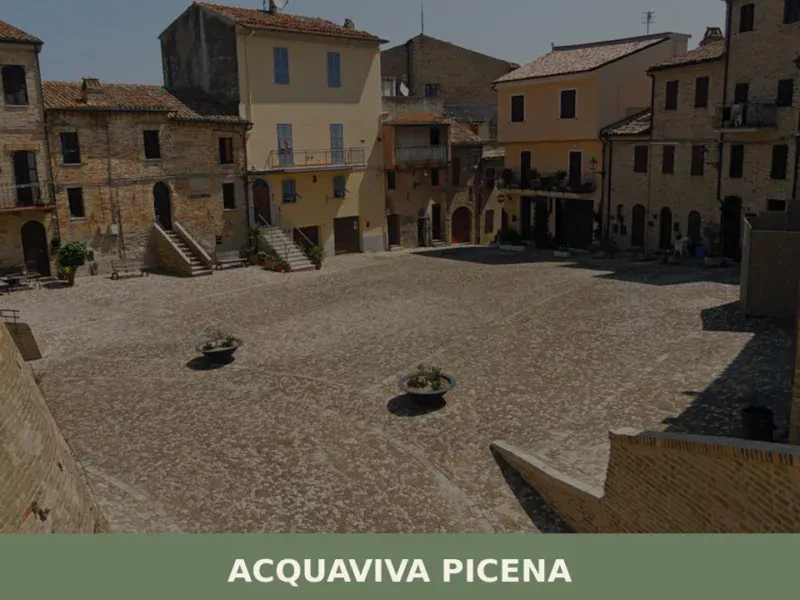
Discover what to see in Acquaviva Picena: medieval fortress, town walls, local food and travel tips for this hilltop village in Ascoli Piceno, Marche.

Barbara
 Hills
Hills
What to see in Barbara, Marche, Italy: 5 top attractions, local food, festivals and how to get there. Population 1,484. Discover this Ancona province comune.
Frontone
Hills
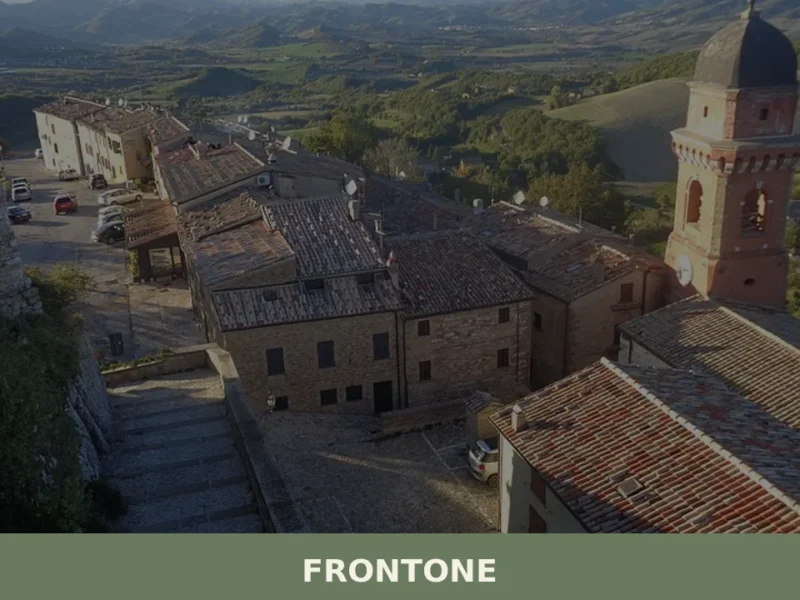
Frontone Castle, whose original structure dates between the 11th and 12th centuries, overlooks the village of the same name, a municipality of 1,218 inhabitants in the province of Pesaro and Urbino. Situated at 412 meters above sea level, Frontone extends along the slopes of Mount Catria, offering a view of the surrounding hilly landscape. Its […]
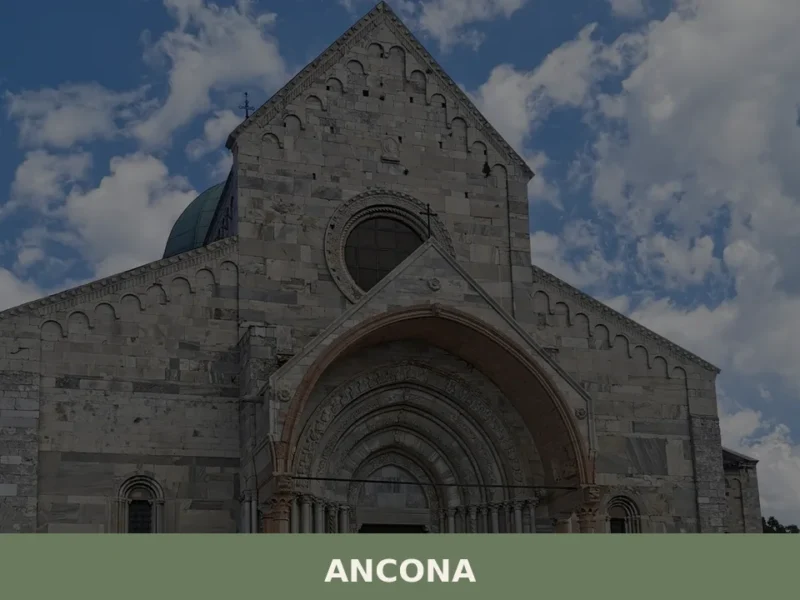
Ancona
Sea
what to see in ancona, a city with 99,000 inhabitants. Discover 5 main attractions like the Duomo di San Ciriaco and Trajan's Arch. Plan your visit.
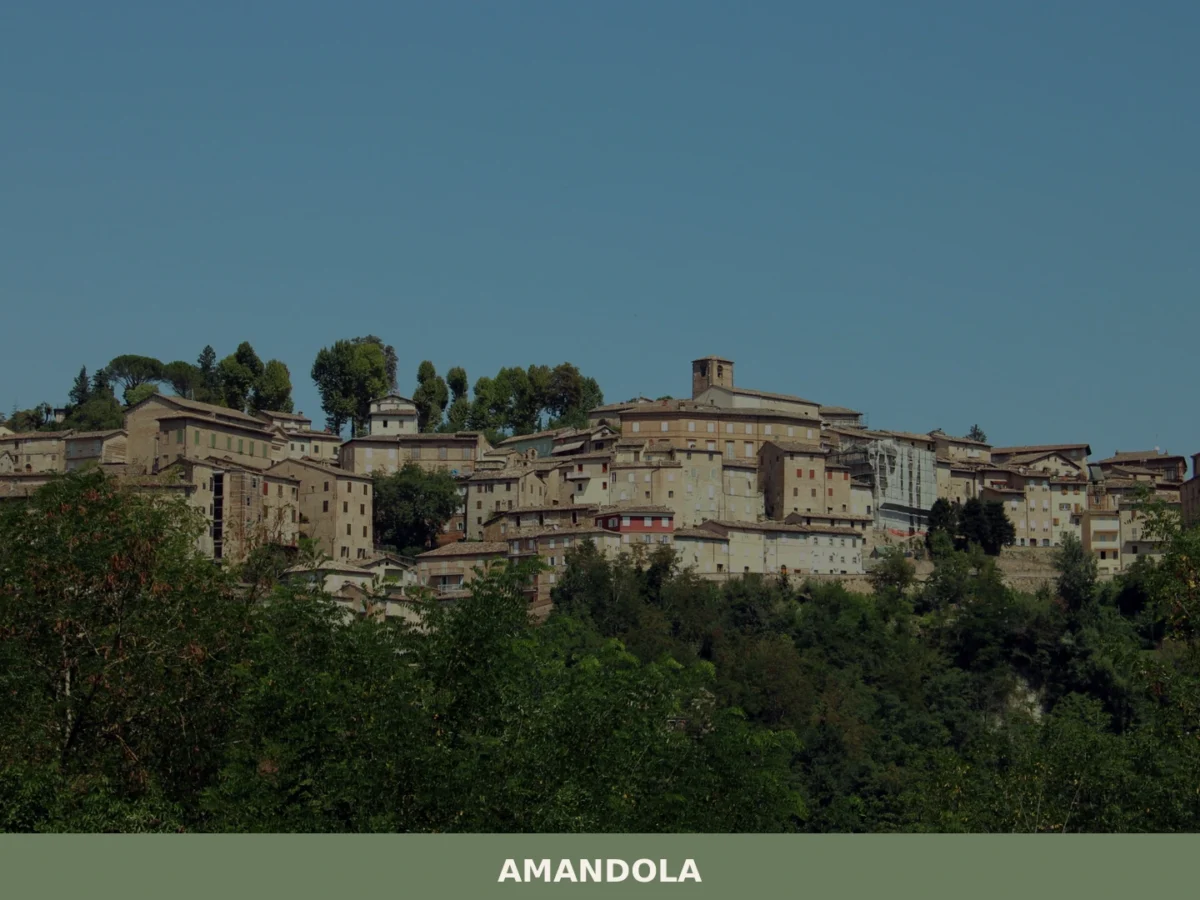
Amandola
Hills
What to see in Amandola: 5 attractions in this Marche village, from the historic centre to the Sibillini Mountains. Discover the complete guide and plan your visit.
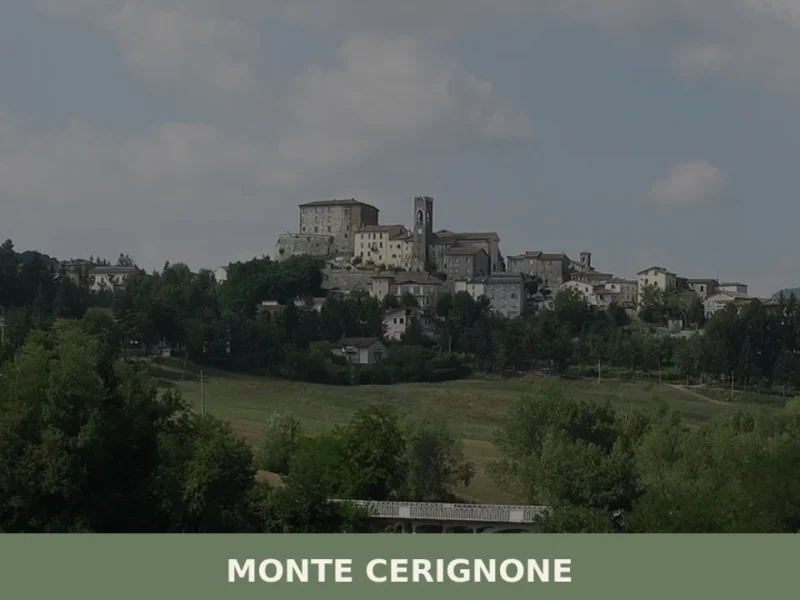
Monte Cerignone
Hills
What to see in Monte Cerignone: discover 5 must-see attractions, from Malatesta Fortress to St. Blaise Church. Plan your trip to this Marche village.
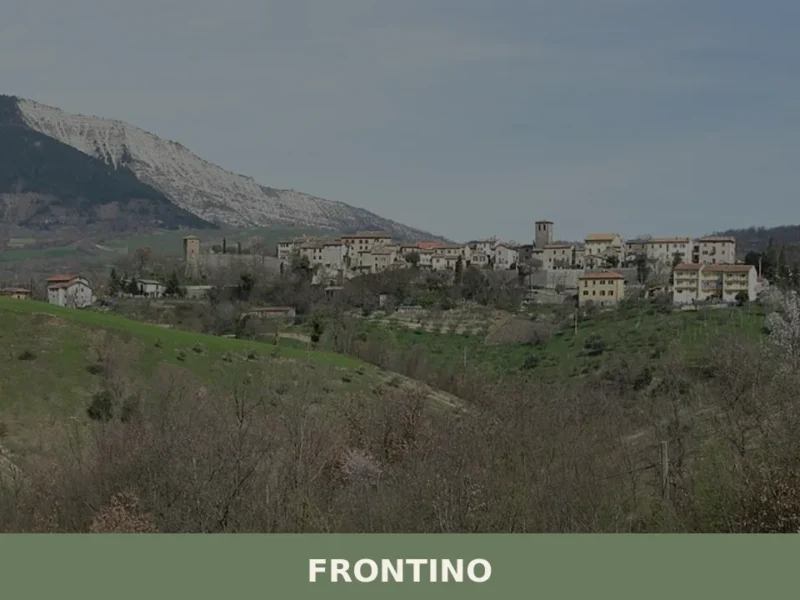
Frontino
Hills
Frontino has around 300 inhabitants today, spread across a hilly area in the province of Pesaro and Urbino at 519 metres above sea level, along the eastern slope of the Apennines separating the Marche from Tuscany and Romagna. The municipality, one of the least populated in the entire region, retains a compact and legible urban […]
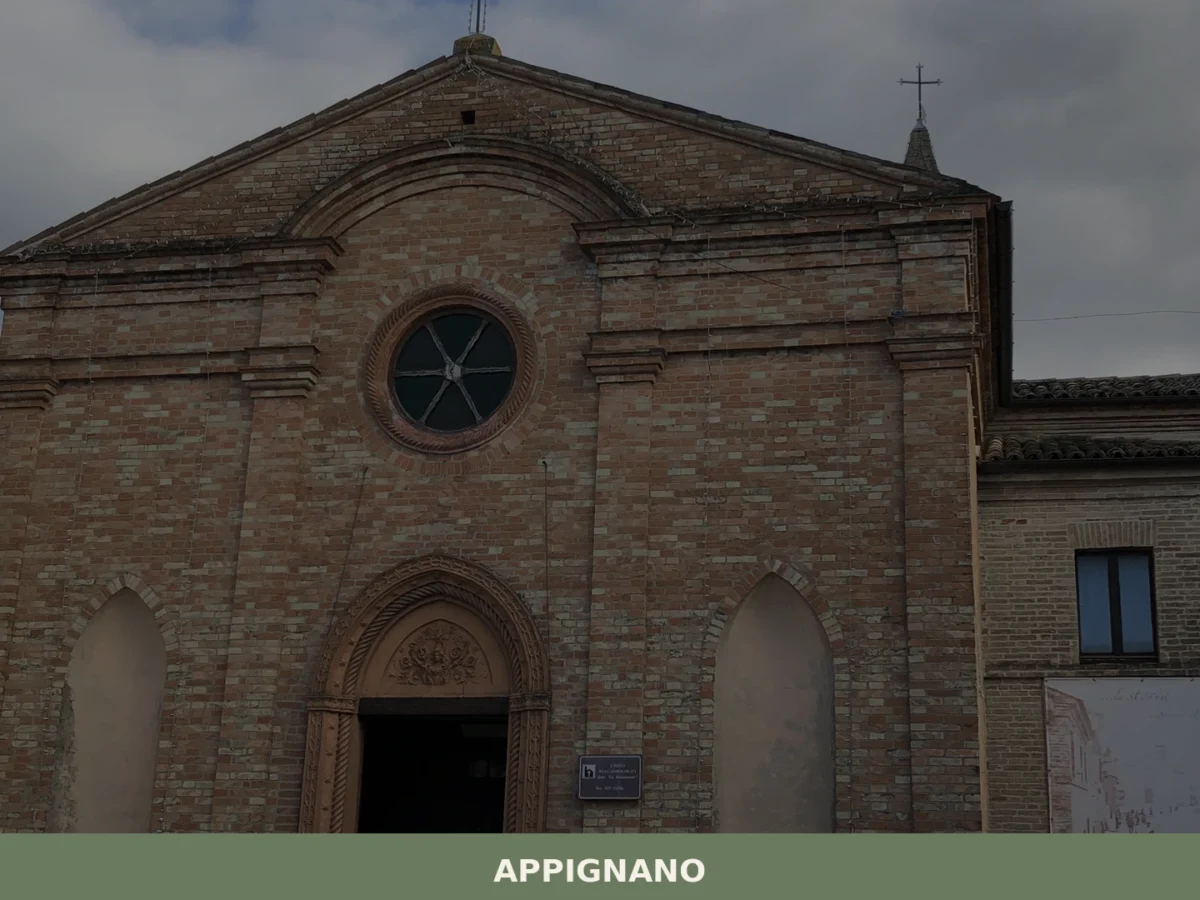
Appignano
 Plains
What to see in Appignano, Marche, Italy: discover the church of San Giovanni, local food traditions, and a village 35 km from Ancona. Explore the full guide.
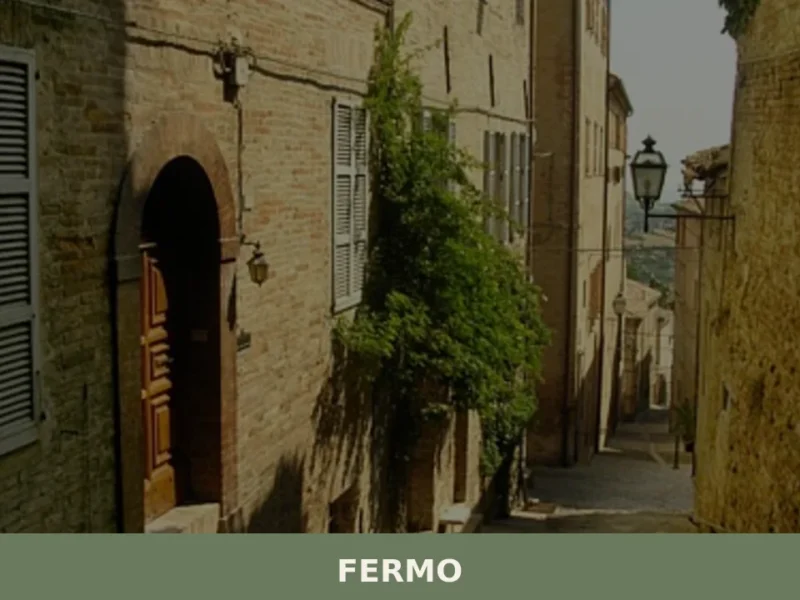
Fermo
Sea
What to see in Fermo? Discover the 5 must-visit attractions of this village in Marche with our complete guide. Plan your perfect visit!
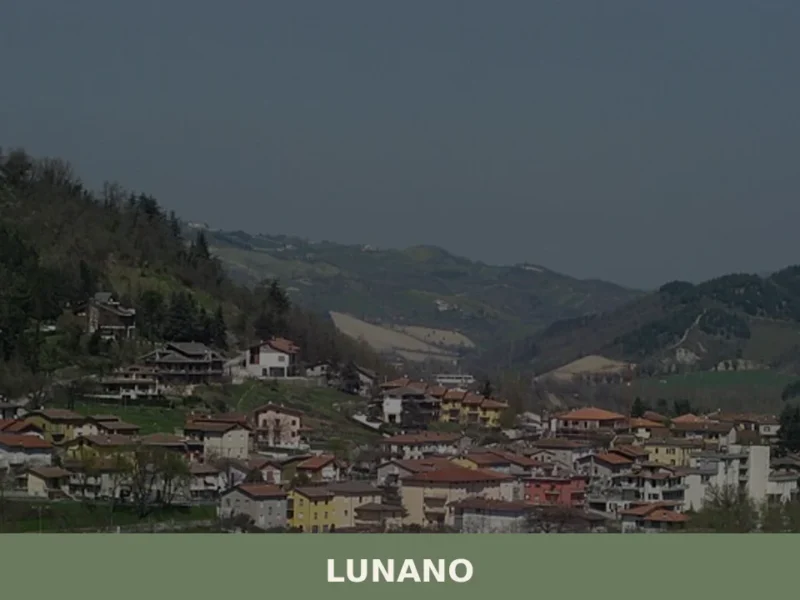
Lunano
Hills
what to see in lunano, Italy: Discover its 297-meter altitude, ancient castle, and unique Chestnut Festival. Explore this Montefeltro village.





🏡 Know Acquasanta Terme better than we do?
If you’re a local or have been there, your knowledge matters: add what’s missing or fix a detail on this page.