


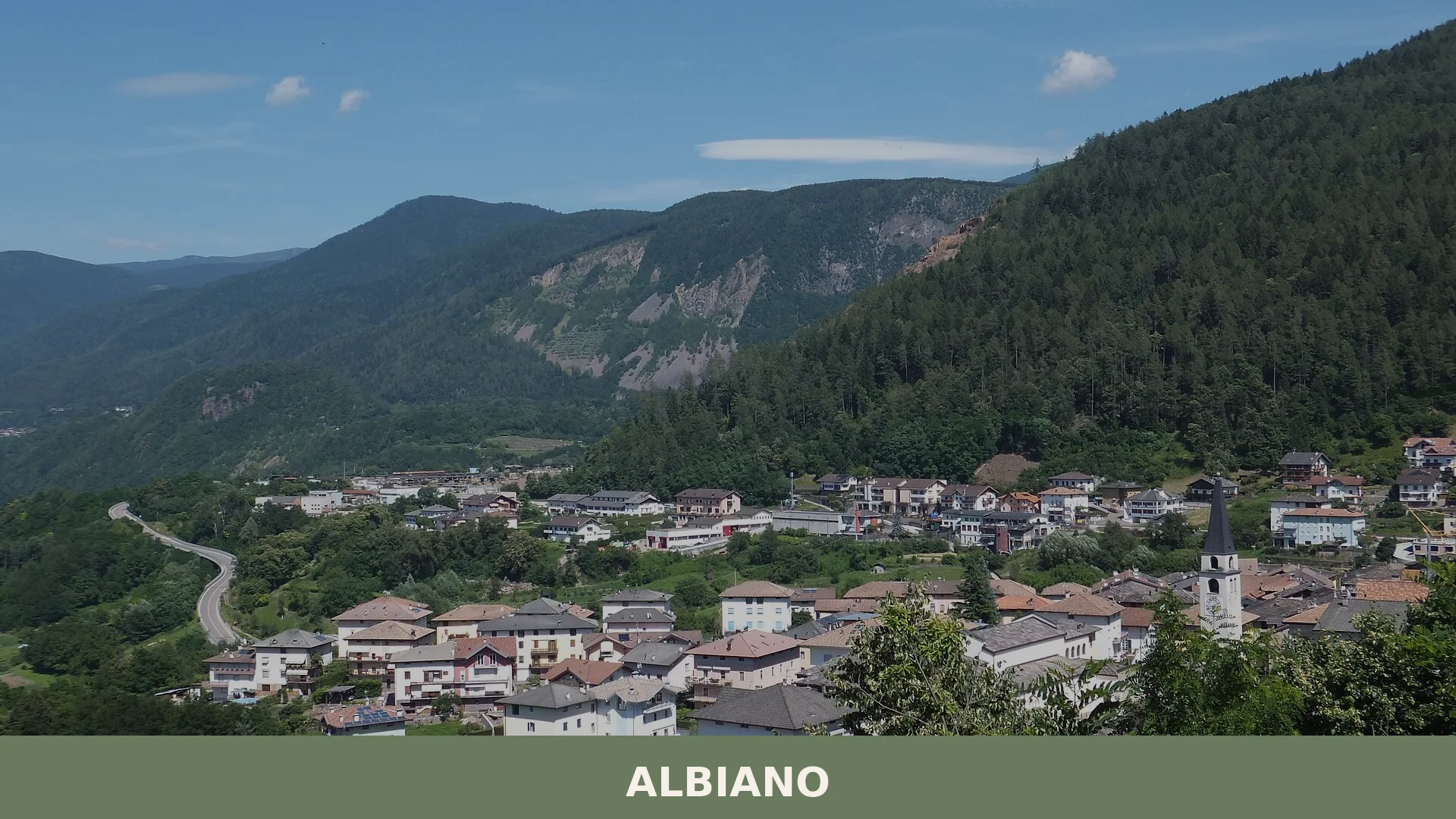
Albiano
 Mountain
A working mountain village of 1,544 people built on Etruscan foundations and medieval mining law. The porfido stone that transforms its landscape feeds the largest European quarry.
Albiano: Porfido, Medieval Statutes and Mountain Settlement in the Val di Cembra
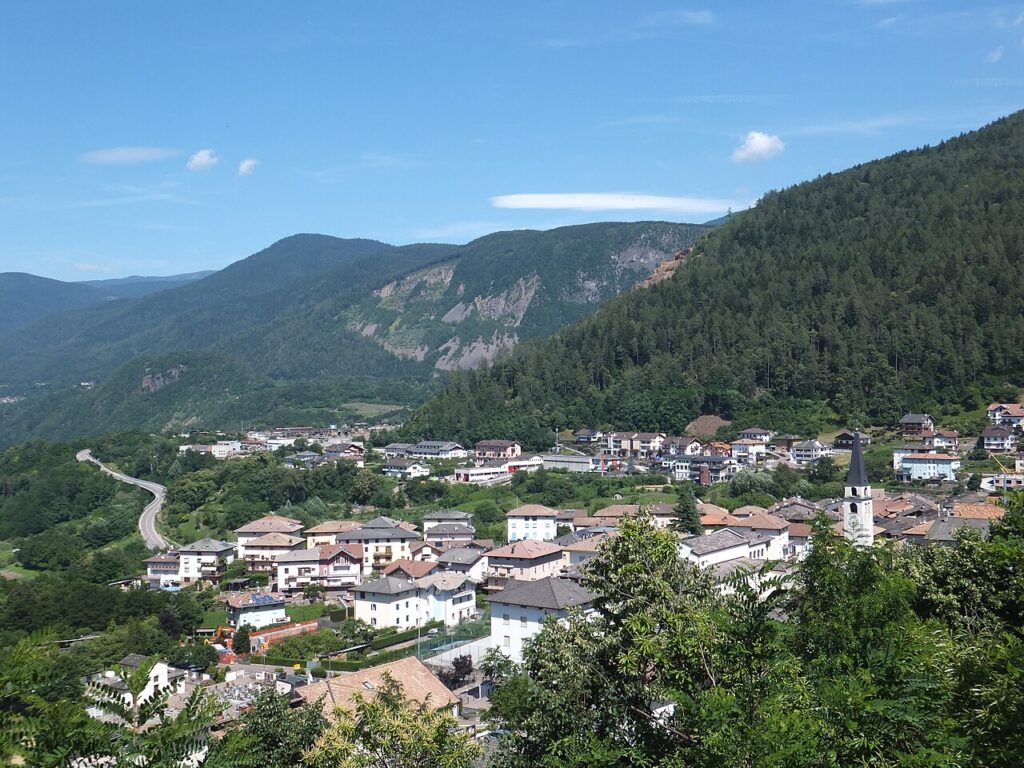
In the Val di Cembra, twenty kilometres north-east of Trento, Albiano rises at 644 metres on a moraine terrace left by ancient glaciers. Stone defines this place: from Etruscan tombs discovered near the Santuario di Sant’Antonio to the open-pit quarries on Monte Gaggio and Monte Gorsa that now cut into the ridge above the village. The landscape is industrial yet alive—a balance between agricultural memory and the roar of extraction machinery that has sustained the community for over a century.
Albiano village in Trentino-Alto Adige embodies two distinct identities: a medieval settlement with roots in Roman mining law, and a modern centre for the production and export of porfido, the volcanic stone formed 260 million years ago in one of Europe’s most extensive mineral deposits. Visitors encounter both dimensions—religious architecture that anchors tradition, and the economic pulse of an extractive industry that replaced rural emigration with opportunity.
Early Settlement and the Mineral Foundation
The name Albiano likely derives from the Roman family name Albius, a hypothesis supported by the abundance of Roman artefacts scattered across the territory. Settlement here is far older than the Latin period: objects from the Bronze Age and Iron Age (5th–6th century BC) have been recovered, and Etruscan-style stone-slab tombs discovered near the Santuario di Sant’Antonio testify to pre-Roman habitation. A Roman underground chamber has also been found, suggesting structured settlement during the imperial period.
The Romans knew this place as a junction point. During the era of Romanisation, Albiano lay near a shortcut of the Via Claudia Augusta Altinate—a route heavily used when the main valley path along the Adige became impassable. From Roman times onward, mining activity shaped the territory: galena argentiferous (silver-bearing lead ore) was extracted with varying intensity until around 1500, regulated and overseen by local feudal lords answerable to the prince-bishop of Trento.
The Codice Vanghiano, compiled in 1208, stands as Europe’s first legal statute concerning mining operations—a document that emerged directly from Albiano’s mineral wealth and the entrepreneurial families who managed its extraction under ecclesiastical authority.
Among those families was Trentino, a prominent mining operator of the Calisio and Albiano deposits and feudal vassal of prince-bishop Federico Vanga. His son, Federico d’Albiano, participated actively in drafting the Codice Vanghiano itself, binding Albiano’s name to a watershed moment in European resource law. During the early 14th century, Albiano belonged to the gastaldia (administrative district) of Pergine, along with Pinè and other communities. After the restoration of the Trento Prince-Bishopric, jurisdiction passed directly to Trento.
The Congress of Vienna in 1815 redefined territorial belonging: the districts of Trento and Bressanone were incorporated into the Tyrolean province with its capital at Innsbruck. At the end of the First World War, the new Province of Trento was established, extending from Ala to the Brenner. Fascism suppressed local councils and introduced the office of Podestà; the adjoining commune of Lona-Lases was suppressed and incorporated during the Fascist period, then separated again in 1952 following the Second World War.
Agriculture, Emigration and Modern Extraction
For centuries, the rhythm of Albiano followed the agricultural calendar: vineyards, wheat, chestnuts, hay meadows and pasture dominated the economy. Selvicoltura (forestry) provided supplementary income. These were subsistence-level pursuits in a mountain setting, never affluent. The 19th century brought catastrophe: cholera, drought and fires combined with limited opportunity to trigger sustained emigration, especially toward the Americas. Families left in waves, seeking a future elsewhere.
The discovery of porfido deposits in 1911—coinciding with the construction of the Strada Provinciale n. 76 (Gardolo Lases)—reversed this trajectory entirely. Quarries multiplied on Monte Gaggio and Monte Gorsa. Processing facilities emerged to shape the raw stone into slabs, cubetti (cubic blocks), edge treatments and other elements for urban paving and architectural use. By the later 20th century, Albiano became one of central Europe’s principal porfido production and export centres, attracting labour first from southern Italy, then from further afield. The stone trade halted emigration and transformed the economy; today it remains the lifeblood of the valley and a significant sector across the entire province.
Religious Architecture and Community Identity
Chiesa di San Biagio (Old Church)
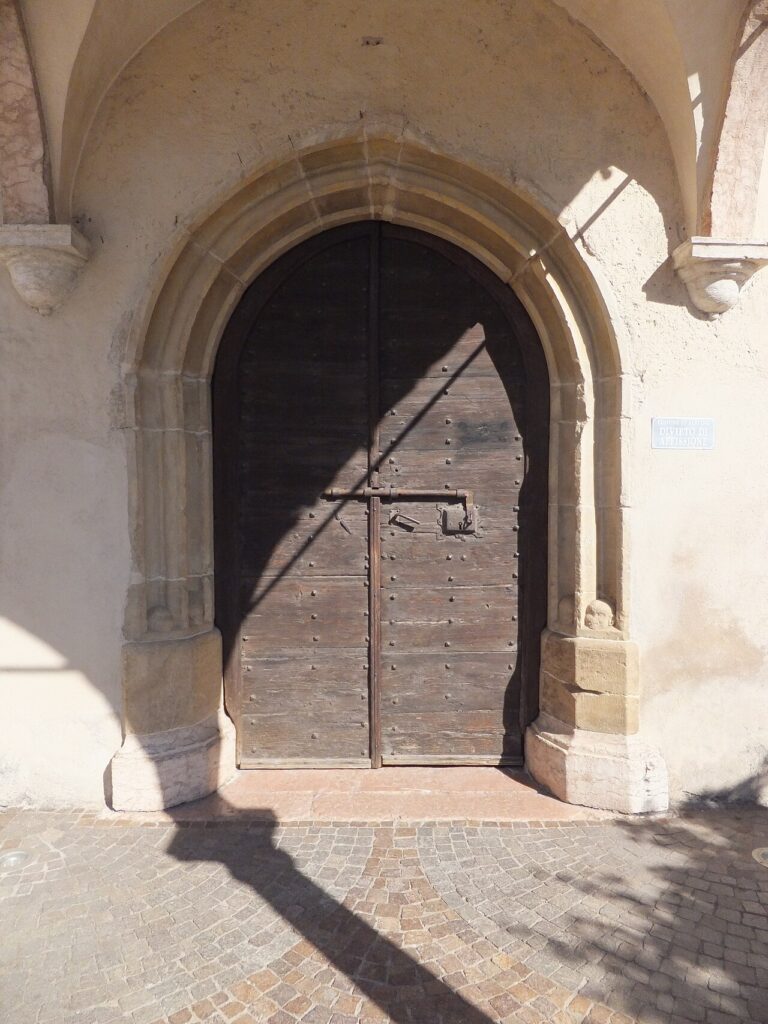
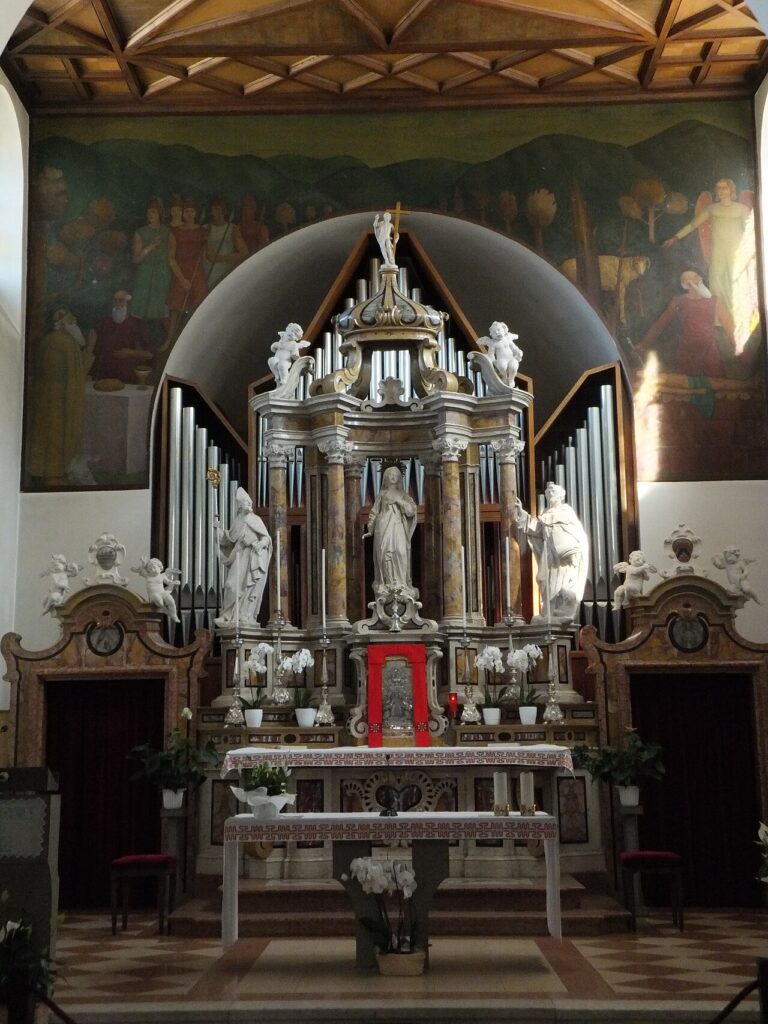
The old Church of San Biagio, documented as early as the 14th century, once served as the parish church and now functions as a subsidiary chapel. Its modest presence on the village landscape speaks to continuity: San Biagio, the patron saint, has watched over Albiano for centuries, his feast celebrated on 3 February in the Alpine calendar of devotion.
Chiesa di San Biagio (New Church)
Built in 1932 to replace the cramped medieval structure, the new Church of San Biagio serves as the current parish church. Its mid-20th-century construction marks the period when Albiano’s modern extractive economy was reshaping the settlement, requiring larger communal spaces to accommodate a growing population drawn by quarry work.
Chiesa dei Santi Antonio di Padova e Rocco
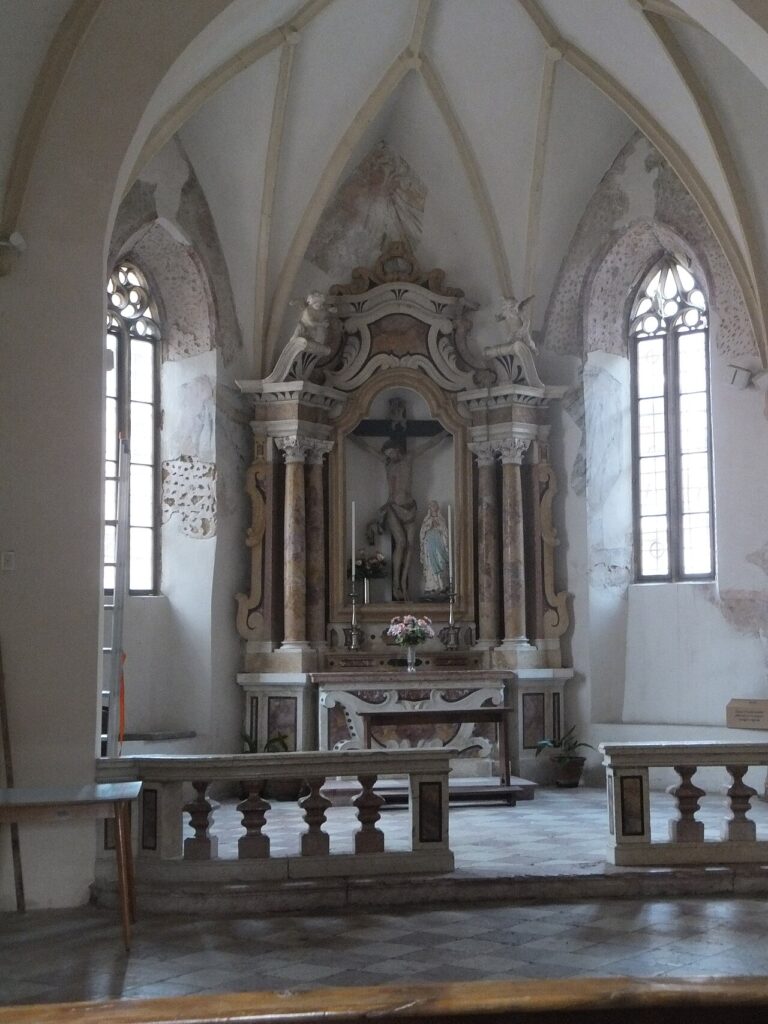
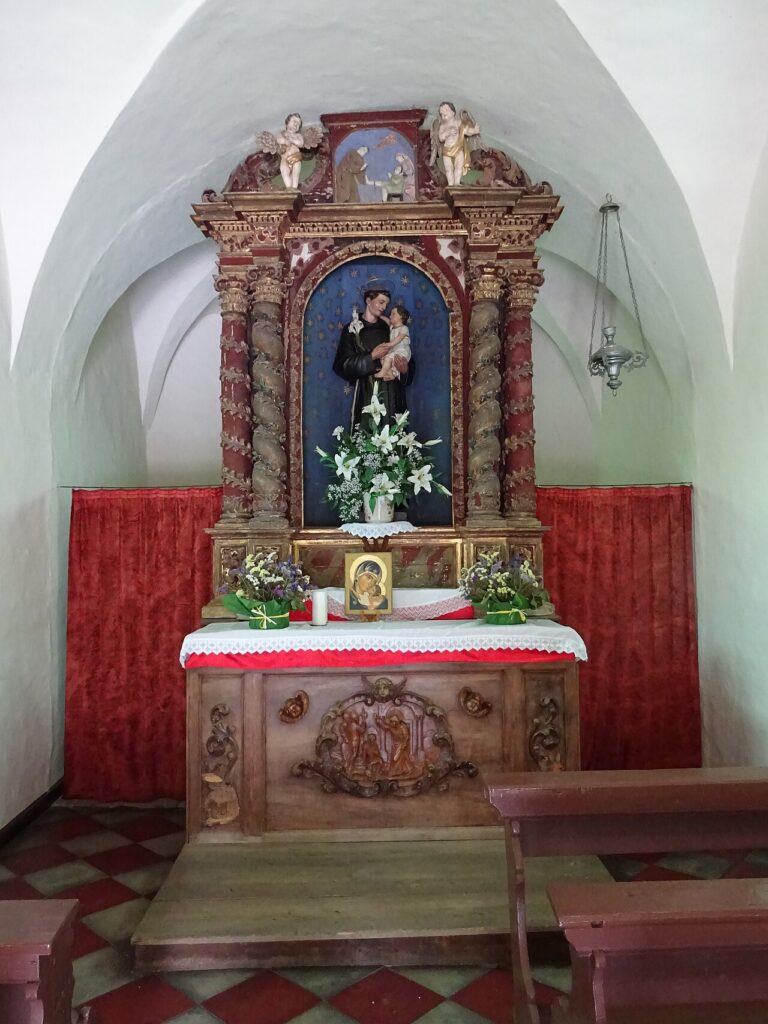
Consecrated in 1670, this subsidiary church dedicated to Saint Anthony of Padua and Saint Roch stands as a reminder of plague veneration and counter-Reformation piety. The dual dedication reflects the religious anxieties of the 17th century, when infectious disease remained a constant threat in Alpine communities.
San Romedio
Located in the frazione (hamlet) of Barco di Sopra, this church maintains spiritual presence in the upper settlements of the commune, serving the dispersed populations of Barco di Sopra and Barco di Sotto.
Santuario di Sant’Antonio
The Santuario di Sant’Antonio holds archaeological significance as the site where Etruscan-style stone-slab tombs were recovered, anchoring Albiano’s pre-Roman history in sacred ground. The sanctuary remains a spiritual focal point within the territory.
Food and Agricultural Heritage
The agricultural tradition of Albiano persists in small-scale viticulture, chestnut cultivation and dairy pastoralism. While the village itself does not produce protected-designation cheese or cured meats, it lies within the broader Trentino food system, where neighbouring producers craft goods such as Asiago DOP and Carne Salada del Trentino IGP. Local tables still feature the fruits of mountain farming: polenta made from traditional grain varieties, apple preparations, and products from the high meadows.
The Val di Cembra as a whole maintains a pastoral and viticultural identity. Visitors to Albiano will encounter the seasonal rhythms of mountain agriculture—hay harvest in summer, grape pressing in autumn—woven into the community’s working calendar alongside the industrial hum of the quarries.
When to Visit and Practical Information
Albiano experiences a continental Alpine climate. The warmest months (June to September) bring mild to warm conditions ideal for walking the valley and visiting the quarry landscapes. Winter snow closes some higher paths but rarely disrupts the main valley road. Spring (April–May) and autumn (September–October) offer clear skies and moderate temperatures; the feast of San Biagio on 3 February draws local observance during the colder season.
The village sits along the Strada Provinciale n. 76 (Gardolo Lases), which connects directly to Trento and other Val di Cembra communities. Trento, the provincial capital, lies approximately 20 kilometres south-west. Public transport links the valley to regional centres; private car access is straightforward via the SP 76.
The comune di Albiano is part of the Comunità della Valle di Cembra, a regional association that coordinates services, cultural events and tourism information across the valley. The official website (https://www.comune.albiano.tn.it) provides practical details on accommodation, local services and seasonal events. The village has limited lodging within its boundaries; visitors typically base themselves in larger valley settlements or nearby Ala and use Albiano as a day stop to see the churches, walk the quarry landscapes and understand the porfido trade that defines the region.
| Departure Point | Distance | Travel Time |
|---|---|---|
| Trento (city centre) | 20 km | 25–30 minutes by car |
| Brenner motorway exit (A22) | 35 km | 40 minutes by car |
| Verona airport (Villafranca) | 150 km | 1 hour 50 minutes by car |
| Innsbruck, Austria | 130 km | 1 hour 45 minutes by car |
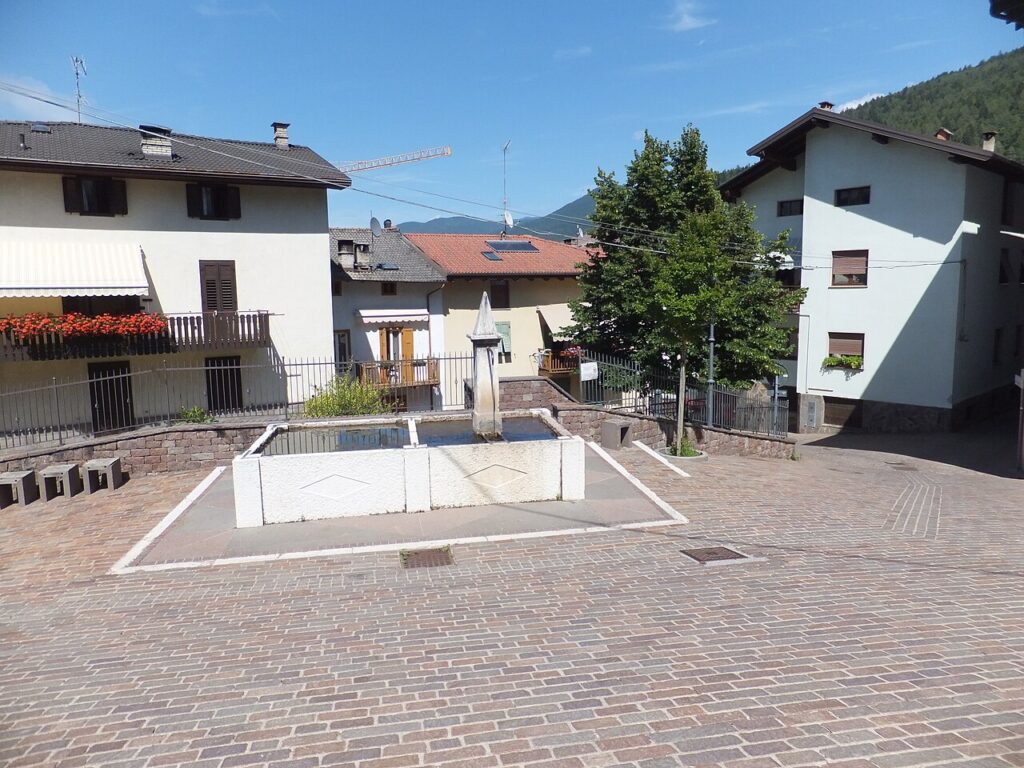
Albiano invites a slow, observant visit: time to sit in one of the small squares, observe the quarry activity on the ridge above, visit the churches that anchor community memory, and walk toward the industrial landscape that now defines the village economy. It is neither a mountain resort nor a heritage theme park, but a living settlement where geology, labour and faith intersect.
Frequently asked questions about Albiano
How do I reach Albiano from Trento?
Albiano is located approximately 20 kilometres north-east of Trento in Val di Cembra. By car, take the SS47 towards Val di Cembra; the journey takes about 30 minutes. Public transport options include regional buses connecting Trento to villages in the valley. The nearest railway station is Trento, from which you can continue by bus or car into the valley.
When is the best time to visit Albiano?
Spring and autumn offer pleasant weather for exploring the mountainous landscape and visiting the quarries. Summer suits hiking and outdoor activities in Val di Cembra. Winter transforms the region into an alpine setting, though mountain access may be limited. The patron saint feast of San Biagio is celebrated on 3 February, offering cultural insight into village traditions.
What are the main attractions in Albiano?
Key attractions include the Santuario di Sant'Antonio, where Etruscan tombs have been discovered, and the open-pit porfido quarries on Monte Gaggio and Monte Gorsa, which showcase the region's important extraction heritage. The village's religious architecture reflects its medieval roots, while the working quarries reveal the industrial dimension that has sustained the community for over a century.
Is Albiano suitable for outdoor activities?
Yes. Val di Cembra offers hiking and mountain biking opportunities. The landscape around Albiano, formed by ancient glacial moraines and surrounded by alpine terrain, provides natural routes for exploration. The area is part of Trentino-Alto Adige's established hiking network. Spring through autumn are ideal seasons for outdoor activities in this 644-metre elevation setting.
What is porfido and why is it important to Albiano?
Porfido is a volcanic stone formed 260 million years ago within one of Europe's most extensive mineral deposits. Albiano developed as a modern centre for porfido production and export, with quarries operating on surrounding mountains for over a century. The stone industry became the economic foundation of the village, replacing earlier agricultural emigration with sustainable employment opportunities.
📷 Photo Gallery — Albiano
In Trentino-South Tyrol More villages to discover

Castelrotto
Mountain
7,000 residents, three languages and one of the Alps' highest-altitude market towns. Castelrotto offers medieval architecture, Ladin heritage and alpine pastures.
Campo Tures
Mountain
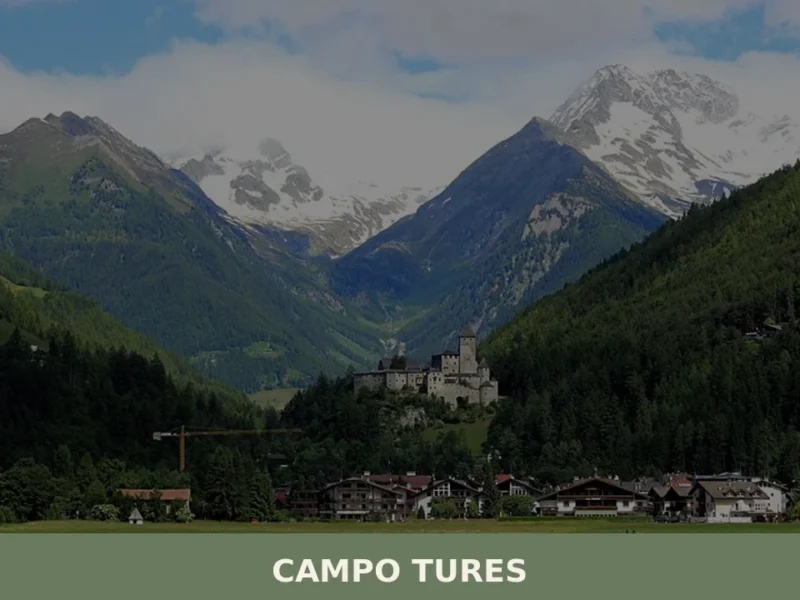
Tures Castle, first documented in 1136, dominates Campo Tures from a rocky spur at the entrance to the Tures Valley, a side valley of the Aurina Valley. The village has 5,321 inhabitants, spread across an elevation of 864 metres, in a basin where the Aurino torrent slows before continuing south. Understanding what to see in […]
Aldeno
Mountain
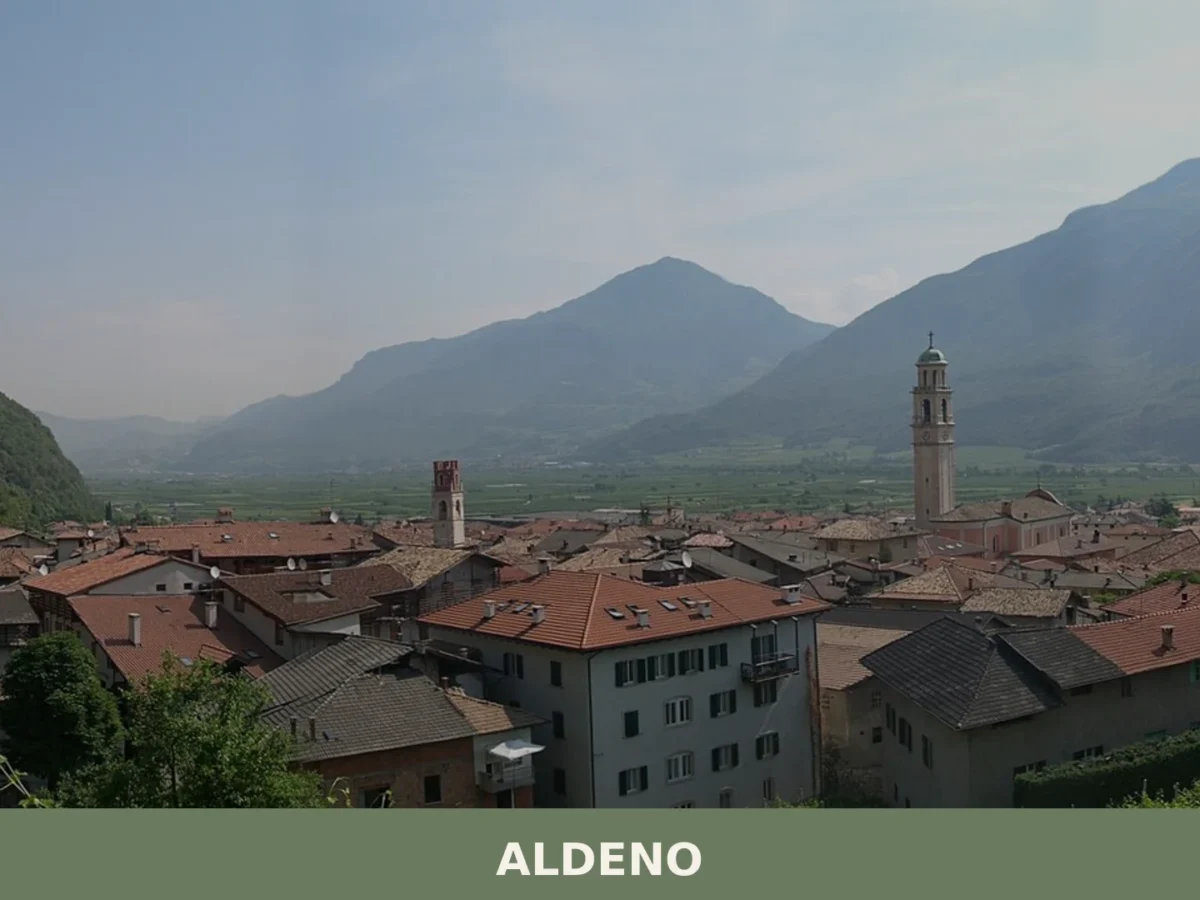
A 3,374-inhabitant comune on the Adige's bank, Aldeno blends prehistoric trade crossings with baroque churches and the memory of the Austro-Hungarian Great War command.
Altopiano della Vigolana
Mountain
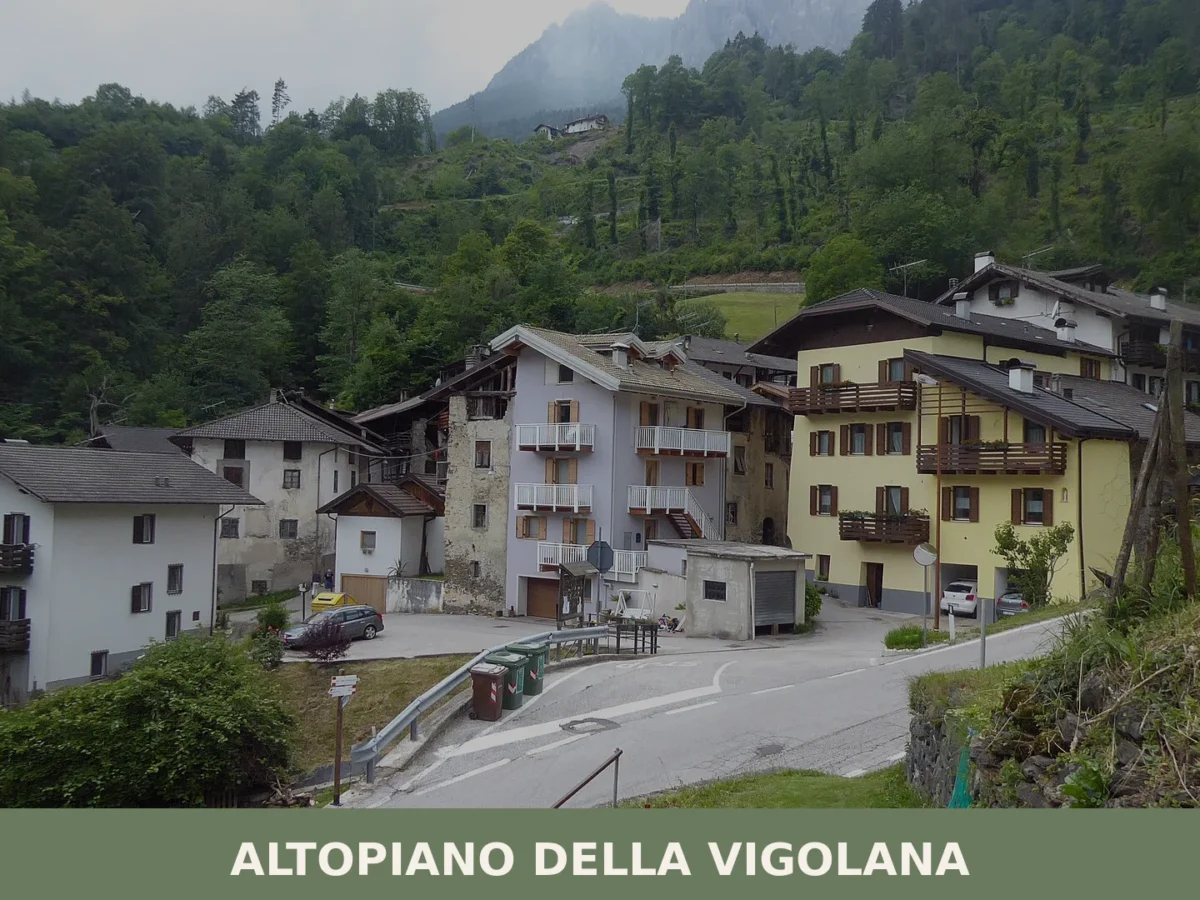
Five thousand inhabitants spread across four frazioni at 725 metres altitude. Roman roads, medieval churches and a 2015 municipal reunification anchor this mountain village in the Upper Valsugana.
Andriano
 Hills
Hills
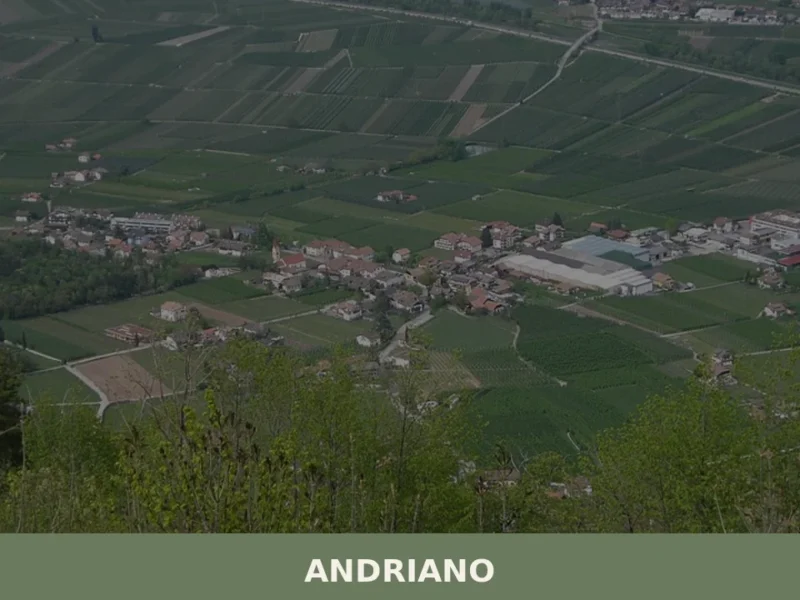
At 274 metres above sea level, on the left bank of the Adige river, Andriano has 1,025 inhabitants spread between the historic centre and the farmsteads scattered among rows of vines. The municipality, one of the smallest in South Tyrol by area, extends entirely across flat ground along the alluvial strip connecting Bolzano to Merano. […]
Bolzano
Hills
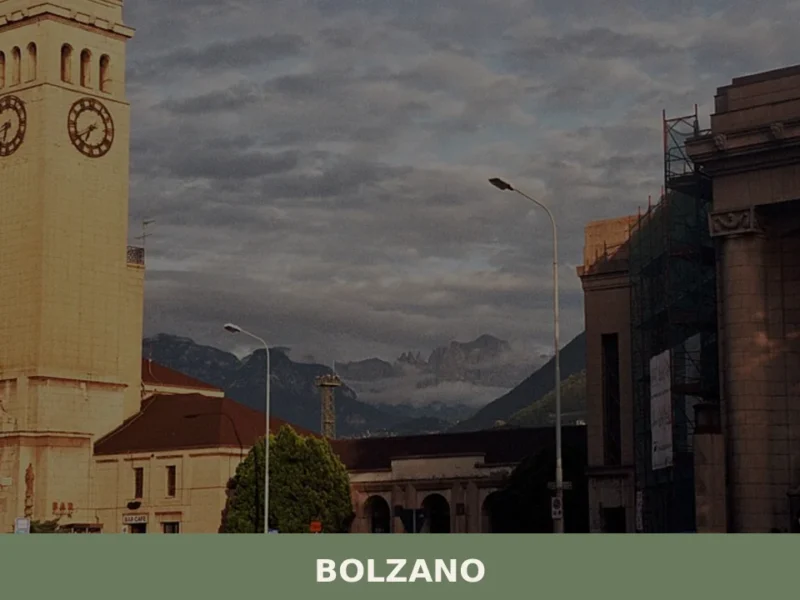
what to see in bolzano at 262m altitude. Discover the South Tyrol Museum of Archaeology, home to Ötzi the Iceman, and stroll along the historic Portici Street.
Ala
Mountain
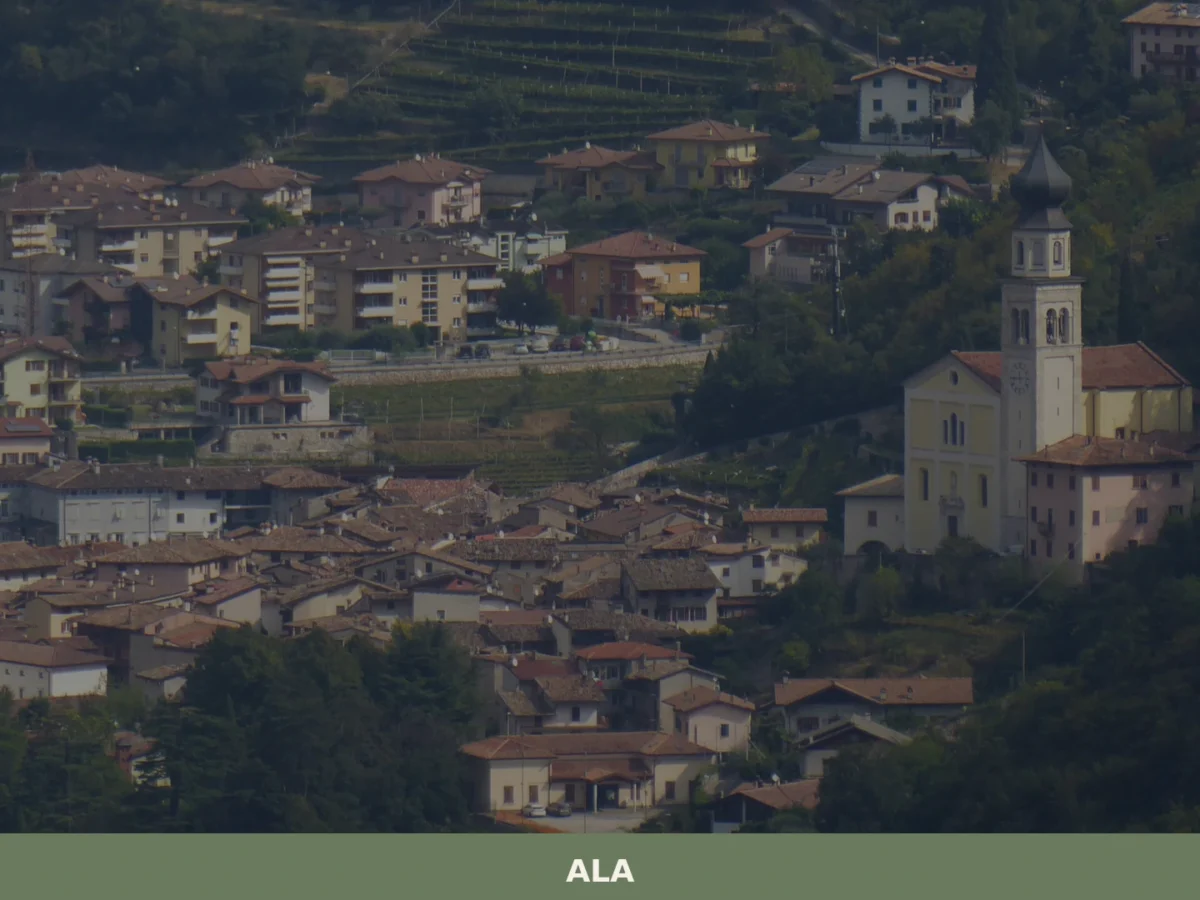
Discover what to see in Ala, Trentino: silk merchant palazzi, Habsburg border history, Vallagarina wines and the Valle dei Ronchi. Practical tips included.
Caldaro sulla strada del vino
Hills
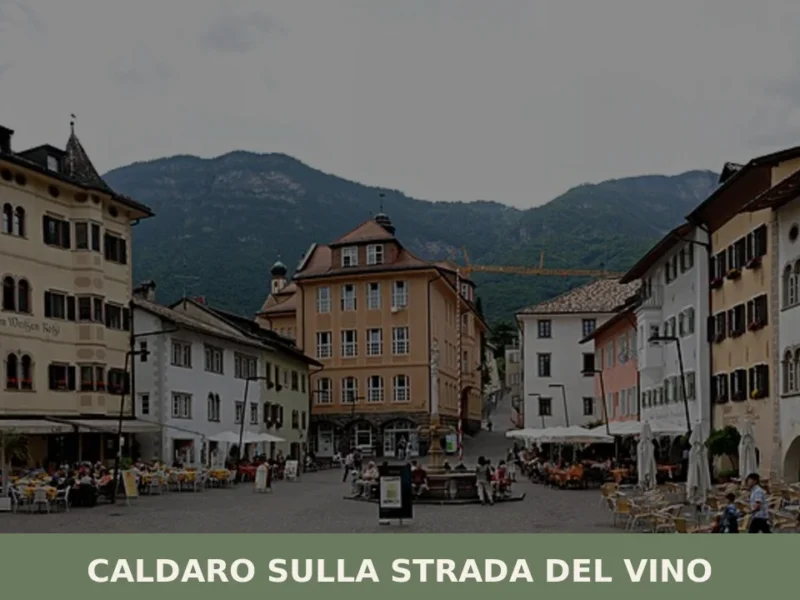
Caldaro sulla strada del vino — Kaltern an der Weinstraße in German — has 7,735 inhabitants and over 600 hectares of vineyards, the largest cultivated wine-growing area in South Tyrol. The place name itself declares the vocation of this centre in the province of Bolzano, which grew along the trade route linking the Bassa Atesina […]
Caines
Hills
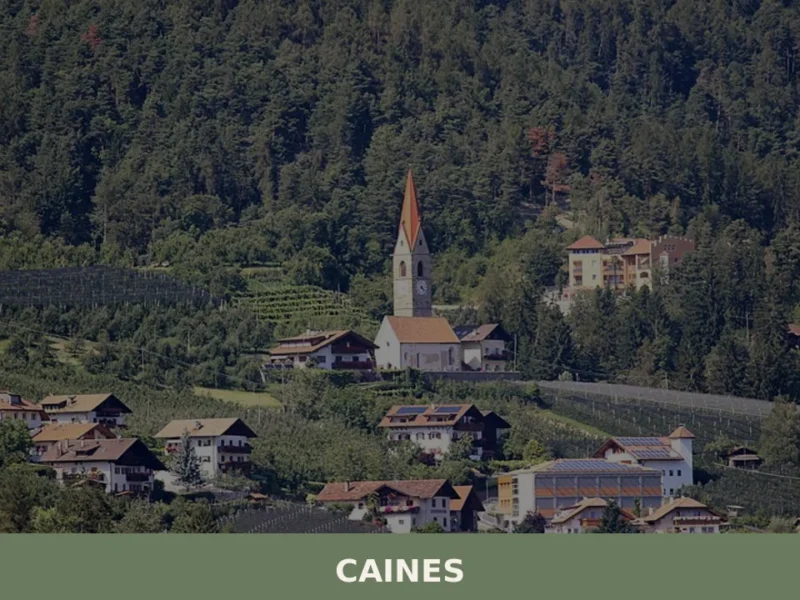
With just 398 registered inhabitants and an elevation of 592 metres above sea level, Caines — Kuens in German — is one of the smallest municipalities in the province of Bolzano. It extends across the sun-facing slope of the middle Passiria Valley, a few kilometres from Merano, on a natural terrace overlooking the confluence of […]
Bressanone
Hills
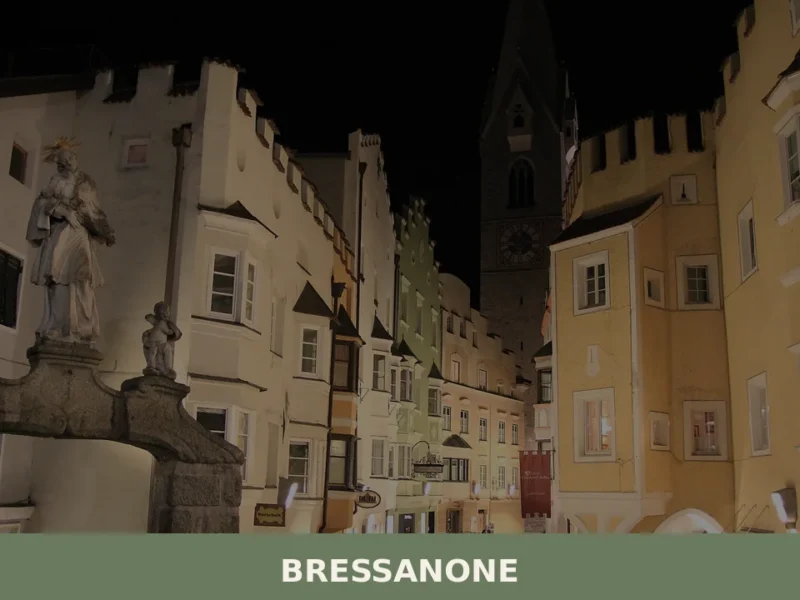
Bressanone is the oldest city in Tyrol, with a bishopric founded around 990 AD that shaped the urban, economic and cultural structure of the entire valley for centuries. Situated at 559 metres above sea level, at the point where the Rienza river flows into the Isarco, the city has a current population of 22,816 and […]


🏡 Know Albiano better than we do?
If you’re a local or have been there, your knowledge matters: add what’s missing or fix a detail on this page.