


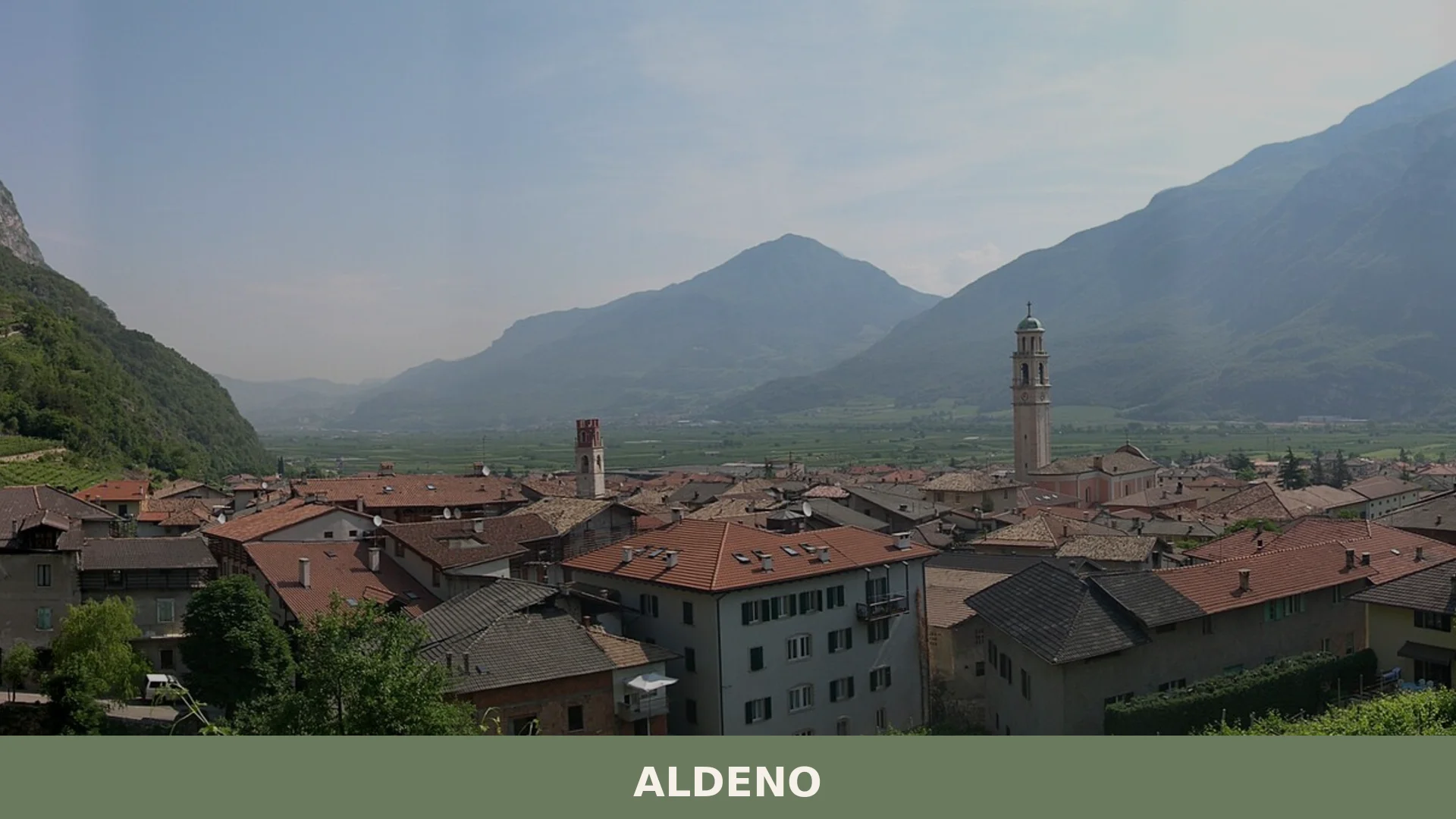
Aldeno
 Mountain
A 3,374-inhabitant comune on the Adige’s bank, Aldeno blends prehistoric trade crossings with baroque churches and the memory of the Austro-Hungarian Great War command.
Aldeno: Where Ancient Trade Routes Meet Alpine Baroque Architecture
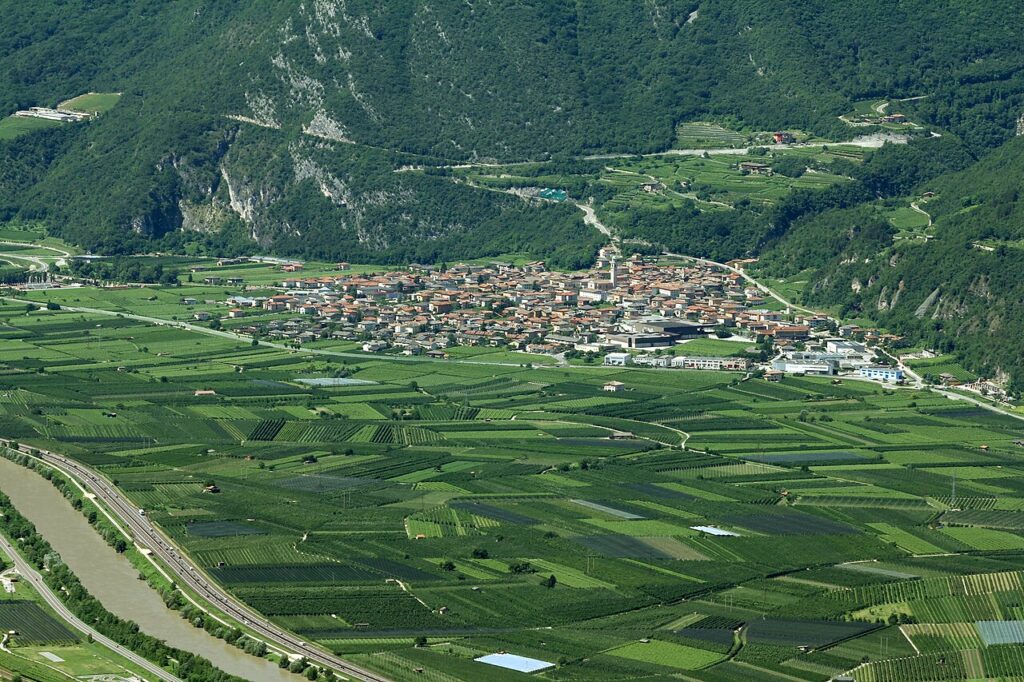
The river Adige bends sharply near Aldeno, and for centuries that bend shaped everything the village became. Bronze Age communities already knew this place as a crossing point; Roman merchants moved along the Via Claudia Augusta through its fields. Today the town sits quietly on that same right bank, midway between Trento and Rovereto, its stone campanile rising above vineyards and orchards at 209 metres above sea level.
Aldeno village in Trentino-Alto Adige is a comune of 3,374 people whose identity rests on two pillars: its role as an ancient commercial hub and its baroque ecclesiastical presence. Visitors arrive to trace the layers of its past—from Bronze Age archaeology to the traces of irredentist struggle during the First World War—and to understand how a small Alpine settlement sustained itself through vine cultivation, silk production and the craft trades of wood and iron.
Origins and Medieval Administration
The name Aldeno carries uncertain roots. Scholars debate whether it derives from the Latin Altinum, the Lombard Aldio, or even the Etruscan Altena or Altuno. From the thirteenth century onward, the village appears in records as Aldenum. In the local Trentino dialect, residents call it Naldem.
What is documented with precision is Aldeno’s role within the Comun Comunale, a medieval administrative institution that governed the Vallagarina from 1100 until 1818. This body managed forests and uncultivated lands across multiple comuni through assemblies called Regole, where male heads of household gathered to decide on collective affairs. That tradition survives today in an annual festival held among seven valley towns—Aldeno, Cimone, Isera, Nogaredo, Nomi, Pomarolo and Villa Lagarina—rotating between late May and early June, where historical games and pageantry recall the medieval system.
In 1866, Aldeno petitioned the Tyrolean Diet to transfer its administrative allegiance from the Lagarino district to that of Trento, a shift that reflected changing territorial and economic interests during the late Habsburg period.
The Great War and Its Scars
Aldeno’s twentieth-century story begins with military occupation. During the First World War, the village became headquarters for the XXI Austro-Hungarian Army Corps, commanded by General Kasimir von Lütgendorf. The Austro-Hungarian authorities moved the administrative and judicial offices of Rovereto to Aldeno, and the town filled with refugees fleeing bombardment in the valleys of Leno, Lizzana and Marco.
In 1916, three figures central to the Italian Risorgimento cause passed through or were identified in Aldeno: the irredentists Damiano Chiesa, Cesare Battisti and Fabio Filzi. All three had been captured by Austro-Hungarian forces in separate actions and were tried by military tribunal at Trento, where they were condemned to death.
A quarter-century later, at the close of the Second World War, Aldeno again became a scene of violent struggle. Partisan units of the Pasubiana engaged retreating Nazi forces in the village, resulting in multiple casualties. These decades left deep marks on collective memory and still shape how residents understand their place in twentieth-century European history.
Rural Economy and Nineteenth-Century Migrations
Before industrial transformation, Aldeno’s livelihood rested on vine cultivation and silkworm breeding—the latter an activity introduced after the Adige’s repeated flooding made conventional agriculture precarious in low-lying areas. Alongside viticulture, farmers planted apple, cherry and plum trees, and cultivated asparagus and other market vegetables. By the second half of the nineteenth century, however, rural poverty and land scarcity triggered waves of emigration. The most significant was a movement toward Bosnia, driven by land-division schemes that offered settlers plots to work.
Wood and metalwork crafts provided alternative income: carpentry, cooperage, masonry, blacksmithing and increasingly aluminum construction became local trades, sustained partly by watermills and small workshops along the Arione stream.
The Baroque Church and Civic Tower
The Church of San Modesto, erected between 1767 and 1776, dominates the village core with its late-baroque vocabulary. The campanile, constructed from the pink and white limestone of the Cadine quarries, reaches 64 metres in height and terminates in a distinctive copper spire shaped like an English helmet. The tower’s form and material make it among the most recognizable vertical landmarks in the Vallagarina, visible across the valley floor.
Close by stands the Civic Tower, the last surviving element of the much older Church of San Zeno, which dated to the sixteenth and seventeenth centuries before being demolished during the eighteenth century. This solitary tower anchors Aldeno’s earlier ecclesiastical and civic identity, a stub of stone that connects the baroque present to the pre-Enlightenment past.
Castello delle Flecche
A sixteenth-century noble residence, the Castello delle Flecche stands as a material reminder of aristocratic settlement patterns in the Vallagarina. The palazzo belonged to the Brolio family and represents the domestic architecture of the regional gentry during the early modern period. It remains a landmark of Aldeno’s built heritage, though not open for regular visits.
Craft Heritage: The IGF Bindery
Just beyond the village periphery stands the IGF S.p.A. Legatoria, one of the largest bookbinding workshops in Trentino and northern Italy. Operated by the Baldo family, this industrial artisanship employs approximately 100 workers and has produced bound volumes for major publishers, including numerous titles from Palermo’s Sellerio press. The workshop embodies the continuation of craft tradition and the village’s capacity to adapt its economy to new material and cultural demands.
Wine, Fruit and Local Flavours
The wines of the Vallagarina have long held a place in regional identity, and Aldeno participates in this culture through MondoMerlot, a major wine festival held in the second half of October that draws producers from across Italy and internationally. The event is one of the region’s important showcases for viticulture and brings visitors focused on tasting and learning about local cultivation practices.
In August, Aldeno hosts Calici di Stelle (Starlit Glasses), an evening celebration conceived by the Movimento Turismo del Vino that pairs local wine with stargazing during the San Lorenzo meteor shower. Fresh fruit—apples, cherries, plums—and asparagus remain staples of the local agricultural calendar, connecting table to field in rhythms that have persisted for generations.
Planning Your Visit
Aldeno lies approximately 10 kilometres south-west of Trento, on the right bank of the Adige. The village sits at the eastern foot of Monte Bondone, roughly midway between the regional capital and Rovereto. Road access is direct: the village is served by connections to the main valley road linking Trento and Rovereto. If you arrive by car from Trento, allow 12–15 minutes; from Rovereto, roughly 20 minutes.
| Departure Point | Distance | Approximate Time |
|---|---|---|
| Trento | 10 km | 12–15 minutes by car |
| Rovereto | 15 km | 18–22 minutes by car |
| Innsbruck (Austria) | 180 km | 2 hours by car |
The best seasons are late spring (May–June), when the Comun Comunale festival rotates through the valley towns, and autumn (September–October), when wine events and harvest rhythms dominate the regional calendar. Summer brings heat to the valley floor, though evening and morning light on the Adige and the surrounding slopes reward early rising or evening walks. Winter is mild compared to higher Alpine elevations, though the Adige valley can be grey and damp.
Visitors seeking baroque ecclesiastical architecture will find the Church of San Modesto a key draw; those interested in Great War heritage and European irredentism will recognize Aldeno as a site charged with twentieth-century memory. The village serves equally as a base for exploring the broader Vallagarina, with road access to neighboring comuni and the larger cultural infrastructure of Trento and Rovereto nearby.
The Comun Comunale – I Giochi e la Regola remains vividly alive not as a museum reconstruction but as an annual rotating festival among the seven valley towns that once governed their common lands together. The tradition links present-day residents to medieval patterns of collective decision-making that persisted for more than seven centuries.
Frequently asked questions about Aldeno
How do I reach Aldeno by car or train?
Aldeno lies midway between Trento and Rovereto in Trentino-Alto Adige. By car, use the Brenner motorway (A22) and exit at Rovereto Nord or Trento Sud, then follow regional roads toward the Adige valley. The nearest railway station is Rovereto, approximately 15 km south, served by regional and national trains on the Brenner line. Local buses connect both cities to Aldeno.
When is the best time to visit Aldeno?
Spring and early autumn offer mild Alpine weather ideal for exploring vineyards and historic sites. The patron saints' feast day of SS. Vito and Modesto (typically June 15) brings local celebrations. Summer suits outdoor walks and wine tasting. Winter is quieter but rewarding for those seeking solitude among stone architecture and mountain views at 209 metres elevation.
What walking trails and cycling routes are available near Aldeno?
Aldeno sits within the Adige valley network, which connects documented CAI (Italian Alpine Club) routes linking Trento and Rovereto. The riverside landscapes offer accessible cycling paths following the Adige course. Detailed route maps and trail conditions are available from Trentino tourism offices and local hiking guides. Routes vary from easy valley walks to moderate hill ascents.
How long should I plan to spend in Aldeno?
A half-day visit suffices to explore the baroque church, civic tower, and village core. Full-day visits allow time for the Castello delle Fleche, local wine estates, and the IGF bindery heritage site. Overnight stays enable wine tasting tours, Adige riverside walks, and day trips to nearby Trento and Rovereto while using Aldeno as a quieter base.
What local wines and products can I taste or buy in Aldeno?
Aldeno's vineyards produce regional Trentino wines, particularly white varieties suited to Alpine terroirs. Local orchards yield apples and stone fruits. Historically, the village sustained itself through silk production and craft trades in wood and iron, legacies partially preserved in artisan workshops. Contact local agriturismos and wine estates directly for tasting visits and authentic product sales.
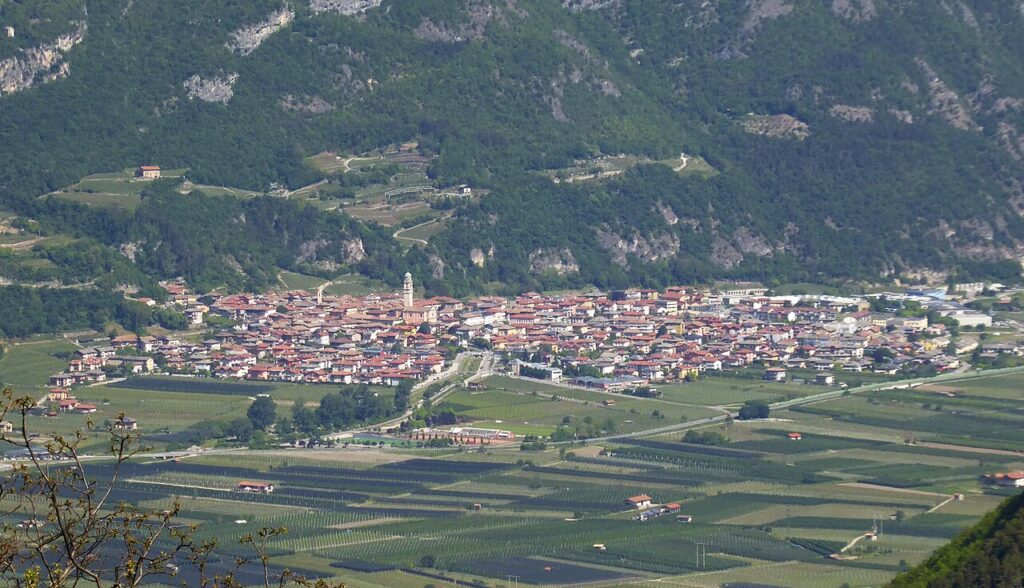
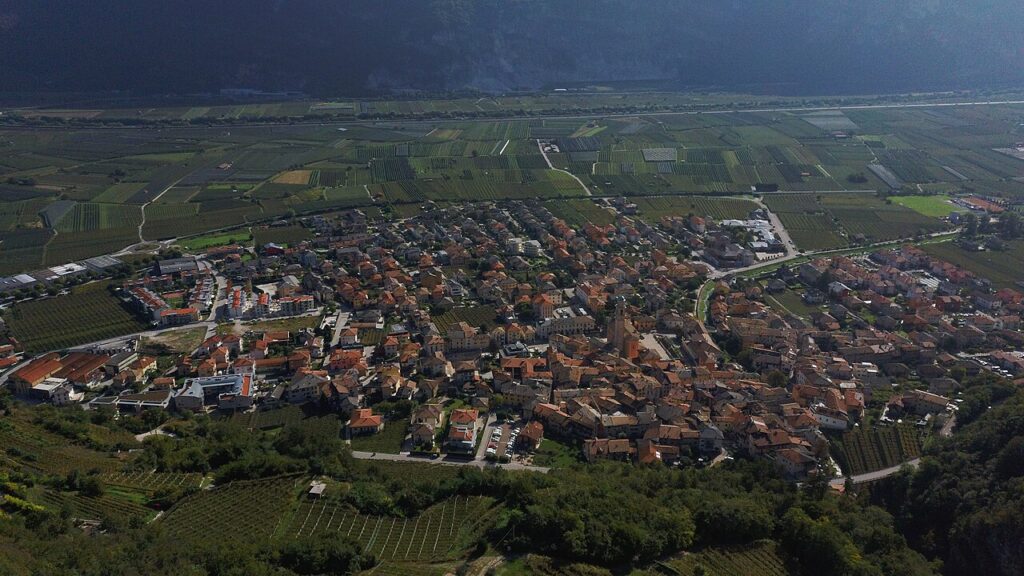
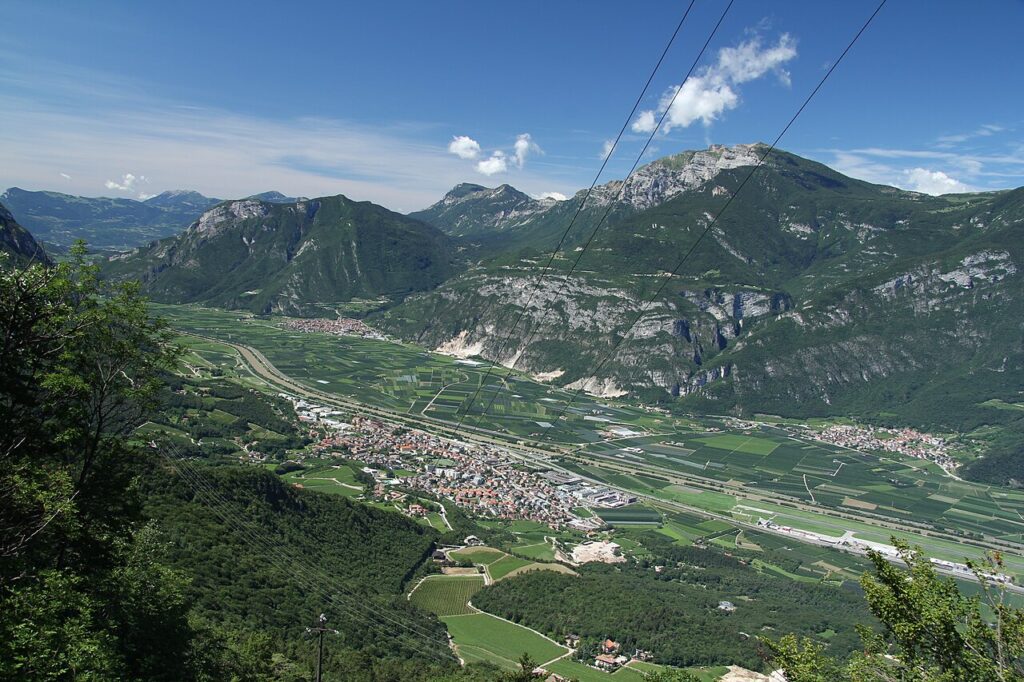
📷 Photo Gallery — Aldeno
In Trentino-South Tyrol More villages to discover
Brennero
Mountain
The Brenner Pass, at 1,370 metres above sea level, is the lowest Alpine crossing between Italy and Austria, and this geographical circumstance has shaped every aspect of life in the village that bears its name. With 2,111 inhabitants spread across the hamlets of Brennero, Fleres, Ponticolo and Terme di Brennero, the municipality marks the northern […]

Castelrotto
Mountain
7,000 residents, three languages and one of the Alps' highest-altitude market towns. Castelrotto offers medieval architecture, Ladin heritage and alpine pastures.
Barbiano
Mountain
Barbiano covers 25.26 square kilometres on the right-hand slope of the Isarco Valley, spread across five hamlets — Barbiano village, Colma, San Giacomo, Saubach and Dreikirchen — each with its own architectural identity and historical function. Understanding what to see in Barbiano means crossing a territory that rises from 471 metres on the valley floor […]
Caines
 Hills
Hills
With just 398 registered inhabitants and an elevation of 592 metres above sea level, Caines — Kuens in German — is one of the smallest municipalities in the province of Bolzano. It extends across the sun-facing slope of the middle Passiria Valley, a few kilometres from Merano, on a natural terrace overlooking the confluence of […]
Campo Tures
Mountain
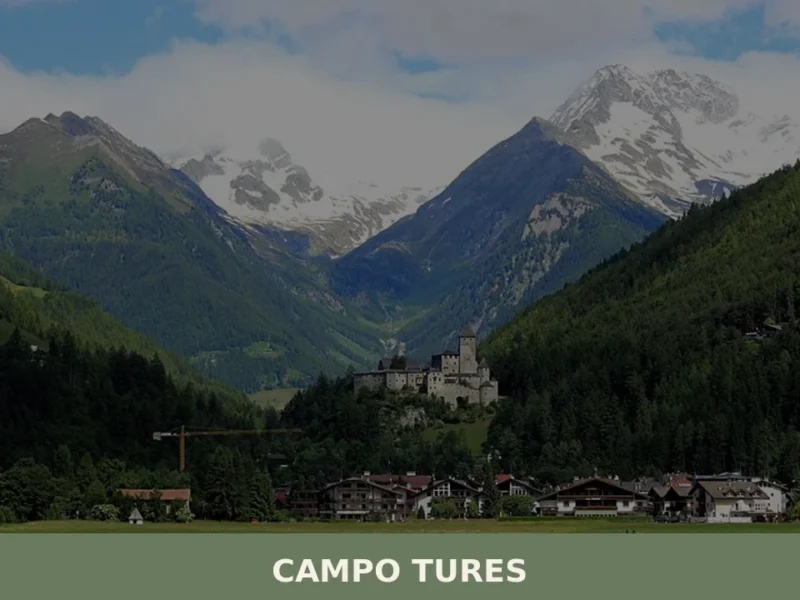
Tures Castle, first documented in 1136, dominates Campo Tures from a rocky spur at the entrance to the Tures Valley, a side valley of the Aurina Valley. The village has 5,321 inhabitants, spread across an elevation of 864 metres, in a basin where the Aurino torrent slows before continuing south. Understanding what to see in […]
Braies
Mountain
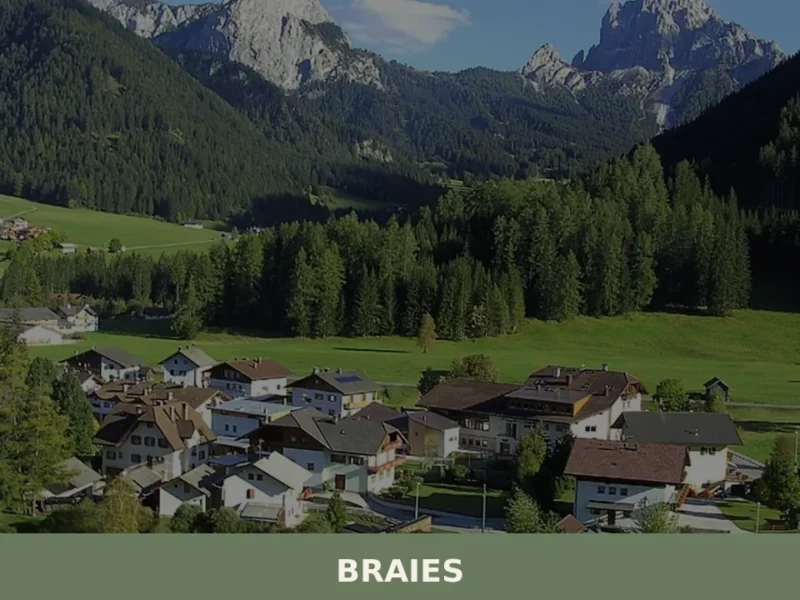
Lake Braies, sitting at 1496 metres above sea level, is the deepest natural lake in South Tyrol: 36 metres at its maximum point, fed by underground springs that filter through the Dolomite rock. This geological fact alone explains why hundreds of thousands of people reach this side valley off the Puster Valley every year. But […]
Ala
Mountain
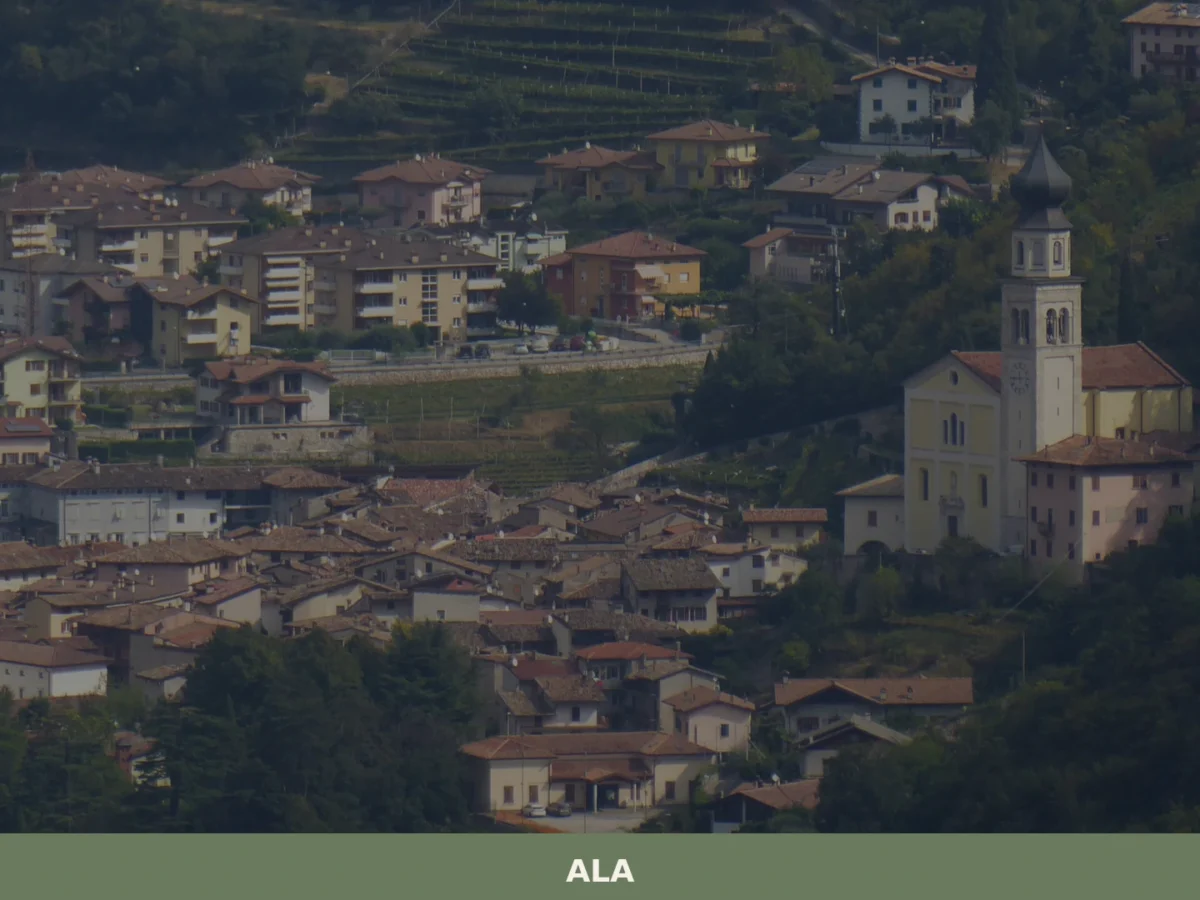
Discover what to see in Ala, Trentino: silk merchant palazzi, Habsburg border history, Vallagarina wines and the Valle dei Ronchi. Practical tips included.
Caldaro sulla strada del vino
Hills
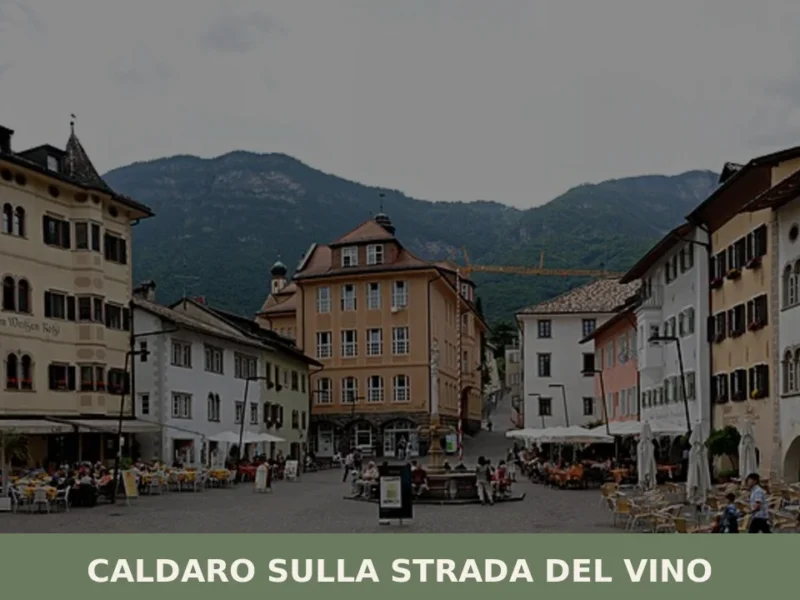
Caldaro sulla strada del vino — Kaltern an der Weinstraße in German — has 7,735 inhabitants and over 600 hectares of vineyards, the largest cultivated wine-growing area in South Tyrol. The place name itself declares the vocation of this centre in the province of Bolzano, which grew along the trade route linking the Bassa Atesina […]

Trento
 Plains
What to see in Trento, a city of 119,359. Discover its Duomo, Castello del Buonconsiglio, and typical cuisine. Explore its rich Council history.
Andriano
Hills
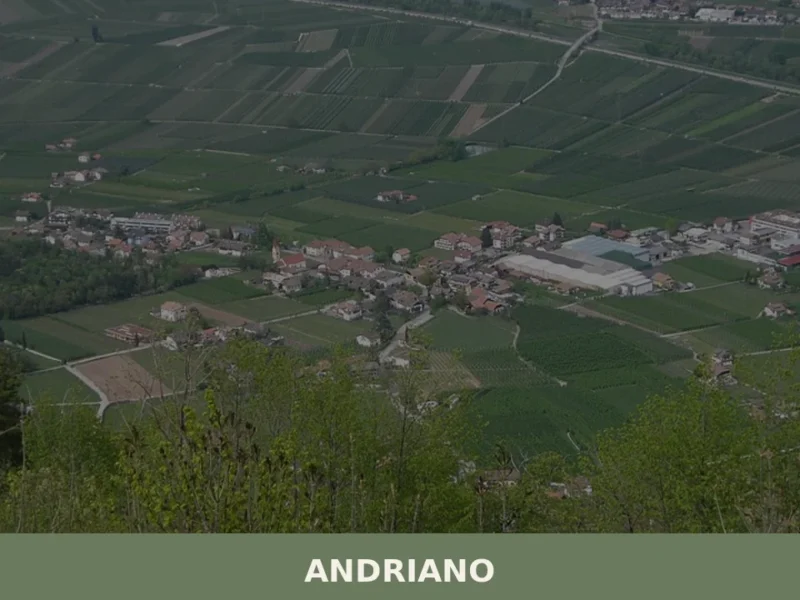
At 274 metres above sea level, on the left bank of the Adige river, Andriano has 1,025 inhabitants spread between the historic centre and the farmsteads scattered among rows of vines. The municipality, one of the smallest in South Tyrol by area, extends entirely across flat ground along the alluvial strip connecting Bolzano to Merano. […]



🏡 Know Aldeno better than we do?
If you’re a local or have been there, your knowledge matters: add what’s missing or fix a detail on this page.