 Mountain
 At 341 metres above sea level, Borgia rises on a colline landscape south of Catanzaro, its pale stone buildings arranged in orderly streets that tell the story of rational reconstruction. White beaches stretch along the Ionian coast six kilometres below, and inland, olive groves slope toward the sea. This is not a village that hides its past—it displays it deliberately, in straight lines and proportioned squares, in the deliberate geometry of survival.
The name Borgia carries the weight of a Renaissance dynasty. A village in the province of Catanzaro with 7183 inhabitants, Borgia owes its identity to Giovan Battista Borgia, Prince of Squillace, who authorised its refoundation in 1547 after Turkish raids had forced relocation to safer ground. Two draws connect visitors to the wider region: the archaeological remains of the Roman colony of Scolacium, and the structured townscape of 18th-century renewal that followed catastrophic seismic damage.
Origins and the Borgia Name
The etymology of Borgia traces to the Spanish noble house, whose Italian branch acquired territorial power in Calabria during the late 15th century. The village takes its current name from Giovan Battista Borgia, who granted permission for its reconstruction in a healthier location following raid damage and plague exposure in the early decades of the 1500s.
Before this documented episode, the site held earlier populations. Scholarly inquiry suggests settlement predates the Greek colony of Skilletion, which Greek colonists founded when they landed on the Ionian coast during the 7th and 6th centuries before the Christian era. They discovered indigenous communities devoted to herding and pastoral life. The Roman coastal city of Scolacium, which later rose nearby, was abandoned between the 7th and 8th centuries, and survivors retreated inland to a hillside settlement called Palagorio, seeking refuge from Saracen incursions and the spread of malaria.
Earthquake, Reconstruction and Enlightenment Design
In the 18th century, Borgia passed to the De Gregorio family, a noble lineage of the region. The stability proved brief. The catastrophic earthquake of 1783 destroyed much of the settlement and decimated its population, as it did across southern Calabria. Royal authorities established a reconstruction fund—the cassa sacra—to rebuild devastated communities, and Borgia was redesigned by architect Vincenzo Ferraresi with Enlightenment principles: geometric streets, rational squares, a level terrain chosen over the cramped medieval hillside.
This orderly layout persists today. The village remained loyal to the Bourbon crown during the brief Neapolitan Republic and later played an active role in the Risorgimento, the Italian unification movement. Under French administration in 1811, it served as the administrative seat for a district encompassing Girifalco and San Floro. When unified Italy formed, Borgia joined the kingdom. A further earthquake in 1905 inflicted additional damage but did not erase the 18th-century urban fabric.
The village rebuilt itself through rational planning rather than organic growth, creating streets that still run straight and squares that still feel like the result of deliberate choice—a rarity in southern Italy, where medieval tangles usually prevail.
Sacred and Civic Life
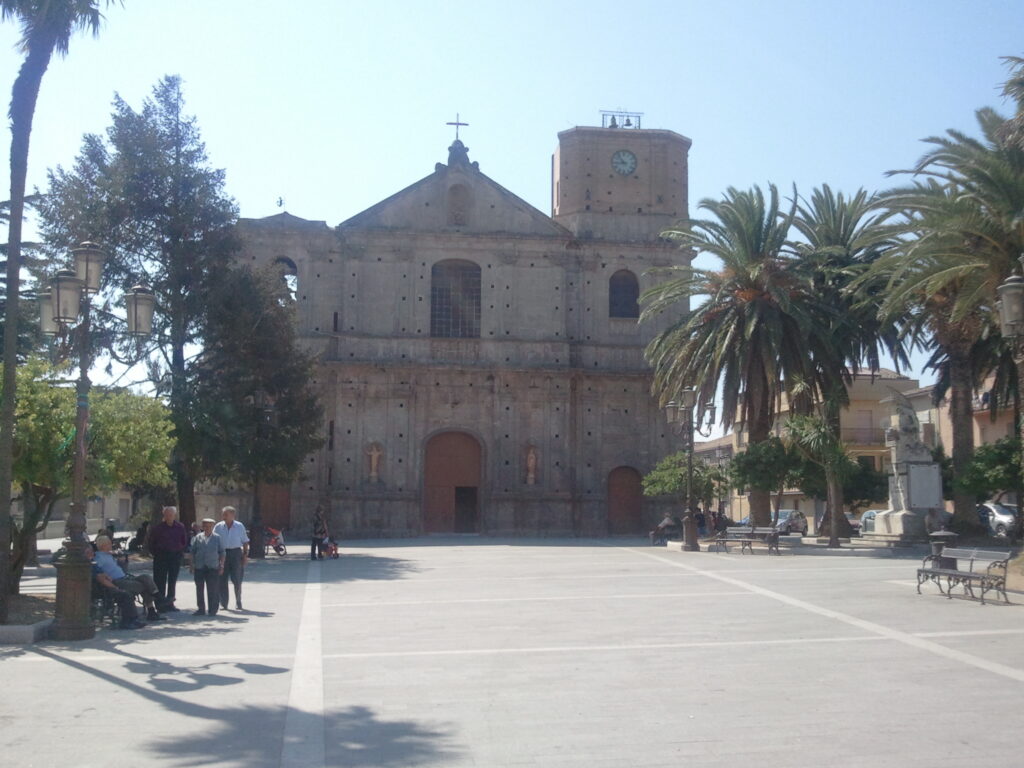
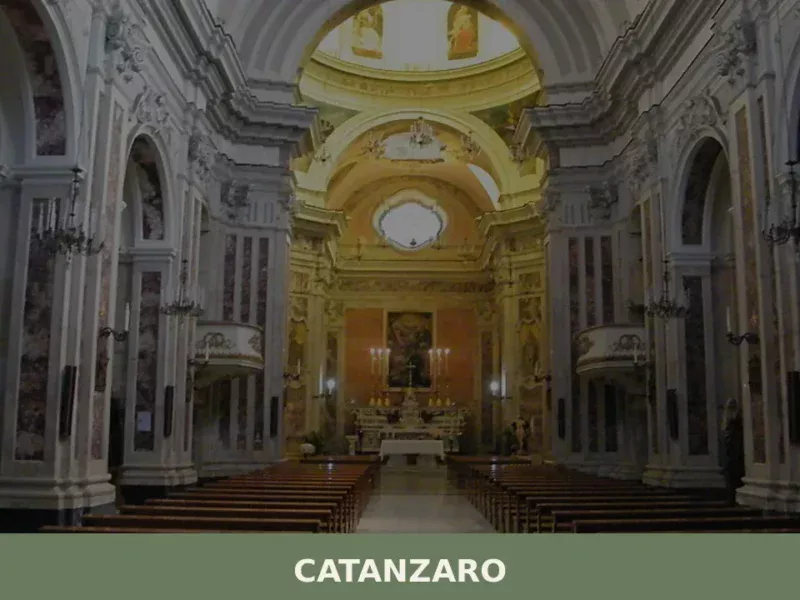
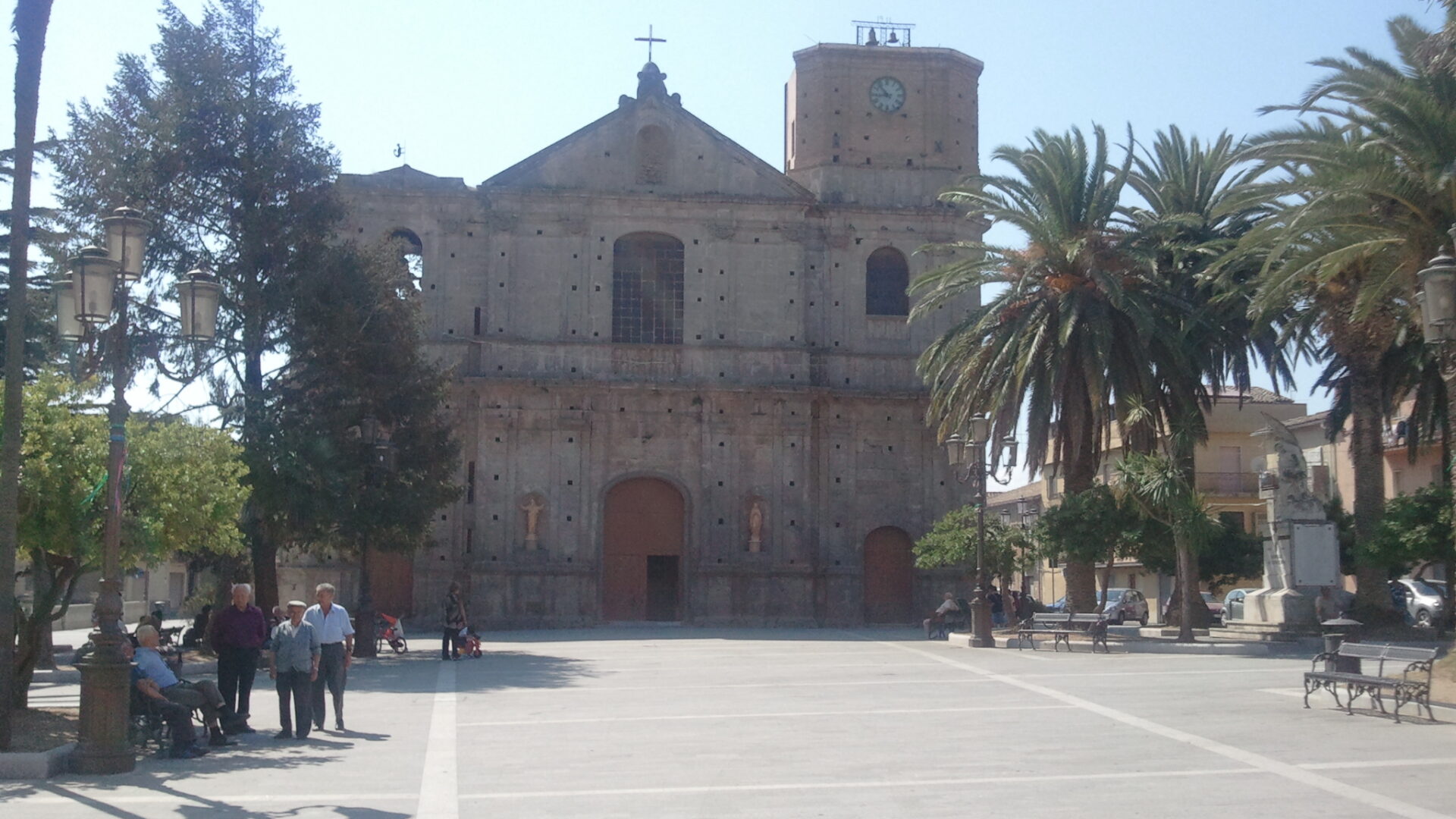
The Church of San Giovanni Battista took shape between 1790 and 1853, a long construction spanning the revolutionary and Restoration eras. San Giovanni Battista is the patron saint of the municipality, celebrated on 24 June each year with local observance. The Duomo, constructed between 1790 and 1853, dominates Piazza Ortona and anchors the civic heart of the village. Nearby stands a monument to the war dead, and the principal plazas—Villa Pertini, Piazza del Popolo and Piazza Ortona—house restored noble palaces reflective of post-earthquake prosperity.
Musical culture flourished in the mid-20th century. Salvatore Caroleo (1916–1989), a composer and conductor, was invited by the municipal administration to establish a concert band. In 1952, the Gran Concerto Bandistico Città di Borgia was founded under his direction. After his tenure ended in 1971, successive directors continued the ensemble’s work. In 2000, the band took the name Banda Musicale Salvatore Caroleo, and the town affixed a commemorative plaque on his former residence in Via Triste, honouring his legacy.
Archaeological Horizons and Coastal Sites
Parco Archeologico di Scolacium
The archaeological park occupies the frazione of Roccelletta di Borgia, encompassing the remains of the ancient Roman colony of Scolacium. Theatre foundations, amphitheatre seating, and structural fragments emerge from dense olive groves, the vegetation itself part of the historical landscape. Visitors walk among republican-era and imperial-period structures in an open-air setting that merges classical archaeology with the living Calabrese countryside.
Basilica di Santa Maria della Roccella
Near the coast within Roccelletta, fragmentary remains of this basilica survive, testament to early Christian or medieval religious life near the seashore. The site overlooks white-sand beaches and sits within sight of the Ionian horizon, illustrating the historical importance of this coastal zone for settlement and faith before malaria and coastal raids turned inhabitants inland.
Chiesa Fortificata di Monisciano
Located in the Roccelletta frazione, this fortified church represents defensive ecclesiastical architecture typical of regions exposed to Mediterranean piracy and incursion. The structure combines religious function with military necessity, reflecting the practical constraints of life in early modern Calabria.
Piazza Ortona and the Civic Centre
The principal square anchors the rebuilt Enlightenment town. The Duomo, constructed between 1790 and 1853, commands the plaza’s spatial hierarchy, and surrounding palaces of stuccoed stone frame measured vistas. The war memorial stands here as well, marking civic memory. Streets radiating from this focal point—particularly Corso Mazzini and Corso Matteotti—sustain the rational grid that Ferraresi’s plan established after the 1783 devastation.
Flavours of the Coast and Hinterland
The territory spans both hill and shore, supporting diverse agricultural tradition. The province of Catanzaro holds designation for regional products of note: Caciocavallo Silano (a stretched-curd cheese with Protected Designation of Origin), Liquirizia di Calabria (liquorice with PDO status), and Soppressata di Calabria (a dry-cured salami). Citrus production includes Clementine di Calabria (Protected Geographical Indication), reflecting the mild climate and volcanic soils of the Calabrese coast.
The six-kilometre marine zone below Borgia yields white-sand beaches and local fishing traditions. Seasonal produce—figs, olives, vegetables—sustains household economies and regional markets. These flavours anchor Borgia to the larger Calabrese food economy rather than forming a distinct local cuisine, yet they define the tastes of daily life in a village positioned between mountain agriculture and coastal harvest.
Planning Your Visit
Borgia lies 25 kilometres south of Catanzaro, the provincial capital. The Statale 106 Jonica (the national highway that hugs the southern Tyrrhenian and Ionian coasts) passes near the settlement, and two secondary roads—the provincial road and the national route—connect Borgia directly to Catanzaro. The frazione of Roccelletta, which merges administratively with the commune, sits closer to the urban sprawl of Catanzaro itself and hosts the principal transport hub.
If arriving by car from Catanzaro, expect 25–35 minutes via the provincial road. Federico Autolinee operates regional bus services linking Roccelletta to Catanzaro, Soverato, Villa San Giovanni, Girifalco and other Calabrese municipalities, though journey times vary. The village is accessible year-round, though late spring and early autumn offer mild weather and fewer summer crowds. The patron feast of San Giovanni Battista on 24 June draws local observance and civic celebration.
| Departure Point | Distance | Travel Time |
|---|---|---|
| Catanzaro (city centre) | 25 km | 25–35 min |
| Soverato (coastal town) | 20 km | 20–25 min |
| Lamezia Terme (airport) | 40 km | 45–55 min |
The rebuilt centre, with its ordered streets and civic plazas, can be explored on foot in two to three hours. The archaeological park of Scolacium and coastal sites require a separate visit, best undertaken with a vehicle or organised tour, as they lie outside the main settlement. Early morning or late afternoon light favours photography of the Baroque town plan and distant Ionian views.