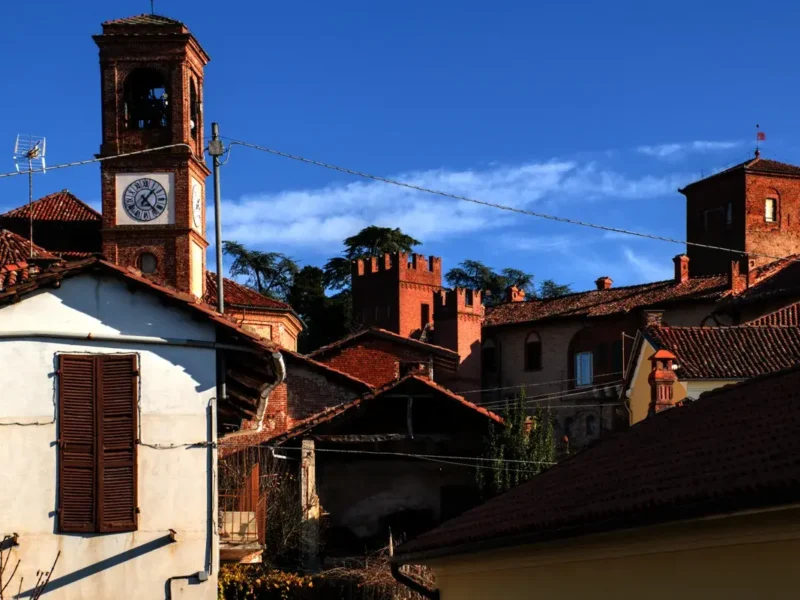
The landscape around Bosconero reveals a pattern of patient intervention. Where dark oak and conifer forests once defined the territory’s edge, medieval farmers carved fields and pasture. The Orco torrent, which flowed through the earliest settlements, later forced an entire population to relocate kilometers inland—a shift still visible in the village’s geography today.
Bosconero village in Piedmont occupies the lower Canavese region at 240 meters altitude, in Turin’s metropolitan province. The comune is home to 3,042 inhabitants and carries within its boundaries two distinct narrative threads: the memory of medieval forest clearance and the 20th-century expansion that nearly doubled its population since 1961.
The first documented mention of the settlement dates to 882, when it bore the name Roveredum—a village distinguished by its abundance of oak trees alongside conifers and cherry oaks. The territory’s darker wooded character eventually earned it a new designation: Bosco-nigro, or dark wood.
From Settlement Displacement to Documented Identity
Early settlement in the area clustered along the Orco’s banks, where water access sustained agriculture and timber processing. Beginning in the eleventh century, the nearby Abbazia di Fruttuaria, founded at San Benigno Canavese, became a catalyst for expansion. The monastery’s influence drew laborers who progressively transformed the landscape, converting forest into arable land and establishing durable settlement patterns.
The fourteenth century brought crisis. Repeated flooding from the Orco forced the entire urban settlement to shift approximately two kilometers inland, away from the riverbanks. This displacement proved permanent, reshaping both the physical layout and the social organization of the territory. Two separate hamlets emerged—Bosco Negro and Lotti—each developing as a frazione under Rivarolo, which itself belonged to the marquessate of San Martino di Agliè.
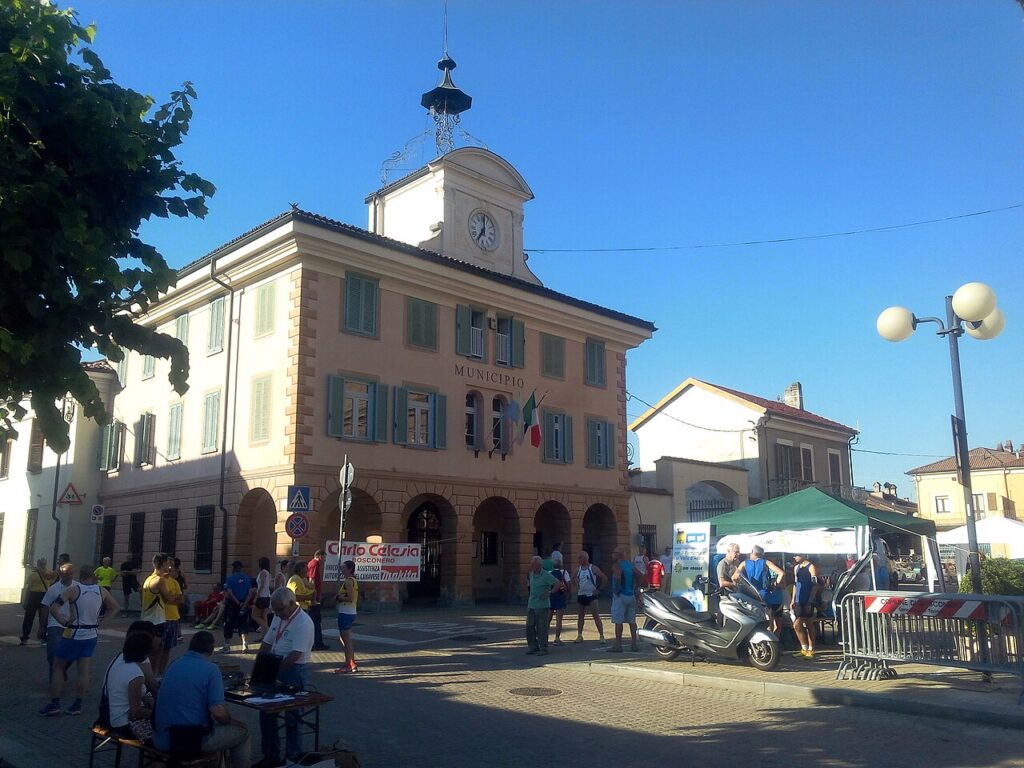
In 1694, these two settlements merged formally into a single, independent comune called Bosconero. This consolidation marked the village’s administrative arrival as a distinct entity within the broader Canavese region. The municipal coat of arms and gonfalone—a banner divided into gold and azure—were officially recognized by presidential decree on 17 November 1992, confirming civic identity nearly three centuries after administrative union.
Places and Landmarks
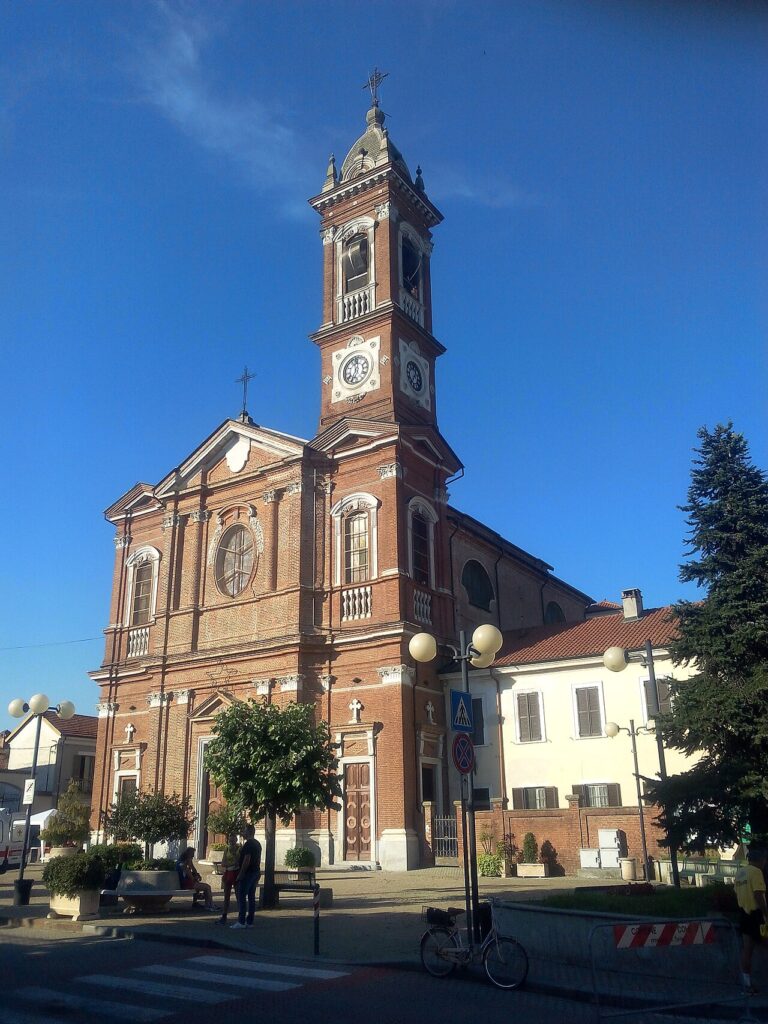
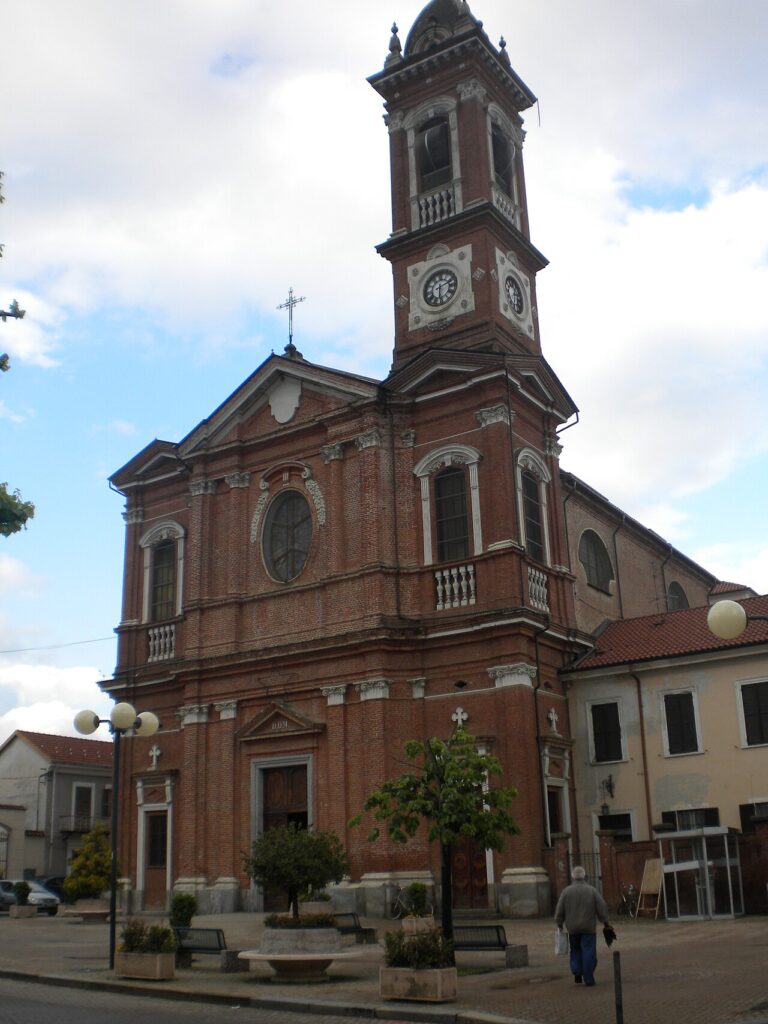
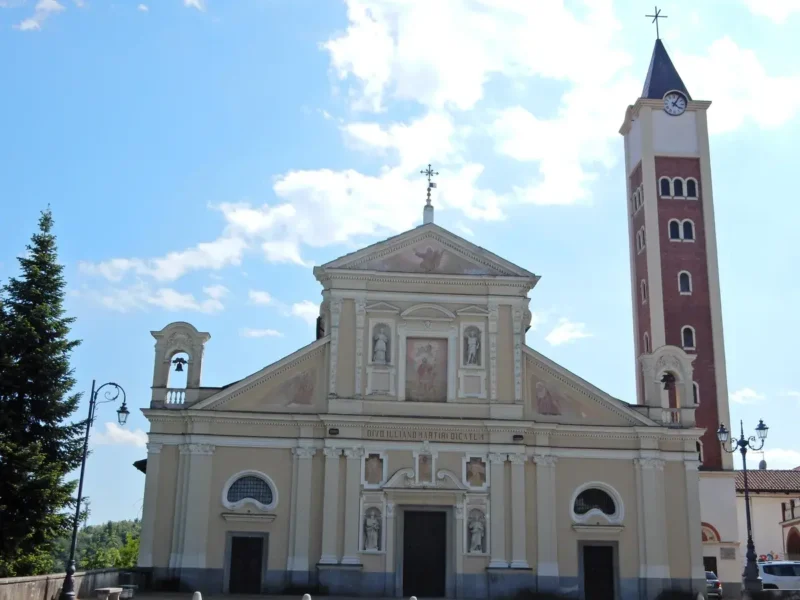
Church of San Giovanni Battista
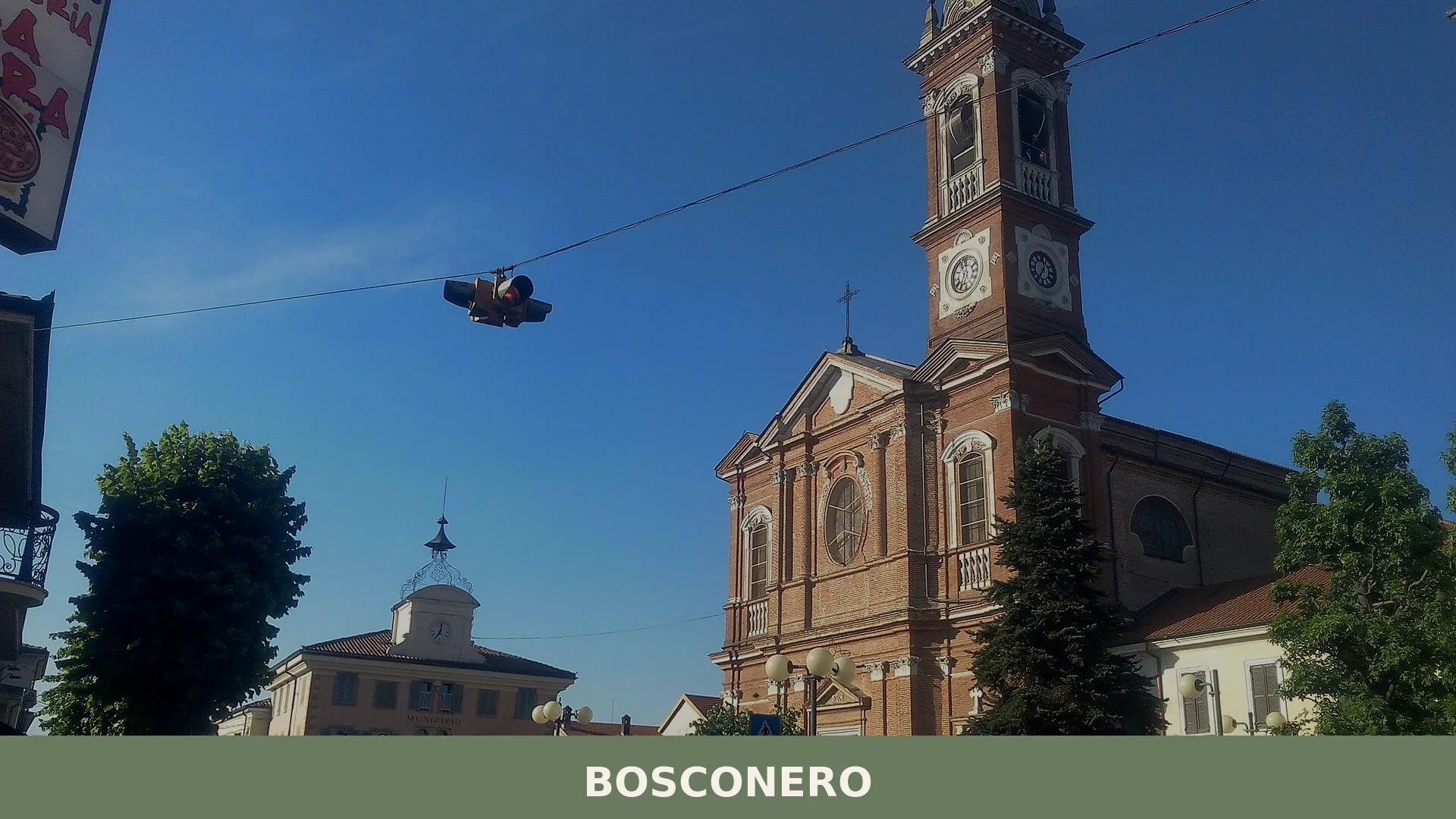
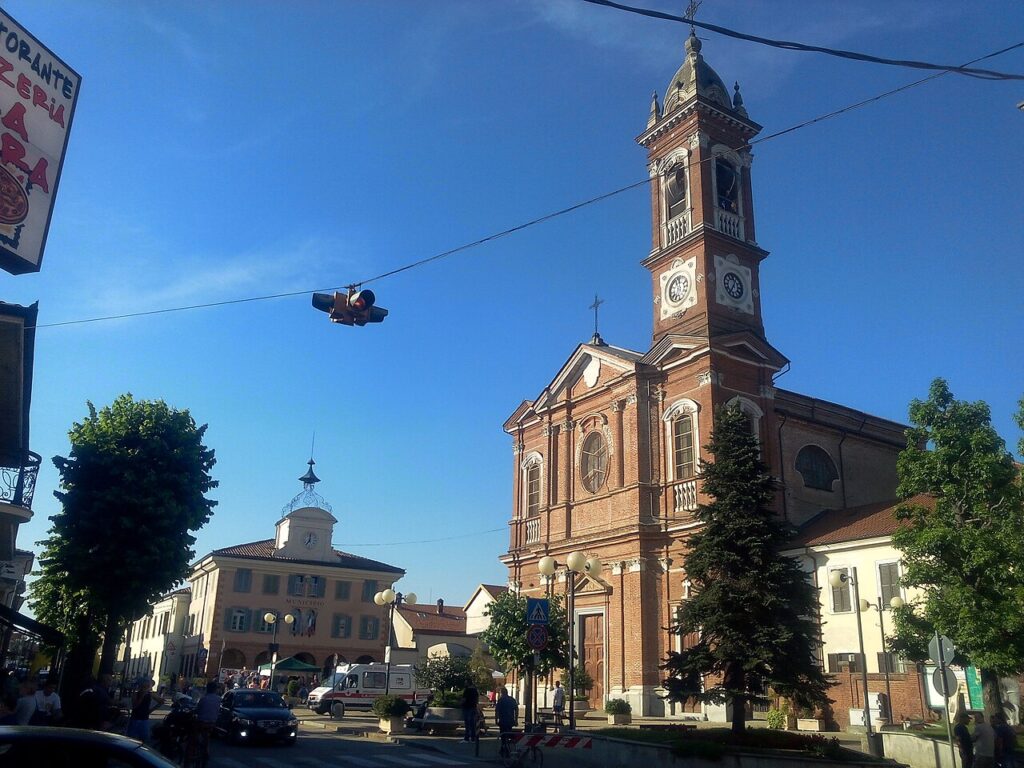
The parish church of San Giovanni Battista stands at the spiritual center of Bosconero. As the village’s patron saint, San Giovanni Battista receives formal commemoration on 24 June, when the traditional feast draws the community together. The church remains a working place of worship and reflects the religious continuity of the settlement across centuries.
Parco del Gerbido
The Gerbido Park preserves tangible evidence of Bosconero’s industrial past. Within its boundaries lie historical drying pits—called canavere in local dialect—where textile fibers were processed. These sunken structures are remnants of the hemp cultivation and weaving trade that, like much of the Canavese region, made Bosconero economically distinctive from the late medieval period onward. The park functions both as archaeological record and as accessible green space for residents and visitors.
The Two Historic Frazioni: Bosco Negro and Lotti
Bosco Negro and Lotti retain their identity as distinct neighborhoods within the modern comune, each preserving the memory of the fourteenth-century flood that first separated them from the Orco’s reach. Their spatial separation, now united administratively, tells the story of how medieval communities adapted to environmental pressure and reshaped their territories in response.
Bosconero Station
The railway station connects Bosconero to the wider Turin metropolitan network, reflecting the village’s integration into modern transit infrastructure. Its presence underscores the twentieth-century growth that transformed the village from a primarily agricultural settlement into a commuter community.
Food and Agricultural Heritage
The Canavese region and Turin province together support a rich agricultural identity. While Bosconero itself is not associated with a single protected designation, the broader territorial context yields products of recognized quality. Nocciola Piemonte (Piedmont hazelnut, IGP) and Grana Padano (DOP) represent the wider food culture of northern Piedmont, where hazelnuts and dairy farming anchor the rural economy.
The historical cultivation of hemp for textile production shaped Bosconero’s economy for centuries. Though that industry has largely ceased, it remains part of the village’s identity. Local wine traditions—particularly Erbaluce di Caluso, a white varietal from the immediate region—and typical Piedmontese liqueurs and spirits reflect the area’s broader gastronomic inheritance, connecting table and territory in ways that link Bosconero to its neighbors across the Canavese.
Visiting Bosconero
Bosconero lies in the lower Canavese, situated near the Orco torrent and close to the provincial road 460 that leads toward Gran Paradiso. The comune is easily accessible from Turin and connects naturally to visits to nearby villages in the same region. The landscape is gently rolling, typical of the Turin flatlands transitioning toward Alpine foothills to the north and east.
Spring and autumn offer optimal conditions for exploration: temperatures are mild, and the agricultural calendar gives the landscape seasonal character. Summer brings warmth suitable for walks through the Parco del Gerbido, while winter draws fewer visitors but affords quieter observation of the village’s rhythms. The artisan fair and the San Giovanni Battista feast (24 June) anchor the local calendar, drawing residents and occasional visitors to celebrate the community’s patron and its crafts heritage.
| Departure Point | Distance | Travel Time |
|---|---|---|
| Turin (city center) | 25 km | 30–35 minutes by car |
| Ivrea | 18 km | 25–30 minutes by car |
| San Benigno Canavese | 8 km | 12–15 minutes by car |
Parking is straightforward in the village center and surrounding streets. Public transit connects Bosconero to Turin via regional rail; the station offers connections to the broader Canavese network. Visitors arrive primarily by private vehicle, as is typical for smaller comuni in this region. The village welcomes exploration on foot, and the proximity of Foglizzo, Agliè, and other Canavese settlements makes Bosconero a logical base for regional discovery.
 Mountain