


Campagnano di Roma
 Hills
Hills
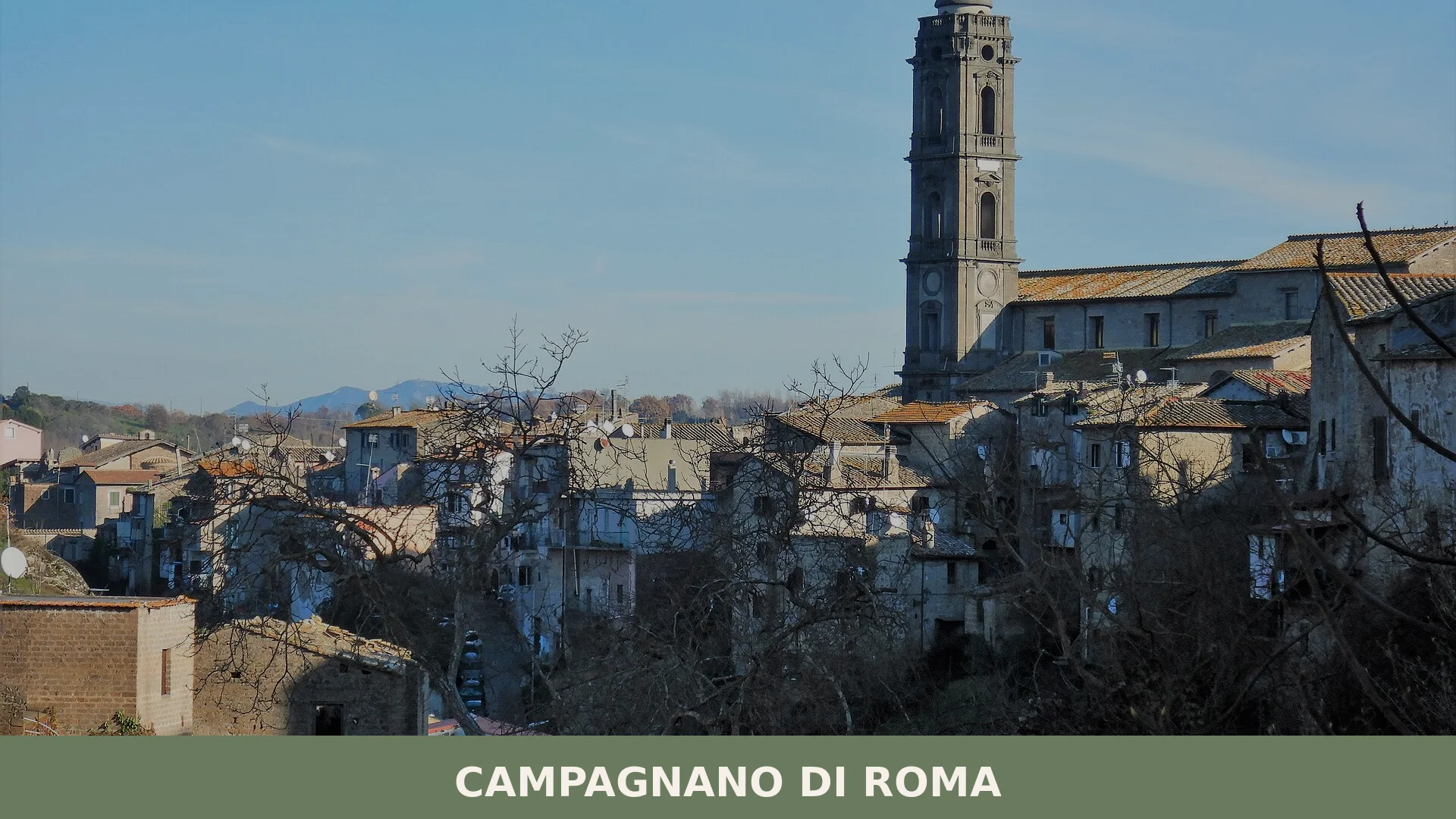
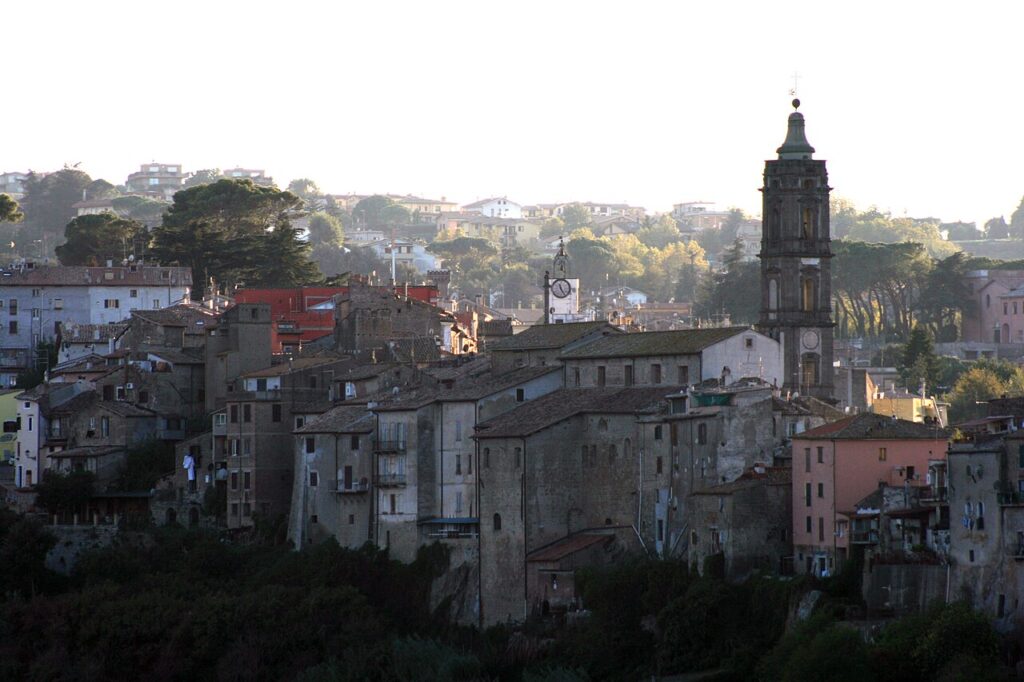
Campagnano di Roma is a hilltop comune of around 10,900 inhabitants in the Metropolitan City of Rome, set on a tufa spur at approximately 270 metres, some 33 kilometres north of Rome.
Discover Campagnano di Roma
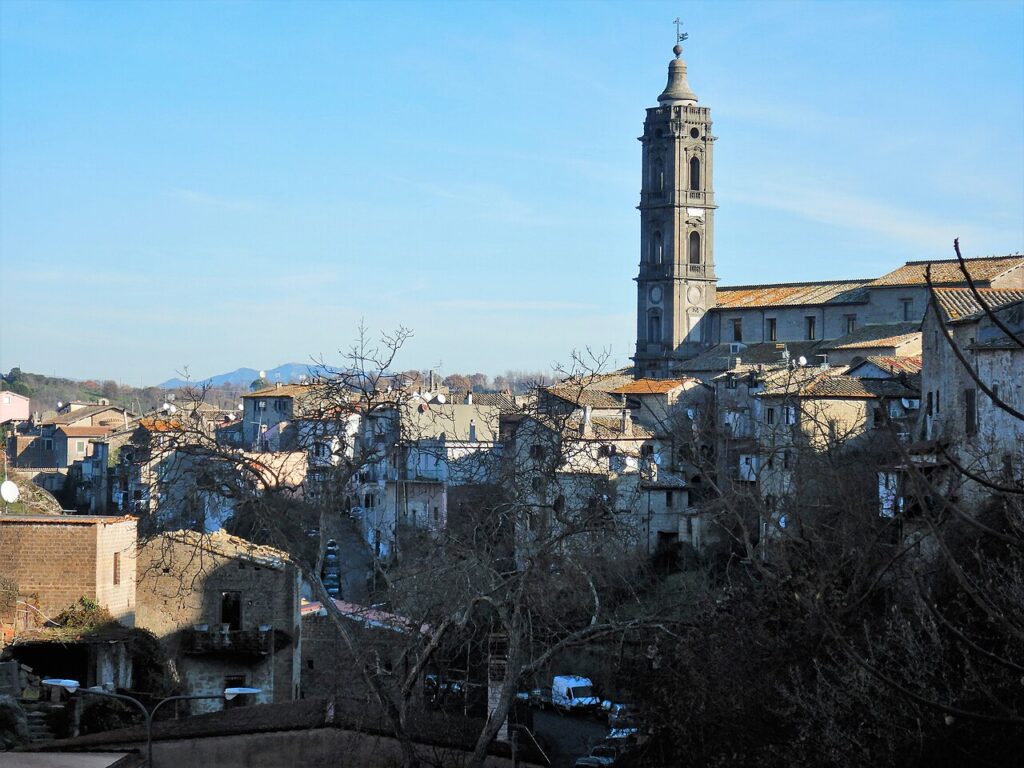
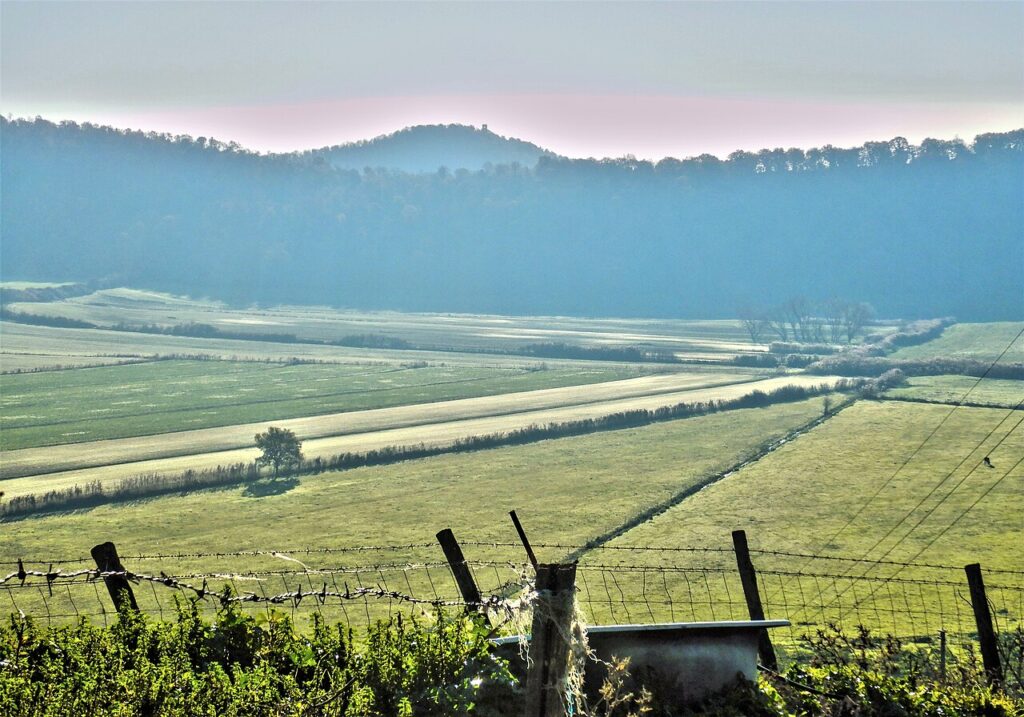
Campagnano di Roma is a hilltop comune of around 10928 inhabitants in the Metropolitan City of Rome, Lazio, standing at approximately 270 metres above sea level on a spur of tufa rock some 33 kilometres north of Rome, within the broader landscape of the Parco regionale di Veio. Its territory takes in volcanic plateaux cut by natural ravines, wooded slopes, and the eastern shore of Lake Martignano, forming a terrain typical of southern Etruria.
The territory carries a documented past stretching from a Bronze Age settlement near Monte Razzano, dated to around 1500 BC, through Etruscan engineering works, Roman road-station activity in the Valle di Baccano, and medieval lordship first recorded in writing in 1076, down to the long period of transformation under the Orsini and later the Chigi families that lasted from the early fifteenth century to the nineteenth. Travellers who follow the Via Francigena, the Romea Strata or the Via Amerina pass through a landscape where each of those layers remains legible in the terrain, the street plan and the surviving monuments.
Campagnano di Roma village in Lazio: history and origins
Campagnano di Roma has a documented past stretching back to around 1500 BC, when the earliest confirmed settlement appeared west of Monte Razzano during the Bronze Age, followed by an Etruscan tagliata cut in the seventh century BC, Roman imperial occupation centred on the Mansio ad Vacanas, medieval incastellamento recorded in writing from 1076, and centuries of noble rule under the Orsini and then the Chigi families.
The pre-Roman layers are particularly rich. By the eighth century BC a small settlement had developed at Mola dei Monti alongside a necropolis of around a hundred tombs at Costa del Follettino, while Etruscan influence left its mark in the seventh century BC with the artificial gorge connecting the Valle di Baccano to the lake of Martignano. After the Roman conquest of Falerii in 241 BC the territory passed into Roman hands, and by the first century AD the valley held the Mansio ad Vacanas — a road station providing rest, stabling and market facilities for travellers on the via Cassia. During the third century the gradual depopulation of the Roman countryside began; a structure at kilometre 26 of the via Cassia, traditionally attributed to the imperial family, is associated with the martyrdom of Sant’Alessandro, bishop of Baccano. Between the eighth and ninth centuries the papacy reorganised the abandoned estates into agricultural units called Domuscultae, and by 1076 Campagnano appears in written sources as a castellum.
The medieval and early modern periods brought successive changes of lordship that left a permanent mark on the townscape. In 1270 a statute between the people of Campagnano and Cardinal Riccardo Annibaldi is recorded, and in 1410 the Senate of Rome sold the town to Gentile Orsini. Under the Orsini, Campagnano became a destination for popes, cardinals and noble courts; a castle built around the first half of the fifteenth century — later partly demolished in the eighteenth century — was associated with artists including Francesco di Giorgio Martini, Giacomo Del Duca and Francesco de Gnocchis. In 1558 the town was absorbed into the Duchy of Bracciano, and in 1662 Pope Alexander VII authorised Flavio Orsini to sell Campagnano to Flavio Chigi, who was Alexander VII’s own nephew. The Chigi period, spanning the seventeenth to the nineteenth century, brought new streets, revised urban layouts, the draining of the marshy lakes of Baccano and Stracciacappe, and the construction of the Borgo Paolino and the monumental Porta Romana. The municipality recovered full administrative autonomy in 1817, though the fractions of Polline Martignano and Magliano separated in 1925 and 1958 respectively.
Churches, a castle and an archaeological museum along the historic centre
Campagnano di Roma offers visitors a collegiate church, two smaller churches, the partial remains of a fifteenth-century castle, and a civic archaeological museum housed in a sixteenth-century tower building.
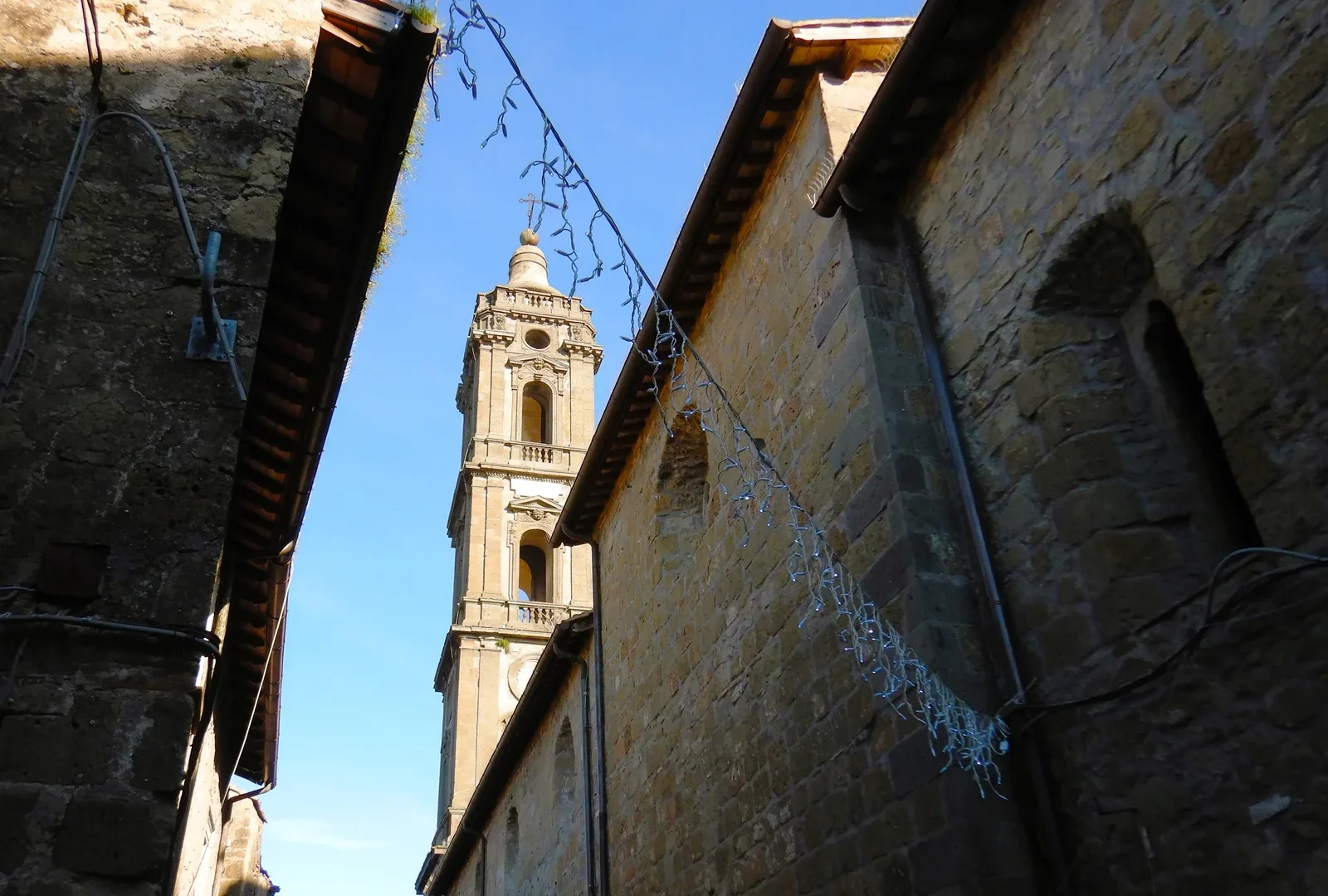
Collegiata di San Giovanni Battista
The Collegiata di San Giovanni Battista stands on the site of earlier structures. The church is dedicated to Saint John the Baptist and represents the principal place of worship in the historic centre.
Chiesa della Pietà
The Chiesa della Pietà contains a fresco of the Pietà. The church itself is documented from the eleventh century.
Castello degli Orsini
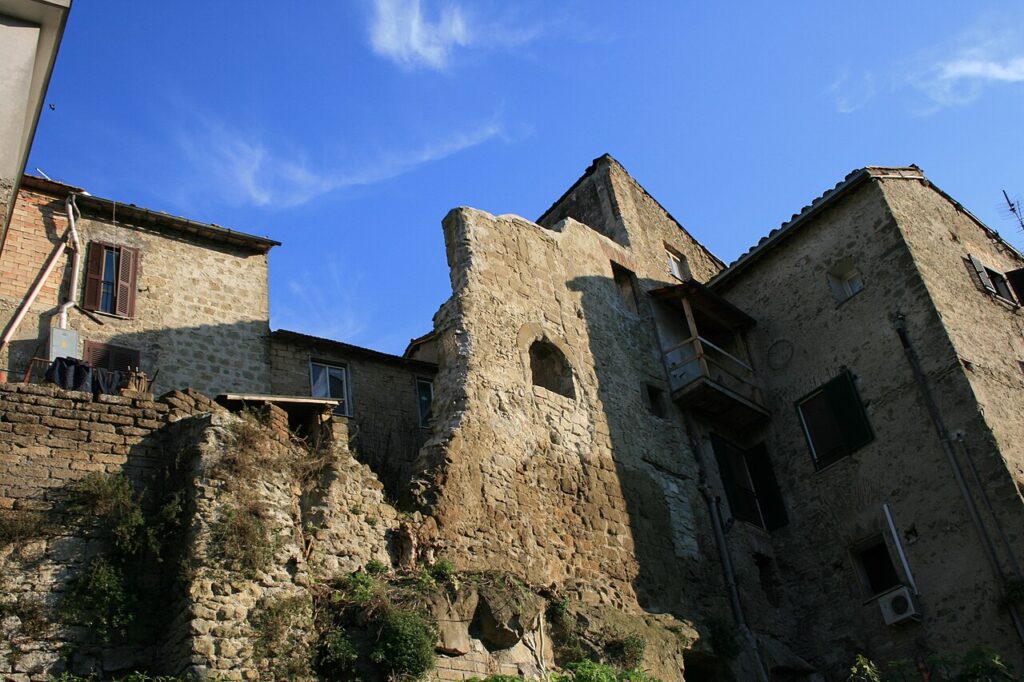
The Orsini family had a castle constructed in Campagnano during the first half of the fifteenth century. Part of the structure was demolished in the eighteenth century. During the period when the Orsini held Campagnano, artists including Francesco di Giorgio Martini, Giacomo Del Duca — a pupil of Michelangelo — and Francesco de Gnocchis are recorded as having worked here.
Museo Civico Archeologico di Campagnano
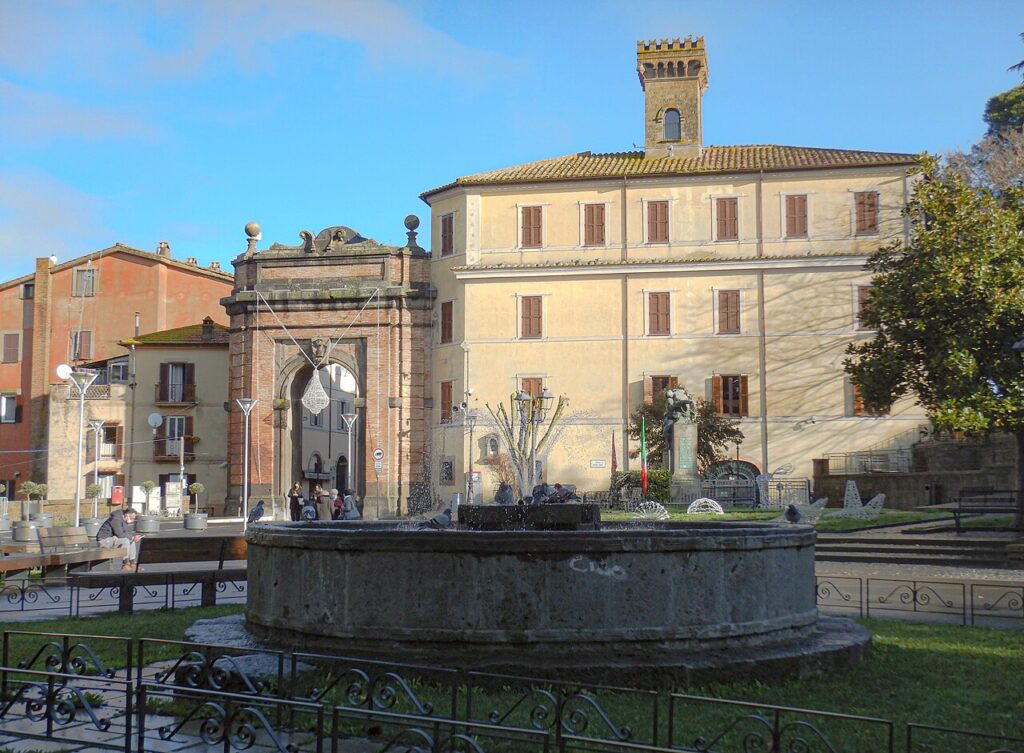
The civic archaeological museum is housed in the Torre dell’Orologio. It occupies the Torre dell’Orologio, a tower building dating from the sixteenth century, on whose summit the face of a water clock is visible; the mechanism is kept inside the building and fed by the fountain below, while a bell on the roof formerly marked the hours. The museum, made operational through an agreement between the municipality and the UPTER – Università Popolare di Roma, displays finds from urban excavations within the historic centre.
Borgo Paolino and Porta Romana
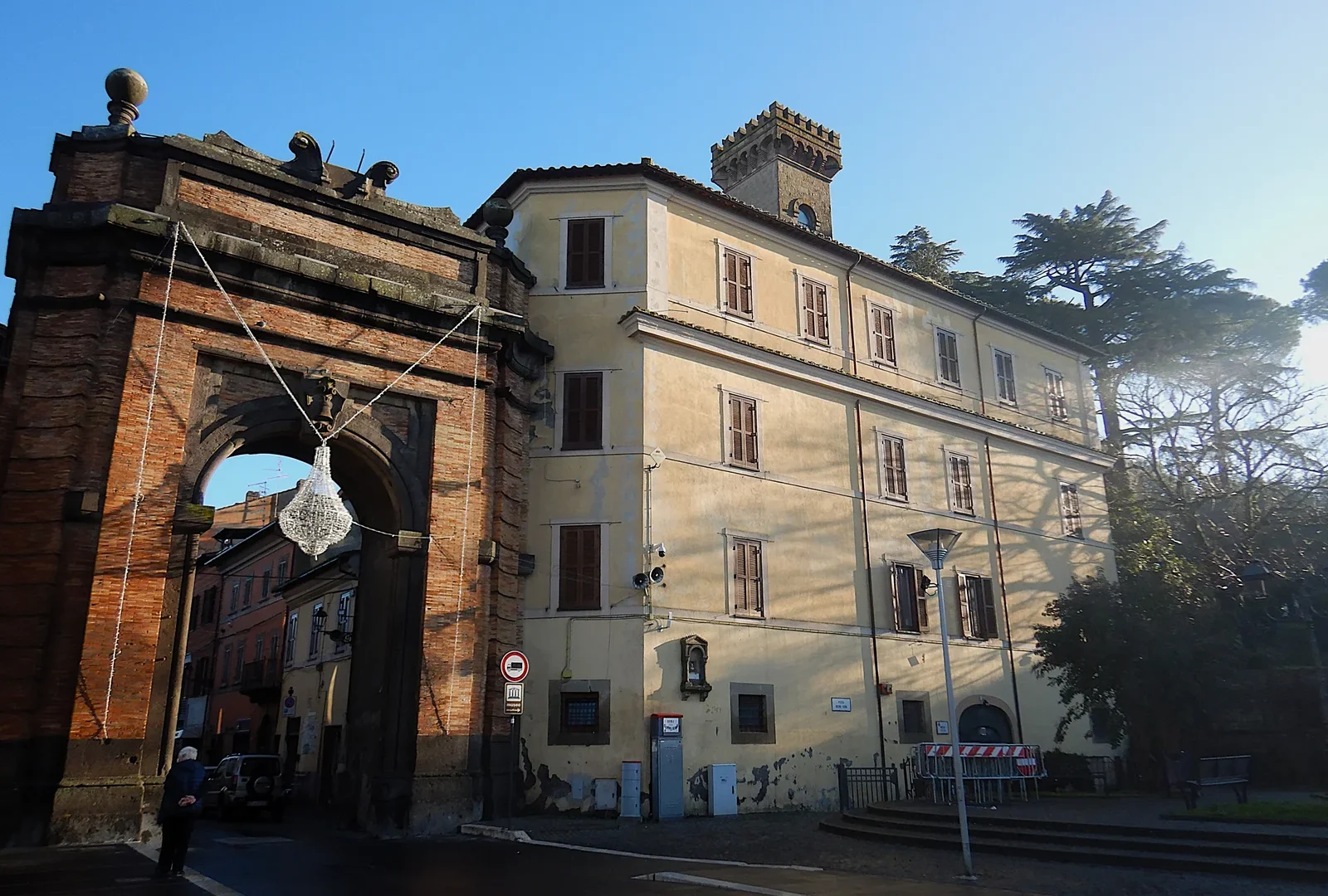
The Borgo Paolino, built between the seventeenth and eighteenth centuries and now corresponding to Corso Vittorio Emanuele, and the Porta Romana — known locally as the Arco — form part of the urban fabric laid out during the period of Chigi family governance.
Certified products and regional flavours around Campagnano di Roma
The territory around Campagnano di Roma falls within a rich agricultural zone of the Roman countryside, where several certified products give the table its character: among the most notable are Abbacchio Romano IGP, the milk-fed lamb long associated with the Lazio countryside, and Carciofo Romanesco del Lazio IGP, the globe artichoke cultivated across the Roman hills. Agnello del Centro Italia IGP broadens the lamb tradition, while Mozzarella di Bufala Campana DOP and Mortadella Bologna IGP, though produced beyond the immediate area, are staples of the regional larder.
None of these carries the label of an exclusive local speciality of Campagnano itself; they belong to the wider provincial and regional context. The same applies to a cluster of traditional Lazio preparations — including liquori such as nocino, fragolino and genziana, the anise-based sambuca romana, and cioccolata a squajo — which appear among the regionally listed PAT products and reflect the flavour culture of the inland hills around Rome.
For wine, the vineyards of the surrounding territory produce denominations worth seeking out. The DOC Bianco Capena and Castelli Romani whites are the most immediately local reference points, while the DOCG Frascati Superiore and Cannellino di Frascati represent the broader Castelli Romani tradition. Cerveteri DOC and Cesanese di Affile DOC extend the range further, and the IGT Lazio and Colli Cimini labels cover much of the production across this stretch of northern Lazio.
Planning your visit and getting there
Campagnano di Roma can be reached easily from the lower Val Pellice and the Turin area. The practical distances and journey times below are kept concise on purpose, so the access information stays clear and consistent.
| Departure | Distance | Time |
|---|---|---|
| Roma (centro) | approx. 33 km | approx. 40 min |
| Bracciano | approx. 18 km | approx. 25 min |
| Anguillara Sabazia | approx. 22 km | approx. 30 min |
| Viterbo | approx. 55 km | approx. 55 min |
These practical reference points are enough to plan the journey without overloading the text with unstable logistics. Once on site, the village is best understood slowly, on foot and in relation to the surrounding landscape.
Frequently asked questions about Campagnano di Roma
How far is Campagnano di Roma from Rome, and what is the best way to get there?
Campagnano di Roma lies approximately 33 kilometres north of Rome. The village is accessible by car via the main roads serving the Metropolitan City of Rome. The nearest motorway exit and public transport connections should be verified with local transport authorities (ATAC or regional services). Travel time from central Rome is typically 45 minutes to one hour depending on traffic conditions.
When is the best time to visit Campagnano di Roma?
The patron saint feast day, honouring San Giovanni Decollato and San Celestino, takes place on 29 August and is the principal celebration. Spring and autumn offer pleasant weather for exploring the hilltop terrain and surrounding volcanic plateaux. Summer can be warm at 270 metres elevation. Winter visits are possible but weather-dependent for outdoor exploration of the Parco regionale di Veio.
What historical periods are represented in Campagnano di Roma?
The village encompasses layers from Bronze Age settlement near Monte Razzano (circa 1500 BC), Etruscan engineering works, Roman road-station activity in Valle di Baccano, medieval lordship (first documented 1076), and transformation under the Orsini and Chigi families from the fifteenth to nineteenth centuries. These historical strata remain visible in the terrain, street layout, and surviving monuments.
Is Campagnano di Roma situated within a protected natural area?
Yes, Campagnano di Roma falls within the Parco regionale di Veio. The territory features volcanic plateaux, natural ravines, wooded slopes, and the eastern shore of Lake Martignano. The geomorphology is typical of southern Etruria, offering opportunities for walking and nature observation within a regionally protected landscape.
Which historical routes pass through Campagnano di Roma?
The Via Francigena, the Romea Strata, and the Via Amerina are historical pilgrimage and trading routes that traverse the landscape around Campagnano di Roma. These routes provide context for understanding the village's position in medieval and ancient communication networks connecting Rome to northern Europe and the Adriatic.
📷 Photo Gallery — Campagnano di Roma


In Lazio More villages to discover
Bolsena
Hills
 Lake
Lake
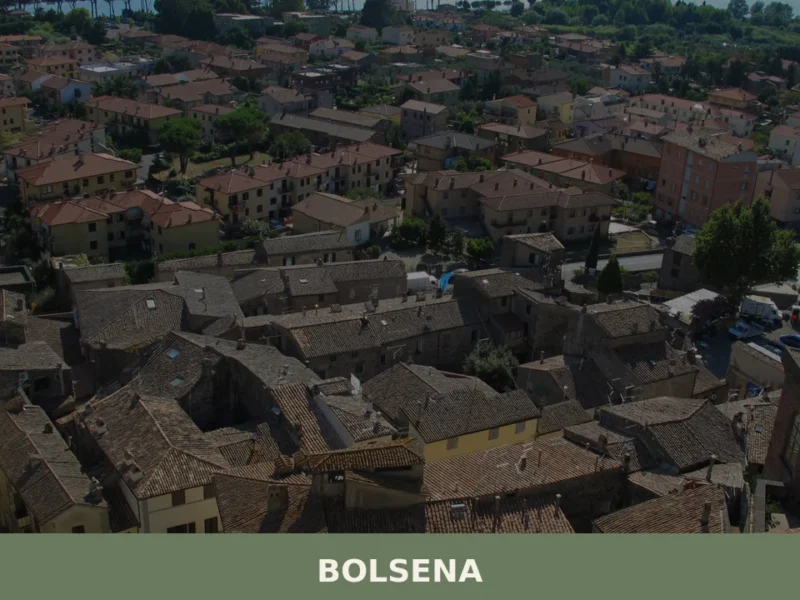
What to see in Bolsena, Lazio, Italy: the 1263 Eucharistic Miracle, Basilica of Santa Cristina, Lake Bolsena at 350 m. Discover history, food and how to get there.
Casperia
Hills
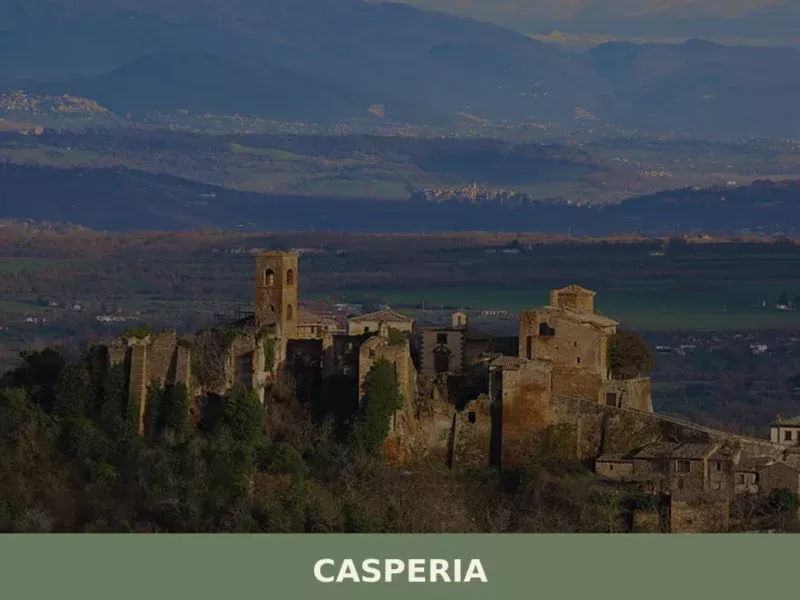
What to see in Casperia, a hilltop village at 397 m in Rieti province: medieval centre, 3 PAT-certified products including guanciale. Plan your visit and where to stay.
Belmonte in Sabina
 Mountain
What to see in Belmonte in Sabina: a hilltop village at 756 m in Rieti province with 644 residents. Explore the medieval centre, PAT guanciale and cacio fiore cheese. Plan your visit now.

Terracina
 Sea
Sea
44,000 residents, one ancient temple on a cliff, and centuries of Roman, medieval and papal history waiting along the Tyrrhenian coast.
Lubriano
Hills
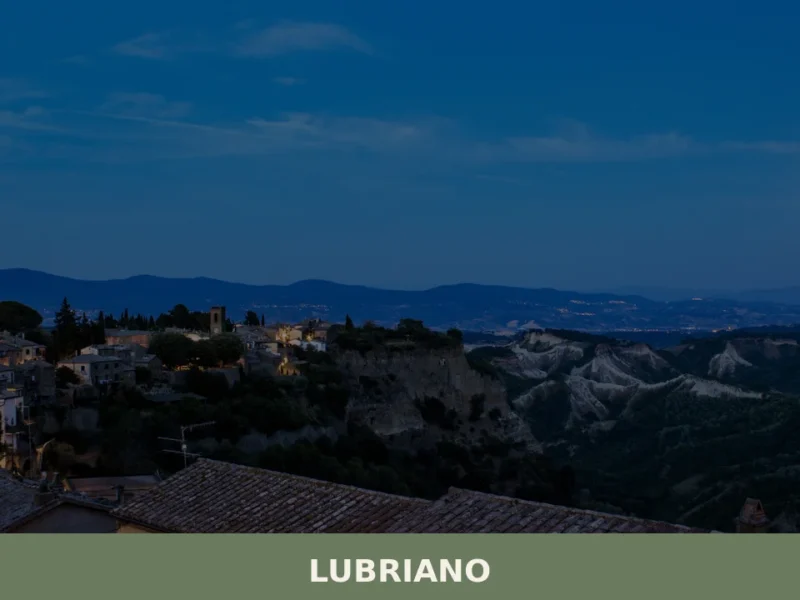
Lubriano has 864 inhabitants and occupies a tuff plateau at 441 metres above sea level, separated from the more famous Civita di Bagnoregio by a calanchi valley nearly two hundred metres deep. The municipal boundary runs along the edge of a gorge that geologists classify as one of the most active in Tuscia for erosion. […]
Allumiere
Hills
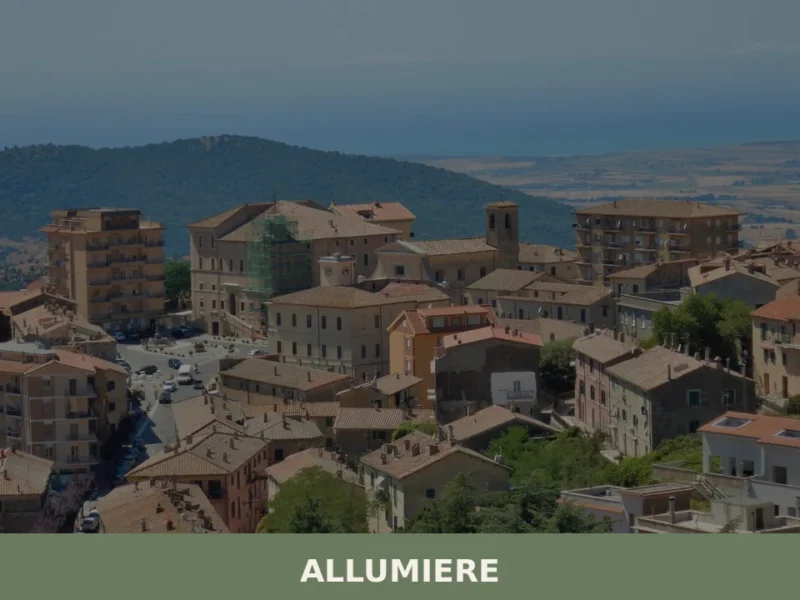
What to see in Allumiere, Lazio, Italy: explore the alunite mining history, Santa Maria Assunta church, and Borgo della Farnesiana. 4,146 inhabitants. Discover it now.
Anticoli Corrado
Hills
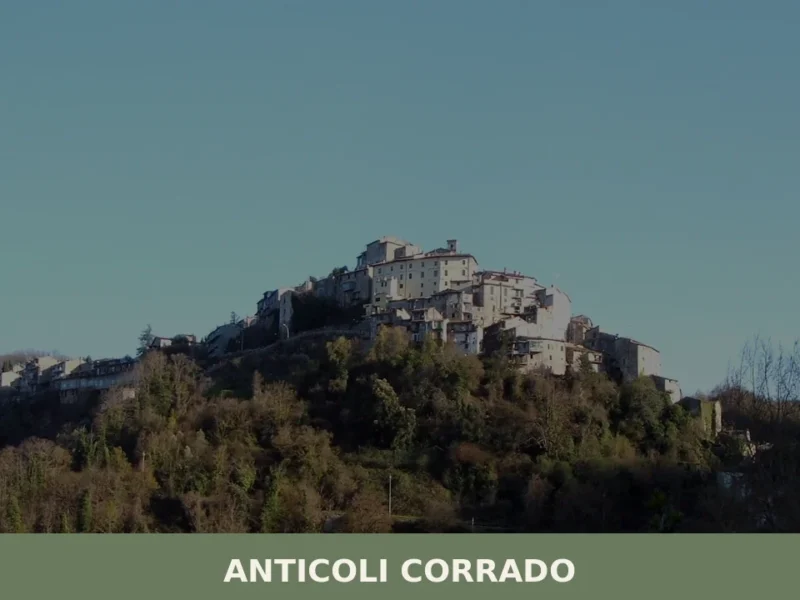
Stone walls rise in tight formation above the Aniene valley, 40 kilometres (25 mi) northeast of Rome, where a cluster of houses at 508 metres (1,667 ft) altitude holds the ruins of a medieval castle and an 11th-century church. The fountain in Piazza delle Ville was cast by Arturo Martini, a sculptor whose work now […]
Gradoli
Hills
Lake
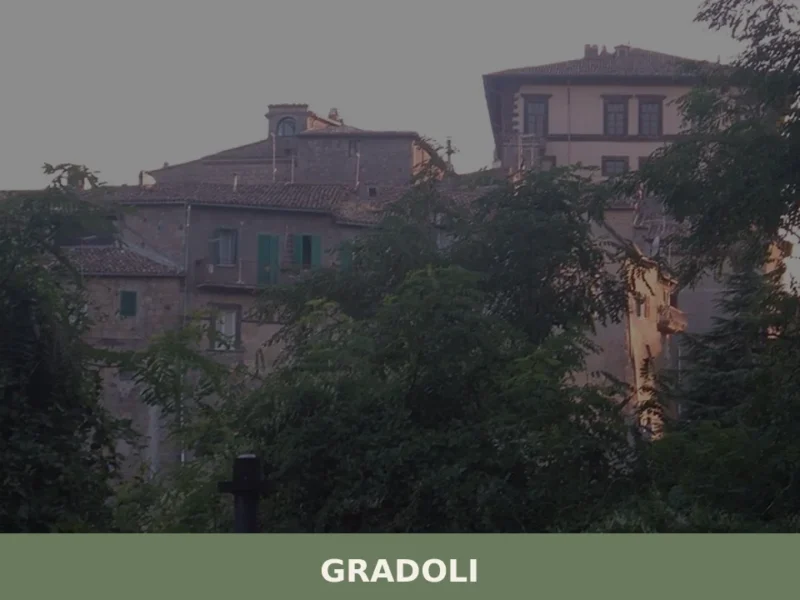
What to see in Gradoli, Italy: Discover the historic Farnese Palace and the Museum of Garments in this village at 470 m. Explore its medieval past and unique cultural events.
Colle di Tora
Hills
Lake
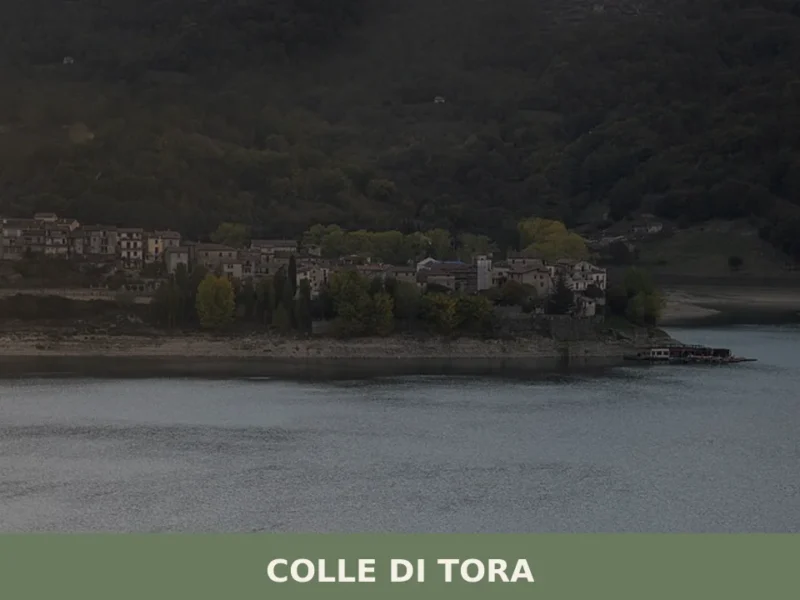
What to see in Colle di Tora: a village at 542 m on Lake Turano with 381 residents, a medieval centre and 3 PAT-certified products. Plan your visit today.
Borbona
Mountain
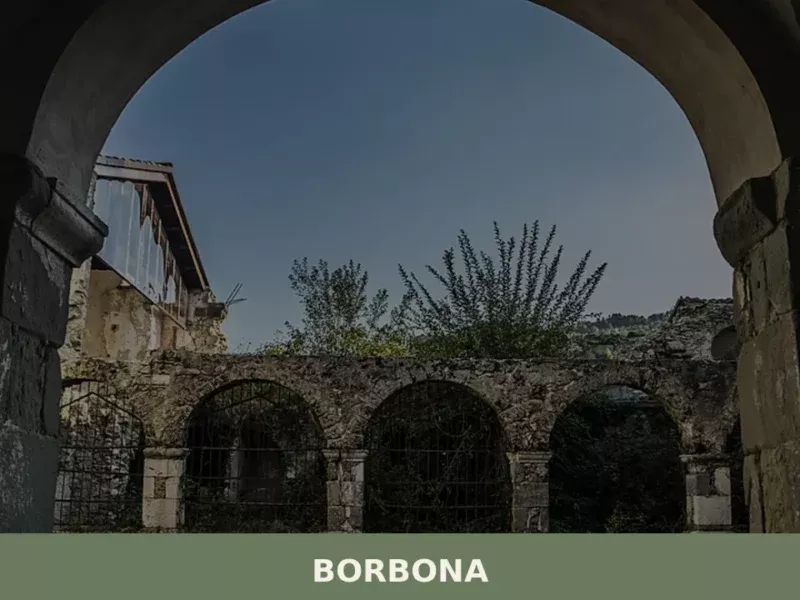
What to see in Borbona: a mountain village at 760m in the province of Rieti with 643 residents. Discover the stone historic centre, 3 PAT products, and the 27 May patron feast.
🧀 Italian traditional products

🏡 Know Campagnano di Roma better than we do?
If you’re a local or have been there, your knowledge matters: add what’s missing or fix a detail on this page.