


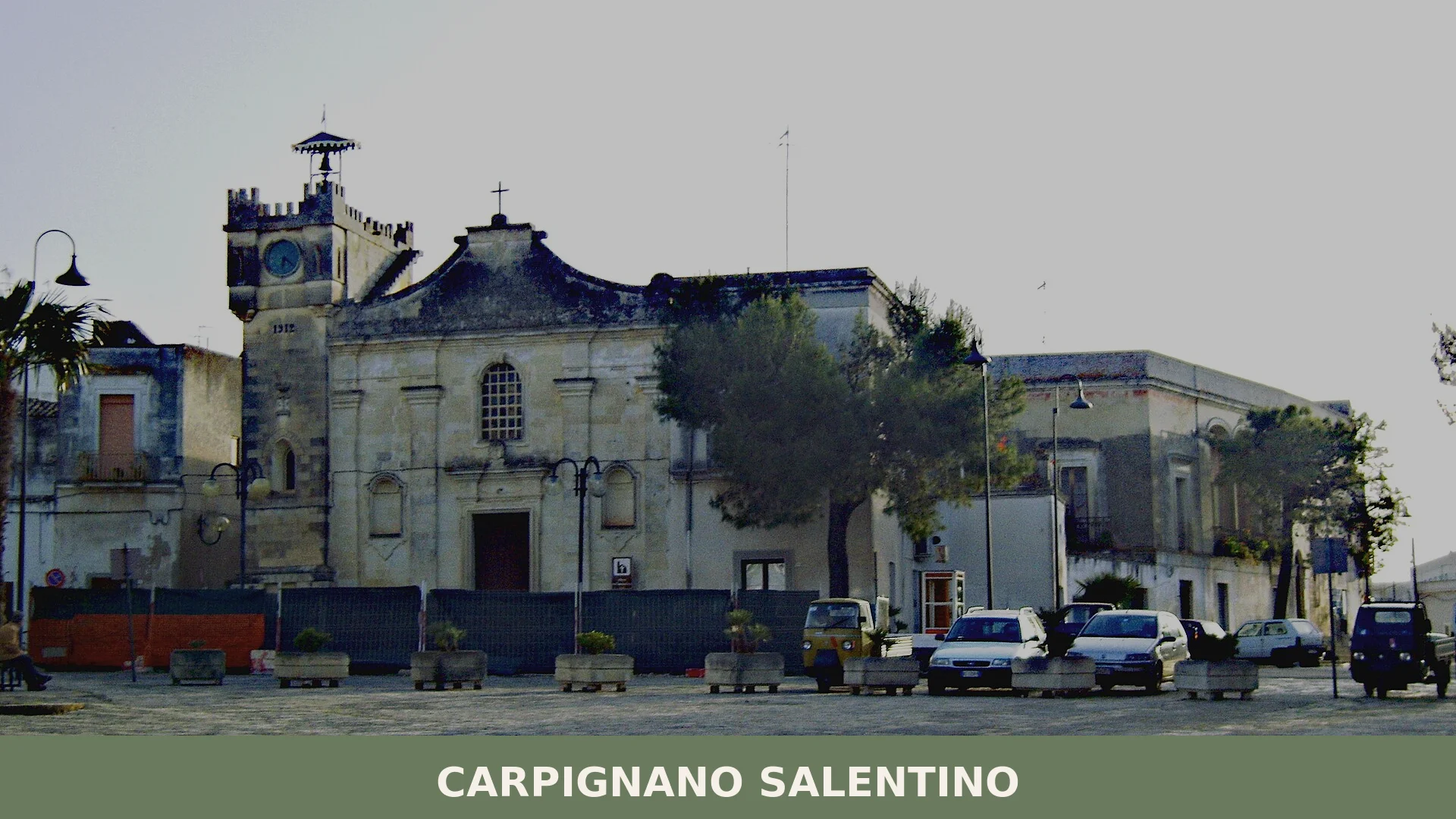
Carpignano Salentino
 Plains
A 3,600-resident comune in eastern Salento. Medieval feudal architecture, tenth-century frescoes and menhir-marked prehistory form its identity.
Carpignano Salentino: Limestone, Layered Power and Sacred Grottoes
Carpignano Salentino: A Salento Village Between Byzantine Art and Noble History
In the heart of the Salento plain, where limestone bedrock rises gently beneath fields of ancient olives and carob trees, stands Carpignano Salentino—a village of pale stone and baroque courtyards that opens onto a landscape seemingly unchanging for centuries. The name itself, scholars propose, derives from the Messapic root karp, meaning stone or rocky height, a fitting description for a settlement perched 76 metres above the surrounding terrain.
Carpignano Salentino village in Apulia is a destination shaped by its role as a feudal centre during the Norman, Swabian, Angevin and Spanish regimes, and above all by the presence of extraordinary Byzantine religious art—crypts frescoed in the tenth century and a sixteenth-century sanctuary sheltering a miraculous image of the Virgin. Bordered by the municipalities of Melendugno to the north and Otranto to the east, the village lies roughly 25 kilometres from Lecce and 13 kilometres from the Adriatic coast, making it a natural waypoint between the inland Salento culture and the maritime frontier.
From Messapic Stones to Feudal Dominion
The territory surrounding Carpignano shows signs of human habitation stretching back millennia. Standing stones—the menhir Grassi and the menhir Croce Grande, known in Greek as Staurotomèa—mark ancient settlement patterns, while excavations in the town centre have uncovered a burial dating to several thousand years before the Christian era. The Romans established their presence here too; the village sits along the course of the Traiana Calabra, a road network that bound the southern peninsula to the administrative centre at Rome.
Under Byzantine rule, Carpignano belonged to the Thema of Longobardia, a military-administrative district that preserved Greek Orthodox Christian traditions across southern Italy. The cryptic sanctuary of Santa Cristina, still visible beneath the modern village, preserves frescoes from the tenth century—panels of saints and sacred scenes in the austere, hieratic style of middle Byzantine art. This layer of faith and artistry would prove foundational to the village’s spiritual identity.
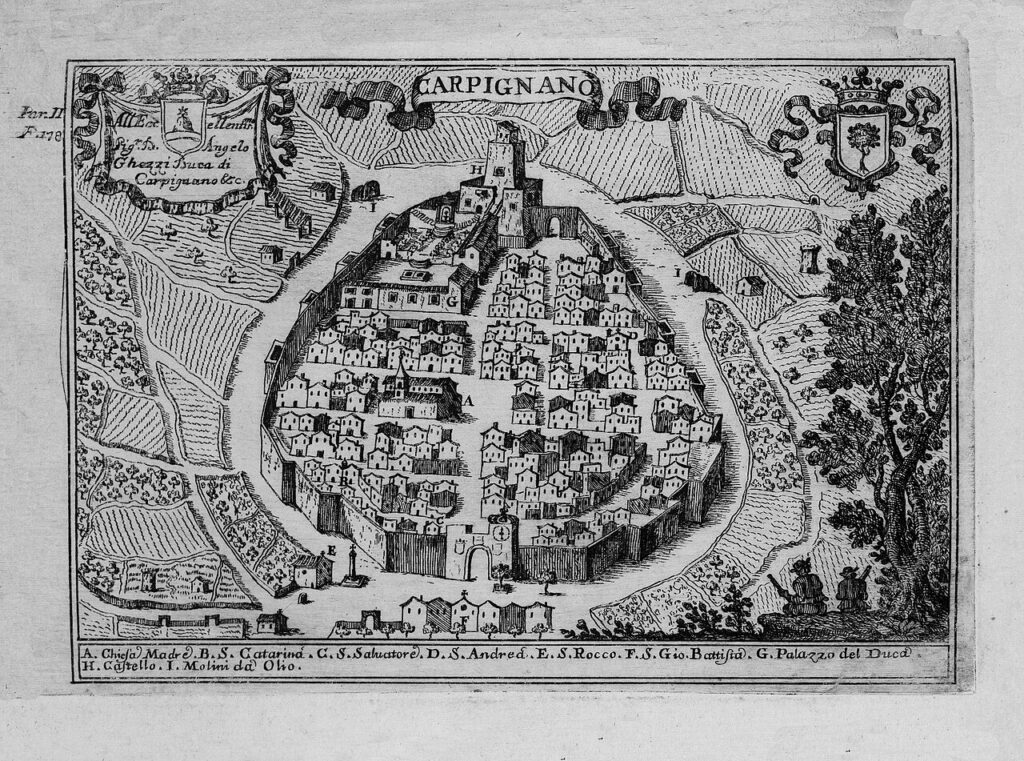
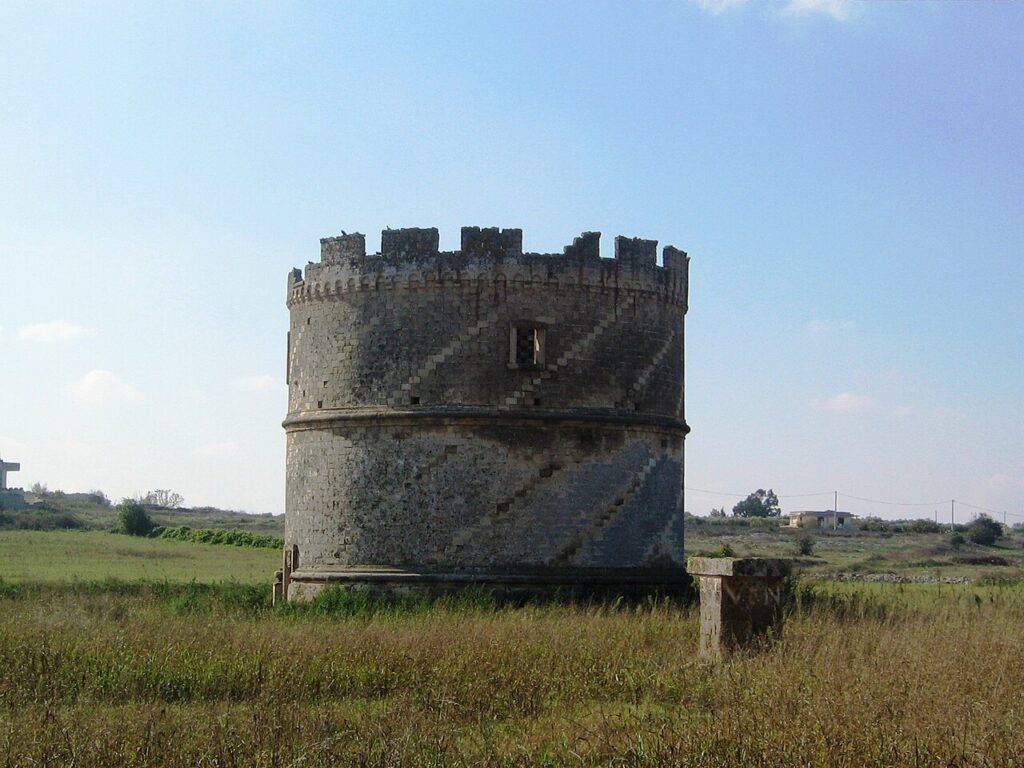
By the late thirteenth century, Carpignano had become formally part of the County of Lecce, entering a long succession of feudal lords. Giovanni Antonio del Balzo-Orsini, lord of Lecce and Carpignano until his death in 1436, stands out among them; his family heraldry still adorns the tower colombaia in the contrada Cacorzo. Later, when Ferdinand the Catholic opened southern Italy to Spanish feudalism, the king granted the fief to Federico Uries, a nobleman from Spain. His descendant Ugo sold it in 1574 to Niccolò Personè, beginning a period of thirty years under Personè family rule. In 1604, Gio. Camillo Personè transferred the fief to Fabrizio Lanario, conte di Sacco, for 33,000 ducats—a transaction that marked Carpignano’s shift into a phase of baroque architectural ambition. The Matuda de Azzevedo family followed, taking the title of princes of Carpignano, before the Ghezzi, originally from Orvieto, acquired the fief in the 1620s and 1630s. Carlo Ant. Ghezzi became the first duke of Carpignano, a title the family retained throughout the eighteenth century.
Sacred Sites and the Sanctuary of the Madonna della Grotta
The Sanctuary of the Madonna della Grotta
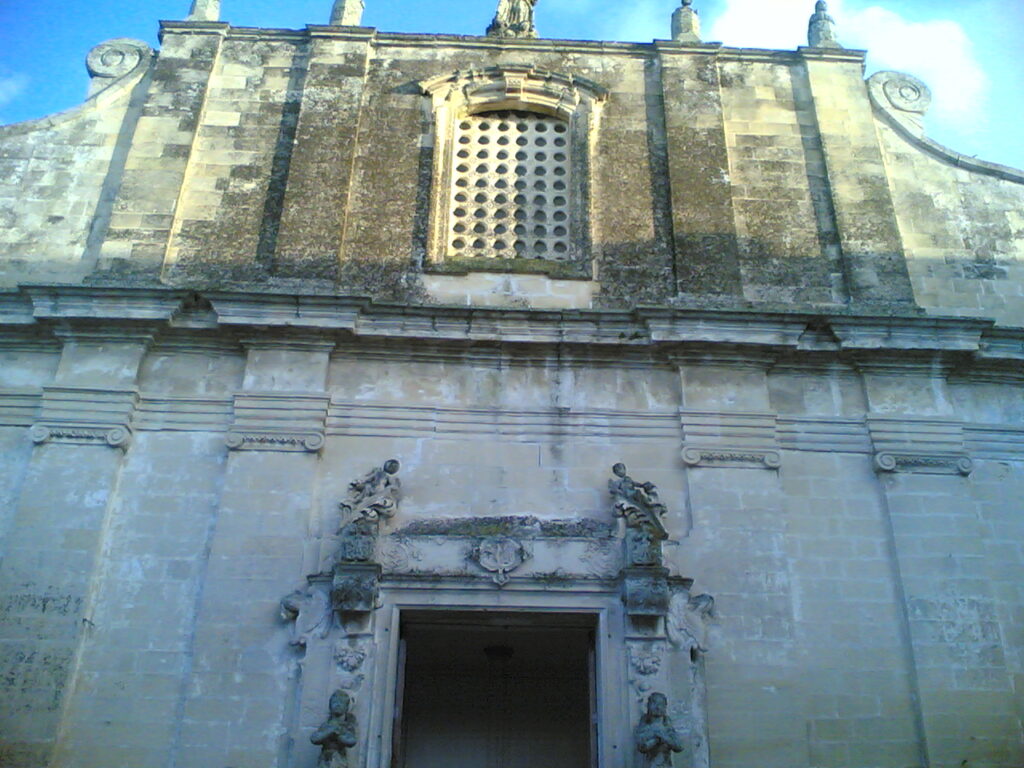
According to local tradition, a man sought shelter in a cave during a violent storm. There, in prayer and sleep, he beheld the Virgin in an apparition, commanding him to build a church in that place. Within the grotto itself, a painting of the Madonna was discovered—the miraculous image that would become the spiritual centre of Carpignano. The sanctuary erected in response stands at the site today, its façade bearing the date 1575. Inside, the crypt houses the original icon; the transept walls display late sixteenth-century frescoes of saints executed with considerable artistic skill. Among the altarpieces is a canvas depicting the Virgin of Purgatory, which ranks among the sanctuary’s most valued possessions.
The Crypt of Santa Cristina
Beneath layers of later building lies a crypt with frescoed walls, a burial chamber and ritual space. The frescoed walls preserve one of Puglia’s oldest and most significant cycles of Byzantine art—sacred figures rendered in the formal, deeply spiritual aesthetic of the Orthodox tradition. Though fragmentary, these images testify to the artistic and theological sophistication of medieval Christianity in the Salento.
The Matrice Church and other chapels
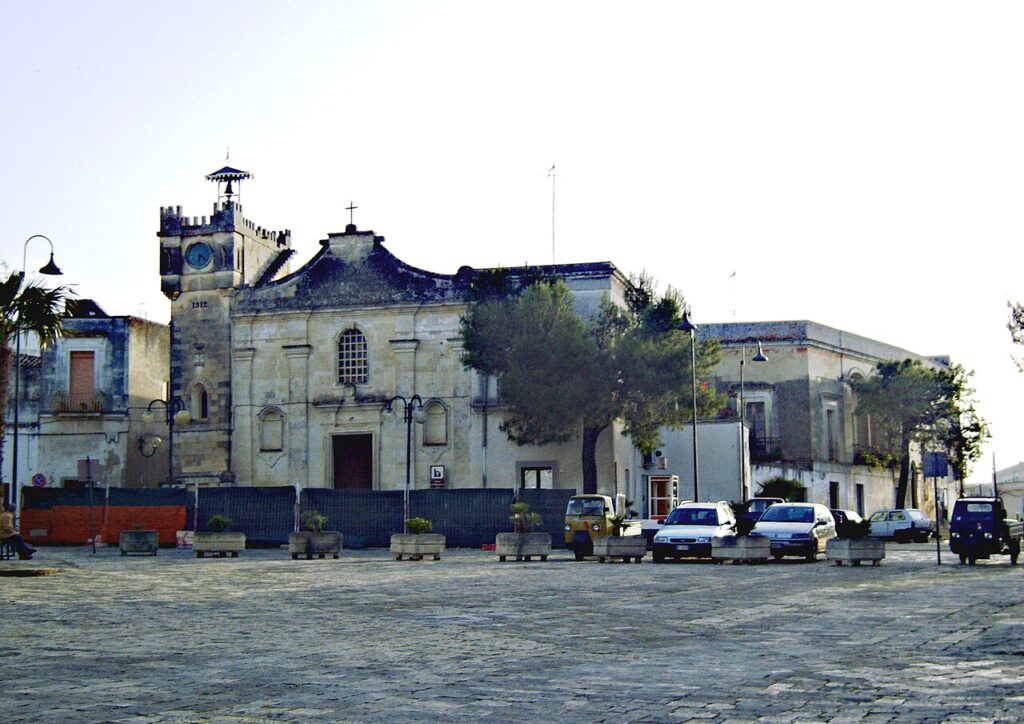
At the urban heart stands the church of the Assumption of Mary, the parish church of Carpignano, rebuilt in the seventeenth century over a modest fifteenth-century structure. Dressed in pale Lecce stone and fronted by a broad ceremonial staircase, it presents an elegant baroque façade articulated by pilasters. The interior shelters Baroque altars of considerable sumptuousness and oil paintings from the sixteenth and seventeenth centuries, relics of the earlier building. The Cappella dell’Immacolata, constructed in the late eighteenth century by the Spiri family, and the Cappella del Carmine, annexed to Palazzo Mortari-Libetta, complete the ecclesiastical landscape of the town centre.
The Church of Santa Marina di Stigliano
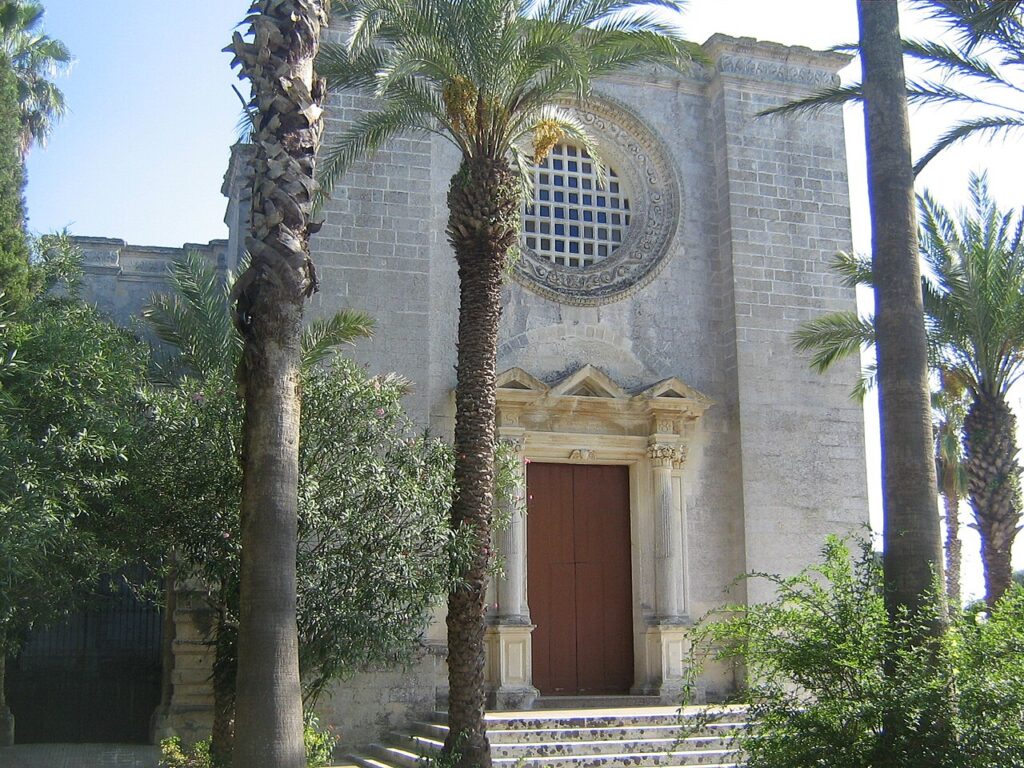
Some three kilometres from the village nucleus, within the territory of the feudo di Carpignano at Santa Marina di Stigliano, a Byzantine-era settlement long abandoned, stands a church erected in 1762 by the nobleman Domenico Salzedo. Built upon the remains of an earlier Byzantine crypt with a rectangular plan, the church takes a Greek-cross form and contains three altars honouring Santa Marina, San Nicola and Saint Eligius. Faint traces of Byzantine frescoes—a Madonna and Child, an image of Santa Marina—remain visible on the crypt walls, connecting this rural sanctuary to the spiritual continuity of the Salento across more than a thousand years.
Palaces and Civic Identity
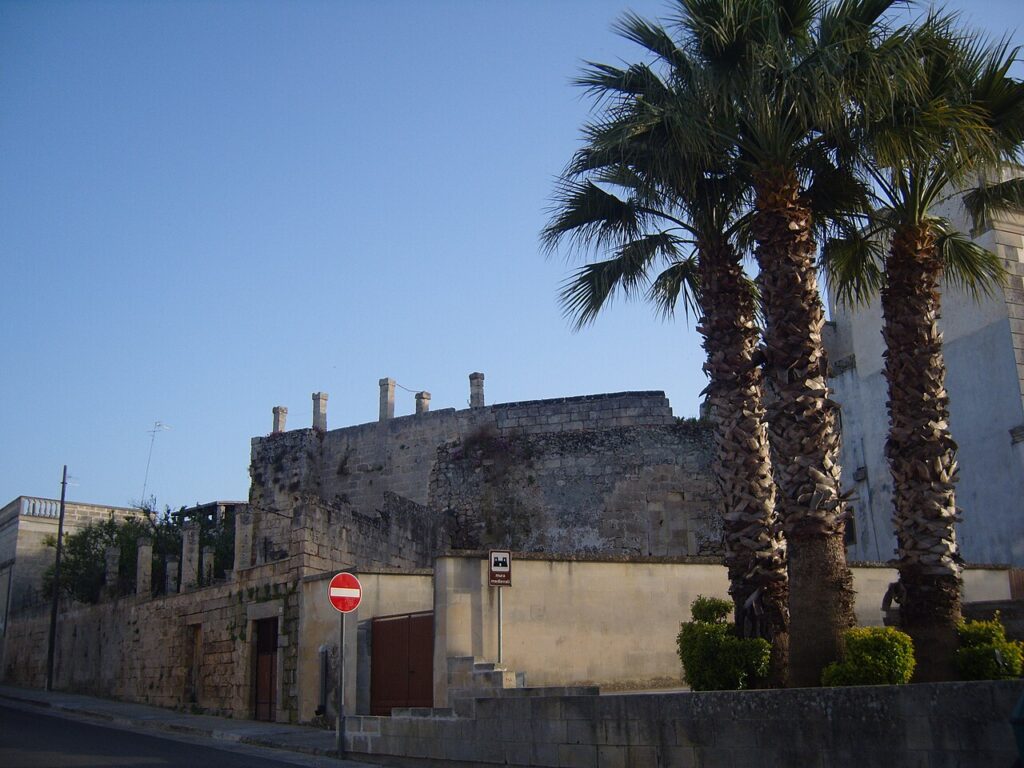
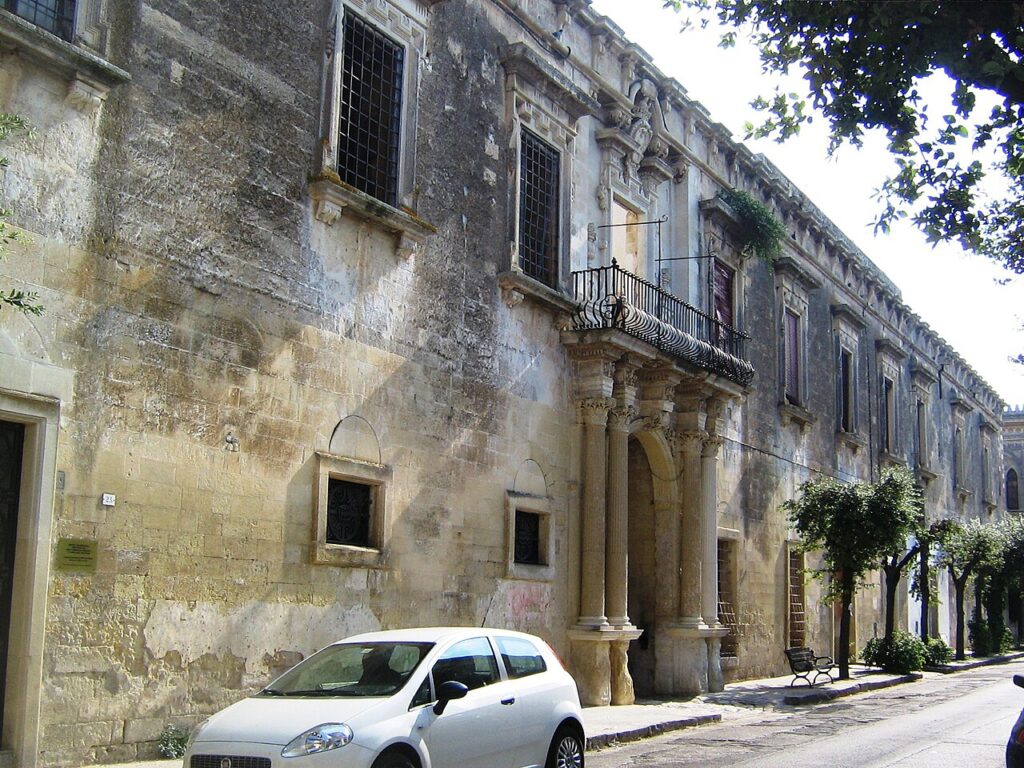
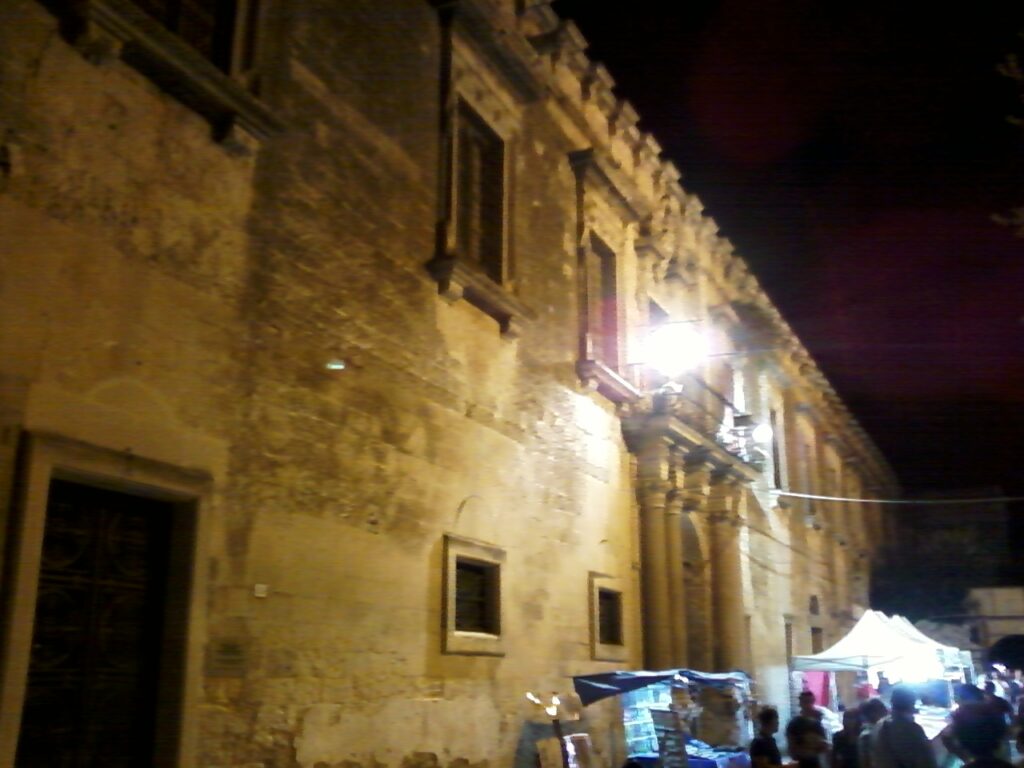
The urban fabric of Carpignano preserves the stratified memory of its noble families through a rich collection of palaces spanning the sixteenth to twentieth centuries. The Palazzo Ducale Ghezzi was rebuilt in the seventeenth century and expanded in the eighteenth century. It dominates the approach between the parish church and the castle. Its long façade features an imposing baroque portal, framed by four fluted columns and crowned by a balcony displaying the ducal crest and the Latin motto Non sibi sed aliis—not for oneself but for others. Other notable dwellings include Casa Zaminga (sixteenth and seventeenth centuries), Palazzo Chironi (late nineteenth century), the Palazzo Municipale (nineteenth century), and numerous other residences that chart the evolution of domestic architecture and family fortunes. The Torre Colombaia in contrada Cacorzo, a cylindrical dovecote fitted with interior cells for birds, was constructed by the del Balzo family and presents stemmi della famiglia del Balzo-Orsini sulla porta; it remains among the largest such structures in the Salento.
The Salento Landscape and Flora
Carpignano’s territory spans 48 square kilometres of Salento countryside, a landscape of low limestone ridges, scattered farmhouses, and ancient olive groves. The climate follows Mediterranean patterns: mild winters, hot humid summers around 34.5 degrees in August, and annual rainfall of approximately 626 millimetres, concentrated in autumn and winter. In 2012, botanists identified at the village the first specimen anywhere of Quercus × caroppoi, a hybrid oak species now known as the Elegant Oak of Carpignano—a reminder that even small corners of southern Italy harbour ecological discoveries. The village’s coat of arms, traditionally depicting a centuries-old pine tree crowned with a marchional corona, reflects the importance of such long-lived emblems to local identity; the original tree was felled in 1976 and replaced by a younger specimen.
Planning Your Visit
Carpignano Salentino is best reached by car from Lecce, the provincial capital, which offers rail connections to Brindisi and other major cities. The journey from Lecce takes roughly thirty minutes along provincial roads heading southeast. Those arriving from the Adriatic coast at Otranto will find Carpignano an easy inland detour of fifteen kilometres. The village itself is compact and walkable, with the parish church, ducal palace and sanctuary accessible on foot from the central square. Spring and autumn offer the most pleasant climate; summers can be intensely hot, while winters are mild but occasionally rainy.
| Departure point | Distance | Approximate time |
|---|---|---|
| Lecce (provincial capital) | 25 km | 30 minutes by car |
| Otranto (coastal town) | 15 km | 20 minutes by car |
| Brindisi (airport) | 70 km | 1 hour by car |
The Via Francigena, a pilgrimage route through the region, offers a quiet waypoint for walkers seeking refuge from the more crowded sections of the trail. The village’s low-key character and lack of mass tourism make it well suited to visitors seeking authentic encounters with rural Salento rather than spectacle. The sanctuary and crypts merit unhurried exploration; the surrounding countryside rewards a morning’s bicycle ride or a slower walk through olive groves and farmland.
Accommodation within Carpignano itself is limited; nearby towns such as Cannole, Bagnolo del Salento and Calimera offer guesthouses and rural apartments typical of Salento hospitality. The feast of Maria SS. della Grotta, the patroness of Carpignano, is traditionally observed on 2 July, when processions and prayers honour the miraculous apparition recorded in 1568.
Frequently asked questions about Carpignano Salentino
What is the best time of year to visit Carpignano Salentino?
Late spring (May–June) and early autumn (September–October) offer ideal conditions, with mild temperatures and lower humidity than summer. The patron saint feast of Maria SS. della Grotta provides a culturally rich visiting experience. Winter months are mild but can be rainy. July–August attract tourists but bring intense heat to the Salento plain.
How do I reach Carpignano Salentino by car from Lecce?
Carpignano Salentino lies approximately 25 kilometres south of Lecce. Follow the SS16 southbound or local provincial roads through the Salento plain toward Melendugno. The village is situated between Melendugno (to the north) and Otranto (13 kilometres east). Parking is available in the village centre near the main piazza.
What is the distance from Carpignano Salentino to the Adriatic coast?
The village sits roughly 13 kilometres west of Otranto and the Adriatic Sea. This proximity makes Carpignano an ideal inland base for exploring both the cultural heritage of Salento and accessing coastal attractions, beaches, and marine landscapes within a short 20–30 minute drive.
What Byzantine art can I see in Carpignano Salentino?
The village contains tenth-century frescoed crypts representing extraordinary examples of Byzantine religious art. Additionally, the Sanctuary of Maria SS. della Grotta (Madonna della Grotta) houses a sixteenth-century miraculous image of the Virgin, blending Byzantine spiritual traditions with later baroque-period artistic expression.
How long should I plan to spend visiting Carpignano Salentino?
A half-day visit (3–4 hours) suffices to explore the village centre, courtyards, and major religious sites including the sanctuary crypts. Those interested in deeper historical study, local agricultural heritage, or combining the visit with nearby Melendugno or Otranto should allocate a full day.
📷 Photo Gallery — Carpignano Salentino
In Apulia More villages to discover
Bari
 Sea
Sea
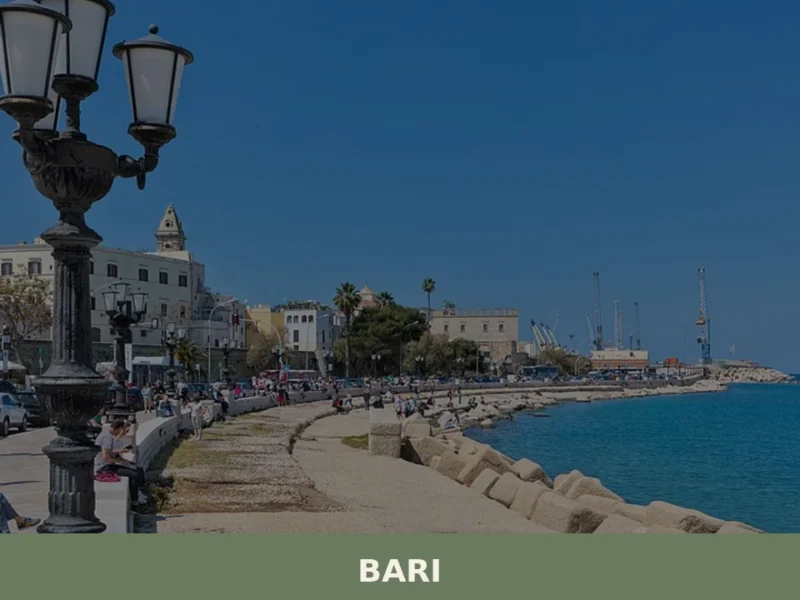
In Bari, the dawn over the Adriatic Sea paints the ancient walls of the old town in shades of pink, while the first rays of sunlight illuminate the imposing façade of the Basilica di San Nicola, the focal point of a city that has welcomed pilgrims and merchants for centuries. Here, history is etched into […]
Rodi Garganico
Sea
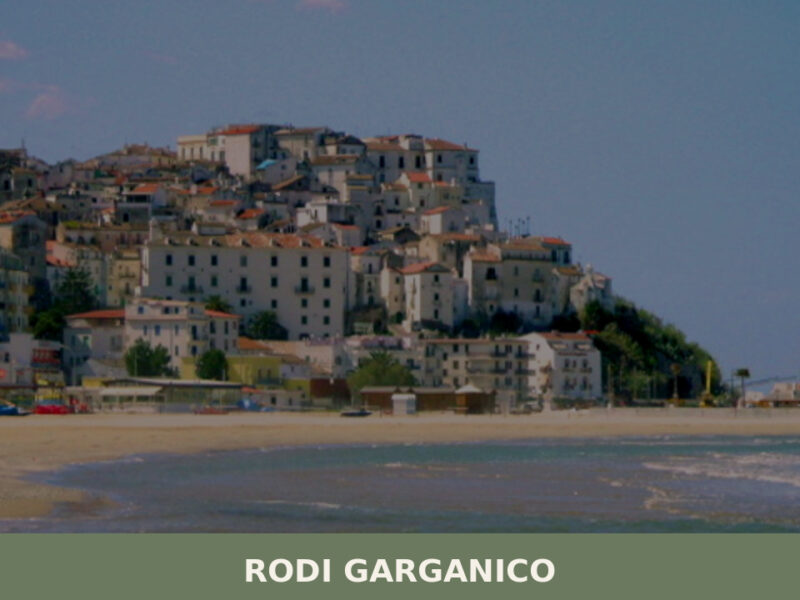
A coastal village of 3,302 inhabitants on the Gargano promontory, Rodi Garganico offers a medieval centre, IGP citrus groves, and an authentic Adriatic harbour life.
Canosa di Puglia
 Hills
Hills
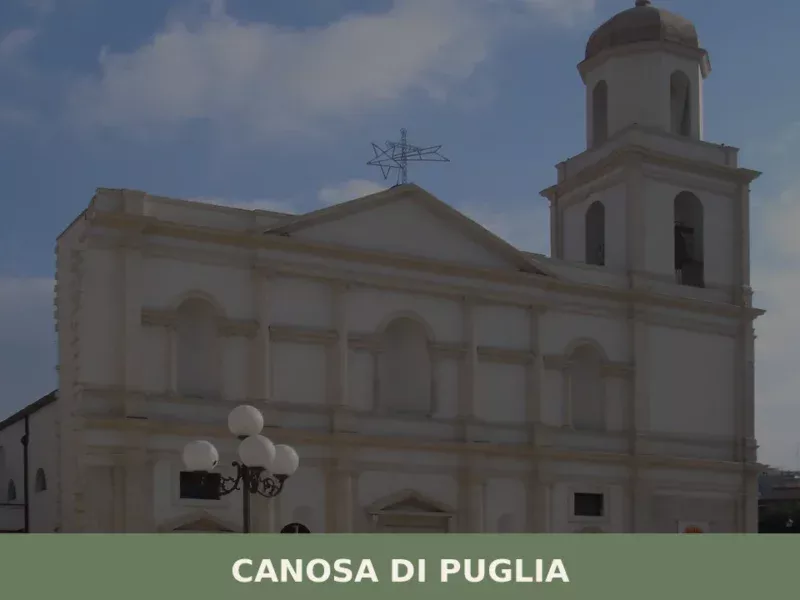
Discover what to see in Canosa di Puglia: Roman hypogea, Norman mausoleum, cathedral, archaeology museum and local food in northern Puglia.
Latiano
Plains
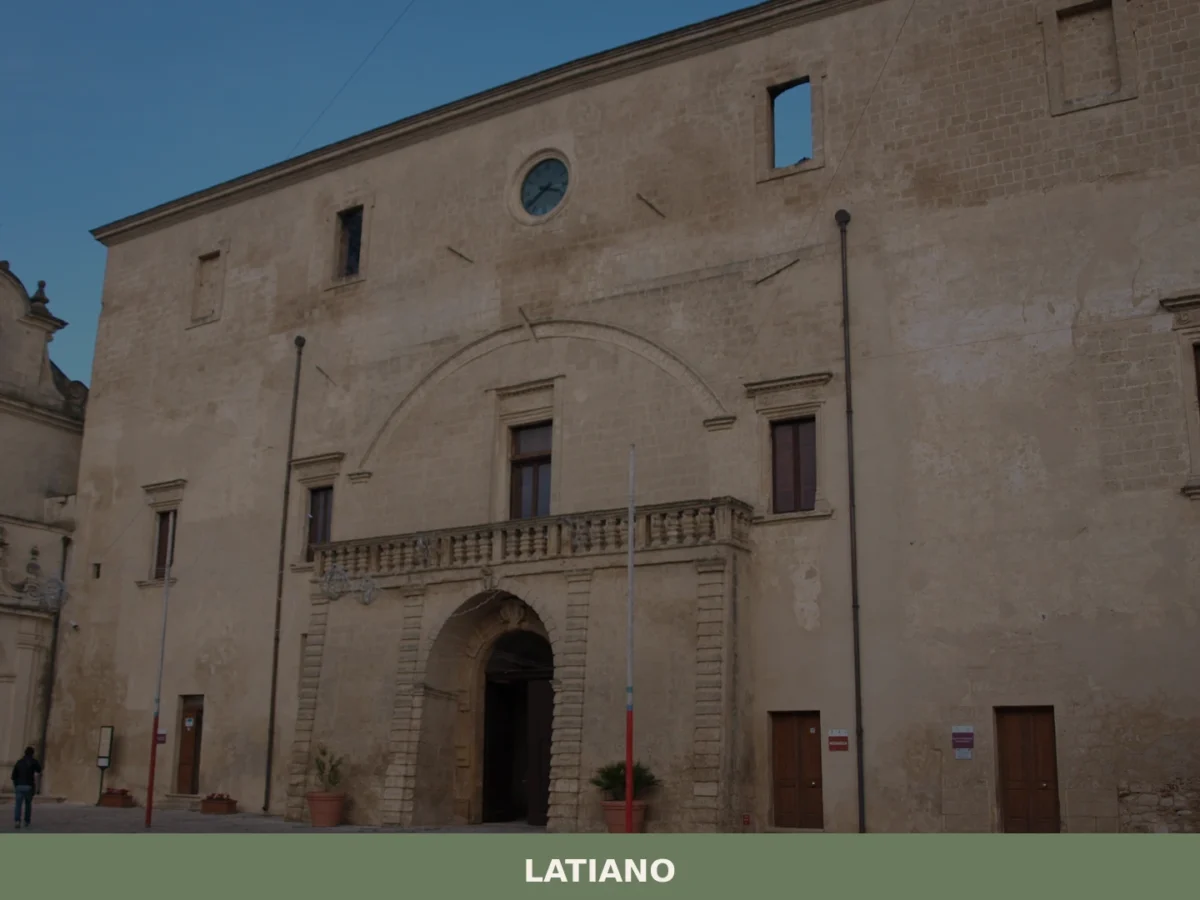
Discover what to see in Latiano, Puglia: Baroque churches, historic masserie, olive groves and local food in this Brindisi province town of 13,000 inhabitants.
Erchie
Plains
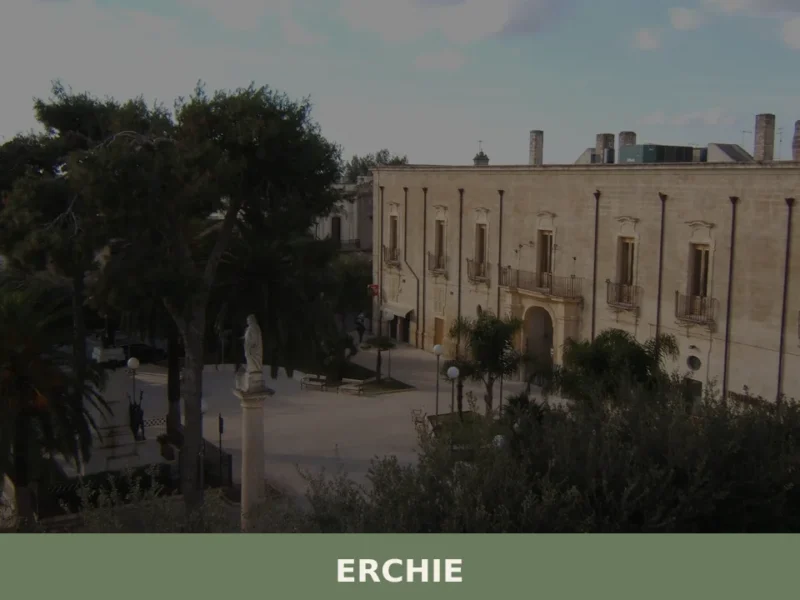
Discover what to see in Erchie, Puglia u2014 a village at the crossroads of three provinces, with Baroque churches, masserie, and authentic Salento cuisine.
Cellamare
Plains
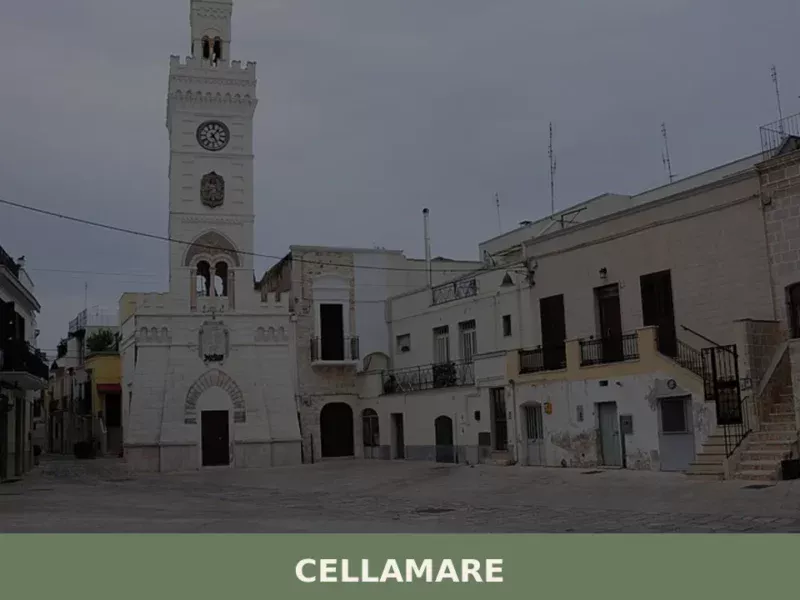
What to see in Cellamare, Italy: Explore this historic village, founded in 1171, located 110 m (361 ft) above sea level. Discover its grape industry and ancient origins.
Serracapriola
Sea
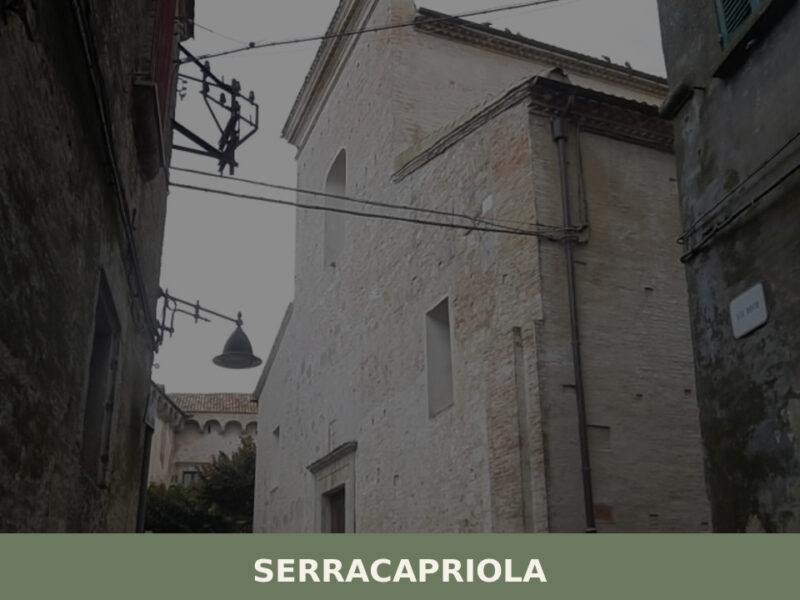
A hilltop village of 3,656 people overlooking the Fortore valley in Foggia province. Serracapriola offers a Norman castle, medieval alleys, and honest Puglian cooking far from the crowds.
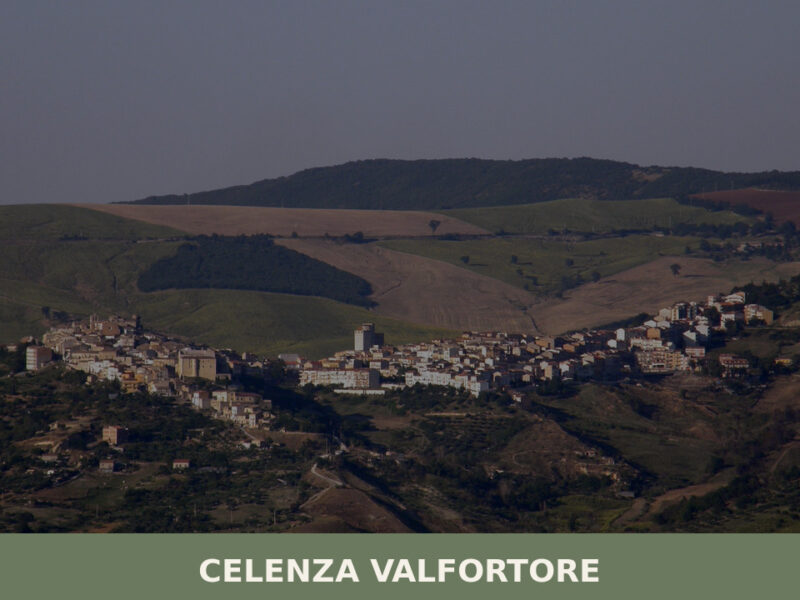
Celenza Valfortore
Hills
A hill village of 1,363 people above the Fortore valley in Puglia's Daunia highlands. Castle, churches, stone lanes, and a working landscape far from the tourist coast.
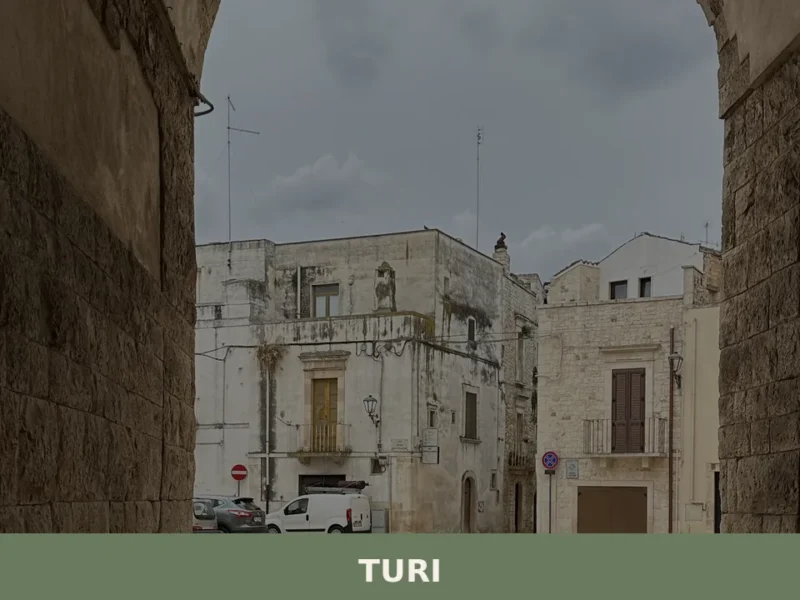
Turi
Hills
What to see in Turi? Discover 5 attractions, including the Mother Church and Norman Castle. Visit Turi for an unforgettable experience!
Stornara
Plains
A quiet agricultural town on Puglia's Tavoliere plain, Stornara rewards visitors with honest rural architecture, sweeping wheat-field panoramas, and a food tradition rooted in durum wheat.




🏡 Know Carpignano Salentino better than we do?
If you’re a local or have been there, your knowledge matters: add what’s missing or fix a detail on this page.