


Mesagne
 Plains
Home to 25,921 inhabitants, Mesagne rises on a gentle slope in Brindisi province. Its baroque churches and layered history span from Iron Age settlements to Renaissance revival.
Mesagne: Medieval Roots and Baroque Splendour in Northern Salento
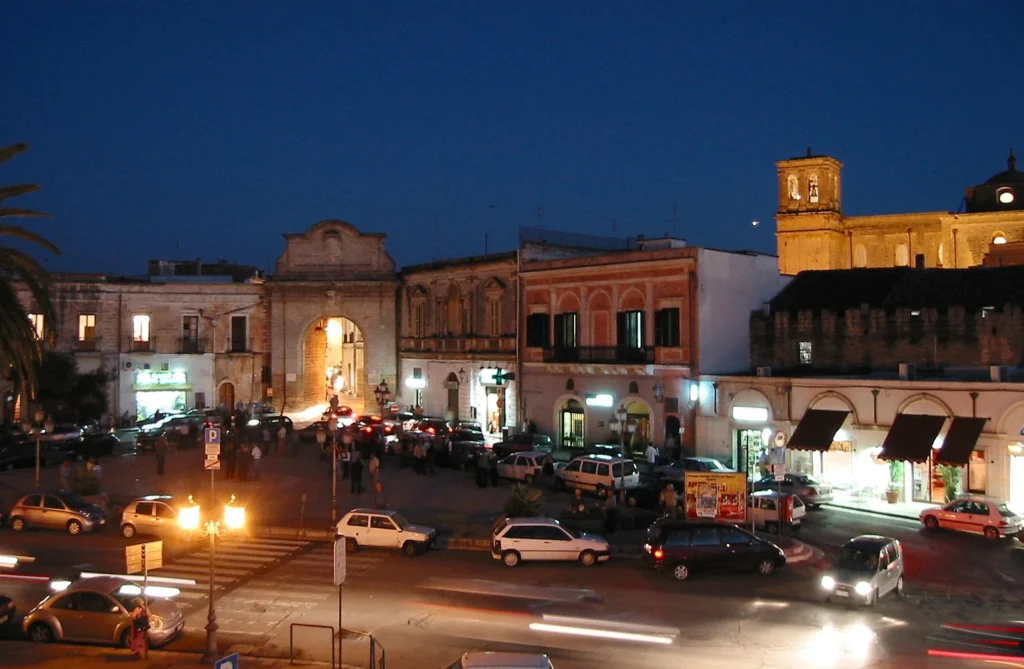
Mesagne crowns a low rise in the flat Salento landscape, its cream and ochre stone catching the hard southern light. The baroque façades rise steeply from the plain, their pilasters and moulded portals facing narrow streets that wind in concentric arcs around the old town. The sea lies thirteen kilometres away, but the air already carries salt and the constant wind that sweeps across this corner of Puglia.
Mesagne village in Apulia sits in the province of Brindisi, inhabited by more than 25,900 people across 22 districts, making it one of the largest towns in the region. The town draws visitors for its baroque churches and the remarkable layers of history beneath its streets—from Iapygian settlements and Roman villas to medieval feudal control and the baroque architectural transformation.
Ancient Centre and Medieval Transitions
Archaeological finds in the area reveal human occupation stretching back to the Upper Paleolithic, when hunter-gatherers moved southward across the peninsula during the glacial period. The Neolithic brought agriculture and permanent settlement. Bronze Age and Iron Age artefacts indicate continuity of habitation; in the town centre itself, remains of an Iron Age settlement belonging to the Iapyges have been uncovered.
Between the sixth and third centuries BC, Mesagne flourished as an important Iapygian centre, its position midway between Oria and the port of Brindisi making it strategically valuable. Archita of Taranto led a military expedition into the area in the period between 366 and 360 BC. When Roman authority extended across the region, Mesagne became one of the numerous estate villas dotted along the Via Appia, the great artery connecting Rome to the Adriatic.
The early medieval centuries saw the settlement reduced to a fortified rural villa within the Lombard feud of Oria, then incorporated into the Norman Principate of Taranto. A small Greek community is recorded in the twelfth century, while medieval documents from the Swabian period confirm donations to the Knights Hospitaller and the Teutonic Order, marking the presence of monastic and military institutions in the town’s religious economy.
The most visible transformation arrived between the fifteenth and seventeenth centuries, when feudal lords and monastic orders invested in urban renewal. Giovanni Antonio Orsini del Balzo, Prince of Taranto, enlarged the castle in the fifteenth century, converting it into a residential palace. By the end of the sixteenth century, the main square housed workshops of leather-workers, farriers and shoemakers, while new palaces with carved windows, dressed portals and balconies filled the expanding streets. The town’s population at that period approached five thousand inhabitants.
Between the 1500s and 1600s, the town was transformed from a feudal stronghold into a centre of craft and architectural ambition, a shift visible today in every baroque palazzo.
The Baroque Churches
Church of All Saints
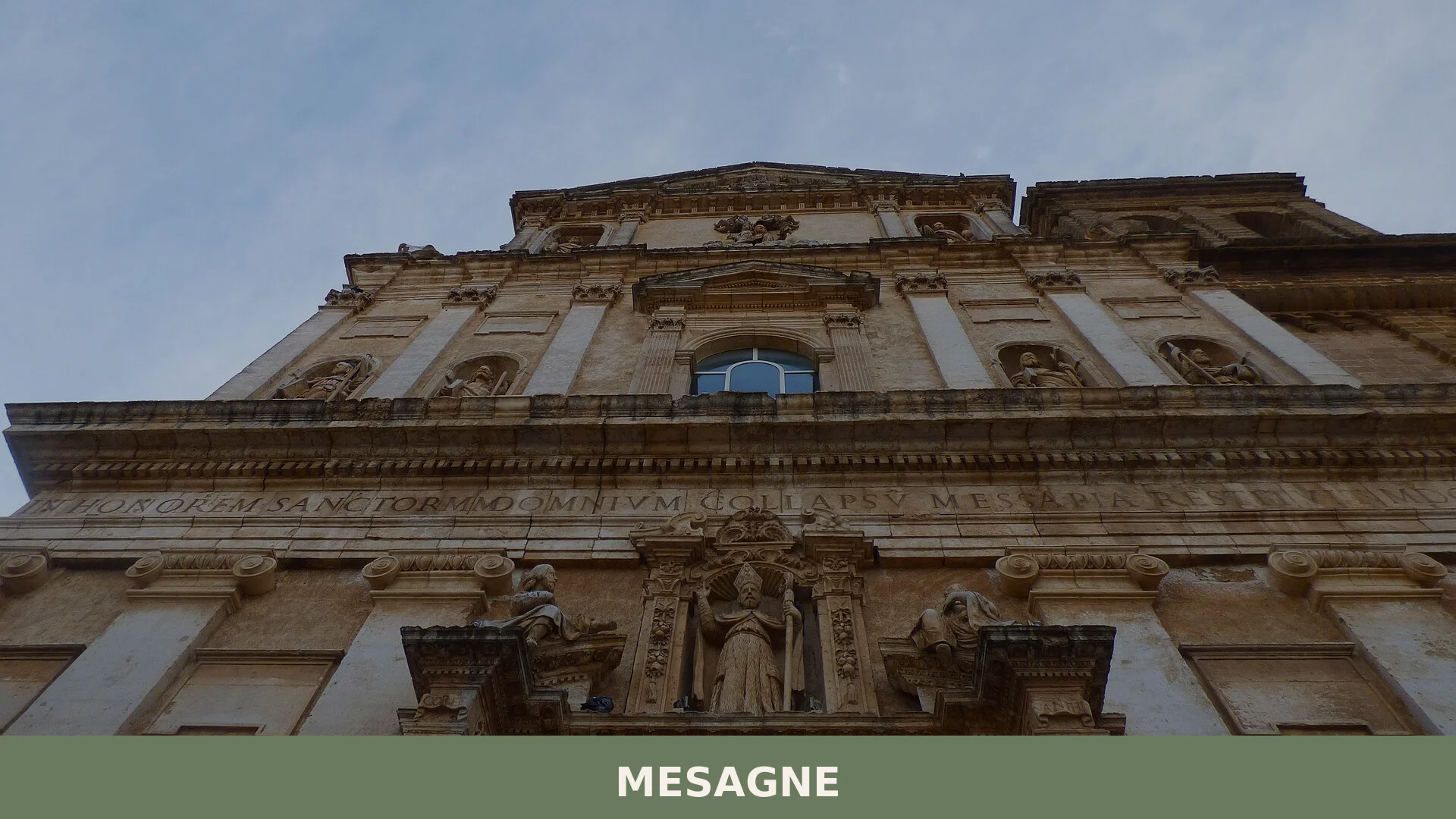
Standing above the town, the Church of All Saints (Chiesa degli Ognissanti) dominates the skyline with its three-tiered baroque façade. On this site once rose a Byzantine church dedicated to San Nicola, dating to the tenth century. It was rebuilt around 1450 and rededicated, then substantially altered again around 1580. The structure collapsed on 31 May 1649. Reconstruction began immediately after, continuing until 1660. The interior rises 24 metres beneath the dome and extends 47 metres along the nave, with lateral chapels framed by Corinthian pilasters. The pulpit stands on the left, while the right side showcases a notable pipe organ by the master craftsman Tommaso Mauro. Key artworks include Saverio Lillo da Ruffano’s Assumption and the Adoration of the Shepherds by multiple hands including Gian Pietro Zullo, Andrea Cunavi and Domenico Pinca.
Church of Saint Anne
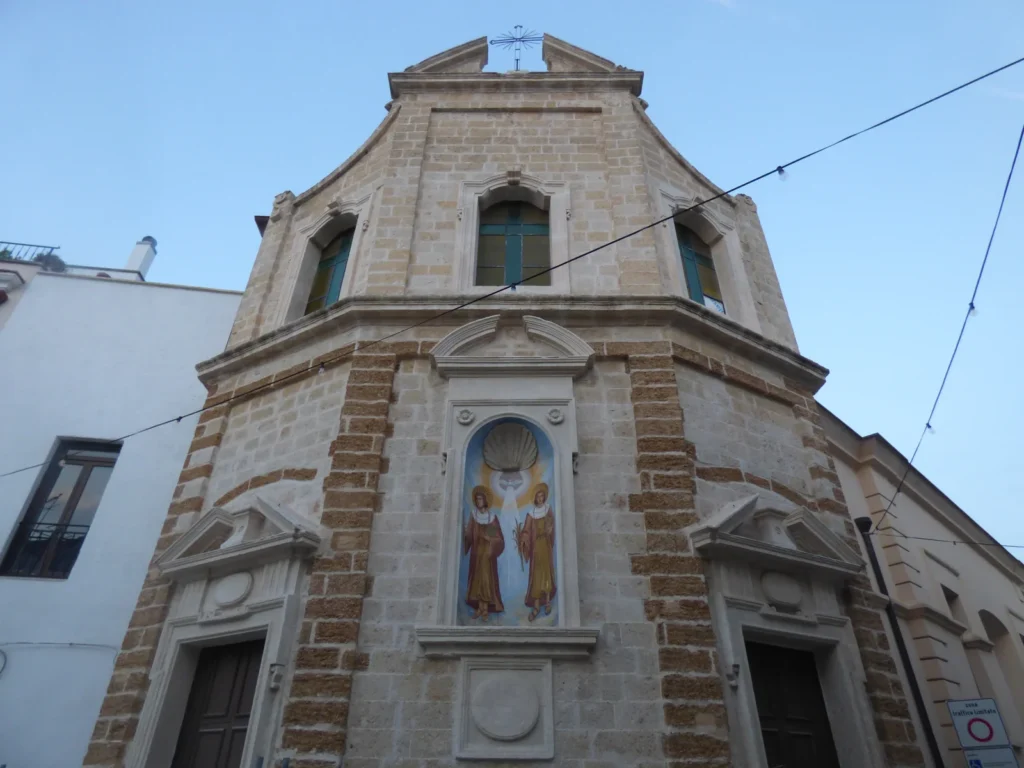
The Church of Saint Anne was built between 1683 and 1699 in fulfilment of a vow. It features a two-storey façade in local limestone with round columns and decorative pilasters. The portals and mouldings display rich vegetal motifs and cherub heads; above sits a curved gable once likely bearing the De Angelis coat of arms. The interior comprises a single nave with three lateral altars and two remarkable wooden pulpits from the eighteenth century. Among its works is a copy of the Veronese’s Deposition of Christ, traditionally attributed to the Mesagne artist Andrea Cunavi, along with nineteenth-century papier-mâché statuary. The stuccowork and ornamental detail feature baroque craftsmanship characteristic of the region.
Basilica-Sanctuary of the Virgin of Mount Carmel
This basilica stands above an earlier Early Christian crypt that remains beneath the nave. The sanctuary later came under the custodianship of the Carmelite friars, marking a significant shift in its spiritual care. The early medieval exterior features a richly decorated portal with a pointed arch and a lunette fresco of the Madonna. Restoration work in 1975 revealed Roman foundations with traces of painted decoration beneath the floor, likely belonging to a villa of the imperial period. The interior was substantially reworked in baroque style during the first half of the seventeenth century, with new lateral chapels, inlaid altars and stucco detail. A single Corinthian column survives from the original three-naved Romanesque structure. At the altar stands an image of the Virgin of Carmel with the Christ Child, a work by Francesco Palviso from Putignano.
Territory and Landscape
Mesagne lies in the flat expanse of the Salento plain, though its historic core rises on a gentle hill that offers views across the agricultural landscape. The territory spans twenty-two districts radiating outward from the old town. At 72 metres above sea level, the village remains firmly inland, yet the Adriatic Sea lies close enough that maritime currents and wind patterns influence the local climate.
The Mediterranean climate brings mild winters and hot summers, but the town’s geographical position—wedged between the Adriatic and Ionian shores—exposes it to cold continental gusts from the Balkans and warm Saharan flows from the south. Winter temperatures rarely fall below freezing, though January 1979 recorded −6.4 °C, while July 2007 peaked at 45 °C. Autumn and winter are the wettest seasons; 2018 brought 138 rainy days. Persistent wind, sometimes gusting above 80 kilometres per hour for several consecutive days, is a defining feature of the meteorological year.
The Town’s Complex Modern History
The twentieth century brought civic growth and formal recognition. The title of city (città) was conferred in 1999, elevating the administrative status of the ancient settlement. However, Mesagne also became associated with organised crime; the structure known as the Sacra Corona Unita, active in the latter twentieth century, had significant organisational presence here, with Giuseppe Rogoli, one of its principal figures, based in the town. This chapter of local history, while documented, casts a shadow across the otherwise celebratory narrative of urban revival.
Local Food and Agricultural Tradition
The Salento countryside produces olives for oil, wheat, and vegetables adapted to the region’s dry climate. The province of Brindisi holds protected designations for several regional specialities, among them the Carciofo Brindisino (IGP), Burrata di Andria (IGP) and the Olio di Puglia (IGP). Local restaurants and food shops in and around the town offer regional preparation.
When to Visit and How to Arrive
The most comfortable seasons are spring (March to May) and autumn (September to November), when temperatures remain warm but not extreme and rainfall, though possible, does not dominate the daily experience. Summer (June to August) brings intense heat and occasional scirocco winds that can raise temperatures unexpectedly. Winter is mild but frequently wet, with regular rain and occasional cold spells; if you travel between November and March, bring waterproof clothing and allow for possible transport delays.
Mesagne lies 13 kilometres west of Brindisi, the provincial capital and the closest significant transport hub. The town is accessible by regional rail and road connections. If arriving by car from Brindisi or from the Lecce direction, follow the provincial roads toward the Salento interior. Parking is available in the modern outer districts; the old town itself has limited vehicle access.
| Departure | Distance | Time |
|---|---|---|
| Brindisi (city) | 13 km | 20–25 min (car) |
| Lecce | 50 km | 55–65 min (car) |
| Brindisi Airport | 30 km | 35–45 min (car) |
Nearby villages worth exploring include Erchie Brindisi, which offers museums, harbours and a broader range of services. The Cammino di Don Tonino pilgrimage route passes through the area, connecting the Salento interior with coastal destinations for those undertaking a longer walking journey.
Feast and Cultural Calendar
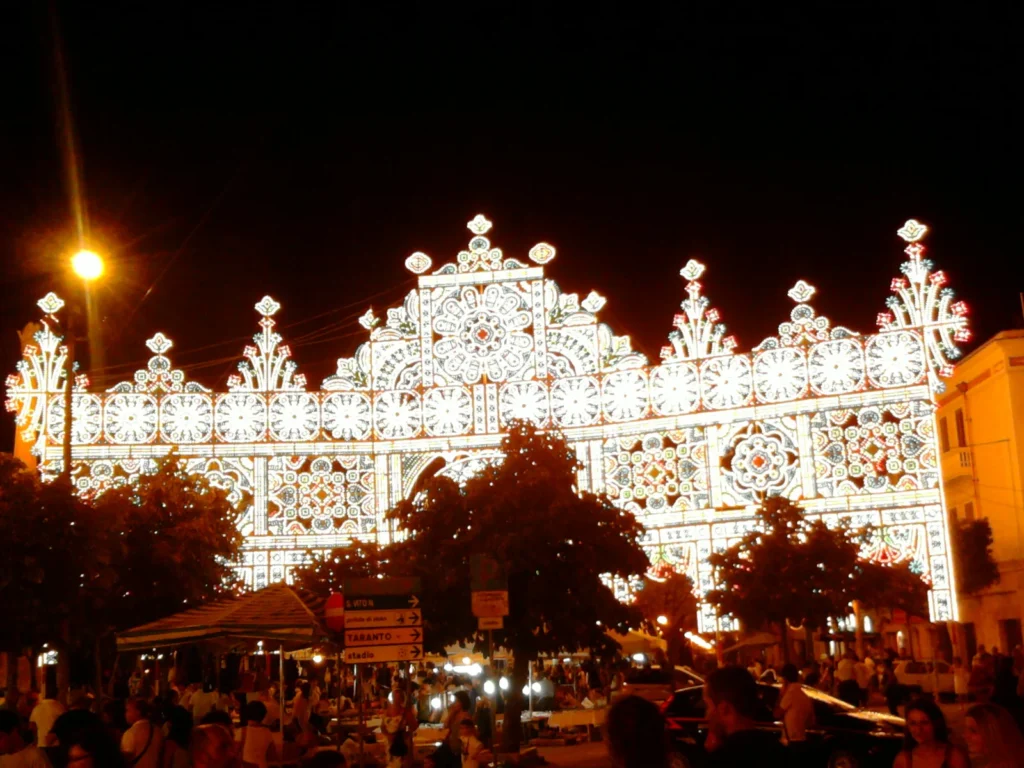
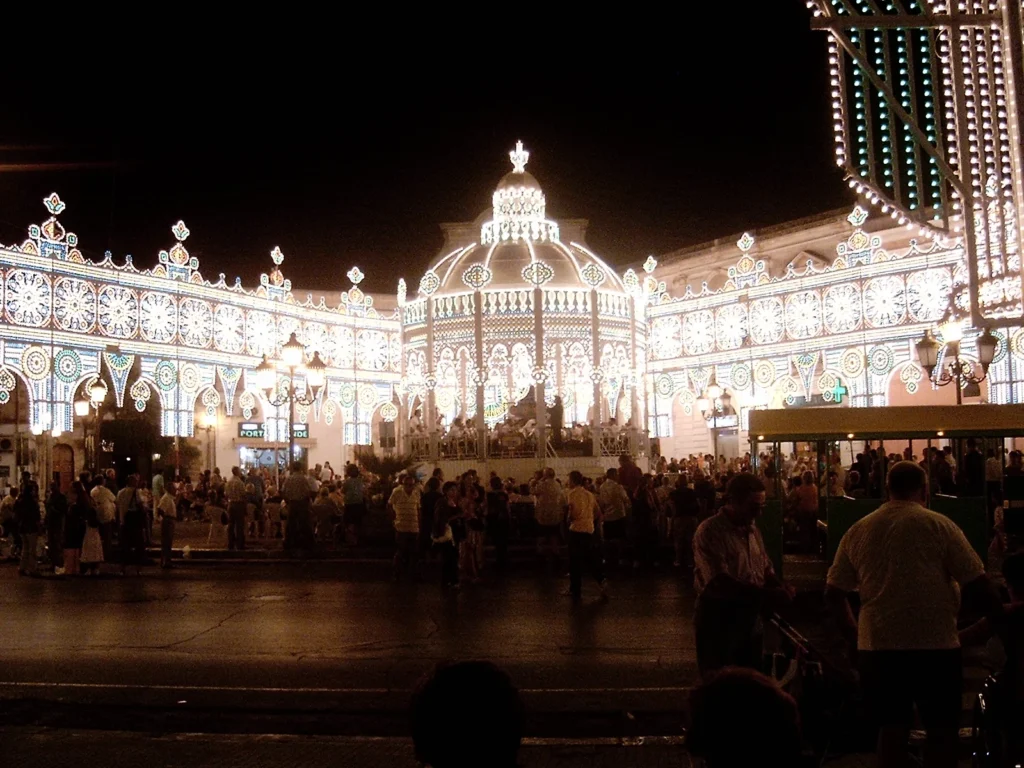
The feast of the Madonna del Carmine falls on 16 July, marking the annual celebration of the village’s patronal devotion. Processions, religious services and community gatherings mark the occasion, drawing families and visitors to the town. The celebration reflects the centuries-long presence of the Carmelite order and the enduring veneration of the Virgin in Apulian spirituality.
Frequently asked questions about Mesagne
What is the best time to visit Mesagne?
Late spring (May–June) and early autumn (September–October) offer ideal weather with warm temperatures and manageable crowds. July features the Patron Saint Feast of Madonna del Carmine on July 16th, a major religious celebration. Summers are intensely hot; winters mild but occasionally rainy. Consider visiting during the feast for authentic cultural experiences, though accommodation may be limited.
How do I reach Mesagne by car?
Mesagne is located in Brindisi province, Puglia. From the north, take the A14 motorway toward Bari–Brindisi and exit at Brindisi Nord. Follow provincial roads southward toward Mesagne, approximately 30 kilometres from Brindisi city centre. Travel time from Brindisi airport: roughly 45 minutes. Parking is available in the town's outer areas; narrow medieval streets restrict vehicle access to the old town centre.
What is the nearest train station?
Mesagne has its own railway station on the Brindisi–Lecce line, operated by Trenitalia. Direct or connecting trains link it to Brindisi (approximately 30 minutes), Lecce, and major cities across southern Italy. The station lies on the town's periphery; a short walk or local bus reaches the historic centre. Check Trenitalia's official website for current schedules and fares.
How long should I plan to spend in Mesagne?
A typical visit spans 4–6 hours, allowing time to explore the baroque churches, wander the concentric medieval streets, and enjoy local cuisine. Those interested in archaeology and detailed art history may extend to a full day. The town's compact size and concentrated attractions make it ideal as part of a broader Salento itinerary rather than an overnight stay destination.
What archaeological periods are represented in Mesagne?
Mesagne's archaeological record spans from Upper Paleolithic hunter-gatherer camps through Neolithic agricultural settlements to Bronze and Iron Age occupation. Most notably, Iapygian Iron Age settlement remains have been excavated in the town centre, representing the indigenous peoples who inhabited the Salento peninsula before Roman conquest. Roman villas and medieval structures overlay these ancient foundations.
📷 Photo Gallery — Mesagne

In Apulia More villages to discover
Biccari
 Hills
Hills
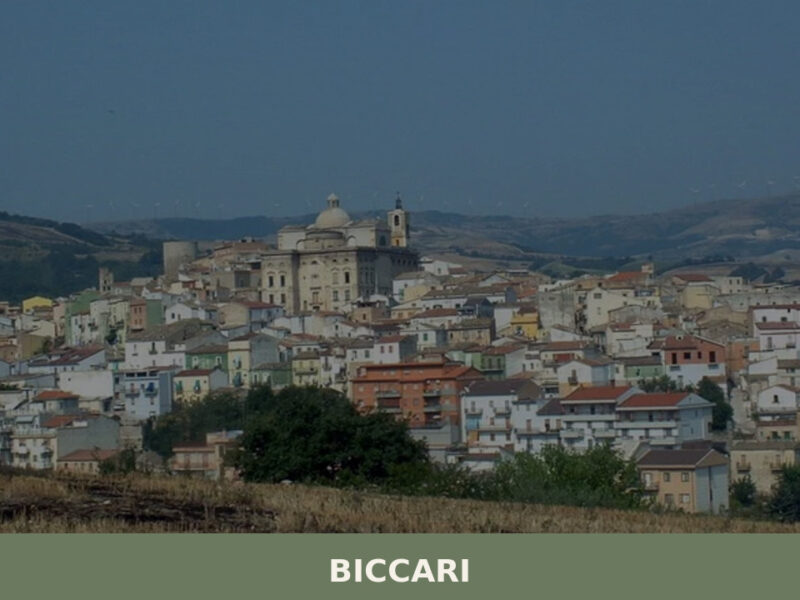
Discover Biccari, a charming hilltop village in Puglia's Daunian Mountains. Explore its Norman tower, mountain lake, forest trails, and authentic southern Italian cuisine.
Sannicandro di Bari
Plains
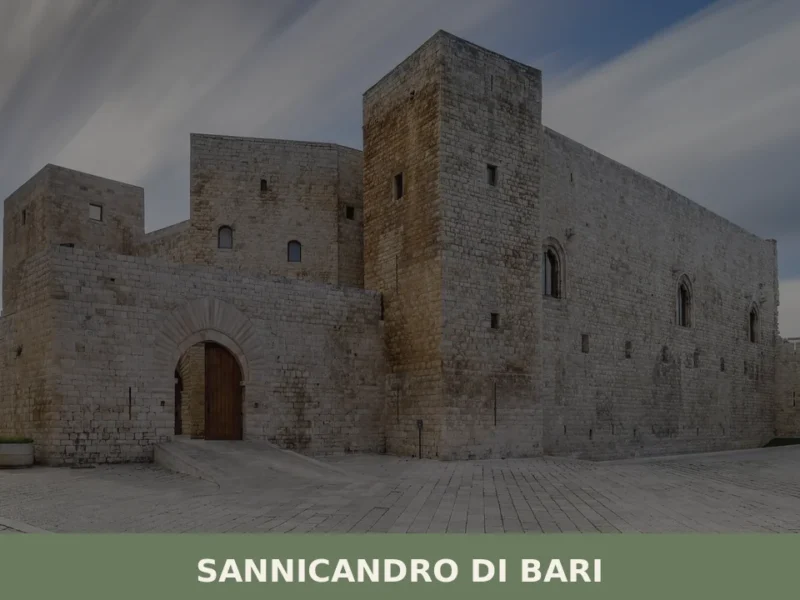
What to see in Sannicandro di Bari? Discover the Norman-Swabian Castle and 4 historic churches. A complete guide to exploring the village and the Bari plain.
Castro
 Sea
Sea
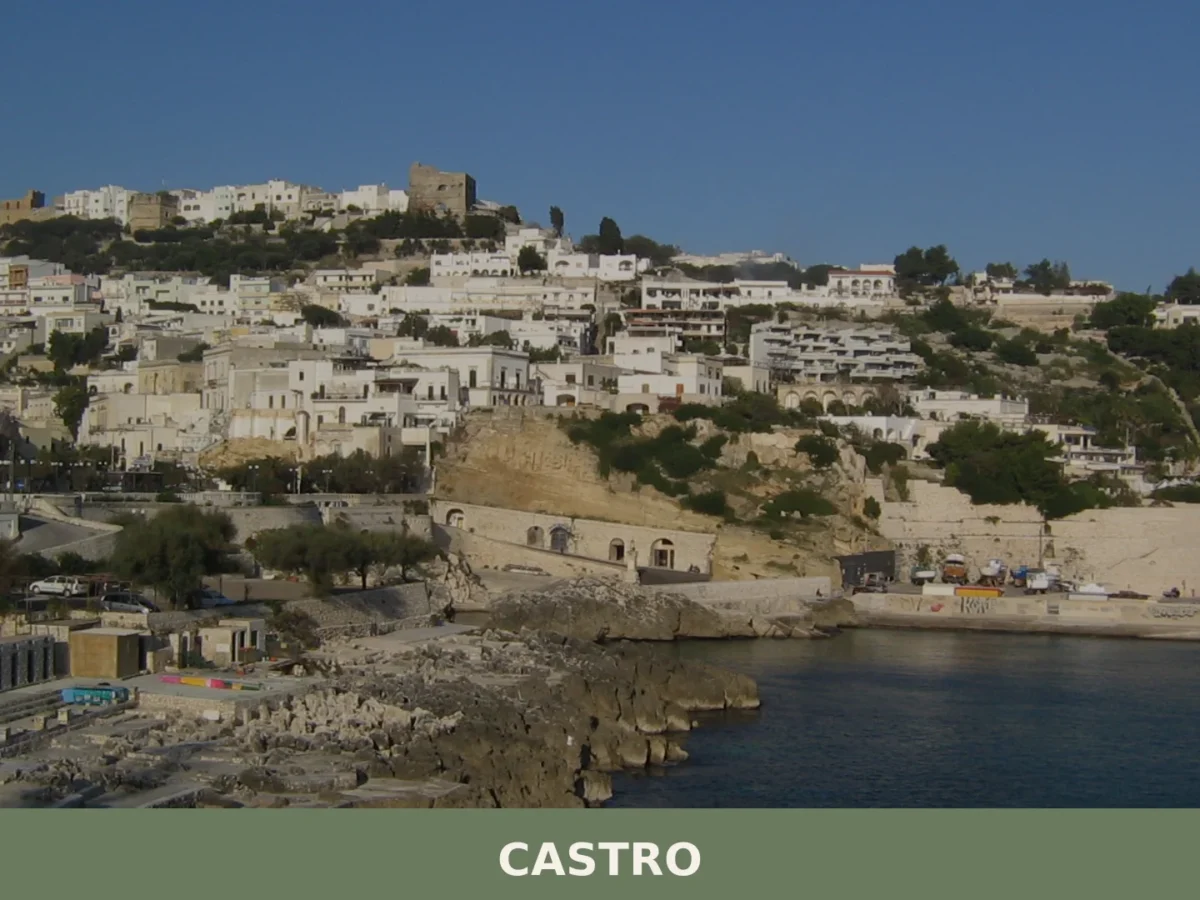
Population 2,318 on 4.44 km². Visit for the 12th-century castle, 11th-century church, and Byzantine remains overlooking the Canale d'Otranto.
San Pietro Vernotico
Sea
What to see in San Pietro Vernotico, Italy? Discover its 14th-century Torre Quadrata and the historic Chiesa Matrice. Explore this village, 36 m above sea level, for its rich past.
Poggio Imperiale
Plains
A planned eighteenth-century village on the Tavoliere plain, Poggio Imperiale offers grid-pattern streets, agricultural landscapes, and the unhurried rhythms of northern Puglia.
Castelluccio dei Sauri
Hills
A hilltop village of 2,024 inhabitants overlooking Puglia's Tavoliere plain. Castelluccio dei Sauri offers ancient tratturi routes, quiet stone lanes, and the deep agricultural traditions of the Capitanata.
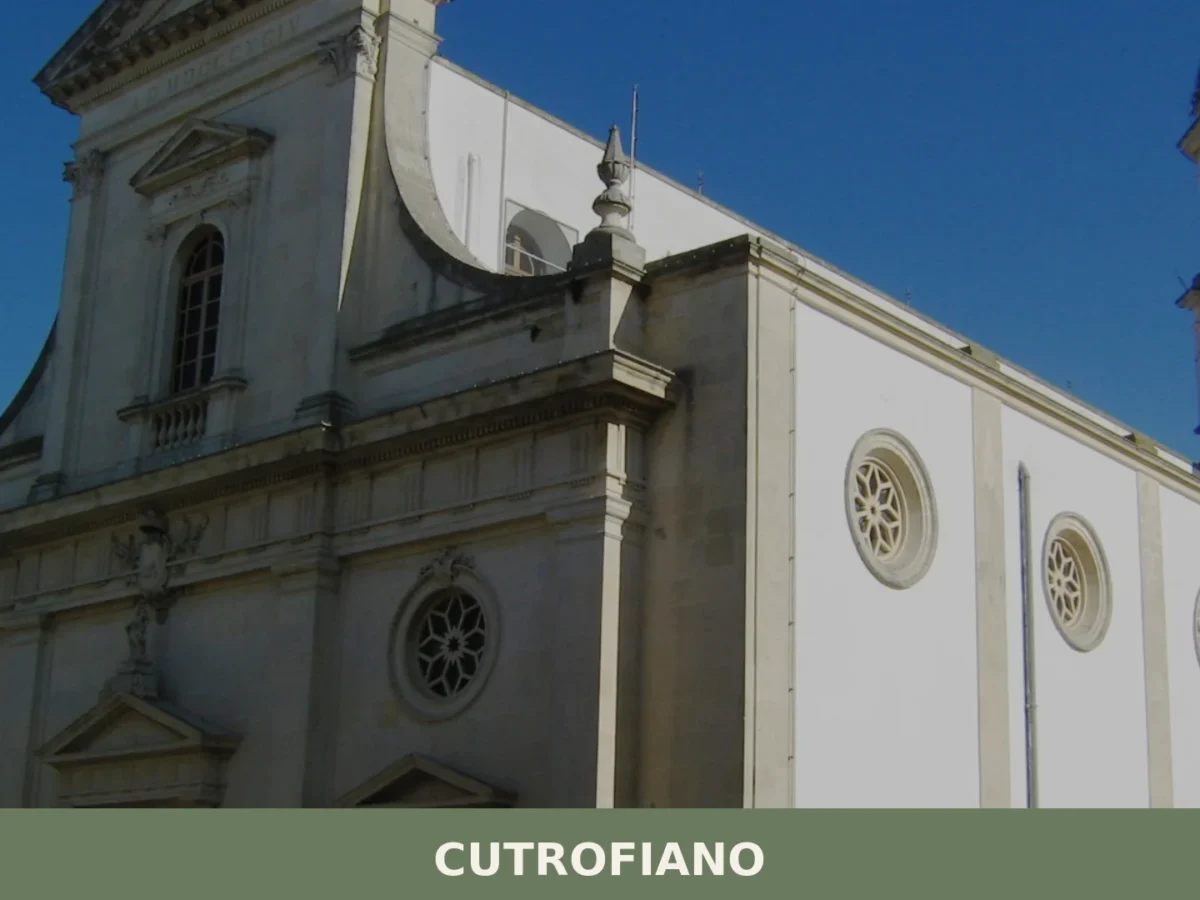
Cutrofiano
Plains
A rural comune of 8,657 souls at 85 metres altitude in southern Lecce province. Visit for medieval crypts, baroque architecture and the living memory of a once-thriving ceramic tradition.
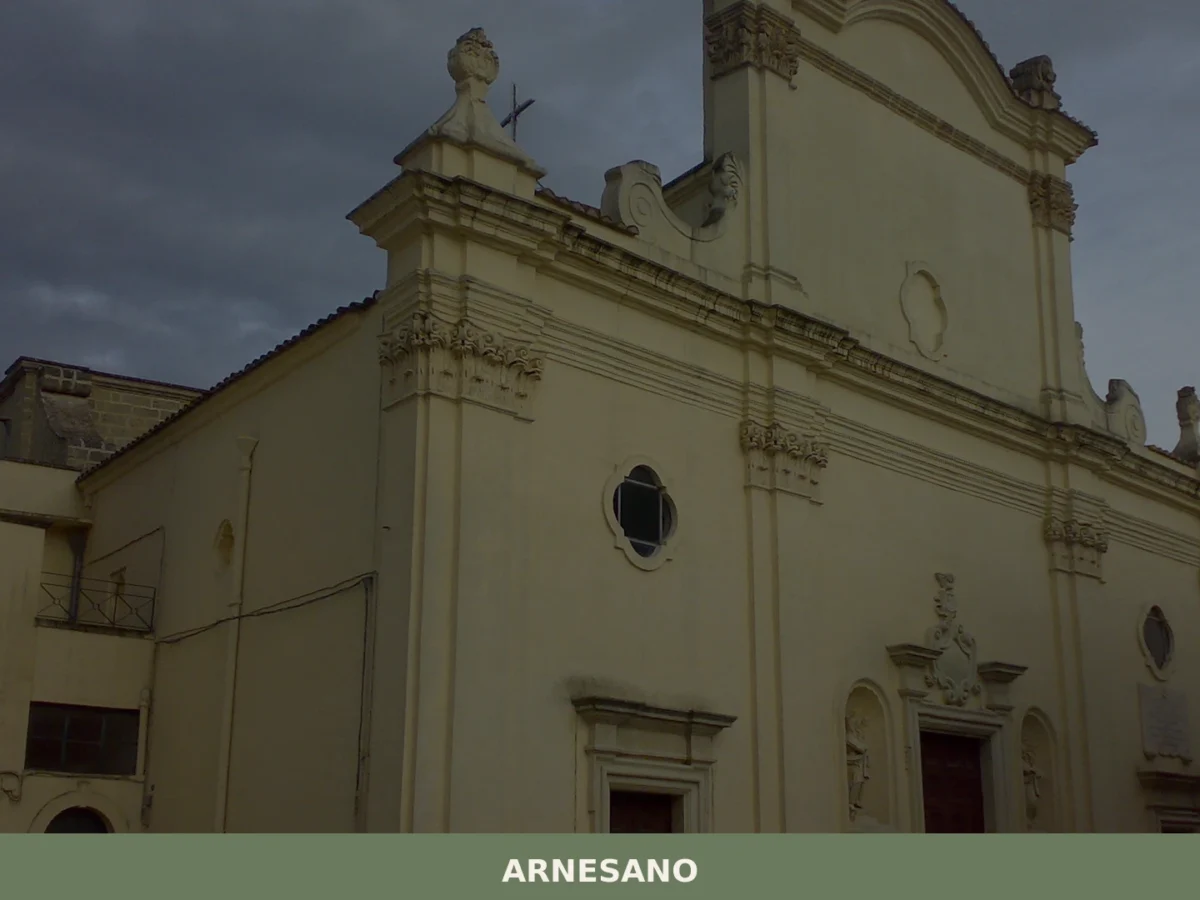
Arnesano
Plains
Discover what to see in Arnesano, a Lecce hinterland comune in the Valle della Cupa. History, food, travel tips and the best of the Salento interior.
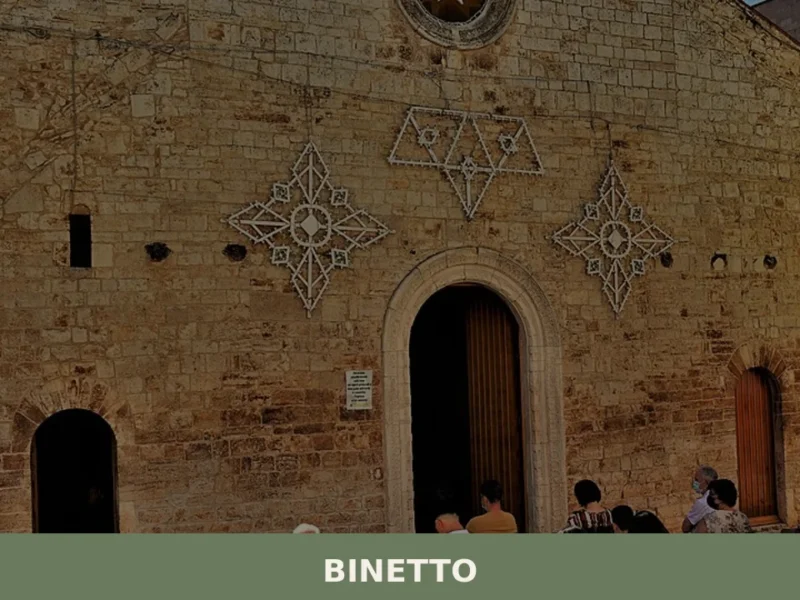
Binetto
Plains
At 170 meters above sea level, with a population of 2,128 inhabitants (most recent ISTAT data), Binetto is located on the Bari plain, a geographical context that has shaped its history and economy. This village, whose origin may date back to Roman settlements linked to vine cultivation, offers a careful discovery experience, away from the […]
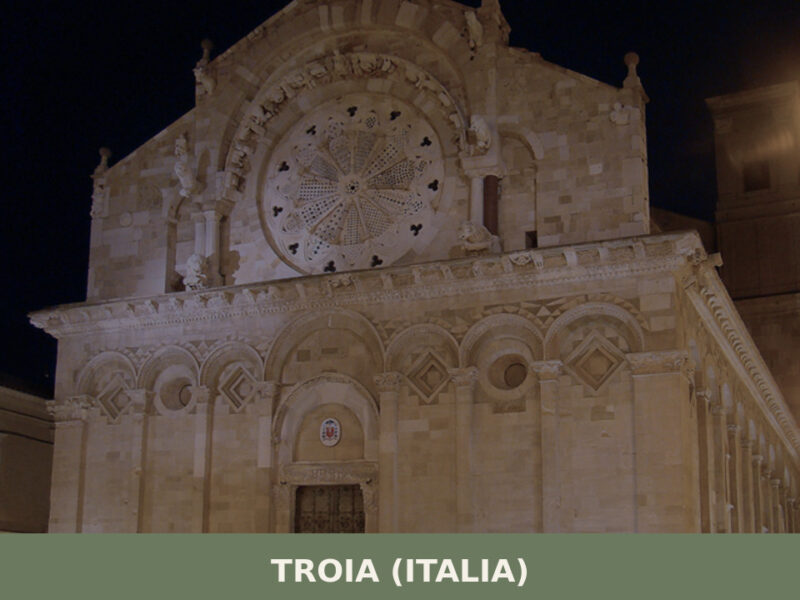
Troia
Hills
A hillside village of 6,574 people centred on a Romanesque cathedral with bronze doors. Troia anchors the agricultural interior of northern Puglia, far from the coast.





🏡 Know Mesagne better than we do?
If you’re a local or have been there, your knowledge matters: add what’s missing or fix a detail on this page.