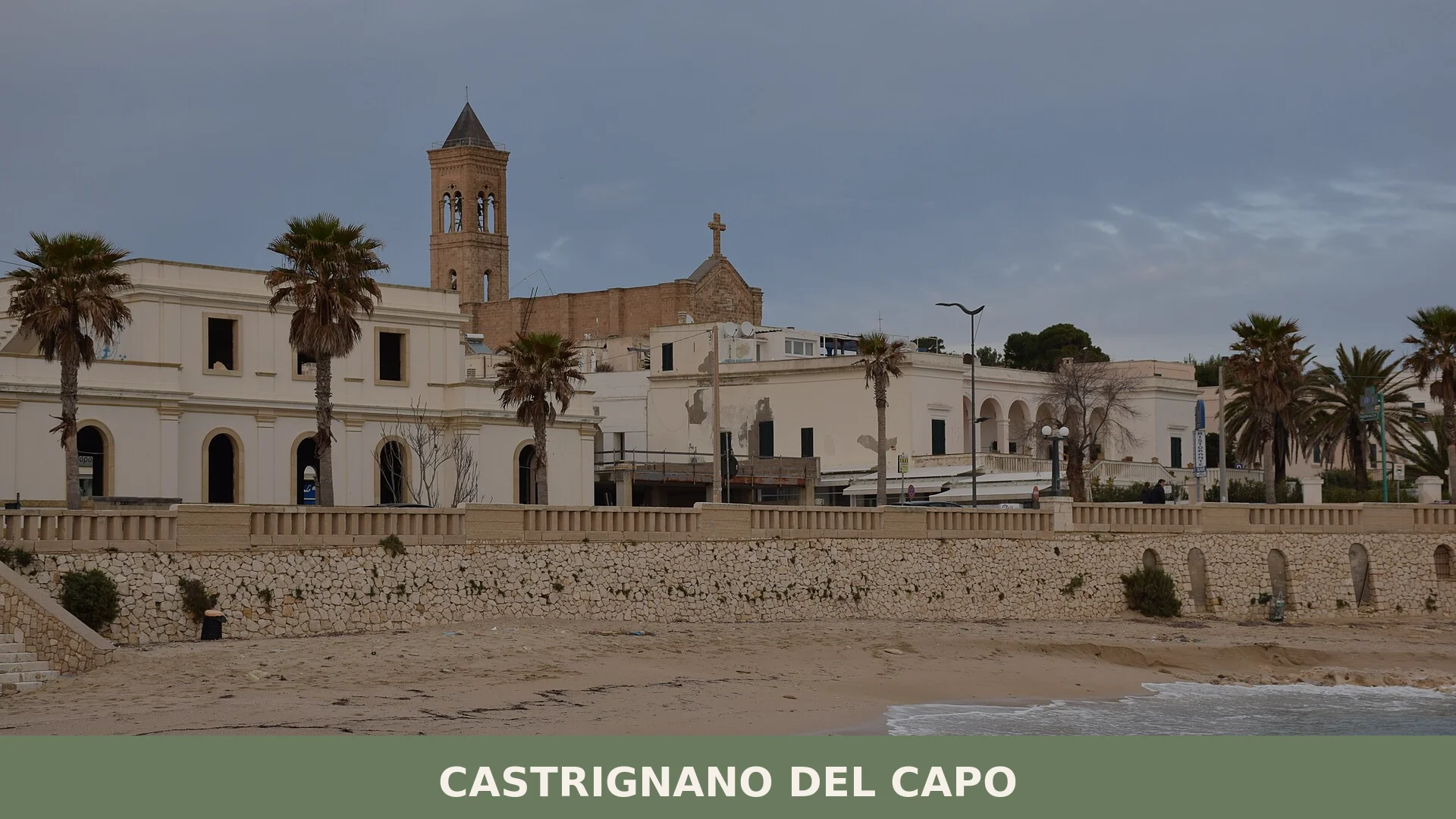
White-walled houses crowd the steep lanes of Castrignano del Capo’s medieval core, their narrow courtyards and carved balconies speaking to centuries of survival on a tufaceous ridge that drops toward the Adriatic. The village perches at 121 metres above sea level, its stone streets following the contours of the old castrum—a defensive settlement whose name echoes the Latin word for fortress.
Castrignano del Capo village in Apulia administers a territory that includes three substantial frazioni: Giuliano di Lecce to the northwest, Salignano to the east, and Santa Maria di Leuca—the celebrated seaside resort that has transformed the economy and reputation of the comune. The medieval Borgo Terra forms the historic core of the comune itself. With 5,093 inhabitants and membership in the Borghi Autentici d’Italia since 2016, this southernmost municipality of Puglia draws visitors to its baroque church, archaeological layers, and access to protected coastal landscapes where two seas meet.
From Bronze Age Settlement to Medieval Refuge
Human presence in this territory extends far into prehistory: the menhir of Ussano, located in the frazione of Giuliano di Lecce, testifies to Bronze Age settlement. Romans later occupied the area, establishing agricultural and military structures. However, the village as it exists today took shape around the tenth century, when Saracen raiders destroyed the neighbouring city of Vereto. Survivors fled inland and founded new settlements, among them Castrignano del Capo, which grew as a refuge centre protected by its elevated position and natural defences.
From 1280 onward, the village fell under feudal rule. The d’Almeto family held it first; over the succeeding centuries, control passed through the hands of numerous noble houses—the De Caniano, Pignatelli, Bilitta, Ayerbo, Della Ratta, Della Barliera, De Frisis and Guarini—each leaving traces in the architectural fabric. The so-called Borgo Terra, the medieval heart, received its most significant civilian adornment in 1460 with the construction of Palazzo Fersini, a noble residence that still anchors the oldest quarter.
The village’s survival rested not on conquest or trade monopoly, but on the ability of its people to retreat uphill when danger came from the sea—a rhythm of threat and refuge that shaped coastal Salento for centuries.
Sacred Architecture and Baroque Renewal
Church of San Michele Arcangelo
The church of San Michele Arcangelo dominates the village’s physical and spiritual life. A severe earthquake on 20 February 1743 destroyed the preceding Renaissance building; reconstruction began immediately on 2 April that same year. The new structure, completed in 1751 and consecrated on 22 December in the presence of bishop Luigi D’Alessandro, embodies baroque restraint in local stone. Six side altars line the nave, while a monumental organ from 1751 occupies the right side. The church’s most prized possession is a wooden statue of San Michele dated 1707, the work of the Neapolitan sculptor Nicola Fumo. Vatican II reforms in 1970 removed the ornate marble altar and balustrade, refocusing the interior on the congregation.
Borgo Terra and Underground Oil Mills
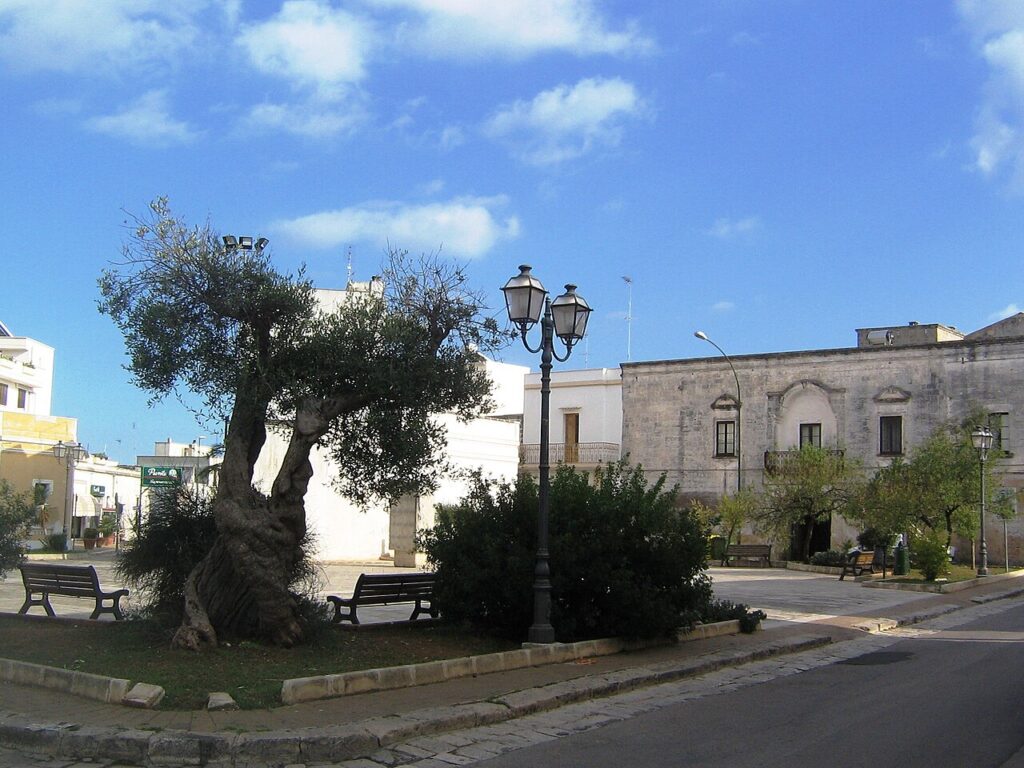
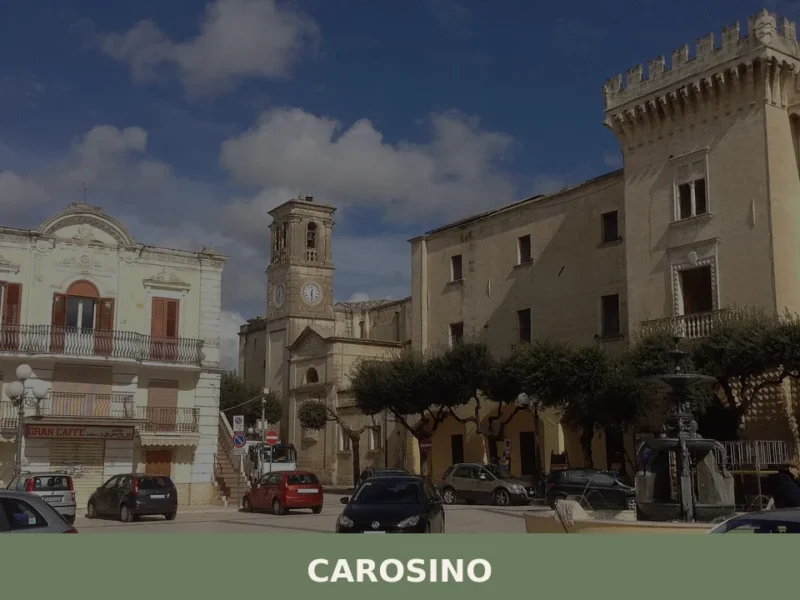
The medieval quarter, Borgo Terra, remains the village’s most legible historical layer. Compact courtyards are enclosed by whitewashed walls; external staircases climb façades; balconies carved from stone cantilever above narrow passages where light filters between rooftops. What distinguishes Borgo Terra from similar Salentine hamlets is the presence of numerous underground oil mills—frantoi ipogei—hewn directly into the soft tufaceous bedrock. These subterranean chambers kept olives cool during pressing, a practical adaptation to the region’s climate. Long neglected, the quarter has recovered its historic character.
Palazzo Muzi and Twentieth-Century Guests
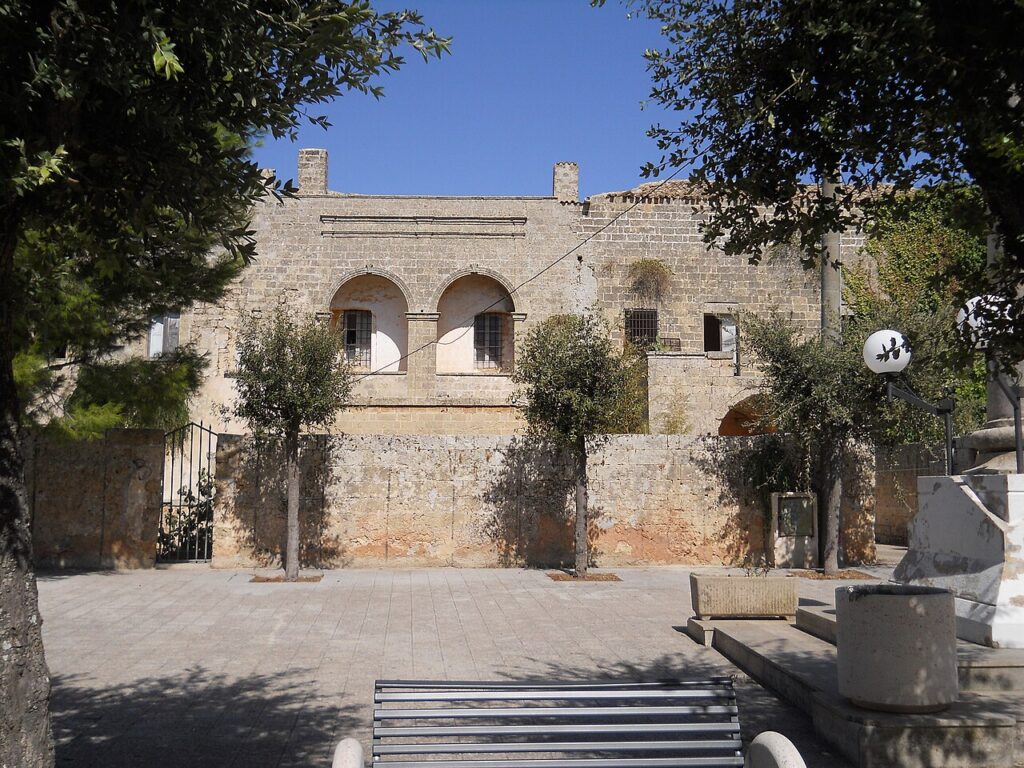
Built between the late eighteenth and early nineteenth centuries, Palazzo Muzi rises at the edge of Borgo Terra in what is now Piazza Mercato. Its austere facade conceals a multi-functional aristocratic household: the structure housed mills, wells for rainwater storage and a hypogeal oil press, making it a self-sufficient productive unit. The palazzo now operates as a bed-and-breakfast, offering visitors an intimate stay within historical walls.
Votive Columns and Nineteenth-Century Piety
Two substantial stone columns punctuate the village’s sacred landscape. The Colonna dell’Immacolata was erected in 1838, crowned by a statue of the Virgin crafted by sculptor Martino Carluccio of Muro Leccese; its base bears a Latin inscription marking the date. A year later, in 1839, the Colonna di San Michele rose nearby, echoing the design of the first column. Both monuments embody the nineteenth-century devotional fervour that reshaped Catholic villages across southern Italy.
The Three Fractions: Territory Beyond the Borgo
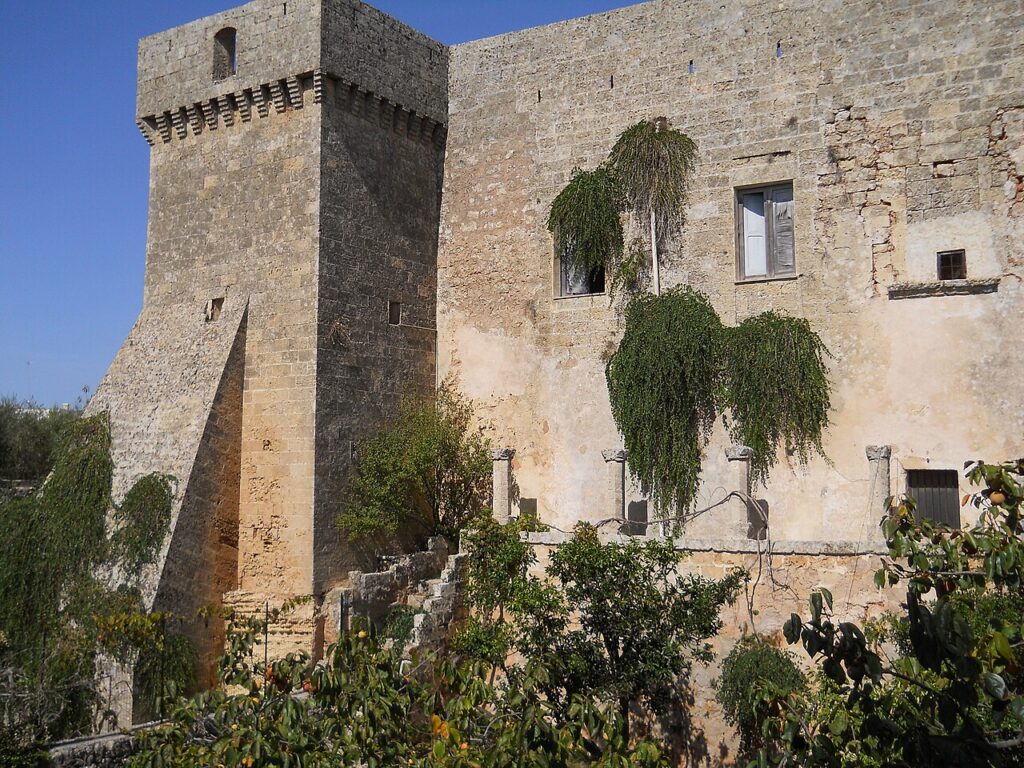
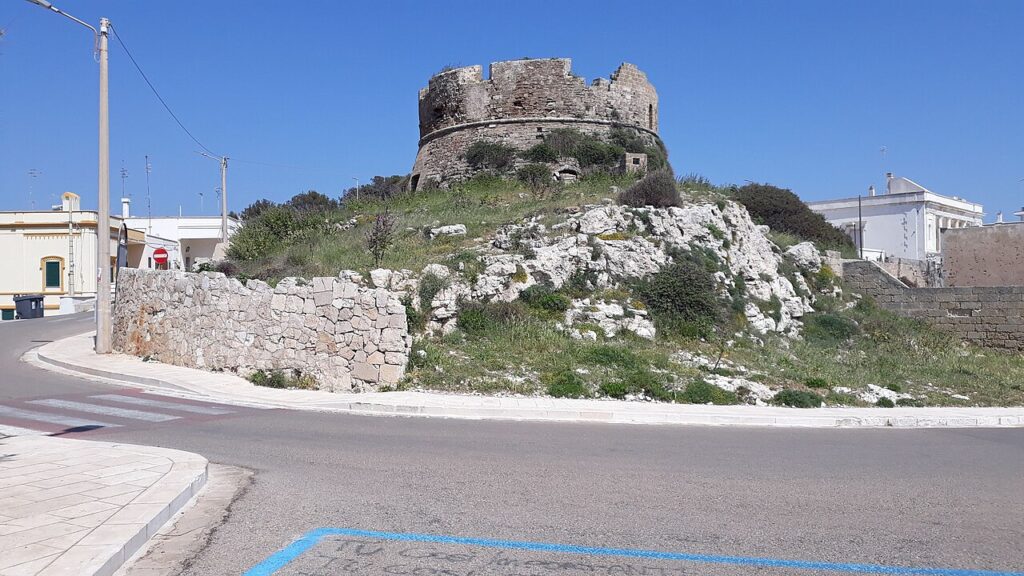
Castrignano del Capo encompasses more than its historic core. The frazione of Giuliano di Lecce to the northwest shelters a sixteenth-century castle, several churches including the Byzantine church of San Pietro and the cripta del Pantocratore, and additional menhirs—archaeological testimony to continuity of human settlement across millennia. Salignano to the east preserves a defensive tower from 1550 and the church of Sant’Andrea, anchoring a smaller rural community. These peripheral hamlets extend the village’s cultural reach and administrative footprint across a territory of 20.27 square kilometres.
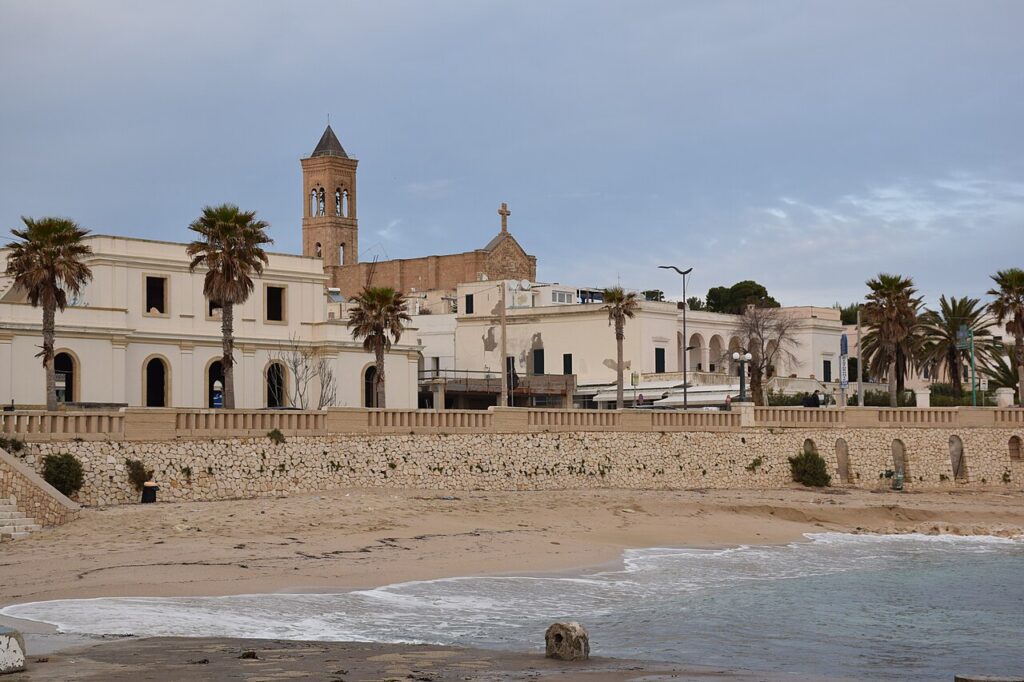
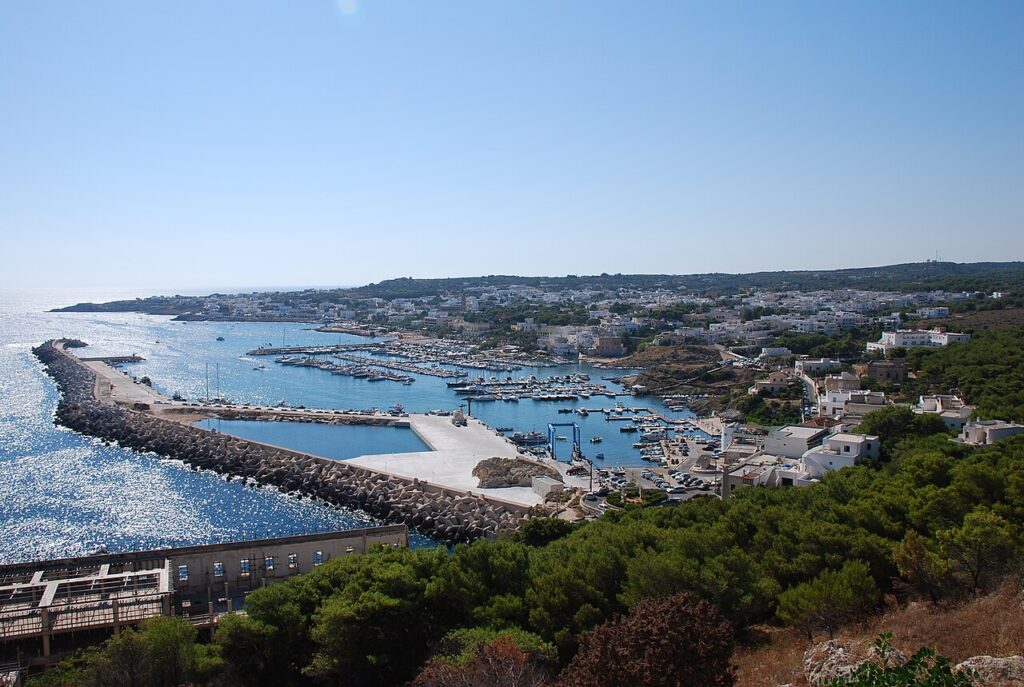
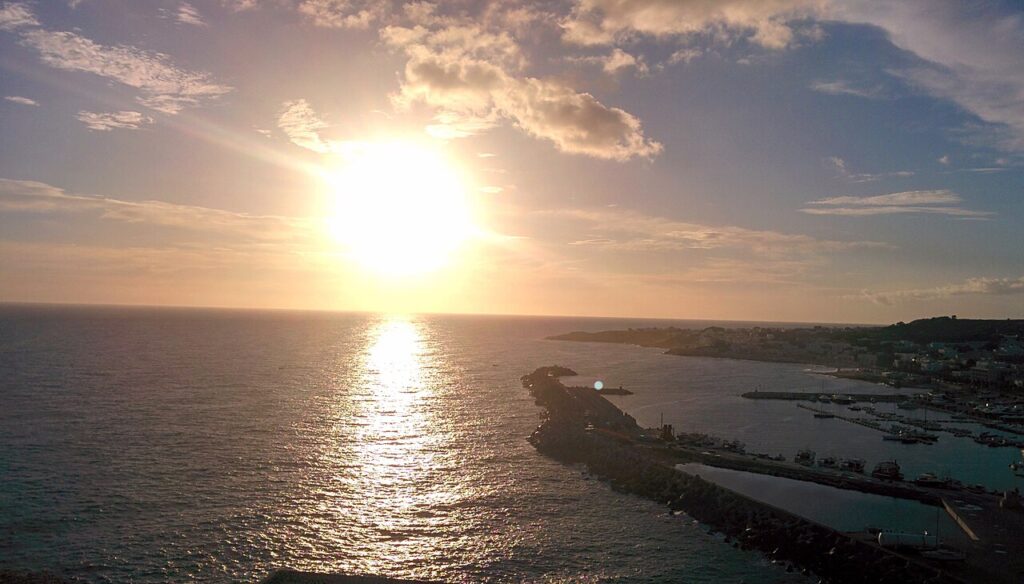
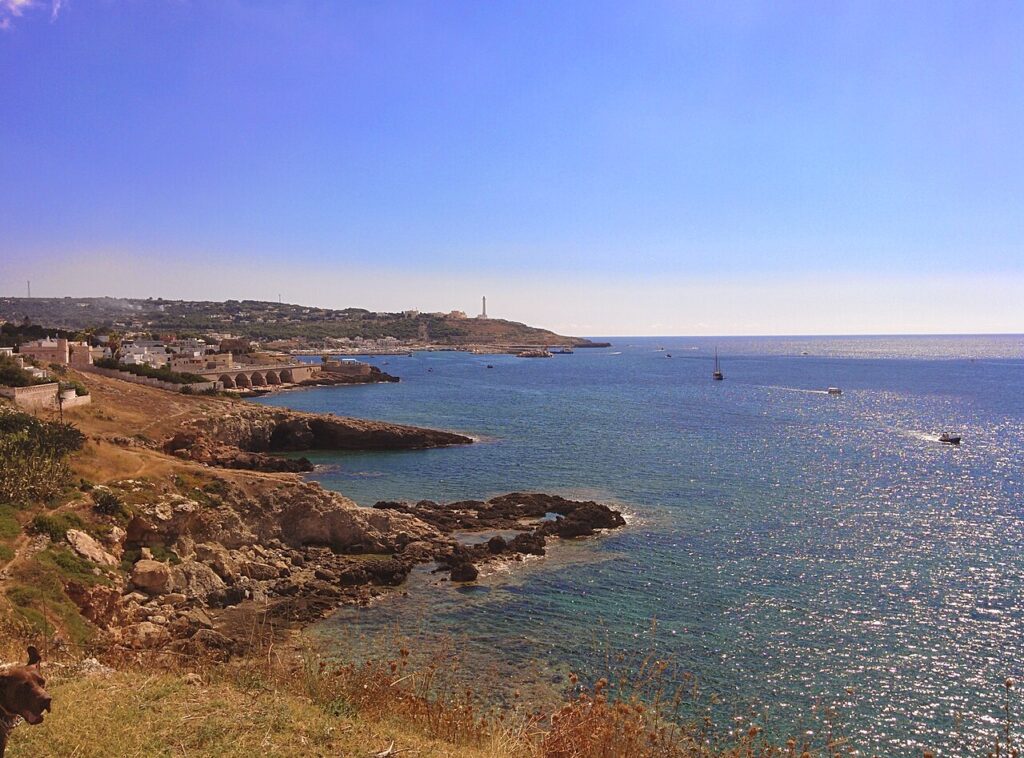
Santa Maria di Leuca, the third and most celebrated fraction, lies at the juncture of the Adriatic and Ionian seas. Originally the site of an ancient Messapian city, it transformed in the nineteenth and twentieth centuries into a resort of villas and hotels. In 2005 it received the Bandiera Blu distinction for water quality and facilities. The Basilica Santuario di Santa Maria de Finibus Terrae marks the peninsula’s terminus. The Parco Costa Otranto – Santa Maria di Leuca e Bosco di Tricase, established by the Puglia region in October 2006, now protects the broader coastal zone, preserving the cliffs, caves and Mediterranean scrubland that define this threshold landscape.
Flavours of the Salentine Table
The kitchen of Castrignano del Capo follows the rhythms of the broader Salento region, where legumes and dried pasta form the foundation of sustenance. Ciceri e tria—a combination of chickpeas and thin, hand-rolled pasta—represents the peasant staple that still graces local tables. Minchiareddi, a homemade pasta shape, and gnommaredd (small rolls of lamb or kid offal) reflect the pastoral heritage of inland settlements. These dishes are prepared with oil from the region’s extensive olive groves, reflecting local production traditions, though specific protected designations vary. The dialect itself—the southern variant of Salentino—carries traces of the Greek, Byzantine, Arab, Norman and Spanish presences that have left their mark on Puglia’s vocabulary and accent.
Planning Your Visit
Access to Castrignano del Capo is straightforward by road. The village lies approximately 40 kilometres south of Lecce, the provincial capital, reachable via the Strada Statale 16 Adriatica or the more direct SS 275 from Maglie toward Santa Maria di Leuca. If you arrive by private car, parking is available on the outskirts of the Borgo Terra; narrow medieval streets admit only foot traffic. The best season for a visit spans October through April, when Mediterranean temperatures remain mild and crowds thin considerably. Summer brings intense heat and congestion, particularly at Santa Maria di Leuca’s beaches, though the sea then offers its greatest appeal.
Visitors walking through Castrignano del Capo are advised to begin in Borgo Terra, where the underground mills and baroque church command two to three hours of exploration. From there, routes southward lead to Salignano and its sixteenth-century tower; northbound paths reach Giuliano di Lecce and its archaeological menhirs. A full day in the main village and immediate surroundings permits lunch at a local osteria and unhurried exploration of stairs and courtyards. Santa Maria di Leuca, a fifteen-minute drive south, merits a separate visit or overnight stay.
The village is integrated into regional pilgrimage networks. The Cammino del Salento passes through or near Castrignano del Capo, welcoming foot pilgrims year-round. The feast of the patron saint, San Michele, falls on 29 September, drawing local devotion and a modest programme of religious observance.
| Departure Point | Distance | Driving Time |
|---|---|---|
| Lecce | 40 km | 45 minutes |
| Brindisi airport | 90 km | 1 hour 20 minutes |
| Gallipoli (west coast) | 35–40 km | ~1 hour |
| Santa Maria di Leuca | 15 km | 20 minutes |
Nearby villages worth exploring include Alessano, located to the north within the same Lecce province, and the coastal hamlet of Acquarica del Capo, which shares similar defensive heritage.
 Mountain