


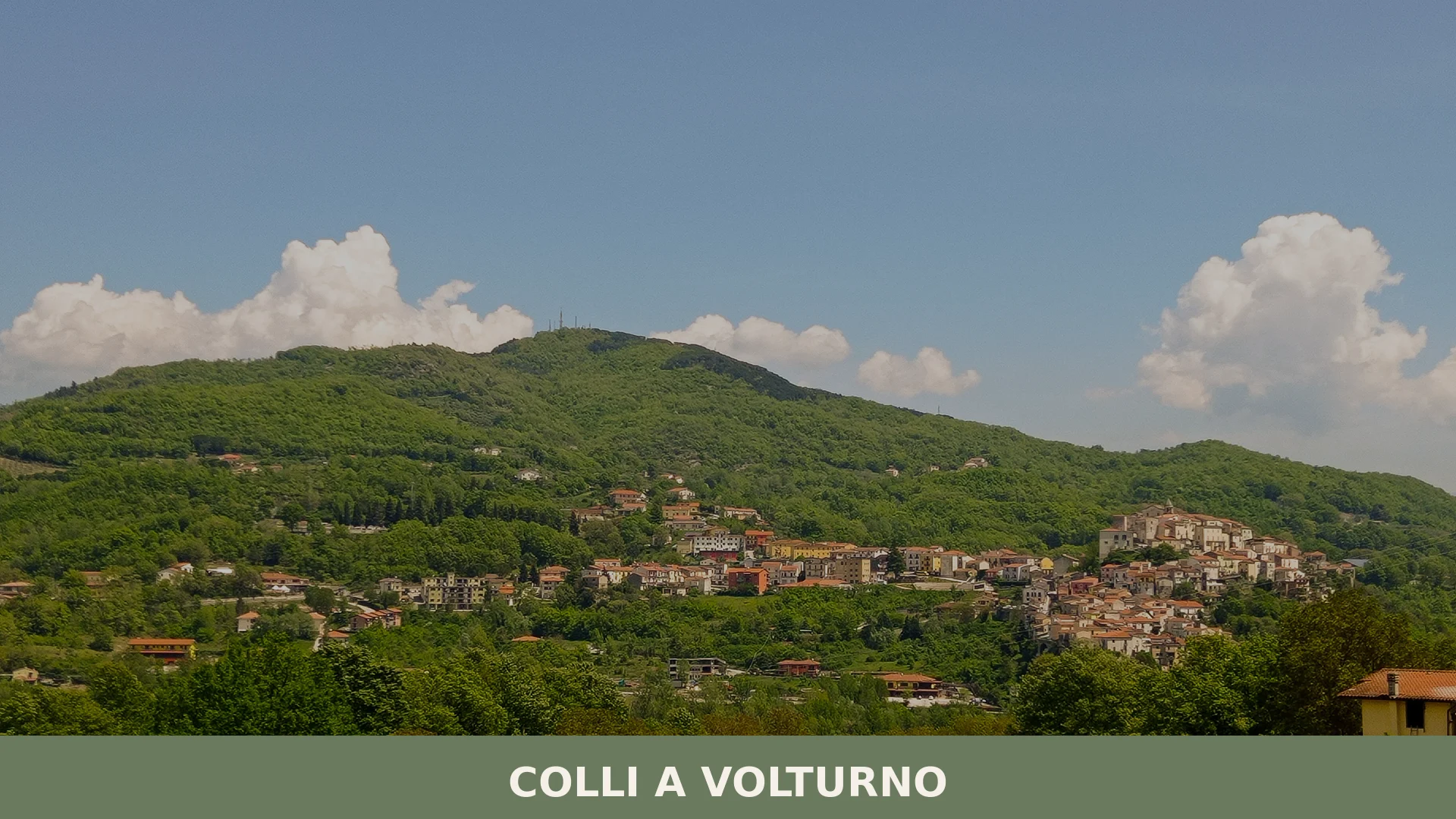

Colli a Volturno is a hillside comune of around 1,270 people in the province of Isernia, Molise, with Benedictine medieval origins, surviving castrum gates, and a landscape stretching across the Valle
Discover Colli a Volturno
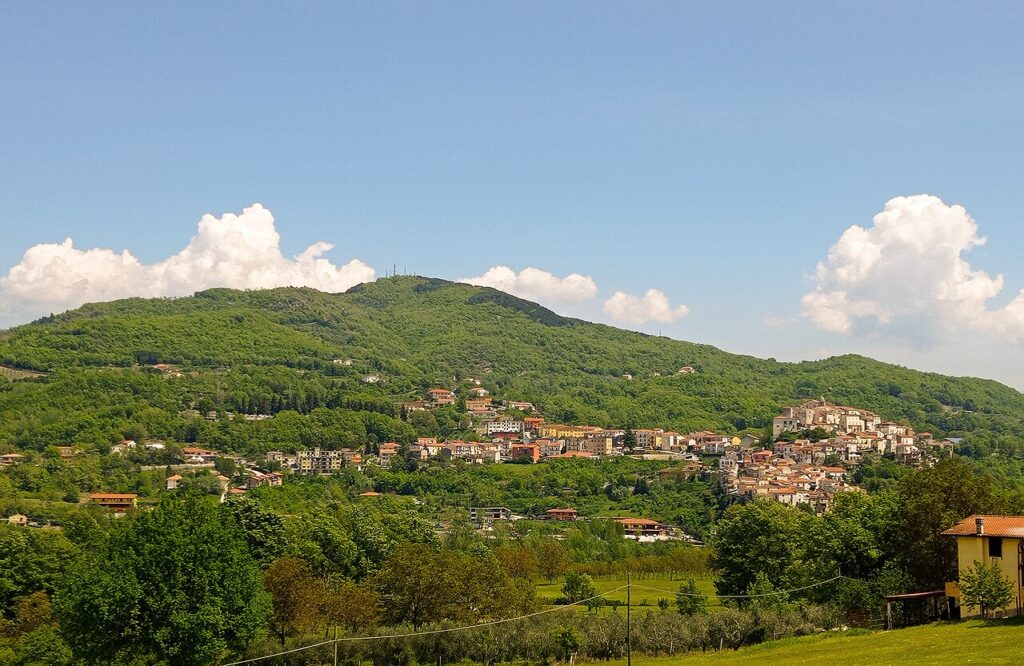
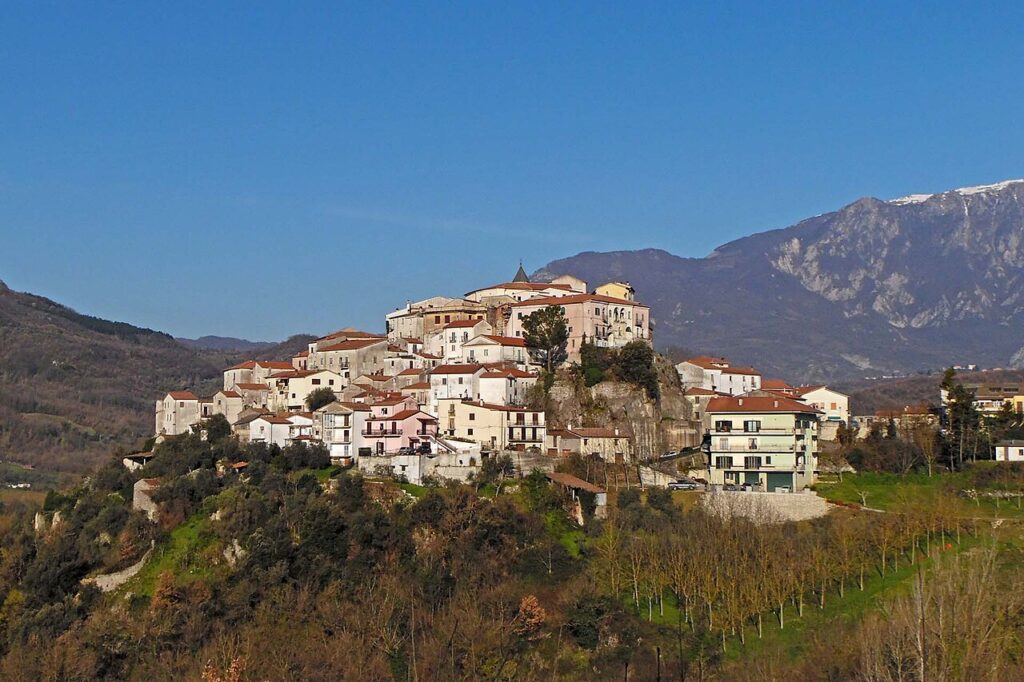
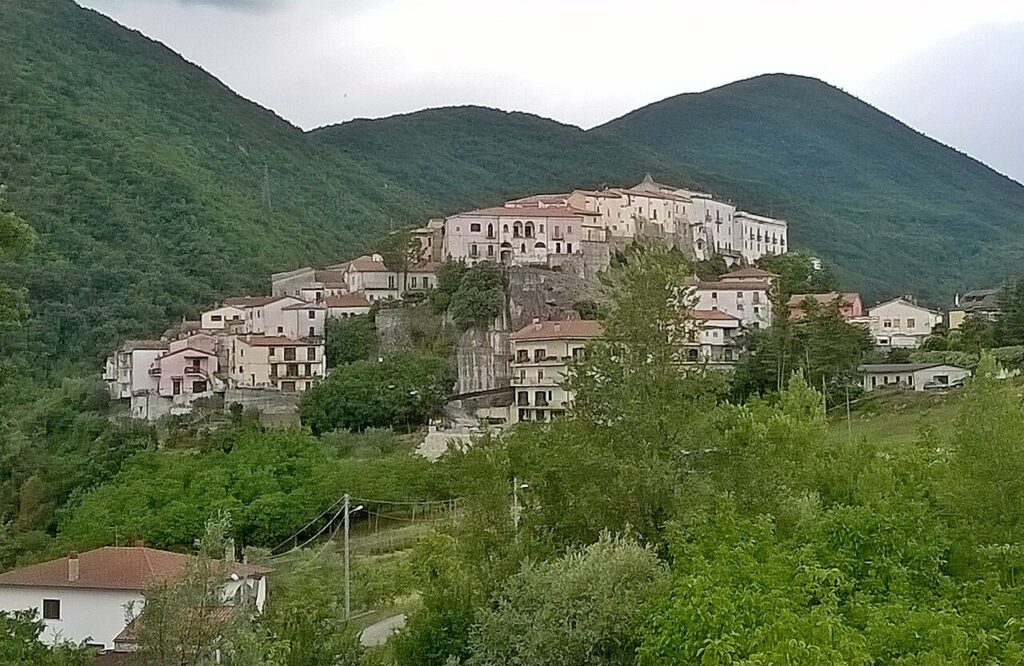
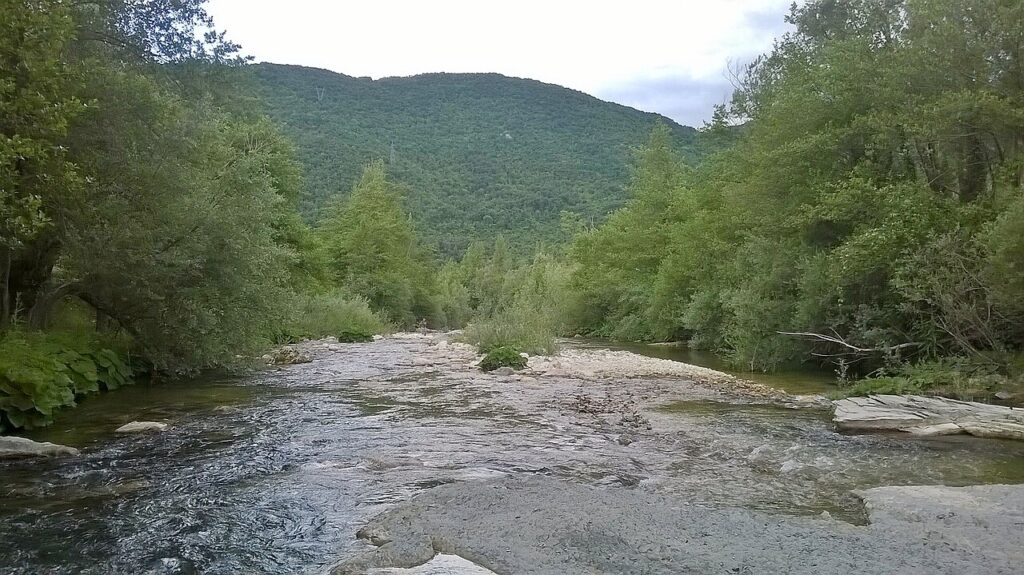
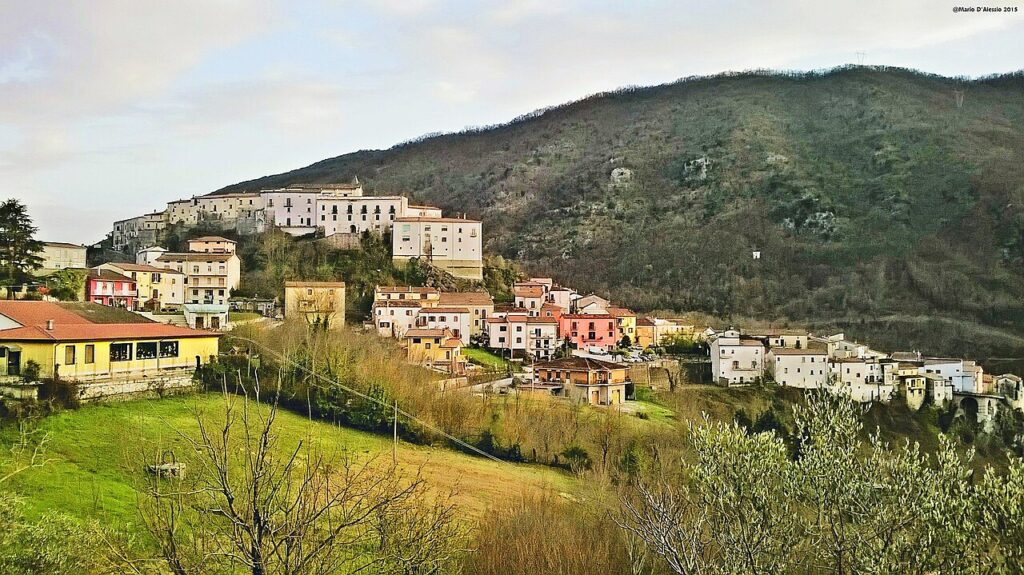
Colli a Volturno is a hill village of around 1269 inhabitants in the province of Isernia, Molise, sitting at roughly 408 metres above sea level across three wooded hills in the valley of the river Volturno, within the boundaries of the Parco Nazionale del Matese and close to the border with the Parco Nazionale d’Abruzzo, Lazio e Molise. Its territory spans just over 24.26 square kilometres, rising from a minimum of about 408 metres near the valley floor to a maximum of 408 metres on the higher ground, with the area around the river given over largely to vegetable cultivation and the surrounding slopes covered by woodland and pasture.
The Colli a Volturno village in Molise carries more than a thousand years of documented history in its stones: the surviving gates of the medieval castrum, a Samnite defensive wall stretching several kilometres along Monte San Paolo, and the results of excavations on the Colle Sant’Angelo — where British School at Rome archaeologists uncovered an early medieval chapel and necropolis in the 1990s — together tell a story that reaches from pre-Roman Samnite settlement through Benedictine colonisation, feudal disputes, seismic catastrophes, and the administrative reshuffles that eventually gave the commune its present name by royal decree in 1863.
Colli a Volturno village in Molise: history from Samnite origins to the modern era
Colli a Volturno traces its origins to Samnite settlement dating back to around the seventh century B.C., and takes its medieval form from a founding act of July 972, when the Benedictine abbot Paolo II of the monastery of San Vincenzo al Volturno signed a land-lease contract establishing the community of Collis Sancti Angeli — the direct ancestor of today’s village — together with two other settlements in the Volturno valley.
The new castrum was dedicated to Sant’Angelo, that is to San Michele Arcangelo, a dedication that reflected the strategic military importance the monks placed on the site within their territorial network. The colonists, numbering between fifteen and twenty individuals of mixed origins, were bound to clear and cultivate the land, build a castle for permanent residence, and deliver annual dues in grain, barley, wine, and livestock to the abbey. In 981, Landolfo Greco, count of Isernia, seized Collis Sancti Angeli along with neighbouring settlements; the emperor Otto II responded with a diploma dated 10 October 981 restoring the Benedictines’ rights, confirmed by a further imperial document that December. A second lease agreement, lasting twenty-nine years, was drawn up in 988 by abbot Roffredo, extending and clarifying the boundaries of the Colli territory. Between 1036 and 1037, the powerful Abruzzese feudal lord Borrello II unlawfully seized several monastiс strongholds, including Collis Sancti Angeli; the dispute was settled only in 1059, when abbot Giovanni V met the newly elected pope Nicholas II at Spoleto and secured the restitution of the usurped lands.
The later medieval centuries brought further disruptions: in 1319 abbot Nicola da Frattura suspended the local clergy for sheltering a group of heretical travellers, and the earthquakes of 1349 and 1456 both caused damage to the castle. Feudal lordship passed through several hands after 1479, when king Ferdinand of Aragon sold the fief to Camillo Pandone, count of Venafro; it subsequently moved to the Rizzo barons, then to the Greco family of Isernia until 1648, and finally to the Carmignano nobles of Naples, who held it until feudal lordship was abolished in 1806. A lieutenancy decree of 17 February 1861 transferred the upper Volturno valley — Colli included — to the province of Molise. The municipality formally adopted its current name, Colli a Volturno, by royal decree on 26 July 1863.
Archaeological investigation has added further depth to this long chronicle: excavations conducted on the nearby Colle Sant’Angelo in the 1990s by the British School at Rome uncovered an early medieval chapel and burial ground dated between the eighth and ninth centuries, built over an earlier structure from around the fifth century A.D.
Castrum, Colle Sant’Angelo, and Three Churches
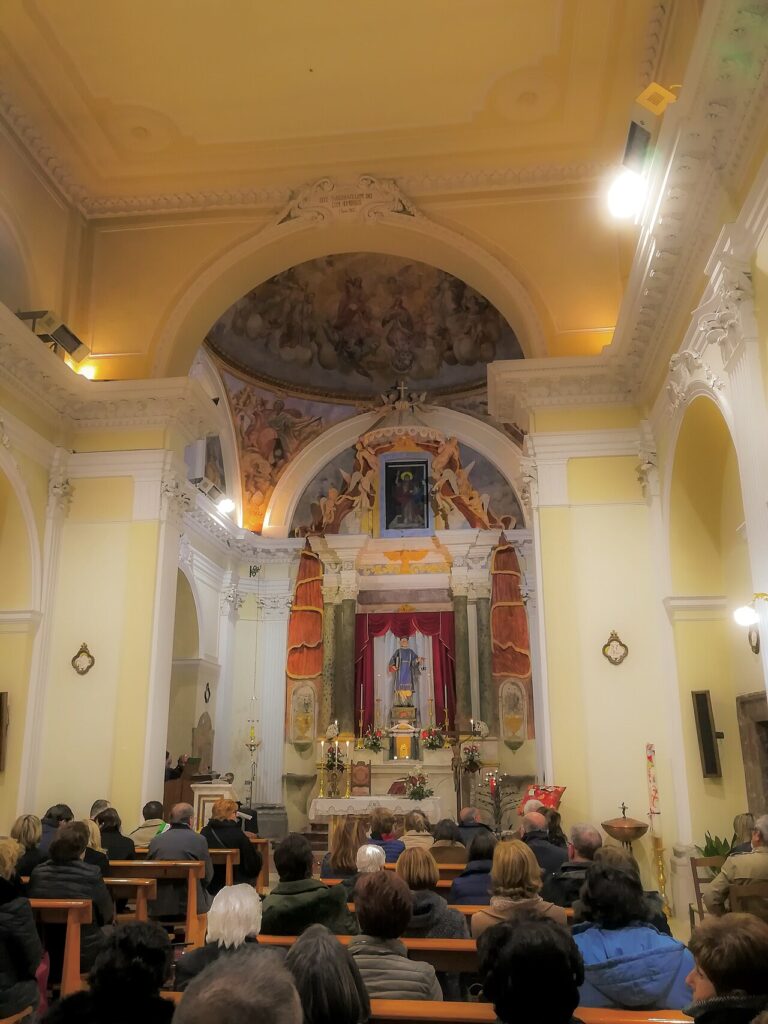
Colli a Volturno preserves the remains of a medieval castrum, a hilltop archaeological site with early medieval structures, and three churches — San Leonardo, Santa Maria Assunta, and Sant’Antonio da Padova — all within or immediately around the compact historic center.
The Medieval Castrum
The fortified settlement was established by Benedictine monks from the monastery of San Vincenzo al Volturno toward the end of the tenth century. Of the original defensive perimeter, which was built directly on the rock, three of the four original gates survive, along with an Angevin tower that has been incorporated into later buildings. The ensemble gives a readable, if fragmentary, impression of the early medieval layout.
Chiesa di Santa Maria Assunta
This church stands at the highest point of the old castrum. Its elevated position served both a defensive purpose and expressed the central role of religious life in the medieval community. Beyond its placement and dedication, the sources do not provide further descriptive detail.
Chiesa di San Leonardo and Chiesa di Sant’Antonio da Padova
Both churches are present within the commune. The sources record their names but offer no further architectural or artistic detail.
Colle Sant’Angelo
On a rise close to the present-day center, excavations carried out in the 1990s by the British School at Rome uncovered a small early medieval church and an adjacent necropolis, dated between the eighth and ninth centuries. The church itself rested on an older structure going back to the fifth century, and its plan — basilical in origin — was later reworked, with the central nave divided in width to raise its northern half, possibly forming a presbytery accessible from both side aisles.
Flavours of the Volturno Valley: Certified Products Around Colli a Volturno
The area around Colli a Volturno sits within a productive zone of Molise and the broader Apennine belt that holds several certified designations, including the aged Caciocavallo Silano DOP, Mozzarella di Bufala Campana DOP, Ricotta di Bufala Campana DOP, Molise DOP cheese, and the Salamini italiani alla cacciatora DOP, alongside Vitellone bianco dell’Appennino Centrale IGP beef — None of these designations are exclusive to the commune itself; all are traceable to the wider provincial and regional territory.
On the wine side, the territory falls within reach of two notable Molise DOC appellations: Pentro di Isernia (also known simply as Pentro), which covers the Isernia hinterland, and Tintilia del Molise, produced from the indigenous Tintilia grape. The IGT designations Rotae and Osco / Terre degli Osci round out the regional picture.
Among traditional products cited for the Molise area, local distilling and liqueur-making traditions include an amaro molisano, nocino (walnut liqueur), and poncio — all regional PAT products to seek out with appropriate curiosity rather than certainty. Cured meats such as capocollo, ciccioli, and coppa (also called capofreddo) belong to the same regional charcuterie tradition. The land immediately surrounding the village, watered by the Volturno river, is primarily cultivated with vegetables, while the surrounding hillsides support olive groves, vineyards, and fruit trees.
Reaching Colli a Volturno and Planning Your Stay in the Matese Park
Colli a Volturno is best reached by car along the roads of the Volturno Valley, ideally in spring or early autumn when temperatures are mild — the village sits at around 408 metres above sea level, with average August highs of about 22 °C and January means near 5 °C, making summer pleasant and winter cold but not severe. The nearest provincial centre is Isernia, roughly 20 km to the south-west, the most practical hub for transport connections and services.
Travellers coming from the south or west may pass through Venafro, historically linked to the area through the Pandone feudal dynasty that once held Colli. To the north, the village borders the Parco Nazionale d’Abruzzo, Lazio e Molise, while the municipal territory itself lies within the Parco Nazionale del Matese — a combination that makes the area genuinely rewarding for those interested in protected landscapes and walking routes. The Cammino di San Michele, a long-distance pilgrimage path, also passes through this part of Molise, offering an additional itinerary for walkers. The small village of Acquaviva d’Isernia lies within the same provincial territory and makes a natural companion stop.
| Departure | Distance | Time |
|---|---|---|
| Isernia | approx. 20 km | approx. 20 min |
| Venafro | approx. 30 km | approx. 30 min |
| Campobasso | approx. 85 km | approx. 1 h 10 min |
| Roma | approx. 190 km | approx. 2 h 30 min |
| Napoli | approx. 130 km | approx. 1 h 45 min |
November brings the heaviest rainfall (average 118 mm), so late spring and September offer the most comfortable conditions for exploring the three wooded hills on which the village stands, the surrounding frazioni, and the paths leading up to Monte San Paolo and Monte La Falconara.
Frequently asked questions about Colli a Volturno
What is the best time to visit Colli a Volturno?
Late spring through early autumn offers ideal weather for exploring the village and surrounding woodlands. November 6th marks the feast of San Leonardo, the patron saint, featuring local celebrations. Autumn provides comfortable temperatures for hiking the wooded hills and visiting archaeological sites. Winter can be wet due to mountain proximity, while summer heat is moderated by the village's 408-metre elevation.
How do I reach Colli a Volturno by car?
Colli a Volturno lies in Isernia province, Molise. Access via the A1 motorway (Naples–Rome) or regional roads through the Volturno valley. The village sits within the Matese National Park boundaries, approximately 50 kilometres from Isernia town. GPS coordinates aid navigation to the medieval centre. Parking is available near the village gates and main piazza area.
What archaeological sites can I explore in Colli a Volturno?
The Colle Sant'Angelo features early medieval chapel and necropolis remains, excavated by British School at Rome archaeologists in the 1990s. The medieval castrum gates survive in the village centre. Monte San Paolo contains a Samnite defensive wall stretching several kilometres, documenting pre-Roman settlement. These sites reveal continuous habitation from Samnite times through Benedictine colonisation.
Is Colli a Volturno suitable for outdoor activities?
Yes. The village's location within Matese National Park, across three wooded hills rising to 1,013 metres, offers excellent hiking opportunities. Dense woodland and pasture cover surrounding slopes ideal for nature walks. The Volturno river valley provides varied terrain. Proximity to Abruzzo, Lazio and Molise National Park expands outdoor options. Autumn is excellent for woodland trekking.
How long should I plan to spend in Colli a Volturno?
A half-day visit suits the village centre and medieval gates. Full-day exploration allows time for Colle Sant'Angelo archaeological site, Monte San Paolo walks, and local atmosphere. Multi-day stays enable thorough hiking of surrounding National Park trails and visits to nearby regional attractions. The compact 1,269-population village combines easily with exploration of the broader Volturno valley.
📷 Photo Gallery — Colli a Volturno
In Molise More villages to discover
Agnone
 Mountain
Discover what to see in Agnone, Molise: the 1040 Marinelli bell foundry, medieval churches, Samnite museum, local food and practical travel tips.
Campochiaro
Mountain
On the eastern slope of the Matese massif, where highland pastures descend toward the Biferno plain, Campochiaro greets visitors with its 594 inhabitants and a compact urban layout, arranged at 750 metres above sea level around the parish church dedicated to Saint Mark. Here, in 1980, archaeologists unearthed an Italic sanctuary from the Samnite period […]
Petacciato
 Sea
Sea
Petacciato overlooks the Adriatic from the hills of Campobasso province. A guide to its historic centre, coastal beach, local food, and Molisan surroundings.
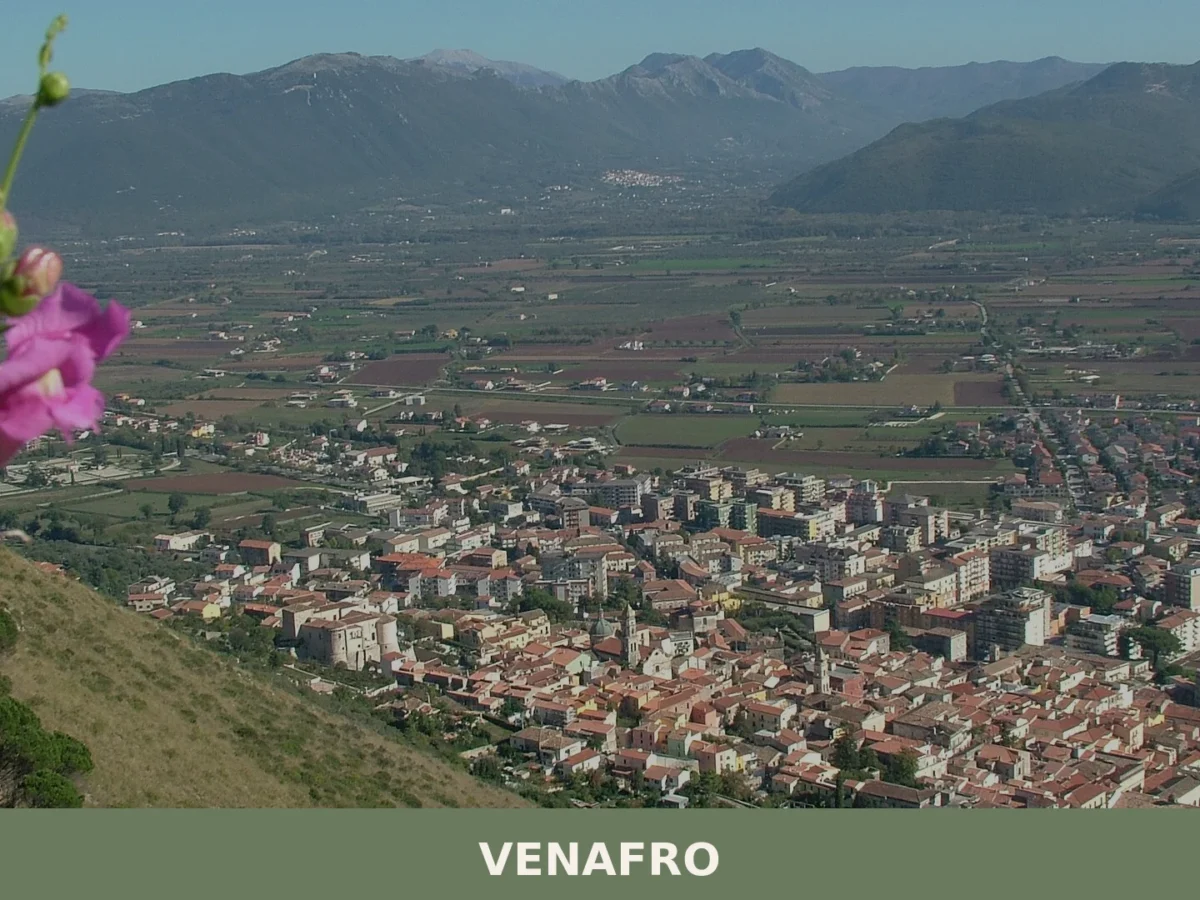
Venafro
 Hills
Hills
Two thousand years of collision shaped this border town. Ancient warfare, medieval revival, papal visits and modern tragedy carved Venafro into a living archive of southern Italian identity.
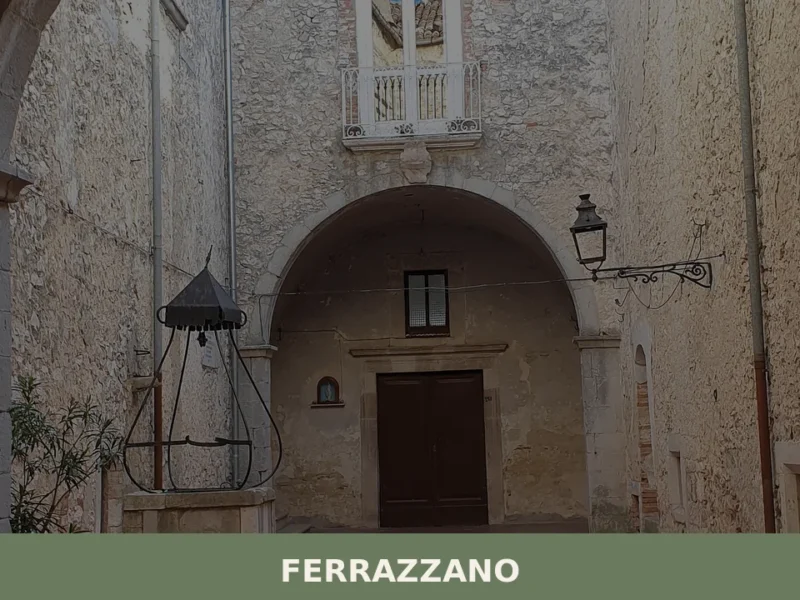
Ferrazzano
Mountain
Morning light hits the limestone walls of Ferrazzano at an angle that turns every alley into a corridor of pale gold. At 872 metres above sea level, the air carries a sharpness that the lower towns of Molise never know — a clarity that makes the distant Adriatic coast visible on days when the haze […]
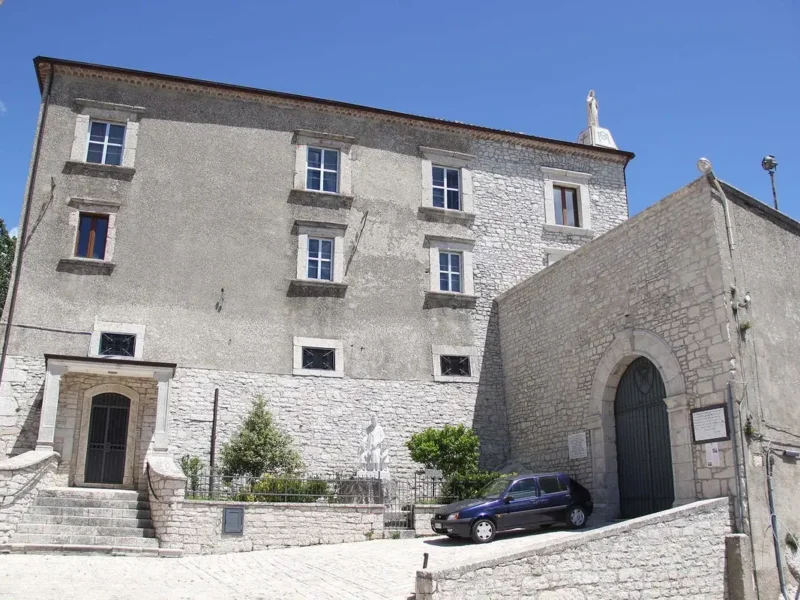
Cercemaggiore
Mountain
Cercemaggiore is a hilltop village in inland Molise, sitting at around 945 metres above sea level with a landscape of oak woodland, grazing land, and long Apennine ridgelines.
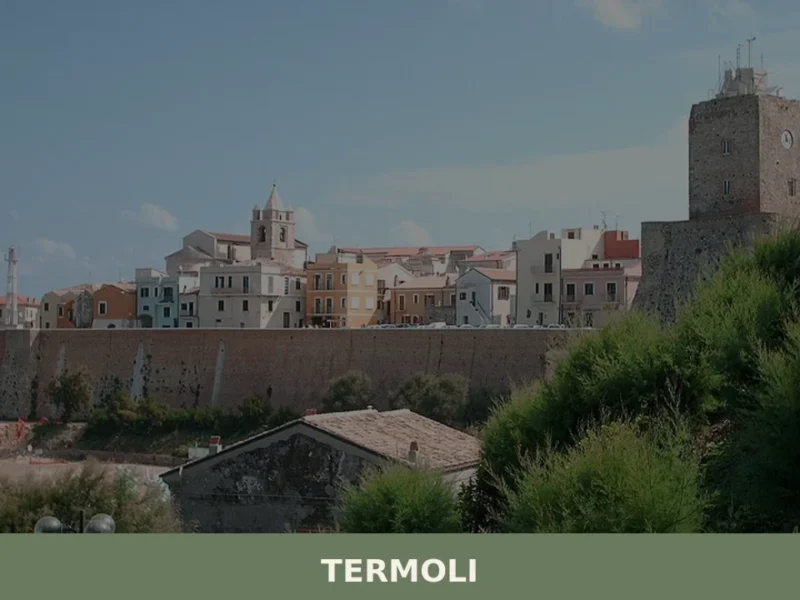
Termoli
Sea
Salt air sharpens every breath along the stone ramparts at dawn, and the Adriatic below shifts between grey-green and pale blue as fishing boats throttle out from the harbour, trailing diesel and the promise of the day’s catch. Termoli — a working coastal town of roughly 32,000 people in the province of Campobasso — sits […]
Acquaviva Collecroce
Hills
Discover Acquaviva Collecroce, a charming Croatian-speaking village in Molise, Italy. Explore its unique culture, history, traditions, and stunning landscapes.
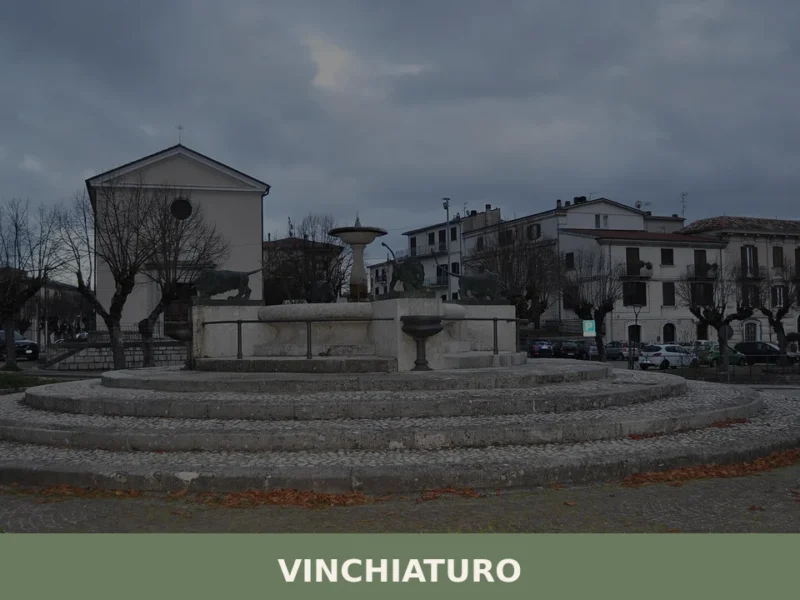
Vinchiaturo
Mountain
Morning mist settles into the valley below as church bells mark the hour from somewhere above the rooftops. At 620 metres above sea level, the air in Vinchiaturo carries a sharpness that cuts through the warmth of Molise’s interior hills. With just over 3,300 inhabitants, this is a village where the rhythm of daily life […]
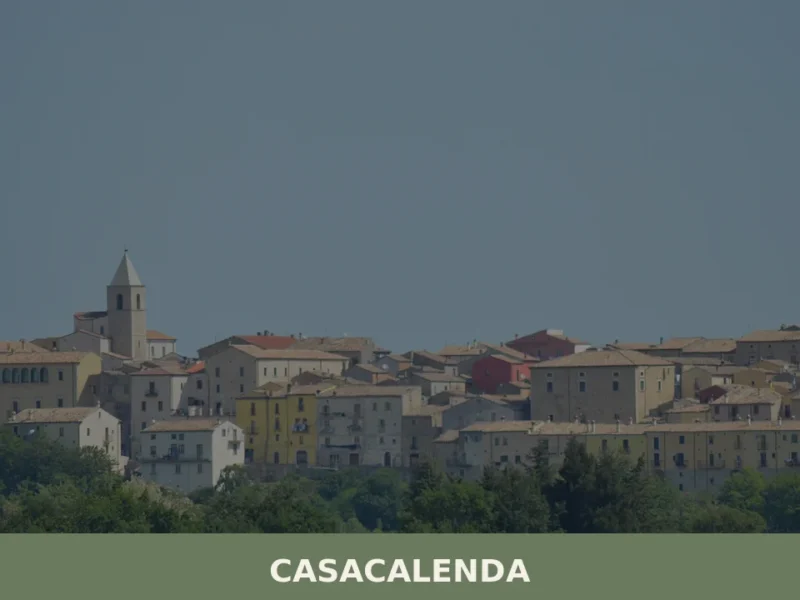
Casacalenda
Mountain
Morning light hits the limestone facades along Corso Roma and the sound is not silence but something close — a dog barking two streets away, the clatter of a shutter being folded back, the low idle of a Fiat Panda parked outside the only bar open before eight. Casacalenda sits at 631 metres above sea […]




🏡 Know Colli a Volturno better than we do?
If you’re a local or have been there, your knowledge matters: add what’s missing or fix a detail on this page.