


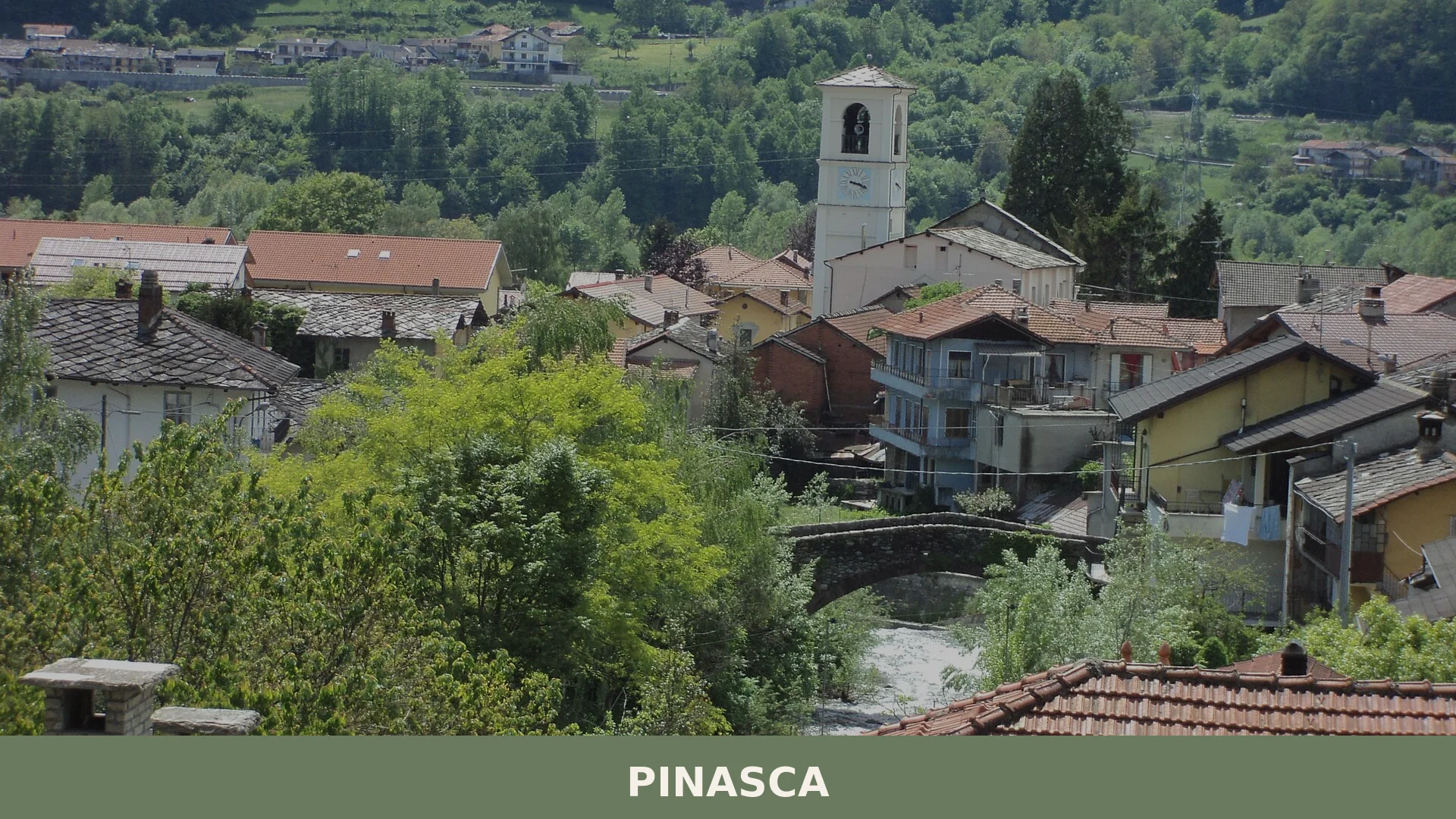

Pinasca is a mountain comune in the Val Chisone, Province of Turin, with over thirteen centuries of documented history, traditional furniture museum, and striking landscapes reaching 2,119 metres.
Discover Pinasca
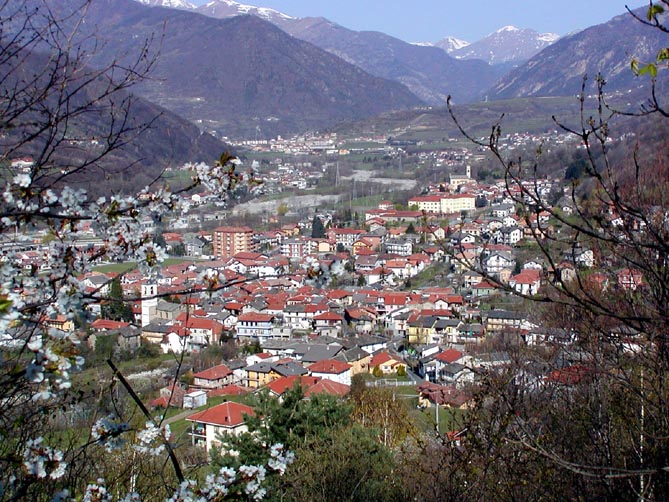
Pinasca is a mountain commune of roughly 2781 inhabitants in the Val Chisone, province of Turin, Piedmont, sitting at 560 metres above sea level and covering some 3,476 hectares — the largest municipal territory in the middle section of the valley. Its 27 frazioni spread across a landscape that climbs from the valley floor to the Punta dell’Aquila at 2,119 m s. l. m., moving through chestnut woods, summer pastures, and the deep gorge carved by the rio Grandubbione. The main settlement lies in a broad basin along the road to Sestriere; its largest frazione, Dubbione, grew up on the banks of the same stream, just before it joins the torrente Chisone.
Pinasca village in Piedmont rewards travellers who look beyond the better-known ski resorts of the surrounding valleys. Medieval documents, Waldensian history, and a tradition of woodworking craft shape its identity. The name appears in written records as early as 720, the parish church consecrated in 1753 is the largest in the whole valley, and the Museo del mobile e della cultura valligiana “Abitare In Valle” holds a collection of some ten thousand pieces of traditional furniture drawn from the Val Chisone and neighbouring valleys — a density of history and material culture unusual even by Piedmontese standards.
Pinasca village in Piedmont: history and roots in the Val Chisone
Pinasca is one of the oldest settlements in the Val Chisone, with its name first recorded in a document of 720 signed by Abbone, founder of the abbey of Novalesa, and confirmed again in a 1020 charter listing local churches under the bishopric of Turin. An act of 1037 records the donation of Pinasca to the Monastery of Santa Maria di Cavour by the Torinese bishop Landolfo; in 1064 Adelaide of Susa, marchioness of Susa and duchess of the Alpi Cozie, bought back the fief from the Cavour monks and transferred it to the Benedictines of the abbey of Santa Maria Assunta in the borough of San Verano in Pinerolo, today known as Abbadia Alpina. Roman-era coins bearing the image of Nero have been unearthed in front of the parish church, hinting at still earlier human presence in the area.
Control of the fief passed through many hands over the medieval and early modern centuries. On 31 January 1346 it was transferred by transaction to Tommaso of Savoy, Bishop of Turin; the Prince of Acaia then sold it on 20 October 1361 to Pietro and Daniele Provana, who were succeeded by Pietro and Andreone Solaro. When the Solaro line died out, Cardinal Lancellotto of Lusignano, from Cyprus, acquired the fief on 20 April 1449. Duke Carlo Emanuele I sold it to Emanuel Filiberto Goveano on 2 May 1619, and subsequent members of the Goveano family divided and alienated it in two separate transactions: half to Gio. Francesco Bergomi of Reggio in 1676, and the other half to Gio. Tomaso Boutal of Pinerolo in 1685. Duke Vittorio Amedeo II later enfeoffed the Bergomi portion to the brothers Francesco, Giuseppe and Luigi on 9 May 1700, and by 1774 the Boutal share had passed to Cristina Agata Boutal, wife of the lawyer Gio. Giorgio Agnes des Geneys.
During the sixteenth and seventeenth centuries Pinasca was drawn into the conflicts between Catholics and Waldensians. In 1571 the Waldensian community built their own place of worship in the locality of Podio. A community of Waldensians who later emigrated to Germany reportedly named a village they founded there “Pinasca,” in memory of the hospitality they had received. The wider region had already endured difficult centuries: after Charlemagne defeated the last Lombard king Desiderio in 774 and organised the Marquisate of Susa, the Val Chisone was ravaged by a Saracen incursion in 906. Until 1963 Pinasca was served by the Pinerolo–Perosa Argentina tramway, and the town has maintained a formal twin-town relationship with Wiernsheim in Germany since 1982.
Places of Interest in Pinasca
Pinasca offers visitors two parish churches, a substantial charitable complex, a museum of traditional furniture, and a landscape that rises from the valley floor at 560 m s. l. m. to the 2,119 m s. l. m. summit of the Punta dell’Aquila.
Parish Church of Pinasca
Dedicated to the Assumption of the Virgin and consecrated in 1753, this is the largest parish church in the entire Val Chisone. Inside, it houses an altar traditionally attributed to Filippo Juvarra. Roman-era coins bearing the image of Nero were unearthed near the church.
Parish Church of Dubbione
Located in the main fraction of Pinasca, this church is dedicated to San Rocco and bears the date 1847.
Piccola Casa della Divina Provvidenza (Cottolengo)
A substantial U-shaped building in Pinasca, associated with the Cottolengo foundation.
Museo del Mobile e della Cultura Valligiana “Abitare In Valle”
This museum holds a collection of around ten thousand pieces of traditional furniture from the Val Chisone and neighbouring valleys, including the Val Lemina and the Valli Pellice. It is directly connected to the Faure family workshop, which specialises in reproducing period furniture using traditional craft methods.
Ponte Annibale
At the centre of Dubbione, this bridge crosses the rio Grandubbione.
What the Val Chisone Table Offers: Food and Produce Around Pinasca
Pinasca sits in a valley where the land still yields cereals, vegetables, fruit, chestnuts and dairy, and where the nearest certified products reflect the broader Pinerolese and Piedmontese countryside rather than a single village kitchen. The most locally resonant designation is the Marrone della Valle di Susa IGP, the prized chestnut of the neighbouring Susa Valley, whose sweet flesh turns up in autumn markets throughout the Torinese uplands. Cheese lovers will recognise Bra DOP and Grana Padano DOP on the tables of the area, while the Mela Rossa Cuneo IGP represents the apple-growing traditions of the wider province. Cured-meat counters in the region carry Crudo di Cuneo DOP and Mortadella Bologna IGP, the latter a trans-regional classic that has long travelled these Alpine trade routes.
In the glass, the closest denominazione to Pinasca is the Pinerolese DOC, whose vineyards occupy the hills framing the valley exit toward Pinerolo; the Collina Torinese DOC and Freisa di Chieri DOC round out the Torinese wine landscape within reach of a day trip. For something stronger, the Piedmontese tradition of alpine herbal liqueurs, ratafià and vermouth provides a fitting end to any mountain meal — products deeply rooted in the regional culture, though not exclusive to this commune.
The May fair held in Pinasca on the third Thursday of the month — locally known as the fera dle caplin-e — and the autumn fair in Dubbione on the third Monday of November are the most direct windows onto the farming and artisan economy that still shapes daily life here.
Reaching Pinasca and Planning Your Stay in the Val Chisone
Pinasca is most easily approached by road along the state road toward Sestriere, lying roughly 53 km west of Turin and 13 km from the nearest railway station at Pinerolo, making a combination of train and onward road connection the most practical option for visitors without a car.
The valley rewards visits in two distinct seasons. Summer draws walkers to the Vallone del Grandubbione and the hamlet of Albarea, both established centres of warm-weather stays, while the ridgeline above offers excursions to the Colle dell’Asino (around 1,300 m), the Colli del Besso (around 1,466 m) and the Monte Cucetto (around 1,692 m). The Punta dell’Aquila, the highest point in the municipal territory at 2,119 m, marks the upper boundary of these routes. Autumn brings the valley’s fairs and the chestnut harvest, and the descent from the mountains toward Pinerolo passes through a string of smaller communities worth pausing in — among them Cantalupa, which lies in the hills between Pinerolo and Turin. Those exploring the wider Waldensian valleys will find Angrogna and the more remote Massello within the same day-trip orbit, each carrying a distinct character shaped by that same mountain history.
| Departure | Distance | Time |
|---|---|---|
| Turin (city centre) | approx. 53 km | approx. 50–60 min |
| Pinerolo | approx. 13 km | approx. 15–20 min |
These practical references help organise the journey clearly, while the village itself is best understood slowly and on foot once you arrive.
Frequently asked questions about Pinasca
What is the best time to visit Pinasca?
Summer months (June–September) offer pleasant weather for hiking and exploring the Val Chisone landscape. August is particularly significant as the Feast of the Assumption (Ferragosto, 15 August) honours the village's patron saint, Santa Maria Assunta, with traditional celebrations. Spring brings wildflowers across the pastures, while autumn offers striking colours in the chestnut woods that characterize the terrain.
How do I reach Pinasca from Turin?
Pinasca lies in the Val Chisone, approximately 50 kilometres southwest of Turin. Drive via the SS23 state road toward Sestriere; the journey takes roughly 1.5 hours by car. The nearest railway station is at Pinerolo (20 kilometres away), from which local buses serve the Val Chisone valley. Winter conditions may affect mountain access; check road conditions before travelling.
What is the Museo del mobile e della cultura valligiana?
Located in Pinasca, 'Abitare In Valle' is a museum housing approximately ten thousand pieces of traditional furniture and domestic objects from the Val Chisone and surrounding Alpine valleys. It represents an exceptional collection of material culture reflecting centuries of regional craftsmanship and domestic life. The museum documents the valley's woodworking heritage, a skill deeply rooted in Pinasca's economy and identity.
What outdoor activities are available around Pinasca?
The municipality's 3,476 hectares offer extensive hiking opportunities, ranging from valley-floor walks along the torrente Chisone to mountain trails ascending toward Punta dell'Aquila (2,119 metres). The landscape transitions through chestnut woods and summer pastures, with routes marked by CAI (Italian Alpine Club) signage. The rio Grandubbione gorge provides scenic trekking, accessible from the frazione Dubbione.
How long should I plan to spend in Pinasca?
A full day allows time to explore the main settlement, visit the parish church (consecrated 1753), and tour the Museo del mobile. Those interested in hiking should allocate 2–3 days to experience the surrounding trails and mountain landscape properly. Overnight stays enable deeper engagement with the valley's Waldensian heritage and traditional culture.
📷 Photo Gallery — Pinasca
In Piedmont More villages to discover
Arignano
 Hills
Hills
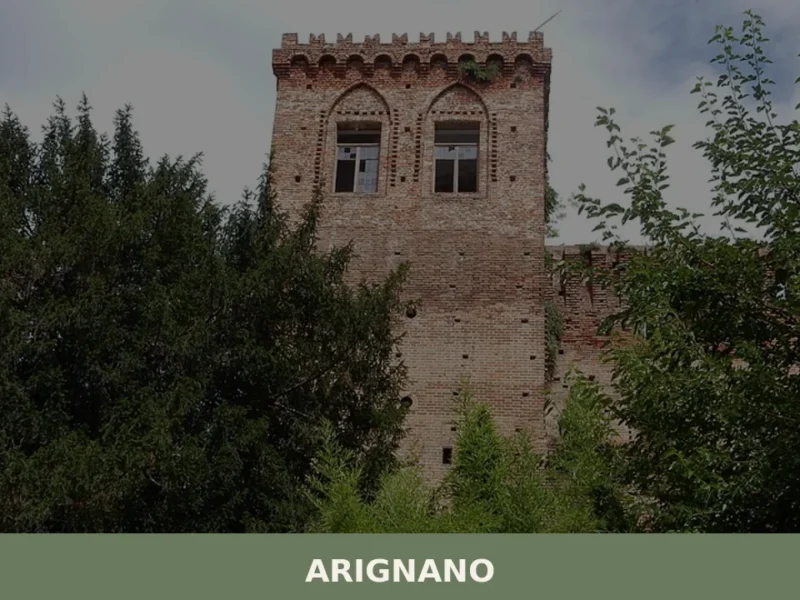
What to see in Arignano in Piedmont: castle, church, hill trails, traditional cuisine, and practical information for visiting the village at 321 m a.s.l.

Brandizzo
 Plains
A plains settlement shaped by centuries of feudal rule and 20th-century industry. Discover baroque architecture, carnival traditions, and the Po river landscape.
Samone
Plains
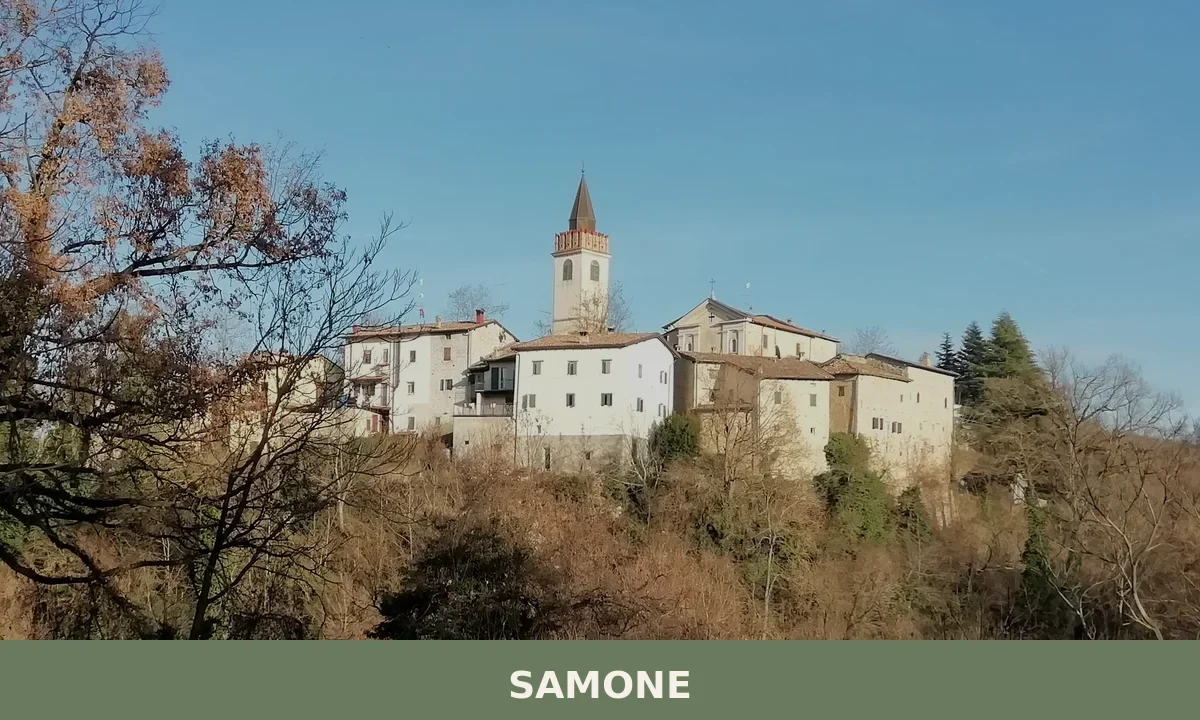
Population 1,536. A modest Turin-province comune with roots in a 10th-century diploma, reshaped by industrial employment and social migration across three generations.
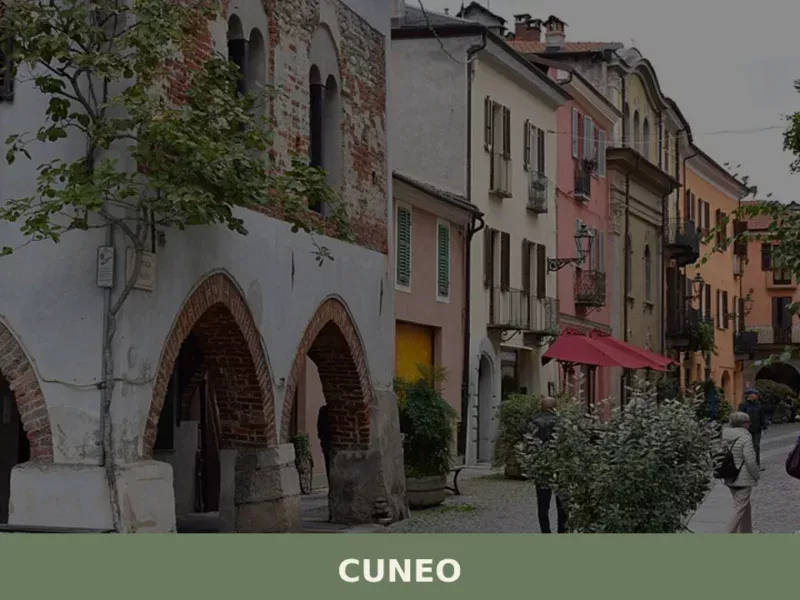
Cuneo
Hills
What to see in Cuneo: 55,744 residents at 534m, historic arcades, Piazza Galimberti and the Cuneese al Rum. Plan your visit with this complete city guide.
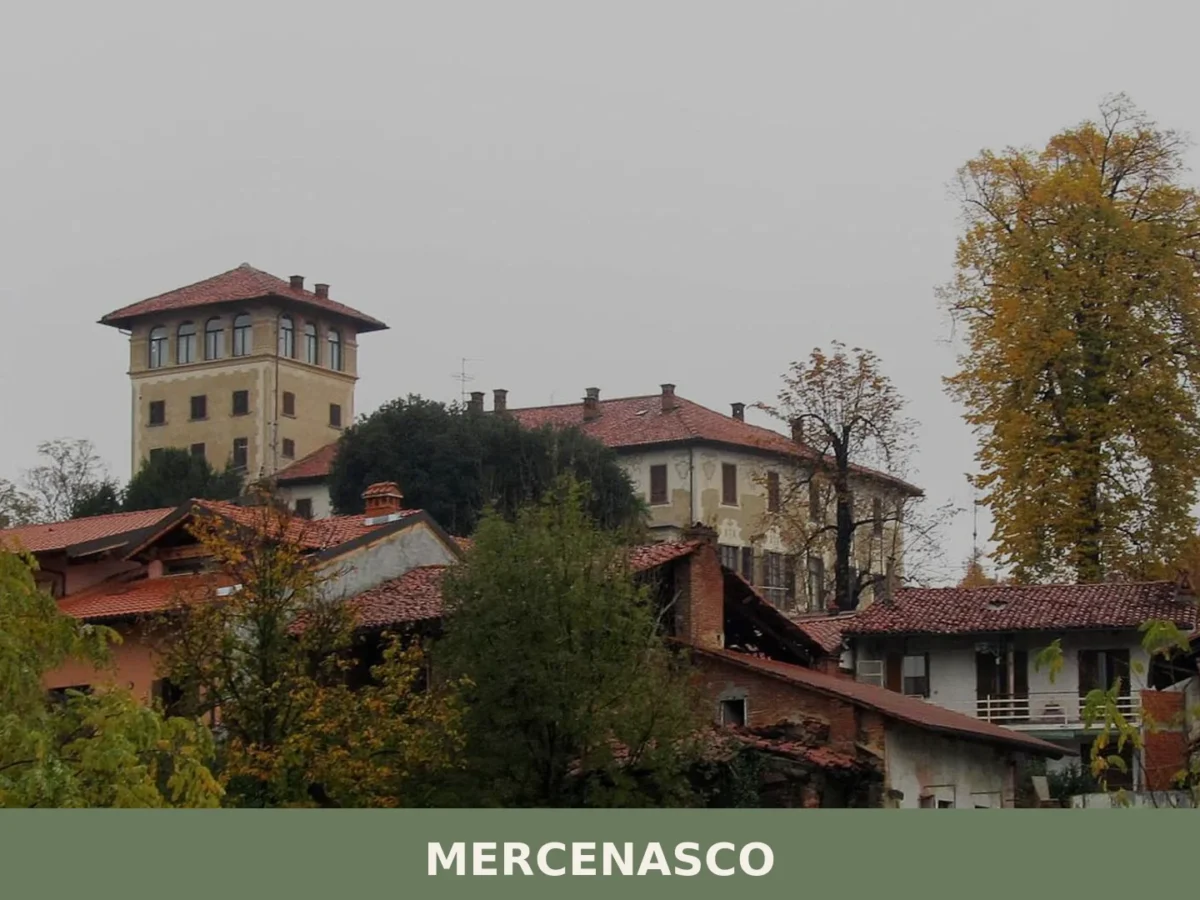
Mercenasco
Hills
Two monuments and a millennium of history: Mercenasco draws visitors with its neogothic castle and baroque parish church set among the Canavese hills, 34 km north of Turin.
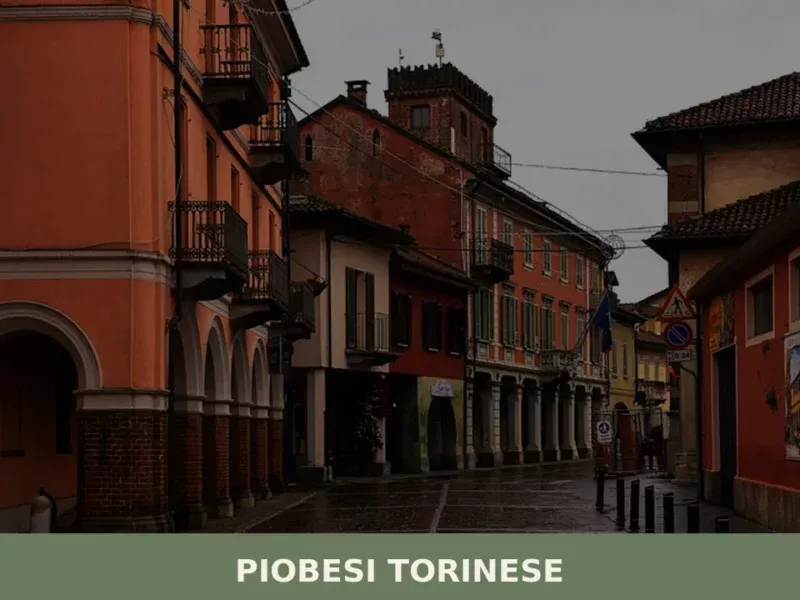
Piobesi Torinese
Plains
Scopri Piobesi Torinese, affascinante borgo piemontese: storia, attrazioni, tradizioni e consigli pratici per visitarlo al meglio.
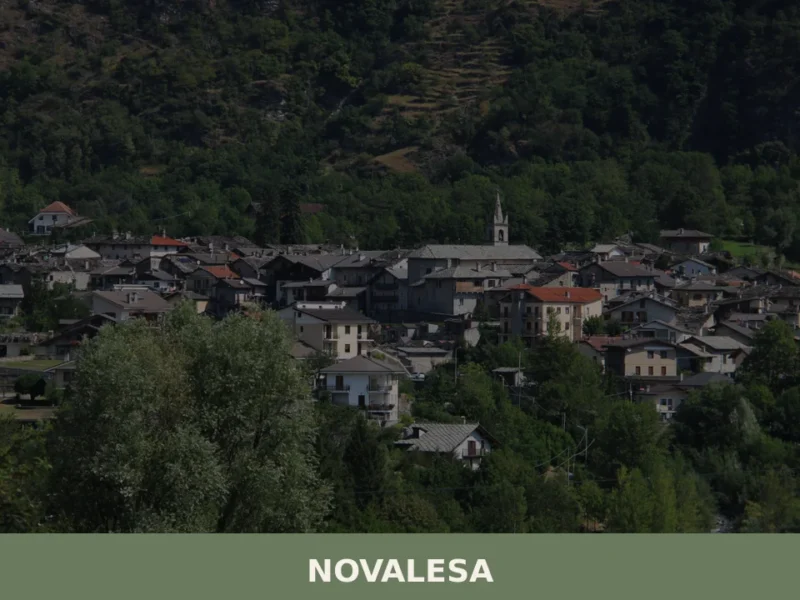
Novalesa
 Mountain
Scopri Novalesa, affascinante borgo medievale del Piemonte: storia, abbazia e paesaggi mozzafiato in Valle di Susa. Visita questo gioiello nascosto!
Rorà
Mountain
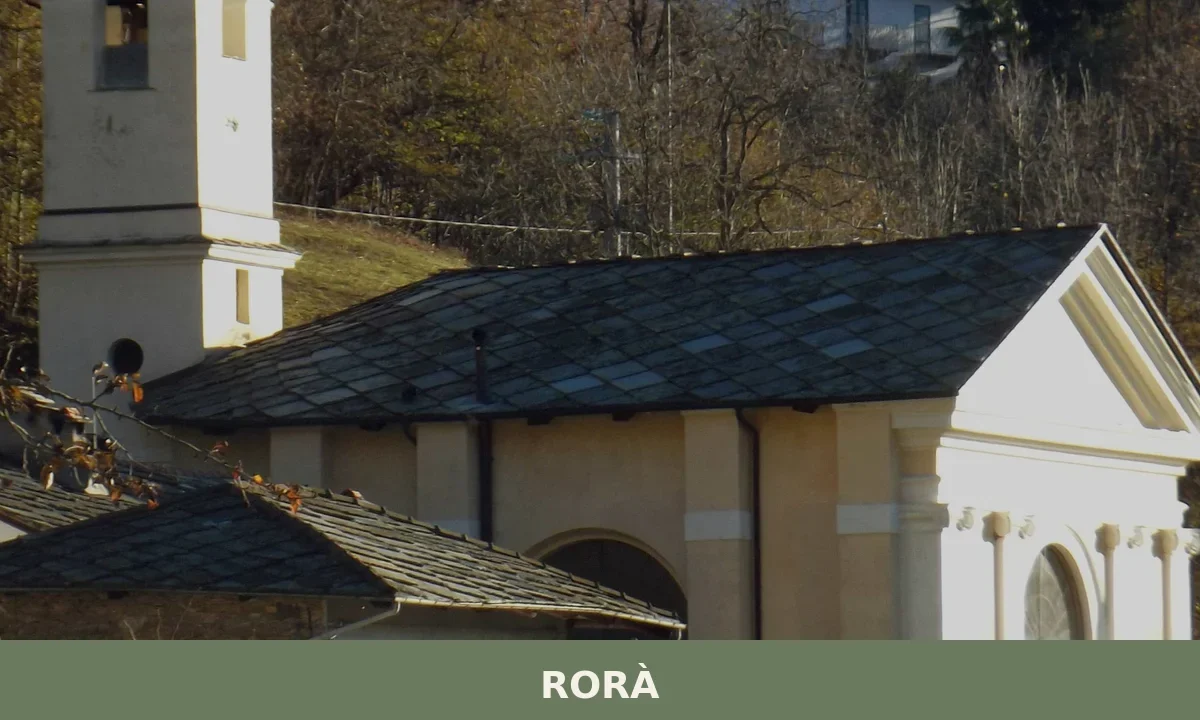
Population 221. Altitude 967 metres. Stone houses, Alpine silence, and a rhythm set by seasons and territorial links that connect to the Pellice valley network.
Sant’Antonino di Susa
Mountain
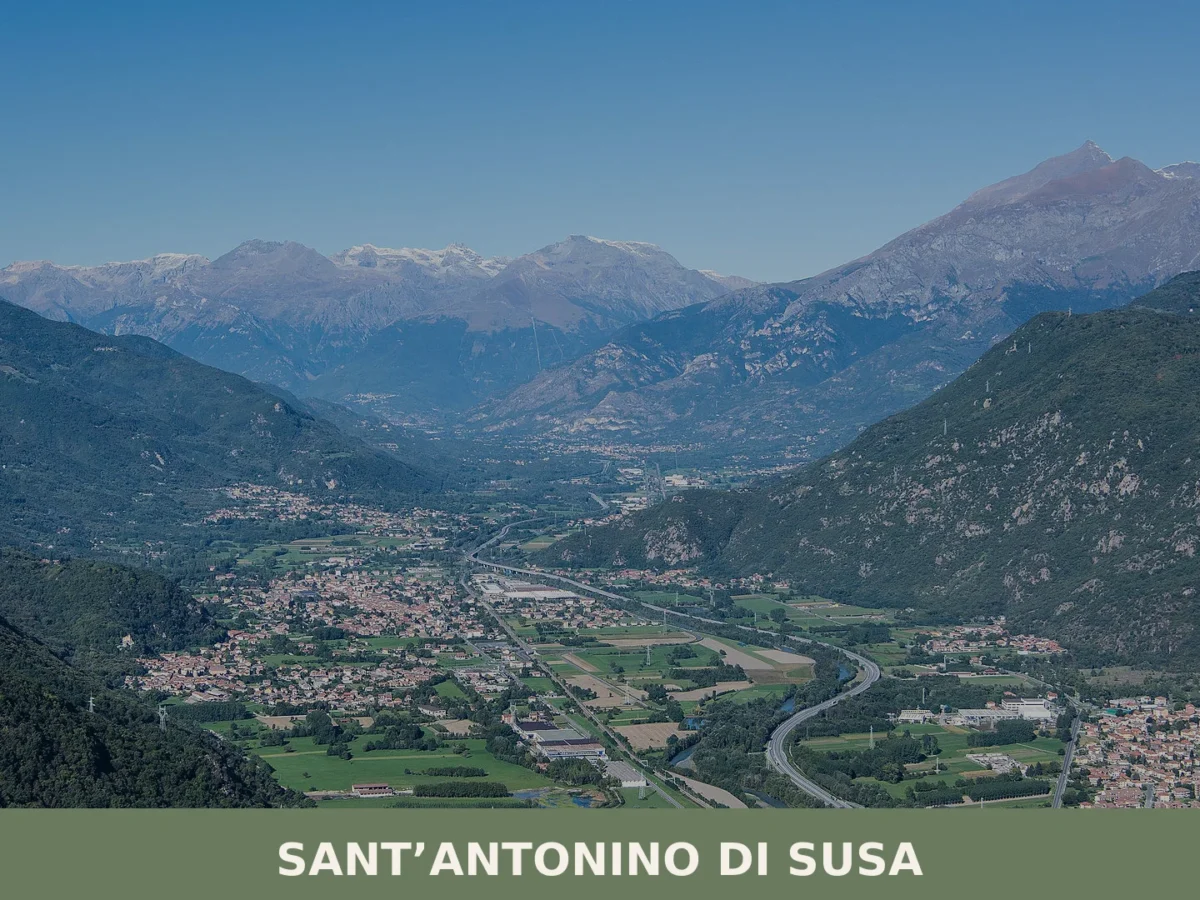
Sant'Antonino di Susa (population 4,074) occupies the right bank of the Dora Riparia at 380 metres. Medieval churches, partisan memory and the echoes of early industrial labour define this Piedmontese comune.

Pralormo
Hills
Population 1,852. A hilltop comune marked by its 13th-century castle, a 1930s parish church sheltering Renaissance art, and a medieval tower that once guarded Asti's trade routes.




🏡 Know Pinasca better than we do?
If you’re a local or have been there, your knowledge matters: add what’s missing or fix a detail on this page.