Stone arches frame the eastern face of the cathedral, their Gothic ribs catching afternoon light above the medieval heart of the town. Below, Renaissance palaces line a single historic street, their facades still bearing traces of 16th-century frescoes. This is the geometry of survival: a town that refused to be swallowed by the power struggles of Venetian territory, instead carving out its own identity through art and commerce.
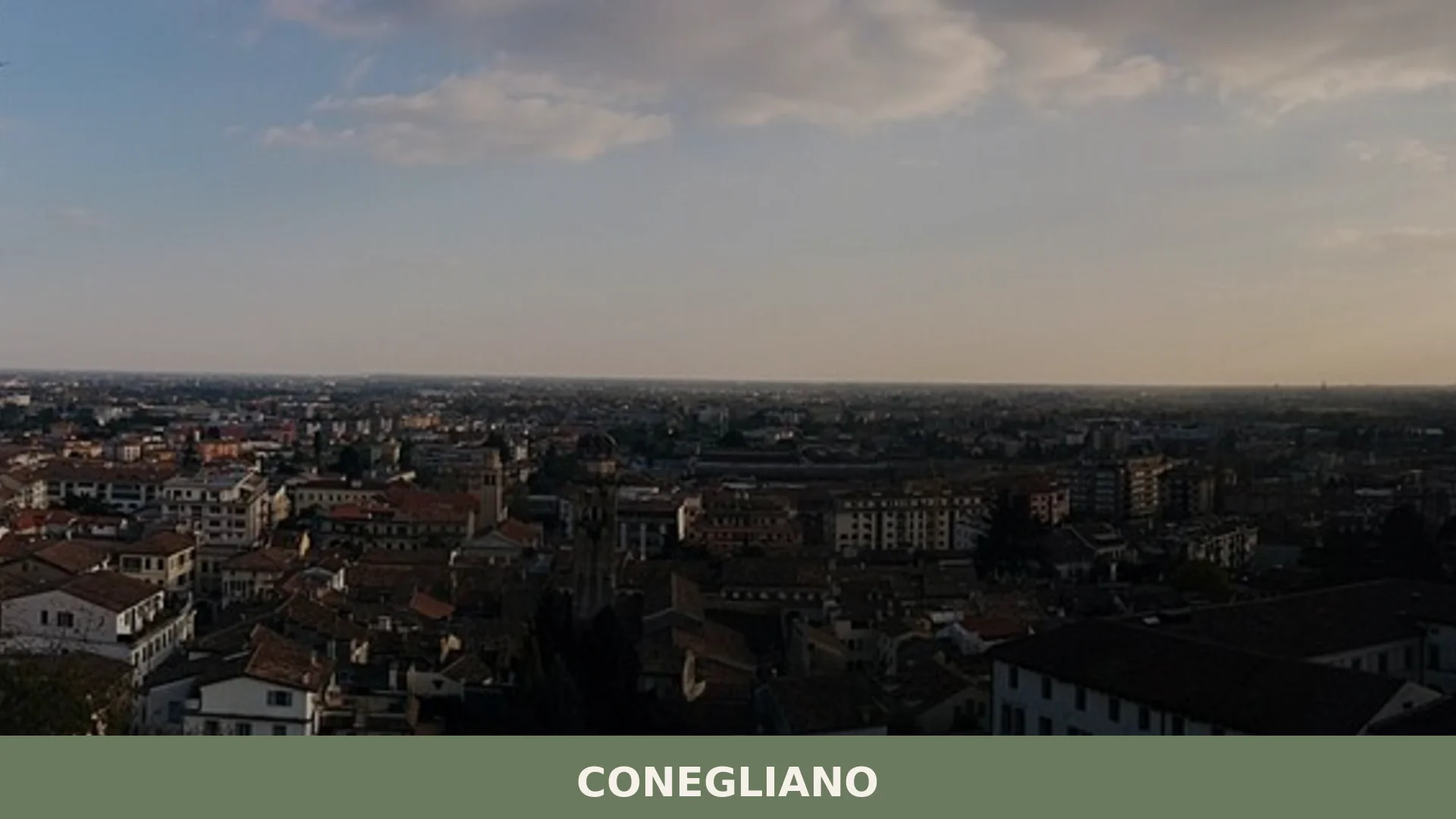
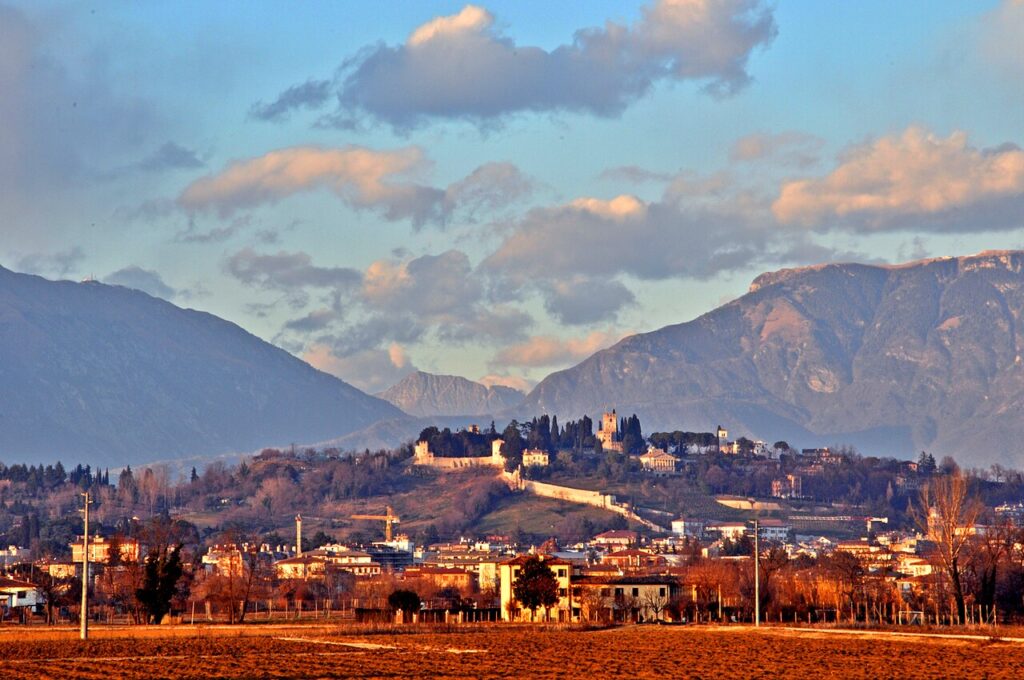
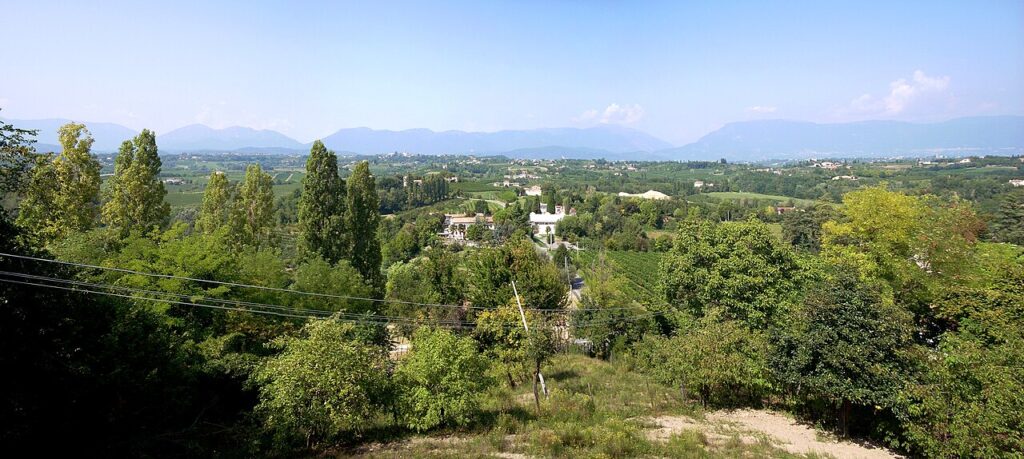
Conegliano is a town in the province of Treviso, perched at 72 metres above sea level where the flat Veneto plain begins its gradual rise toward the Belluno Prealps. It is known for two treasures: the paintings of Gianbattista Cima, its native son, and the production of Prosecco DOCG, the sparkling wine nurtured by microclimate and tradition in the surrounding hills. Visitors come to walk streets where Renaissance shopfronts still bear their original proportions, and to taste wine in the shadow of terraced vineyards that slope upward in every direction.
From Roman Garrison to Venetian Stronghold
The name Conegliano likely has Roman roots—possibly from cuniculus, the underground passages of a fortress, or from the place-name Cornelianus—though medieval documents suggest Lombard and Germanic influences as well. The earliest written form, Colinglane, appears in 1016. What is certain is that the territory lay along a crucial passageway between the mountains and the Friuli plain, making it a natural site for defense.
Around the 10th century, a fortress rose here under the control of the bishops of Belluno, built perhaps upon earlier Roman foundations. The town itself took shape during the 12th century, when local noble families organised a commune around the castle, spurring the growth of settlements and religious institutions. The monastery of Santa Maria in Mater Domini was founded in 1231, followed by convents of the Franciscans and the Umiliati order; these communities brought stable agriculture and crafts to the region.
Conegliano remained a contested prize through the medieval centuries. It passed through the hands of the Ezzelini and Scaligeri lords. During the late 14th century, the Carraresi held the region briefly before the Republic of Venice consolidated control of Treviso and its surrounding territories; walls and fortifications rose and were rebuilt during this period of transition. Fragments of the medieval fortress survive, preserving evidence of the castle’s former extent. The Municipal Palace, which marks a symbolic shift from medieval stronghold to civic centre, has medieval and Renaissance origins with later modifications.
The opening of the railway in 1858 and the construction of major roads shifted the commercial heart southward, toward the station. The town endured occupation and damage during World War I. In the postwar decades, local enterprise revived through dairy production, wine-making, and textile mills.
The Cathedral, the Painter and the Frescoed Streets
The Cathedral of San Leonardo and the Works of Cima
The collegiata di San Leonardo stands at the heart of Conegliano’s spiritual and artistic life. Its simple three-nave interior is distinguished by the Pala di Conegliano The cathedral’s exterior is framed by the elegant ogival arches of the Scuola dei Battuti, a confraternity structure whose façade displays a vast fresco cycle painted in the 16th century. Inside the Scuola dei Battuti chamber, frescoes adorn the walls, their narrative scenes still vivid despite the centuries.
Via XX Settembre: The Living Museum of Renaissance Stone
The central thoroughfare of Conegliano preserves the physical grammar of Renaissance urbanism. Renaissance palaces and civic buildings line the street, many still bearing the ghosts of their original frescoes on upper storeys. These facades tell of merchant wealth and civic ambition during the 15th and 16th centuries. Among them stands the ancient residence of Cima da Conegliano, a modest but identifiable building that anchors the artistic identity of the town. The street preserves layers of medieval, Renaissance and 18th-century civic architecture.
The Castle Foundations and San Lorenzo Church
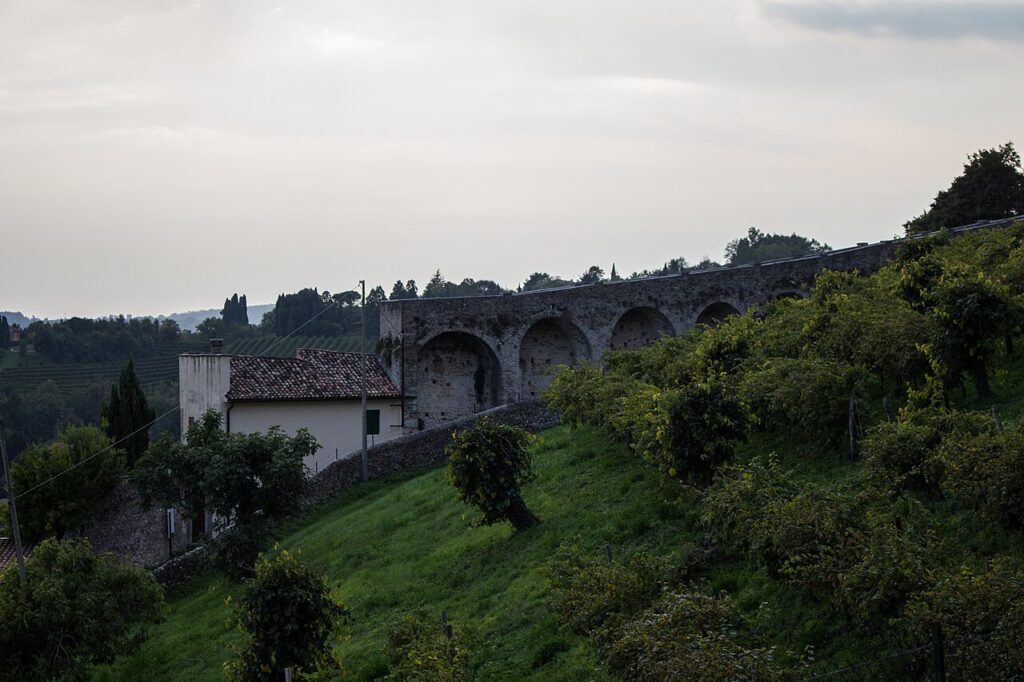
Little remains of the medieval fortress that once dominated the skyline, but its former perimeter is marked by fragments of wall. The archaeological footprint of the fortress, though mostly erased, defines the spatial logic of the old town centre and reminds visitors of the strategic importance that shaped Conegliano for nearly a thousand years.
Convents and Monastic Heritage
Several religious institutions survive as working or heritage sites. The monasteries of Santa Maria in Mater Domini and Santa Maria del Monte (a Benedictine community) reflect the long partnership between spiritual life and local development. While some are now partially closed to the public or repurposed, they remain visible markers of the medieval and early modern network of faith and learning that sustained the town’s cultural identity.
Prosecco and the Taste of the Hills
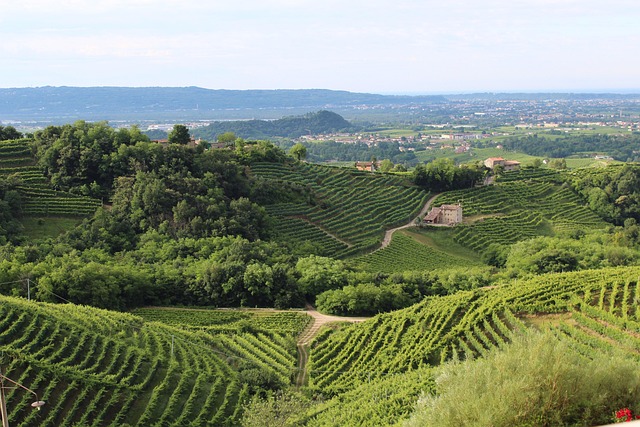
The territory surrounding Conegliano yields Prosecco DOCG, the dry sparkling wine whose character is shaped by the microclimate of the rolling hills. The combination of moderate continental weather, spring and autumn rains exceeding 1,000 mm annually, and the thermal contrast between the cool hilltops and warmer valley floors creates ideal conditions for the Glera grape. Wine-making has long been joined with dairy and textile production as economic pillars.
The region also produced traditional cheeses and dairy goods during the 20th century, a heritage that survives in local artisanal workshops. Though no specific dishes are named in historical records for Conegliano itself, the agricultural abundance of the Veneto plains—grains, vegetables, small livestock—shapes the regional cooking of which the town is part. The annual feast of San Leonardo, the patron saint, falls on 6 November and anchors the civic calendar, with celebrations primarily spiritual and social rather than gastronomic in focus.
How to Visit
Conegliano is positioned between two major population centres and transport hubs. Treviso, the provincial capital, lies approximately 30 km to the south; Belluno, a mountain town, stands about 45 km to the north. The Autostrada A27 connects both cities to Conegliano directly. The Venice–Udine railway line runs through the town, providing train access from Treviso and beyond. The town is also served by the SS 13 Pontebbana (Treviso–Udine) and the SS 51 di Alemagna (toward Belluno and the Cortina d’Ampezzo region), making road access straightforward from multiple directions.
The best season for visiting is late spring through early autumn, when the hillside vineyards display full colour and temperatures remain mild. Summers are warm and occasionally humid, with afternoon thunderstorms not uncommon. Winters are moderately cold, with occasional snow in the higher elevations and persistent fog in the lower valleys, though the medieval centre remains walkable year-round. A full day suffices to explore the cathedral, the frescoed streets and the castle site; those interested in wine or the surrounding hill villages will benefit from two days or more.
| Departure | Distance | Travel Time |
|---|---|---|
| Treviso | ~30 km | 30–40 mins by car or train |
| Venice (city centre) | approximately 50 km | 60–80 mins by train or car |
| Belluno | ~45 km | 45–55 mins by car |
| Udine | ~85 km | 70–85 mins by car |
Parking is available in the modern town near the railway station and in dedicated car parks near the medieval centre. The old town is entirely pedestrianised, with narrow streets suited to walking. Local guides and wine merchants offer tours of nearby vineyards and cellars.
“Connected by rapid roads to various provincial capitals and bordered by landscapes that shift between plain and mountain, Conegliano occupies a position of privilege that has both protected and tested it through centuries of change.”

 Mountain