
Crotone
What to see in Crotone, Calabria, Italy: explore 5 top attractions, from a Greek sanctuary founded c. 710 BC to the Castle of Charles V. Discover the city now.
Discover Crotone
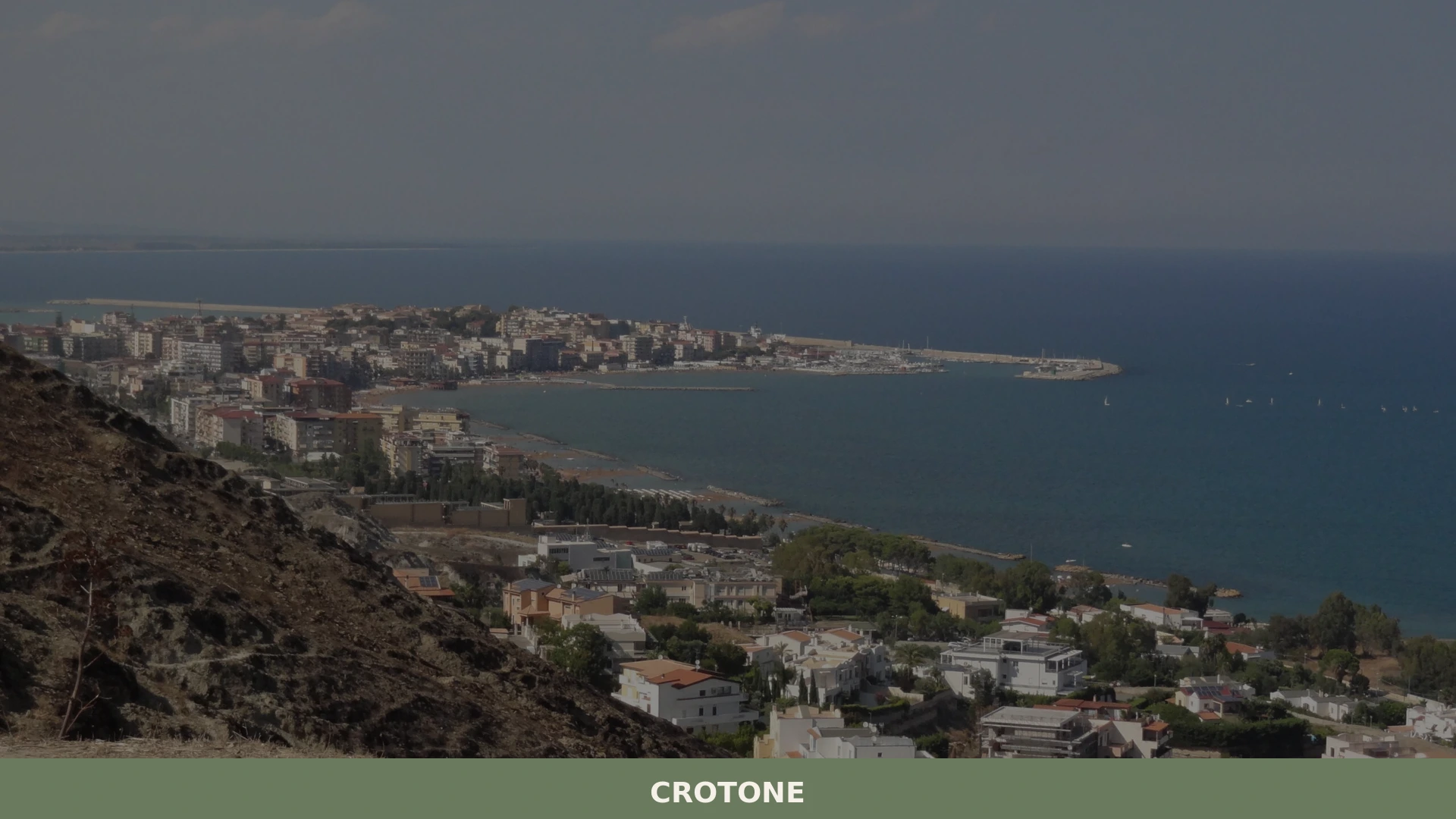
The Ionian Sea reaches the shore at Crotone with a directness that feels unmediated. No lagoon softens the approach, no offshore island breaks the horizon line.
The old city occupies a promontory above the water, and the 16th-century bulk of the Castle of Charles V cuts a hard silhouette against the sky.
Beneath the streets, excavations since 1975 have uncovered orthogonal Greek blocks, Roman baths with painted plaster, furnaces, and stretches of city wall that once ran for 12 miles around a population of between 50,000 and 80,000 people at the city’s peak around 500 BC.
Deciding what to see in Crotone means navigating roughly 2,700 years of continuous urban occupation, concentrated in a city of 59,342 inhabitants on the Calabrian coast of southern Italy.
Crotone, Calabria, Italy sits on the eastern coast of the region, roughly 220 km (137 mi) south of Taranto and 190 km (118 mi) north of Reggio Calabria.
Visitors to Crotone find a Magna Graecia archaeological circuit, a well-documented Pythagorean heritage, a working seafront, and the Sanctuary of Hera Lacinia at Capo Colonna, 10 km (6.2 mi) from the city centre.
History of Crotone
The promontory above the Esaro river was already occupied by indigenous populations — likely Oenotrians and Japigi — in the Bronze Age and early Iron Age, long before any Greek ship arrived. The formal Greek foundation of the city, known as Kroton, is dated to around 710 BC. Its oikistes, or founding leader, was Myscellus, from the city of Rhypes in Achaea in the northern Peloponnese.
He had consulted the Delphic Oracle, which directed him to found a city beside the Esaro.
Archaeological evidence suggests Myscellus made three separate expeditions before a stable settlement took hold, with the decisive founding occurring around 708 BC.
The name evolved from Kroton to the Latin Crotona, then through the medieval form Cotrone, before the Italian state changed it to the current Crotone in 1928.
The city grew rapidly into one of the most significant centres of Magna Graecia, with walls 12 miles long enclosing a vast urban area. From 588 BC onward, Croton produced multiple generations of Olympic and Panhellenic Games winners, the most celebrated being Milo of Croton, a wrestler whose victories became legendary across the Greek world.
The physician Democedes, son of Calliphon, was considered the foremost doctor in Greece in the 6th century BC; he eventually served in the court of the Persian king Darius, curing him of a dislocated ankle.
Around 530 BC, Pythagoras founded his philosophical and mathematical school at Croton, gathering pupils including the medical theorist Alcmaeon and the philosopher-mathematician Philolaus.
In 510 BC, a Crotonian army of 100,000 men commanded by the wrestler Milo destroyed the rival city of Sybaris, after which Croton became the head of a confederation of 25 city-states. In 480 BC, Croton was the only Italian coastal city to send a ship to support the Greeks at the Battle of Salamis, the vessel funded and commanded by the athlete Phayllos.
Repeated military pressure eroded Croton’s dominance across the 4th and 3rd centuries BC. The Syracusan tyrant Dionysius captured the city in 379 BC and held it for twelve years. By the time Pyrrhus invaded Italy between 280 and 275 BC, the city retained its 12-mile walls but half the urban area stood empty. Croton submitted to Rome in 277 BC, and in 194 BC it became a Roman colony.
Hannibal used it as winter quarters for three years during the Second Punic War, and the city was not retaken until 205 or 204 BC.
Later, around 550 AD, the Ostrogoth king Totila besieged the city unsuccessfully.
Arab raids sacked it around 870, and in 1992 the modern city became the capital of the newly established Province of Crotone. Industrial development between the two World Wars doubled its population during the 1930s, though the collapse of the major employers Pertusola Sud and Montedison by the late 1980s triggered a significant economic crisis from which the city has since recovered through urban renewal.
What to see in Crotone, Calabria: top attractions
Castle of Charles V
The castle’s stone mass rises directly above the modern seafront, its 16th-century walls built on the orders of the Habsburg emperor Charles V as part of a coastal defence network against Ottoman naval incursions. The structure overlooks the Ionian Sea with a commanding field of view that made it operationally significant for its entire period of active military use.
Inside, the layout follows the characteristic compact geometry of Spanish imperial fortifications in southern Italy.
The castle serves as the clearest surviving marker of the period of Spanish rule that shaped Calabrian coastal towns for centuries. It is accessible from the city centre on foot and is worth visiting early in the morning, when the light from the east falls directly on the seaward walls.
Sanctuary of Hera Lacinia at Capo Colonna
Ten kilometres (6.2 mi) east of the city centre, a single standing column of white marble rises above the cape that juts into the Ionian Sea.
This surviving column is what remains of the Heraion, the Sanctuary of Hera Lacinia, which served as the federal meeting place and treasury for the Italiote League, a confederation of Greek cities that formed to resist Syracusan expansion and Lucanian attacks.
The sanctuary dates to the 5th century BC and was one of the most important religious sites in Magna Graecia. A stone anchor block associated with the athlete Phayllos, who funded Croton’s ship at the Battle of Salamis in 480 BC, was found at Capo Cimiti nearby and is now preserved in the on-site museum.
The cape is reachable by car via a coastal road, and the museum holds finds from both the sanctuary and surrounding excavations.
National Archaeological Museum of Crotone
The city’s archaeological collections document the full span of Kroton’s occupation, from Bronze Age indigenous settlements through the Greek colonial period and into the Roman era. Exhibits include grave goods from the Carrara necropolis that archaeologists have interpreted as evidence of mixed marriages between Greek settlers and indigenous women from the first generation of colonisation, around 708 BC.
The museum holds coins minted between 480 and 460 BC that confirm Croton’s role as head of a 25-city confederation after the destruction of Sybaris.
It also contains material from urban excavations carried out from 1975 onward, including pottery from Greek furnaces, fragments of the ancient city walls in opus quadratum construction, and painted Roman plaster from a building discovered in 2010 in Via Discesa Fosso. For those interested in what to see in Crotone from an archaeological angle, the museum provides the interpretive framework for everything visible above ground.
Ancient City Walls and Urban Archaeological Layers
Sections of the ancient walls of Kroton are visible at several points around the modern city, most accessibly near the river Esaro and on the Vigna Nuova hill.
A large wall fragment with double facing in opus quadratum and emplecton construction, dated to the mid-4th century BC, was found in the water collector of the industrial area of the Papaniciaro stream.
The overall wall circuit, as reconstructed by archaeologists over recent decades, descended from the St.
Lucia hill to the Carrara hill and extended across the Esaro river, enclosing an area of at least 617 hectares. Traces of wall have been recorded at 40 m (131 ft) above sea level on the Cimone Rapignese.
Walking the perimeter of the modern city, fragments of this circuit appear in walls, foundations, and the edges of building plots in a pattern that makes the ancient urban scale legible even from street level.
The Seafront and Capo Colonna Coastal Strip
Crotone’s Ionian coastline runs south from the city toward the cape, and the stretch of sand and shallow water here has given the city its defining character as a seaside destination, which is why mare (the sea) defines its primary identity among Italian travellers. The water temperature along this coast peaks between July and September, making it functional for swimming across those months.
The coastal road connects the city beach directly to the Capo Colonna headland, allowing a single half-day circuit to cover both the shoreline and the sanctuary.
This strip is also where the Esaro river reaches the sea, the same river named in the Delphic Oracle’s instruction to Myscellus when Kroton was founded around 708 BC. In 1996, the Esaro flooded and damaged the city significantly, an event that accelerated subsequent investment in urban infrastructure along the waterfront.
Local food and typical products of Crotone
The food culture of Crotone reflects the geography of the Ionian coast and the agricultural hinterland of the Crotone province, a stretch of territory that moves quickly from flat coastal land into the foothills of the Sila plateau.
The sea provides swordfish, tuna, and pesce spada preparations, while the inland farming areas contribute dried legumes, cured meats, and hard wheat products that have formed the base of local cooking for generations.
The city’s long history of Greek, Roman, Byzantine, Arab, Norman, and Spanish occupation has left practical traces in the kitchen — in the use of dried figs, the preference for olive oil over animal fat, and in preserved fish preparations that echo Mediterranean trading patterns of the ancient world.
Among the dishes most closely associated with the Crotone area, pitta ‘mpigliata is a filled pastry of Greek-Byzantine origin, constructed from a soft dough wrapped around a mixture of figs, honey, walnuts, raisins, and cloves, then baked until the exterior caramelises slightly.
Pasta e fagioli con cotiche combines dried borlotti beans with pork rind and pasta in a thick broth seasoned with chilli, which grows in volume across the Calabrian interior.
Frittula — fried pork offcuts rendered down in their own fat — is sold by weight in local butcher shops and eaten on bread.
Fish preparations including alici sott’olio (anchovies preserved in local olive oil) and rosamarina, a paste of tiny newborn fish packed in salt and chilli, appear on most tables near the coast. The chilli itself, used in quantities that distinguish Calabrian cooking from other southern Italian traditions, is grown locally and dried in long strings hung from building facades through September and October.
The Crotone area produces a notable hard cheese, Pecorino Crotonese, made from full-fat sheep’s milk and aged for a minimum of 60 days for the semi-aged version or up to six months and beyond for the stagionato form. The rind develops a hard, oily surface from regular treatment during ageing, while the paste becomes progressively granular and sharp.
It is used grated over pasta in the local tradition and also eaten in wedges with local bread and cured meats.
Searching out what to see in Crotone should include a visit to one of the covered market stalls in the city where producers from the Crotone province bring their goods on weekday mornings.
Festivals, events and traditions of Crotone
The city’s patron saint is San Dionigi Areopagita, and his feast day falls on 9 October each year.
The celebration centres on a religious procession through the city streets, during which the image of the saint is carried from the cathedral and accompanied by the local community in a formal civic and devotional event. The October date places the feast in the early autumn, after the intense heat of the Ionian summer has passed and the city’s seasonal population has returned to its year-round rhythm.
Church services, street gatherings, and the illumination of the principal civic spaces mark the day across its full course.
The broader calendar of Calabrian religious and food fairs touches Crotone province across the spring and summer months.
Local sagre — traditional food festivals organised around a specific product or dish — take place in municipalities across the hinterland between May and September, with events focused on local olive oil, dried chilli, and cured meats drawing visitors from across the region. The proximity of the Ionian coastline means that the summer months also bring outdoor concerts, film screenings, and cultural events organised along the seafront, a pattern common to most Calabrian coastal cities of comparable size.
When to visit Crotone, Italy and how to get there
The best time to visit Crotone for those combining sea and archaeology is late May through June, or September.
These months offer water temperatures above 20°C (68°F) suitable for swimming, without the peak-summer crowding that characterises July and August along the Ionian coast. The October feast of San Dionigi Areopagita gives a specific cultural reason to visit in early autumn, when the town is fully operational but noticeably quieter than in high season.
Visitors primarily interested in archaeological sites find the spring and autumn preferable for comfort, as the temperature at the Capo Colonna headland in July regularly exceeds 35°C (95°F) in the afternoon.
Getting to Crotone by car from the north is most practical via the A2 Autostrada del Mediterraneo to the Cosenza Sud exit, then the SS107 eastward to the coast and the SS106 Jonica south to Crotone — a total journey from Cosenza of approximately 80 km (50 mi).
From the south, the SS106 runs directly along the Ionian coast from Reggio Calabria, 190 km (118 mi) away. By train, Trenitalia operates services on the Taranto–Reggio Calabria Ionian line, with Crotone served by the station on this route; journey time from Taranto is approximately 3 hours.
The nearest airport with scheduled domestic and some international connections is Lamezia Terme International Airport, roughly 110 km (68 mi) west of Crotone by road, with a transfer time of approximately 1 hour 20 minutes by car. From Rome, the fastest option combines a high-speed train to Lamezia Terme and a car hire, covering a total journey of around 5 hours.
International visitors should note that English is spoken in hotels and at major sites, but in smaller shops and local markets Italian is standard; carrying cash in euros is advisable, as card acceptance is inconsistent outside the city centre.
Crotone works well as a base for day trips along the Ionian coast toward the Norman remains at Gerace, which preserves one of the largest Norman cathedrals in Calabria and sits roughly 120 km (75 mi) to the south.
Travellers moving through the region might also consider a stop at Stilo, 100 km (62 mi) southwest, where the 10th-century Byzantine church known as the Cattolica stands intact on a rocky slope above the village — a useful counterpoint to Crotone’s Greek and Roman layers.
Where to stay near Crotone
Crotone has a functioning accommodation offer oriented toward both Italian seaside tourism and visitors arriving for the archaeological circuit.
Options range from seafront hotels along the Ionian coast to agriturismi in the hinterland, where farmstays typically offer rooms and meals based on local produce from the Crotone province.
The city’s summer season generates a reliable rental market for apartments and short-term lets along the coastal strip between the city centre and Capo Colonna, making self-catering a practical choice for visitors planning to spend several days exploring both the sea and the inland areas of the province.
Photo Gallery of Crotone
Do you have photos of Crotone?
Share your photos of the village: the best ones will be added to the official gallery, with your credit.
Send your photosFrequently asked questions about Crotone
What is the best time to visit Crotone?
The best time to visit Crotone for sea and beach activities is July through September, when the Ionian Sea reaches its warmest temperatures. For archaeological sites like Capo Colonna and the National Archaeological Museum, spring (April–June) and early autumn (September–October) offer cooler conditions and fewer crowds. On 9 October, the city celebrates its patron saint Dionigi l'Areopagita with local festivities — a good occasion to experience Crotone's civic and religious traditions alongside its historical sites.
What are the historical origins of Crotone?
Crotone was founded as the Greek colony of Kroton around 710–708 BC by Myscellus of Rhypes in Achaea, guided by the Delphic Oracle to settle beside the Esaro river. It grew into one of the most powerful cities of Magna Graecia, with walls stretching 12 miles and a population of up to 80,000 at its peak around 500 BC. Pythagoras established his school here around 530 BC. The city later became a Roman colony in 194 BC, and its name evolved through Crotona, Cotrone, to the modern Crotone in 1928.
What to see in Crotone? Main monuments and landmarks
The top three sites are: the Castle of Charles V, a 16th-century Habsburg fortress on the seafront (best visited at sunrise when eastern light hits the seaward walls); the Sanctuary of Hera Lacinia at Capo Colonna, 10 km east of the city centre, where a single standing marble column marks one of Magna Graecia's most important religious sites; and the National Archaeological Museum of Crotone, which holds finds from Bronze Age through Roman periods, including coins confirming Croton's role as head of a 25-city confederation after 510 BC.
What are the main natural or scenic attractions of Crotone?
Crotone's primary natural attraction is its Ionian coastline, which runs south from the city toward Capo Colonna. The cape itself is a distinctive headland jutting into the sea, reachable by a coastal road that also passes the Esaro river mouth — the same river referenced in the Delphic Oracle's founding instruction to Myscellus. The shallow, sandy shoreline along this strip makes it one of the more accessible swimming coasts in Calabria. The hinterland rises quickly toward the Sila plateau, expanding options for inland exploration.
Where to take the best photos in Crotone?
The most photogenic spots in Crotone are the seaward walls of the Castle of Charles V at sunrise, when light from the east creates sharp contrast against the stone; the solitary marble column of the Sanctuary of Hera Lacinia at Capo Colonna with the open Ionian horizon behind it; and the old city promontory viewed from the seafront below, where the castle's silhouette is most clearly defined against the sky. The cape itself offers wide coastal views that frame the column within a dramatic seascape.
Are there museums, churches or historic buildings to visit in Crotone?
The National Archaeological Museum of Crotone is the city's principal museum, containing grave goods from the Carrara necropolis, coins from 480–460 BC, pottery from Greek furnaces, and painted Roman plaster from excavations dating to 1975 and beyond. The Castle of Charles V functions as both a historic monument and exhibition space. The on-site museum at Capo Colonna houses finds from the Sanctuary of Hera Lacinia, including a stone anchor block associated with the athlete Phayllos. Visitors should verify current opening hours and admission fees directly with each institution.
What can you do in Crotone? Activities and experiences
Crotone offers a well-defined half-day coastal circuit combining the city beach, the Esaro river mouth, and the Capo Colonna sanctuary via a single coastal road. The castle is walkable from the city centre. Archaeological walks through the modern city reveal fragments of Kroton's ancient 12-mile wall circuit embedded in streets, foundations, and building plots around the Esaro and Vigna Nuova hill. Swimming along the Ionian shore is viable from July through September. The city's food culture — built on Ionian seafood and Sila hinterland produce — rewards exploration of local restaurants.
Who is Crotone suitable for?
Crotone suits travellers with a strong interest in ancient Greek history and Magna Graecia archaeology — the Pythagorean heritage, the Sanctuary of Hera Lacinia, and the archaeological museum offer a coherent and substantive circuit. Families and couples seeking an Ionian beach holiday in a working Calabrian city rather than a resort will find the seafront accessible and uncrowded outside August. History-focused solo travellers and those following a broader southern Italy itinerary between Taranto and Reggio Calabria will find Crotone a logically placed and historically dense stop.
What to eat in Crotone? Local products and specialties
Crotone's food is shaped by its dual geography: the Ionian coast produces swordfish and tuna, served in preparations collectively known as pesce spada dishes, while the agricultural hinterland toward the Sila plateau contributes dried legumes, cured meats, and hard wheat products. The layered history of Greek, Byzantine, Arab, Norman, and Spanish occupation has left traceable influences in the local kitchen. For verified DOP and IGP products specific to the Crotone province, the regional Calabria tourism authority and official Denominazioni d'Origine listings provide the most accurate current information.
Getting there
Piazza della Resistenza, 88900 Crotone (KR)
Nearby Villages near Crotone
In Calabria More villages to discover
Ardore
 Plains
what to see in ardore: Discover Italy with Ardore’s altitude at 250 m, explore scenic landscapes and local festivals in Calabria.
Bocchigliero
 Mountain
What to see in Bocchigliero: a mountain village at 870m in Cosenza. Discover the Mother Church and the Baronial Palace ruins.
Anoia
Plains
What to see in Anoia? Explore the 5 main attractions of this Calabrian village. The complete guide awaits to help plan your visit. Learn more!
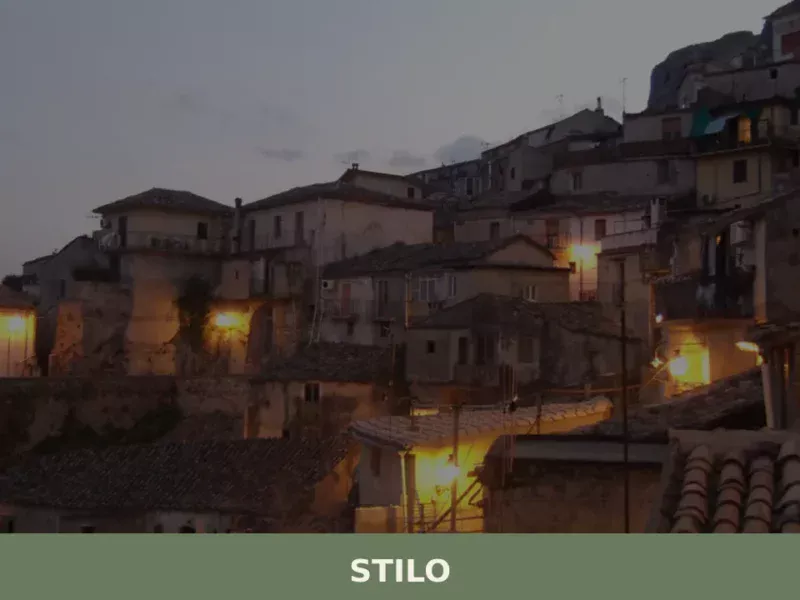
Stilo
 Sea
Sea
The Cattolica church occupies a spur of rock above the rooftops, its five small domes visible from the valley floor before the rest of the village comes into focus. Below the church, the streets narrow and the stone deepens in colour, shifting from pale grey to near-black where the walls absorb the shadow. Iron and […]
Amendolara
Sea
Explore Amendolara village, a charming Italian gem nestled in Calabria. Discover its rich history, stunning landscapes, and authentic local culture. Plan your visit today!
Cosenza
 Hills
Hills
What to see in Cosenza, Italy: explore 5 key attractions from the 1239 Swabian Castle to the medieval Duomo. Discover events, food and how to get there.
Gerace
Hills
A rock formed from sea fossils laid down 60 million years ago rises 500 metres (1,640 ft) above the Ionian plain. From its summit, on a clear day, the coastal town of Locri and the sea beyond it are visible as distinct horizontal bands of terracotta, grey, and blue. The hill is composed of marine […]
Agnana Calabra
Mountain
Planning a visit? Discover what to see in Agnana Calabra u2014 history, local food, best time to visit and how to reach this Reggio Calabria village.
Pentedattilo
Hills
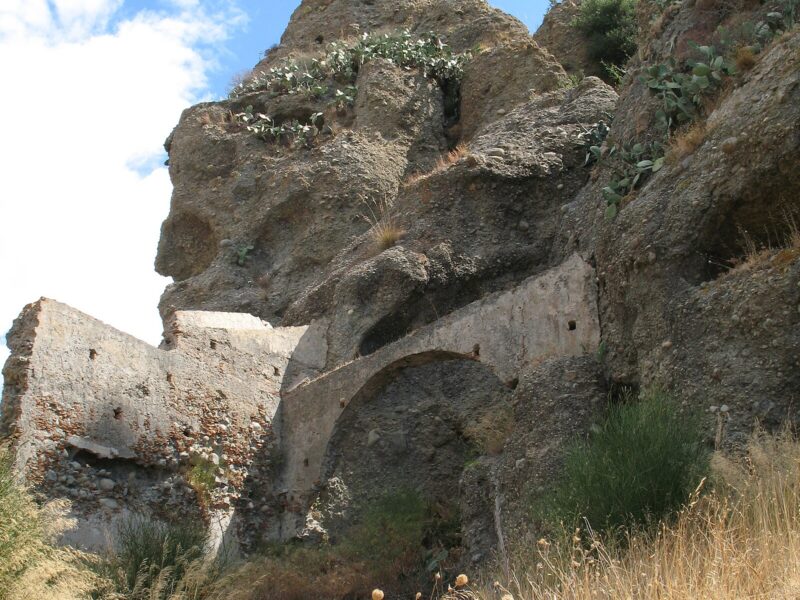
What to see in Pentedattilo, Calabria, Italy: a ghost town founded in 640 BC at 250 m altitude. Discover top attractions, history, and how to get there.
Acquaro
Hills
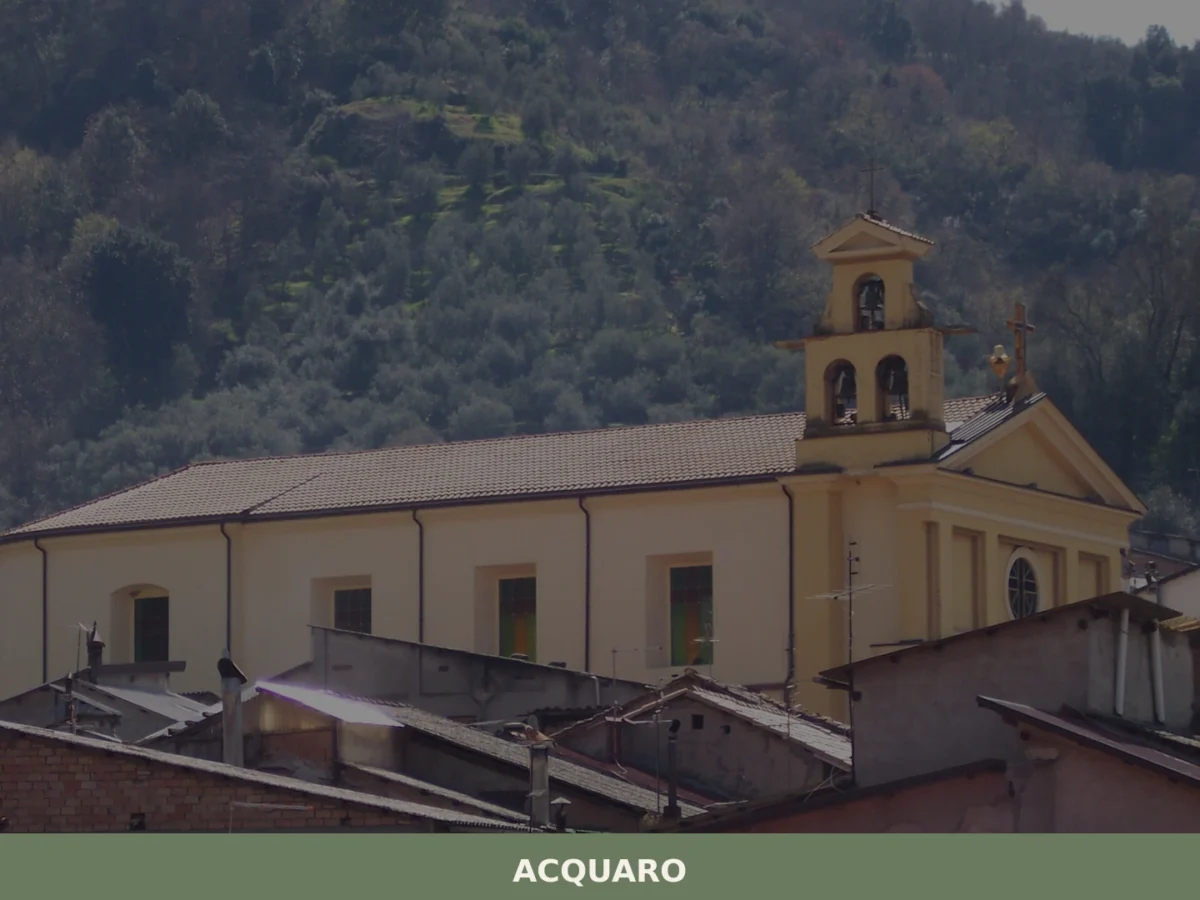
Discover what to see in Acquaro, a village of 1,778 inhabitants in Vibo Valentia, Calabria. History, food, travel tips and the Alto Mesima valley landscape.

📝 Incorrect information or updates?
Help us keep the Crotone page accurate and up to date.