


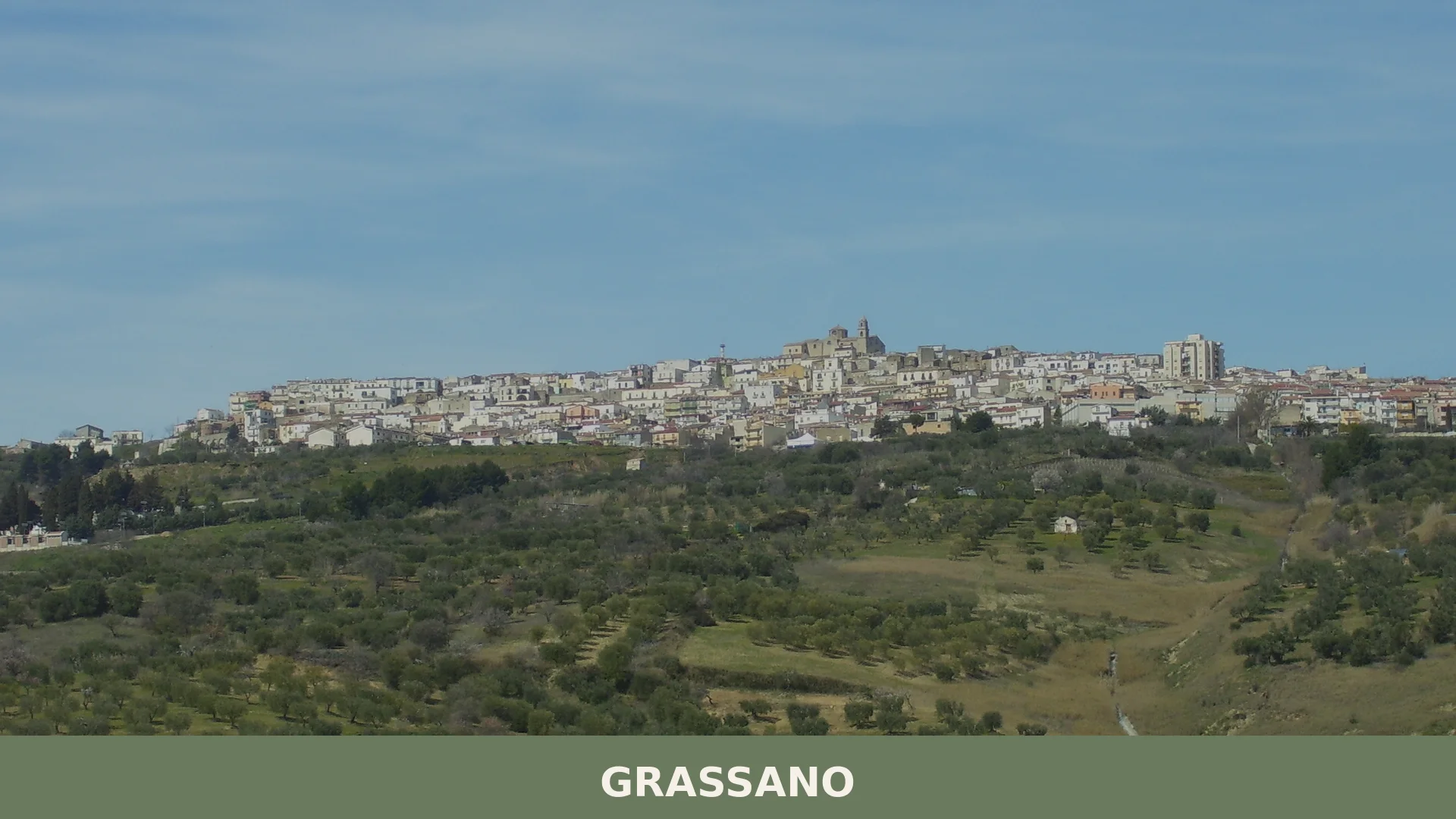
Grassano
 Hills
Hills
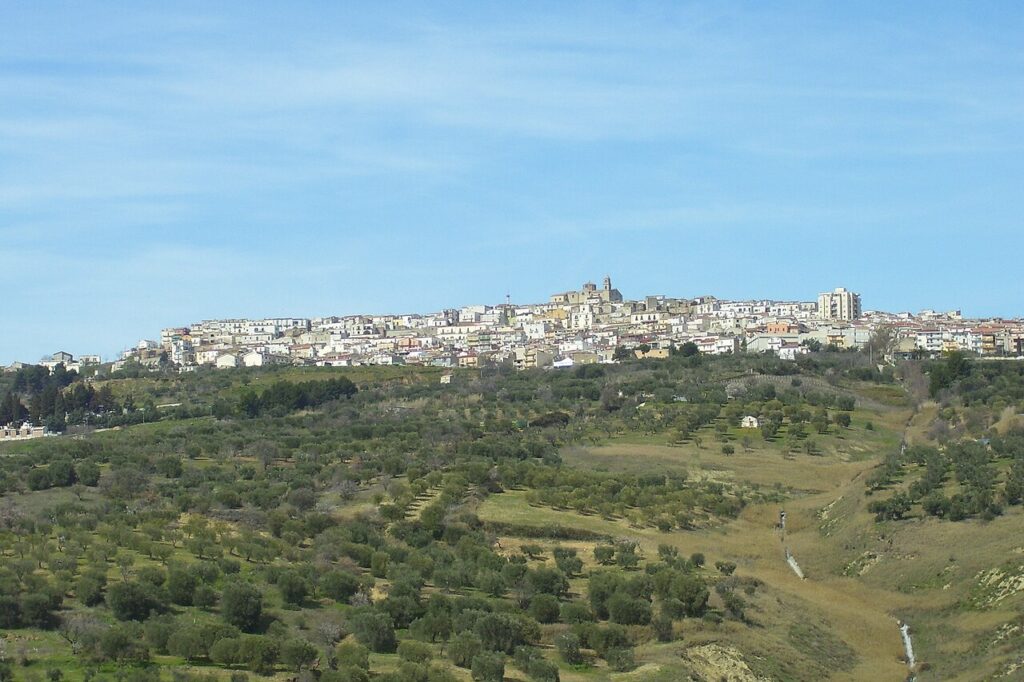
Grassano is a hill town of around 4,500 inhabitants in the province of Matera, Basilicata, with a medieval castle, a Knights of Malta Preceptory and a landscape shaped by two river valleys.
Discover Grassano
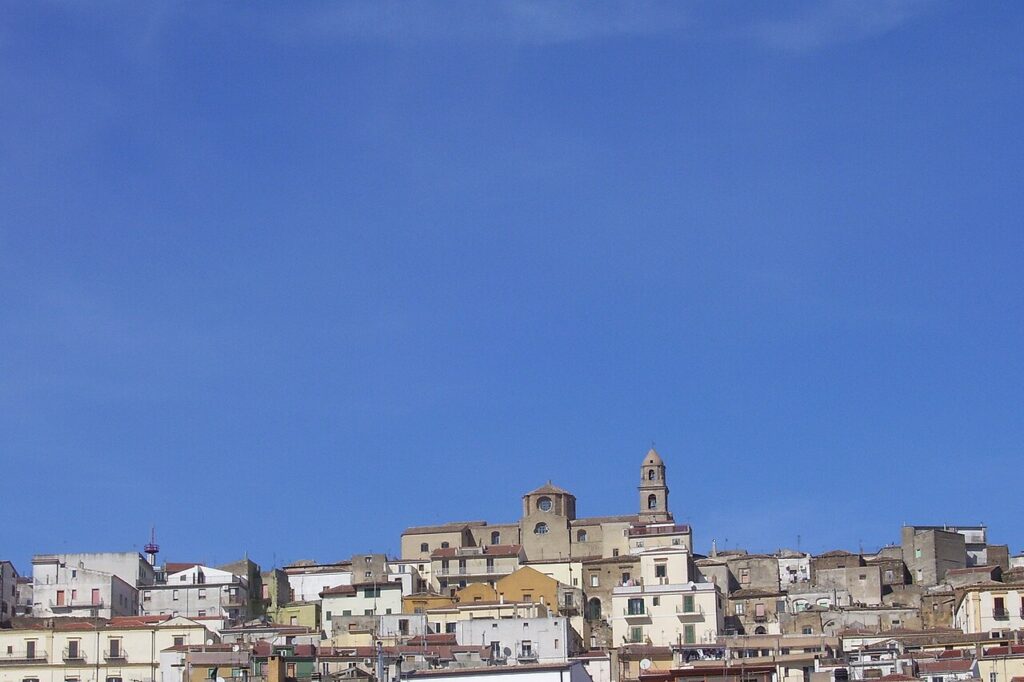
Grassano is a hill town of around 4578 inhabitants in the province of Matera, Basilicata, sitting at 576 metres above sea level on terrain that rises between the valleys of the Bradano and Basento rivers, roughly 18 kilometres from Tricarico and 12 from Grottole. Its compact historic centre climbs toward the summit of the hill, where the Castello Commendale once housed the Knights of Malta, and its streets carry nearly nine centuries of documented civic and religious life.
Grassano village in Basilicata entered the written record in 1123 as one of the centres of the Diocese of Tricarico, and its story since then has moved through Angevin administration, the long stewardship of the Hospitallers, and the turbulent months of 1861 when the brigand formations of Carmine Crocco reached its heights. Today the town of roughly 41.08 square kilometres preserves churches, palaces, and a civic emblem — two cornucopias full of fruit, adopted as a symbol of fertile land since the eighteenth century — that together make a visit feel less like tourism and more like reading a place.
Grassano village in Basilicata: history and origins
Grassano village in Basilicata traces its documented history to at least 1123, when it first appeared among the centers of the Diocese of Tricarico, later described in Angevin records as castellum quod vocatur Crassanum; by 1320 it counted only 12 taxable hearths, suggesting a modest settlement of between 47 and 4578 inhabitants.
A fifteenth-century platea recorded Grassano as a casale — a dependent hamlet — of the city of Tricarico, a status the local population resisted. The dispute required a royal ruling: on 19 January 1414, King Ladislao d’Angiò-Durazzo issued what became known as the sentenza della candela, formally reaffirming Grassano’s subordination to Tricarico’s territory. The village had by then long been bound to a different power as well: the Knights of Malta, whose presence is first attested through a letter dated 4 June 1368 in which Pope Urban V sought the restitution of the local Hospitaller Preceptory to the Prior of Barletta. The earliest named commander on record is frà Trailo Sansone di Troia, documented in 1365. From the Castello Commendale at the summit of the settlement, the Knights administered Grassano and its surrounding territory — including nineteen dependent granges across Basilicata — until 1810, when a law suppressing non-social-interest corporations dissolved the Commenda and brought their long dominion to an end.
Churches, the Commendale Castle and Urban Monuments
Grassano preserves a cluster of religious and civic landmarks concentrated on the hilltop: the Chiesa Madre at the highest point of the village, the Convento di Santa Maria del Carmine with its early-twentieth-century bell tower, the Castello Commendale, several historic palaces, and a series of public sculptures distributed across the main squares.
Chiesa Madre
Standing at the highest point of the village, the Chiesa Madre was originally the chapel of the castle held by the Commander of Malta. Its earliest documented mention appears in the 1588 pastoral visit of Bishop Santonio. During the eighteenth century a right lateral nave was added and the orientation of the building was reportedly reversed. The clock mechanism, long out of service, was restored and returned to working order in 2023 by R. Eustacchio Mattia.
Convento di Santa Maria del Carmine
The first reliable records of this convent date to 1612. It houses a Via Crucis by Domenico Guarino and, in the left nave, a nativity scene by the local artist Francesco Artese. The bell tower was built in the early twentieth century. A separate chapel nearby, the cappella Abbatangelo, is also part of the religious fabric of the town.
Castello Commendale
Positioned at the summit of the built-up area, this was the administrative seat of the Knights of Malta, who governed Grassano and its territory for centuries. The castle gave the town much of its urban character during the long period of Hospitaller rule. The tower of the former Palazzo Commendale was demolished in the early 1970s.
Historic Palaces
The town retains a number of historic residences — Palazzo Materi, Palazzo Ruggiero, Palazzo Ferri and a structure known as La Torretta — though detailed documentation on these buildings is limited.
Public Sculptures and Memorials
Several squares in the centre hold works of civic sculpture. Piazza A. Ilvento displays a statue honouring Arcangelo Ilvento; Piazza della Repubblica has a statue of Padre Pio; Piazza della Libertà holds a bronze figure of a sower; Piazza Mazzini contains a sculpture dedicated to emigrants; and Piazza del Purgatorio is home to the war memorial. The apse of the former church of Purgatorio, also located in that square, was demolished in the early 1970s.
Flavours of Grassano and the Matera Province
Grassano sits within a province rich in certified food products, and visitors to the area can count on tasting several quality-labelled specialities tied to the Basilicata and Matera territories. The two cornucopie — horns of plenty — that have featured on the town’s emblem since the eighteenth century are no coincidence: the fertile lands along the Basento river have long sustained a productive agricultural tradition.
Among the certified products of the province, Caciocavallo Silano DOP and Canestrato di Moliterno IGP represent the area’s strong dairying heritage. Olio Lucano IGP and Pane di Matera IGP — the distinctive crusty sourdough loaf baked in the city of Matera — are also found in the region. La Mozzarella di Gioia del Colle DOP è un prodotto pugliese e non appartiene al patrimonio lattiero-caseario della provincia di Matera o della Basilicata. La Lenticchia di Altamura IGP è un prodotto pugliese (Altamura si trova nella provincia di Bari) e non fa parte dei prodotti certificati della provincia di Matera o della Basilicata.
On the wine side, the province of Matera falls within the Matera DOC and the regional Basilicata IGT appellations, and the celebrated Aglianico del Vulture DOCG — Basilicata’s flagship red — is produced not far away. Traditional preparations encountered across the wider Lucanian territory include capocollo, carne podolica, capretto in fricassea and the dark grape-must condiment known as mir’ cutt’.
Planning your visit and getting there
Grassano can be reached easily from the lower Val Pellice and the Turin area. The practical distances and journey times below are kept concise on purpose, so the access information stays clear and consistent.
| Departure | Distance | Time |
|---|---|---|
| Calciano | approx. 15 km | approx. 20 min |
| Tricarico | approx. 18 km | approx. 25 min |
| Garaguso | approx. 18 km | approx. 25 min |
| Irsina | approx. 22 km | approx. 30 min |
| Matera | approx. 50 km | approx. 50 min |
| Potenza | approx. 60 km | approx. 55 min |
These practical reference points are enough to plan the journey without overloading the text with unstable logistics. Once on site, the village is best understood slowly, on foot and in relation to the surrounding landscape.
Frequently asked questions about Grassano
What is the best time to visit Grassano?
September is ideal, especially around September 22nd when Grassano celebrates the Feast of Sant'Innocenzo, its patron saint. This festival brings the community together with traditional religious and cultural events. The autumn climate is pleasant, with moderate temperatures perfect for exploring the historic hilltop centre. Spring (April–May) also offers mild weather and fewer crowds, making it suitable for leisurely walking tours through the compact medieval streets.
How do I reach Grassano from nearby towns?
Grassano is located in Matera Province, approximately 18 kilometres from Tricarico and 12 kilometres from Grottole. The village sits at 576 metres altitude on terrain between the Bradano and Basento river valleys. The nearest major town is Matera itself. Access is primarily by car via provincial roads. The nearest railway station is in Tricarico or Matera; from there, local buses or car hire are recommended for the final journey to Grassano.
What historical sites should I not miss in Grassano?
The Castello Commendale, located at the hilltop summit, once housed the Knights of Malta and remains the town's most prominent landmark. The village preserves numerous churches reflecting nearly nine centuries of documented religious life dating from its first written record in 1123. The historic centre itself is an open-air museum, with medieval streets, civic palaces, and the town emblem—two cornucopias symbolising fertile land—adopted officially in the eighteenth century.
How long should I plan to spend in Grassano?
A half-day visit (3–4 hours) allows exploration of the compact historic centre, the Castello Commendale, and major churches. For a more immersive experience, plan a full day to walk the medieval streets unhurriedly, visit religious monuments, and enjoy local dining. An overnight stay enables deeper engagement with the landscape between the Bradano and Basento valleys and nearby attractions in the Matera Province, such as Tricarico or Grottole.
Does Grassano have accommodation options?
Grassano, with a population of approximately 4,578, is a small village. While specific hotel names and agriturismos require verification from current tourism databases, the area—part of the Matera Province in Basilicata—typically offers rural guesthouses, bed-and-breakfasts, and farm stays. Visitors should contact the Matera Province tourism office or local municipal authorities for up-to-date accommodation availability and recommendations tailored to their preferences and budget.
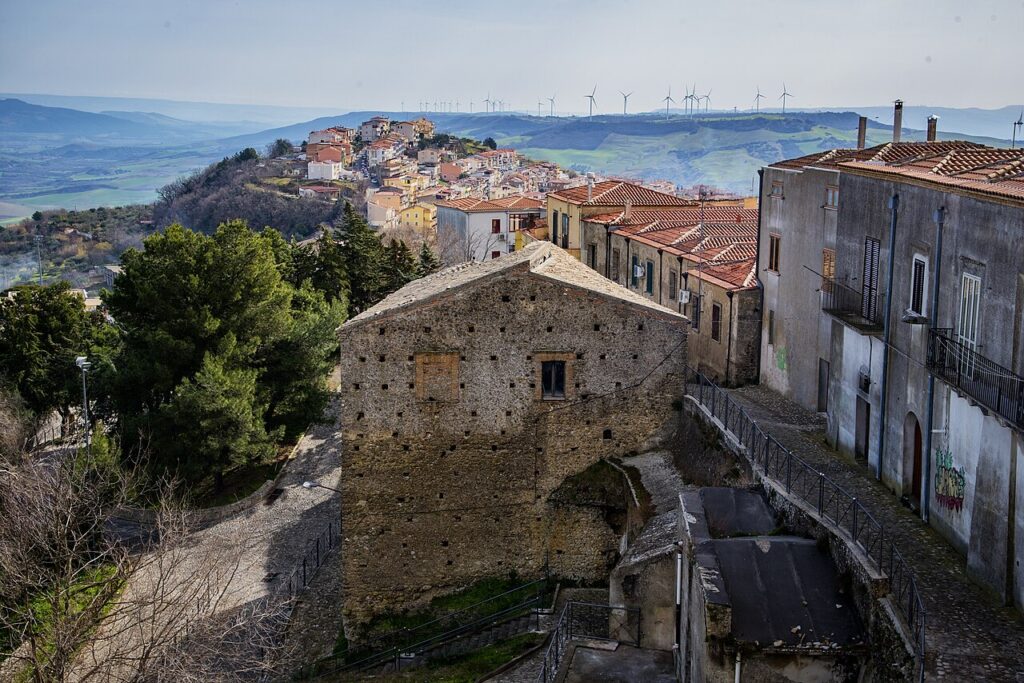
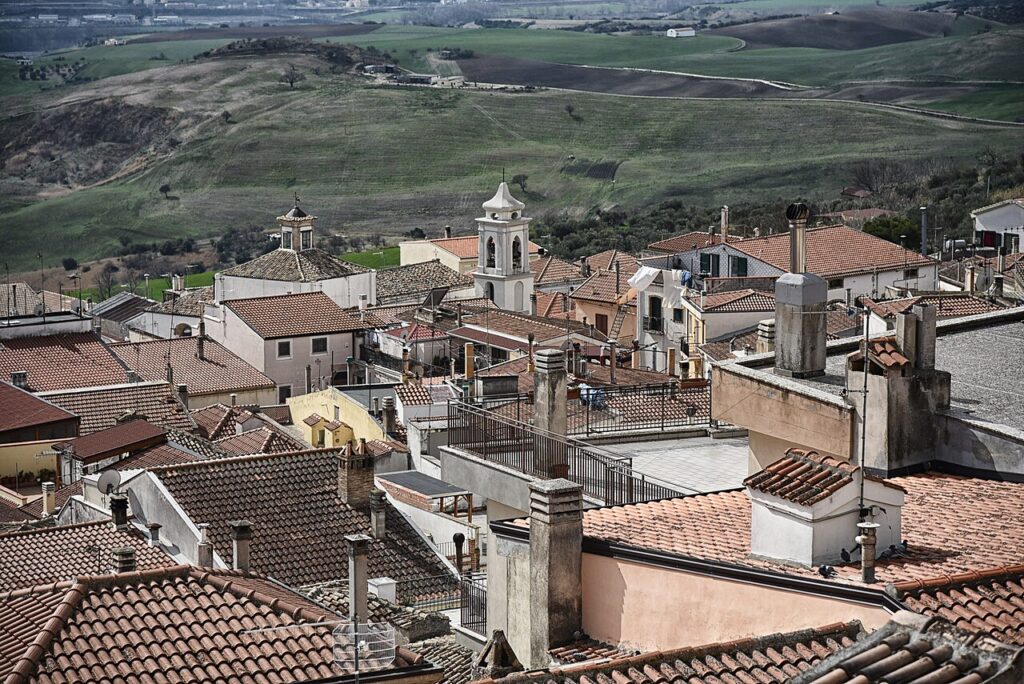
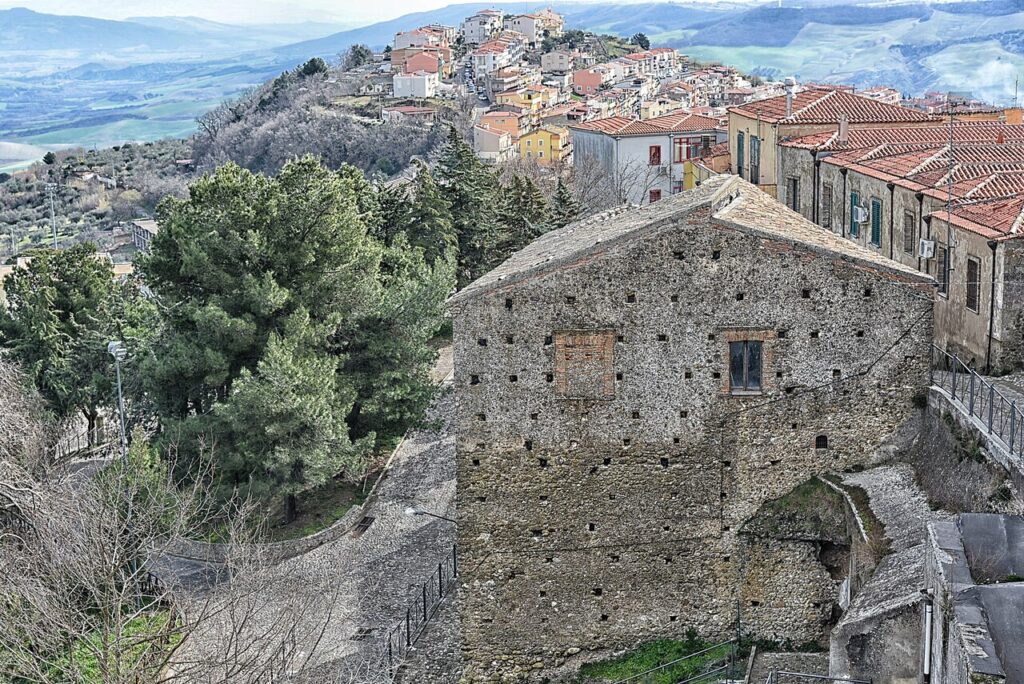
📷 Photo Gallery — Grassano
In Basilicata More villages to discover
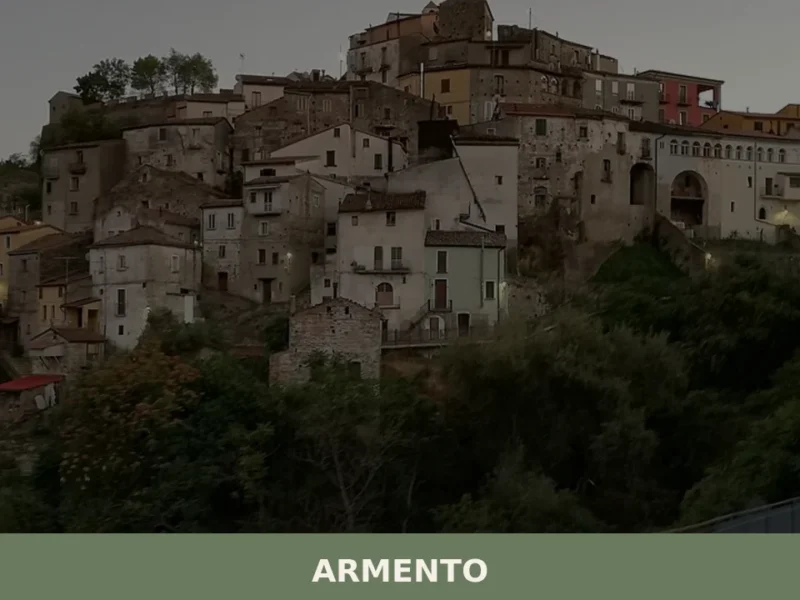
Armento
 Mountain
In 1814, a farmer unearthed a Lucanian funerary assemblage dating to the 4th century BC in the countryside around Armento: a golden crown, now held at the Antikensammlung in Munich, which confirmed the presence of a high-ranking Italic settlement in this part of the Val d’Agri. The village sits at 710 metres above sea level […]

Cirigliano
Mountain
What to see in Cirigliano, Italy: a medieval village with a 17th-century Pietu00e0, an oval castle tower, and local pasta traditions. Discover 5 top attractions.

Colobraro
Hills
What to see in Colobraro, Italy: explore the village at 630 m altitude known as 'that village'. Discover its curse legend, Sinni valley views & local food. Read the guide.
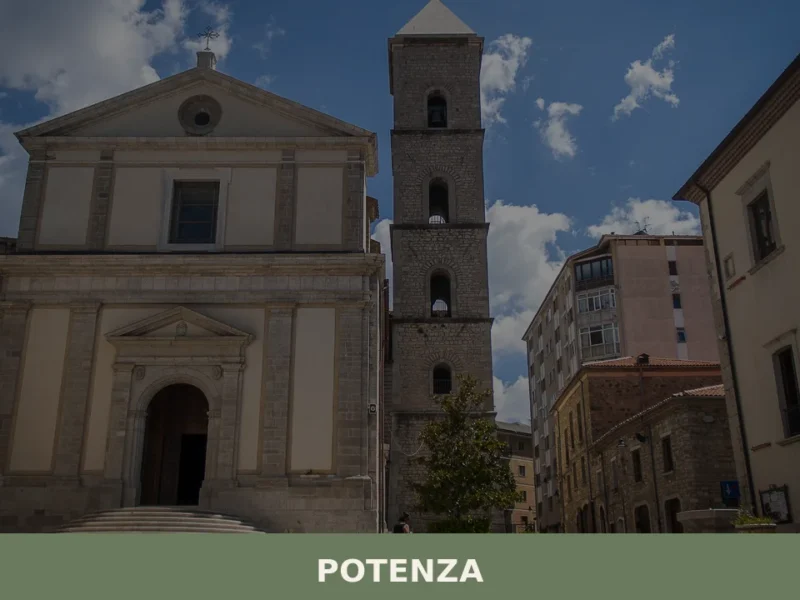
Potenza
Mountain
What to see in Potenza: from the historic centre churches to Castello Tramontano. Complete guide with 5 attractions and practical tips for your visit.
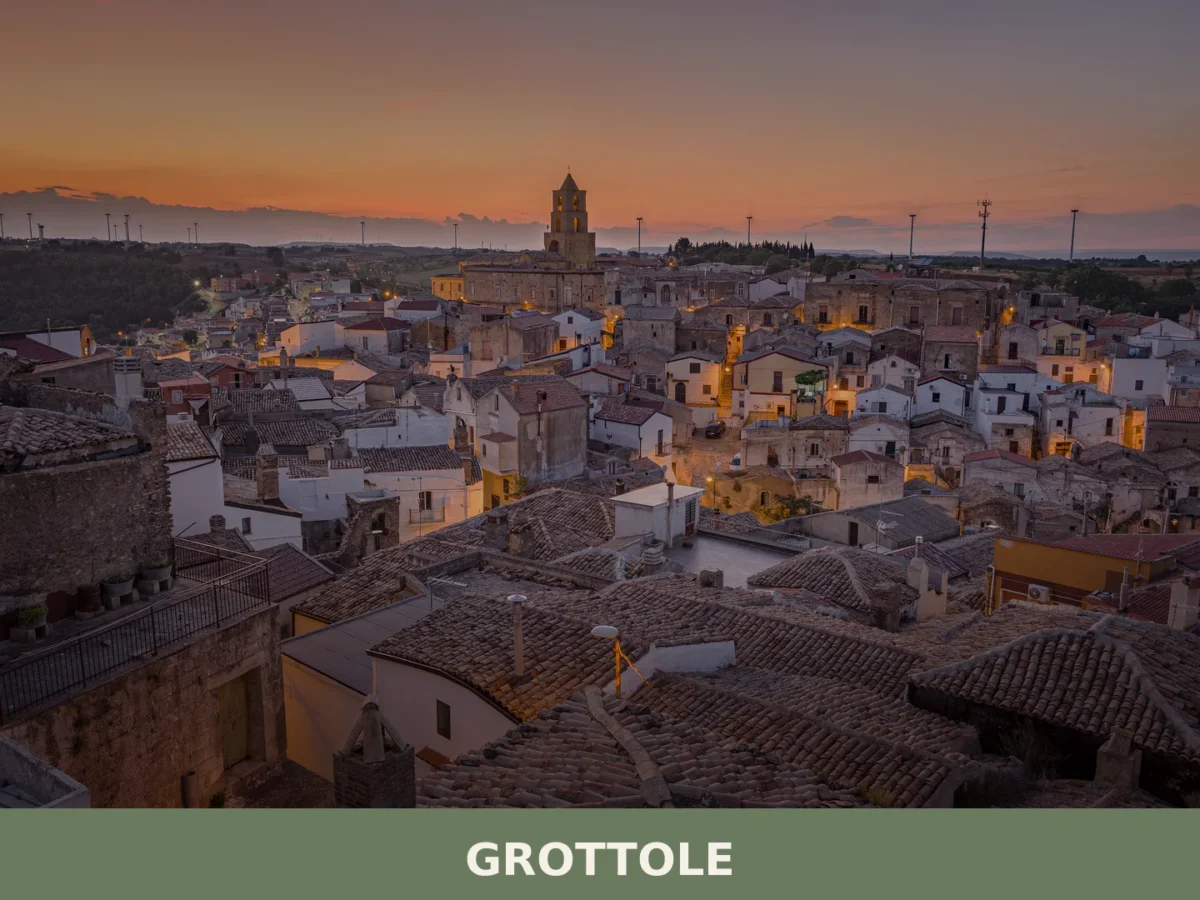
Grottole
Hills
Grottole is a hill town of roughly 1,960 inhabitants in the province of Matera, Basilicata, with a documented history from prehistoric times through to the end of the feudal era in 1874.
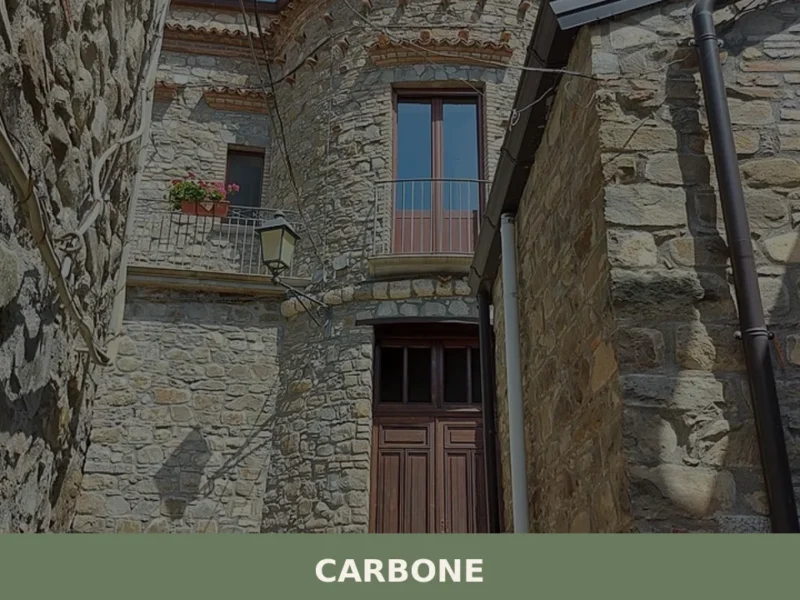
Carbone
Mountain
In the heart of Basilicata, 692 meters above sea level, lies Carbone, a settlement whose history is deeply connected to the 10th-century foundation of the Abbey of San Luca by Basilian monks. This monastic settlement, which became one of the most influential in Southern Italy, influenced the village’s identity, affecting its architecture and culture for […]

Craco
Mountain
What to see in Craco, Italy: explore the abandoned town at 400 m (1,312 ft), its medieval tower, film locations, and Basilicata's landscape. Discover it all here.
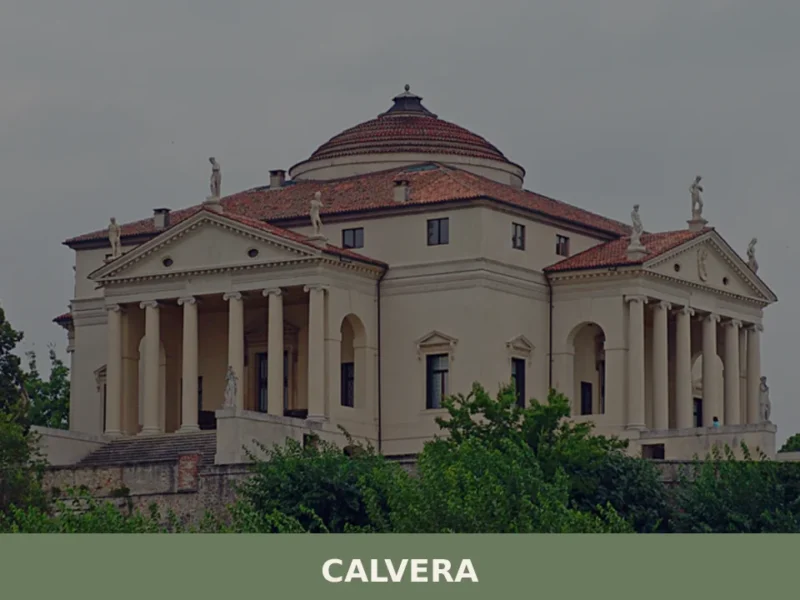
Calvera
Mountain
At 630 meters above sea level, in the heart of the province of Potenza, lies Calvera, a small Lucanian municipality distinguished by its elevated position and authentic atmosphere. The village, with its stone houses clinging to the hillside, offers panoramic views of the surrounding valley, bearing witness to a history of mountain life and a […]
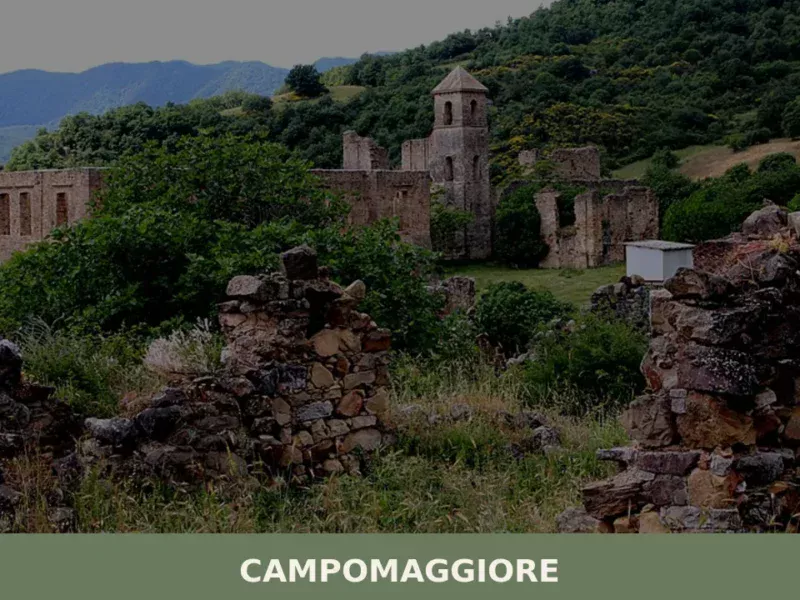
Campomaggiore
Mountain
As the morning mist reluctantly peels back from the Lucanian Apennines, a faint scent of wild herbs drifts through the narrow lanes of Campomaggiore. At 795 meters above sea level, this small community, home to 832 inhabitants, begins its day with a quiet rhythm. Sunlight catches the weathered stone of an ancient wall, illuminating moss […]
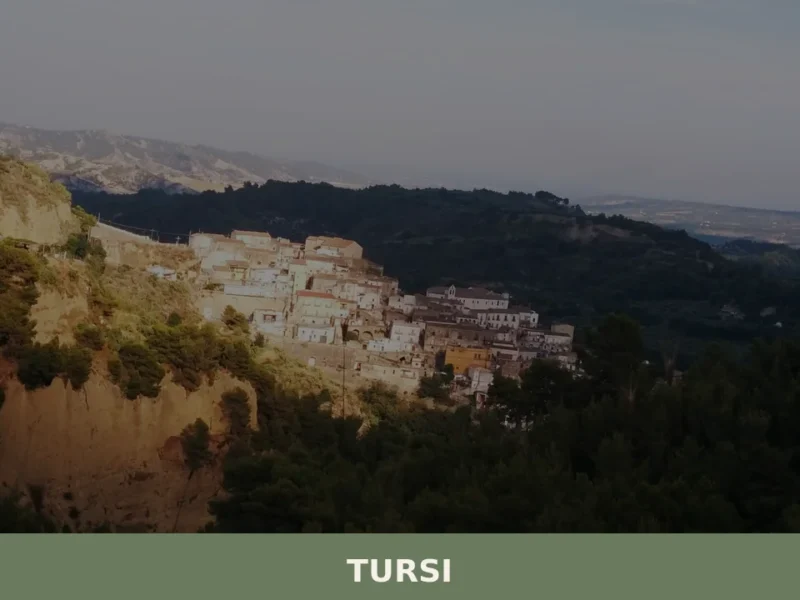
Tursi
 Plains
The ochre-yellow clay slopes that surround Tursi do not stay still. Every significant rainfall shifts the marly sediment, exposing new gullies in the Cenozoic rock and deepening the three chasms — the Palmara ditch to the north, the St. Francis ditch to the east, and the Cathedral ditch to the west — that have protected […]


🏡 Know Grassano better than we do?
If you’re a local or have been there, your knowledge matters: add what’s missing or fix a detail on this page.