


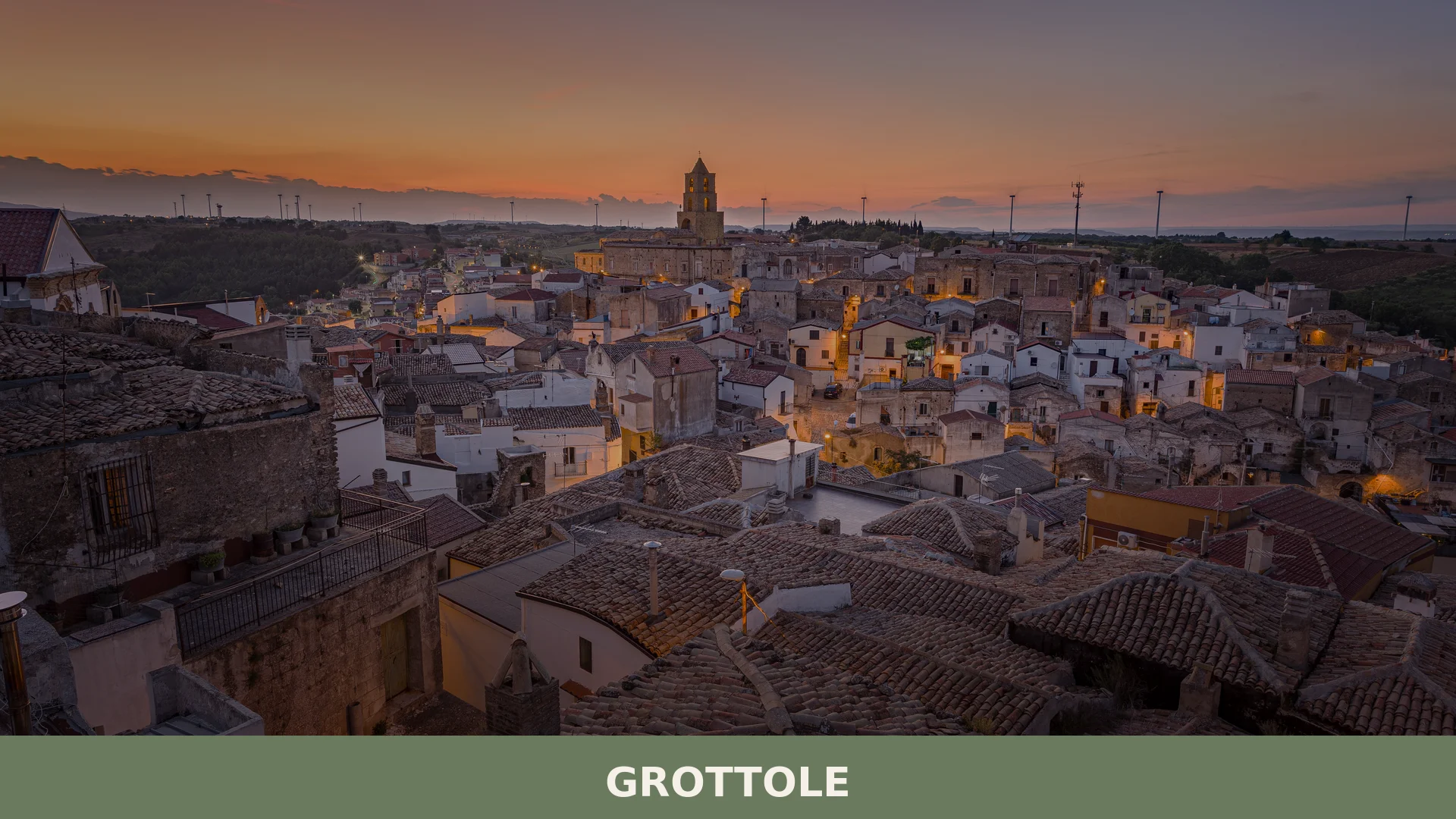
Grottole
 Hills
Hills
Grottole is a hill town of roughly 1,960 inhabitants in the province of Matera, Basilicata, with a documented history from prehistoric times through to the end of the feudal era in 1874.
Discover Grottole
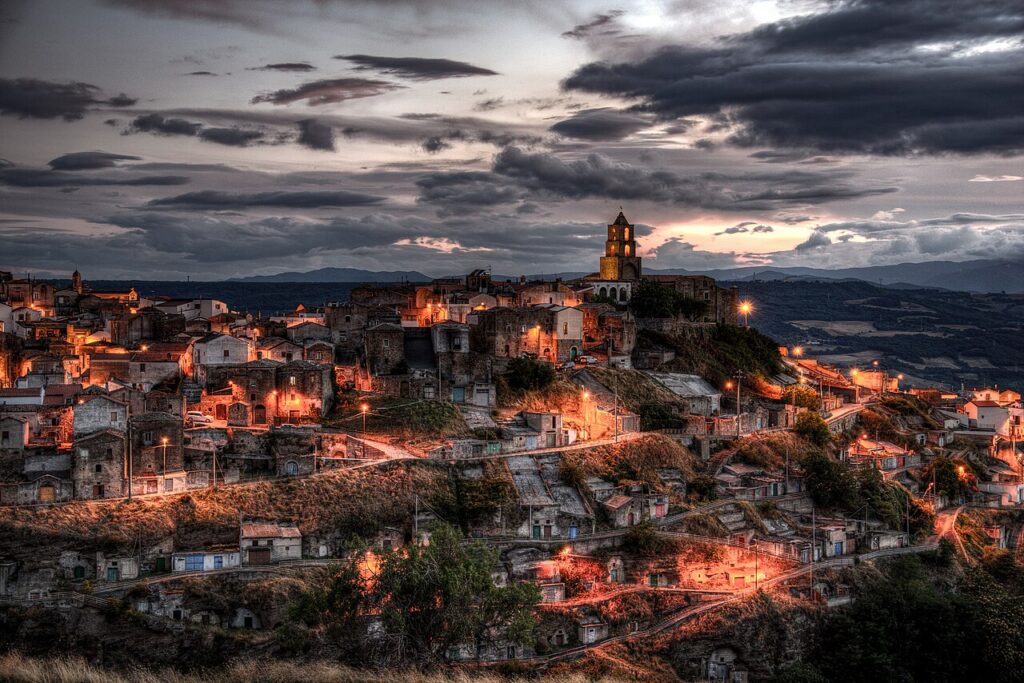
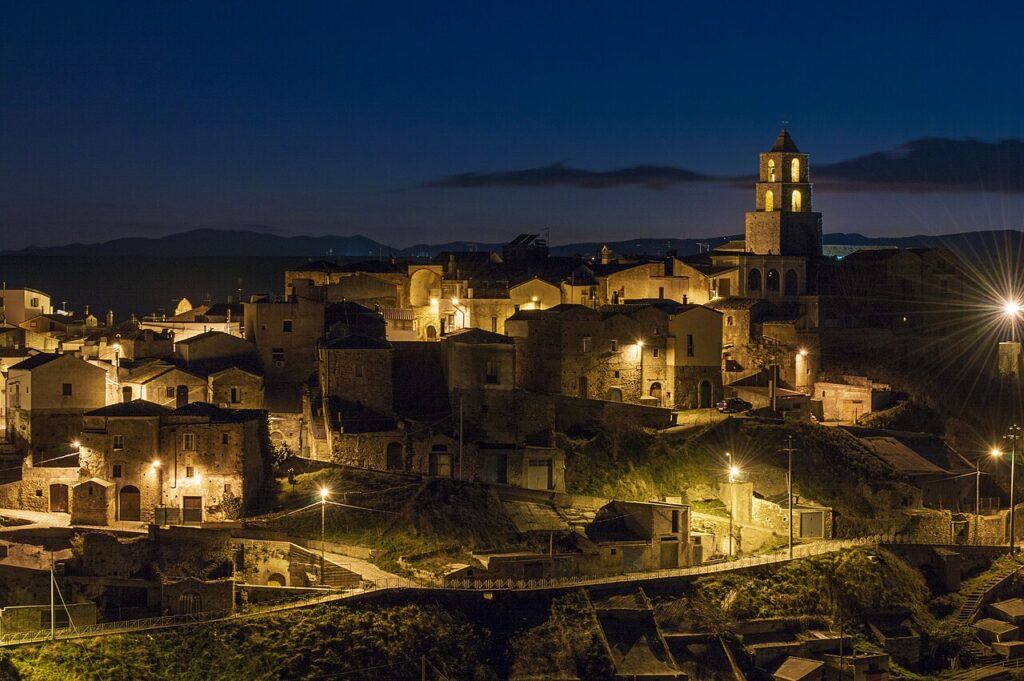
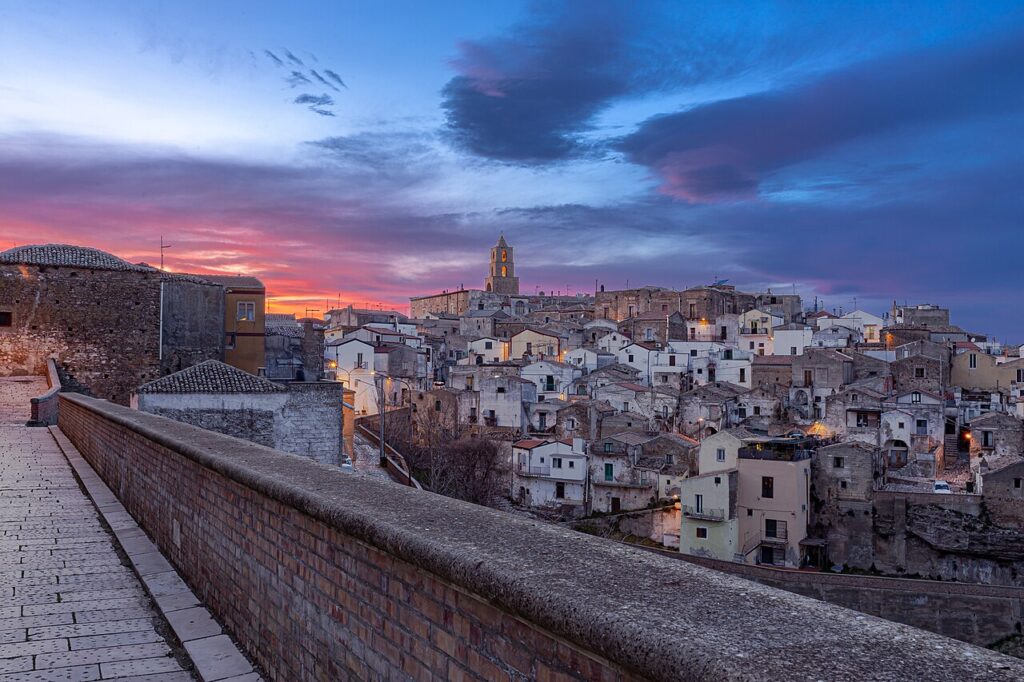
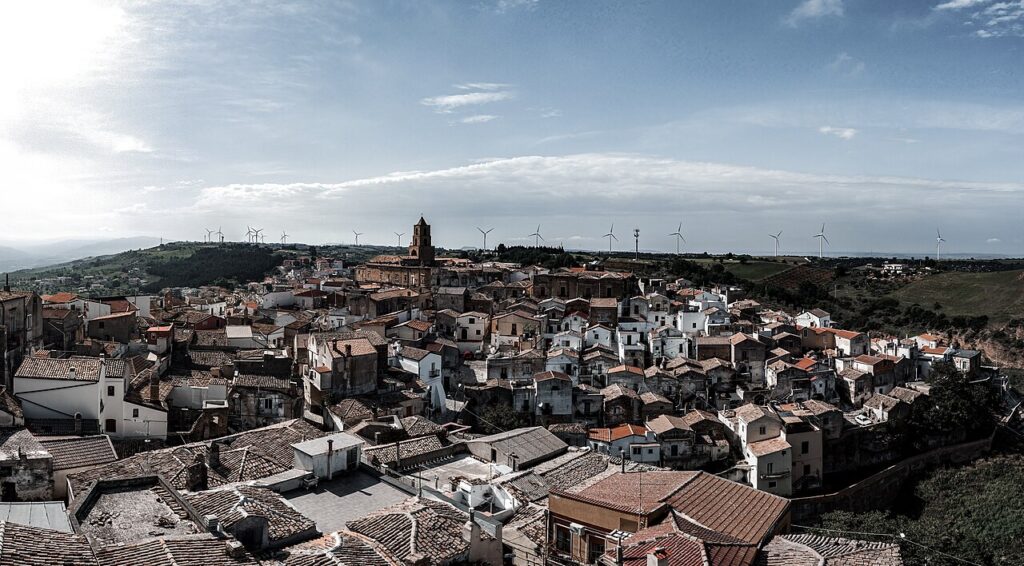
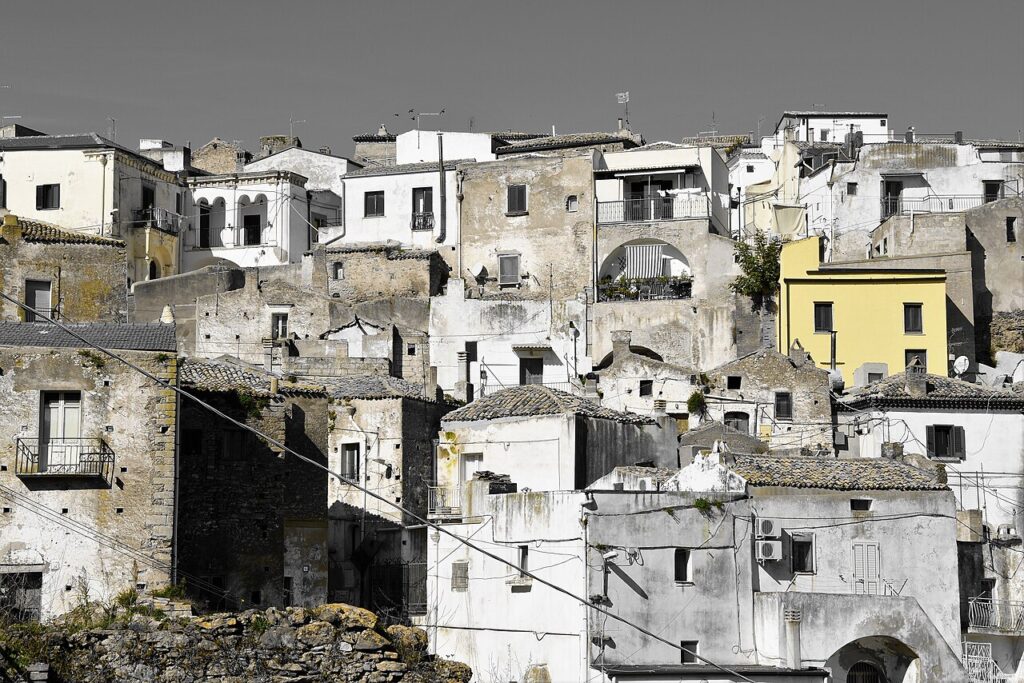
Grottole is a hillside comune of around 1958 inhabitants in the province of Matera, Basilicata, sitting at 482 m s. l. m. across a territory of some 11,600 hectares between the rivers Basento and Bradano. Its name among locals is Iëròttëlë, and its recorded past stretches from prehistoric traces through Greek and Roman occupation to a long medieval and early-modern feudal story that left its mark on the landscape in the form of two castles, several churches and the ruins of an abandoned borgo. The nearest town of any size, Matera, lies about 32 kilometres to the east-north-east, while to the west the comune borders Grassano and Tricarico.
Grottole village in Basilicata rewards visitors who look beyond the better-known Sassi towns: its compact historic centre holds churches ranging from the Dominican-linked Santa Maria Maggiore to the atmospheric ruin known as the Chiesa Diruta dei Santi Luca e Giuliano, while the surrounding countryside shelters the Riserva Regionale San Giuliano, the woodland of Bosco Le Coste, and the distant tower ruins of Altojanni — a medieval borgo that vanished, for reasons still unclear, probably before the end of the fifteenth century.
Grottole village in Basilicata: a history of ancient roots and feudal change
Grottole is one of the oldest settlements in Basilicata, with evidence of prehistoric, Greek and Roman occupation in its territory, and a documented feudal history stretching from the Norman conquest of the eleventh century through to the abolition of feudalism in the early nineteenth century. In the Magna-Graecia period the area formed part of the seventh Metapontine region, colonised by Greeks from around the eighth century B.C. The Lombards later fortified the site, though the town managed to break free of their control around the year 1000.
The Norman era brought a rapid succession of lords: in 1042 the feud passed to Guglielmo Braccio di Ferro, then to Roberto il Guiscardo, and subsequently to the counts Loffredo of Matera. Under Angevin rule, Carlo I d’Angiò granted the feud to Ruggero di Lauro, count of Tricarico, who had supported the Angevin conquest; it then moved to the Monteforte and to the Orsini Del Balzo. At the beginning of the sixteenth century it was held by the Gaetani Dell’Aquila d’Aragona family, before passing in 1534 to the Marchesi Sanchez De Luna d’Aragona, who served as treasurers of the Kingdom of Naples.
Throughout the seventeenth century the Caracciolo and the Spinelli di San Giorgio each held the feud in turn, until 1738 when it passed by marriage to the Sanseverino di Bisignano. After 1806, when feudal landholding was abolished by law, the estate was divided between Sanseverino descendants and Rosa Miracco, a natural daughter of Luigi Sanseverino, the thirteenth Prince of Bisignano. Grottole did not finally shed its last feudal lord, Prince Sanseverino, until 1874. Among the enduring marks left by these centuries is the cult of San Rocco, which took hold in the town following the plague of 1655, while the Santuario di Sant’Antonio Abate on the plateau of Altojanni was built at the close of the fourteenth century at the behest of Queen Giovanna. The nearby medieval settlement of Altojanni itself disappeared, for reasons that remain unknown, probably during the fifteenth century.
Castles, Sanctuaries and Churches: Grottole’s Built Heritage
Grottole preserves two medieval castles, four named churches, and a hilltop sanctuary set among the ruins of a vanished medieval settlement — a compact but historically layered set of monuments distributed across the town and its surrounding territory.
Castello Sichinulfo
Set on a low hill called the Motta, slightly separated from the main inhabited centre, this castle features a square-based central tower surrounded by a series of adjoining rooms that form the main body of the structure. Early-nineteenth-century records describe it as comprising thirteen upper rooms, six lower rooms, a stable and a cellar. A large decorative fireplace with stucco work, positioned close to the tower, survives as one of the more notable interior elements.
Church of Santa Maria Maggiore
The principal church of Grottole, adjoined by a former Dominican friary. Its interior holds carved wooden altars, an eighteenth-century choir loft and choir stalls, along with a number of paintings and statues. Among these is a stone sculpture of the Madonna and Child attributed to the Lucanian school.
Church of San Rocco
Originally known as Santa Maria la Grotta, this three-nave church became associated with the cult of San Rocco following the plague of 1655. The central nave contains a large polyptych by the artist Pietro Antonio Ferro, dating from the seventeenth century, depicting the Seven Corporal Works of Mercy. The left nave, the only one decorated with stucco work, houses the altars of San Rocco and of the Madonna dell’Assunta.
Sanctuary of Sant’Antonio Abate
Built at the end of the fourteenth century at the wish of Queen Giovanna, this sanctuary stands on the summit of the Altojanni plateau, near the remains of a medieval settlement that had disappeared — for reasons still unknown — by around the fifteenth century. It functions as a pilgrimage destination on 17 January, the liturgical feast of the saint, and again on Pentecost Sunday and the two following days.
Ruins of the Tower of Altojanni
Located roughly twelve kilometres from the town centre, close to the sanctuary, these remains belong to what was once a full medieval settlement. Visible traces include a defensive structure, a church, and a number of storage pits used to preserve foodstuffs.
Church of the Saints Luca and Giuliano
Also referred to locally as the Chiesa Diruta, this church is listed among Grottole’s religious buildings. No further details about its current state or interior are recorded in available sources.
Castello di Altojanni
A second castle is recorded in the Altojanni area, associated with the same plateau as the sanctuary and the vanished medieval borough. Its remains form part of the broader archaeological presence in that part of the municipal territory.
Food and Flavours of Grottole and the Matera Area
Grottole sits within the province of Matera, a territory recognised for several certified products including Caciocavallo Silano DOP, Pane di Matera IGP, Olio Lucano IGP and the Matera DOC wine, making it a reliable base for tasting the broader Lucanian food tradition. The village itself has a long-standing craft tradition tied to the working of clay and terracotta, an activity that shaped its identity across the centuries. While no food product is exclusive to Grottole’s municipal boundaries, the surrounding area offers a rich table worth exploring.
Among the certified cheeses of the territory, Caciocavallo Silano DOP and Canestrato di Moliterno IGP stand out as aged, full-flavoured products rooted in the pastoral economy of Basilicata. Mozzarella di Gioia del Colle DOP and Lenticchia di Altamura IGP extend the range toward the neighbouring Apulian border, reflecting the porous geography between the two regions. Olive oil produced under the Olio Lucano IGP label and the distinctive Pane di Matera IGP, baked in a traditional durum wheat loaf, are everyday staples across this part of the province.
On the wine side, the Matera DOC and the broader Basilicata IGT designation cover the vineyards closest to Grottole, while Aglianico del Vulture — available both as a DOC and as the region’s only DOCG — is the benchmark red of Basilicata as a whole. Among traditional preparations cited for the wider regional area, Capocollo, carne podolica lucana and agnello delle Dolomiti Lucane represent the meat-based heritage of inland Basilicata.
Getting to Grottole and Planning Your Visit
Grottole is most comfortably reached by car from Matera, roughly 32 km to the east, or from Ferrandina, about 23 km to the south, making either city a practical starting point; spring and early autumn, when temperatures are mild and the hill landscape is at its greenest, are generally the most rewarding seasons for a visit. The village sits at 482 m a. s. l. in the north-eastern part of the province of Matera, between the Basento and Bradano river valleys, and is classified in climatic zone D, with January averages around 6 °C and August averages near 25 °C.
The closest main road connections run through the surrounding towns. Grassano lies just 12 km to the west, Miglionico 13 km to the south-east, and Irsina 31 km to the north. Travellers combining Grottole with nearby villages might consider a loop that includes Ferrandina to the south or the smaller centres of Garaguso and Calciano, all within the same Bradano–Basento hill country. The 16 km Cammino Montiano offers a walking route for those who prefer to explore the territory on foot.
| Departure | Distance | Time |
|---|---|---|
| Matera | 32 km | approx. 35 min |
| Ferrandina | 23 km | approx. 25 min |
| Grassano | 12 km | approx. 15 min |
| Miglionico | 13 km | approx. 15 min |
| Irsina | 31 km | approx. 35 min |
| Tricarico | 29 km | approx. 30 min |
The Riserva Regionale San Giuliano, part of which falls within Grottole’s own territory, rewards a half-day excursion at any season, while the pilgrimage to the Santuario di Sant’Antonio Abate on 17 January and again at Pentecost gives visitors a chance to witness a living local tradition still very much observed by the community.
Frequently asked questions about Grottole
When is the best time to visit Grottole?
August is ideal, as the Feast of San Rocco (the village patron saint) takes place on August 16th, bringing local celebrations and traditional events. Summer offers warm weather suitable for exploring the historic centre and surrounding countryside. Spring and autumn provide pleasant temperatures for hiking the regional reserves and nearby trails without excessive heat.
How do I reach Grottole from Matera?
Grottole lies approximately 32 kilometres east-north-east of Matera, the nearest town of significant size. The journey is best made by private car, which takes around 40 minutes via regional roads. Public bus services may be available through local Basilicata transport networks, though schedules should be verified in advance with the provincial transport authority.
What outdoor activities are available around Grottole?
The Riserva Regionale San Giuliano and Bosco Le Coste woodland offer excellent opportunities for nature walks and hiking. The ruins of Altojanni, a fifteenth-century abandoned borgo, provide a historically significant trekking destination. The surrounding countryside between the Basento and Bradano rivers is suitable for leisurely countryside walks and photography.
How long should I plan to spend in Grottole?
A half-day visit suffices for the compact historic centre, including Santa Maria Maggiore and Chiesa Diruta dei Santi Luca e Giuliano. A full day allows exploration of both the village core and nearby natural reserves. An overnight stay enables deeper engagement with local culture and outdoor routes, plus day trips to neighbouring Matera.
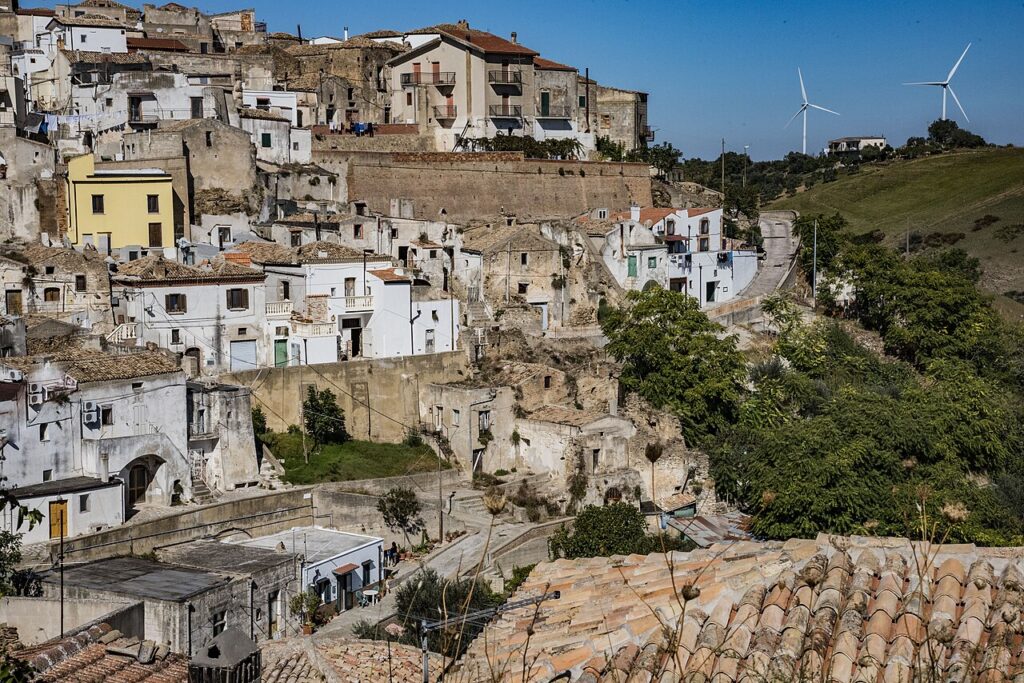
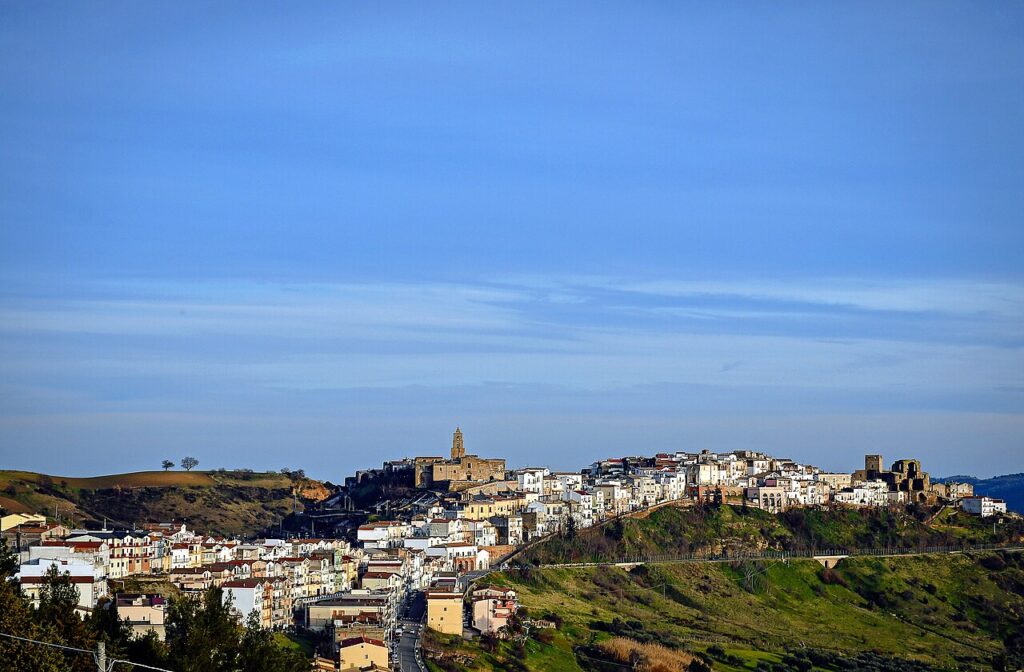
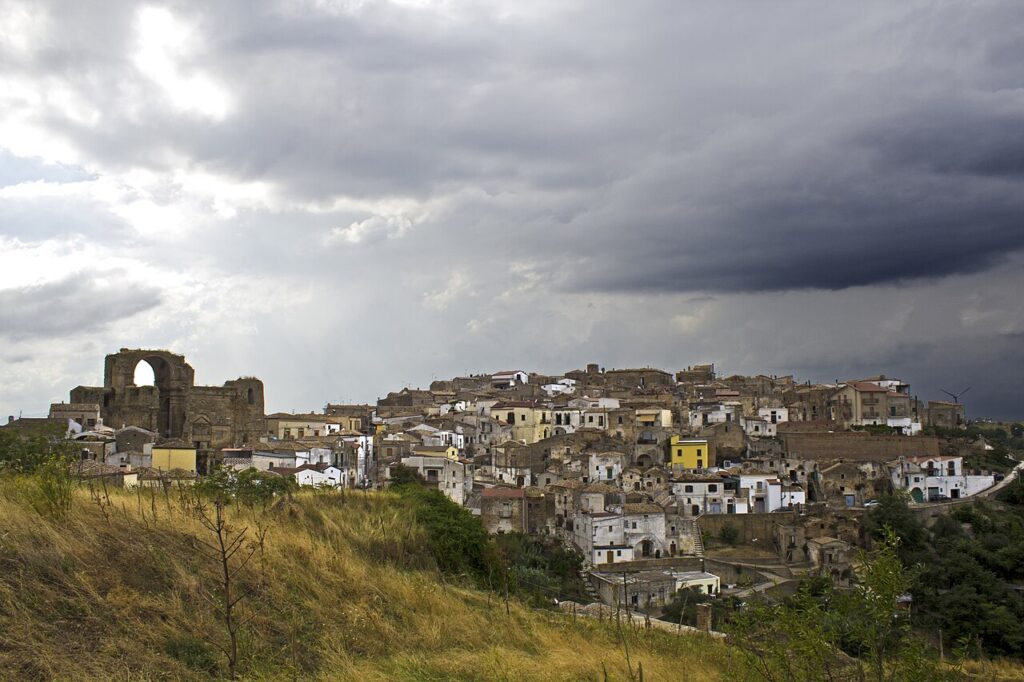
📷 Photo Gallery — Grottole
In Basilicata More villages to discover
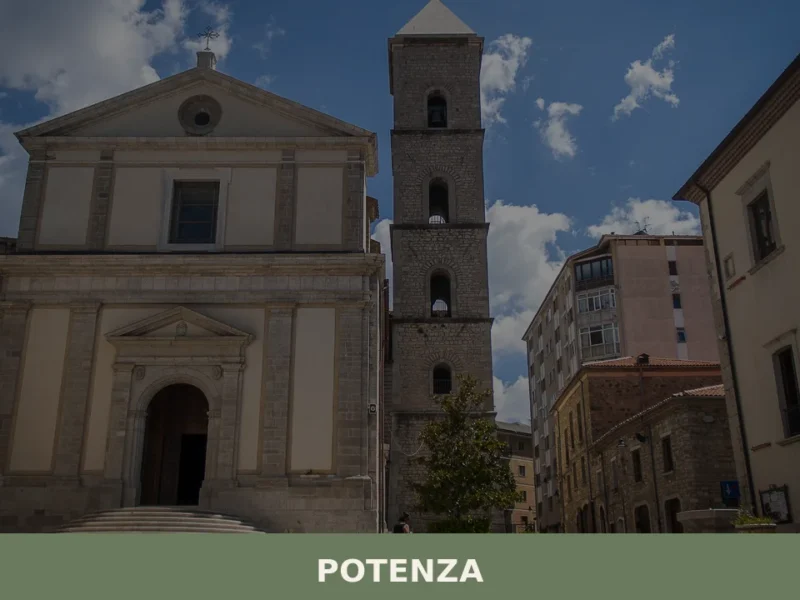
Potenza
 Mountain
What to see in Potenza: from the historic centre churches to Castello Tramontano. Complete guide with 5 attractions and practical tips for your visit.

Filiano
Mountain
What to see in Filiano, Basilicata, Italy: explore the Grotta dei Pisconi rock art, Pecorino di Filiano PDO, and a 16th-century hilltop comune. Discover it now.
Calvera
Mountain
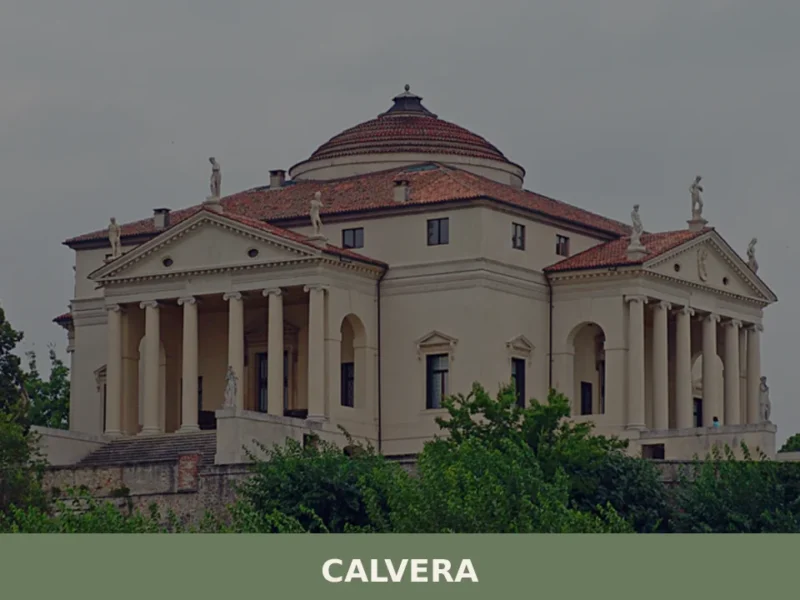
At 630 meters above sea level, in the heart of the province of Potenza, lies Calvera, a small Lucanian municipality distinguished by its elevated position and authentic atmosphere. The village, with its stone houses clinging to the hillside, offers panoramic views of the surrounding valley, bearing witness to a history of mountain life and a […]
Cancellara
Mountain
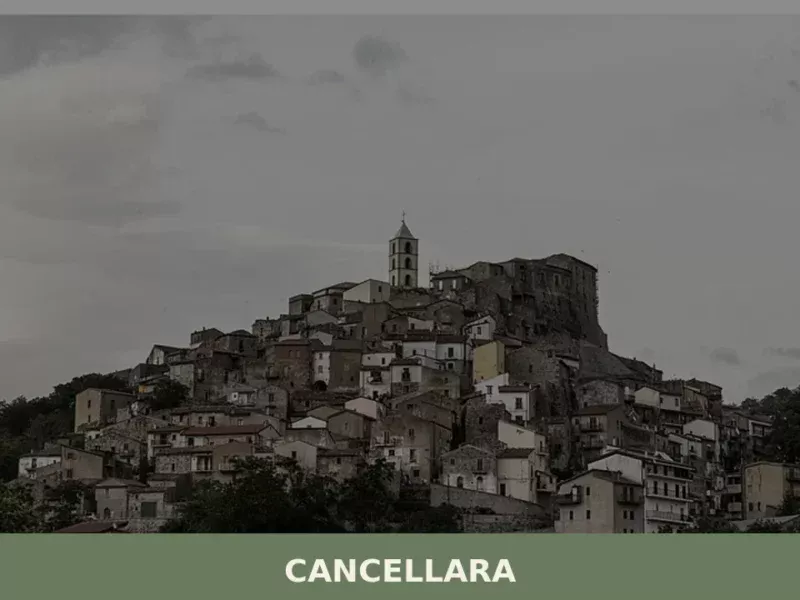
Population 1,091. A hillside village in Potenza province where rural rhythms and agricultural heritage define everyday life.
Grassano
Hills
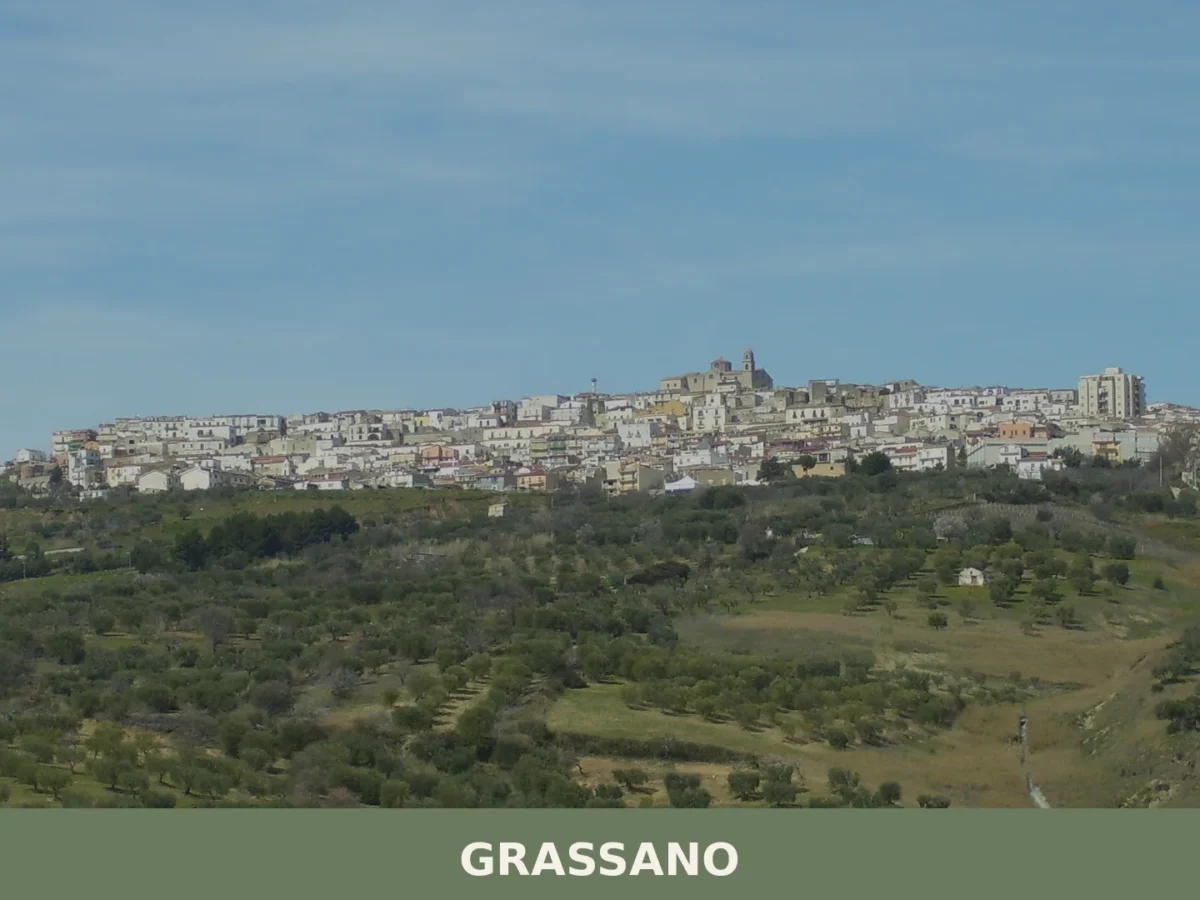
Grassano is a hill town of around 4,500 inhabitants in the province of Matera, Basilicata, with a medieval castle, a Knights of Malta Preceptory and a landscape shaped by two river valleys.
Carbone
Mountain
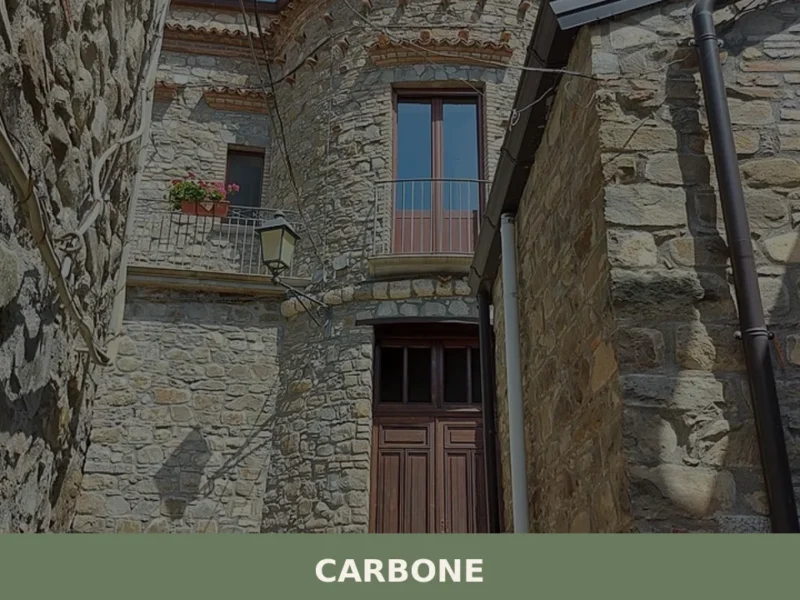
In the heart of Basilicata, 692 meters above sea level, lies Carbone, a settlement whose history is deeply connected to the 10th-century foundation of the Abbey of San Luca by Basilian monks. This monastic settlement, which became one of the most influential in Southern Italy, influenced the village’s identity, affecting its architecture and culture for […]
Trivigno
Mountain
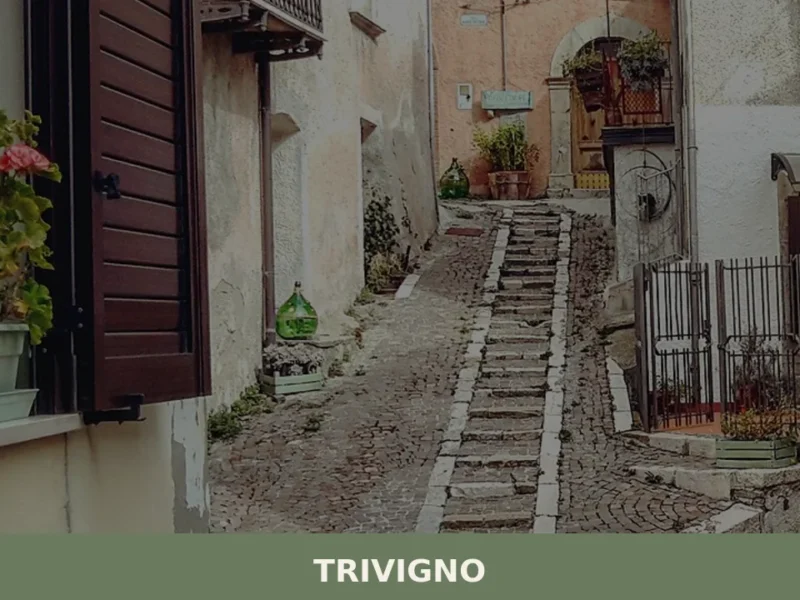
Trivigno has a current population of 570 and occupies a ridge at 725 metres above sea level in the middle Basento valley, in the province of Potenza. Its territory extends across fields of durum wheat and Turkey oak woods covering the eastern slopes up to the borders with neighbouring municipalities. Those looking for what to […]

Francavilla in Sinni
Mountain
What to see in Francavilla in Sinni, Basilicata, Italy: explore a town founded in 1426, the Sinni river valley, and local food traditions. Discover it all here.

Castronuovo di Sant’Andrea
Mountain
Discover Castronuovo di Sant'Andrea, a hidden Basilicata gem with medieval roots, ancient churches, stunning Apennine landscapes, and rich local traditions.
Brindisi Montagna
Mountain
Discover Amaro, a picturesque village in Friuli Venezia Giulia, Italy. Explore its history, stunning Alpine scenery, and authentic Italian mountain culture.




🏡 Know Grottole better than we do?
If you’re a local or have been there, your knowledge matters: add what’s missing or fix a detail on this page.