


Cirigliano
 Mountain
What to see in Cirigliano, Italy: a medieval village with a 17th-century Pietu00e0, an oval castle tower, and local pasta traditions. Discover 5 top attractions.
Discover Cirigliano
An oval tower rises from the centre of a walled village, its base broad enough to anchor the entire settlement against the ridgeline. The walls that encircle Cirigliano are not decorative: they speak directly to the defensive logic of medieval Basilicata, where every hilltop was a strategic position and every gate a checkpoint.
Inside those walls, a chapel preserves a Pietà carved in wood and set into a shrine whose decorative frame has survived more than three hundred years of mountain winters.
Deciding what to see in Cirigliano begins with understanding how compact and layered this comune really is.
The village sits in the province of Matera, in the Southern Italian region of Basilicata, and its documented history stretches back to 1060. Visitors to Cirigliano find a feudal castle with a surviving oval tower, a 17th-century Pietà inside the adjoining chapel, intact perimeter walls, and a culinary tradition built around hand-shaped pasta and a horseradish frittata that appears on no other menu in the region.
History of Cirigliano
The name Cirigliano derives from Caerellius, the Latin name of a Roman centurion who reportedly received these lands as a reward for military service.
That etymology ties the settlement to a period long before its first written record, suggesting continuous occupation of a site that Roman military logic would have found defensible and well-positioned along the route connecting Heraclea to Potenza and Tricarico. The earliest documentary evidence is a text from the Diocese of Tricarico dated 1060, which formally registers the existence of the town. At that time, Cirigliano already served a practical function: it was a designated stopping point for travellers moving between those major centres, and two establishments defined that role — the local bakery and the tavern of Acinello.
The medieval character of Cirigliano is legible in its physical structure.
The perimeter walls and towers that still stand today were not rebuilt for appearance; they remain largely as constructed, confirming the settlement’s role as a fortified nucleus. At the centre, the feudal castle and its oval tower dominate the layout. The castle passed through several documented ownerships: the Coppola family purchased it from the Iannellis family in 1595 for 13,000 ducats, a transaction large enough to indicate both the castle’s strategic value and the financial weight of landownership in the region.
By 1750, the property had transferred again, this time to the barons Formica, whose family has retained it to the present day.
The 19th century brought Cirigliano into direct contact with the turbulent aftermath of Italian unification. On 12 November 1861, brigand formations led by Carmine Crocco and José Borjes moved on the village with the explicit aim of disarming the militiamen of the local national guard.
The villagers received them without resistance, and the group rested in Cirigliano for approximately two hours before continuing toward Gorgoglione and eventually the wider Basilicata interior, a region that, like Pietrapertosa, experienced prolonged brigandage in the years immediately following unification.
That episode places Cirigliano within one of the most documented and contested phases of Southern Italian history, when the Bourbon resistance and the new Italian state collided across the mountain villages of the Mezzogiorno.
What to see in Cirigliano, Basilicata: top attractions
The Feudal Castle and Oval Tower
The tower at the heart of the castle complex has an oval base, a relatively rare plan in the defensive architecture of Basilicata, where circular or square towers were more common. The structure dates to the medieval period and remained in use as a feudal administrative centre through at least the 18th century, when the Formica barons took possession of the property in 1750. Standing beside it, a visitor can read the stone directly: the thickness of the walls, the restricted openings, and the elevated position all reflect the original defensive brief.
The castle is privately owned by the Formica family, so access to the interior may be limited, but the exterior tower and the surrounding courtyard zone are visible from within the village walls.
Chapel of the Addolorata and the 17th-Century Pietà
Adjoining the castle, the Chapel of the Addolorata contains the most precisely dated object in Cirigliano: a Pietà, a sculptural or painted representation of the Virgin Mary holding the body of Christ, produced in the 17th century and set into a decorated wooden shrine that has remained intact.
The shrine’s frame is an object in its own right — carved timber, structured to display and protect the devotional image simultaneously. This kind of decorated wooden temple was characteristic of Southern Italian religious craftsmanship in the Baroque period, and few examples survive in such complete condition in villages of this scale. The chapel is located within the castle precinct, so visiting both structures in a single circuit is the logical approach.
The Medieval Walls and Defensive Towers
Cirigliano’s perimeter walls encircle the entire historic nucleus, and the towers positioned along them are still standing at multiple points. The layout follows the standard logic of medieval hill fortification: walls tight against the edge of the buildable ridge, towers projecting slightly to allow flanking fire, and a limited number of controlled entry points. Walking the circuit of the walls takes under thirty minutes, but the views outward across the Basilicata hill country — layers of eroded clay slopes and wooded ridges — give practical context to why this specific location was chosen and defended.
The condition of the walls varies section by section; some stretches are heavily consolidated, others show the original stonework more clearly.
The Historic Road Stop: Bakery and Tavern of Acinello
Cirigliano’s position on the road between Heraclea and Potenza or Tricarico gave it an economic function that most villages of its size never had.
The bakery of Cirigliano and the tavern of Acinello were the documented stopping points for travellers using that route, and their existence is recorded in the earliest descriptions of the town. No physical trace of these two establishments survives in identifiable form today, but the logic of their placement — close to the main gate, accessible to passing traffic — shaped the lower section of the village.
For visitors interested in the pre-modern road network of Basilicata, Cirigliano represents a concrete example of how small medieval settlements functioned as service nodes on inter-regional routes that predate the Roman road system by centuries.
The Village Streetscape Within the Walls
What to see in Cirigliano also includes the internal fabric of the village itself, where the alignment of houses follows the original medieval plot divisions. Streets are narrow and in some sections stepped, the building heights consistent with a settlement that was not substantially rebuilt in the 19th or 20th centuries. The materials are local stone throughout.
Several facades retain architectural details — door surrounds, window proportions, corbelling — that date the construction to specific phases between the 15th and 18th centuries. The village is small enough that a systematic walk through all its lanes takes roughly forty-five minutes, and because the internal street pattern is not a grid, the sequence of spaces changes continuously as you move from the castle end toward the walls.
Local food and typical products of Cirigliano
Basilicata’s inland cuisine is shaped by altitude, isolation, and the practical requirement of preserving food through long winters.
Cirigliano, set in the province of Matera on terrain where wheat, vegetables, and small livestock were the primary agricultural outputs, developed a kitchen built around what could be grown locally and prepared without complex equipment. The culinary tradition here is not a simplified version of coastal Lucanian cooking; it is its own thing, with dishes that do not appear in the standard inventories of regional food guides.
Two dishes define the local table. Letratte is a hand-shaped pasta made at home, cut into irregular strips and served with sauces that vary by season and household.
The pasta is made from wheat flour and water, worked by hand on a wooden board, and the texture is deliberately uneven — thicker in some sections, thinner in others — because it is cut rather than rolled through a machine.
Rafanata is a frittata, a thick egg-based dish, made with fresh horseradish grated directly into the egg mixture before cooking. Horseradish in this context is not a condiment applied at the table; it is the structural flavouring of the dish, sharp and slightly bitter, cooked into the egg until the heat mellows the raw edge without eliminating it. Both dishes are products of a domestic tradition rather than a restaurant culture, and the best versions are found in private homes or in local events where residents cook collectively.
No certified PDO or PGI products are specifically registered to Cirigliano in the available sources, but the broader Matera province is associated with several protected designations relevant to the surrounding area.
Visitors sourcing local food products will find that markets in larger nearby centres carry Basilicata-specific items — dried legumes, preserved peppers, and locally produced olive oil — that complement the dishes prepared in Cirigliano itself.
The best period for encountering these dishes in their traditional context is late autumn and winter, when horseradish is freshly dug and the communal cooking that accompanies local festivals brings rafanata and letratte out of private kitchens and onto shared tables.
Summer visitors will find the village quieter and the food offer more limited to what individual households prepare for family meals.
Festivals, events and traditions of Cirigliano
The sources confirm the presence of the Chapel of the Addolorata within the castle precinct, and the Addolorata — Our Lady of Sorrows — is a common focus of religious observance in Southern Italian villages, typically marked by a procession on the Friday before Palm Sunday or on 15 September, the liturgical feast of Our Lady of Sorrows.
The 17th-century Pietà preserved in the chapel would have been the devotional centrepiece of any such observance, carried in procession or displayed on the altar during the relevant feast days.
The village’s small scale means that these events, when they occur, are organised entirely by the local community, without the infrastructure of larger town festivals.
The broader tradition of Basilicata’s hill villages includes the sagra — a food-focused communal festival tied to a specific local product or the agricultural calendar — and given Cirigliano’s documented culinary specialities, a local event centred on rafanata or letratte would be consistent with regional practice. However, specific festival dates and confirmed annual events for Cirigliano are not recorded in the available sources, and no dates should be assumed without checking with the municipality directly before travelling.
When to visit Cirigliano, Italy and how to get there
The best time to visit Basilicata’s inland villages, including Cirigliano, is spring — specifically April through early June — when temperatures across the province of Matera are moderate, ranging between 14°C (57°F) and 22°C (72°F) at altitude, and the landscape is at its most readable after winter rainfall has consolidated the clay slopes and greened the ridge vegetation.
Late September through October is a comparable second option, with the added benefit of the harvest season in the surrounding agricultural land.
Summer brings heat that can exceed 35°C (95°F) in the valley floors, though Cirigliano’s elevation moderates temperatures relative to the coastal plain. Winter access is reliable on main roads but the village’s streets, being steep and stone-paved, can become slippery after frost.
Cirigliano, Basilicata, Italy is not served by rail directly. The nearest train station with regional connections is Potenza Centrale, approximately 55 km (34 mi) to the northwest, accessible via Trenitalia services from Naples, Salerno, and Rome. From Potenza, onward travel to Cirigliano requires a car or a pre-arranged local transfer, as no scheduled bus service connects the two points with useful frequency for day visitors. By road from Potenza, the drive follows the SS407 Basentana and connecting provincial roads; the journey takes approximately 50 minutes under normal conditions.
From Matera, the provincial capital 60 km (37 mi) to the east, the drive takes roughly one hour via the SP3 and connecting roads.
For visitors arriving by air, the nearest airport with international connections is Bari Karol Wojtyła Airport, approximately 140 km (87 mi) east of Cirigliano, with a driving time of around two hours. Rome Fiumicino is approximately 380 km (236 mi) north; a day trip from Rome is logistically possible but leaves limited time in the village and is more comfortably managed as an overnight stay in the region. If you arrive by car, the most practical approach is to park at the edge of the walled area, as the internal streets are too narrow for vehicle access in most sections. International visitors should note that English is rarely spoken in smaller local shops and at village-level services; carrying Euros in cash is practical, as card payment infrastructure in very small comuni can be inconsistent.
Travellers exploring the Matera province by car can combine Cirigliano with other medieval hilltop villages in the area. The village of Castelsaraceno, located further south in Basilicata, shares the same pattern of walled medieval settlement and makes a logical second stop on a two-village circuit from Matera. Visitors extending their trip westward toward the Potenza province will find that Brienza, a hilltop comune with its own castle complex, adds a comparable but architecturally distinct experience to the same road itinerary.
Frequently asked questions about Cirigliano
What is the best time to visit Cirigliano?
The ideal time to visit Cirigliano is late spring (May–June) or early autumn (September–October), when temperatures at 656 metres are mild and the Basilicata hill landscape is at its most vivid. Summer is pleasant and cooler than the coast, making July particularly appealing: the feast of the patron saint Giacomo il Maggiore falls on 25 July, bringing the village's small community together for religious and local celebrations — the best opportunity to experience Cirigliano's living traditions. Avoid mid-winter if possible, as mountain conditions can make access along secondary roads difficult.
What are the historical origins of Cirigliano?
Cirigliano's name derives from Caerellius, a Roman centurion said to have received the land as a military reward, pointing to pre-medieval occupation on a naturally defensible ridge. The first written record is a Diocese of Tricarico document dated 1060, which records the village as a waypoint on the route between Heraclea, Potenza and Tricarico, already equipped with a bakery and the tavern of Acinello. The feudal castle changed hands in 1595 — sold by the Iannellis family to the Coppola family for 13,000 ducats — and passed to the Formica barons in 1750, who still own it today.
What to see in Cirigliano? Main monuments and landmarks
The core itinerary covers three linked sites. The Feudal Castle centres on an oval tower — an unusual plan in Basilicata — visible from the village lanes; interior access is limited as the castle remains privately owned by the Formica family. The adjoining Chapel of the Addolorata houses a 17th-century Pietà set in an intact carved wooden shrine, one of the better-preserved examples of Baroque devotional craftsmanship in a village of this size. Encircling everything, the medieval perimeter walls and flanking towers can be walked in under thirty minutes, with open views across eroded clay ridges and wooded valleys.
Where to take the best photos in Cirigliano?
The most rewarding photographic positions in Cirigliano are along the medieval perimeter walls, where the ridgeline setting opens onto layered views of the Basilicata hill country — eroded clay slopes alternating with wooded ridges. The oval tower of the feudal castle, framed by the tight stone lanes of the historic centre, offers strong architectural compositions. Because the internal street pattern is not a grid, each bend in the village lanes produces a different spatial sequence, making the forty-five-minute walk through the walled nucleus consistently productive for detail photography of stonework, door surrounds and corbelling.
Are there museums, churches or historic buildings to visit in Cirigliano?
The Chapel of the Addolorata, attached to the feudal castle precinct, is the principal religious building and contains the village's most significant artefact: a 17th-century carved wooden shrine enclosing a Pietà. Visiting the chapel and the castle exterior together in a single circuit is the practical approach, as both occupy the same zone at the heart of the walled village. No dedicated museum is documented for Cirigliano. The medieval walls and their towers constitute the main built heritage outside the castle complex and are freely accessible on foot.
What can you do in Cirigliano? Activities and experiences
Cirigliano rewards a slow, on-foot approach. Walking the full circuit of the medieval walls takes under thirty minutes; a systematic tour of all internal lanes adds another forty-five. The feast of San Giacomo il Maggiore on 25 July is the main annual event and the best opportunity to encounter local cooking — including the horseradish frittata known as rafanata and the hand-cut pasta letratte — prepared collectively by residents. The surrounding Basilicata hill country, characterised by eroded clay ridges and wooded slopes visible from the walls, provides context for understanding why this specific site was chosen and fortified.
Who is Cirigliano suitable for? Families, couples, hikers, solo travelers?
Cirigliano suits travellers who prioritise authenticity over infrastructure. With a population of 284 and no documented tourist facilities within the village, it is best approached as a half-day or full-day excursion rather than a base. History enthusiasts will find the medieval walls, oval tower and 17th-century chapel genuinely rewarding. Couples and slow-travel visitors drawn to undiscovered Southern Italy will appreciate the intact streetscape and the absence of crowds. Families with older children interested in medieval architecture will find the compact walled circuit manageable. It is not oriented toward beach tourism, nightlife or extensive hiking networks.
What to eat in Cirigliano? Local products and specialties
Two dishes are specific to Cirigliano's culinary tradition. Letratte is a hand-shaped pasta cut into irregular strips from a wheat-flour-and-water dough worked on a wooden board; the uneven texture is intentional and distinguishes it from machine-rolled formats. Rafanata is a thick frittata made with fresh horseradish grated directly into the egg mixture — horseradish functions here as the primary flavouring, not a condiment, cooked until mellowed but still present. Both dishes belong to a domestic rather than restaurant tradition and are most reliably encountered during collective local events, particularly around the 25 July feast day.
📷 Photo Gallery — Cirigliano
Nearby Villages near Cirigliano
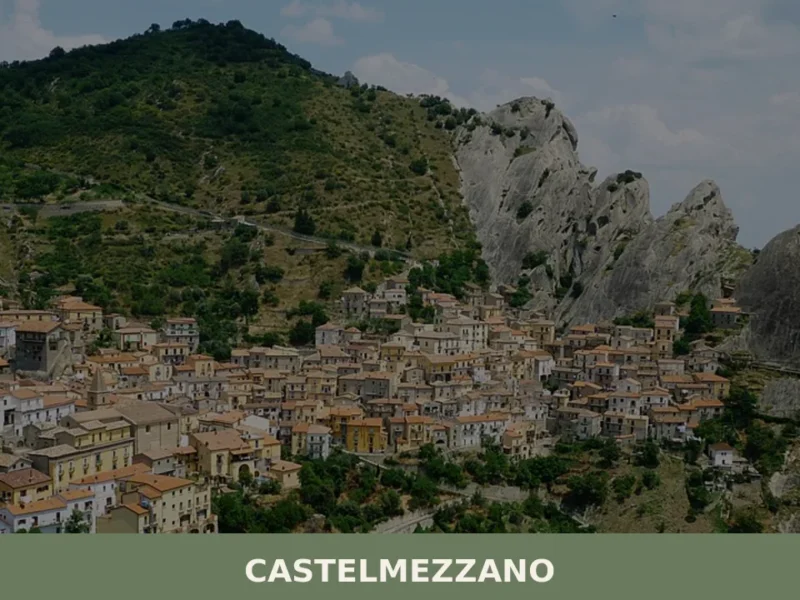
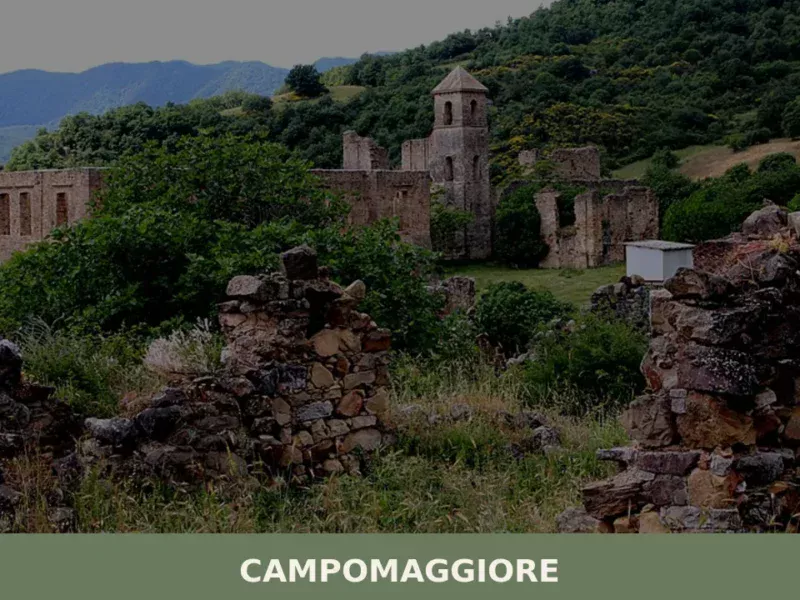
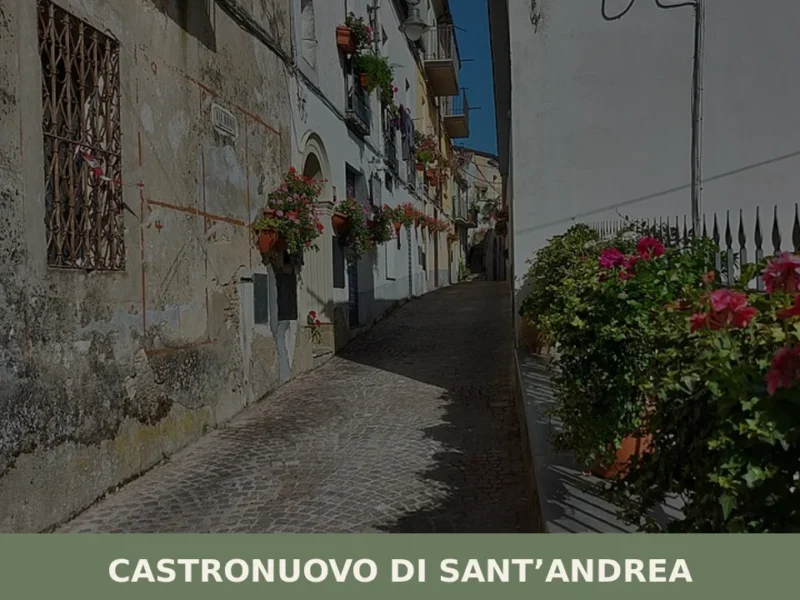
In Basilicata More villages to discover
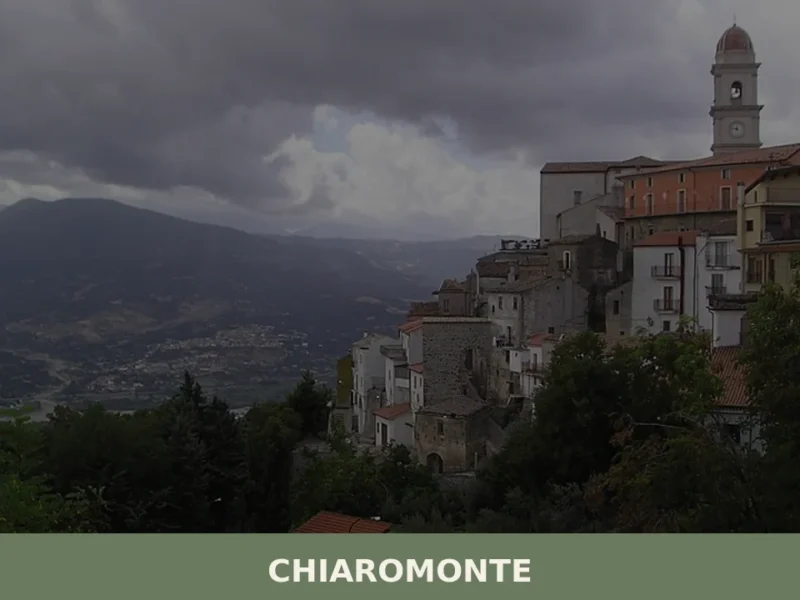
Chiaromonte
Mountain
what to see in chiaromonte, Italy: Discover its 794m altitude and delve into its history, from ancient roots to the case study of Montegrano. Explore Basilicata.
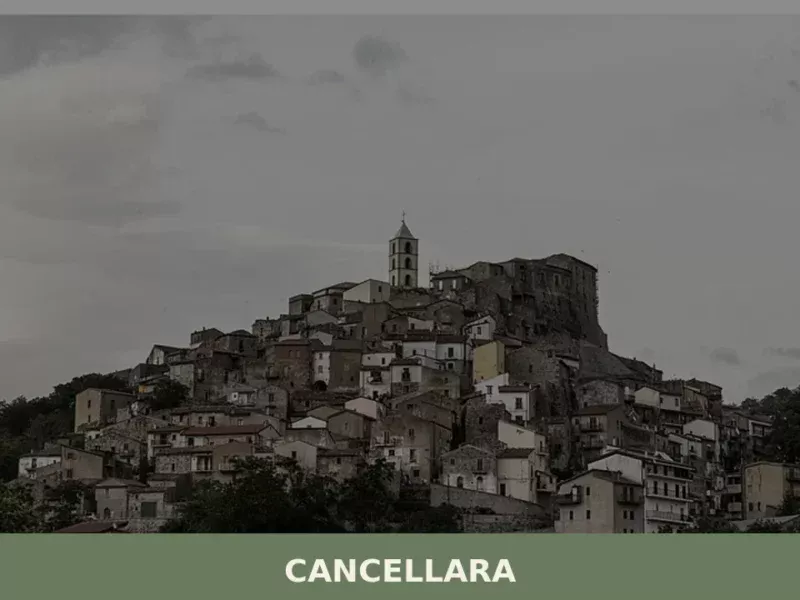
Cancellara
Mountain
What to see in Cancellara: Discover Italy's Basilicata region, a village at 680 m (2,231 ft) known for its medieval castle and ancient necropolis. Explore its history and salami festival.

Ferrandina
 Hills
Hills
What to see in Ferrandina, Basilicata, Italy: 6 historic churches, olive oil production, and a hilltop at 482 m. Discover top attractions and how to get there.
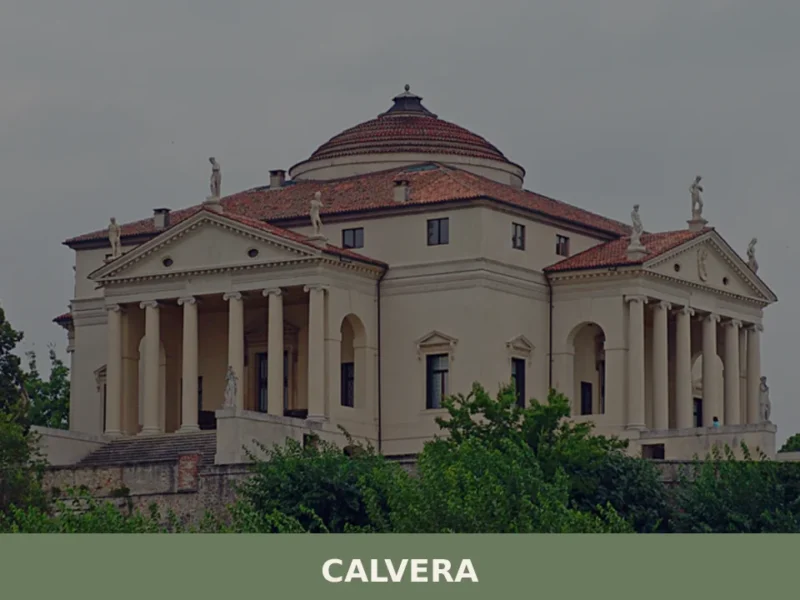
Calvera
Mountain
At 630 meters above sea level, in the heart of the province of Potenza, lies Calvera, a small Lucanian municipality distinguished by its elevated position and authentic atmosphere. The village, with its stone houses clinging to the hillside, offers panoramic views of the surrounding valley, bearing witness to a history of mountain life and a […]

Craco
Mountain
What to see in Craco, Italy: explore the abandoned town at 400 m (1,312 ft), its medieval tower, film locations, and Basilicata's landscape. Discover it all here.

Castelluccio Inferiore
Mountain
What to see in Castelluccio Inferiore: 5 must-see attractions, from the historic center to baroque churches. Discover the complete guide to this Basilicata village.

Colobraro
Hills
What to see in Colobraro, Italy: explore the village at 630 m altitude known as 'that village'. Discover its curse legend, Sinni valley views & local food. Read the guide.
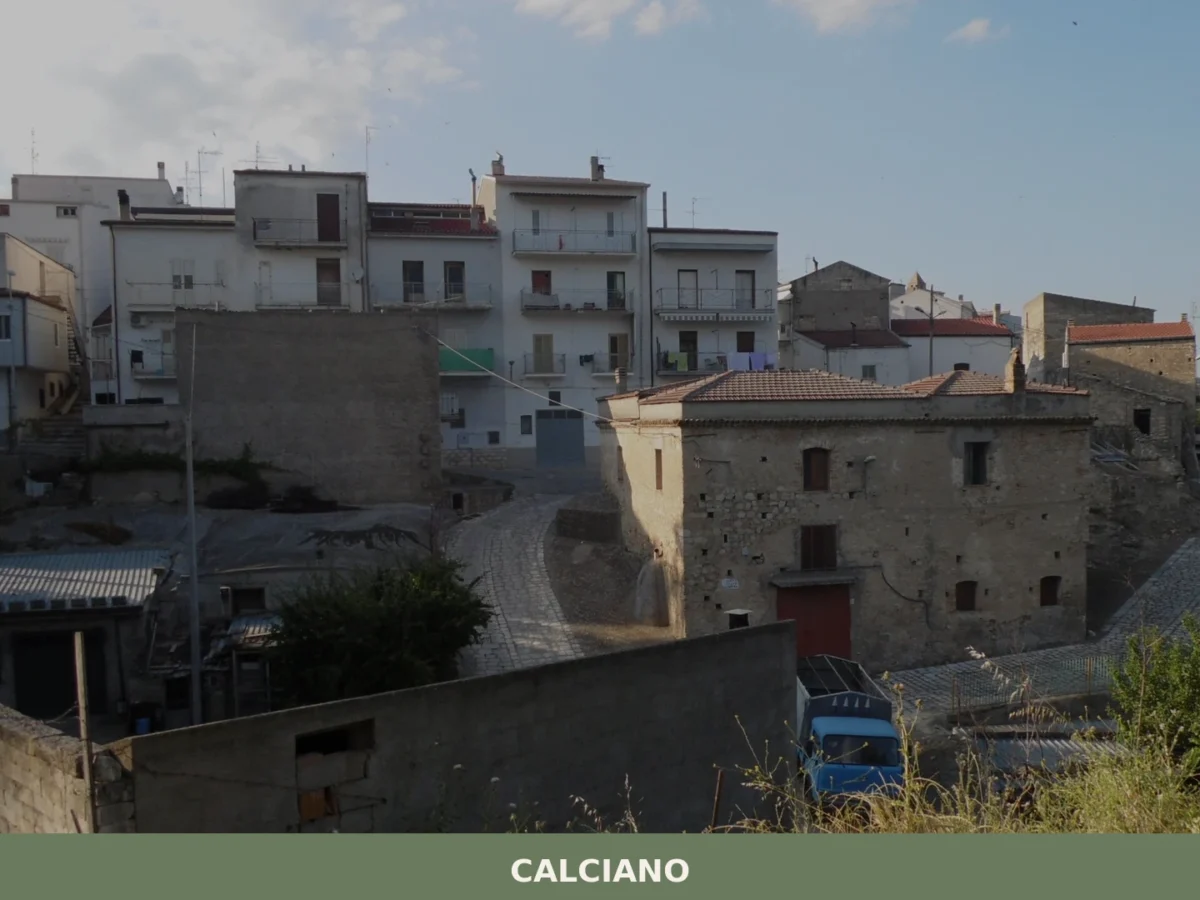
Calciano
Hills
Six hundred inhabitants, a dialect that calls the town Caucësciànë, and a landscape that the province of Matera renders with geometric precision: clay hills that change colour with the passing hours, narrow streets where the wind carries dust in summer and silence in winter. In this article History and origins of Calciano What to See […]

🏡 Know Cirigliano better than we do?
If you’re a local or have been there, your knowledge matters: add what’s missing or fix a detail on this page.