


Laterza
 Sea
Sea
Discover what to see in Laterza, Puglia: the giant karst gravina, Byzantine rock churches, maiolica ceramics and famous bread. Practical travel guide.
Discover Laterza
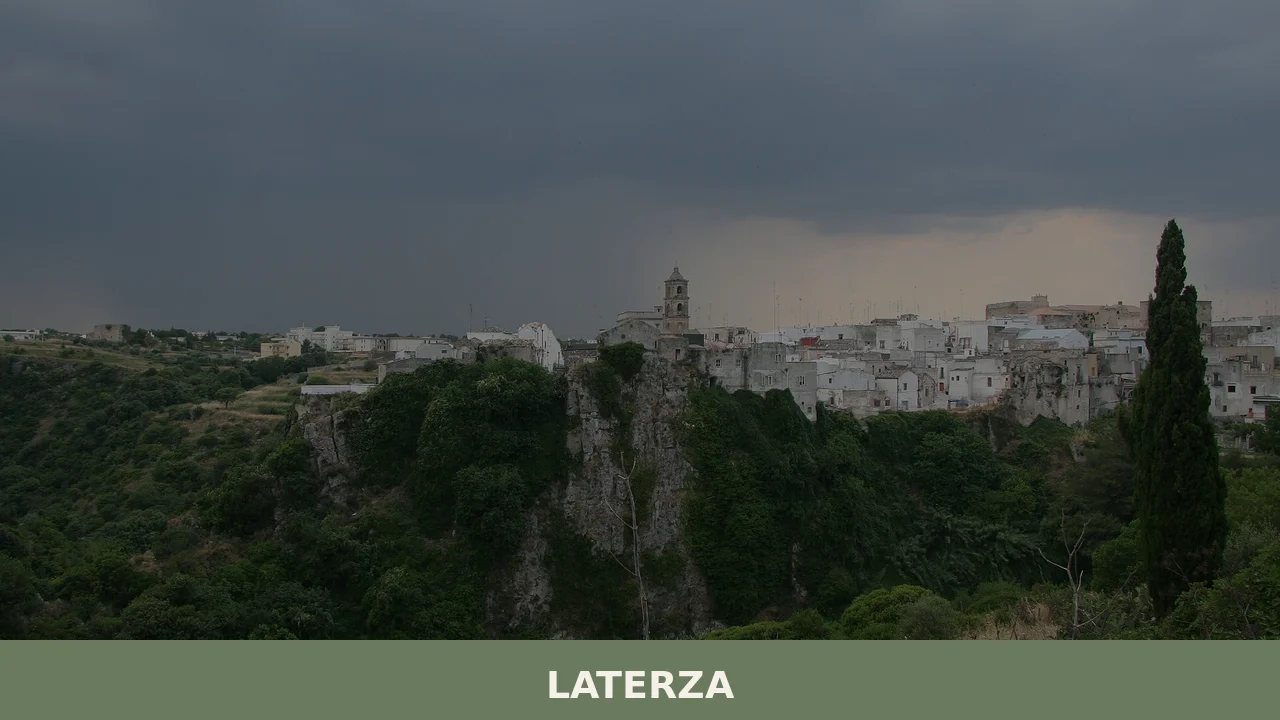
Laterza is a comune of around 14,500 inhabitants in the province of Taranto, in the southern Italian region of Puglia. The town sits above one of the deepest karst ravines in Europe, a geological fracture that has defined its geography and economy for centuries. Three things set Laterza apart from other Puglian towns of similar size: its bread, its maiolica ceramics — white tin-glazed earthenware decorated in turquoise — and that ravine. Knowing what to see in Laterza means understanding how these three elements have always intersected with daily life here.
History of Laterza
The settlement’s origins are rooted in the pre-Roman period, with evidence of occupation of the gravina — the deep limestone gorge that flanks the town — dating back to prehistoric cave dwellers who used its walls as shelter and burial sites. The ravine’s caves were inhabited continuously through the Byzantine era, when communities of Greek monks carved out rock churches in the gorge walls, some of which preserve traces of frescoed decoration. This form of rupestrian settlement, common across the Murgia plateau, was a direct response to the insecurity of the early medieval landscape in the Taranto hinterland.
Laterza passed through Norman and then Angevin control during the medieval period, when it was administered as a feudal possession in the broader framework of the Kingdom of Naples. The town’s position on the boundary zone between the territories of Bari and Taranto gave it a degree of strategic relevance during the recurring conflicts between competing noble houses. By the fifteenth and sixteenth centuries, Laterza had developed as a centre of ceramic production, exploiting local clay deposits in conjunction with the artistic conventions of southern Italian maiolica — a tradition that continued without interruption and that today constitutes one of the town’s most documented cultural identities.
The town’s economic structure during the modern era revolved heavily around agricultural production and artisanal bread-making, both shaped by the particular conditions of the Alta Murgia landscape — hard durum wheat cultivation, wood-fired ovens, and the slow rhythms of a community where food processing and craft manufacture were the primary sources of income. Administratively, Laterza remained part of the Terra d’Otranto before being incorporated into the province of Taranto when that province was established in 1923, a reorganisation that shifted its institutional relationships south toward the Ionian coast rather than east toward the Adriatic.
What to see in Laterza: 5 must-visit attractions
1. The Gravina di Laterza
The karst ravine that cuts along the edge of the town is one of the largest in Europe, reaching depths of over 200 metres in some points. Its near-vertical limestone walls contain hundreds of cave openings — dwellings, storerooms, and Byzantine-era rupestrian churches — carved by human hands across millennia. The gorge is also a nesting site for Egyptian vultures and other raptors. The Riserva Naturale Regionale Gravina di Laterza protects the site.
2. The Rupestrian Churches of the Ravine
Cut directly into the limestone walls of the gravina, these rock-hewn churches date from the Byzantine period, broadly between the ninth and thirteenth centuries. Several retain fragments of fresco painting in the Byzantine iconographic style. They were used by communities of Basilian monks who settled in the Taranto hinterland following the southward retreat of Byzantine political control in Italy.
3. The Maiolica of Laterza
Laterza’s ceramic tradition is distinguished by its specific chromatic register: turquoise — sometimes described locally as turchino — applied over white tin enamel. This colour palette, along with stylised floral and figurative motifs, defines the town’s maiolica as distinct from other Puglian ceramic centres. Several workshops remain active in the old town, and examples of historical production are documented in local collections.
4. The Church of Santa Maria della Neve
One of the principal religious buildings in Laterza’s historic centre, the church is dedicated to Our Lady of the Snow. Its façade and interior reflect the accumulation of interventions typical of southern Italian parish churches — an originally medieval structure progressively altered through the baroque period and beyond. It remains an active place of worship and a reference point for the town’s religious calendar.
5. The Historic Centre and Its Bread Culture
Laterza’s old town retains a fabric of stone streets and traditional buildings where the bread-making tradition remains visibly alive. The local bread — baked in wood-fired ovens from durum wheat semolina, in large round forms — is one of the town’s most documented culinary identities. Several bakeries in the centre continue production using methods consistent with those practised here for generations. You can find further context on local food culture through the Comune di Laterza’s official website.
What to see in Laterza: local food and typical products
Bread is the product most closely associated with Laterza, and its reputation extends well beyond the province of Taranto. Produced from locally grown durum wheat semolina, shaped into large round loaves, and baked in wood-fired ovens, Laterza bread has a dense crumb and a hard, dark crust that allows it to keep for several days without deteriorating — a quality essential in a historically agricultural economy where trips to the bakery were not daily events. The bread’s characteristics are tied to both the local grain varieties and the high-temperature baking technique that has been refined here over centuries.
Beyond bread, the broader gastronomic landscape of the Taranto hinterland is present in Laterza’s kitchens: pasta dishes based on semolina dough, legume soups incorporating local varieties of chickpeas and broad beans, and preparations centred on lamb and kid goat from the Murgia plateau. The Puglia regional tourism portal provides a useful orientation to the broader food traditions of this part of southern Italy. Local restaurants and trattorias in the old town centre tend to reflect this agricultural pantry directly, without significant reinterpretation for outside tastes.
Best time to visit Laterza
Spring — from late March through May — offers the most rewarding conditions for visiting Laterza. The gravina is at its most alive during this period, with nesting raptors active along the cliff faces and the surrounding Murgia landscape in full vegetation. Temperatures are moderate, typically ranging between 14°C and 22°C, and the light in the late afternoon hours sharpens the limestone surfaces of the ravine walls in a way that is useful for anyone attempting to photograph or sketch the rock churches. The summer months, particularly July and August, bring sustained heat — temperatures regularly exceeding 35°C on the plateau — which makes extended exploration of the ravine trails physically demanding from midday onward.
Autumn is the second-best window: harvest activity in the surrounding countryside provides context for understanding the agricultural economy, and the ceramic workshops tend to be fully operational after the slower summer period. The town’s religious calendar includes observances around the feast of Santa Maria della Neve in August, which draws local participation and provides a point of contact with the community’s civic and devotional life. Visitors intending to walk the ravine floor should wear appropriate footwear regardless of season — the limestone path can be uneven and slippery after rainfall.
How to get to Laterza
Laterza sits roughly 45 kilometres northwest of Taranto and approximately 60 kilometres southwest of Bari, placing it within reach of both of Puglia’s main urban poles. The most practical access by road is via the SS7 (Via Appia) or the SS100 from Taranto, followed by local roads toward the Alta Murgia; the journey from Taranto by car takes approximately 45 to 50 minutes. From Bari, the route via the SS96 and then south through Acquaviva delle Fonti or Gioia del Colle takes around one hour. The nearest commercial airports are Bari Karol Wojtyła Airport (approximately 70 kilometres) and Brindisi Airport (approximately 90 kilometres), both served by multiple European carriers.
- By car from Taranto: approx. 45 km, 45–50 minutes via SS7 or SS100
- By car from Bari: approx. 60 km, around 1 hour via SS96 south
- Nearest airport: Bari Karol Wojtyła Airport, approx. 70 km
- By train: No direct rail connection to Laterza; the nearest functioning stations are at Taranto and Gioia del Colle, from which onward travel requires a local bus or car hire
- By bus: Regional bus services connect Laterza to Taranto; schedules should be verified locally as frequency is limited
Where to stay in Laterza
Accommodation in Laterza is limited in quantity compared to the larger coastal or resort towns of Puglia, which is consistent with its profile as a working inland comune rather than a tourism-oriented destination. The available options centre on B&Bs and small guesthouses in or near the historic town centre, which is the most practical base for reaching both the ravine and the ceramic workshops on foot. A small number of agriturismo properties operate in the surrounding countryside, offering the rural setting of the Alta Murgia at the cost of requiring a car for every movement into town.
Visitors preferring a wider range of hotel accommodation — or who plan to use Laterza as a day destination within a larger itinerary — may find it more convenient to base themselves in Taranto, which is 45 kilometres to the south and offers a fuller range of lodging categories. Booking in advance is advisable for spring visits, when ravine tourism and ceramic-related cultural events may reduce availability in a market that has few total rooms. Direct contact with the municipality or local tourist information services via the Comune di Laterza can help identify current accommodation providers.
More villages to discover in Puglia
The Alta Murgia and the territory between Bari and Taranto contain a series of towns that share Laterza’s agricultural heritage and craft traditions, each with its own distinct profile. Noci, to the northeast in the Valle d’Itria area, is known for its trulli districts and its own significant bread and confectionery traditions, making it a natural companion destination for anyone exploring the cultural continuities of this part of the Murgia. To the south, toward the Salento, Carosino offers a window into a smaller Tarantino comune with its own distinct character and rural pace.
Expanding the itinerary further, Alezio in the Lecce province represents the Salento ceramic and agricultural tradition in a different register — geographically and climatically distinct from the plateau around Laterza, but connected by the common thread of Puglian craft identity. For those using the regional capital as a logistical hub, the complete guide to Bari provides orientation to Puglia’s largest city, from which day excursions to the inland villages of the Murgia, including Laterza, can be planned efficiently.
Frequently asked questions about Laterza
What is the best time to visit Laterza?
The ideal time to visit Laterza is spring, from late March through May. During this period, the Gravina is particularly vibrant, with nesting raptors active and the surrounding Murgia landscape in full bloom. Temperatures are moderate, ranging from 14°C to 22°C, perfect for exploration. Don't miss the patron saint's feast day for Santa Maria Mater Domini on May 20th. Autumn also offers rewarding conditions, with harvest activities providing cultural context and ceramic workshops fully operational. While summer is hot, the feast of Santa Maria della Neve in August offers a glimpse into local traditions.
What are the historical origins of Laterza?
Laterza's origins are deeply rooted in the pre-Roman period, with evidence of prehistoric cave dwellers inhabiting the gravina's shelters. This continuous occupation extended through the Byzantine era, when Greek monks carved rupestrian churches into the gorge walls. Passing through Norman and Angevin control, Laterza evolved into a significant feudal possession. By the 15th and 16th centuries, it emerged as a notable center for maiolica ceramic production, a heritage that continues today. Its economy historically revolved around agriculture and artisanal bread-making, profoundly shaped by the Alta Murgia landscape.
What to see in Laterza? Main monuments and landmarks
Laterza is home to several unique attractions. The majestic Gravina di Laterza, one of Europe's deepest karst ravines, is a regional nature reserve offering breathtaking views. Within its walls, discover ancient Rupestrian Churches, carved by Byzantine monks, some retaining fragments of frescoes. Explore the historic center's labyrinthine stone streets, where you can admire the distinctive turquoise Maiolica of Laterza and visit active ceramic workshops. Don't miss the Church of Santa Maria della Neve, a principal religious building reflecting centuries of architectural evolution, and experience the town's renowned bread culture at its traditional wood-fired bakeries.
What are the main natural or scenic attractions of Laterza?
The primary natural attraction is the awe-inspiring Gravina di Laterza, designated as a Riserva Naturale Regionale. This monumental karst ravine, reaching over 200 meters deep, is a critical nesting site for rare Egyptian vultures and other raptors, offering exceptional birdwatching opportunities. The dramatic, near-vertical limestone walls and the extensive cave systems provide a unique geological spectacle. The surrounding Alta Murgia landscape also contributes to Laterza's scenic beauty. Visitors exploring the ravine floor should wear appropriate footwear, as paths can be uneven and slippery, especially after rainfall.
Where to take the best photos in Laterza?
For stunning landscape photography, the Gravina di Laterza is a must-capture, especially in the late afternoon when the golden light dramatically sharpens the limestone surfaces of the ravine walls and highlights the ancient rupestrian churches. Panoramic viewpoints overlooking the gorge from the town's edge offer spectacular vistas. Within Laterza's historic center, the narrow stone streets, traditional architecture, and vibrant maiolica workshops provide charming opportunities for capturing the authentic character and artisanal heritage of the village. Don't forget the iconic wood-fired bakeries and their distinctive bread.
Are there museums, churches or historic buildings to visit in Laterza?
Yes, Laterza offers significant historical and religious sites. The Rupestrian Churches, carved into the Gravina's limestone walls, date from the Byzantine period, with some preserving fascinating fragments of frescoed decoration. The Church of Santa Maria della Neve, located in the historic center, is a prominent religious building that showcases architectural layers from its medieval origins through the Baroque era. While there isn't a formal museum explicitly named, the town's active maiolica workshops serve as living displays of its centuries-old ceramic tradition, and historical examples are documented in local collections.
What can you do in Laterza? Activities and experiences
In Laterza, you can immerse yourself in both nature and culture. Explore the Gravina di Laterza's trails, marveling at its geological formations and ancient rupestrian churches. Discover the town's rich artisanal heritage by visiting active maiolica workshops, where you can witness the crafting of distinctive turquoise ceramics. Indulge in the renowned local cuisine, particularly the famous Laterza bread from wood-fired ovens, at traditional bakeries and trattorias. Engage with local life by observing agricultural activities in autumn or attending religious festivals, such as the patron saint's feast on May 20th.
Who is Laterza suitable for? Families, couples, hikers, solo travelers?
Laterza is ideally suited for travelers seeking an authentic, less-touristed Puglian experience. It strongly appeals to nature lovers and hikers eager to explore the dramatic Gravina and its unique ecosystem, including raptor spotting. History enthusiasts will appreciate the ancient rupestrian churches and pre-Roman origins. Art and craft aficionados will be drawn to the maiolica ceramic workshops, while foodies can savor the renowned Laterza bread and traditional Murgia cuisine. It's also well-suited for couples and solo travelers looking for a quieter, culturally rich destination away from mass tourism, offering a genuine slice of inland Puglia.
What to eat in Laterza? Local products and specialties
Laterza's culinary identity is defined by its celebrated bread, renowned throughout Puglia and beyond. Made from locally grown durum wheat semolina, shaped into large round loaves, and baked in wood-fired ovens, it boasts a dense crumb and a hard, dark crust that allows it to keep for several days. Beyond this iconic bread, the local gastronomy reflects the rich agricultural pantry of the Taranto hinterland. Expect hearty semolina pasta dishes, comforting legume soups featuring local varieties of chickpeas and broad beans, and flavorful preparations of lamb and kid goat, sourced from the surrounding Murgia plateau.
Nearby Villages near Laterza

In Apulia More villages to discover
Brindisi
Sea
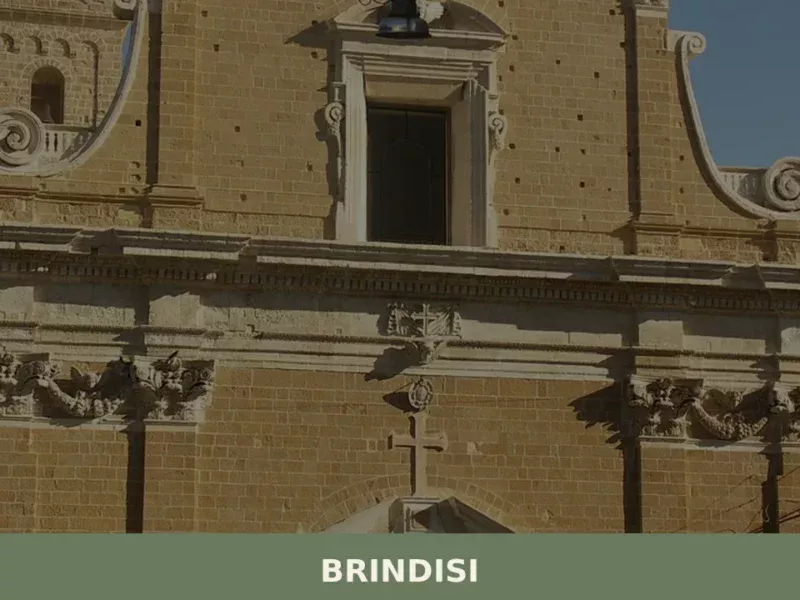
From the port of Brindisi, at a strategic point where the Adriatic opens towards the East, stands the Monument to the Italian Sailor, an imposing structure that since 1933 has watched over the city and its maritime routes. This city, overlooking a natural inlet that for centuries has welcomed fleets and trade, has historically been […]
Faeto
 Mountain
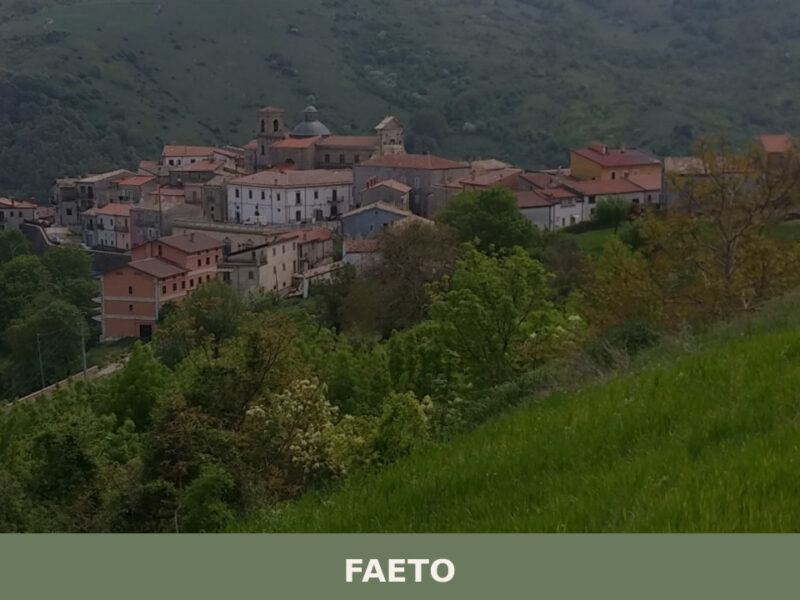
A Franco-Provençal-speaking village of 616 inhabitants high in the Daunia mountains. Discover what to see in Faeto: ancient dialect, beech forests, and Puglia's highest peak.
San Severo
 Plains
A ridge-top village above the Tavoliere plain in Foggia province, San Paolo di Civitate holds Roman ruins, Norman battlefield history, and an unhurried agricultural life.

Caprarica di Lecce
Plains
2,250 residents and a living Griko heritage make Caprarica di Lecce a village where language, stone and landscape form a coherent, unbroken identity.
Minervino di Lecce
Plains
3,400 residents and 98 metres of elevation. A village where megalithic stones predate written history, and Renaissance architecture speaks of feudal ambition.
Monopoli
Sea
From the promontory where the Castle of Charles V stands, the view sweeps across the Adriatic, a horizon of waters that have shaped Monopoli’s identity for centuries. This port city, whose name evokes the idea of a “unique city,” reveals itself through its architecture, which tells of historical layers, from Messapian walls to Spanish fortifications. […]
Bagnolo del Salento
Plains
Bagnolo del Salento: discover the village, visit historic churches, and taste traditional cuisine. Plan your trip now!
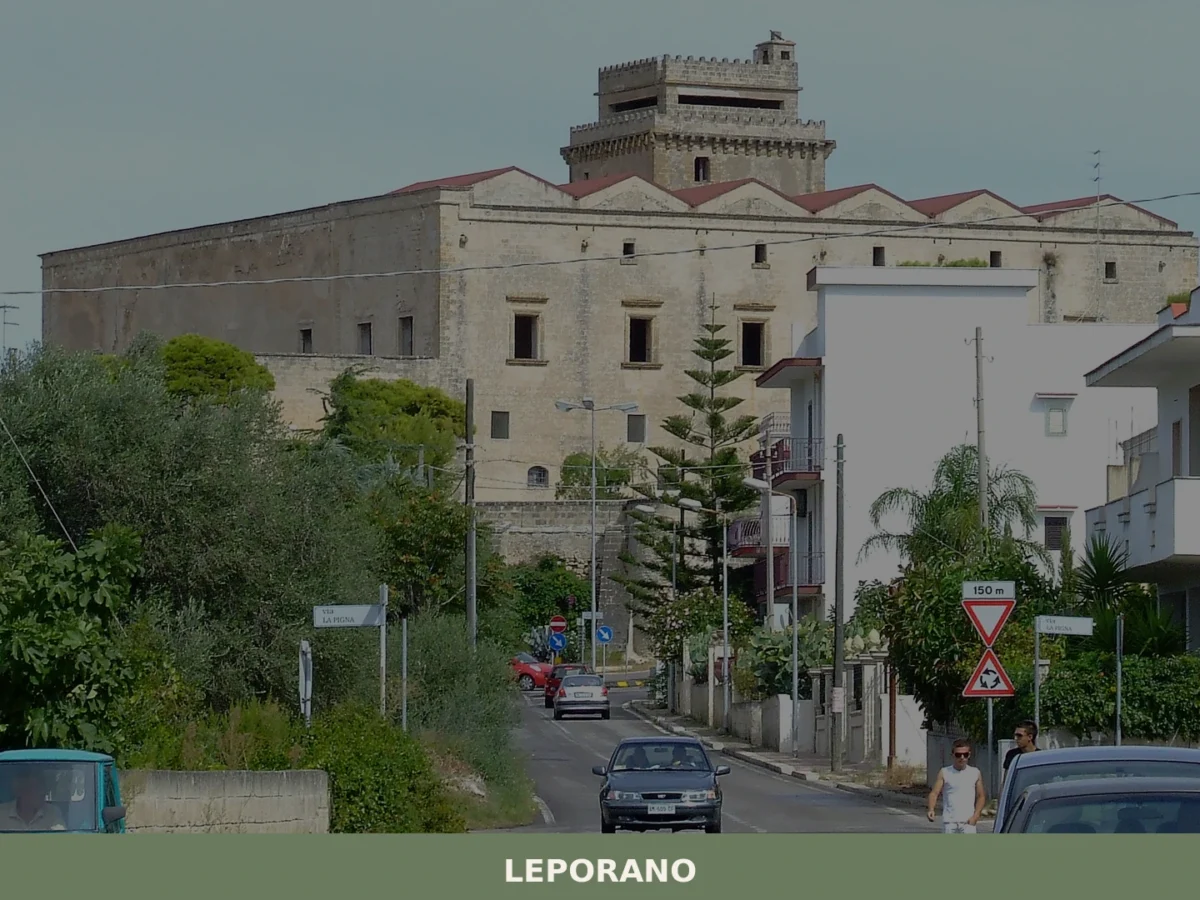
Leporano
Sea
Discover what to see in Leporano, Puglia: Aragonese tower, Ionian coastline, local food and practical tips for visiting this Taranto province municipality.
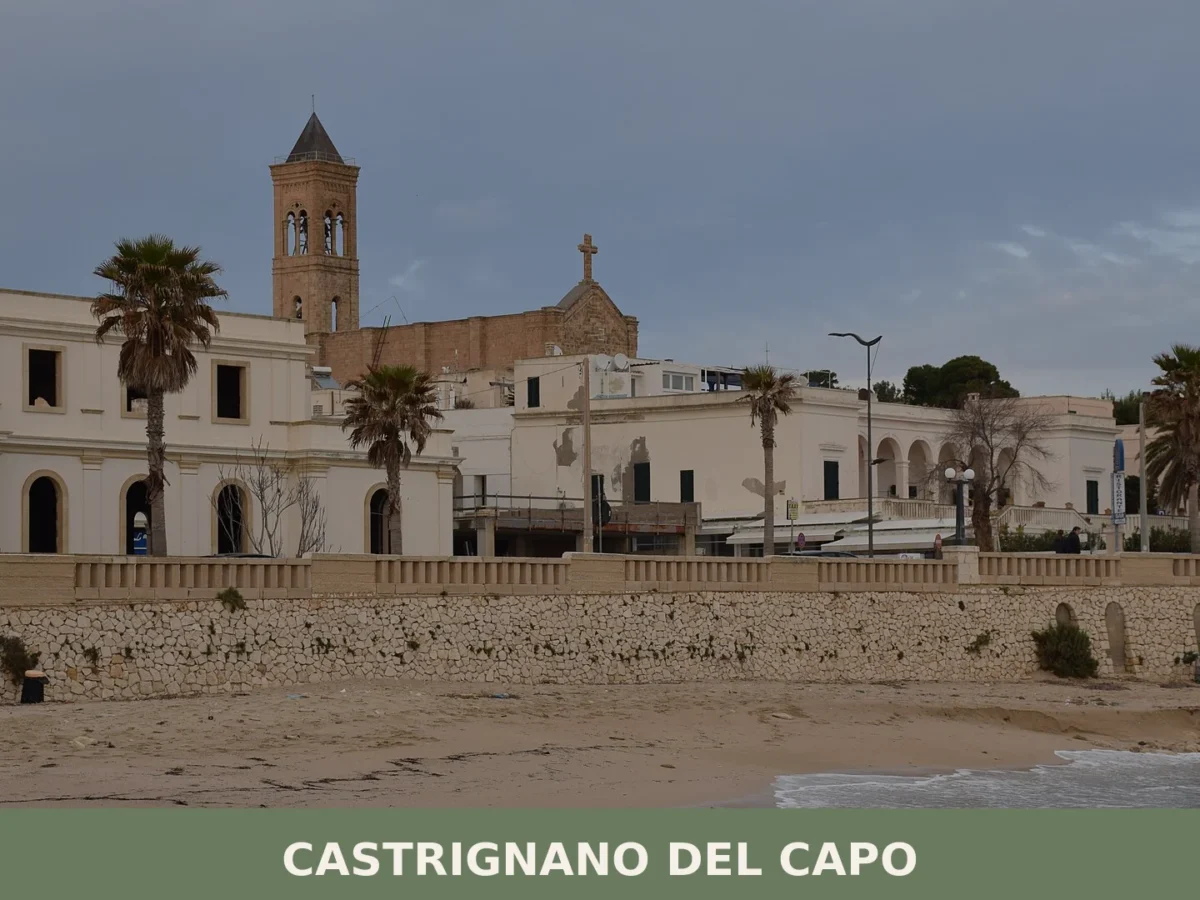
Castrignano del Capo
Sea
A village of 5,093 inhabitants where baroque architecture meets coastal limestone cliffs. Explore the medieval heart, defensive heritage and the fractions that include the celebrated beach resort of Santa Maria di Leuca.
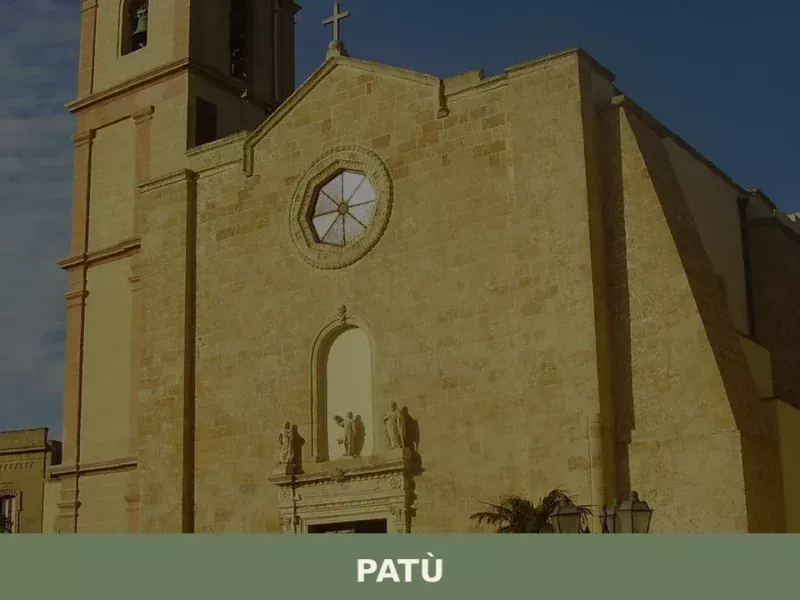
Patù
Sea
What to see in Patu00f9, Puglia, Italy: explore the Centopietre mausoleum, Byzantine crypts and a 1564 Renaissance church in a village of 1,699 inhabitants. Discover it now.
🏡 Know Laterza better than we do?
If you’re a local or have been there, your knowledge matters: add what’s missing or fix a detail on this page.