


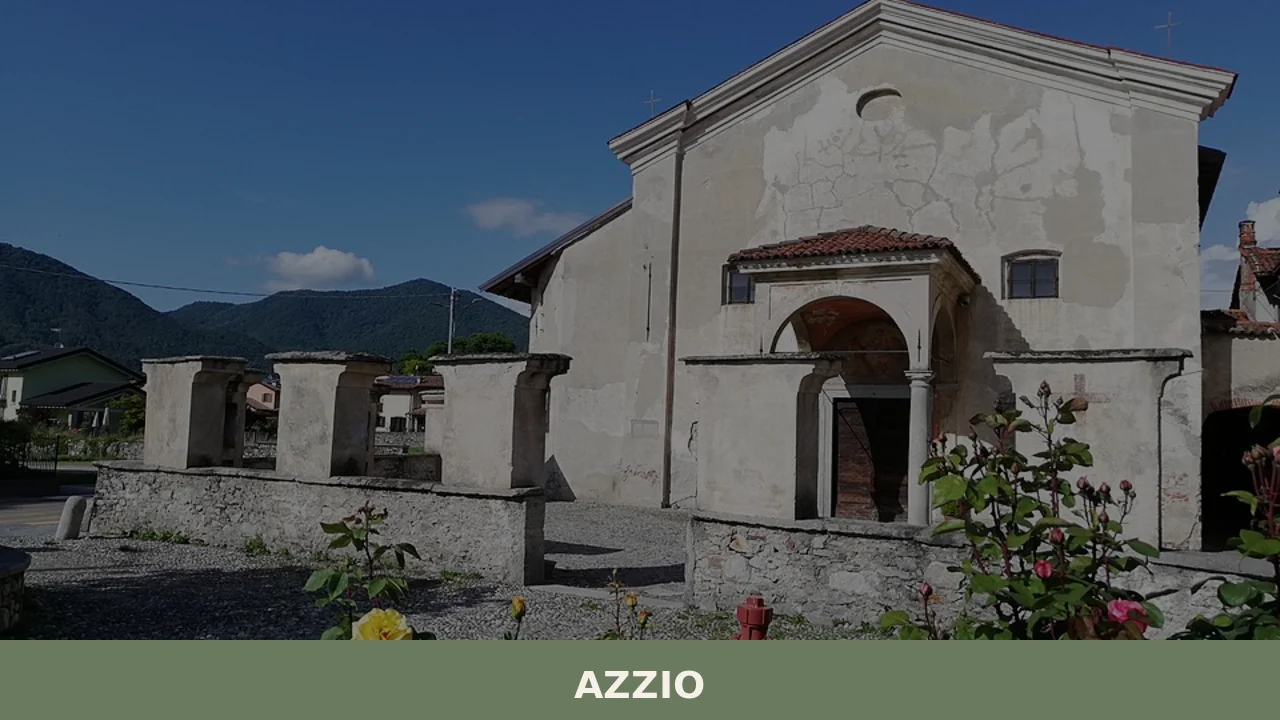

Azzio is a compact Lombard comune of 761 residents in the province of Varese, set at 387 metres on the northern slopes of the Campo dei Fiori massif.
Discover Azzio
Azzio is a small comune in the province of Varese, Lombardia, sitting at around 399 metres above sea level on the northern slopes of the Campo dei Fiori, with a resident population of roughly 760 people spread across just over two square kilometres. Its administrative identity has shifted more than once over the centuries: the settlement was absorbed into neighbouring Gemonio and later Cuvio during the early nineteenth century, then consolidated further with Orino in the late 1920s, tracing a path of municipal reorganisation that many communities across northern Italy followed during those periods.
Azzio village in Lombardy rewards visitors with a quietly layered character — a compact territory marked by several places of worship, including the church of Sant’Antonio and Sant’Eusebio on the village outskirts, the cappella delle Grazie, the church of the Beata Vergine Addolorata, and the church of the Beata Vergine Annunziata — and by proximity to the food and wine traditions of the wider Varese area, from the DOP Formaggella del Luinese to the IGT Ronchi Varesini wines produced in the surrounding territory.
Azzio village in Lombardy: history and community roots
Azzio is a small Lombard settlement in the province of Varese, recorded with a modest population as early as the mid-eighteenth century, growing steadily through the nineteenth century to over 400 by the mid-1800s, and today home to roughly 760 residents in a territory of just over two square kilometres on the northern slopes of the Campo dei Fiori.
The administrative history of the village was not linear: during the early nineteenth century Azzio was absorbed into neighbouring municipalities, being annexed first to Gemonio and then to Cuvio, before later experiencing a further consolidation with Orino in the late 1920s. These mergers reflected broader patterns of municipal reorganisation common across northern Italy during those periods.
A landmark in the local religious and architectural record is the church of Sant’Antonio and Sant’Eusebio, on the outskirts of the village. It originated as a place of worship dedicated solely to Sant’Eusebio, which served as a vicarial church dependent on the collegiate of San Lorenzo di Canonica. Around the early seventeenth century the structure was enlarged and transformed when it became part of a convent of reformed Franciscan friars. The adjacent convent buildings — including portions of two cloisters, a kitchen, refectory and several cells — survive in altered form as private property, while the church itself remains accessible. Among its interior features are frescoes attributed to Gian Battista Ronchelli, a wooden bust of Sant’Eusebio, and two gilded wooden statues dating from the seventeenth century.
The municipality’s civic identity is formally expressed through heraldic symbols granted by presidential decree in early 1985: a shield combining a rainbow, a golden treble clef, nine trees on a green field, and three six-pointed stars — an unusual composition that sets Azzio apart visually among the villages of the Varese area.
Churches, a Convent, and an Organ Workshop: Azzio’s Built Heritage
Azzio’s points of interest include four religious buildings — the church of Sant’Antonio e Sant’Eusebio, the cappella delle Grazie, the church of the Beata Vergine Addolorata, and the church of the Beata Vergine Annunziata — along with the surviving structures of a former Franciscan convent and the premises of organ-builder Mascioni.
Church of Sant’Antonio e Sant’Eusebio
On the outskirts of the village stands this church, originally built in the early seventeenth century by enlarging and transforming an earlier building dedicated to Sant’Eusebio, which had served as a vicariate church dependent on the collegiate of San Lorenzo di Canonica. The construction was carried out by Franciscan friars minor reformed, who also built a convent alongside it. The conventual complex is still partly legible in its layout, despite extensive alterations over the centuries: surviving portions include the ambulatories of two cloisters, the kitchen, the refectory, and several cells. The convent buildings are now in private ownership; the church remains accessible.
Inside, frescoes by Gian Battista Ronchelli flank the altar, accompanied by a wooden bust of Sant’Eusebio and two gilded wooden statues — the Virgin and Sant’Antonio — dating from the seventeenth century. A Via Crucis with square shrine niches runs along the exterior forecourt.
Parish Church and the Mascioni Organ
The parish church of the Vergine Maria houses a pipe organ built by Vincenzo Mascioni in 1891. The Mascioni firm, one of Italy’s noted organ-building workshops, has its premises in Azzio itself.
Certified Flavours of Azzio and the Varese Uplands
Azzio sits within a province and region rich in certified products, from the DOP-protected Formaggella del Luinese — a soft goat’s cheese produced across the Luino area — to the Miele Varesino DOP, a honey with defined geographical roots in the Varese hills, and the Grana Padano DOP, one of Italy’s most widely recognised aged cheeses.
The local wine landscape is anchored by the Ronchi Varesini IGT, the designated geographical indication that covers the vineyards of the Varese foothills. Further afield, Lombardy contributes a broad cellar: the Franciacorta DOCG and Valtellina Superiore DOCG stand among the region’s most celebrated labels, while the Sforzato di Valtellina DOCG and Oltrepò Pavese designations extend the regional range considerably.
Among IGP products reachable from Azzio, the Asparago di Cantello IGP — grown around the Cantello area to the south — deserves a mention for visitors touring the wider province. The Mortadella Bologna IGP and Cotechino Modena IGP, whose production zones are centred on Emilia-Romagna, are nonetheless widely available across northern Italy and easily found in the shops and markets of the Varese area.
Planning your visit and getting there
Azzio can be reached using the practical reference points below. Distances and journey times are kept concise so the access information stays clear and consistent.
| Departure | Distance | Time |
|---|---|---|
| Varese | approx. 15 km | approx. 20 min |
| Milano | approx. 60 km | approx. 55–65 min |
| Luino | approx. 20 km | approx. 25 min |
These practical reference points are enough to plan the journey without overloading the text with unstable logistics. Once on site, the village is best understood slowly, on foot and in relation to the surrounding landscape.
Frequently asked questions about Azzio
When is the best time to visit Azzio?
Spring and early autumn are ideal for visiting Azzio. The village celebrates its patron feast, Maria SS. Annunziata, on 25 March, making late March a particularly atmospheric time to visit. Spring also brings mild temperatures at around 400 metres altitude, perfect for walking the slopes of the Campo dei Fiori. Summer weekends can be busy with day-trippers from Varese and Milan, while autumn offers pleasant hiking conditions and the harvest season for local Varese-area wines.
How do you get to Azzio by car?
By car, Azzio is reached via the A8 Milan–Varese motorway, exiting at Varese and continuing northwest towards Gemonio and Cuvio along the SP69 provincial road. The village sits roughly 15 kilometres north of Varese city centre. Parking is limited but available along the main village road. No motorway directly serves the immediate area, so a car or motorcycle is strongly recommended, as public transport connections to Azzio itself are infrequent.
Is there a train station near Azzio?
The nearest railway stations are Cittiglio and Laveno Mombello, both served by Trenord regional lines connecting to Varese and Milan Porto Garibaldi. From either station you would need a local bus or taxi to reach Azzio, as no direct rail link exists to the village. Cittiglio station is approximately 4 kilometres away and offers the most practical interchange point for visitors arriving from Milan or Varese without a car.
Are there hiking trails around Azzio?
Azzio sits on the northern slopes of the Campo dei Fiori, a protected regional park (Parco Campo dei Fiori) that is crossed by several CAI-marked trails. The park network connects villages across the Varese uplands and reaches the summit of Campo dei Fiori at 1,226 metres. Trails suitable for moderate hikers depart from the Cuvio–Azzio area. The CAI Varese section maintains route markings and publishes updated trail maps available on the official Parco Campo dei Fiori website.
How long should you plan to spend in Azzio?
Azzio itself is compact enough to explore on foot in two to three hours, taking in its several village churches including the church of Sant'Antonio and Sant'Eusebio and the cappella delle Grazie. Most visitors combine a stop in Azzio with a broader itinerary across the Medio Verbano and Campo dei Fiori area, making a half-day or full-day excursion realistic. Combining the village visit with a hike in the regional park or a tasting of local DOP Formaggella del Luinese extends the experience comfortably to a full day.
📷 Photo Gallery — Azzio
Nearby Villages near Azzio
In Lombardy More villages to discover

Losine
 Mountain
622 residents, three medieval churches and a dialect nickname that survives centuries. Losine rewards visitors who look beyond Lake Garda for Lombard mountain identity.
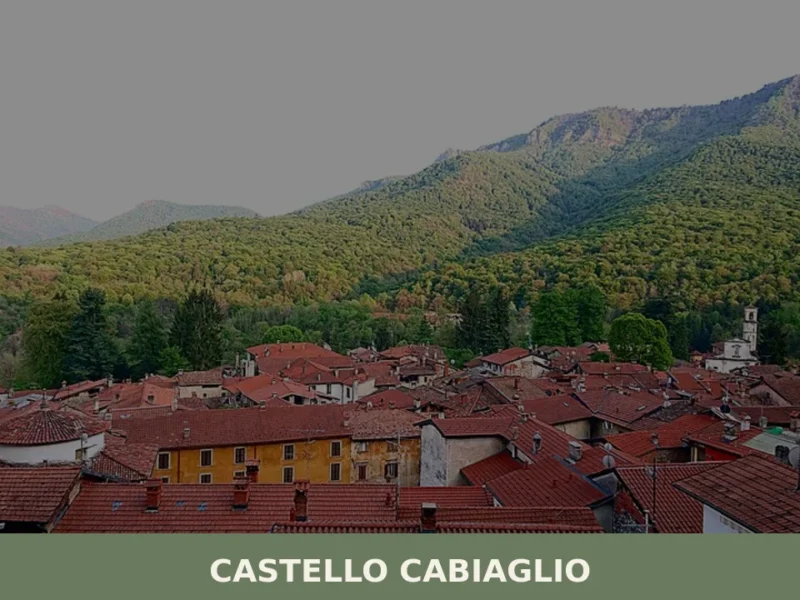
Castello Cabiaglio
 Hills
Hills
What to see in Castello Cabiaglio: a hill village at 514m with 567 residents in Varese. Explore Sant'Appiano church, Campo dei Fiori trails and local porcini risotto. Plan your visit now.
Besozzo
Hills
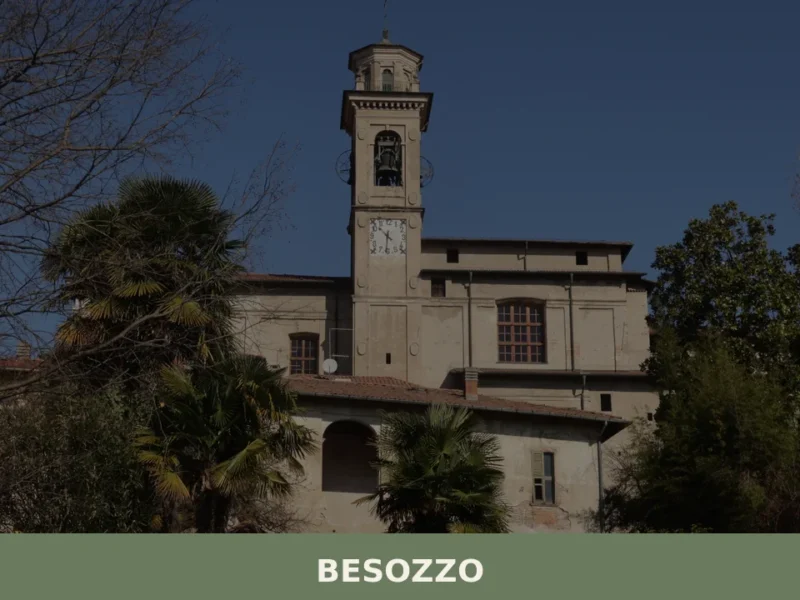
What to see in Besozzo, Italy: Explore the historic upper village (240 m a.s.l.), its noble Palazzi, and proximity to Lago Maggiore. Discover this Lombardian gem.
Bisuschio
Hills
In Bisuschio, in the province of Varese, economic activity linked to ceramic production developed starting from the 18th century, with local kilns contributing to the manufacture of tableware and bricks for the area. This hillside village, located 370 meters above sea level, offers a view of the Prealpine landscape and nearby lakes. For those wondering […]
Almenno San Bartolomeo
Hills
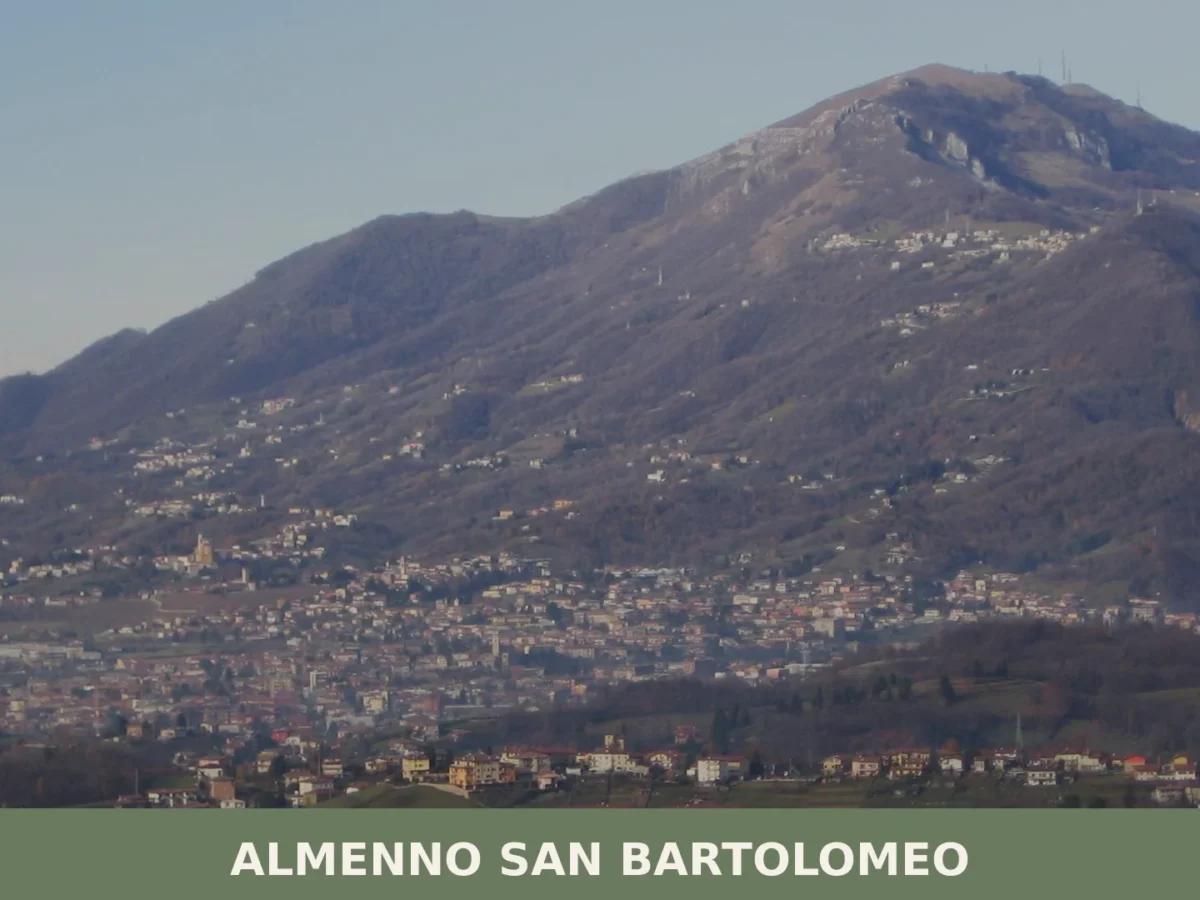
Almenno San Bartolomeo is a hilltop comune in the province of Bergamo, Lombardia, notable for its Romanesque Rotonda di San Tomè, a celebrated museum of woodworking and a layered history stretching ba
Lecco
 Lake
Mountain
Lake
Mountain
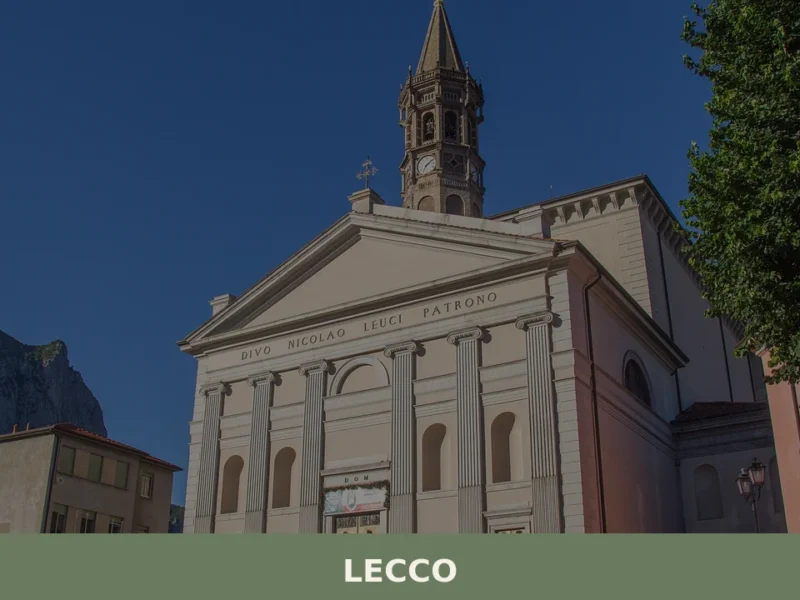
what to see in lecco, Italy: Explore the 5 essential attractions of this Lombard city, from the historic Azzone Visconti Bridge to the towering Mount Resegone. Discover its 47,240 inhabitants.
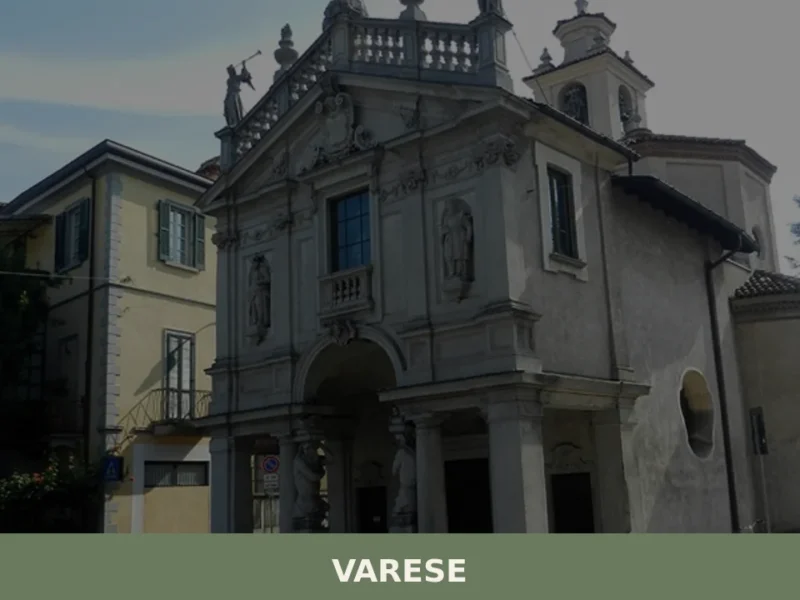
Varese
Hills
Lake
Varese, a Lombard city with a population of 78,409 inhabitants, stands at 382 m above sea level and is distinguished by its strategic position between lakes and pre-Alps. This locality, capital of the eponymous province, offers a rich historical and natural heritage that attracts numerous visitors every year. In this article History and Origins of […]
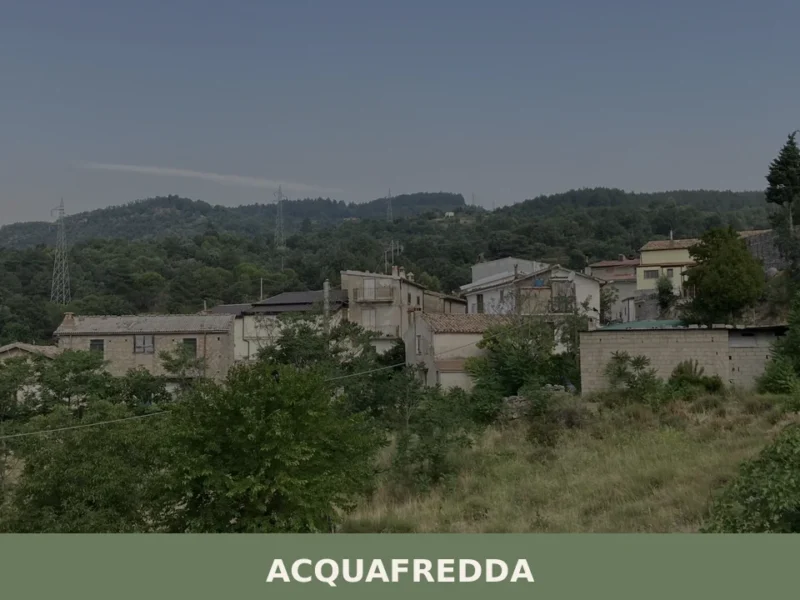
Acquafredda
 Plains
What to see in Acquafredda, a municipality in the lower Brescian area at 55 m above sea level: the Church of San Biagio, historic farmsteads, fontanili and the traditional cuisine of the Po Plain.

Campospinoso
Plains
1,335 residents, two historic nuclei and eight centuries of feudal heritage. Campospinoso rewards visitors drawn to rural Lombardy's quieter, less-travelled corners.

Milano
Plains
Over 1.3 million residents and 2,600 years of history make Milano Lombardia one of Europe's most compelling destinations. Art, opera, fashion and extraordinary food await every visitor.






🏡 Know Azzio better than we do?
If you’re a local or have been there, your knowledge matters: add what’s missing or fix a detail on this page.