


Minervino di Lecce
 Plains
3,400 residents and 98 metres of elevation. A village where megalithic stones predate written history, and Renaissance architecture speaks of feudal ambition.
Minervino di Lecce: Megalithic Roots and Renaissance Palaces in the Salento
In the flat limestone country of south-eastern Salento, approximately 40 kilometres inland from Lecce, Minervino di Lecce rises slightly above the surrounding bassopiano—a low plain of the Serre ridges—at between 82 and 127 metres above sea level. The village takes its character from stone: megalithic dolmens that predate any written record, defensive palaces built by feudal lords who granted themselves ducal titles, churches whose carved stone panels speak of Renaissance ambition. A population of around 3,400 inhabits a territory of 17.89 square kilometres, bordered by neighbours including Giuggianello, Uggiano la Chiesa, and Santa Cesarea Terme.
Today, Minervino di Lecce in Apulia draws visitors interested in Bronze Age archaeology and the layered administrative histories of the medieval and early modern South. The village is part of the Borghi Autentici d’Italia network, and it sits along the Via Francigena, the pilgrimage route that brings walkers through southern Italian landscapes. Its reputation rests on two anchors: the Dolmen Li Scusi, among the most substantial megalithic structures in the region, and a sequence of noble residences whose facades carry the heraldry of families who ruled here for centuries.
From Japygian Sanctuary to Feudal Stronghold
The origins of Minervino are layered and debated. The name itself may derive from a temple dedicated to Minerva, the Roman goddess whose image appears on the village coat of arms (officially granted in 1998). Alternatively, tradition holds that the name preserves the memory of Castrum Minervae, an ancient settlement destroyed during one of the incursions that periodically ravaged the Salento coast. The presence of megalithic monuments—dolmens and standing stones—indicates continuous human activity from the Bronze Age onward, though the builders and their exact chronology are not documented in the archaeological record.
Medieval and early modern Minervino emerged as a feudal holding. In 1269, the casale (rural settlement) was granted to Ruggero Sambiasi, a nobleman possibly descended from the powerful Sanseverino dynasty. Over subsequent generations it passed through the hands of a succession of lords: Ugone Billotta, who received it from King Philip after it was seized from Giordano de Paleano; Ruggero Maramonte during the Angevin period; and Nicolantonio de Frisis in 1378, a member of a Lecce noble family with roots in the time of King Manfred. The Gargano family owned it from 1584. In the early decades of the sixteenth century, the settlement supported roughly 95 families—approximately 475 people—distributed across multiple boroughs, the largest being Borgo Minervino itself, with some 150 inhabitants. The Filomarini, dukes of Cutrofiano, held Minervino as a fief, then the Venturi from 1619 onwards, a family to whom the title of duke was subsequently granted. Families including the Morì della Gatta, the Scarciglia, and the Urso left behind palatial residences that still stand as testimony to their local authority.
Until 1650, what we now call Minervino was divided into sixteen separate borghi—Borgo Minervino, Borgo Murtole, Borgo Giudecca and others—each resembling a fortified farm with a population of 50 to 100 souls. These were not towns in the modern sense, but defensive agricultural compounds scattered across the same territory.
The region experienced repeated violence. Saracen raids between the eighth and ninth centuries destroyed settlements both inland and coastal; the Turkish incursion of 1480–1481 brought further destruction. The tradition of compact, defensible settlements reflects this insecurity. Yet excavation has also revealed evidence of a Roman road whose paving resembles the Via Appia, suggesting that Minervino may rest upon older Roman foundations, though this remains a working hypothesis rather than an excavated certainty.
Megalithic Monuments and Cultural Archaeology
Dolmen Li Scusi
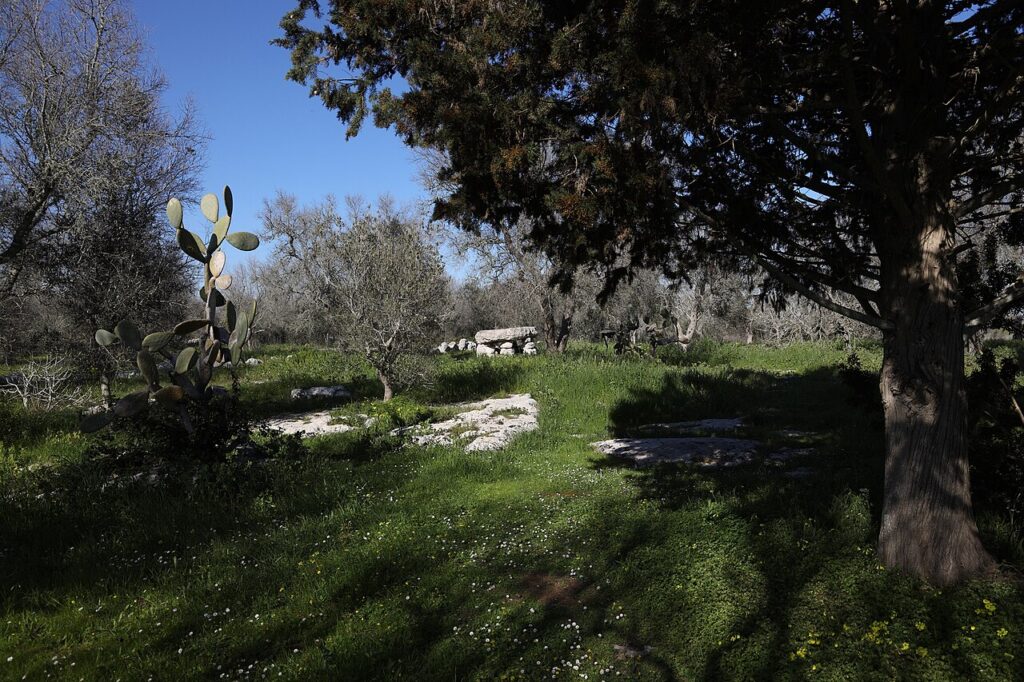
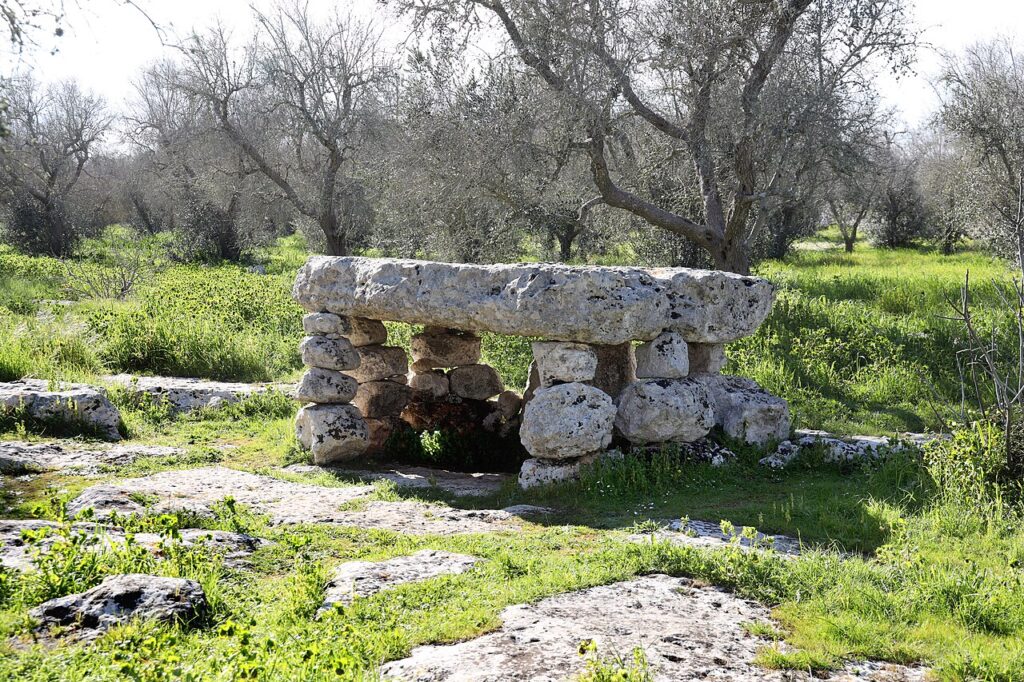
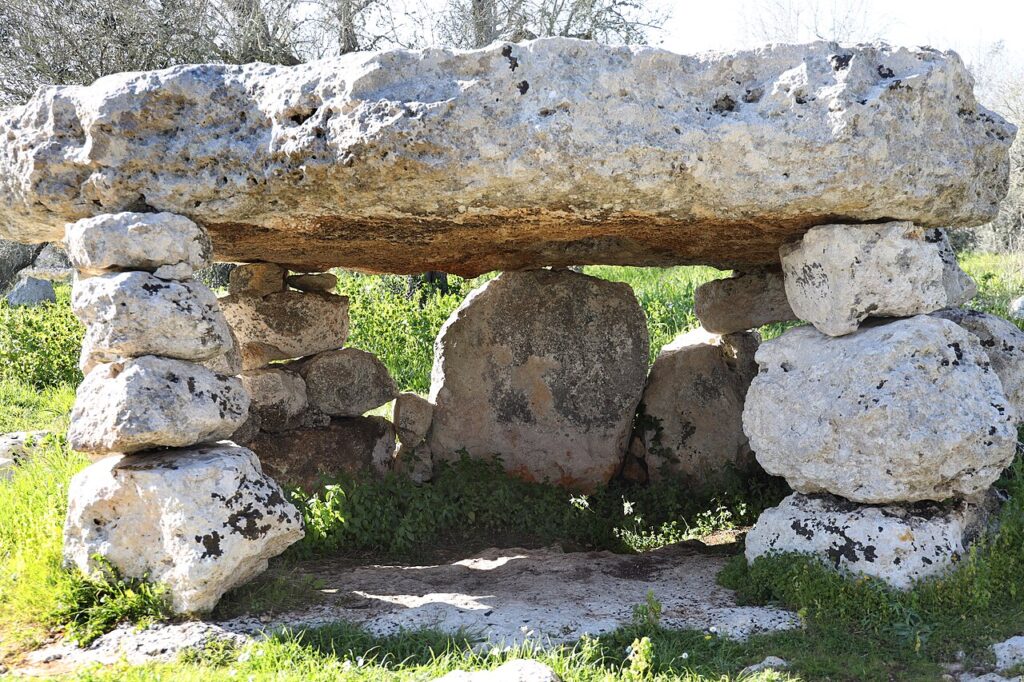
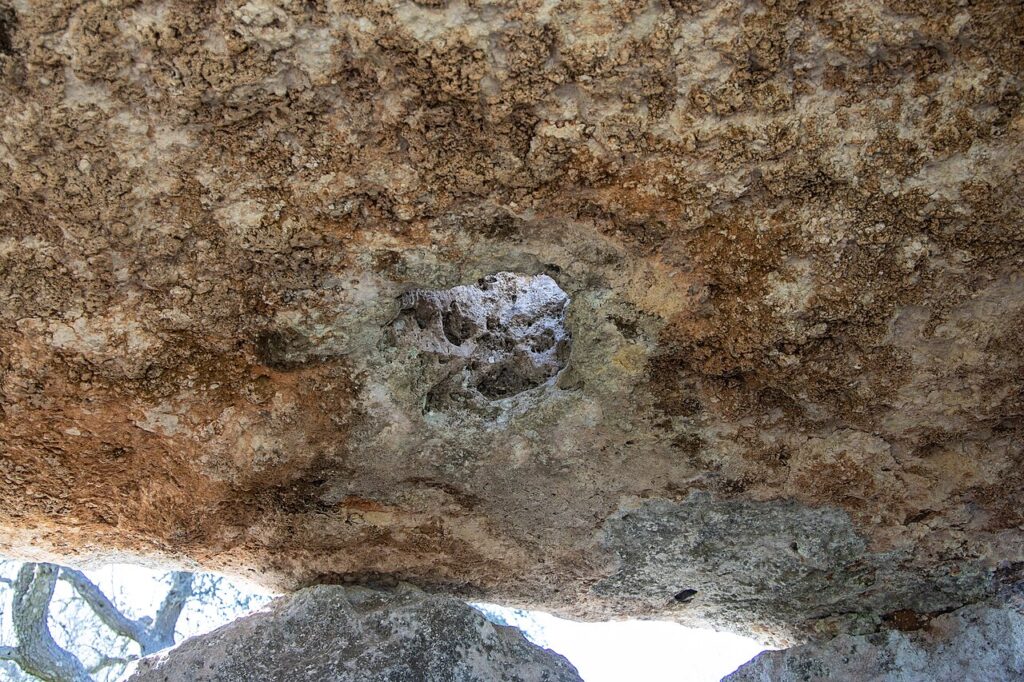
The stone monument rises approximately one metre above ground level, supported by eight uprights, one of which is a single unbroken block. The capstone measures 250 by 380 centimetres, with a thickness varying between 35 and 45 centimetres; on the western side, two orthostats (upright stones) are linked by a horizontal wedge stone that helps secure the roof. An opening oriented toward the southeast admits light through a central hole in the capstone. For its scale, the monument commands respect as one of the largest dolmens in the region. The site has recently been developed as the Parco culturale del Dolmen Li Scusi, integrating the megalith within a contemporary heritage landscape.
Menhir Monticelli
A short distance away stands the Menhir Monticelli, a roughly shaped standing stone measuring 70 by 40 centimetres and rising 1.80 metres from ground level. Its form is irregular and tapered, with evident toolmarks on the upper portion. The scholar Palumbo once theorised that it might represent only a truncated fragment of a larger original monument, though this remains speculation. The stone takes its name from the agricultural property on which it sits. A second standing stone, the Menhir San Giovanni Malcantone, lies a few hundred metres distant, technically within the neighbouring municipality of Uggiano la Chiesa but part of the same megalithic landscape.
Renaissance Churches and Baroque Decoration
Chiesa madre di San Michele Arcangelo
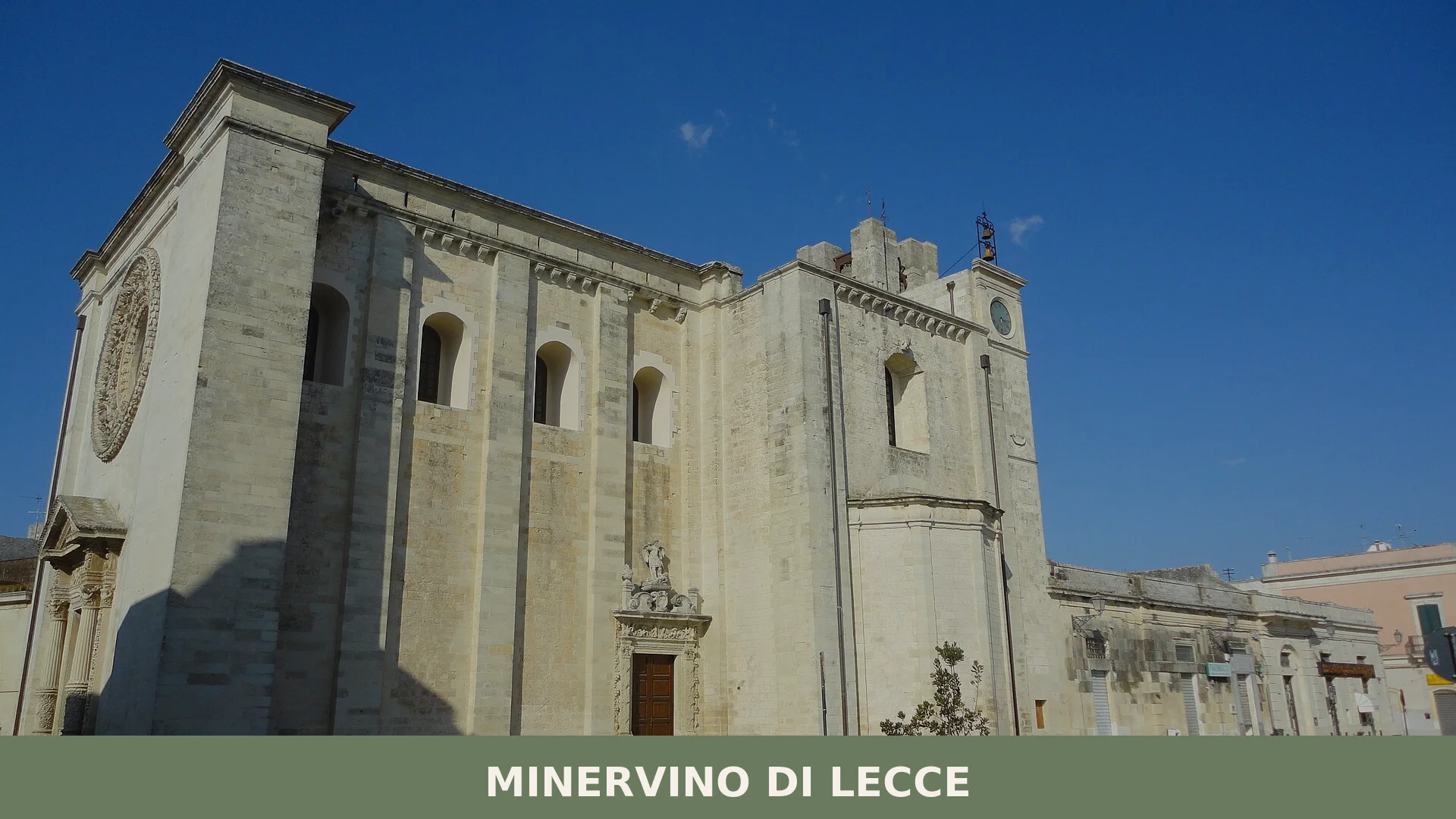
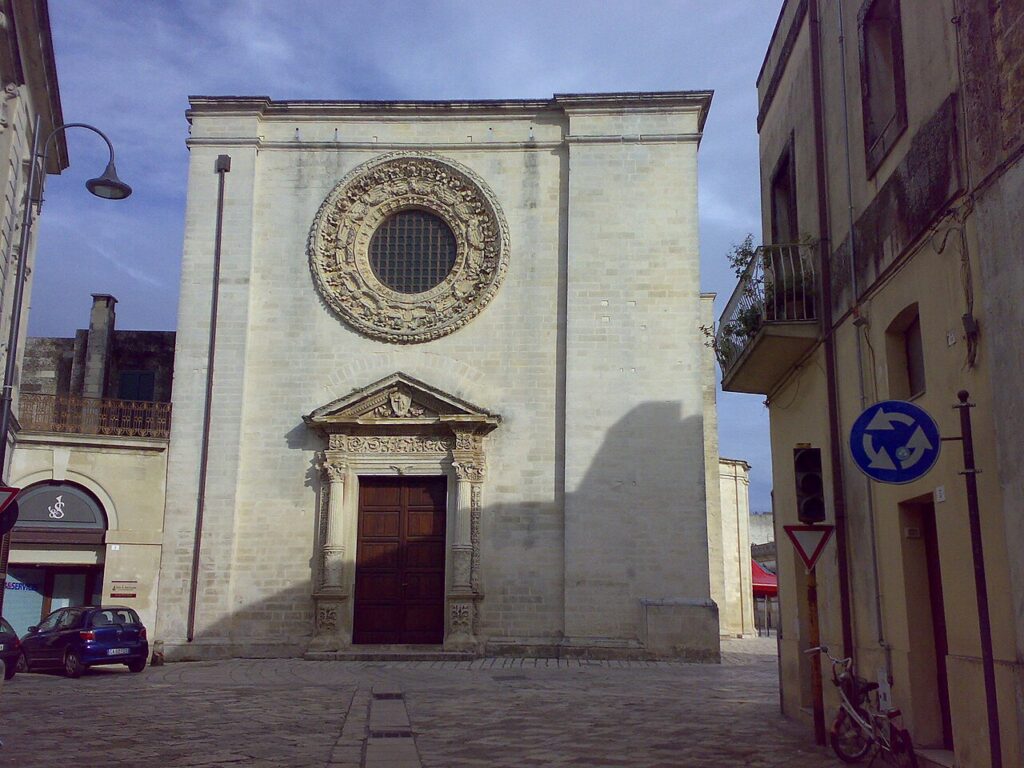
The mother church of Saint Michael the Archangel dates to the sixteenth century. An earlier structure was documented in 1486 when Bishop Serafino da Squilacce visited the settlement. The architects Gabriele Riccardi of Lecce and his student Giovanni Maria Tarantino of Nardò are credited with the design and execution. The broad western facade is framed by two sturdy pilasters and dominated by a baroque rose window that echoes the grander example at the Basilica di Santa Croce in Lecce. Inside, a single nave culminates in a Latin cross, with vaulted ceiling enriched by carved stone ribs that converge at the vault’s apex. The principal altars occupy the transept and are dedicated to the Blessed Sacrament and to Saint Rocco, the latter referring to an older chapel absorbed into the church structure. Most notable is the stone apse, sculpted by Riccardi: it rises in two tiers of arcaded panels set between Corinthian columns, the lower tier densely carved with foliage, the upper tier articulated by rectangular frames and pilaster strips decorated with spiral motifs. Six radiating ribs of the half-dome converge toward the keystone, which bears an inscription in Latin dated to 1573. Twentieth-century restoration work after 1975 stripped away later baroque stucco ornament and removed the high altar and organ.
Chiesa della Madonna delle Grazie
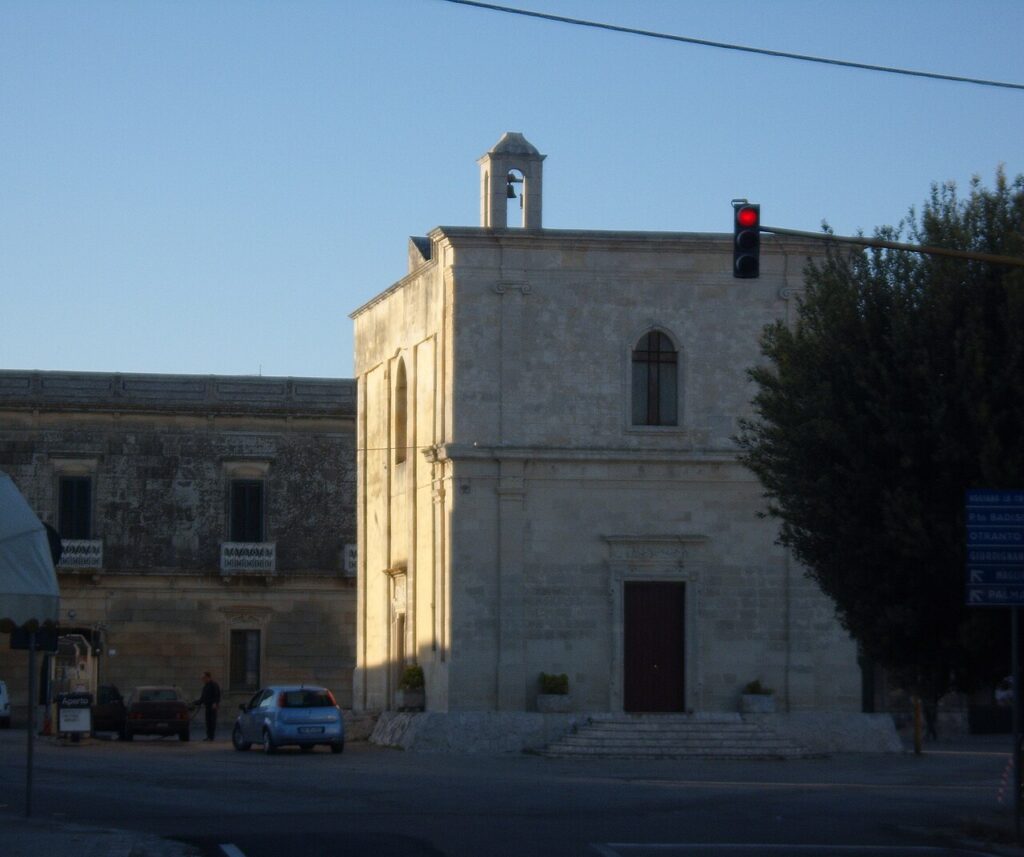
The Church of the Madonna delle Grazie dates to the seventeenth century and descends below street level; visitors enter via twelve stone steps into a chamber notably lower than the surrounding town. A simple facade with modest ornament frames the central portal and window. A single nave is roofed with a distinctive vault of local limestone and articulated by pilaster strips carrying Corinthian capitals, which frame arched recesses along the side walls. The focus of the interior is the baroque altar, finely carved in local limestone and dated 1680, which houses a seventeenth-century canvas of the titular Madonna. A wooden shrine contains a papier-mâché statue of the Madonna delle Grazie.
Chiesa della Madonna Immacolata
Also known as the Church of Santa Lucia, this building was reconstructed between the late seventeenth and early eighteenth centuries, its completion dated by inscription to 1717. The interior is a single rectangular nave roofed by a cross vault. Painted roundels on the side walls depict scenes from the lives of Jesus and Mary. The left wall displays a stone figure of Saint Michael the Archangel, the right wall a stone figure of Saint Lucy. The baroque altar in the presbytery, eighteenth-century in date, is dedicated to the Immaculate Conception and features a paliotto (altar frontal) decorated with a tondo showing the Holy Family’s flight to Egypt, flanked by putti. The altar’s upper register displays a late-nineteenth-century canvas of the Virgin Immaculate and is flanked by statues of Saint Irene and Saint Joseph with the Christ Child (left) and Saint Barbara and Saint Anne (right). The architectural frame concludes with a cimasa (crown moulding) between two angelic forms, enclosing an oval inscribed with the Latin words Tota pulchra es Maria—Thou art all fair, O Mary.
Palaces of the Nobility
Palazzo Venturi
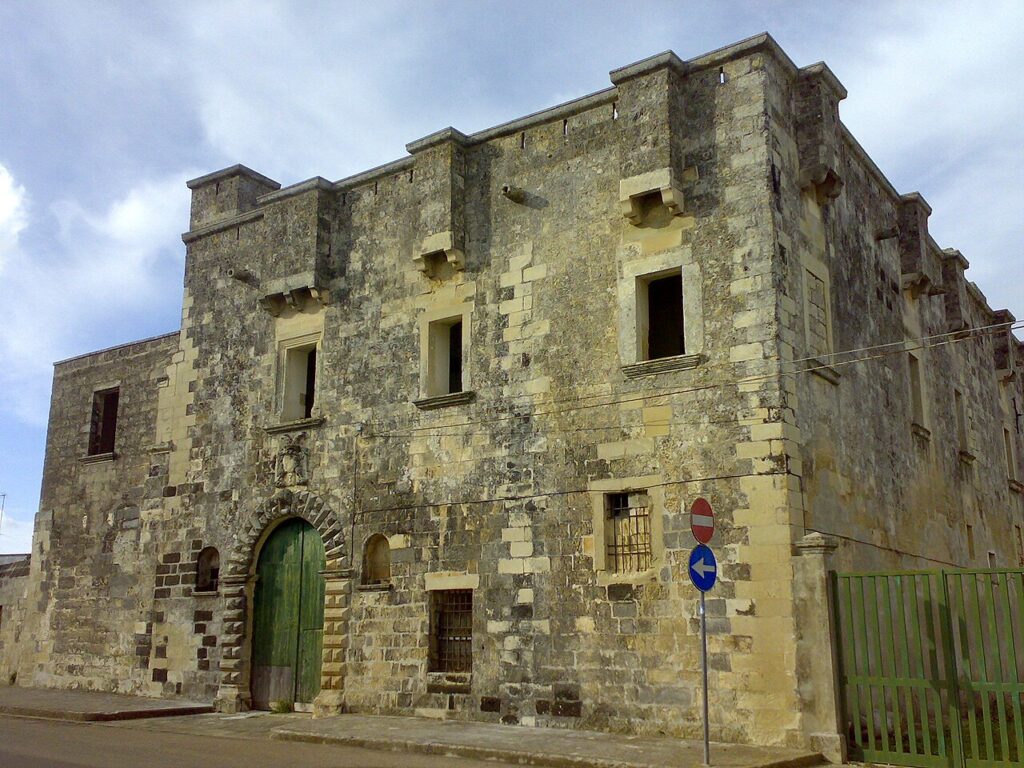
Palazzo Venturi presents itself as a severely functional two-storey structure of the sixteenth century, its defensive character evident in the loopholes positioned above the entrance portal and windows. The building functioned as a fortified residence against external attack. Its most distinguished architectural feature is the finely drafted portal, whose rusticated stonework frames the heraldic emblem of the Venturi family.
Palazzo Scarciglia
An elegant eighteenth-century residence, Palazzo Scarciglia was built by the family whose name it bears. The main facade is executed in local limestone and articulates three baroque portals with semicircular arches. The central portal carries the family shield—a tower crowned by an eagle. The interior is organised around a spacious atrium decorated with floral motifs and stone balustrades; the ground floor housed storage and stables, while the noble chambers occupied the upper level.
Palazzo Baronale Gallone
Sited in the frazione (hamlet) of Specchia Gallone, this sixteenth-century palazzo was commissioned by Gian Battista Gallone and subsequently passed to the Sangiovanni family, then to the Basalù, whose name is sometimes used for the building. It represents the architectural ambitions of the rural gentry during the Renaissance period in the Salento.
Flavours of the Salento Interior
The broader region of the Lecce province offers a distinctive food culture rooted in the Mediterranean landscape. Among protected products of the province are Burrata di Andria (IGP), Olio di Puglia (IGP)—the olive oil that underlies southern Italian cooking—and Uva di Puglia (IGP). The Salento’s agrarian calendar has long produced typical preparations preserved across generations: dried figs with almond paste, ricotta-filled pastries both savoury and sweet, tomato conserves, and seafood preparations that reflect the closeness of the Adriatic and Ionian coasts. Though Minervino sits inland, these traditions inform local tables and seasonality.
Visiting Minervino di Lecce
Geography and climate favour a visit in spring (April–May) or autumn (September–October), when temperatures are moderate and the Mediterranean sun is gentler than in high summer. Winters are mild, with average January temperatures around 16°C, while August averages 26°C. The region receives approximately 676 millimetres of rainfall annually, concentrated in autumn and winter. The village lies in seismic zone 4, indicating very low earthquake risk.
Access and travel times are shown in the table below. From Lecce, the regional road network connects southward and inland through the network of comune (municipal) seats that make up the lower Salento. Public transport links Minervino to regional centres; however, a private car offers greater flexibility for exploring the scattered archaeological sites and the network of neighbouring villages within the province. The Via Francigena pilgrimage route passes through the territory, making the village a logical halt for walkers crossing southern Italy toward Bari or the heel of Puglia.
| Departure point | Distance | Travel time (car) |
|---|---|---|
| Lecce | 40 km | 45–55 minutes |
| Brindisi airport | 65 km | 1 hour 15 minutes |
| Bari | 180 km | 2 hours 15 minutes |
The feast of the patron saint, Sant’Antonio da Padova, falls on 13 June and brings together the parish community. Minervino’s administrative heritage and position within Borghi Autentici d’Italia indicate an interest in sustainable tourism and the preservation of architectural character. Visitors drawn to prehistoric monuments will find the Dolmen Li Scusi and its cultural park an essential stop; those interested in feudal history and Renaissance stone-carving will find the churches and noble palaces worth sustained attention. The village itself offers the quiet rhythm of an inland Salento settlement, without the coastal tourism infrastructure of nearby Santa Cesarea Terme or the bustle of Lecce, making it a suitable base for exploring the archaeological and architectural hinterland on foot or by short drives to neighbouring comuni including Botrugno and Carpignano Salentino.
Frequently asked questions about Minervino di Lecce
How far is Minervino di Lecce from Lecce city, and what is the best way to reach it by car?
Minervino di Lecce lies approximately 40 kilometres inland from Lecce. By car, take the SS16 state road heading south from Lecce towards Santa Cesarea Terme, then follow local roads towards the village. The journey takes roughly 45–50 minutes. The nearest motorway access is via the A16 Adriatica, exiting at Lecce. Parking is available in the village centre near the main piazza.
When is the best time to visit Minervino di Lecce?
Visit between late spring and early autumn (May–September) for pleasant weather suited to exploring megalithic sites and walking the Via Francigena. The patron saint feast of Sant'Antonio da Padova on June 13th offers cultural immersion and traditional celebrations. Summer temperatures in the Salento plain average 25–30°C; bring sun protection and water for outdoor archaeological visits.
What are the opening hours for the Dolmen Li Scusi, and is there a visitor centre?
The Dolmen Li Scusi is accessible year-round as an open-air megalithic monument located outside the village. No formal ticketing or fixed hours apply. The site is free to visit. For guided tours and detailed archaeological information, contact the municipal tourist office or local heritage associations in advance. Most visits last 30–45 minutes.
Are there documented walking or cycling routes through Minervino di Lecce?
Minervino di Lecce sits on the Via Francigena pilgrimage route, offering long-distance walking access through southern Italian landscapes. Local trails connect to neighbouring villages including Giuggianello and Uggiano la Chiesa. Cycling is suitable across the flat limestone plain. Consult CAI (Italian Alpine Club) regional guides or the Borghi Autentici d'Italia network for marked route details and maps.
How long should I plan to spend in Minervino di Lecce village?
A full day (6–8 hours) allows time to explore the Dolmen Li Scusi, visit Renaissance churches with carved stone panels, tour noble palaces and their heraldic facades, and enjoy local Salento cuisine. Half-day visits (3–4 hours) cover the village centre and one major monument. Evening visits suit photography of architectural details and sunset views across the plain.
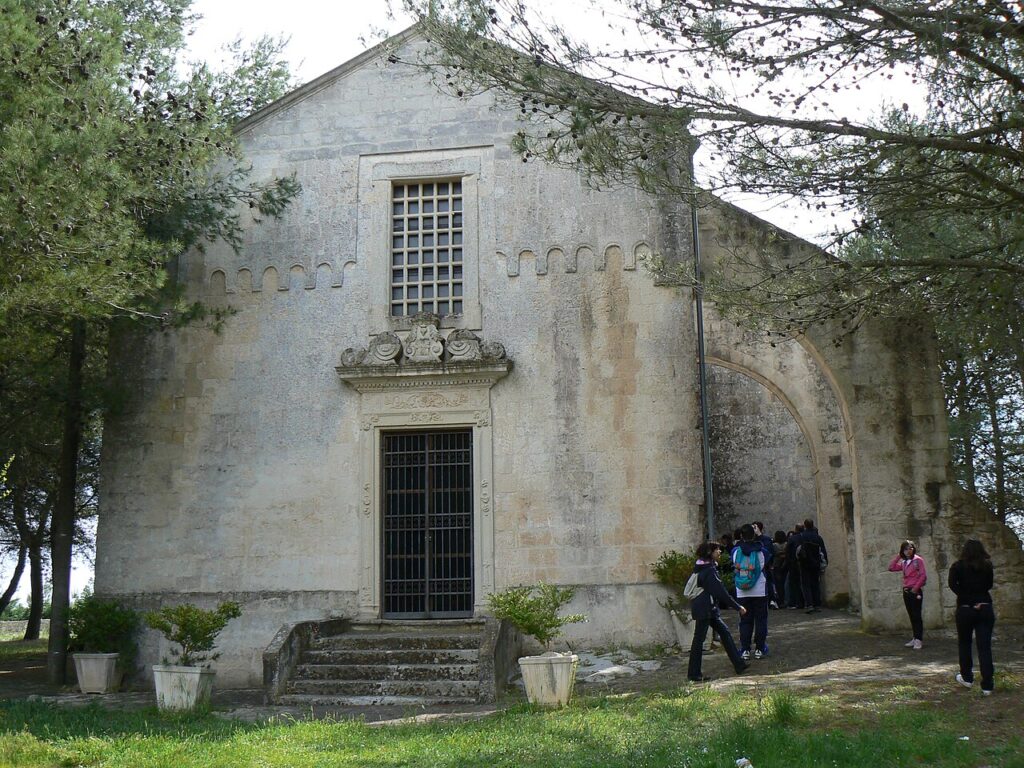
📷 Photo Gallery — Minervino di Lecce
In Apulia More villages to discover
Grottaglie
Plains
Discover what to see in Grottaglie, Puglia: ceramic quarter, Castello Episcopio, ravines and local food. Practical travel guide with history and tips.
Apricena
Plains
Discover Apricena, a stone-quarrying town in Puglia's Gargano area. Explore medieval heritage, local cuisine, and authentic Southern Italian charm.
Triggiano
Plains
What to see in Triggiano? Discover the 5 must-see attractions, from the Baronial Castle to the Mother Church, and experience the tradition of this Apulian village.
Volturara Appula
 Hills
Hills
A hill village of 378 residents at 489 metres in the Daunian Subapennines. Volturara Appula offers medieval lanes, panoramic views over the Tavoliere, and the quiet of a place most travellers never find.
San Paolo di Civitate
Plains
A ridge-top village above the Tavoliere plain in Foggia province, San Paolo di Civitate holds Roman ruins, Norman battlefield history, and an unhurried agricultural life.
Castellaneta
 Sea
Sea
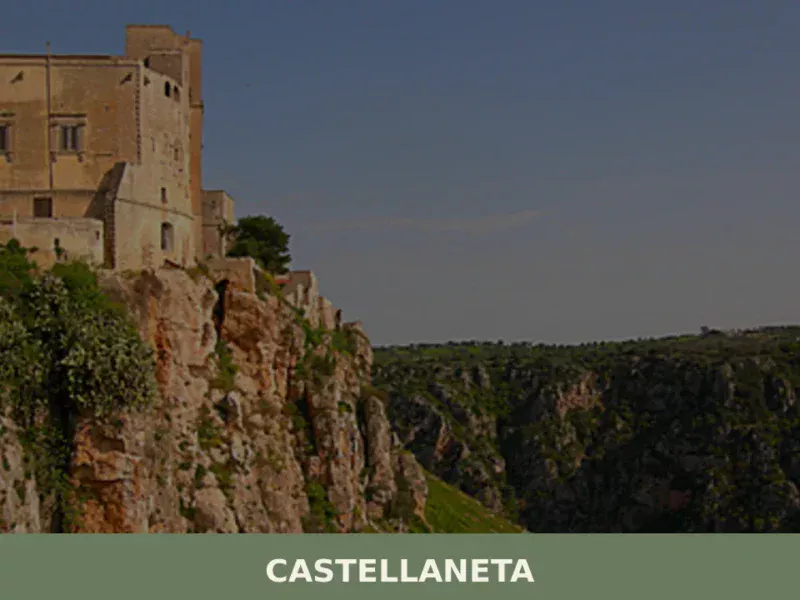
Castellaneta, a comune of around 15,784 inhabitants in the province of Taranto, sits above a dramatic ravine system carved into the Apulian plateau — a geological fact that has determined the town’s layout, its defensive logic, and the views that define it today. Visitors drawn to this corner of southern Puglia often arrive expecting little […]
San Marco in Lamis
Hills
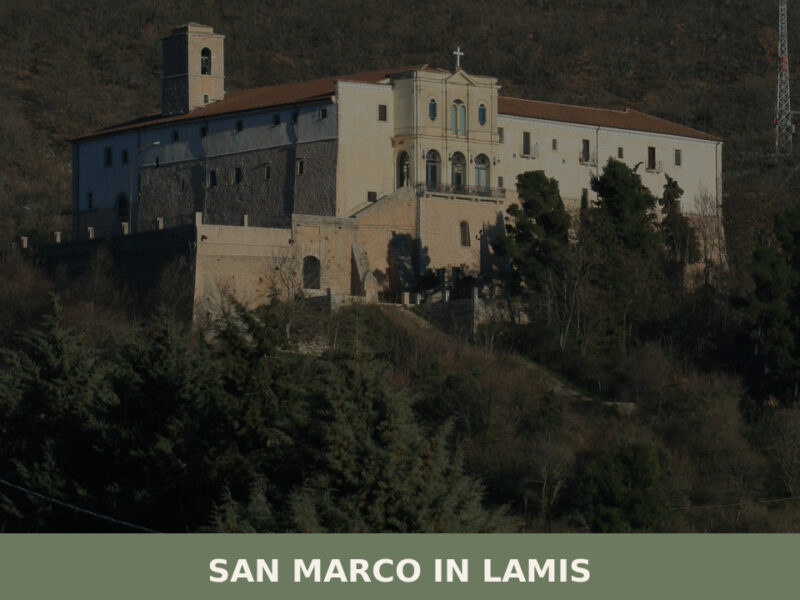
A highland town on the western Gargano, San Marco in Lamis holds ancient monasteries, a dramatic Good Friday fire procession, and the quiet intensity of inland Puglia.
Maruggio
Sea
A 5,100-soul village in Taranto province, hidden in a natural depression and rebuilt by military monks. Medieval stone, salt ponds, Greek shipwrecks offshore.
San Pietro Vernotico
Sea
What to see in San Pietro Vernotico, Italy? Discover its 14th-century Torre Quadrata and the historic Chiesa Matrice. Explore this village, 36 m above sea level, for its rich past.
Peschici
Sea
A settlement of 4,276 souls on the Gargano coast. Medieval core, Adriatic light and deep roots in Apulian food and faith.




🏡 Know Minervino di Lecce better than we do?
If you’re a local or have been there, your knowledge matters: add what’s missing or fix a detail on this page.