


Volpiano
 Plains
3 Baroque churches and a Roman centuriation grid still visible in the fields make Volpiano a rewarding stop in the Canavese between Turin and the Alps.
Volpiano: Roman Roots, Abbey Legacy and Baroque Churches in Canavese
Stand at the edge of Volpiano on a clear morning and the flat agricultural land stretches east toward the Malone torrent, its banks edged with poplar rows and cascine whose names — Germania, Ruffino, Verdina — echo centuries of rural continuity. The grid of fields around the old farmsteads still follows the straight lines of Roman land division, a geometry so persistent that it survives satellite mapping as clearly as it survives the eye. The Malone, the Bendola, the rio San Giovanni, and the rio Ritano thread through a landscape that balances wheat fields and light industry with an ease typical of the Canavese lowlands.
Volpiano village in Piedmont draws visitors for two distinct reasons: its concentration of Baroque religious architecture, which punches well above its weight for a town of fifteen thousand, and its quietly remarkable historical arc, from Roman centuriation through medieval times to the modern era. Sitting at 219 metres above sea level on the eastern rim of the Vauda plateau, in the Metropolitan City of Torino, it belongs geographically and culturally to the Canavese, a sub-region that rewards slow exploration.
From Vicus Ulpianus to the Dukes of Savoy: A Long Arc of Power
The name itself carries the weight of the past. Scholarly research traces the toponym to Vicus Ulpianus, derived from the Roman family name Ulpius, pointing to a settlement organised during the period of Roman colonisation. An alternative reading connects the first syllable to the Piedmontese word Vàuda, itself from a Celtic root meaning woodland, yielding the meaning “the plain of the Vauda.” Both interpretations agree on one thing: this was occupied, named and structured land long before the medieval record begins. Archaeological evidence confirms the Roman presence firmly, including traces of centuriation still visible around the old farmsteads and the remains of a large rural villa uncovered on the boundary with a neighbouring municipality during high-speed rail excavations.
The first written document to mention Volpiano dates to 14 May 1014, when the emperor Henry II placed the properties of the abbey of Fruttuaria under imperial protection. That diploma named among its holdings Vulpianum cum castellum et capella — Volpiano with its castle and chapel — and also mentioned a gateway (valva de Vulpiano), confirming that the settlement already had three defining features: a fortification, a place of worship, and an enclosed entrance. The abbey of Fruttuaria itself was closely connected to one of the most significant figures born of this territory, Guglielmo da Volpiano, a monk, abbot, musician and monastic architect who spent his career reforming monasteries across France and the Empire. His family held land here; the abbey he designed and promoted became celebrated across medieval Europe.
Over the following centuries Volpiano passed between different powers with a regularity that reflects its strategic position on routes connecting Turin to the Canavese valleys. The local castle served at times as a residence for the abbots of Fruttuaria. It changed hands during the Canavese conflicts, came under the Marquisate of Monferrat, survived as a fortified position during the wars between France and Spain in the sixteenth century, and was finally taken and destroyed by French forces in 1555. The town entered definitively into Savoyard territory in 1631 under the terms of the Treaty of Cherasco, closing a long chapter of contested sovereignty. In Piedmontese the town is still called Volpian or Vorpian, pronunciations that preserve a spoken identity distinct from the written Italian form.
Churches, Courtyards and the Fabric of the Old Town
Church of Santi Pietro e Paolo
The parish church dedicated to Saints Peter and Paul, the town’s patron saints, stands as the oldest surviving religious structure in Volpiano. Its origins may lie in a chapel attached to the medieval castle, and its architectural lines show traces of a Gothic sensibility, though repeated enlargements and reconstructions over the centuries have layered its appearance considerably. Significant restoration work was carried out between 1875 and 1879 at the initiative of the local vicar Monsignor Vaschetti, and the most recent intervention dates to 2019. The church remains the focal point of the town’s liturgical calendar, particularly around the feast of its patron saints.
Church of the Confraternita
Built around 1731 to a design by architect Antonio Maria Lampo, this church is the most architecturally refined building in Volpiano. Constructed in a pronounced Baroque style, it was known locally as Gesia neuva — the New Church. Notably, it was built using materials recovered from the demolished castle walls, so the old fortification lives on, in a sense, in the curves and cornices of this sacred space. The interior features a carved wooden choir. Above the entrance door sits a pipe organ preserved in excellent condition. The spatial experimentation of Lampo’s design reflects the broader architectural conversations happening in Piedmont at the time.
Church of San Rocco
After a plague epidemic, the community of Volpiano chose in 1683 to rebuild an existing chapel in honour of San Rocco, the saint traditionally invoked against pestilence. The interior holds five canvas paintings, one depicting San Rocco alongside San Sebastiano, and a crucifix above the altar that dates to the fifteenth century. The church also houses a pipe organ assembled by volunteers coordinated by Domenico Reano, using tin and fir wood pipes — 363 in total — that produce a tone suited equally to liturgical accompaniment and chamber concerts. The instrument and the origin story together make this small chapel one of the more memorable stops in town.
Sanctuary of Santa Maria delle Grazie
Construction of the current sanctuary began in 1744 under the direction of master builder Carlo Antonio De Stefanis and was completed and blessed in August 1746. During floor restoration work in 2007, excavations revealed Romanesque masonry from an earlier structure that had left no documentary trace, as well as Renaissance-period remains and associated burials from two distinct phases. The elegant façade and bell tower give the building a civic as well as devotional presence on its square.
The Cascine Malone and the Rural Landscape
About three kilometres northeast of the town centre, the hamlet of Cascine Malone sits on the left bank of the Malone torrent. It represents the agricultural character of Volpiano’s territory more directly than any church or piazza: working farmsteads, river-bottom vegetation and a pace shaped by cultivation rather than commerce. Visitors who walk or cycle out from the centre gain a clearer sense of how the town’s identity is rooted in the Vauda plateau’s mix of arable land and water. The surrounding countryside, with its Roman grid still faintly legible, rewards unhurried attention.
Land, Agriculture and What Grows in the Canavese Plain
Volpiano is described in its own administrative identity as both an agricultural and an industrial centre. The Canavese lowlands are rice and grain country, watered by numerous streams and historically tied to the rhythms of cereal farming, with local food culture drawing on this productive plain through locally grown ingredients, seasonal preservation and the cucina povera tradition that has long defined Piedmontese rural cooking.
Visitors curious about Piedmontese food culture will find the wider Canavese area well represented by producers and seasonal markets. The town’s connections to Foglizzo and to Barbania, both set in the same agricultural landscape, extend the range of local flavours worth exploring in the area.
Planning a Visit to Volpiano
Volpiano is well connected to Turin by the Ferrovia Canavesana, which connects it to Turin. The journey from Turin is short and the station sits close to the town centre, making a day visit without a car entirely practical. By road, the town is accessible from the Turin ring road network to the southeast. If you arrive by car, parking near the central piazza is generally straightforward outside market days.
Spring and early autumn are the most comfortable seasons for exploring the churches and the surrounding agricultural landscape. Summer brings long light and easy cycling conditions on the flat roads toward the Malone, while winter weekends can be quiet enough to appreciate the Baroque interiors of the Confraternita church without distraction. The civic library hosts periodic events focused on local territory — the Volpiano a Porte Aperte and I luoghi delle parole programmes have in recent years offered access to spaces and collections not always open to the general public, worth checking before a visit.
For travellers building a longer Canavese itinerary, Volpiano pairs well with neighbouring communities that share its mix of agricultural landscape and layered history. Rondissone lies close by on the plain, while Casalborgone and Baldissero Torinese offer different vantage points on the Torinese hinterland. A circuit through this part of Piedmont rewards those who take the minor roads rather than the motorway.
| Departure | Distance | Time |
|---|---|---|
| Turin (Torino Porta Susa) | approx. 20 km | 25–35 min by train or car |
| Milan | approx. 130 km | 1 h 20 min by car |
| Ivrea | approx. 25 km | 25–30 min by car |
| Caselle Torinese Airport | approx. 10 km | 15 min by car |
That combination — medieval abbey connections, Baroque organ music and contemporary industry — captures the layered, sometimes incongruous character of a place that has never quite fit a single category.
Frequently asked questions about Volpiano
How do you reach Volpiano by car and public transport?
By car, Volpiano is reached from the A4 Turin–Milan motorway, Settimo Torinese exit, then approximately 8 km northward on the SP2. From downtown Turin it is about 20 km. By train, the nearest station is Settimo Torinese, served by the Turin–Ivrea line; from there you continue by bus or taxi. GTT and regional bus services connect Volpiano with Turin and the towns of Canavese with regular routes.
When is Volpiano's patron saint celebrated and what does the celebration include?
Volpiano celebrates Saints Peter and Paul on June 29th. As in many Piedmont towns, the celebration includes a solemn mass in the main parish church, a procession and moments of popular festivities in the historic centre. The period coincides with the start of summer in Canavese, when long days and mild weather make a visit to the surrounding agricultural areas pleasant as well.
How long does it take to visit Volpiano and where can you park?
A visit to the historic centre and main Baroque churches takes approximately two to three hours. For those wanting to explore the historic farmhouses and surrounding waterways, half a day is recommended. Volpiano has free public parking near the town hall and central square. There are no particularly restrictive limited traffic zones, making car access convenient for most visitors.
Are there cycling or hiking routes around Volpiano?
The flat territory around Volpiano is well suited for cycling. The Canavese cycling network touches the area, with routes along the Malone stream that runs through the municipality. Rural roads between historic farmhouses and poplar rows are easy to travel even for untrained cyclists. For more structured hikes, the nearby Vauda plateau — a protected area — offers documented CAI trails just a few kilometres to the west.
Are there farm stays or accommodation options in Volpiano and the immediate surroundings?
Given the agricultural vocation of the Canavese territory, in the Volpiano area and in neighbouring towns such as Brandizzo and San Benigno Canavese there are farm stays and B&Bs set in the rural landscape. For a wider accommodation offer, Settimo Torinese about 8 km away has mid-range hotels suitable for business stays as well. It is recommended to check availability on portals such as Booking.com or the Turin Metropolitan City website.
📷 Photo Gallery — Volpiano


In Piedmont More villages to discover
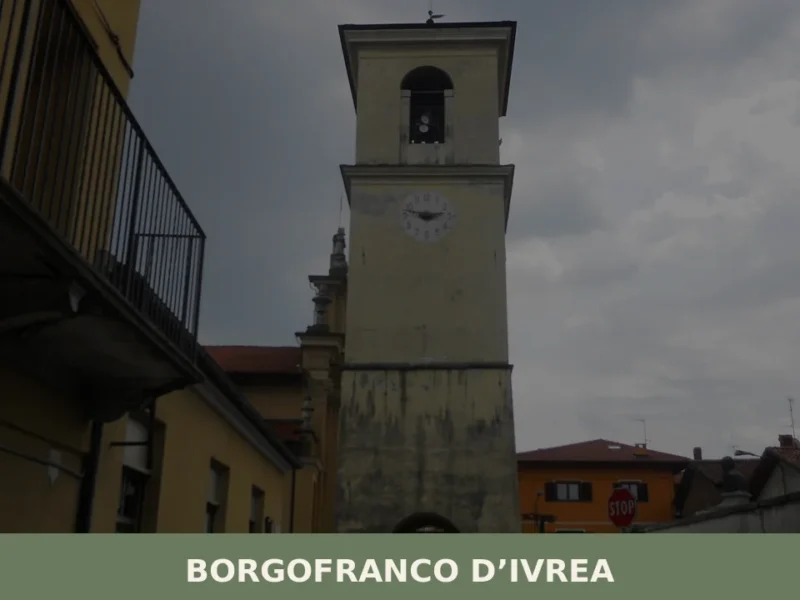
Borgofranco d’Ivrea
 Hills
Hills
Discover what to see in Borgofranco d'Ivrea: medieval street grid, Serra d'Ivrea moraine, Canavese food and practical travel tips for this Piedmont village.
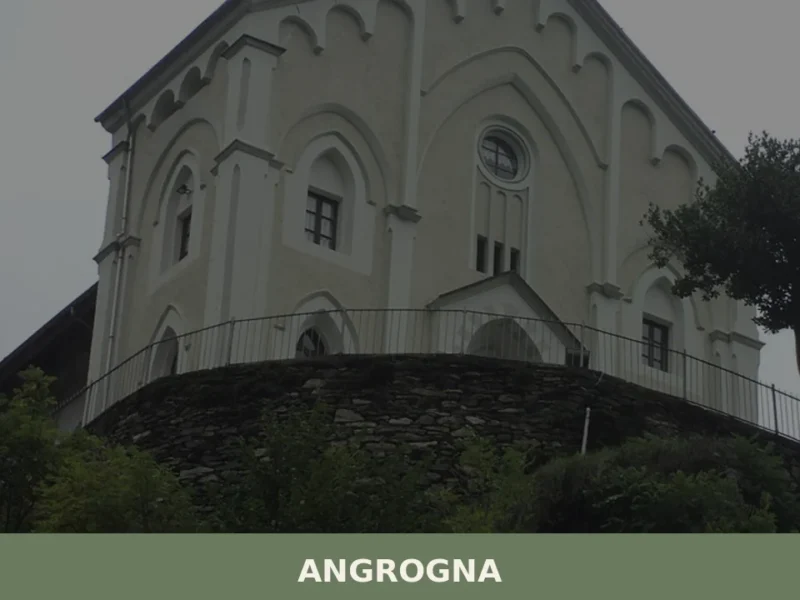
Angrogna
 Mountain
What to see in Angrogna: Chanforan, the Ghieisa d'la Tana, Waldensian trails, historic hamlets and mountain cuisine. A complete guide to the village.
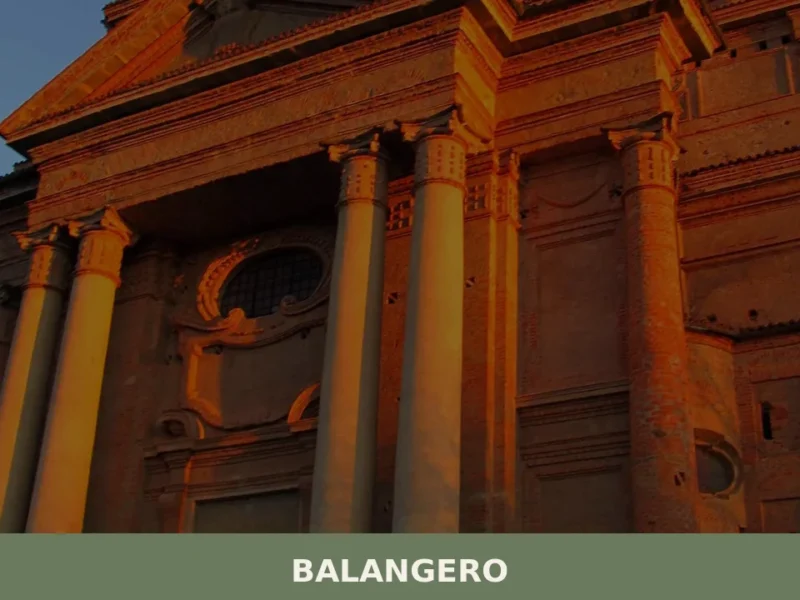
Balangero
Hills
Balangero has just over 3,000 inhabitants and sits at 440 metres above sea level on a hillside in the northern part of the province of Turin. The village is known for having hosted, within its municipal territory, one of the largest asbestos mines in Europe — an extractive operation that left a deep mark on […]
Balme
Mountain
What to see in Balme, a village at 1,432 m in the Valle di Viù (TO): the historic centre, high pastures, the Alpi Cozie Park, local food and practical tips for your visit.
Baldissero Torinese
Hills
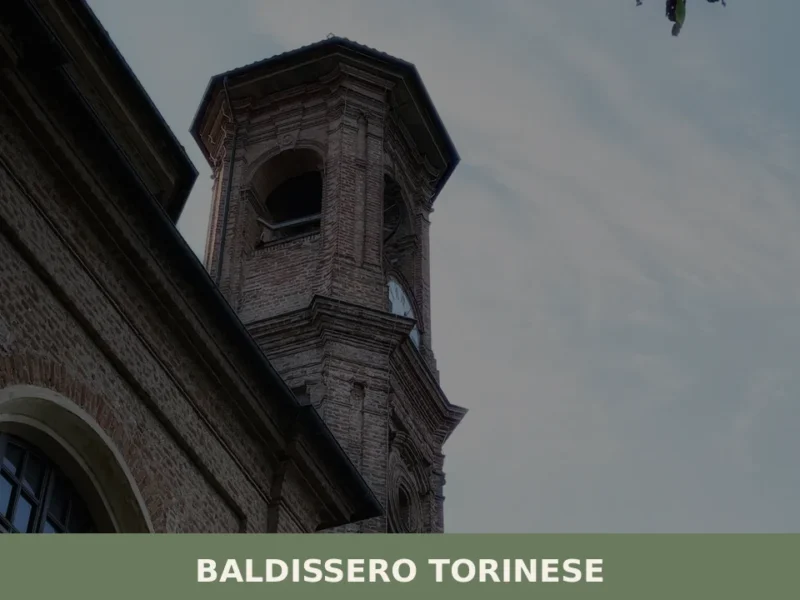
Baldissero Torinese stands at 421 metres above sea level, on the eastern slope of the Turin hills, less than fifteen kilometres from the Piedmontese regional capital. With a population of 3,789, the municipality belongs to the Metropolitan City of Turin and retains an urban layout that still reflects its historical layers, from the medieval core […]

San Benedetto Belbo
Hills
145 residents, one literary trail, one medieval monastery legacy. San Benedetto Belbo rewards slow travellers with Fenoglio's landscape and Langa hilltop views.
Monteu da Po
Hills
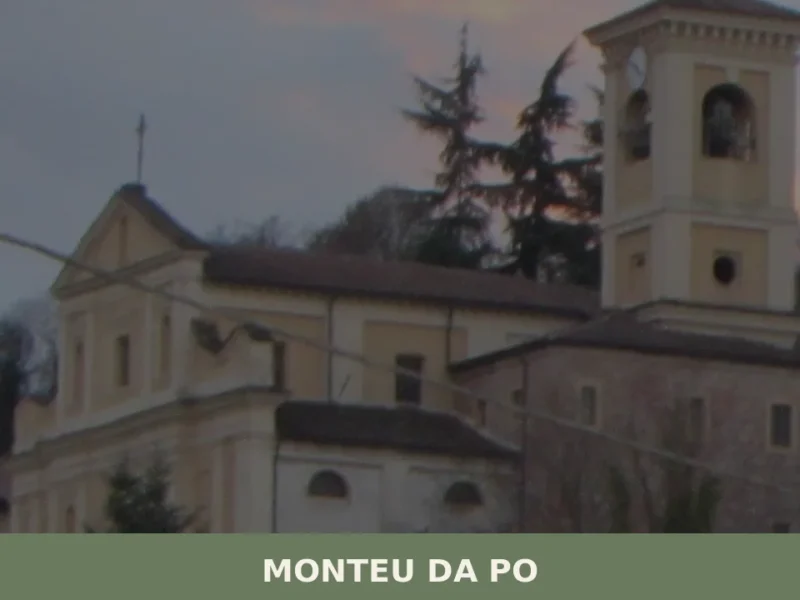
Scopri Monteu da Po, affascinante borgo piemontese sulle rive del Po. Storia, natura e tradizioni in un angolo autentico del Piemonte da non perdere.
Andrate
Mountain
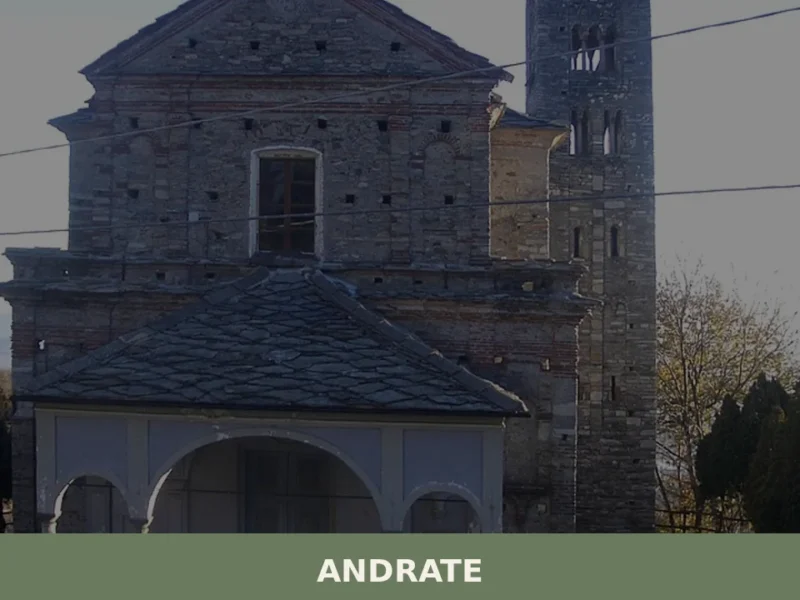
What to see in Andrate in Piedmont: panoramic views over the Serra d'Ivrea, trails, chestnut groves, Canavese cuisine. Complete guide with history and practical information.

Acceglio
Mountain
Discover what to see in Acceglio, a 170-resident mountain village at the head of Valle Maira in Cuneo, Piemonte — trails, churches, alpine pastures and local food.
Almese
Hills
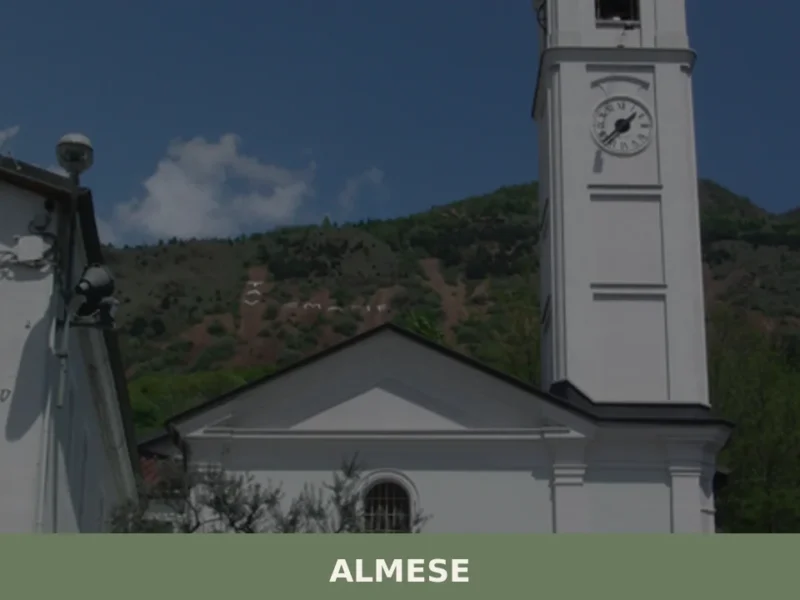
In 1029, a document from the Abbey of Novalesa recorded the name Almese for the first time, linked to a series of land holdings in the lower Val di Susa. That place name — probably derived from a Celtic or pre-Latin word connected to alpine pastures — appears in a territory that already served as […]
🏡 Know Volpiano better than we do?
If you’re a local or have been there, your knowledge matters: add what’s missing or fix a detail on this page.