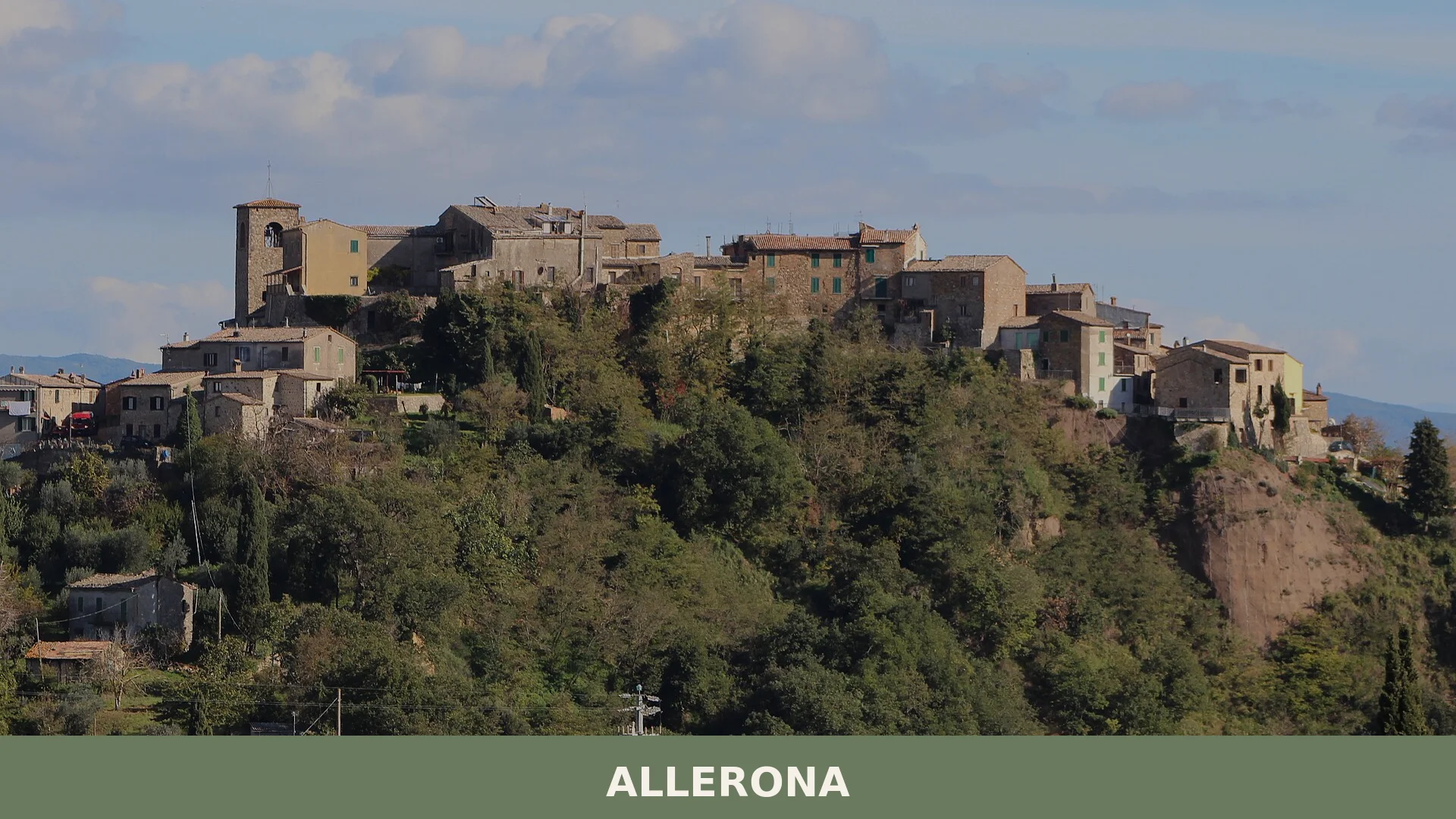
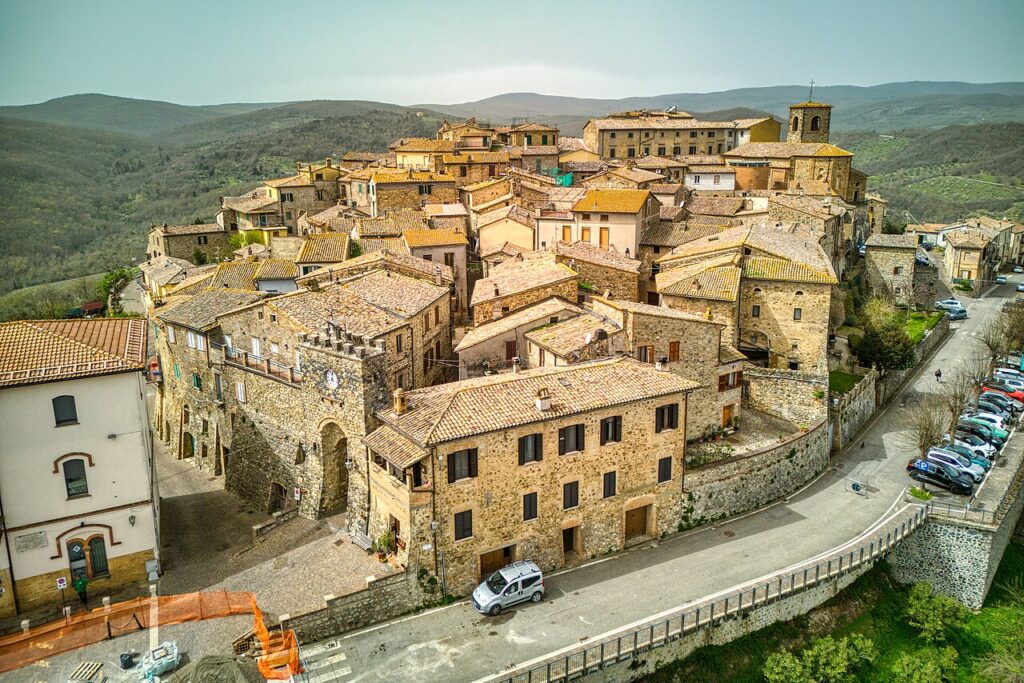
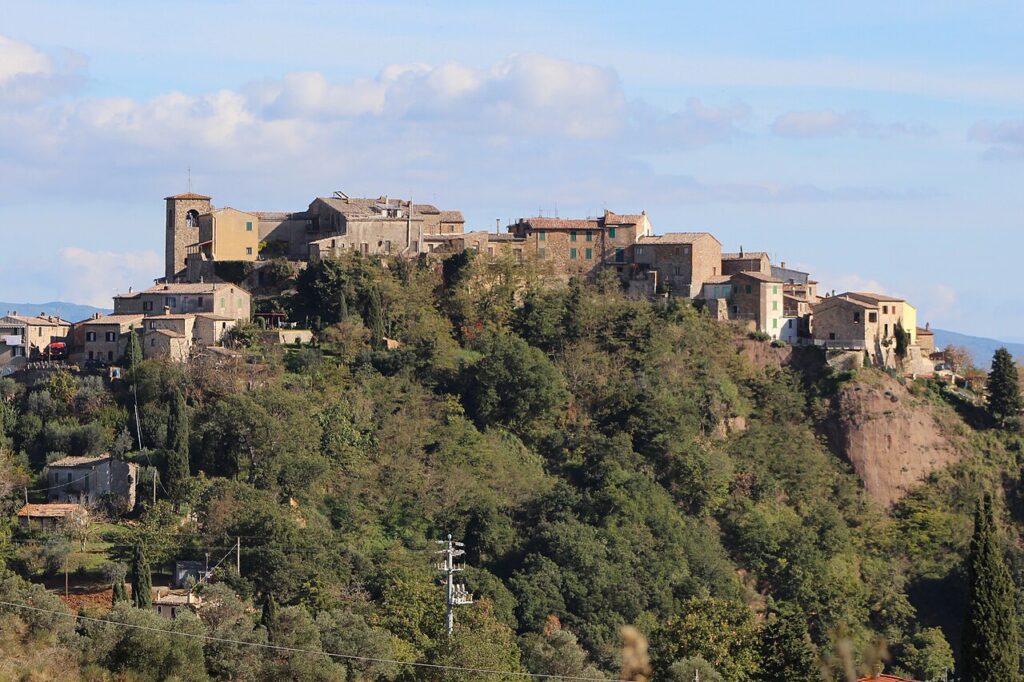
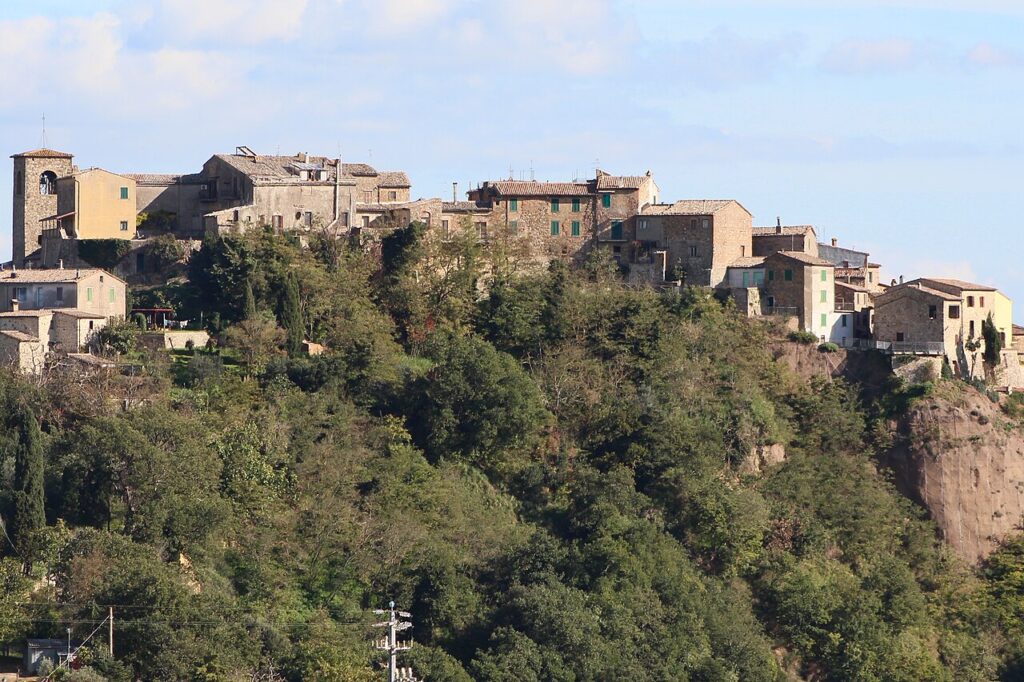
Stone walls rise at 472 metres where Umbria touches its western edge, where three administrative borders meet in a single square kilometre. This is where Allerona sits—a village so positioned that it shares territory with both Lazio and Tuscany, a geographical singularity shared by only three other Umbrian communes. The light here feels borrowed from two other regions, and the agrarian calendar that governs local life carries the rhythms of agricultural workers across three provinces.
Allerona village in Umbria holds roughly 1,687 residents within its administrative bounds. The village draws those seeking to understand how rural tradition survives—not as performance, but as lived practice—and those interested in the architectural markers of a former frontier settlement. Its patron, Sant’Isidoro, anchors the ecclesiastical identity, while the annual celebration of Sant’Isidoro, protector of farmers, reveals how labour and spirituality remain inseparable in this landscape.
A Fortress Between Powers
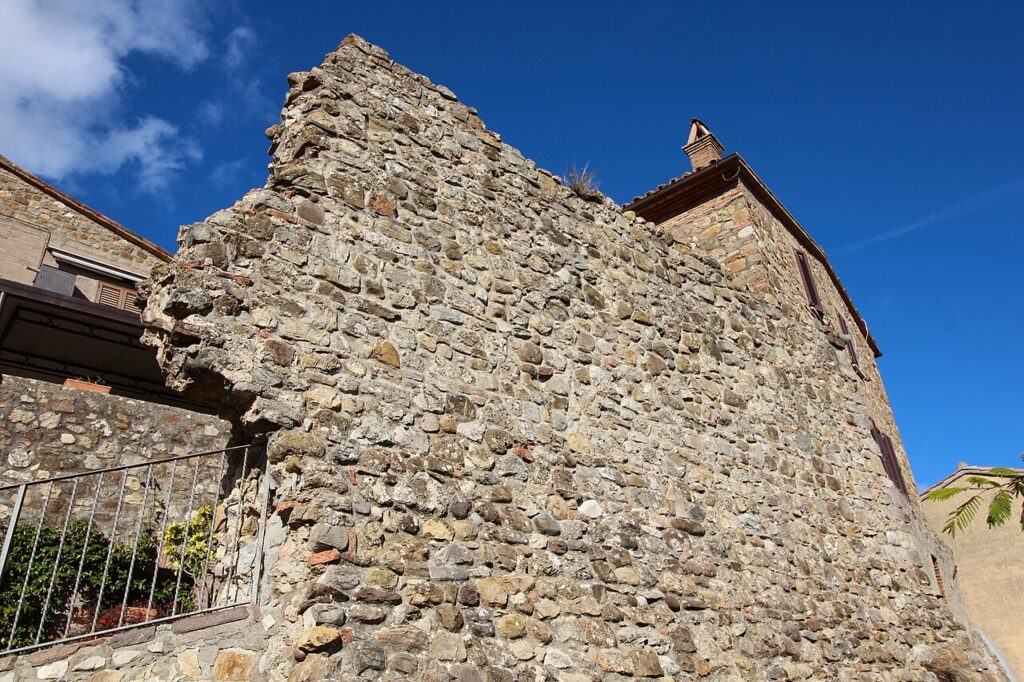
Allerona’s history is bound to its position. The village once served as a baluardo of Orvieto toward Chiusi—a defensive outpost protecting the territory of a more powerful neighbour. This strategic role shaped its form: the settlement organised itself around points of control and access. The Porta del Sole, the principal gateway to the castello, still marks where that vigilance was concentrated, a physical reminder of an era when borders required walls and gates.
The administrative identity of Allerona crystallised in the twentieth century. The commune’s heraldic symbols—stemma and gonfalone (divided of azure and red)—were formally granted by presidential decree on 25 May 1970. The coat of arms displays three golden peaks crowned by a stag, set against a red field, with a chief of silver bearing crossed corbezzolo sprigs, sustained by a wavy band of azure charged with a twin wavy band of silver. These symbols, adopted formally in the second half of the 20th century, represent how even small settlements claim official presence within the modern state.
Allerona’s strategic importance lay not in size or wealth, but in its position: a point where territorial power had to be asserted and defended. Control of the Porta del Sole meant control of passage itself.
The Portal and Defensive Landscape
Porta del Sole
The gate stands as the most tangible witness to Allerona’s former function as a fortified settlement. Originally the primary access to the castello, the Porta del Sole framed movement between the open countryside and the protected interior. Its design—robust, measured, built to control rather than welcome—speaks to an era when entry required scrutiny. The gate remains the architectural anchor linking the visitor to Allerona’s defensive past, a threshold that once determined who and what moved through the settlement.
The Festival of Agrarian Life
Every third Sunday of May, Allerona suspends ordinary time for the celebration of Sant’Isidoro, protector of farmers and agricultural labourers. The festival does not restrict itself to prayer; it stages a material proclamation of rural identity through the Pugnaloni—allegorical carts built by hand and decorated to represent scenes of agrarian life. Each cart carries an image of Sant’Isidoro’s miracle: the saint kneeling in prayer while an angel works the soil beside him, a visual theology that merges faith with labour.
The term Pugnalone derives from the pungolo, the iron-tipped staff and scraper used by oxherds to drive animals and clean ploughshares. Before the Second World War, these carts were constructed from wood and other materials by farmers themselves during winter months, each one a functional sculpture born from the rhythms of seasonal work. Today they remain a testament to how craft and tradition persist, though now they are vehicles of collective memory rather than practical tools. The carts compete for recognition, judged and honoured at the festival’s close. A marked distinction separates the Pugnaloni of Allerona from those of the neighbouring comune of Acquapendente, a territorial distinction preserved in the details of craft and design.
Flavours of the Territory
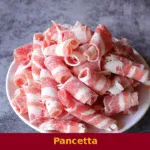
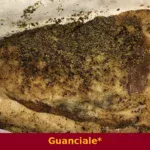
The landscape surrounding Allerona supports the agricultural traditions that structure local life. Regional specialities such as guanciale, the cured jowl that anchors Roman and Umbrian cooking, and mazzafegati, the herb-spiced liver sausage, belong to the broader food culture of the province of Terni. The territorial production of Pecorino Toscano DOP, the hard-pressed sheep’s cheese, and Vitellone bianco dell’Appennino Centrale IGP, the white beef of the central Apennine, underlines how Allerona’s position at a regional boundary also situates it within multiple food systems. These products emerge not as tourist commodities but as expressions of the terrain—its pastures, its craft knowledge, its seasonal calendar.
Planning a Visit to Allerona
Allerona lies in the province of Terni, in southern Umbria. The village is accessible by road; visitors approaching from the north typically transit through Orvieto, the larger hill town to the north-east. Public transport connections to Allerona itself are limited, and independent travel by car remains the most practical approach. The village is best visited during the warmer months, when the May festival of Sant’Isidoro takes place and the countryside is fully animate.
| Departure Point | Distance | Driving Time |
|---|---|---|
| Perugia (Umbria) | 120 km | 1 hour 45 minutes |
| Orvieto (Umbria) | 20 km | 25 minutes |
| Terni (Umbria) | 65 km | 1 hour 10 minutes |
| Rome | 160 km | 2 hours 10 minutes |
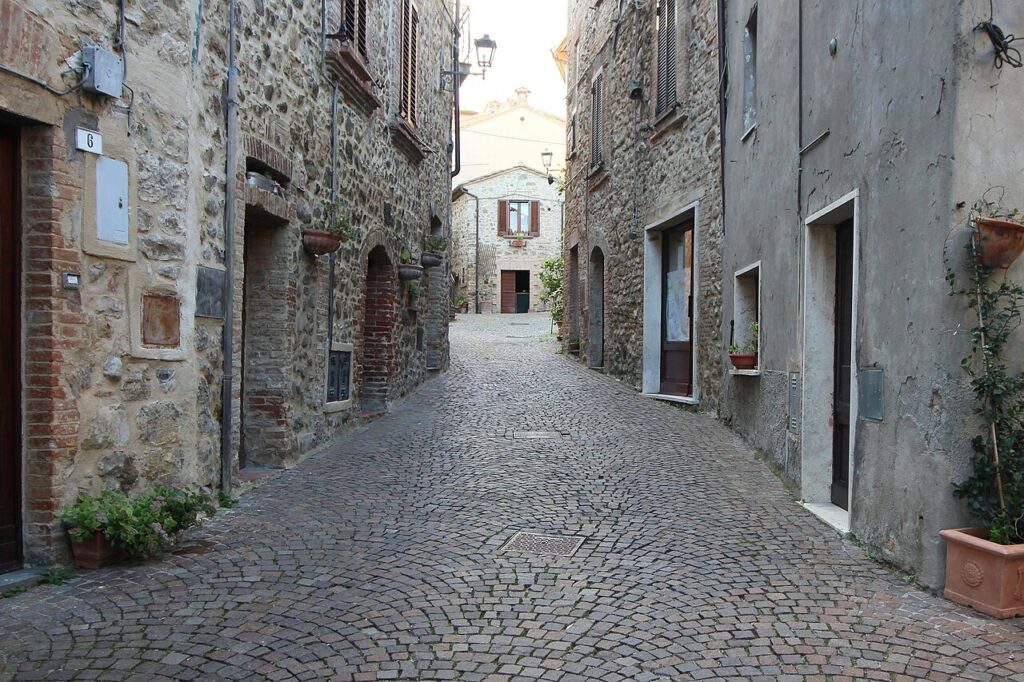
The village itself rewards a half-day visit. Walk the compact street network, observe the Porta del Sole, and absorb the scale and texture of a settlement built for defence rather than display. If timing aligns with the May festival, the presence of the Pugnaloni transforms the piazza into a space where collective memory becomes visible. Photography is permitted; the light at altitude offers clear views across the Umbrian landscape toward Tuscany and Lazio. Nearby Orvieto, with its cathedral and urban scale, serves as a natural companion destination for a longer regional itinerary through Umbria.
 Mountain