


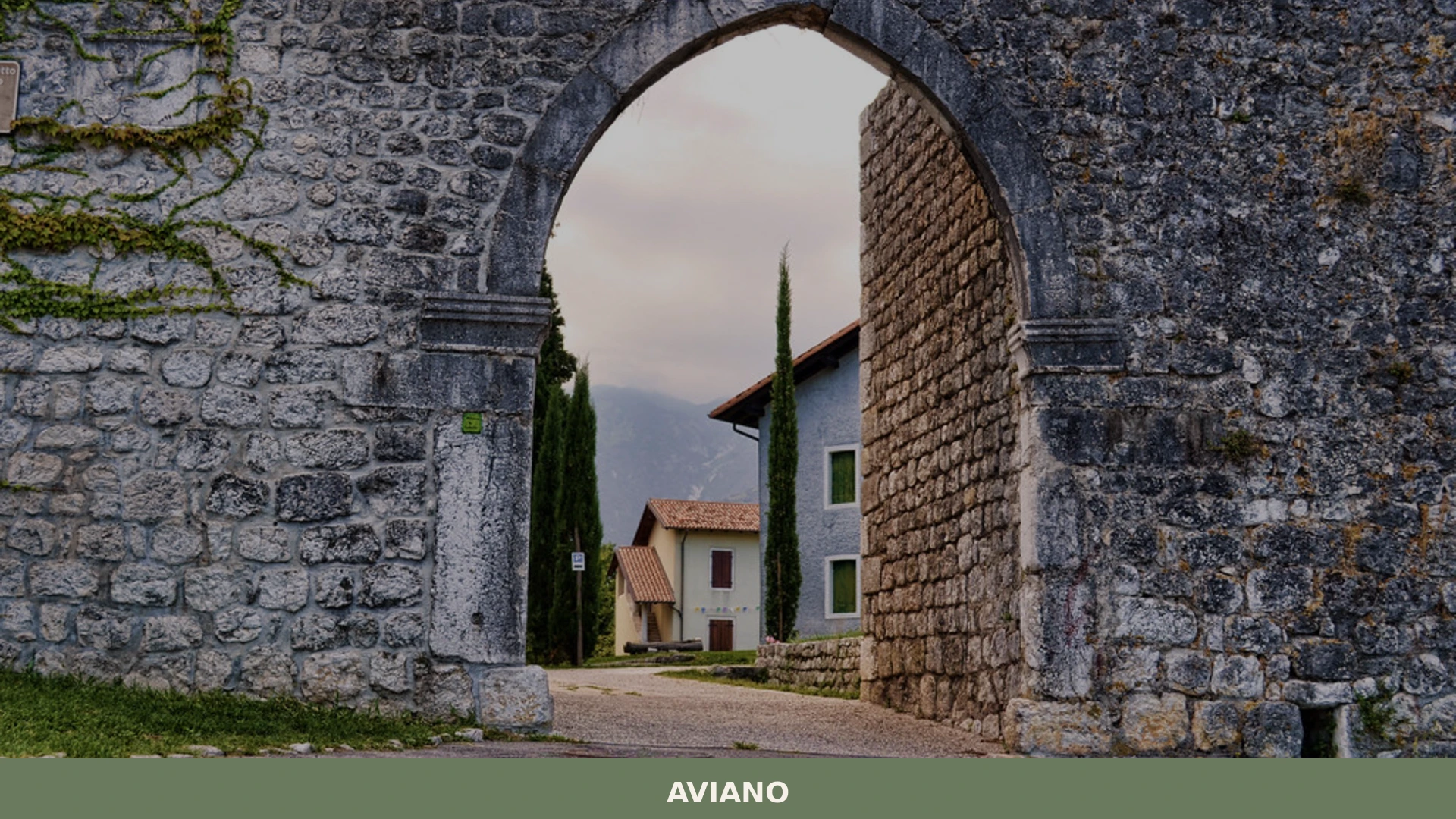

What to see in Aviano, Italy: Explore this town of 8,948 inhabitants, from its 10th-century castle ruins to the Cathedral of San Zenone. Discover its rich history and natural beauty.
Discover Aviano
The sturdy remains of the 10th-century castle, with its two towers and defensive walls, stand guard on a hill overlooking the plain where Aviano developed.
These ancient fortifications, once a stronghold of the Patriarchate of Aquileia, whisper tales of sieges and conquests that shaped the Friulian landscape for centuries.
Below, the Duomo, built between 1775 and 1832, showcases the architectural evolution of the village, contrasting the medieval past with later Baroque influences.
For those seeking to discover what to see in Aviano, this guide offers an overview of its significant historical sites and natural beauty.
With a population of 8,948 inhabitants, this Friuli-Venezia Giulia town presents a rich tapestry of experiences, from exploring the castle ruins to visiting the C.R.O., a leading Italian cancer research center.
Visitors to Aviano will find a blend of cultural depth and opportunities for outdoor activities in the nearby Dolomites.
Storia di Aviano
The origins of Aviano stretch back to the Bronze Age, as archaeological findings confirm its early settlement.
Over time, the area transitioned into an agricultural hub, primarily dependent on the influential municipality of Concordia Sagittaria. The very name, Aviano, is believed to stem from a prediale name, a term referring to land ownership, likely linked to a Roman landowner named Avilius or Avidius.
During the early Middle Ages, the territory now known as Aviano was characterized by scattered parish churches and small villages, corresponding to the hamlets visible today across the plain, offering a historical perspective on what to see in Aviano.
A pivotal moment in Aviano’s development occurred around the 11th century, when the Patriarchate of Aquileia constructed a castle on a strategic hill overlooking the surrounding plain.
This formidable structure was subsequently entrusted to local feudal lords, becoming a key defensive and cultural center for the region.
The castle endured multiple sieges throughout the 14th century, first by the Da Camino family and later by the Carraresi, before ultimately falling to the Hungarian troops of Emperor Sigismund in 1411.
Aviano remained under the jurisdiction of the Patriarchal State of Friuli until 1420, when it, along with much of the Patriarchate’s territory, was absorbed into the vast dominion of the Venetian Republic.
The late 15th century brought devastating raids by Ottoman troops in 1477 and 1499, which resulted in significant loss of life and many inhabitants being taken captive.
This period of intense conflict also impacted other nearby communities like Colloredo di Monte Albano, which shared the turbulent fate of the Friulian plain during these centuries.
Following the demise of the Venetian Republic, Aviano experienced the same political shifts as the wider Friuli and Veneto regions, becoming part of the Napoleonic Empire and then the Austrian Empire under the Kingdom of Lombardy-Venetia.
In 1866, as a consequence of the Third War of Italian Independence, which was itself part of the broader Prussian-Austrian War, Aviano was finally annexed to the Kingdom of Italy. The 20th century marked another significant transformation with the establishment of one of the first airfields of the Italian Air Force in Aviano in 1911.
This airfield grew in strategic importance over the decades, eventually evolving into the NATO Aviano Air Base in the 1950s, a crucial military installation that continues to operate today.
Furthermore, the late 1960s saw the mountain area of Piancavallo developed into a popular ski and winter sports resort, adding a new dimension to the municipality’s identity.
The presence of military airfields was also a feature in other Friulian areas, such as Campoformido, highlighting a shared regional history of aviation development.
What to see in Aviano, Friuli-Venezia Giulia: top attractions
Beyond its historical narrative, Aviano offers a diverse range of attractions for visitors, blending ancient ruins with significant religious sites and natural landscapes.
For those wondering what to see in Aviano, the village and its surrounding municipality provide a compelling itinerary that spans centuries of architectural and cultural development. From the imposing remains of a medieval castle to the serene beauty of mountain resorts, each site tells a part of Aviano’s unique story.
The following highlights showcase the rich heritage and diverse experiences awaiting exploration in this Friulian destination.
The Castle Remains
Perched on a hill near the town, the ancient castle of Aviano dates back to the first half of the 10th century.
Visitors can explore the evocative remains, which include two prominent towers, the central mastio, and sections of the original defensive walls.
Within these historic walls stands the Renaissance-style Church of Santa Maria e Giuliana, constructed in 1589, which houses a precious stone Pietà sculpture crafted by skilled masters from Salzburg.
The site offers a tangible connection to the feudal past of the region and provides panoramic views over the surrounding landscape.
Cathedral of San Zenone (Duomo)
The impressive Cathedral of San Zenone, also known as the Duomo, dominates the central square of Aviano, reflecting architectural trends from the late 18th and early 19th centuries.
Construction began in 1775 and concluded in 1832, resulting in a neoclassical façade that belies its rich interior.
Inside, the cathedral displays a collection of significant paintings dating from the 16th and 17th centuries, including one notable work attributed to the school of Paolo Veronese.
This grand religious edifice serves as a spiritual and artistic focal point for the community, dedicated to the patron saint of the town.
Sanctuary of the Madonna del Monte
Standing as a testament to local devotion, the Sanctuary of the Madonna del Monte was originally built in 1615 on the site where a Marian apparition is said to have occurred.
Although its foundations are from the early 17th century, the sanctuary later underwent significant remodeling in the opulent Baroque style, which is evident in its current decorative elements. The structure offers a serene place for reflection and pilgrimage, drawing visitors to its hallowed grounds.
Its location, often associated with a sense of elevation, provides a quiet retreat from the everyday bustle.
Venetian Villas
Aviano is home to a notable collection of seven Venetian villas, each protected by the Regional Institute Venetian Villas (IRVV), underscoring their historical and architectural significance.
Among these elegant estates, Villa Policreti-Fabris, with its adjoining frescoed chapel, Villa Bonassi, and Villa Zanussi-Fabris are open to visitors upon request, offering a glimpse into the opulent lifestyles of past centuries.
Another imposing example is Villa Menegozzi Brazzoduro, dating from the mid-18th century, whose interiors are adorned with landscape views executed in the delicate tempera technique.
These villas represent a significant cultural heritage, showcasing the architectural styles and artistic tastes that flourished under Venetian influence.
Piancavallo Ski Resort and Monte Cavallo
Just a short distance from the main village, the Piancavallo ski resort offers a modern destination for winter sports enthusiasts, situated at an elevation of 1,267 meters (4,157 ft) above sea level.
This resort lies at the foot of Monte Cavallo, which itself reaches a majestic height of 2,250 meters (7,380 ft), providing a dramatic backdrop for outdoor activities.
On one of Monte Cavallo’s peaks, visitors can find a bronze statue of the Virgin Mary, a work by the sculptor Pierino Sam Pordenone (1921–2010), offering a point of contemplation amidst the alpine scenery.
During the warmer months, the area transforms into a destination for hiking and enjoying the mountain environment, making it a year-round attraction for those seeking recreation.
Exploring what to see in Aviano often includes this natural highlight.
Local food and typical products of Aviano
Aviano’s historical foundation as an agricultural area, as evidenced by its early dependence on the municipality of Concordia Sagittaria, establishes a primary connection to the land and its produce.
While specific local dishes or certified products uniquely originating from Aviano are not detailed in the provided historical sources, the broader Friuli-Venezia Giulia region is renowned for its diverse culinary traditions.
The fertile plains surrounding Aviano would have historically yielded grains, vegetables, and supported livestock, forming the basis of a subsistence economy.
This agricultural heritage suggests a diet centered on fresh, seasonal ingredients, prepared with traditional methods common to rural Italian communities. The absence of specific culinary mentions for Aviano in historical records directs attention to the wider regional gastronomic identity, which is known for its robust and authentic flavors.
The Friulian culinary landscape, in general, is characterized by its blend of Alpine, Venetian, and Slavic influences, favoring ingredients such as polenta, various cheeses, and cured meats.
Although no specific Aviano-branded certified products are documented in the available information, visitors to the region can typically find high-quality local produce and artisan goods.
These might include regional cheeses, olive oils, and wines from the nearby Collio and Grave del Friuli areas, often available at local markets or specialty food shops.
The agricultural past of Aviano, shared with many towns across the Friulian plain, indicates a heritage of producing ingredients that contribute to the rich and varied cuisine of Friuli-Venezia Giulia, even if specific Aviano dishes remain unrecorded.
Festivals, events and traditions of Aviano
The community of Aviano gathers annually to celebrate its patron saint, Zeno di Verona, with a dedicated feast day on April 12.
This important religious observance typically involves solemn church services at the Cathedral of San Zenone, honoring the saint who is revered across various parts of northern Italy. The feast day provides an opportunity for local residents to participate in a long-standing tradition, often accompanied by communal gatherings and a sense of shared heritage.
These celebrations reflect the deep-rooted cultural and spiritual identity of the village, adding another dimension to what to see in Aviano beyond its physical landmarks.
While specific details of additional festivals or recurring public events in Aviano are not extensively documented in the available historical records, the patron saint’s feast remains a central fixture in the annual calendar.
Such local celebrations often include elements of music, traditional food stalls, and other activities that bring the community together. Visitors to Aviano during this period can experience a genuine expression of local customs and community spirit, observing how ancient traditions continue to shape modern life in this Friulian town.
When to visit Aviano, Italy and how to get there
The best time to visit Friuli-Venezia Giulia, and Aviano specifically, largely depends on the activities planned.
Winter months, particularly from December to March, are ideal for those interested in skiing and winter sports at the Piancavallo resort, which offers facilities at an elevation of 1,267 meters (4,157 ft).
For visitors seeking to explore the historical sites, hike in the Dolomites foothills, or enjoy the pleasant climate of the plain, spring (April to June) and autumn (September to October) offer milder temperatures and fewer crowds.
The patron saint’s feast on April 12th provides a cultural highlight for spring visitors.
Summers, while warm, are also suitable for outdoor exploration, especially in the higher altitudes of Monte Cavallo.
Aviano is accessible via its railway station on the Sacile-Pinzano Railway, though service is currently limited to the route between Sacile and Maniago.
For travelers arriving by train, reaching Aviano often involves connecting at Sacile, which is on the main Venice-Udine railway line.
From major Italian cities, a day trip from Venice is feasible; Venice is approximately 80 km (50 mi) southwest of Aviano, with train connections via Sacile available through Trenitalia.
For those preferring to drive, Aviano is well-connected by regional roads, and visitors from nearby regions might find it a convenient destination.
International visitors typically fly into Venice Marco Polo Airport (VCE) or Trieste Airport (TRS), then proceed by rental car or train.
Exploring what to see in Aviano is facilitated by its regional connections.
Upon arrival, navigating Aviano and its surrounding hamlets is best done by car for maximum flexibility, although the main village is walkable.
For international visitors, it is advisable to carry some Euros cash, as smaller establishments may not always accept credit cards, and while English is understood at the Aviano Air Base, its prevalence in local shops and restaurants might be limited.
The official website of the Comune di Aviano provides additional practical information for planning a visit to this part of Friuli-Venezia Giulia.
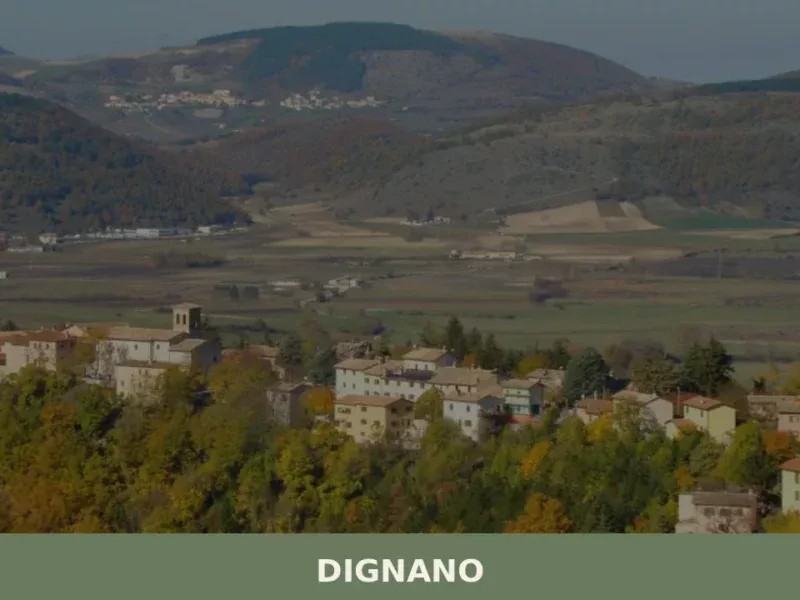
Consider extending your trip to nearby Dignano, another Friulian village with its own historical character.
Frequently asked questions about Aviano
What is the best time to visit Aviano?
Aviano offers distinct experiences depending on the season. For winter sports enthusiasts, the Piancavallo ski resort is ideal from December to March, while the warmer months from late spring to early autumn are perfect for hiking and enjoying the mountain environment around Monte Cavallo. To experience local traditions, consider visiting on April 12th for the feast day of the patron saint, Zeno di Verona, which involves solemn services at the Duomo. Spring and autumn also offer pleasant weather for exploring the village's historical sites and elegant Venetian villas.
What to see in Aviano? Main monuments and landmarks
Aviano boasts several significant landmarks. Explore the evocative Castle Remains, a 10th-century stronghold with two towers and the Church of Santa Maria e Giuliana, offering panoramic views. In the village center, visit the impressive Cathedral of San Zenone (Duomo), a neoclassical edifice housing 16th and 17th-century paintings. The serene Sanctuary of the Madonna del Monte, dating from 1615, showcases Baroque artistry. Discover the elegant Venetian Villas, such as Villa Policreti-Fabris, Villa Bonassi, and Villa Zanussi-Fabris, which can be visited upon request. For nature lovers, the nearby Piancavallo ski resort and Monte Cavallo offer alpine scenery and outdoor activities.
What are the main natural or scenic attractions of Aviano?
The primary natural attraction is the Piancavallo ski resort, nestled at the foot of Monte Cavallo. This area, reaching up to 2,250 meters, is a hub for winter sports and transforms into a popular destination for hiking and enjoying the alpine environment in warmer months. Visitors can also find a bronze statue of the Virgin Mary on one of Monte Cavallo's peaks, offering a point of contemplation amidst the scenery. Additionally, the ancient Castle Remains provide panoramic views over the plains surrounding Aviano.
Where to take the best photos in Aviano?
For breathtaking panoramic shots of the Friulian landscape, head to the Castle Remains perched on the hill overlooking Aviano. This ancient site provides an ideal vantage point, especially at sunset. Another picturesque spot is on Monte Cavallo, where a bronze statue of the Virgin Mary stands amidst stunning alpine scenery, perfect for capturing the majestic mountain backdrop. The neoclassical façade of the Duomo in the central square and the elegant Venetian Villas also offer excellent photographic opportunities, reflecting the village's architectural beauty.
Are there museums, churches or historic buildings to visit in Aviano?
Yes, Aviano is rich in historic buildings and churches. You can visit the Castle Remains, home to the 16th-century Church of Santa Maria e Giuliana. The impressive Cathedral of San Zenone (Duomo), built between 1775 and 1832, is a must-see for its neoclassical architecture and significant paintings. The Sanctuary of the Madonna del Monte, dating from 1615, offers a serene Baroque experience. Additionally, several elegant Venetian Villas, such as Villa Policreti-Fabris, Villa Bonassi, and Villa Zanussi-Fabris, are open to visitors upon request, showcasing opulent historical residences. There are no specific museums mentioned in the provided information.
What can you do in Aviano? Activities and experiences
In Aviano, visitors can explore the historical Castle Remains and its Church of Santa Maria e Giuliana, offering a journey into the past. Delve into the village's architectural heritage by visiting the Cathedral of San Zenone (Duomo) and the Baroque Sanctuary of the Madonna del Monte, or arrange a visit to one of the elegant Venetian Villas. For outdoor enthusiasts, the Piancavallo ski resort provides opportunities for winter sports. During warmer months, the area around Monte Cavallo transforms into a perfect spot for hiking and enjoying the mountain scenery.
Who is Aviano suitable for? Families, couples, hikers, solo travelers?
Aviano is an excellent destination for a diverse range of visitors. History and culture enthusiasts will appreciate its medieval castle ruins, neoclassical Duomo, Baroque sanctuary, and elegant Venetian villas. Outdoor lovers, including hikers and winter sports enthusiasts, will find the nearby Piancavallo ski resort and Monte Cavallo ideal for year-round activities. Couples seeking a romantic getaway can enjoy the scenic views and historical charm, while solo travelers looking for reflection or exploration will find a serene environment. It's also suitable for families who enjoy a mix of historical discovery and nature.
What to eat in Aviano? Local products and specialties
While Aviano itself doesn't have uniquely documented certified products, its agricultural heritage means visitors can enjoy the rich culinary traditions of the Friuli-Venezia Giulia region. Expect dishes influenced by Alpine, Venetian, and Slavic flavors, often featuring polenta, various regional cheeses, and cured meats. High-quality local produce, olive oils, and wines from nearby areas like Collio and Grave del Friuli are typically available at local markets and specialty shops, offering a taste of the authentic Friulian gastronomic landscape.
Getting there
Piazza Giacomo Matteotti, 33081 Aviano (PN)
Nearby Villages near Aviano
In Friuli-Venezia Giulia More villages to discover
Pordenone
 Plains
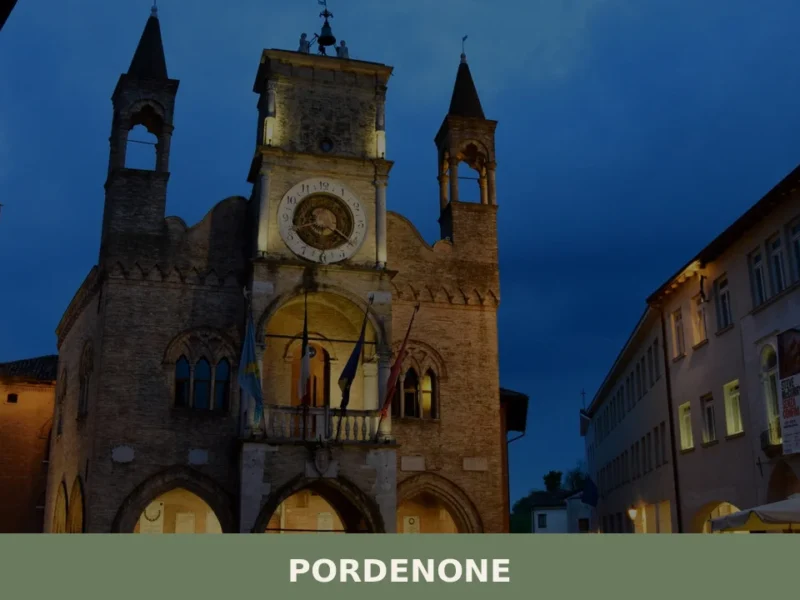
Pordenone is a river city of 52,314 residents in Friuli-Venezia Giulia, where a navigable stretch of the Noncello shaped two millennia of trade, art, and urban life.
Latisana
Plains
Latisana shaped medieval trade along the Tagliamento River for centuries. Visit for its Venetian architecture, ancient port history, and the lagoon at Aprilia Marittima.
Andreis
 Mountain
What to see in Andreis, a village of 242 residents in the Friulian Dolomites Park: attractions, local food, how to get there and when to visit.
Cassacco
Plains
The Castle of Cassacco appears in documents of the Patriarchate of Aquileia as early as 1158, when Patriarch Ulrich II confirmed its possession to the local lords. Since then, that manor in a commanding position over the Friulian plain has shaped the life of an entire rural territory, defined by cultivated fields, rows of vines […]
Carlino
Plains
The first thing you notice arriving in Carlino is the industrious silence of the Friulian plain, broken only by the rustle of water flowing through the drainage canals that cross the municipal territory. We are in the Bassa Friulana, province of Udine, just a few kilometres from the Marano Lagoon, in a land where agriculture […]
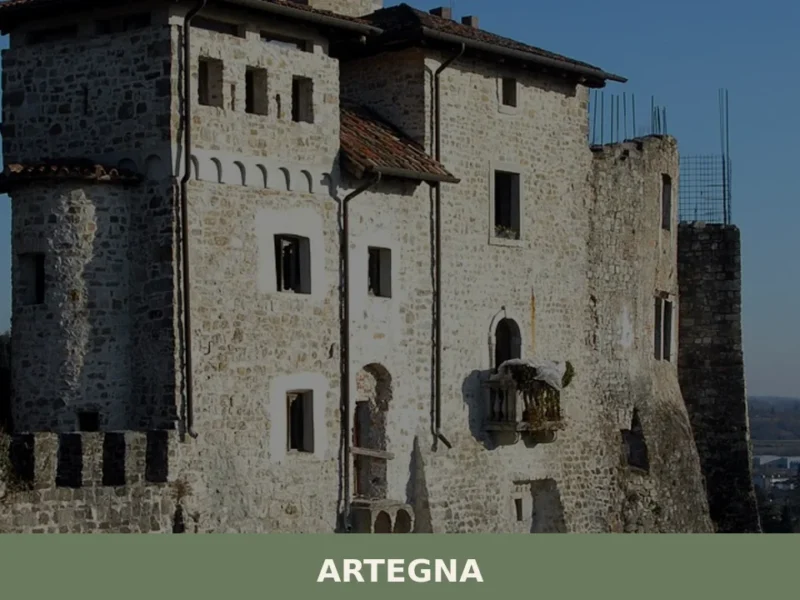
Artegna
 Hills
Hills
In 1976, two violent earthquakes devastated Friuli, and Artegna was among the hardest-hit communities. The reconstruction that followed did not simply raise walls again: it redesigned the very identity of the town, bringing to light archaeological layers buried beneath the rubble of the San Martino hill. Today, anyone wondering what to see in Artegna will […]
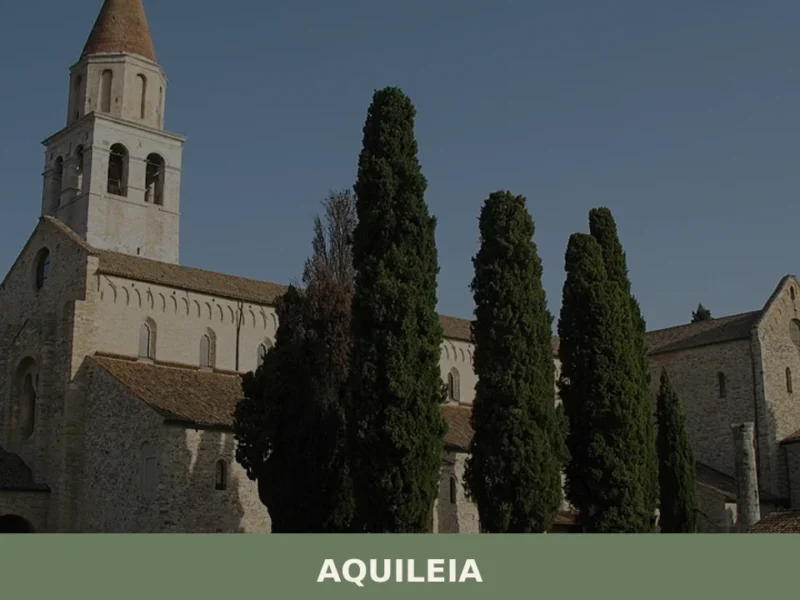
Aquileia
Plains
What to see in Aquileia: early Christian basilica, UNESCO mosaics, Roman forum, archaeological museum. Guide with history, cuisine and how to get there.
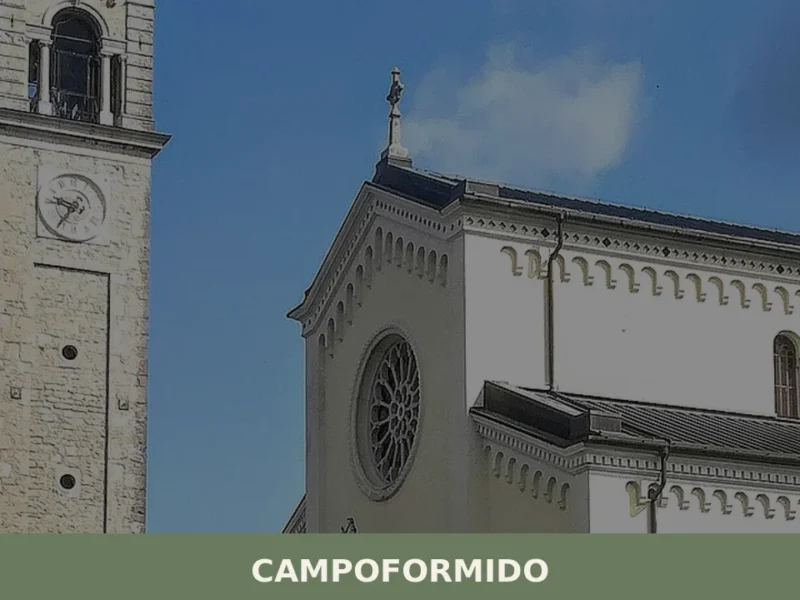
Campoformido
Plains
On 17 October 1797, in a country villa on the Friulian plain, plenipotentiaries representing Napoleon Bonaparte and the Austrian Empire signed the treaty that redrew the political map of Europe, erasing the Republic of Venice after more than a millennium of existence. That document bears the name of this place: Campoformido, a municipality of 7,799 […]
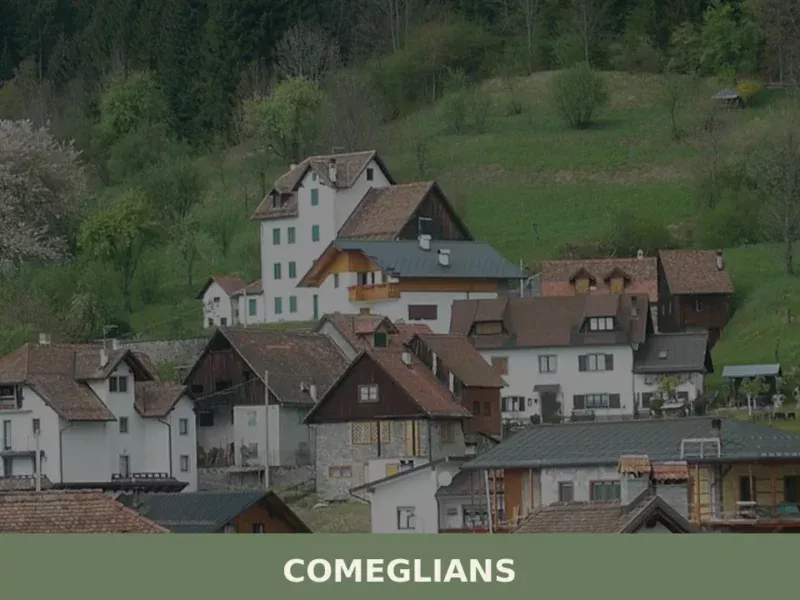
Comeglians
Hills
In the valley of the Degano torrent, along the road that climbs from Tolmezzo toward the Monte Croce Carnico pass, Comeglians marks a precise point on the map of Carnia: 553 metres above sea level, 533 inhabitants spread across the main village and the hamlets of Povolaro, Maranzanis, Tualis, and Calgaretto. The municipality is documented […]
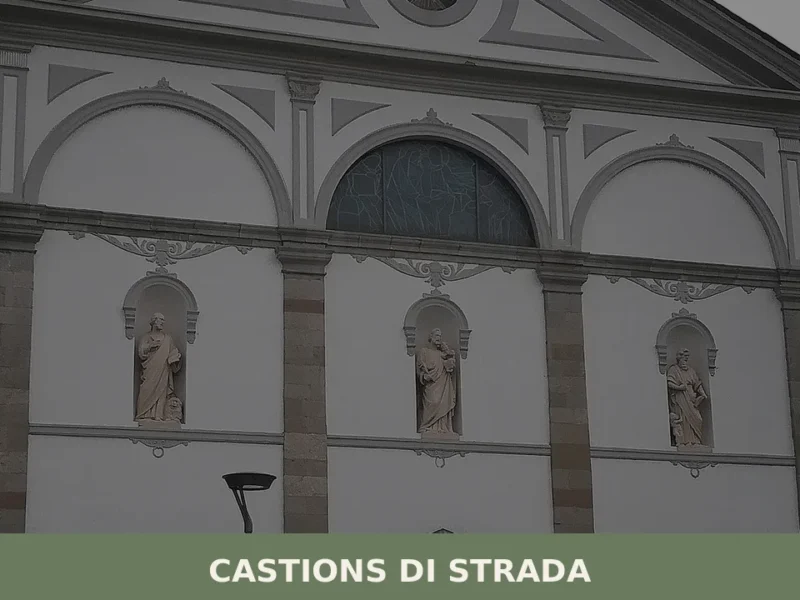
Castions di Strada
Plains
A straight road cuts across the Friulian plain at twenty-three metres above sea level, and along that route — the ancient road that connected Aquileia to Concordia Sagittaria — a settlement grew whose very name declares its reason for being. Castions di Strada owes its identity to that Roman road, to a network of drainage […]



🏡 Know Aviano better than we do?
If you’re a local or have been there, your knowledge matters: add what’s missing or fix a detail on this page.