


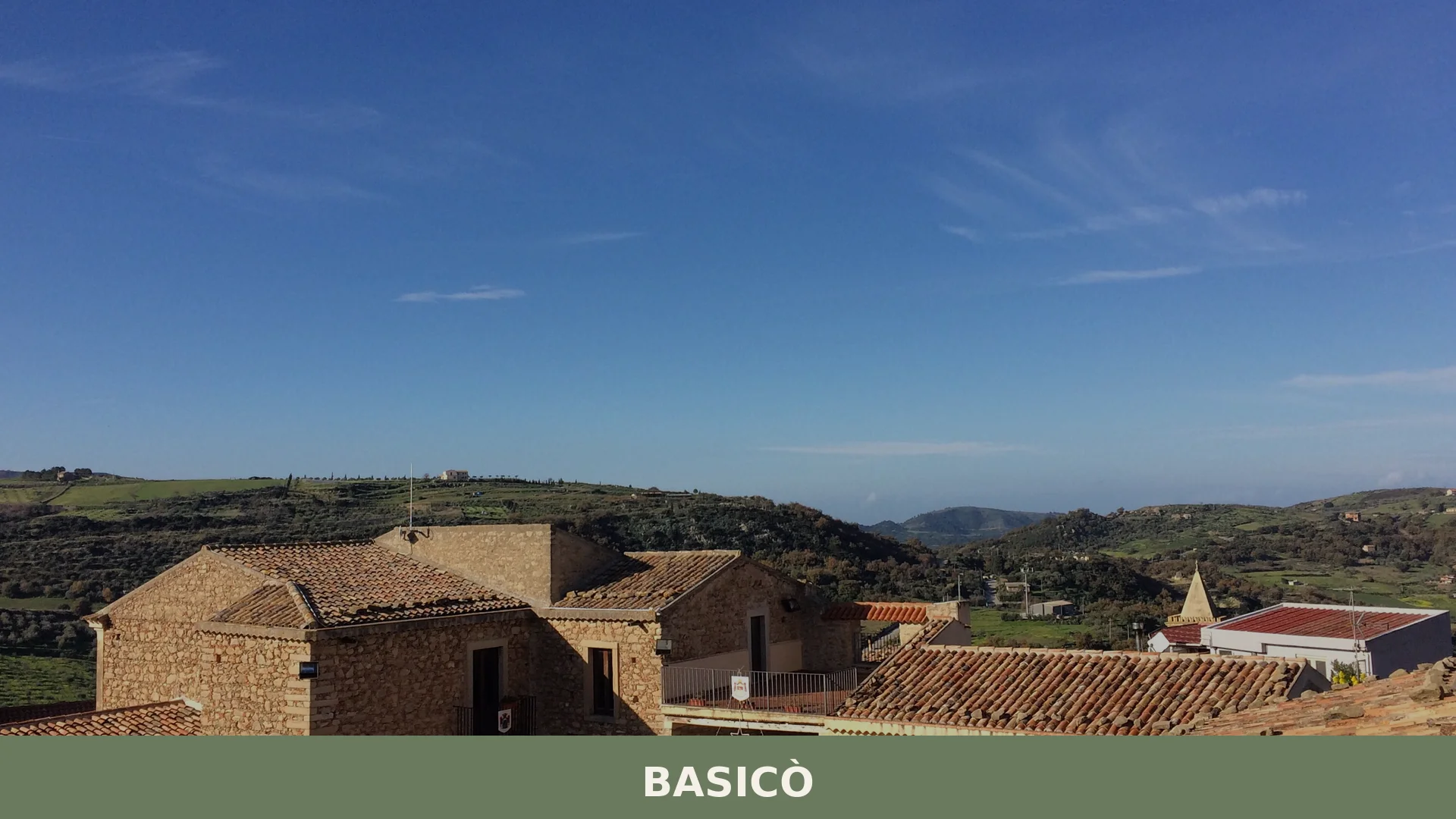

Basicò is a hilltop comune in the province of Messina, Sicily, with a documented history stretching back to 1262 and a living tradition of provola cheese, feudal architecture and prehistoric archaeolo
Discover Basicò
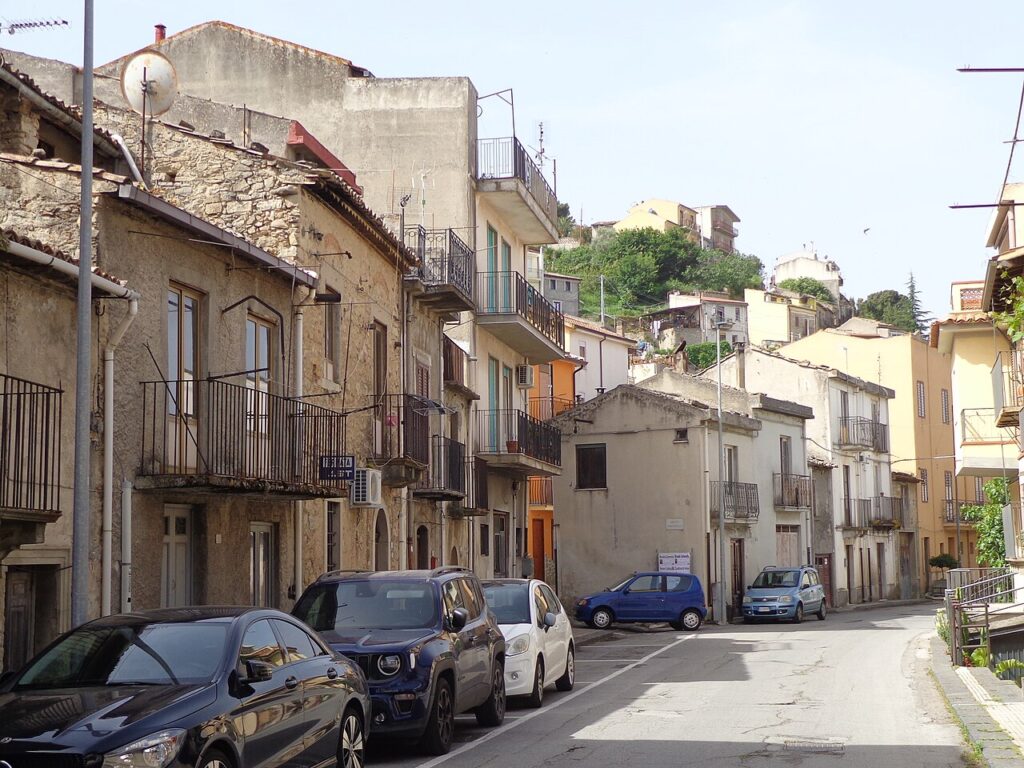
Basicò is a hill village in the province of Messina, Sicily, covering just under 11.98 square kilometres at an elevation of 520 metres, with a population of around 643 inhabitants known as basicotani. It sits within the coastal hill region near Milazzo, connected by provincial roads to Montalbano Elicona and Tripi, and reached most conveniently via the Falcone motorway exit on the Messina–Palermo autostrada.
Basicò village in Sicily carries a recorded past stretching back to at least the mid-thirteenth century, when its first religious building rose on ground that had already known monastic life during the age of Frederick II of Swabia. Over the following centuries the village accumulated a layered heritage of feudal palaces, parish churches, and prehistoric archaeological sites, alongside living traditions — above all the craft of cheesemaking — that continue to draw visitors each August to one of Sicily’s longest-running local food festivals.
Basicò village in Sicily: history, feudal lords and landmarks
Basicò is a Sicilian hill village in the province of Messina whose recorded history stretches back to at least 1262, when the Church of Santa Maria — the settlement’s first religious building — was erected, while its name itself recalls an ancient monastery of Clarisse nuns that existed during the reign of Frederick II of Swabia.
For centuries the focal point of local power was the baronial Palazzo De Maria, a structure typical of the Sicilian baglio tradition. From the mid-fourteenth century onward, a succession of feudal families took up residence there: the Lanza arrived around 1360, followed by the Marullo in 1539, the Saccano in 1570, the Naselli in 1740, and finally the De Maria barons, who held the palace from 1766 to 1919. By 1812 the building had ceased to function as a noble residence. A second significant civil monument, Palazzo Foti, rose in the seventeenth century on the foundations of an earlier fifteenth-century structure and served successively as the seat of the Governor and then as home to the Foti barons.
Churches, Palaces and Archaeological Sites in Basicò
Basicò preserves two sixteenth-century churches, one baroque-era civic palace, the restructured Palazzo baronale De Maria, and two open-air archaeological sites — Monte Pito and Gittunita — along with the ruins of its oldest religious building, now visible in front of the town hall.
Chiesa di San Francesco d’Assisi
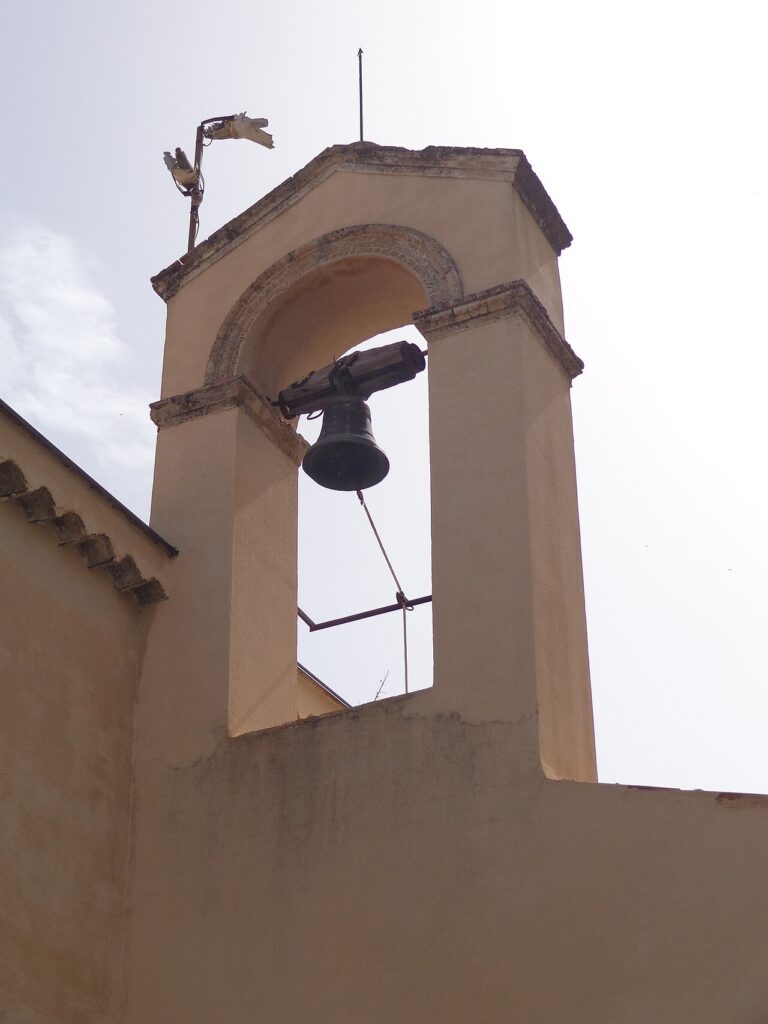
Built in the sixteenth century, the church has three naves and shows clear signs of modifications carried out over successive centuries. The bell tower to its right rises to about 520 metres and was completed in two construction phases — the early eighteenth century (1700, 1713) and the early 1800s (1804). It holds six bells and, since 1876, an clock that marks the quarter-hours and the hours. Inside, a small parish museum occupies part of the building.
Chiesa di San Biagio
Dating approximately to the sixteenth century, this single-nave church contains an eighteenth-century wooden high altar and a seventeenth-century statue of Saint Blaise.
Chiesa di Santa Maria
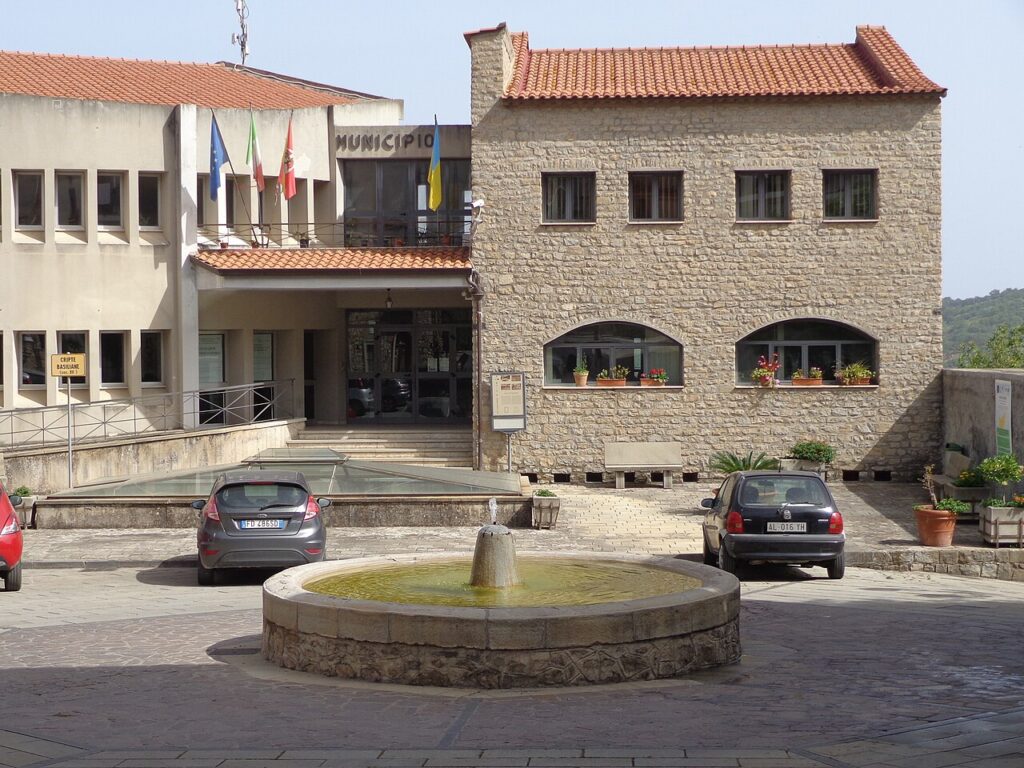
Erected in 1262 and considered the earliest religious building in Basicò, it was closed for safety reasons in 1933, fell into disrepair by the mid-twentieth century, and was demolished in 1986. The site was partly occupied by the present town hall. The remains of the ancient crypts are still visible in the square in front of it.
Palazzo baronale De Maria
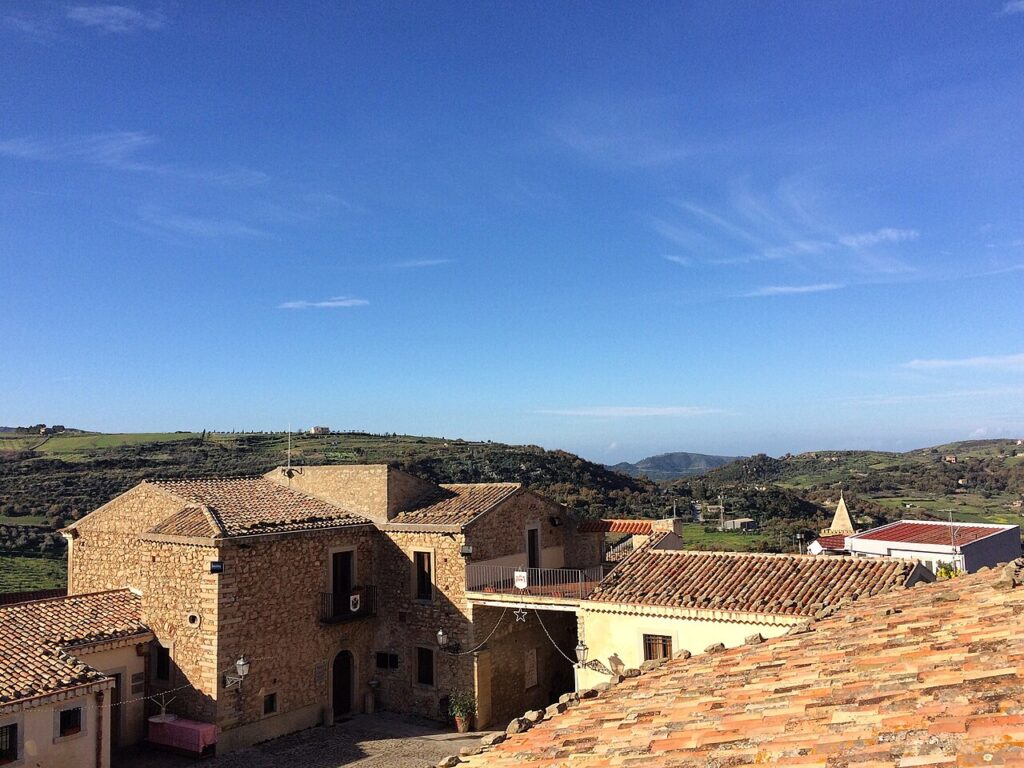
A sixteenth-century structure built on the plan of a traditional Sicilian baglio, it served as a noble residence until the early nineteenth century and was restored in the early 2000s. The main building, formerly the baron’s home, now houses a library of over 1,000 volumes spread across three reading rooms. A wide terrace connects the two main bodies of the complex. The former service wing holds a congress hall and the Museo Arti e Tradizioni, whose two sections document the production of bread and, separately, the making of local cheeses — particularly the provola basicotana. The open courtyard is also regularly used by a local theatre company for performances.
Palazzo Foti
Raised in the seventeenth century over an earlier fifteenth-century construction, of which some ogival arches survive, it served first as the seat of the Governor and later as the Foti family’s baronial residence. The building now belongs to the Fondazione Ignazio Foti.
Monte Pito and Gittunita
Both sites contain large boulders carved with zoomorphic figures attributed to the ancient Siculi and Sicani peoples. No structures survive above ground; the interest is entirely archaeological.
Basicò and Its Territory: Provola, Certified Products and Local Flavours
Basicò is best known for its provola basicotana, a local cheese celebrated each year on 19 August at the Sagra della Provola Basicotana — one of the oldest food festivals in Sicily, first held in 1972 in the courtyard of the Palazzo Baronale De Maria. The village’s Museo Arti e Tradizioni, housed within the same palace, dedicates an entire section to cheese-making traditions, including tools, photographs and equipment donated by local residents.
The broader provincial territory of Messina contributes several certified products relevant to the area. Among protected designations, look for Provola dei Nebrodi (DOP), Pecorino Siciliano (DOP) and Salame S. Angelo (IGP). Citrus lovers will find Limone Interdonato Messina (IGP), grown along the Ionian coast not far from here. The volcanic influence of Etna reaches the regional wine landscape, represented by the Etna DOC, while the straits of Messina produce the distinctive Faro DOC red. Closer to the Aeolian Islands, the fragrant Malvasia delle Lipari DOC rounds out a wine picture of considerable variety.
Reaching Basicò and Planning Your Visit to the Nebrodi Foothills
Basicò sits at around 520 metres on the litoranea hills inland from the Tyrrhenian coast and is most conveniently reached by car via the Falcone exit of the Messina–Palermo motorway, after which provincial roads connect the village to neighbouring centres; the nearest railway station is at Vigliatore, a fraction of the adjacent municipality of Terme Vigliatore, on the Palermo–Messina line. The village is linked by provincial roads to Montalbano Elicona (via contrada Santa Barbara) and to Tripi, making a compact day-trip circuit feasible.
The summer months are the most rewarding time to visit: the Festa della Musica on 21 June, the Solenne Processione di Maria SS. di Basicò on 21 August and the Sagra della Provola Basicotana on 19 August all fall within a concentrated window. The theatrical company that performs in the baglio of the Palazzo Baronale also tends to programme events across the warmer season. Spring offers quieter conditions for exploring the archaeological sites at Monte Pito and Gittunita, where carved rocks attributed to the ancient Siculi and Sicani peoples can be examined at a leisurely pace. The Tyrrhenian coastal strip, including the area around Rodì Milici, lies within easy reach for those combining an inland and coastal itinerary.
| Departure | Distance | Time |
|---|---|---|
| Casello autostradale di Falcone | approx. 10 km | approx. 15 min |
| Messina | approx. 55 km | approx. 50 min |
| Palermo | approx. 170 km | approx. 2 h |
| Stazione di Terme Vigliatore | ~12 km | approx. 15 min |
Travellers arriving by train to Messina can connect to the Palermo–Messina coastal line and alight at Vigliatore, then continue by local road or taxi. Those touring from further south along the Ionian coast, perhaps from Acireale, can factor Basicò into a longer northward journey through eastern and northern Sicily.
Frequently asked questions about Basicò
How do I reach Basicò by car from Messina or Palermo?
From the Messina–Palermo autostrada, take the Falcone motorway exit. From there, provincial roads connect Basicò to nearby towns including Montalbano Elicona and Tripi. The village sits at 520 metres elevation in the coastal hill region near Milazzo, approximately 12 kilometres in area. GPS coordinates and detailed directions are recommended for precise navigation on mountain roads.
When is the best time to visit Basicò?
August is ideal, when Basicò hosts one of Sicily's longest-running local food festivals celebrating its renowned cheesemaking tradition and provola cheese. Additionally, visit on October 4th for the Feast of San Francesco d'Assisi, Basicò's patron saint, featuring traditional religious and community celebrations. The hillside location offers pleasant autumn and spring weather.
What is Basicò famous for?
Basicò is renowned for its cheesemaking craft, particularly provola cheese production, which anchors the village's August food festival. The village also holds historical significance with recorded heritage dating to 1262, when the Church of Santa Maria was built. Medieval feudal palaces, parish churches, and prehistoric archaeological sites reflect layers of Sicilian cultural history spanning centuries.
How long should I plan to spend in Basicò?
A half-day visit suffices to explore the village's churches, feudal palaces, and main piazza. However, plan a full day if visiting during August's food festival or attending October's patron saint celebrations. The small population of 643 inhabitants means Basicò is intimate; combine visits with nearby Montalbano Elicona or Tripi for extended exploration of the Nebrodi foothills region.
📷 Photo Gallery — Basicò
In Sicily More villages to discover
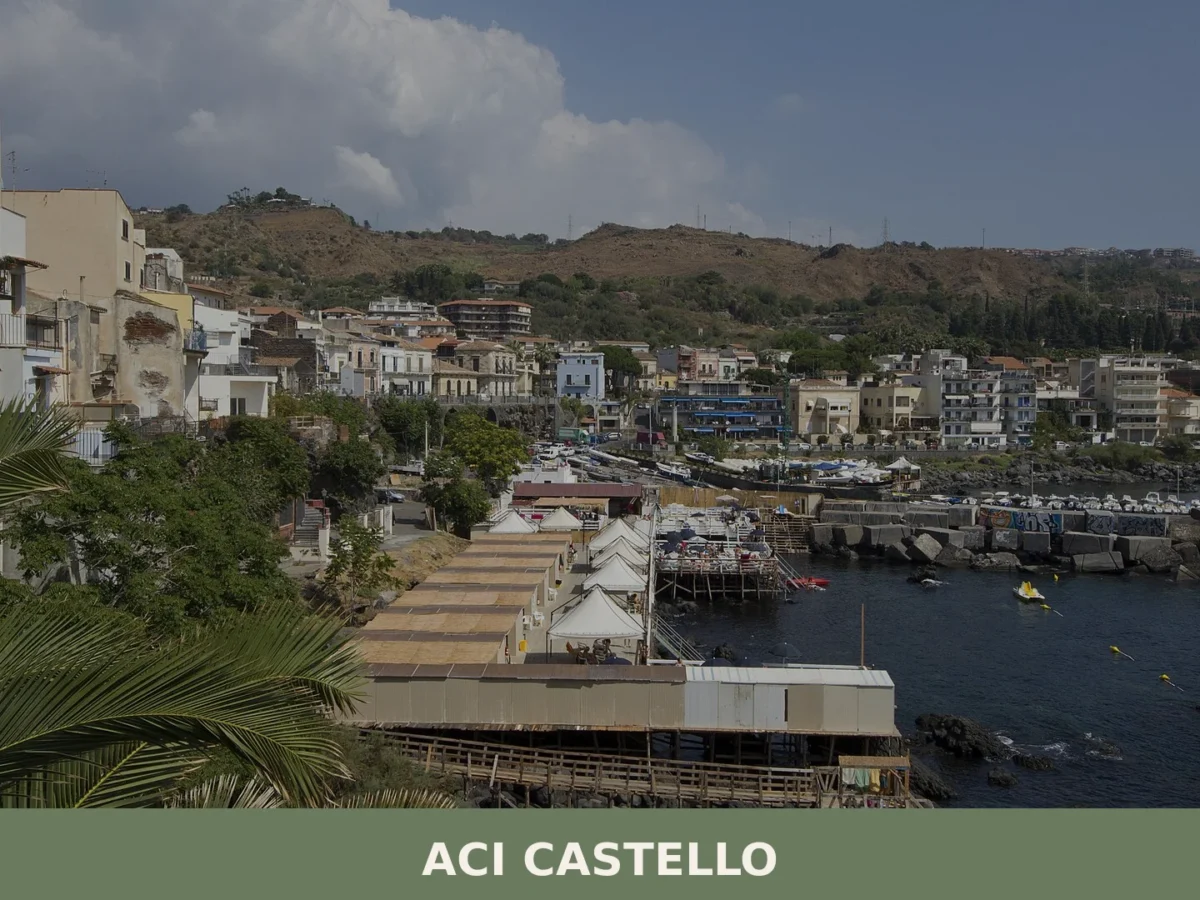
Aci Castello
 Sea
Sea
A clifftop village on the Ionian coast with a 12th-century castle and layers of Greek, Roman and medieval settlement. Where coastal life meets archaeological depth.
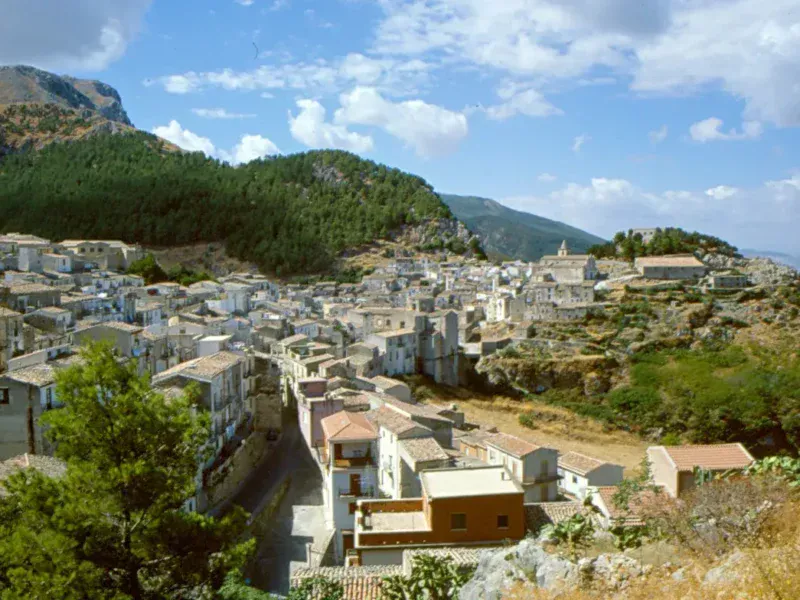
Gratteri
 Mountain
Gratteri, a medieval village in the province of Palermo: history, mother church and stone streets. Discover how to visit it and how to get there from the Madonie.
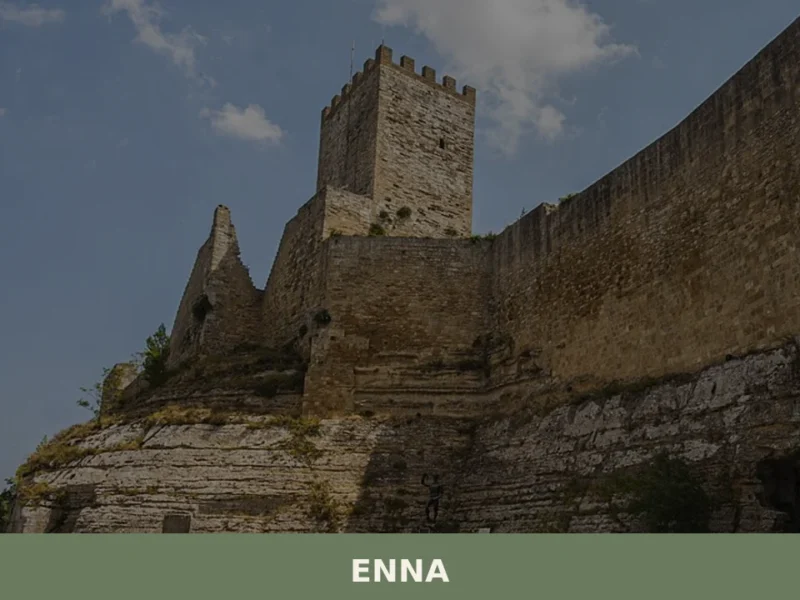
Enna
Mountain
Discover Enna, a breathtaking village perched in the heart of Sicily, Italy. Explore its rich history, stunning landscapes, and timeless charm.
Campofiorito
Mountain
Campofiorito sits at 660 metres above sea level in the province of Palermo, a small agricultural commune of 1,321 inhabitants whose name translates literally as “field of flowers.” Founded as a feudal settlement in the early eighteenth century, the village occupies a limestone ridge in the upper Belìce valley, surrounded by wheat fields and grazing […]
Siracusa
Sea
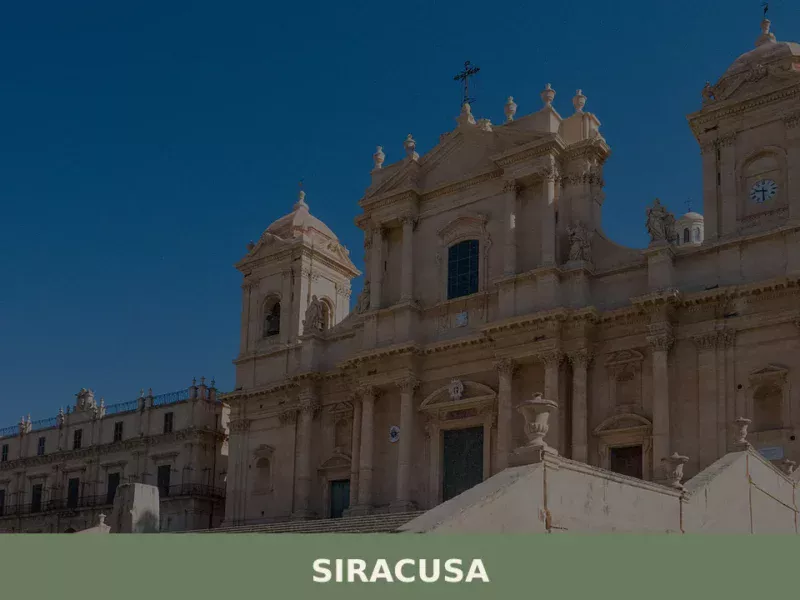
What to see in Siracusa: UNESCO city of 118,644 people. Explore the Greek Theatre, Ortigia, and the Catacombs of San Giovanni. Plan your visit with our complete guide.
Trapani
Sea
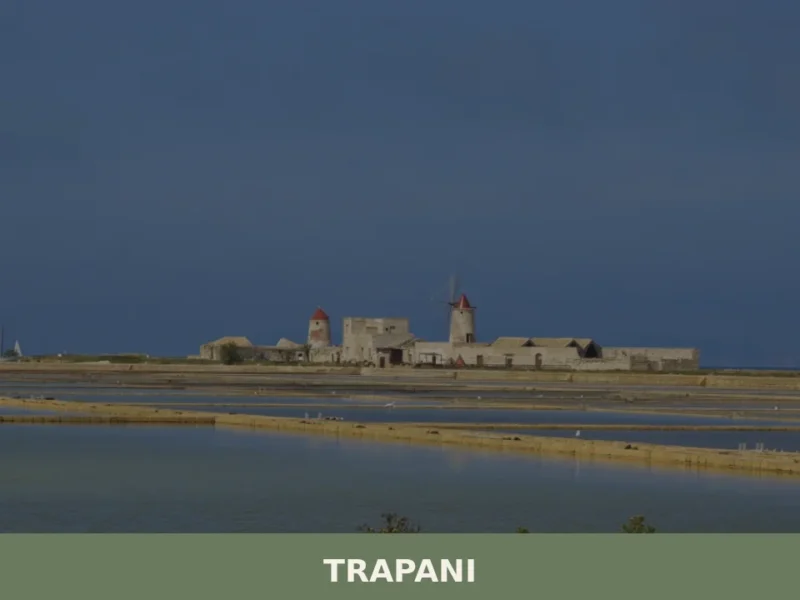
What to see in Trapani: salt pans, Pepoli Museum, Procession of the Misteri and Trapanese pesto. City of 68,967 inhabitants. Plan your visit now.
Campofelice di Fitalia
Mountain
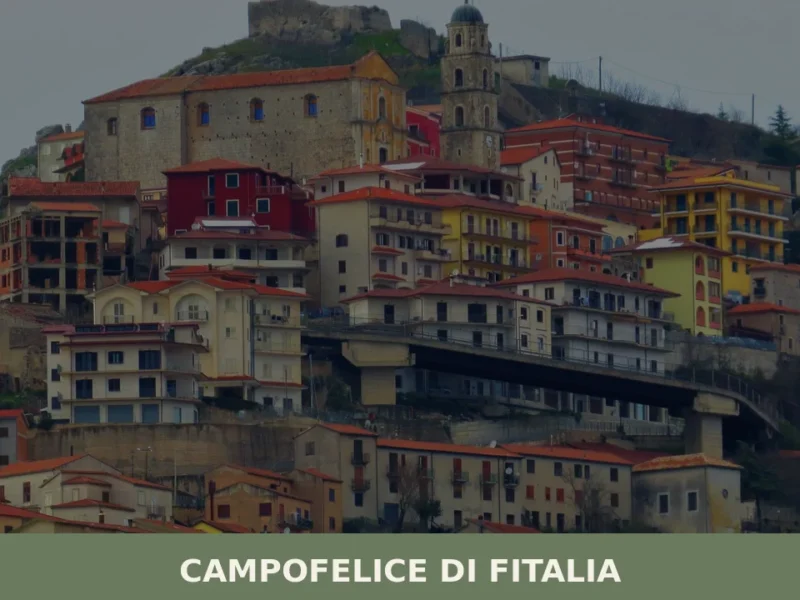
Discover what to see in Campofelice di Fitalia: history, rural architecture, local food, and the quiet beauty of inland Sicily at 734m altitude.
Ragusa
Sea
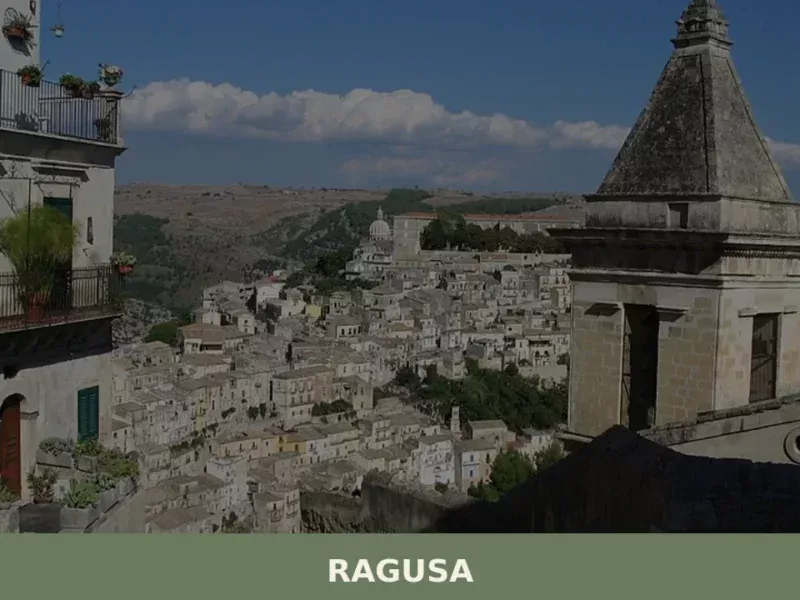
What to see in Ragusa, a UNESCO city at 520m with 70,000 residents: explore Ibla, San Giorgio, Giardino Ibleo and Cotognata PAT. Plan your visit now.
Palermo
Sea
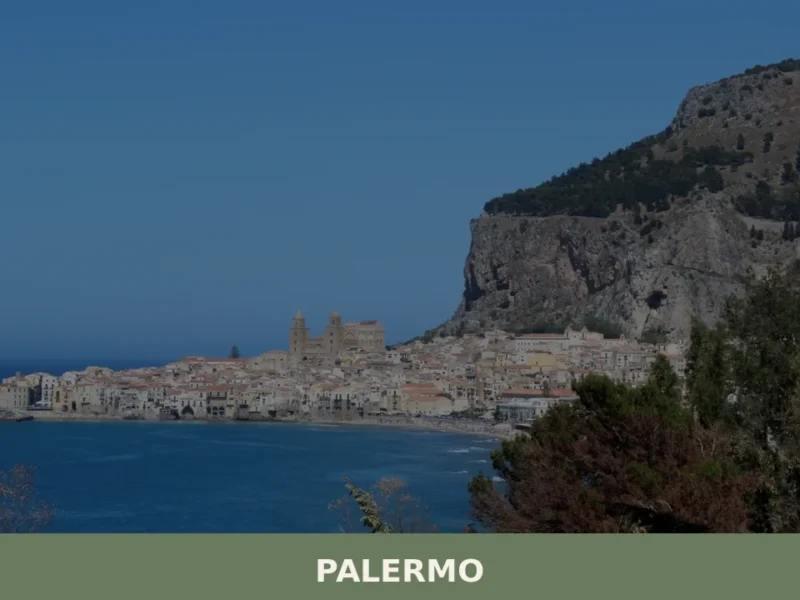
What to see in Palermo: from the Palatine Chapel mosaics to Ballaru00f2 Market. Home to 654,987 people and 2 PAT-certified products. Plan your visit with this complete guide.
Baucina
 Hills
Hills
Nine historic churches and a 2013 archaeological museum make Baucina a compact but layered destination in the Palermo hinterland.
🏡 Know Basicò better than we do?
If you’re a local or have been there, your knowledge matters: add what’s missing or fix a detail on this page.