


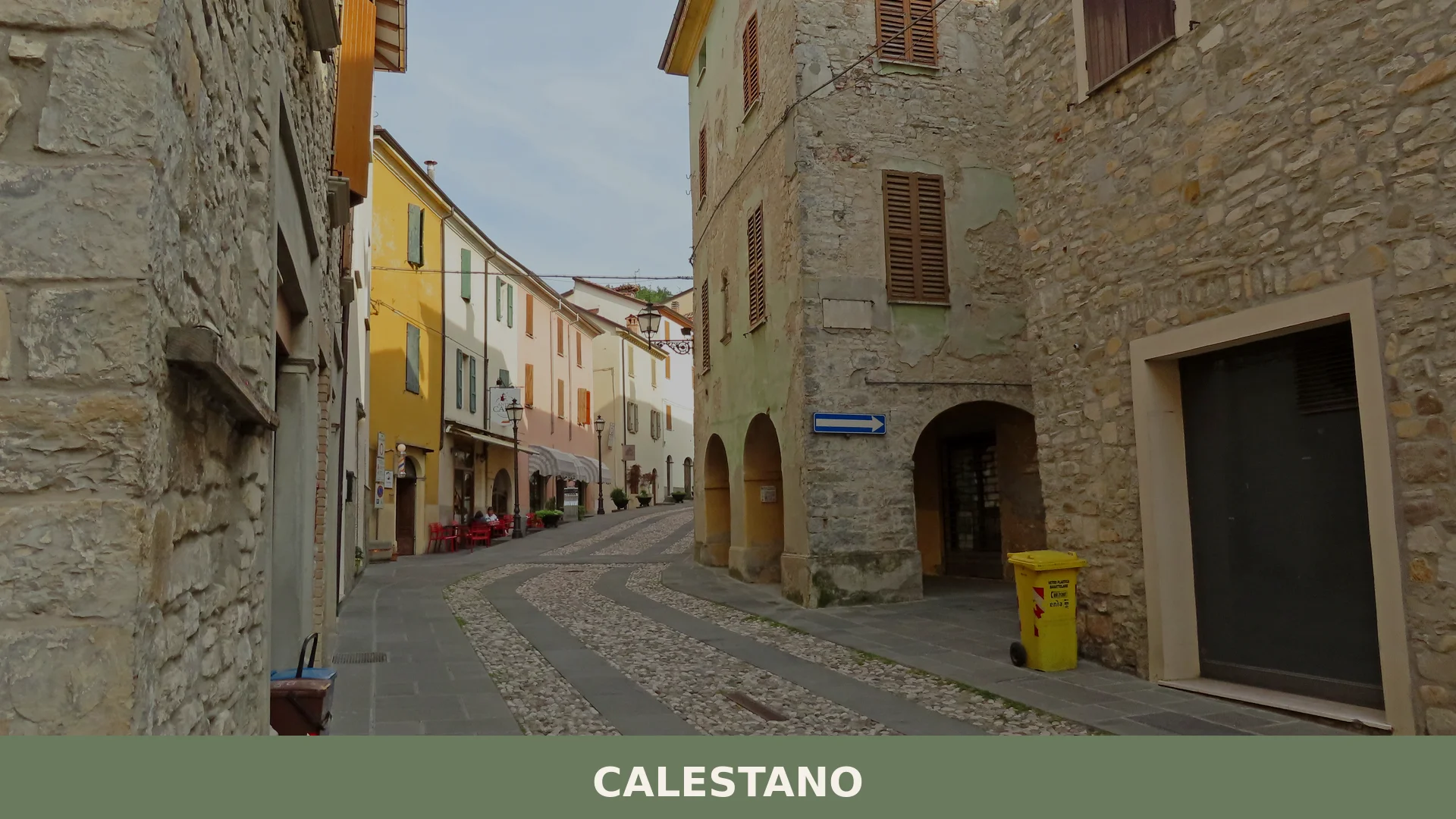
Calestano
 Hills
Hills
Calestano is a hill municipality in the Baganza valley, province of Parma, with over seven thousand years of human history, five medieval castles and striking natural formations in the Parma Apennines
Discover Calestano
Calestano is a hill municipality in the province of Parma, Emilia-Romagna, with around 2,100 residents spread across roughly 57.17 square kilometres of the middle and upper Baganza valley, at a municipal-centre elevation of 417 metres above sea level. The territory rises from about 417 metres at its northernmost point in the valley floor to a ridge of 417 metres along the watershed dividing the Val Parma from the Val Baganza, giving the landscape a marked vertical range. Five medieval castles — Calestano, Marzolara, Alpicella, Vigolone and Ravarano — punctuate the surrounding hills, and the natural rock formations known as the Salti del Diavolo, sculpted from ancient oceanic conglomerates near Chiastre di Ravarano, add a distinctive geological character to the countryside.
Human presence here reaches back at least seven thousand years, from Neolithic stone tools found near Marzolara to the feudal chronicles that fill the Middle Ages with a succession of powerful families — Fieschi, Visconti, Farnese and others — each leaving a mark on the valley. Calestano village in Emilia-Romagna first enters the written record on 20 March 1028, in a land contract relating to an agricultural estate at Fontanelle, and the centuries that followed brought sieges, dynastic transfers and the slow accumulation of the rural, wooded landscape visitors encounter today, where the Baganza torrent runs along the western edge of the built-up centre and the forests and cultivated slopes of the Apennine foothills stretch in every direction.
Calestano village in Emilia-Romagna: history from prehistoric times to the feudal age
Calestano village in Emilia-Romagna has been continuously inhabited since at least around 5000 B.C., when Neolithic communities left stone tools near Marzolara, and its recorded medieval history begins on 20 March 1028, when the settlement was first mentioned in a land contract concerning an agricultural estate at Fontanelle. Copper-age objects found in the surrounding area date to roughly 3000 B.C., and by around 1500 B.C. the Ligures had established a hilltop fortified settlement above Fragno; a tomb attributed to the same people, dating to the close of the fourth century B.C., was uncovered near Casaselvatica.
Between the eleventh and thirteenth centuries, five castles — Calestano, Marzolara, Alpicella, Vigolone and Ravarano — were raised to guard the valley, probably on the initiative of the Commune of Parma. While Ravarano passed to the Pallavicino family in 1214, the remaining strongholds were granted in 1249 to Alberto Fieschi, Count of Lavagna. The Fieschi held these lands through several generations; in 1275 Cardinal Ottobono Fieschi — later Pope Adrian V — named his brother Percivalle as heir, and in 1313 the nephews Luca, Carlo and Ottobono of the Torriglia branch received formal investiture from Holy Roman Emperor Henry VII of Luxembourg. After Luchino Visconti seized Parma in 1346, the Fieschi territories lost their autonomy by 1350, and in 1371 Bernabò Visconti erected a fortress at Calestano to guard the valley against a feared threat from Niccolò II d’Este, Marquis of Ferrara.
The fifteenth century brought repeated military episodes. In 1426 Filippo Maria Visconti sent the condottiere Pier Maria I de’ Rossi to seize the Fieschi lands in the Baganza valley; Marzolara fell after twenty-four days of bombardment, and Gian Luigi Fieschi was wounded and captured at Calestano. Ownership shifted repeatedly over the following decades among various lords — including Niccolò Piccinino, Albertino de’ Cividali and finally Giannantonio Fieschi, who recovered the castles of Calestano, Marzolara and Vigolone in 1443. After the creation of the Duchy of Parma and Piacenza in 1545, the Fieschi remained closely tied to the Farnese; Duke Ranuccio I Farnese elevated Calestano to a county in 1600 and assigned it to Scipione Fieschi. The county changed hands again in 1650, when Carlo Leone and Claudio Fieschi sold their rights over Calestano, Marzolara, Vigolone and Alpicella to Count Camillo Tarasconi, whose family remained in possession until feudal rights were abolished by Napoleonic decree in 1805, after which Calestano became a commune in 1806.
Castles, Churches and Rock Formations Along the Baganza Valley
Calestano preserves five medieval castles — Calestano, Marzolara, Alpicella, Vigolone and Ravarano — five historic churches, and the geological formation known as the Salti del Diavolo near the locality of Chiastre di Ravarano.
The Castles
Most of the five castles were built between the eleventh and thirteenth centuries, probably under the direction of the Commune of Parma, to defend the Baganza valley. Castello di Calestano was later reinforced by Bernabò Visconti in 1371. Each played a distinct role in the long feudal history of the territory.
- Castello di Calestano — at the centre of successive sieges, reinforcements and political transfers across several centuries, fortified by Bernabò Visconti in 1371.
- Castello di Marzolara — the seat of a rocca that withstood a 24-day bombardment before capitulating during the campaign of Pier Maria I de’ Rossi in the 1420s.
- Castello di Vigolone — among the fortifications occupied by imperial troops under Ferrante I Gonzaga during the war of Parma in 1551, and recaptured by the army of Duke Ottavio Farnese in January 1552.
- Castello di Alpicella — one of the four castles sold by Carlo Leone and Claudio Fieschi to Count Camillo Tarasconi in 1650.
- Castello di Ravarano — acquired as early as 1214 by the marquis Pelavicino Pallavicino, it followed a separate feudal trajectory from the other four, passing through several hands before the abolition of feudal rights under Napoleonic decrees in 1805.
The Churches
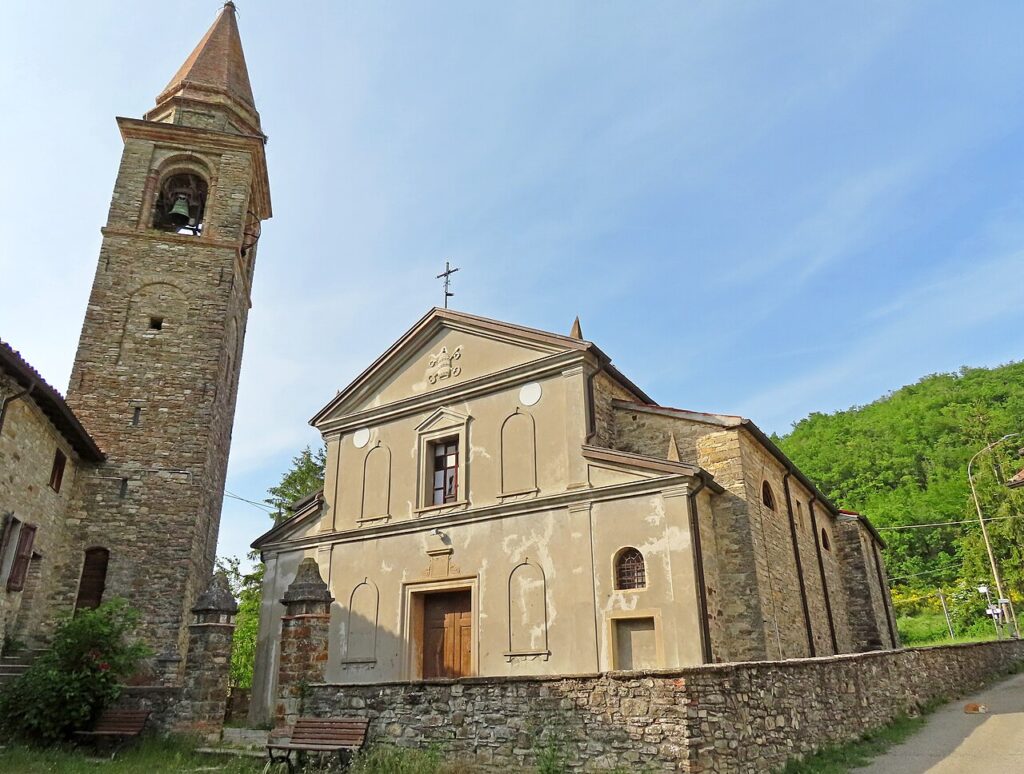
Five churches are documented within the commune: San Giovanni Battista, the Annunciazione di Maria Vergine, San Pietro Apostolo, San Bartolomeo and San Lorenzo. The church of San Lorenzo is notable for the fact that its bell tower was fortified by the condottiere Sforza Pallavicino during the military events of the mid-sixteenth century.
Salti del Diavolo
Near the locality of Chiastre di Ravarano, a series of aligned sedimentary rock formations rise in tower-like shapes that cut across the Baganza valley at right angles. These structures formed through the gradual disintegration of ancient conglomerates, originally deposited on the Ligurian-Piedmontese ocean floor during the Campanian stage of the Late Cretaceous. Each tower displays a graduated composition: large pebbles cemented at the base give way to smaller, more rounded stones toward the centre, while the summit consists of a compact, whitish amalgam that was widely used in the architectural decoration of local buildings until the twentieth century.
Flavours of the Calestano Valley and the Parma Hills
The Calestano area sits within one of Italy’s most celebrated food landscapes, where several protected-designation products from the wider Parma province set the table: Culatello di Zibello DOP, the prized slow-cured pork cut synonymous with the lowland Po plain, and Coppa di Parma IGP are among the cured meats that define this corner of Emilia-Romagna. The territory also falls within reach of Fungo di Borgotaro IGP, the prized porcini mushroom harvested in the Apennine valleys nearby, and Mortadella Bologna IGP from the broader regional tradition.
Among the local spirits and liqueurs listed in the regional PAT registers, the area is associated with preparations such as Bargnolino (a sloe-berry liqueur), Anicione and Anisetta (anise-based drinks), Liquore di prugnoli, and a Macerato di pere in grappa — a pear macerate in grappa. These are traditional artisan productions of the broader Parma hills rather than exclusive Calestano specialities.
For wine, the hills around Calestano fall within the Colli di Parma DOC zone, which produces whites, reds and the lightly sparkling Malvasia typical of the Parma Apennine ridges. The Fortana del Taro IGT designation also covers this territory. As with the food products, these wines are expressions of the provincial landscape rather than single-village productions.
Reaching Calestano and Planning Your Stay in the Baganza Valley
Calestano is most conveniently reached by road along the Baganza valley, roughly 30 km south of Parma, and the spring and autumn months — when rainfall is highest but temperatures are mild — offer the most atmospheric conditions for exploring its castles, forested ridges and the rock formations known as the Salti del Diavolo.
The village sits at 411 m above sea level in the middle-upper stretch of the torrente Baganza. The valley road connecting it northward to Parma also links it to the neighbouring comune of Langhirano to the east, itself reachable via the gentler eastern slopes of the valley where the terrain is less steep. To the south, the road continues toward Berceto over increasingly elevated Apennine terrain, while to the west lies Terenzo.
Summers are warm and winters can be cold with snow, so the most comfortable seasons for a visit are late spring and early autumn. The climate data confirm an average annual temperature of around 11.4 °C, with July as the warmest month and January the coldest. The surrounding hills, reachable from Tizzano Val Parma in the adjacent valleys, share the same Apennine character and can be combined into a broader itinerary through the Parma uplands.
| Departure | Distance | Time |
|---|---|---|
| Parma | approx. 30 km | 35-40 min |
| Langhirano | approx. 15 km | 20-25 min |
| Berceto | approx. 25 km | 30-35 min |
These practical references help organise the journey clearly, while the village itself is best understood slowly and on foot once you arrive.
Frequently asked questions about Calestano
When is the best time to visit Calestano?
August is ideal, coinciding with the San Lorenzo patron saint feast on August 10th, featuring local celebrations and traditional events. Summer offers pleasant weather for exploring the Apennine hills and medieval castles. Spring and autumn provide mild conditions perfect for hiking through the forested slopes of the Baganza valley. Winter visits are possible but may bring snow at higher elevations above 1,000 metres.
What are the main historical attractions in Calestano?
Five medieval castles dominate the landscape: Calestano, Marzolara, Alpicella, Vigolone, and Ravarano. The Salti del Diavolo rock formations near Chiastre di Ravarano showcase ancient oceanic conglomerates carved by geological forces. The village itself is documented from 1028 CE in land contracts, reflecting centuries of feudal rule by families including the Fieschi, Visconti, and Farnese dynasties.
What outdoor activities are available in Calestano?
The dramatic vertical terrain—ranging from 293 to 1,313 metres—offers extensive hiking opportunities through Apennine forests and cultivated slopes. The Baganza valley provides scenic walking routes along the torrent. Mountain biking is possible on forest tracks and ridge trails. The varied elevation and natural landscape make it ideal for nature photography and geological exploration.
How long should I plan to spend in Calestano?
A day trip works well for visiting the village centre and nearby castles. Two to three days allows time to explore medieval sites, walk valley trails, and experience local hospitality. Longer stays enable thorough hiking in the upper Baganza valley and visits to all five castles. The quiet, rural character rewards slower-paced exploration of the landscape and its history.
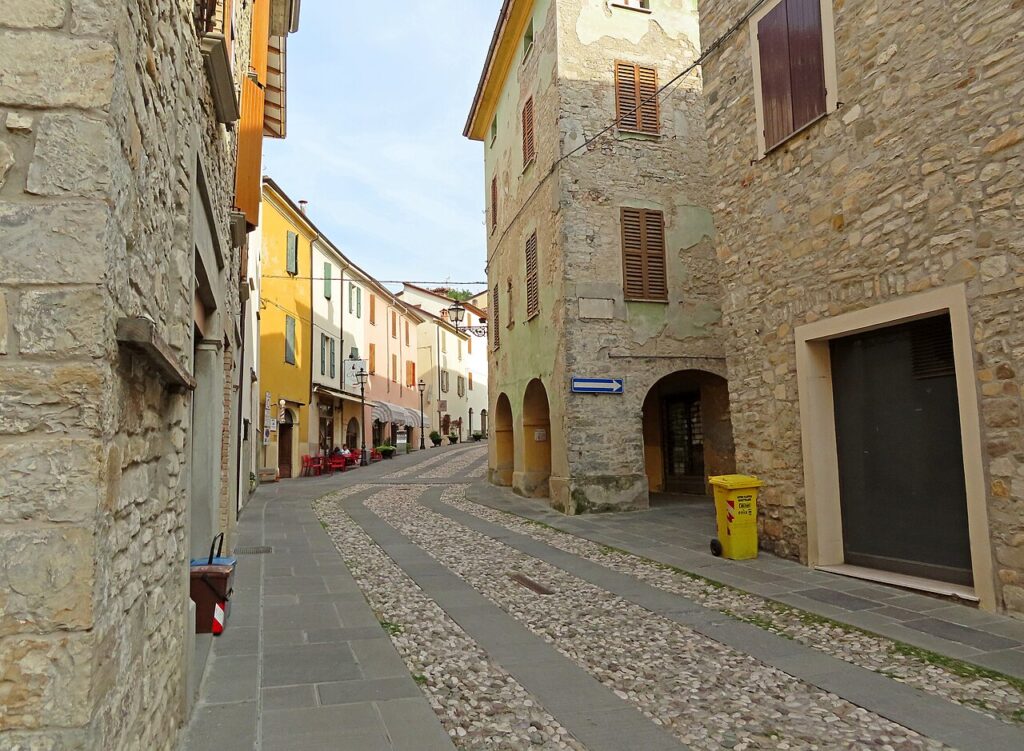
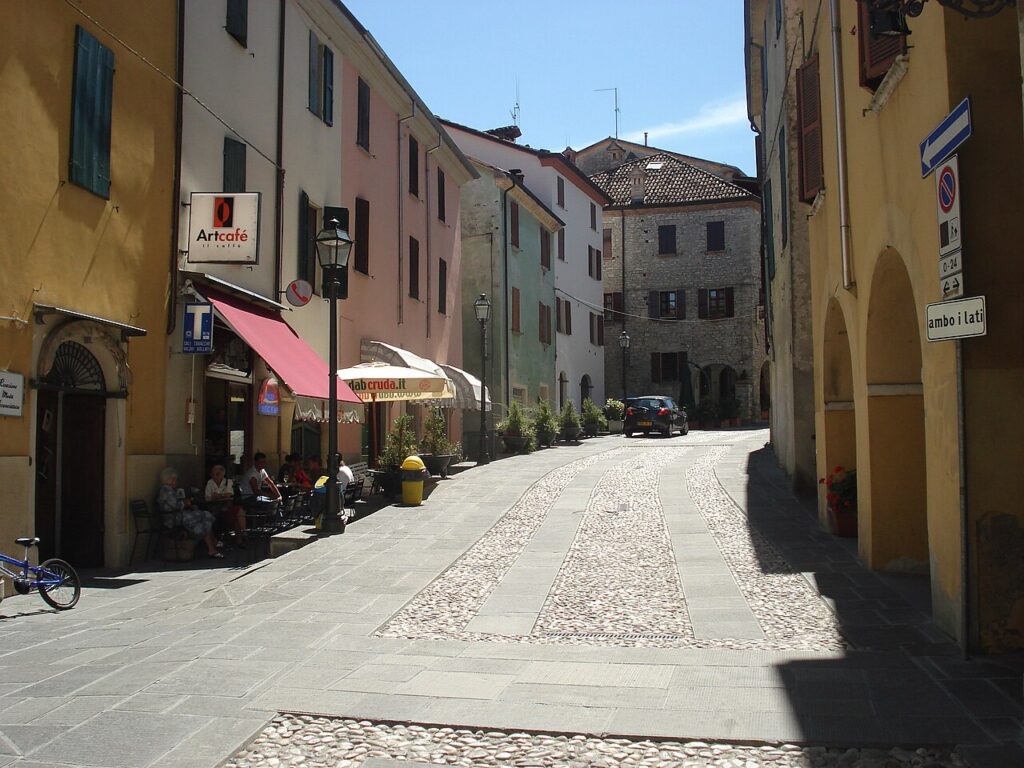
📷 Photo Gallery — Calestano




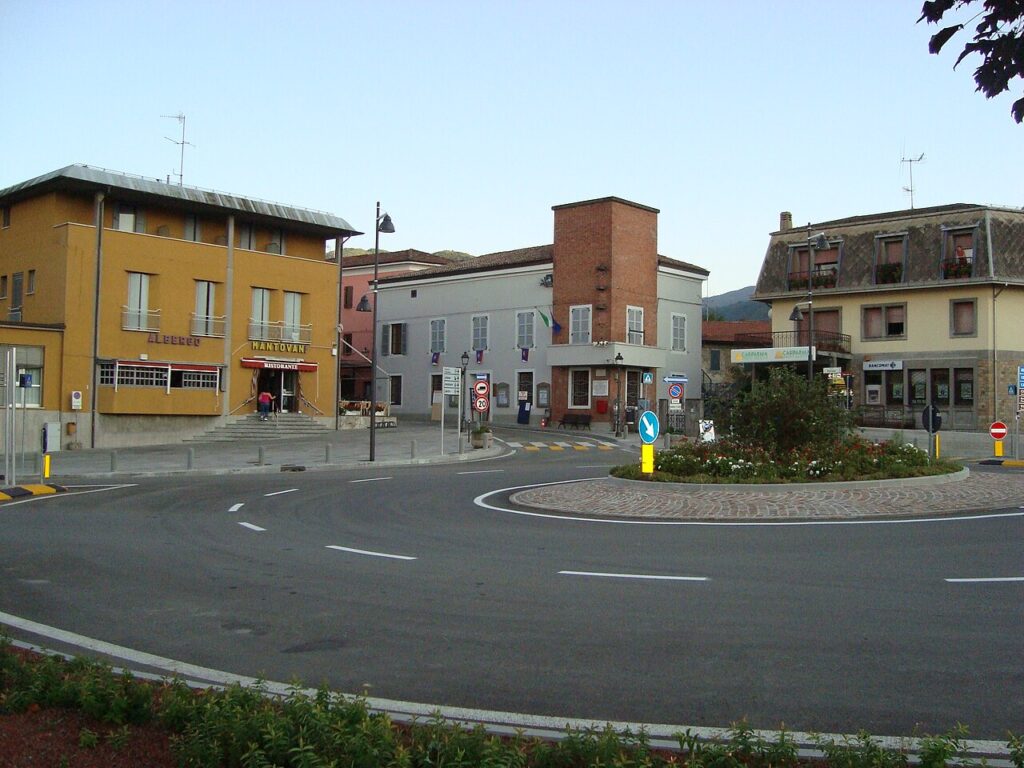
In Emilia-Romagna More villages to discover
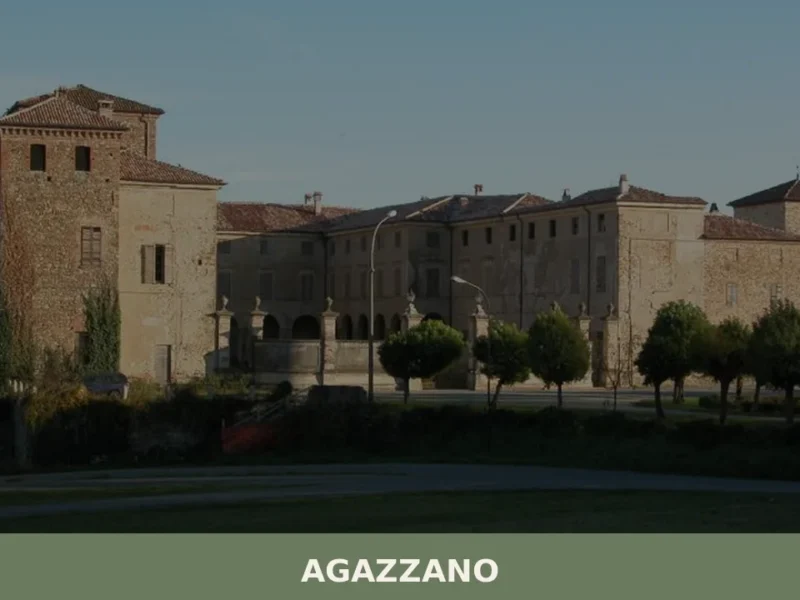
Agazzano
 Plains
What to see in Agazzano, a village at 187 m in Piacenza province with 2,054 residents. Explore the medieval castle, Santa Maria Assunta church and Val Luretta. Plan your visit.
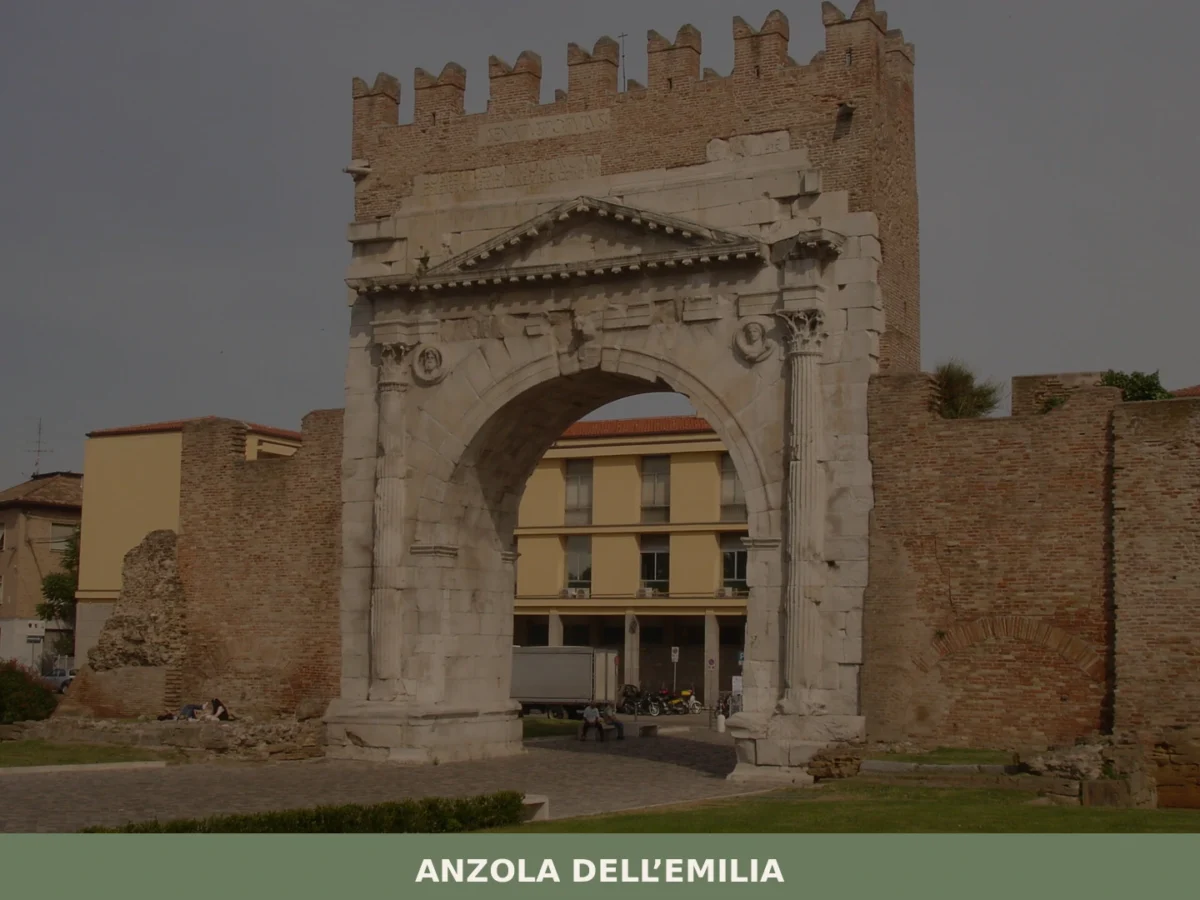
Anzola dell’Emilia
Plains
What to see in Anzola dell'Emilia: 5 must-visit attractions, from the medieval tower to the parish church. Discover the complete guide and plan your visit.

Langhirano
 Mountain
Population 10,916. Langhirano sits at 265 metres altitude on the slopes of Monte Milano, gateway to the Val Parma and epicentre of prosciutto production.
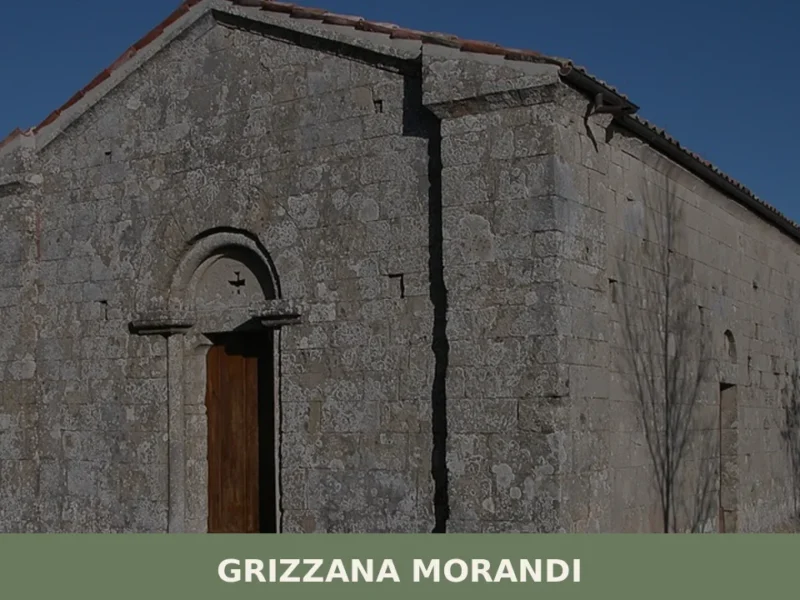
Grizzana Morandi
Hills
In 1929, the Bolognese painter Giorgio Morandi travelled to Grizzana for the first time — a scattered municipality in the Emilian Apennines that he would return to every summer for over thirty years. From the barns and tower-houses of this valley, he painted hundreds of landscapes, transforming the clay badlands and mountain ridgelines into universal […]
Calendasco
Plains
What to see in Calendasco, a village of 2,485 residents on the Po plain at 55 m elevation. Discover the medieval castle, the 19 February Saint Conrad festival and Piacenza cured meats.

Sorbolo
Plains
Sorbolo offers 3,000 years of history from Bronze Age terramare to Farnese noble palaces. Visit for Roman centuriation, a Serassi organ and authentic Po Valley cuisine.
Ottone
Hills
Discover what to see in Ottone, the village at 510m above sea level in Val Trebbia. Explore the Church of San Marziano and the castle ruins. Plan your visit!
Bagno di Romagna
Hills
what to see in bagno di romagna, Italy: Discover its 47°C hot springs and historic Basilicas. Explore Emilia-Romagna's natural wonders.
Gazzola
Plains
What to see in Gazzola, a Piacenza hill village at 146 m with 2,050 residents. Explore Rivalta Castle, the Luretta valley and Colli Piacentini DOC wines. Plan your visit.
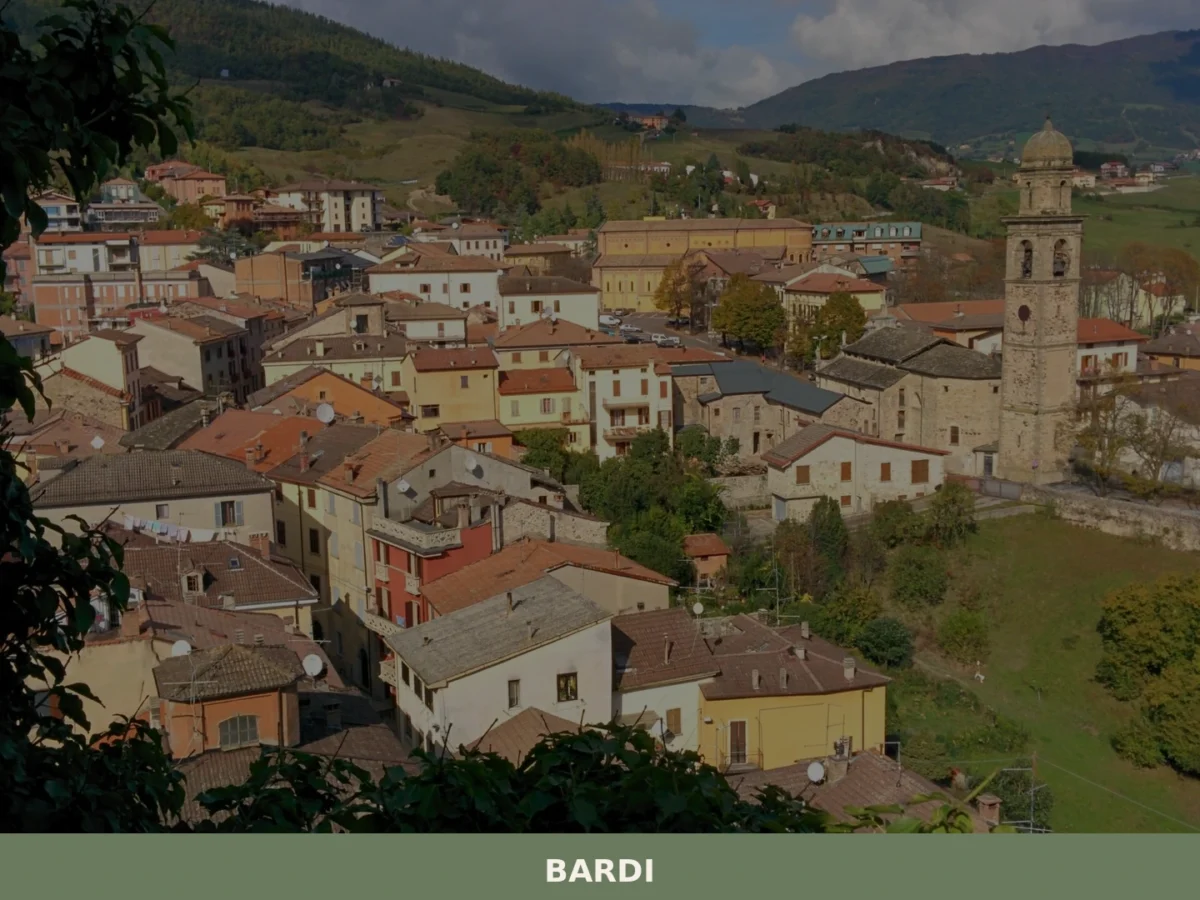
Bardi
Mountain
What to see in Bardi, Italy: Explore the Landi Castle and its 13th-century Oratory at 625 m altitude. Discover this mountain village in Emilia-Romagna.




🏡 Know Calestano better than we do?
If you’re a local or have been there, your knowledge matters: add what’s missing or fix a detail on this page.