


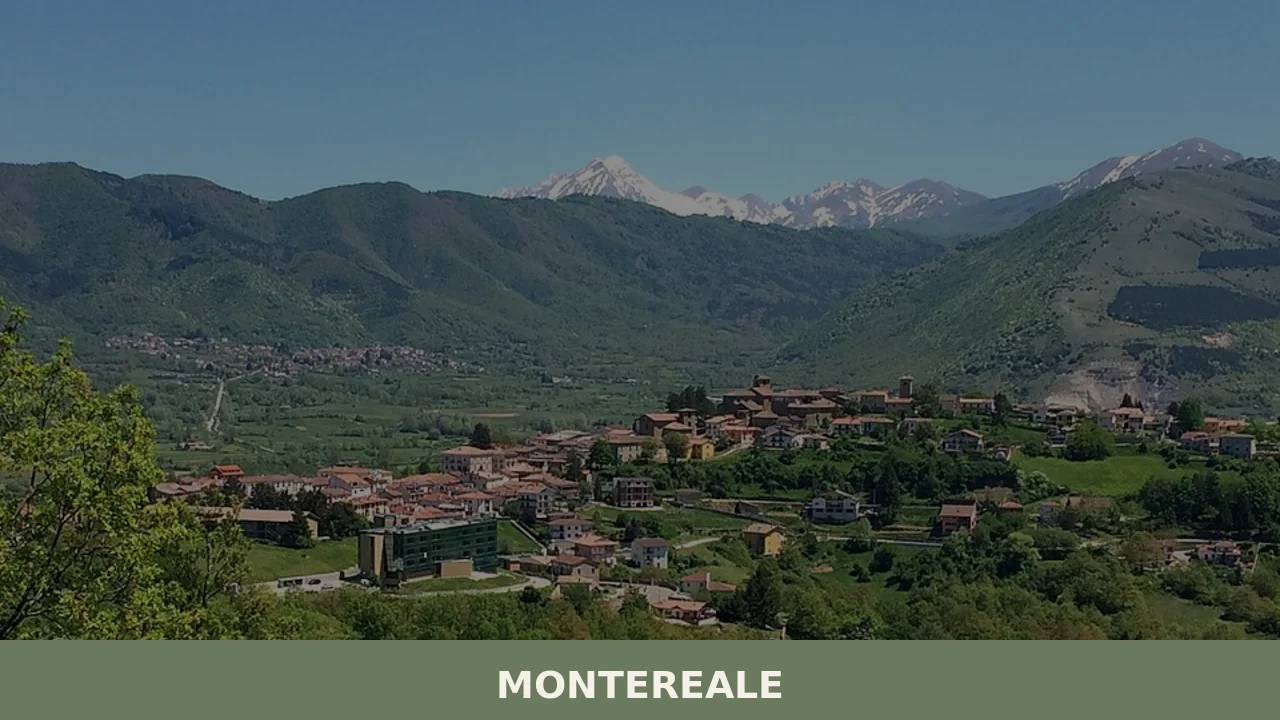

What to see in Montereale in Abruzzo: Romanesque churches, medieval walls, mountain cuisine and Laga trails. Complete guide to the village at 948 m.
Discover Montereale
At 948 metres above sea level, on the L’Aquila side of the Monti della Laga, Montereale already had its own defensive structure in the 12th century, when the village fell under the Norman jurisdiction of the Contado aquilano. Today its 2,768 inhabitants live in a centre that still bears the marks of the 2016 earthquake and the long reconstruction effort, yet retains its medieval urban layout intact, with its entrance gates and the remains of the defensive walls.
Understanding what to see in Montereale means reading a precise layering of history: 13th-century churches, Renaissance fountains, and a network of hamlets scattered along the ridges that separate the L’Aquila basin from the upper Tronto valley.
History and origins of Montereale
The place name appears in documents as Mons Regalis, a reference to the royal demesne that underscores the village’s direct belonging to the Crown as early as the Swabian period. Frederick II incorporated Montereale into the defensive system along the northern border of the Kingdom of Naples, a strategic position controlling the passage between the Tyrrhenian and Adriatic sides through the Apennine saddle. In 1254 the village took part in the founding of the city of L’Aquila, contributing one of the castles that gave rise to the quarti system of the regional capital — an administrative bond that lasted for centuries.
In the 14th century Montereale was a fief of the Camponeschi family, then passed under the control of the Orsini and finally the Medici, following the turbulent feudal dynamics of the Kingdom of Naples. The most notable figure linked to the village is Blessed Andrea da Montereale (1397–1480), an Augustinian friar and theologian whose cult was confirmed in 1764. Andrea taught at the universities of Siena, Florence and Padua, and his body is preserved in the conventual church of the village.
Earthquakes — the one in 1703, then those of 2009 and 2016 — have repeatedly damaged the built environment, making Montereale a case study in reconstruction within high-altitude Apennine villages.
During the Risorgimento, the Montereale area was the scene of episodes of brigandage linked to pro-Bourbon resistance. The border position between the Papal States and the Kingdom of the Two Sicilies had for centuries made this Apennine strip a land of transit and smuggling, a fact still reflected in the place names of the districts and the paths connecting the hamlets.
What to see in Montereale: churches, walls and mountain architecture
Church of Santa Maria in Cellis
A Romanesque building from the 13th century located just outside the town centre, it preserves a cycle of 14th-century frescoes from the Umbrian-Latian school. The façade features an ogival portal with phytomorphic decorations. The single-nave plan ends in a semicircular apse, and the quadrangular bell tower has been restored several times after earthquake damage.
Inside, it houses a polychrome wooden Madonna datable to the 15th century.
Porta dell’Ospedale and the town walls
Of the three gates giving access to the medieval village, Porta dell’Ospedale is the best preserved. The round arch leads into the old nucleus, where the perimeter walls follow the profile of the hill. The defensive circuit, visible in several stretches despite earthquake collapses, dates to the Angevin phase and was reinforced in the 15th century. A pedestrian path allows visitors to follow a good portion of its eastern perimeter.
Church of San Giovanni Battista
Located in the centre of the village, this church retains a Renaissance portal and an interior remodelled in the 18th century after the 1703 earthquake. Inside are Baroque wooden altars and a 17th-century canvas depicting the Baptism of Christ. The square-section bell tower is one of the most recognisable features of the village skyline as seen from the main road below.
Convent of Sant’Andrea
An Augustinian complex linked to the memory of Blessed Andrea, founded in the 15th century.
The cloister features arcades on octagonal small columns, and the adjoining church holds the remains of the Blessed in an urn beneath the high altar. The convent sustained damage in 2016, and consolidation work brought to light portions of medieval masonry previously covered by 18th-century plaster.
Medieval fountain in Piazza del Popolo
The village’s main square houses a fountain with a basin in local stone, whose current structure dates to the 16th century but sits on an older water system. The irregularly shaped square still functions as the focal point of civic life: the town hall and several noble palazzi with rusticated portals face onto it. From this point there is a direct view towards the Monti della Laga chain to the north-east.
What to see in Montereale: local food and regional products
The cuisine of Montereale reflects the conditions of the high mountains around L’Aquila: dishes built on dried legumes, sheep meat and heritage grains.
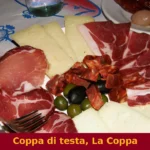
Sagne e fagioli — irregularly shaped hand-cut pasta served with borlotti beans slow-cooked in an earthenware pot — is the most common first course in the village’s households. Arrosticini, prepared here with meat from mature sheep and not just lamb, are cooked on a narrow, elongated fornacella grill. Pecorino d’Abruzzo, produced in the hamlets with milk from flocks grazing on the Laga pastures, is aged in stone cellars for a minimum of sixty days. Local butcher shops carry Mortadella di Campotosto IGP, a pork salume with a strip of lard running through its centre, made in the neighbouring villages using a technique documented since at least the 18th century. Lenticchia di Santo Stefano di Sessanio, grown on nearby plateaux, frequently appears in Montereale’s winter soups.
Among the sweets, ferratelle — thin wafers pressed in a double-plate iron — are made with flour, eggs, olive oil and anise. During the feast of Blessed Andrea in May, families prepare cellitti, mostaccioli filled with cooked grape must and almonds. Miele dei Monti della Laga, particularly the high-altitude wildflower variety, is harvested by beekeepers who position their hives between 900 and 1,300 metres.
Also worth noting is the use of solina, an Abruzzese soft wheat sown in autumn, used for breadmaking in wood-fired ovens still active in some hamlets. Restaurants in the municipality also serve dishes based on agnello cacio e ova, an Easter preparation in which the meat is finished with a cream of eggs and grated pecorino.
When to visit Montereale: the best time of year
Winter at 948 metres brings temperatures that regularly drop below zero, with frequent snowfall between December and February. It is the right period for those seeking the village in its most stripped-back dimension, without visitor flows, and for those who practise cross-country skiing or snowshoeing on the Laga trails.
Spring, from April onwards, opens the season of wildflower blooms on the high-altitude meadows, and in May the liturgical feast of Blessed Andrea da Montereale is held, with a procession and market in the central square.
Summer remains the period with the most open services and the greatest accessibility to the hamlets and hiking trails that connect Montereale to the Gran Sasso and Monti della Laga National Park. Maximum summer temperatures rarely exceed 28 °C. September and October offer stable days and raking light that sharply defines the profile of the surrounding mountains — ideal conditions for landscape photography and hikes without the muggy heat of lower elevations.
How to reach Montereale
By car, Montereale is reached from the A24 Roma–L’Aquila motorway, exiting at L’Aquila Ovest and then continuing on the SS 260 towards Amatrice for approximately 30 kilometres. From Rome the distance is 145 km, coverable in about two hours. From Ascoli Piceno, on the Marche side, take the SS 4 Salaria to Accumoli and then the provincial road to Montereale — roughly 65 km in one hour and twenty minutes.
The nearest railway station is L’Aquila, served by the regional Terni–Rieti–L’Aquila–Sulmona line.
From there it is necessary to continue by scheduled bus (operated by TUA Abruzzo) or by private vehicle. The closest airport is Roma Fiumicino, approximately 170 km away. For those coming from the Adriatic side, Pescara airport is about 130 km via the A25 and A24. The official website of the Municipality publishes road condition updates, which are particularly useful during the winter months when the SS 260 may require snow chains or winter tyres.
Other villages to discover in Abruzzo
Visitors to Montereale find themselves on an Apennine axis linking several smaller centres of inland Abruzzo, each with its own distinct identity. Moving southward within the province of L’Aquila, Cansano occupies a different sector of the Abruzzese mountains: we are on the eastern flank of the Majella, close to the Piano delle Cinquemiglia, in a territory where the pastoral economy has left visible traces in the drove roads and rural structures. Comparing the two villages — one facing the Monti della Laga, the other facing the Majella — reveals the geographic variety of a region that changes radically within a few dozen kilometres.
Towards Molise, Castelguidone represents another model of Abruzzese mountain village, situated in the province of Chieti on the border with Molisan territory.
While Montereale looks towards the main Apennine ridge and its historical role as an outpost of the Kingdom, Castelguidone tells the story of the more interior and lateral dimension of southern Abruzzo. Both centres share the demographic reality of population decline, and together they offer a concrete map of the conditions facing small mountain municipalities in central Italy today. For further reading on the area’s history, the Wikipedia page dedicated to Montereale provides bibliographic references and up-to-date administrative data.
Frequently asked questions about Montereale
When is the best time to visit Montereale?
September is ideal, particularly around September 13th when the Festa di Beato Andrea (Blessed Andrew's feast) takes place, celebrating the village's patron saint. Summer months offer pleasant mountain weather suitable for hiking. Autumn brings cooler temperatures and clear skies perfect for exploring the medieval centre and surrounding ridges. Winter snow may affect accessibility to some areas.
How do I reach Montereale from L'Aquila?
Montereale is located at 948 metres altitude on the L'Aquila side of Monti della Laga. The nearest major city is L'Aquila, approximately 50 kilometres away. By car, access is via provincial roads through the Apennine valleys. The closest railway station is at L'Aquila. Public transport options are limited; a private vehicle is recommended for independent exploration of this mountain village.
What outdoor activities are available around Montereale?
The village sits on ridges separating the L'Aquila basin from the upper Tronto valley, offering excellent hiking opportunities. Mountain trails connect Montereale to scattered hamlets along the ridgelines. The Monti della Laga massif provides natural routes for trekking and nature exploration. These routes suit various fitness levels and offer panoramic views across the Apennine landscape.
How long should I plan to spend in Montereale?
A half-day visit suffices to explore the medieval centre, view the 13th-century churches, Renaissance fountains, and defensive walls. For a complete experience including hiking in surrounding valleys and visiting nearby hamlets, plan a full day. Those interested in detailed historical study or multiple outdoor excursions should allocate two days minimum in the area.
What is Montereale's historical significance?
The name Mons Regalis references its status as a royal demesne under the Swabian Crown. Frederick II strategically incorporated Montereale into the Kingdom of Naples's defensive northern border, controlling the crucial Apennine passage between the Tyrrhenian and Adriatic coasts. Founded in 1254 as part of L'Aquila's establishment, it represents medieval crown authority and defensive architecture.
Nearby Villages near Montereale
In Abruzzo More villages to discover
Torano Nuovo
 Sea
Sea
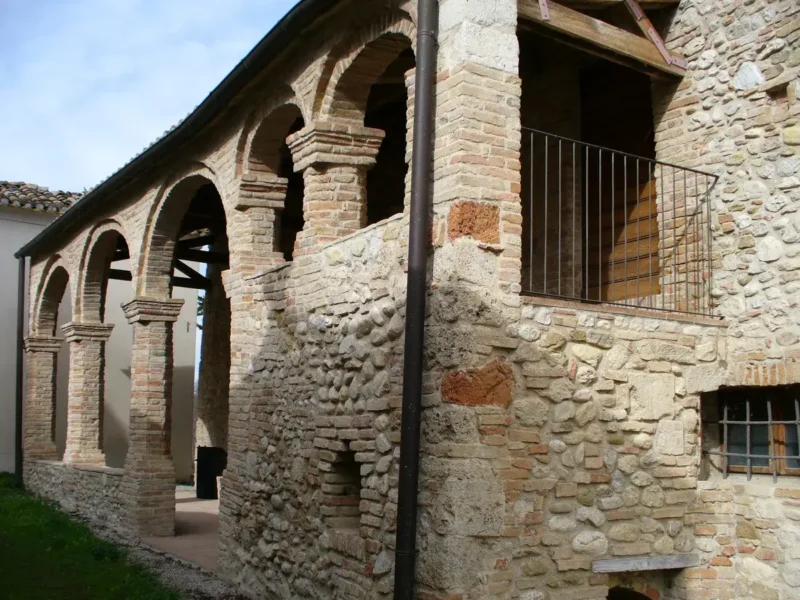
Torano Nuovo, a hillside village in Abruzzo's Val Vibrata, invites travelers to discover an authentic Abruzzo where history intertwines with daily life.
Palombaro
 Hills
Hills
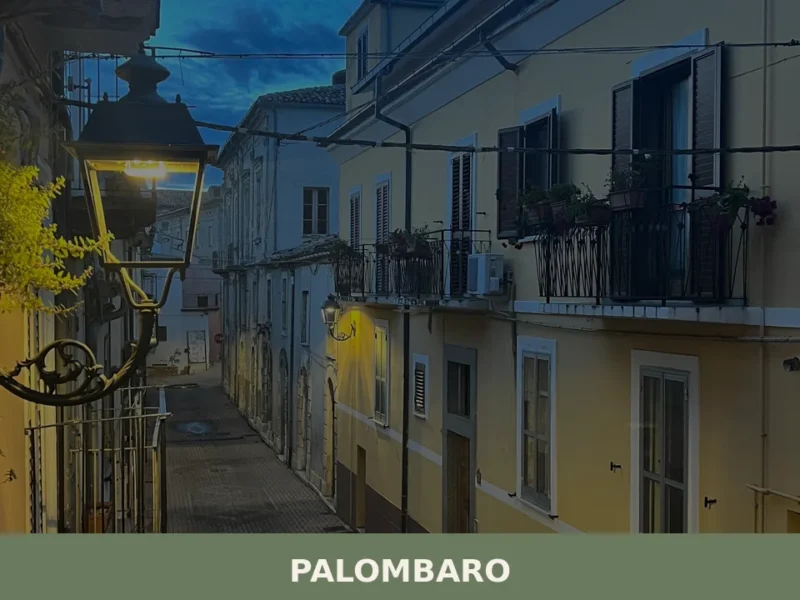
Palombaro is a hill settlement of 943 inhabitants in the province of Chieti, Abruzzo, set within the Parco Nazionale della Maiella at 530 metres above sea level.
Rocca Pia
 Mountain
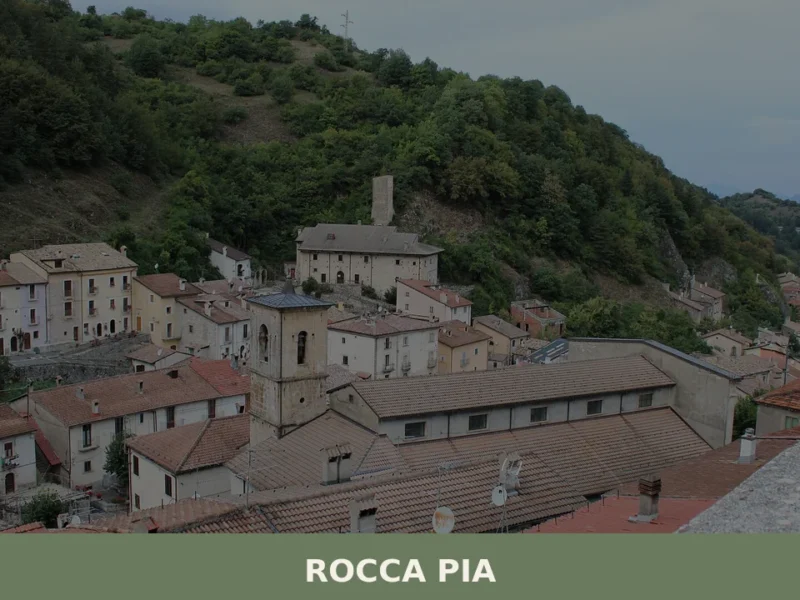
what to see in rocca pia, Italy: Explore this Abruzzo comune near L'Aquila. Discover its territory extending to the Cinquemiglia Plain. Read our guide.
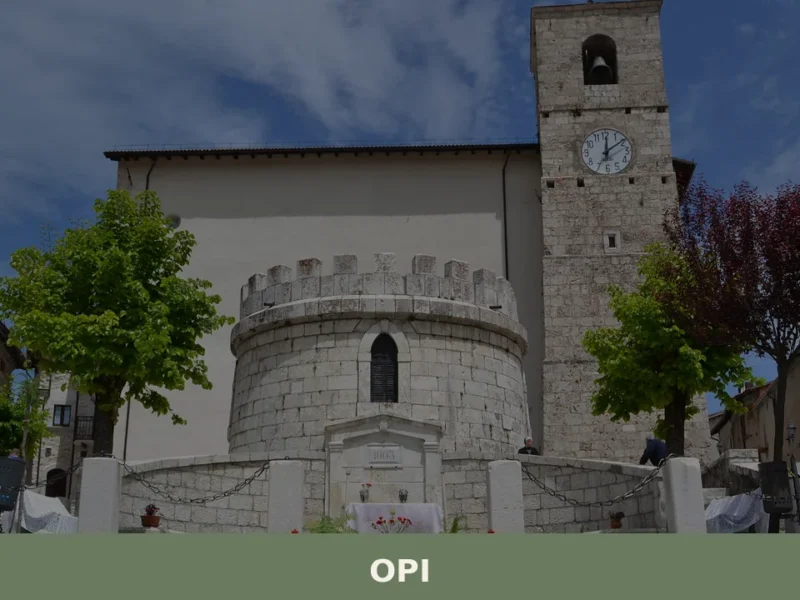
Opi
Mountain
Opi is a stone-built mountain village at 1,224 metres in Abruzzo, enclosed by Marsican peaks and almost entirely surrounded by national park wilderness.
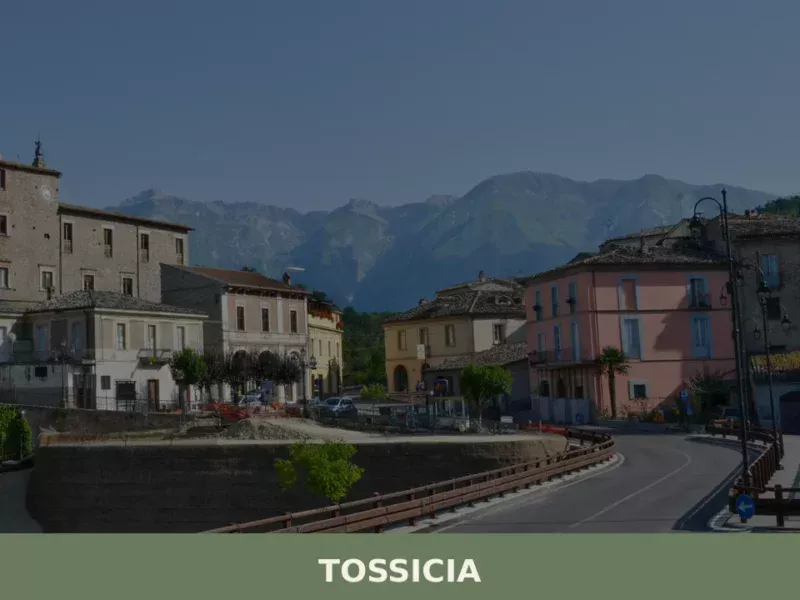
Tossicia
Mountain
Tossicia is a compact stone village in the Teramo province of Abruzzo, perched at 425 metres on the northern Gran Sasso slopes, where a feudal past survives in carved lintels, a marchese's palace and
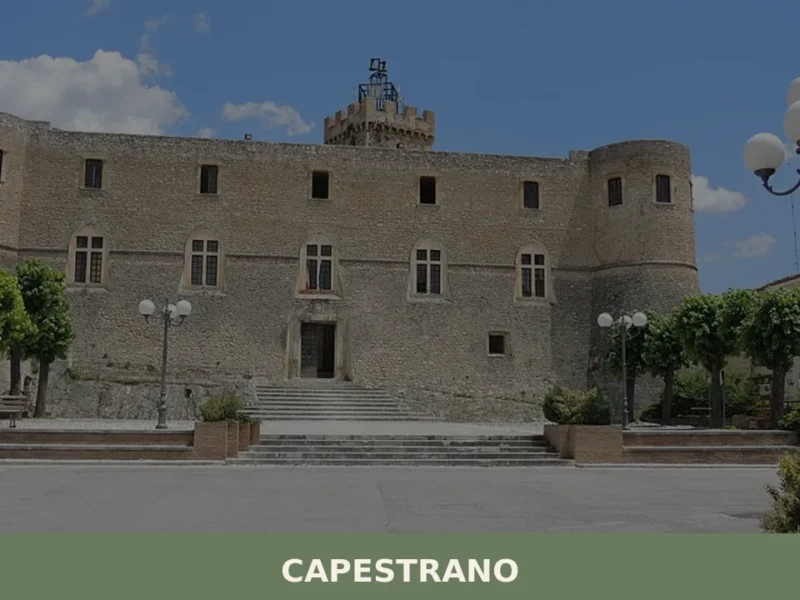
Capestrano
Hills
Capestrano is a historic mountain commune of 810 people in the Tirino valley, province of L'Aquila, Abruzzo, known for the 1934 discovery of the Warrior of Capestrano and for its Franciscan and mediev
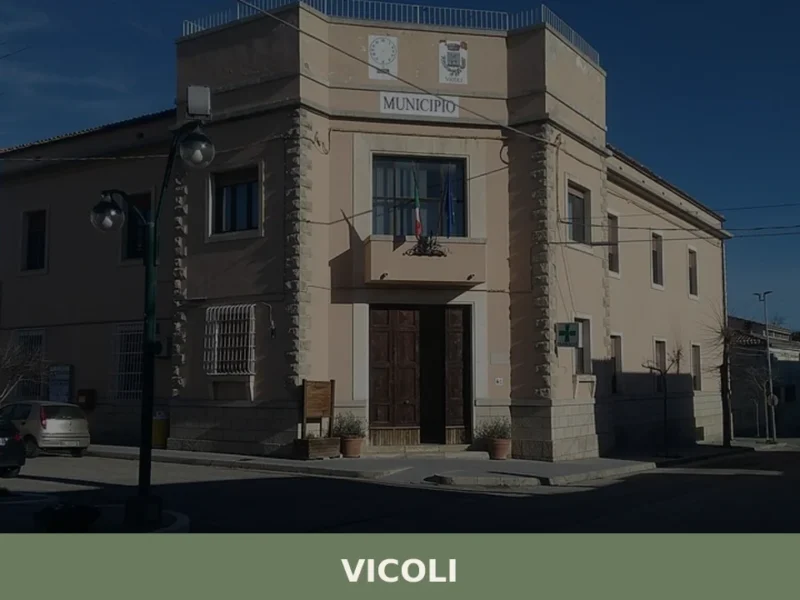
Vicoli
Hills
what to see in Vicoli, Italy: Discover the historical castle ruins and ancient village core of this Abruzzo comune, home to 394 inhabitants. Explore its medieval past.
Gamberale
Mountain
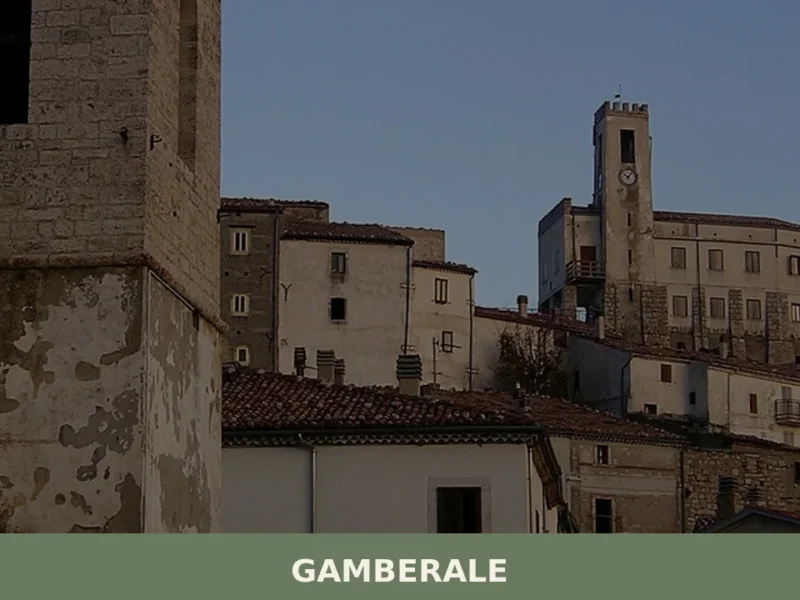
At 1,343 metres above sea level, along the eastern ridge of the Majella mountains where the slopes descend towards the Sangro valleys, 277 residents keep alive a settlement that the catasto onciario of the Kingdom of Naples already recorded in the eighteenth century as a community of shepherds and charcoal burners. Visitors arriving in Gamberale […]
Quadri
Mountain
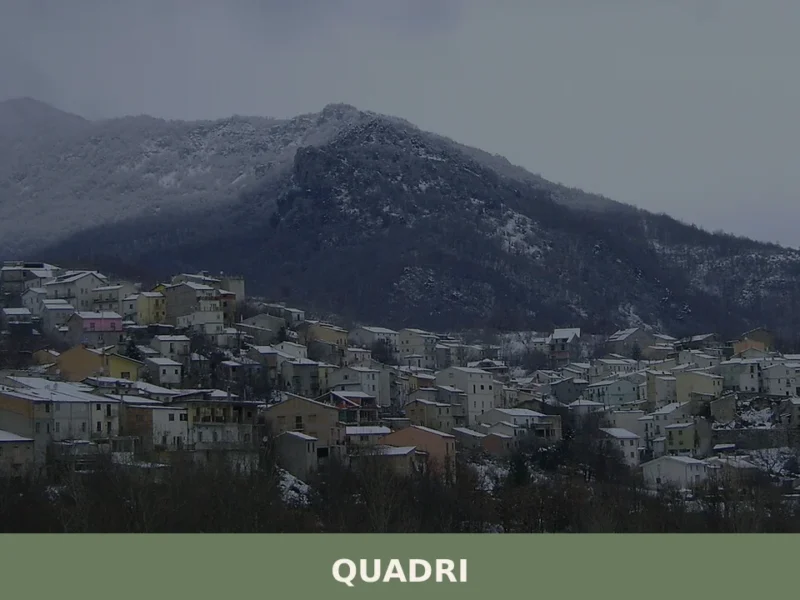
A compact hilltop settlement of around 682 residents above the Sangro river, Quadri offers an unfiltered view of inner Abruzzo at its most honest.
Castel di Ieri
Hills
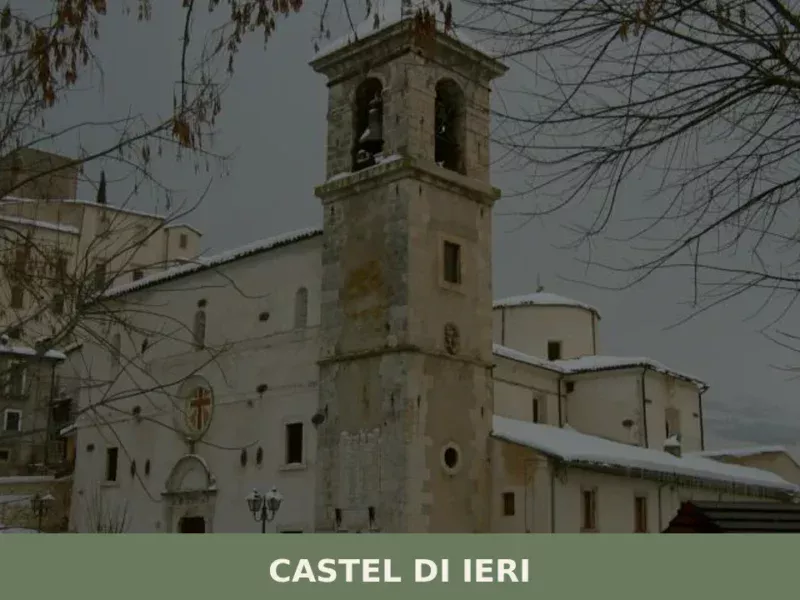
In Castel di Ieri, a village of 289 registered inhabitants at 519 metres above sea level in the Valle Subequana, the most significant feature lies underground: an Italic temple from the 1st century BC, unearthed during the 1980s, which redrew the archaeological map of inland Abruzzo. Anyone looking into what to see in Castel di […]


🏡 Know Montereale better than we do?
If you’re a local or have been there, your knowledge matters: add what’s missing or fix a detail on this page.