Stone and clay rise from the foothills where the Chisone valley opens onto Piedmont’s plain. San Secondo di Pinerolo sits at 413 metres above sea level, a hill village of 3,643 inhabitants, where the old centre clusters around a baroque church and an ancient well that has become the town’s emblem. To the north lies Miradolo, a former stronghold now marked by a 19th-century château; to the south spreads Airali, where modern commerce and small manufacturing have relocated.
San Secondo di Pinerolo village in Piedmont draws its identity from two interwoven histories: first as a settlement near a medieval fortress that once commanded the valley, then as the home of skilled potters whose earthenware travelled across the region. The baroque church rebuilt in the 1770s and the annual Palio delle Contrade—a June pageant of local quarters competing in traditional games—still anchor the rhythm of daily life.
From Fortress to Village: Six Centuries of Transition
San Secondo takes its name from a martyr of the Theban Legion, whose feast the village honours as its patron. For centuries, however, the real centre of power lay at Miradolo, where a fortified stronghold rose in the late medieval period as an outpost of the Pinerolo abbey. That fortress guarded the strategic opening of the Chisone valley into lowland Piedmont—until the late 1500s, when Franco-Savoyard military campaigns left it in ruins.
As Miradolo declined through the early modern era, San Secondo rose. The Bianco counts made it their seat of a rural contea, or feudal territory. Religious conflict—particularly the 1600s struggles between Catholics and Waldensian communities—marked the region. By the early 1700s, the village undertook restoration of its damaged church.
The 1700s proved decisive. Population grew, and San Secondo became renowned for the manufacture of earthenware vessels—the tupin that filled Piedmont’s kitchens and markets. By the 1800s, fourteen potteries worked the local clay, their products traded across the entire region. This craft heritage defined the village’s identity for a century. Only after World War II, when industrial ceramics and plastic containers replaced handmade terracotta, did the trade collapse. The 1960s and 1970s brought new small factories and commercial activity, concentrated mainly in Airali’s flatter terrain.
“The potters of San Secondo made vessels that outlasted empires—humble tupin, yet essential to every household in the Pinerolese.”
Stone, Brick and Baroque: The Sacred and Historic Centre
Chiesa di San Secondo
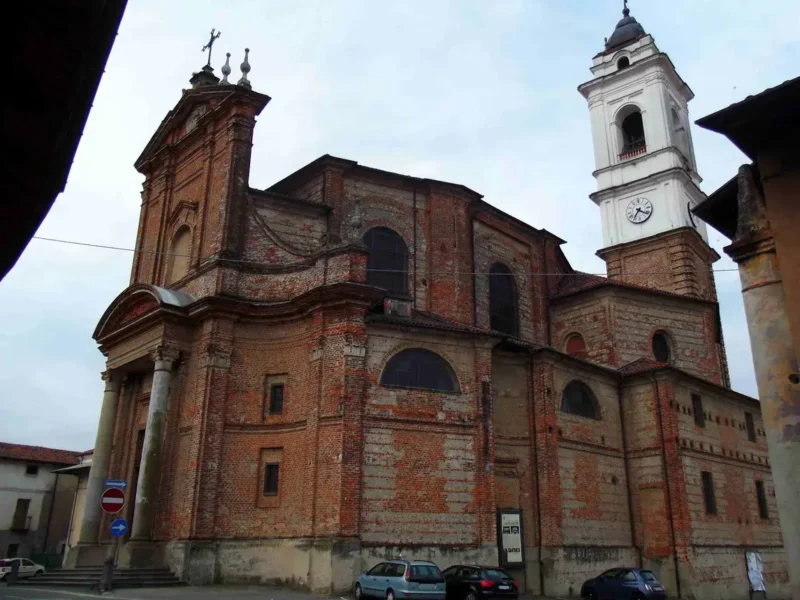
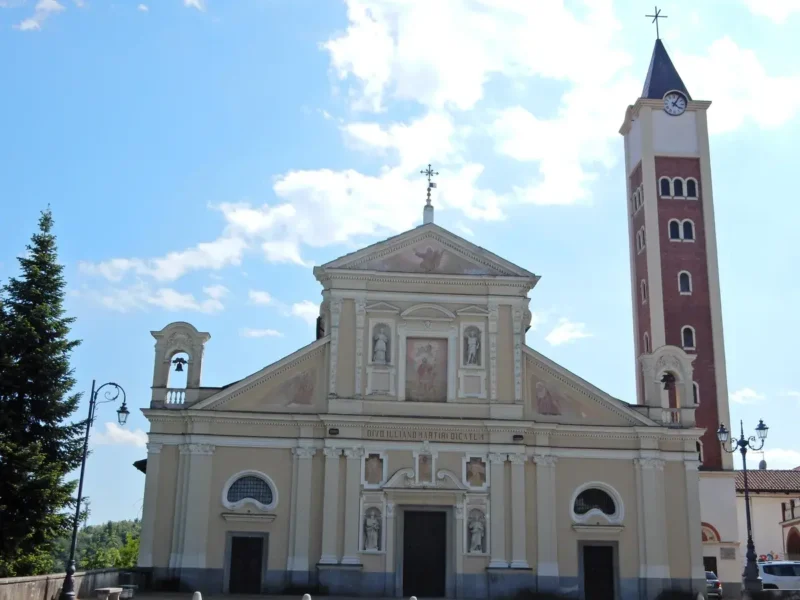
The first documented mention of this church dates to 1368, though wars and neglect left it crumbling by the early 1700s. The church underwent reconstruction in baroque style, with work on the façade beginning in 1743 and the overall reconstruction completed in 1773. The interior holds chapels, among them a chapel dedicated to Saint Anthony of the potters—a reminder of the trade that sustained the village. The church remains the spiritual and architectural focus of the historic capoluogo.
Castello di Miradolo
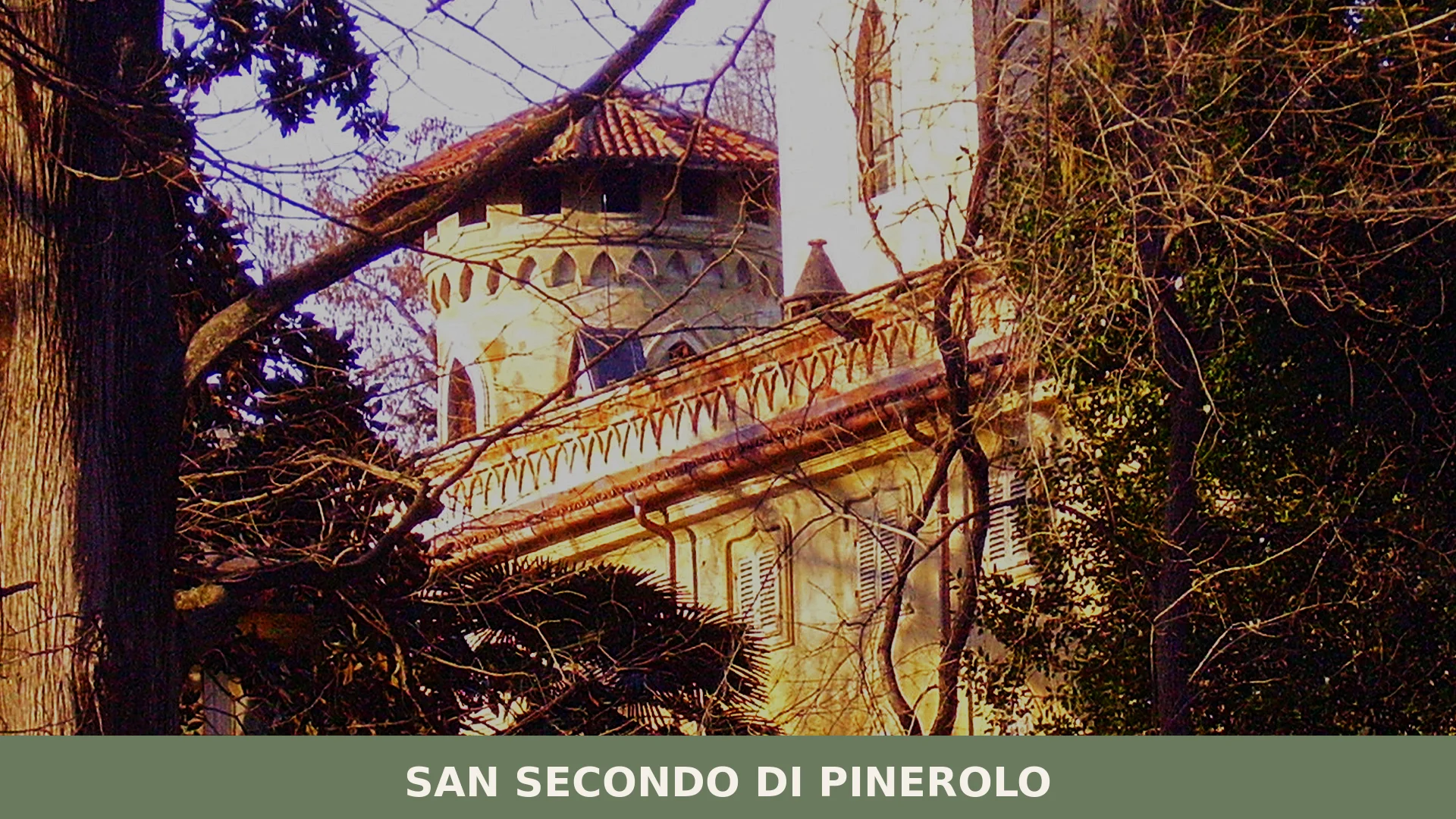
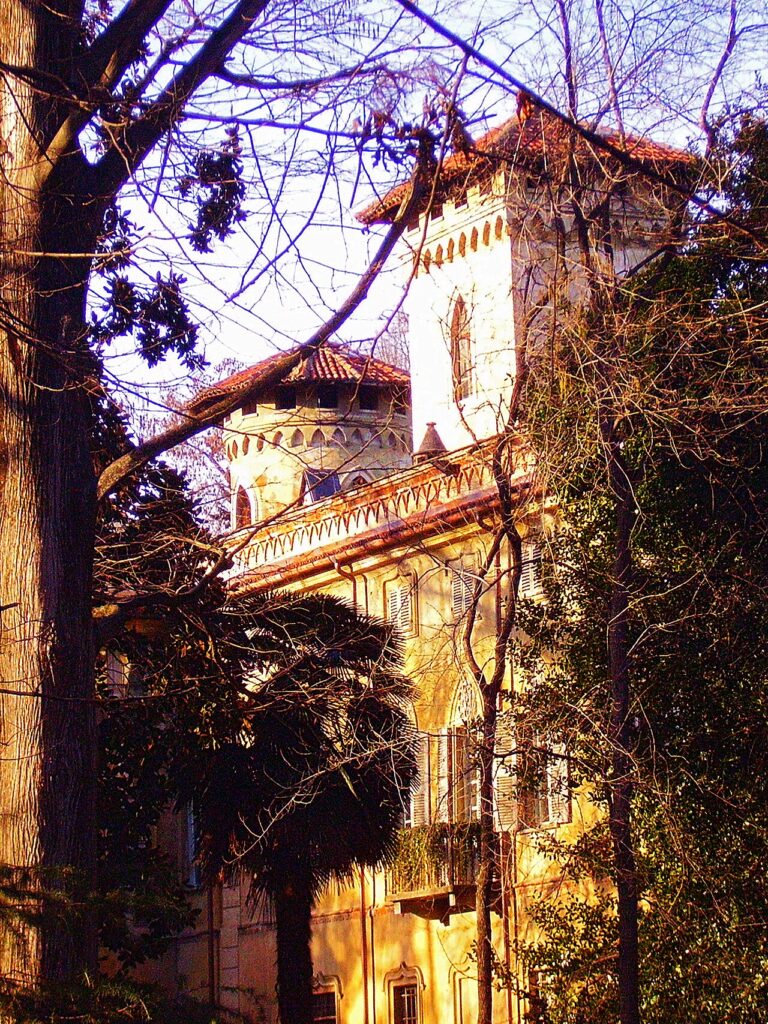
North of the main village, beside the Chisone stream, stand the grounds of this medieval fortress. The original stronghold was demolished in the late 1500s during the Franco-Savoyard conflicts. In the 19th century, a neogothic residence was built on the site, set within a spacious park. Today the château is private property, visible from surrounding paths but not open to public tours.
Historic Centre and Local Symbols
The old town cluster contains 18th-century stone buildings and the aforementioned well—a modest cylinder of brick and stone that has become the village’s symbolic landmark. Nearby stands a baroque-era confraternity chapel dedicated to the Trinity, its small form and simple decoration typical of lay devotional spaces. A protestant temple, inaugurated in 1958, serves the Waldensian community that has a long presence in these valleys. The village coat of arms, officially recognised in 1936, depicts San Secondo mounted on horseback, armoured and holding a silver pennant with a red cross—a heraldic memory of the saint-warrior and the medieval power that once flowed through the territory.
Miradolo Hamlet and the Colombini Villa
The frazione of Miradolo sits on the hillslopes north of the capoluogo, preserving a quieter, older settlement pattern. A parish church stands in the hamlet. A 19th-century villa stands in the hamlet, adding a layer of historical interest to the landscape. The hamlet feels suspended between its feudal past and the slower agricultural rhythms that persist in Piedmont’s hill country.
Terracotta Craft and Village Rhythm
For nearly two centuries, the tupin—large, unglazed terracotta storage vessels—defined San Secondo’s economy and reputation. Potter families established workshops, dug clay from hillside pits, shaped vessels on the wheel and fired them in wood kilns. These functional pots, sturdy and porous, were prized for storing grain, wine and preserved foods across the Pinerolese region and beyond. The craft united artisan skill with local geology: the Chisone valley’s clay beds provided raw material within walking distance of the village.
Though industrial production ended the craft in the post-war decades, the memory lingers. The Palio delle Contrade revives competitive energy between neighbourhood factions in traditional games and contests. This pageant is one of the village’s few events that draws visitors and renews bonds among residents. The square itself, modest but open, becomes the stage for communal identity.
Visiting San Secondo di Pinerolo: Access and Best Seasons
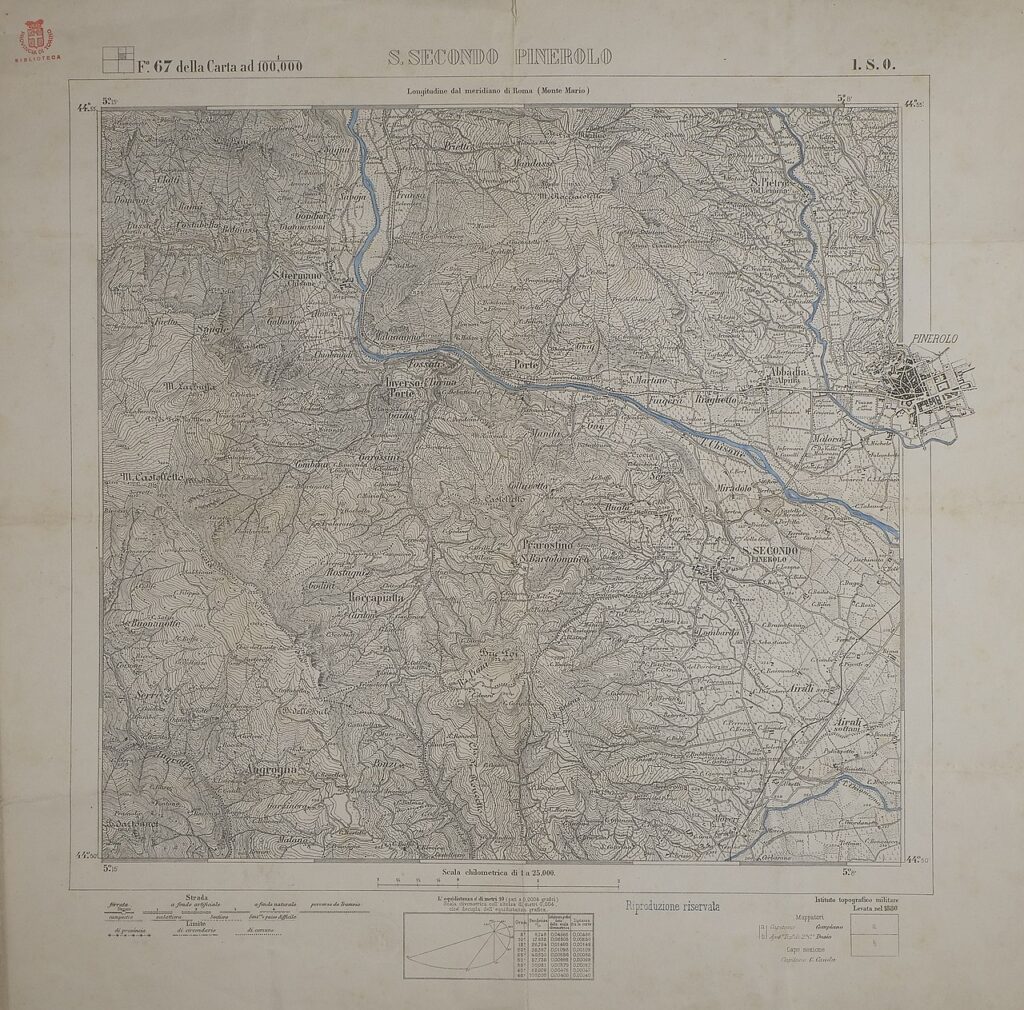
San Secondo di Pinerolo lies in the foothills south of Turin, near the village of Porte and the larger town of Pinerolo. The comune sits at the mouth of the Chisone valley, where low mountains give way to broader Piedmont. Public transport options are limited. Most visitors arrive by personal vehicle, parking near the historic centre or in Airali.
Late spring (May–June) and early autumn (September–October) offer the best climate for exploration. The Palio draws a crowd of local and regional visitors; booking accommodation in nearby Pinerolo or Osasco is wise during that week. Summers are warm but pleasant; winters are cool and occasionally wet. The village has no hotels of its own, but agritourismos and small inns operate in the surrounding foothills. A modest restaurant or two serves traditional Piedmont fare; for serious dining, Pinerolo and nearby towns offer more choice. The village is best savoured on foot—the old centre can be explored in under an hour—combined with a walk up to the Miradolo castle grounds or down to Airali’s broader landscape.
Neighbouring villages within easy reach include Prarostino, Bricherasio and San Germano Chisone The Chisone valley itself—a route of great historical and scenic interest—opens westward upstream toward the Alps and is rich in stone villages, hiking paths and mountain refuges. San Secondo serves as a convenient entry point to this broader territorial network.




 Mountain