


What to see in Casalincontrada, Abruzzo, Italy: 3 historic monuments, a 14th-century city gate and Baroque church. Discover the best of this Chieti village.
Discover Casalincontrada
A 14th-century city gate still marks the entrance to the old centre, its stone arch cutting the skyline above the Abruzzo hills in the province of Chieti. The church of Santo Stefano protomartire rises a short distance from that gate, its Baroque renovations layered over a 14th-century frame in a way that makes the two centuries legible at the same time.
Below the ridge, the valley holds agricultural land that has supplied the same compact cluster of houses for roughly eight hundred years.
Deciding what to see in Casalincontrada becomes straightforward once you understand the scale: three principal monuments, a medieval street plan, and a culinary tradition rooted in the wider Abruzzo upland.
Visitors to Casalincontrada find a 13th-century foundation with two surviving medieval-era religious buildings and one intact fortified gate, all reachable on foot within the historic centre. The village sits in the province of Chieti, roughly 10 km (6.2 mi) from the city of Chieti itself, making it a practical half-day stop on any circuit of central Abruzzo.
History of Casalincontrada
The name Casalincontrada carries two distinct linguistic layers.
The first element, casale, denotes a rural settlement or farmstead cluster in the medieval Italian administrative vocabulary, a term still preserved in the local Abruzzese dialect forms Lu Casèle and Lu Casale. The second element, contrada, refers to a district or quarter, a word used across central and southern Italy to define sub-municipal territories. Together they describe, with documentary precision, a settlement that began as an organised rural district rather than as a fortified hilltop stronghold.
The village was founded in the 13th century by Frederick II of Hohenstaufen, the Holy Roman Emperor whose building and administrative programme reshaped much of southern and central Italy.
Frederick’s reorganisation of the Abruzzo territory involved establishing controlled settlements to consolidate grain production and tax collection across the Apennine foothills. Casalincontrada fits this model: positioned at a manageable altitude above the Chieti plain, it commanded access to agricultural land while remaining defensible.
How to get to Casalincontrada
Casalincontrada is easily reachable by car from Chieti, located approximately 10 km (6.2 mi) away. Public transport options may include local bus services.
Local food and typical products of Casalincontrada
The culinary tradition of Casalincontrada is deeply rooted in Abruzzese cuisine, featuring robust dishes based on local agricultural products and traditional recipes.
What to see in Casalincontrada
Casalincontrada offers several historical and cultural points of interest worth exploring, including its well-preserved medieval gate and the Church of Santo Stefano protomartire.
The 14th-century city gate, which still stands today, reflects the consolidation that followed Frederick’s initial foundation, as subsequent lords reinforced the settlement with permanent masonry structures. Villages established under Hohenstaufen authority across Abruzzo often share this sequence of 13th-century foundation and 14th-century fortification, a pattern also visible in settlements such as Barisciano in the L’Aquila province, which developed within the same broader Norman-Swabian administrative framework.
By the 16th century, Casalincontrada had accumulated enough civic resources to commission the church of Santa Maria delle Grazie, a construction that signals a period of relative demographic and economic consolidation.
The Baroque renovation of the older church of Santo Stefano protomartire, applied to a 14th-century structure, places the village within the broad cultural current that swept Abruzzo’s religious architecture between the late 16th and 18th centuries.
That renovation did not erase the earlier fabric entirely; structural elements from the original building remain visible to an attentive visitor. Through the modern period, Casalincontrada remained a comune, the basic unit of Italian municipal government, within the province of Chieti, and it continues to function as an independent municipality today.
What to see in Casalincontrada, Abruzzo: top attractions
Church of Santo Stefano Protomartire
The exterior stonework of Santo Stefano Protomartire shows the structural seams between its original 14th-century construction and the Baroque interventions added in later centuries, a layering that rewards a slow exterior examination before entering.
Built to honour Saint Stephen, the first Christian martyr, the church has served the community for over six hundred years in various architectural configurations.
Inside, the Baroque renovation introduced decorative elements typical of the period — carved altarpieces, vaulted ceilings with applied ornament — over a nave whose proportions still reflect the 14th-century original. The church sits within the historic centre and is accessible on foot from the city gate; visiting in the morning, when light enters from the east-facing windows, gives the best reading of the interior surfaces.
Church of Santa Maria delle Grazie
Santa Maria delle Grazie was constructed in the 16th century, approximately two hundred years after the first church in the village, and its proportions reflect the Renaissance preference for measured, symmetrical religious space.
The dedication to the Virgin of Graces — Madonna delle Grazie in Italian — was widespread across Abruzzo in this period, connecting the village to a regional network of Marian devotion that influenced both architectural commissions and annual festivals.
The building’s 16th-century fabric has been maintained without the dramatic overlay of Baroque renovation that altered Santo Stefano, giving visitors a clearer reading of its original construction logic. Access is straightforward from the village centre, and the church is particularly relevant for those following the itinerary of Abruzzo’s Renaissance religious architecture.
The 14th-Century City Gate
The city gate is the oldest purely civic structure in Casalincontrada, constructed in the 14th century to mark and control the principal entrance to the settlement. Its masonry arch, built from local stone, has survived without significant reconstruction and remains the clearest surviving evidence of the medieval fortification phase that followed Frederick II’s original foundation.
Standing beneath the arch, it is possible to gauge the original street width — narrow enough to slow mounted traffic — and to read the gate’s dual function as both defensive barrier and toll point for goods entering the village.
The gate anchors the eastern approach to the historic centre; arriving by car or on foot from the direction of Chieti, visitors encounter it as the first fixed point of the old town’s spatial sequence.
The Historic Centre and Medieval Street Plan
The street plan of Casalincontrada preserves the compact, irregular layout characteristic of 13th and 14th-century Abruzzo settlements, where lanes followed topography rather than a formal grid. Walking the central streets takes no more than twenty minutes end to end, but the sequence of covered passages, stone thresholds, and narrow house fronts documents eight centuries of continuous residential use in a relatively unaltered form.
Several façades retain carved stone details — lintels, corbels, and window surrounds — that date from different construction phases between the 14th and 18th centuries.
For those interested in comparing this type of compact medieval layout across the region, the village of Pietranico in Abruzzo offers a related example of small-scale historic urbanism in the Chieti hinterland.
The Surrounding Chieti Hill Landscape
Casalincontrada occupies a position on the Abruzzo hill system between the Chieti plain and the first Apennine rises, at an altitude that places it above the coastal fog belt and below the high mountain snowline.
The cultivated land visible from the village edge — olive groves, cereal fields, and patches of managed woodland — corresponds to the same agricultural base that supported the settlement since Frederick II’s reorganisation of the territory.
The views northeast toward the Adriatic coast and northwest toward the Gran Sasso massif give a clear reading of Abruzzo’s compressed geography, where sea and high mountain are separated by less than 60 km (37.3 mi). Visiting in late spring, when the cereal fields are still green and the slopes carry flowering vegetation, gives the most complete visual context for understanding the village’s position in the landscape.
Local food and typical products of Casalincontrada
The cooking of the Chieti hill zone, which includes Casalincontrada, developed from the intersection of upland pastoral practice and lowland cereal agriculture. Sheep transhumance — the seasonal movement of flocks between high summer pastures in the Apennines and winter grazing on the Adriatic coastal plain — shaped the protein base of local cooking for centuries, producing a repertoire built around lamb, mutton, and aged sheep’s milk cheeses rather than beef or pork as the primary meats.
This pastoralist foundation combines with a strong tradition of dried pasta production, using durum wheat grown in the Chieti province, to define the character of the table in this part of Abruzzo.
Among the dishes documented in the broader Chieti upland tradition, agnello alla brace — lamb grilled over wood embers, seasoned with rosemary and local olive oil — represents the most direct expression of the pastoral base.
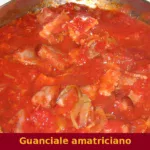
Pasta alla chitarra, egg pasta cut on a wooden frame strung with steel wires to produce a square-section spaghetti, is the canonical first course across Chieti province; it is typically served with a slow-cooked lamb ragù or, in simpler preparations, with a tomato sauce enriched with guanciale, cured pork cheek.
Fiadone, a savoury cheese tart made with fresh sheep’s ricotta and eggs in a short-crust pastry shell, appears at Easter and at other significant calendar points, connecting the table directly to the liturgical cycle that also structures the village’s religious events. Cheese production in the area centres on pecorino, sheep’s milk cheese at various stages of maturation from soft and fresh to hard and sharp after extended ageing.
The Chieti province falls within several certified product designations that cover the broader Abruzzo territory. The area produces olive oil under the Aprutino Pescarese DOP designation, though the core production zone centres on the Pescara hill municipalities.
Abruzzo saffron, produced under the Zafferano dell’Aquila DOP designation, comes specifically from the plateau around Navelli in the L’Aquila province, not from Chieti.
For locally sourced provisions, the weekly market held in Chieti city, approximately 10 km (6.2 mi) from Casalincontrada, supplies the full range of seasonal hill-zone produce including fresh pasta, local cheese, cured meats, and preserved vegetables. Visitors travelling through the area in autumn will find the market stalls at their most varied, with dried legumes, new-season olive oil, and dried mushrooms from the Majella foothills all available.
For those exploring the food traditions of the wider Chieti province, the village of Tornareccio in Abruzzo is documented as a centre of confectionery production, particularly honey-based sweets, and sits within an easy drive from Casalincontrada for travellers combining food itineraries across the province.
Festivals, events and traditions of Casalincontrada
The principal religious festival of Casalincontrada follows the feast of Santo Stefano Protomartire, the patron saint to whom the village’s oldest church is dedicated.
Saint Stephen’s feast falls on 26 December in the Roman Catholic calendar, placing the main patronal celebration in the heart of the winter season. In Abruzzo’s hill villages, patronal festivals of this type typically involve a solemn Mass in the parish church, a formal procession through the main streets of the historic centre carrying the image or relics of the patron saint, and communal gathering in the central square following the liturgical ceremony. The winter timing distinguishes this celebration from the majority of Abruzzo summer festivals and gives it a particular character shaped by the season.
The dedication of the second church, Santa Maria delle Grazie, connects the village to the Marian calendar cycle observed across Abruzzo, with the feast of the Madonna delle Grazie celebrated on 2 July.
Religious observances in small Chieti hill villages of this type traditionally include votive processions, the ringing of church bells at prescribed intervals, and communal meals following the liturgical events. These calendar points also function as occasions for the preparation of traditional dishes — including fiadone at Easter and slow-cooked meat preparations at winter feasts — reinforcing the connection between religious observance and local culinary practice that runs through the documented food culture of the area.
When to visit Casalincontrada, Italy and how to get there
The most practical period for visiting Casalincontrada spans late April through June and September through October.
Spring brings mild temperatures across the Chieti hills, with daytime readings typically in the range of 15–22°C (59–72°F), and the agricultural landscape is at its most visually legible before the summer heat compresses the vegetation. Autumn offers similar temperatures with the addition of harvested fields and early olive pressing activity in the surrounding area.
July and August are the warmest months, with temperatures that can reach 32–35°C (90–95°F) in the hill zone; the village receives more visitors during this period as part of the general Abruzzo summer tourism circuit, but the heat makes extended outdoor exploration less comfortable during midday hours. Winter visits, timed to coincide with the 26 December feast of Santo Stefano, require preparation for cold and occasional snow on the Chieti hills. For international visitors, it is worth knowing that English is not widely spoken in smaller shops and local bars; carrying some euros in cash avoids the payment limitations that affect some smaller establishments.
From Rome, Casalincontrada is approximately 210 km (130.5 mi) by road, making it feasible as a long day trip though more comfortably managed as part of an overnight stay in Chieti or Pescara. The most direct road route uses the A25 motorway from Rome toward Pescara, exiting at Chieti Scalo, followed by a short drive of approximately 10 km (6.2 mi) on the provincial road to Casalincontrada.
Travellers arriving by rail can reach Chieti railway station on the Pescara–Sulmona line, then continue by local bus or taxi to the village.
The nearest international airport is Pescara Airport (Aeroporto Internazionale d’Abruzzo), located approximately 18 km (11.2 mi) from Casalincontrada; from the airport, the village is reachable by car in under thirty minutes via the A14 and connecting provincial roads. Travellers combining Casalincontrada with other Chieti province villages might consider the hill village of Prezza, which lies in the L’Aquila province along the same Apennine foothills corridor and adds a further medieval centre to a two-day Abruzzo itinerary.
Frequently asked questions about Casalincontrada
What is the best time to visit Casalincontrada?
Late spring (May–June) is the ideal time to visit Casalincontrada: cereal fields are still green, slopes carry flowering vegetation, and the hill climate is mild. The village honours its patron saint, Santo Stefano Protomartire, with local celebrations that animate the historic centre. Summer offers clear views toward both the Adriatic coast and the Gran Sasso massif. Autumn brings olive harvest activity across the Chieti hill zone. Winter is quiet but the compact historic centre remains fully walkable, and proximity to Chieti city (10 km) makes it a practical stop year-round.
What are the historical origins of Casalincontrada?
Casalincontrada was founded in the 13th century under Frederick II of Hohenstaufen, Holy Roman Emperor, as part of his administrative reorganisation of the Abruzzo territory to consolidate grain production and tax collection across the Apennine foothills. The name combines casale (a rural farmstead cluster) and contrada (a district), reflecting its origins as an organised rural settlement rather than a hilltop fortress. The 14th-century city gate documents a subsequent fortification phase. By the 16th century the village had grown enough to commission a second church, Santa Maria delle Grazie.
What to see in Casalincontrada? Main monuments and landmarks
The three principal sites are all reachable on foot within the historic centre. The 14th-century city gate is the oldest civic structure, its original stone arch intact. The church of Santo Stefano Protomartire (14th-century foundation, Baroque renovation) shows two architectural layers simultaneously; morning visits make best use of east-facing light. The 16th-century church of Santa Maria delle Grazie preserves its Renaissance proportions without later overlays. The medieval street plan itself — carved lintels, covered passages, narrow house fronts — merits a 20-minute walk end to end. Admission to outdoor areas and streets is free.
Where to take the best photos in Casalincontrada?
The 14th-century city gate offers the most iconic shot: its stone arch frames the Abruzzo hill skyline behind. From the village edge, northeast-facing viewpoints capture the Adriatic coastline on clear days, while northwest views take in the Gran Sasso massif — sea and high mountain visible simultaneously within a 60 km span. Late spring morning light works best for both landscape panoramas and close-up stonework photography in the historic lanes. The exterior of Santo Stefano Protomartire, where medieval and Baroque masonry meet visibly, is particularly rewarding in low-angle morning light.
Are there museums, churches or historic buildings to visit in Casalincontrada?
Casalincontrada has two documented historic churches open to visitors. Santo Stefano Protomartire, the village's patron-saint church, dates from the 14th century with Baroque interior renovations including carved altarpieces and vaulted ceilings. Santa Maria delle Grazie is a 16th-century Renaissance church that retains its original proportions without major later alterations. The 14th-century city gate is a civic monument freely accessible at all times. No permanent museum is documented for the village. For current opening hours of the churches, contact the municipality of Casalincontrada or the local parish directly, as hours may vary seasonally.
What can you do in Casalincontrada? Activities and experiences
The primary activities centre on slow cultural tourism and food and wine exploration. The historic centre is compact enough for a self-guided 20-minute walking circuit covering the gate, both churches, and medieval street fabric. The surrounding Chieti hill landscape — olive groves, cereal fields, managed woodland — is suited to gentle country walks. The village sits 10 km from Chieti city, making it a practical half-day stop on a broader circuit of central Abruzzo. Local agritourism and farm visits in the Chieti hill zone offer direct engagement with olive oil production and pecorino cheese traditions documented for this area.
Who is Casalincontrada suitable for?
Casalincontrada suits travellers interested in authentic, uncommercialized medieval villages without crowds. Couples and cultural tourists will appreciate the layered architectural history — Hohenstaufen foundation, 14th-century gate, Baroque church renovations — compressed into a walkable 20-minute centre. Food and wine enthusiasts benefit from proximity to the Chieti hill culinary tradition: pasta alla chitarra, lamb dishes, and aged pecorino. Photographers find strong material in the gate arch and hill panoramas. Families with children and elderly visitors will find the flat, short circuit of the historic centre accessible. It is not suited to those seeking beaches, nightlife, or extensive hiking infrastructure.
What to eat in Casalincontrada? Local products and specialties
The table in Casalincontrada draws on the Chieti hill tradition shaped by sheep transhumance. Pasta alla chitarra — square-section egg pasta cut on a wire-strung wooden frame — is the canonical first course, typically served with slow-cooked lamb ragù or a guanciale-enriched tomato sauce. Agnello alla brace, wood-grilled lamb with rosemary and local olive oil, is the most direct expression of the pastoral base. Pecorino at various maturations is the principal cheese. Fiadone, a savoury sheep's ricotta tart in short-crust pastry, appears at Easter and other calendar points. Local olive oil is produced within the broader Chieti hill zone.
📷 Photo Gallery — Casalincontrada
Getting there
Piazza Alceste De Lollis, 66012 Casalincontrada (CH)
Nearby Villages near Casalincontrada
In Abruzzo More villages to discover
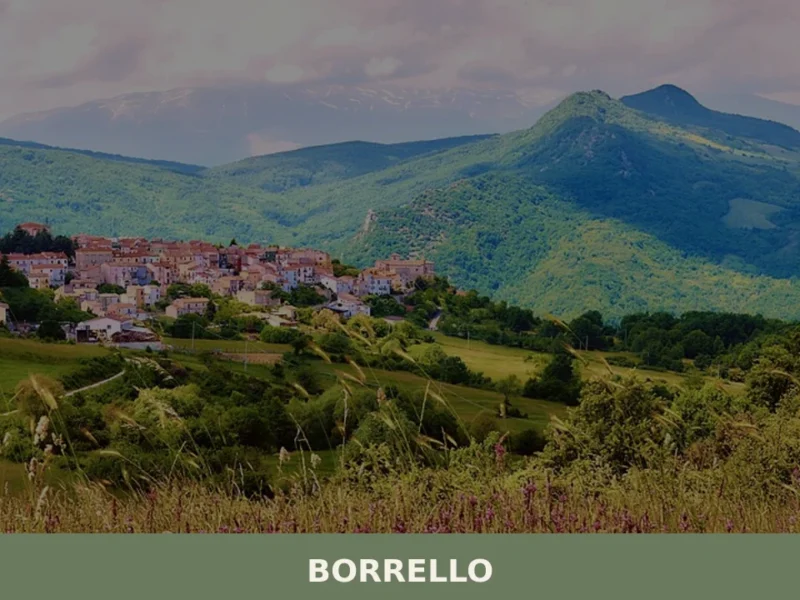
Borrello
 Mountain
At 804 metres above sea level, on the eastern slope of the Majella massif, 338 inhabitants watch over a settlement that in the eighteenth century counted more than two thousand residents. Anyone looking into what to see in Borrello will find a territory shaped more by geology than by human hands: the Cascate del Verde, […]
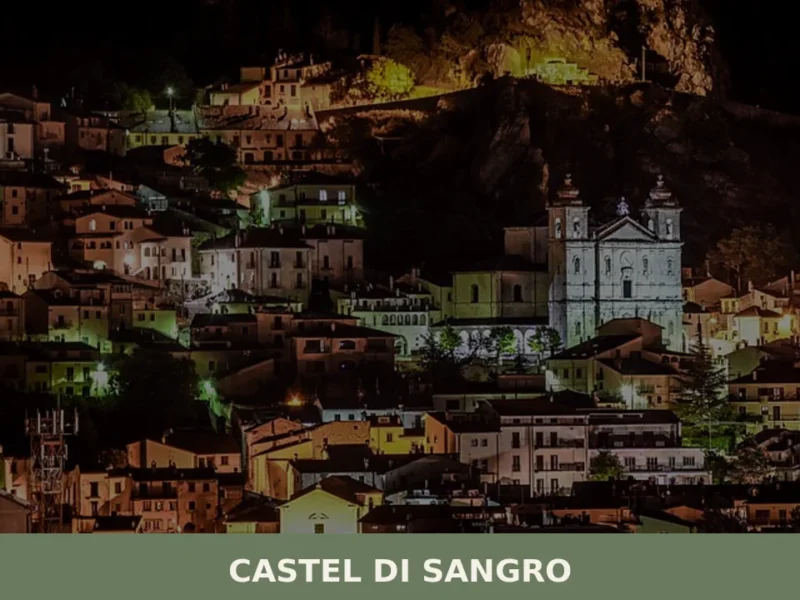
Castel di Sangro
Mountain
At 793 metres altitude in the Abruzzo uplands, Castel di Sangro anchors the Alto Sangro valley as both a historic settlement and active mountain tourism base.
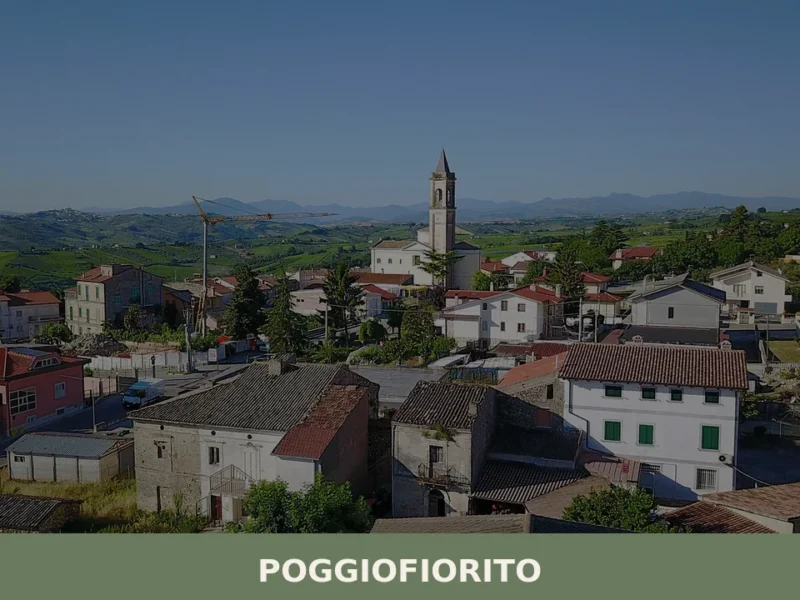
Poggiofiorito
 Sea
Sea
A small hill town on the ancient road between Guardiagrele and Ortona, Poggiofiorito offers a quietly coherent slice of inland Abruzzo, centred on the church of San Matteo and open to sweeping views o
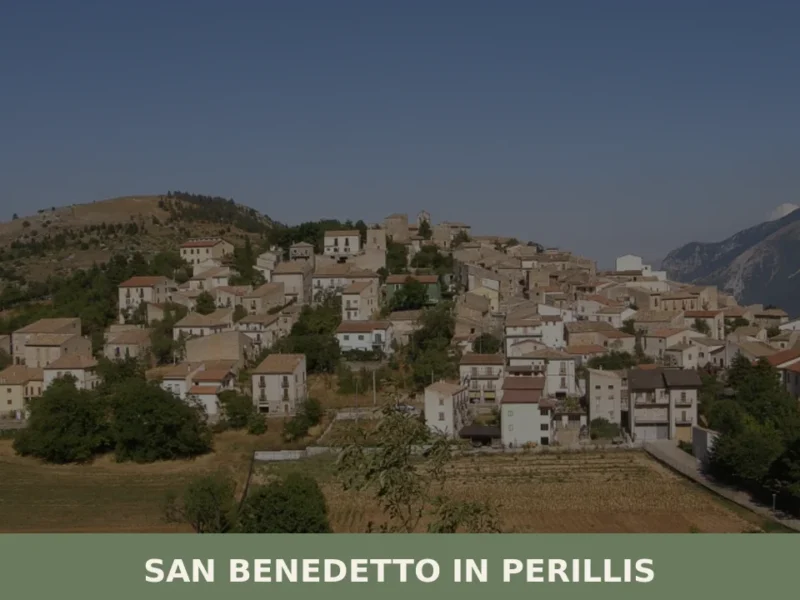
San Benedetto in Perillis
Mountain
San Benedetto in Perillis, a village with just 100 inhabitants, offers a journey into the heart of Abruzzo's mountainous interior.
Celano
Mountain
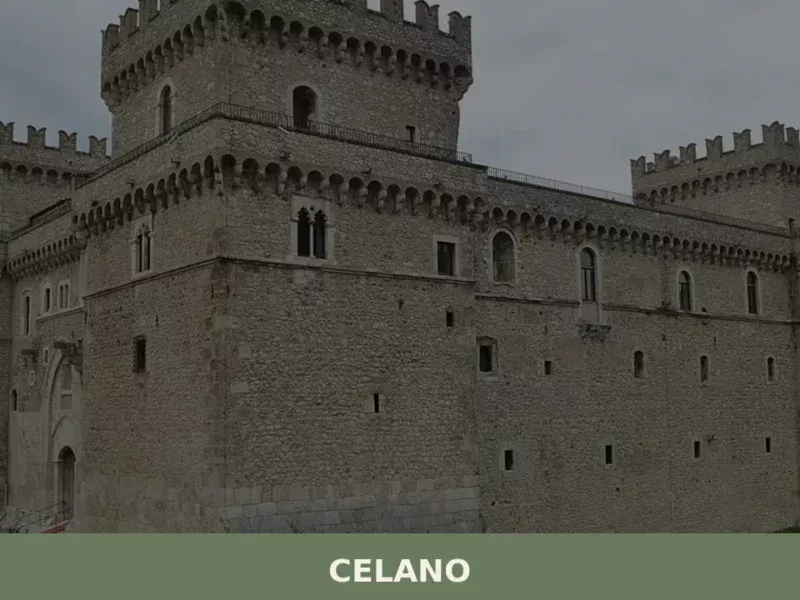
The Castello Piccolomini in Celano, with its four corner towers and curtain wall enclosing a perimeter of over one hundred metres, commands the Fucino plain from an altitude of 840 metres. Anyone wondering what to see in Celano will find an unequivocal starting point here: a fortress that has endured six centuries of history, earthquakes […]

Cappelle sul Tavo
 Hills
Hills
What to see in Cappelle sul Tavo, Abruzzo, Italy: discover 5 top attractions, local food traditions and how to get there. Explore this Pescara province comune.
Cellino Attanasio
Mountain
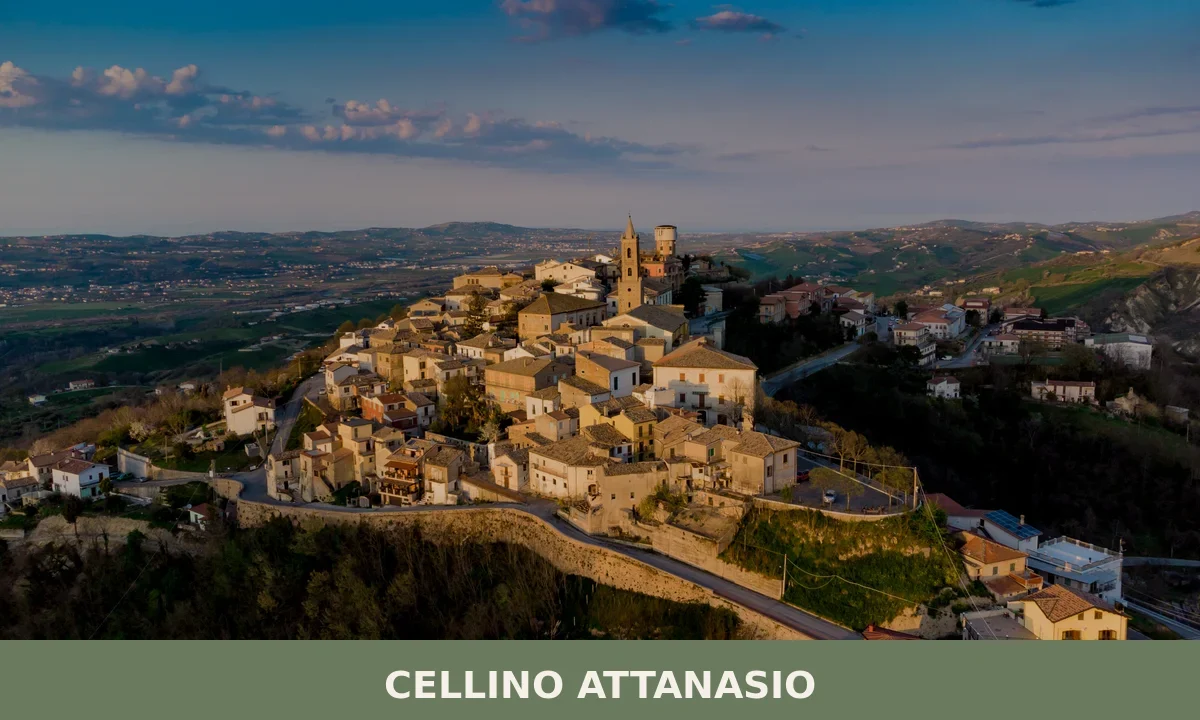
A village of 2,188 residents with Acquaviva fortress walls and a church holding a 15th-century altarpiece by Andrea De Litio. Two valleys, one medieval skyline.
Introdacqua
Mountain
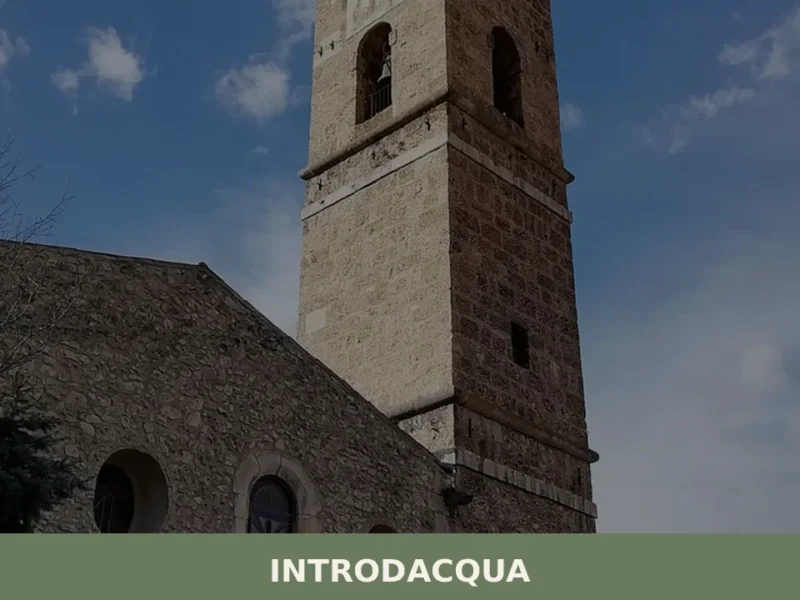
At 642 metres above sea level, at the exact point where three watercourses — the Gizio, the Nera and the San Callisto — converge in the Peligna valley, stands Introdacqua, whose Latin name Intro Acquas records this confluence of waters. The village has a current population of 2,117 and retains an urban layout reflecting at […]
Villa Sant’Angelo
Mountain
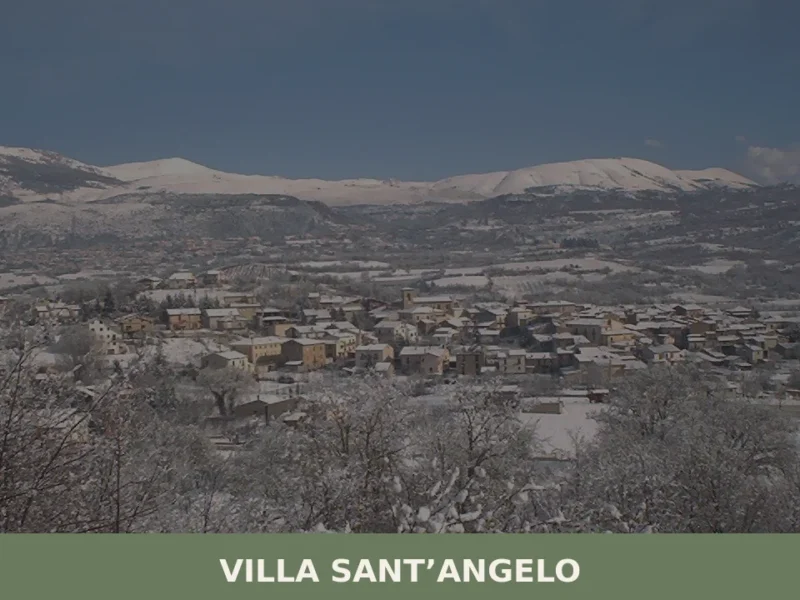
What to see in Villa Santu2019Angelo? Discover 5 must-see attractions and the history of the ancient village. Plan your guided visit now!
Pescocostanzo
Mountain
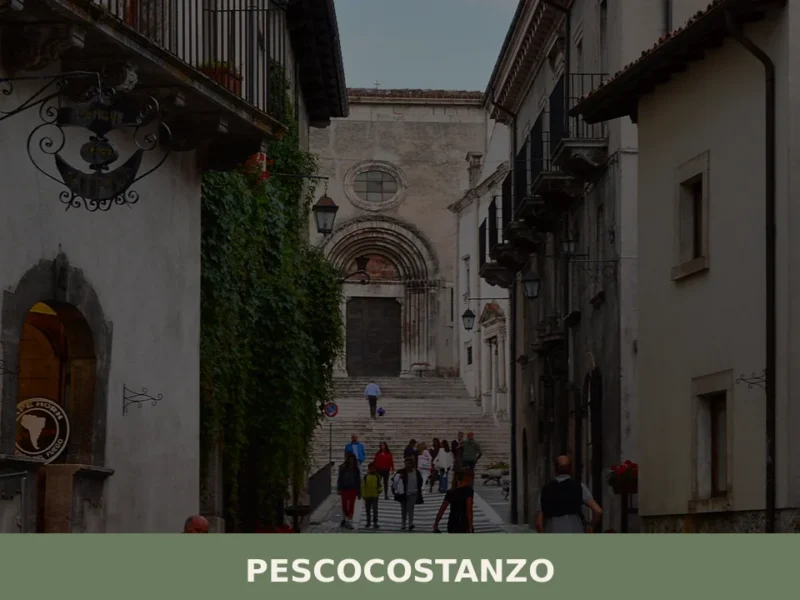
what to see in pescocostanzo offers a blend of mountain beauty and historical charm in Italy. Discover its 1,138 inhabitants, the Maiella National Park, and the Basilica di Santa Maria del Colle. Explore Abruzzo's heart.


🏡 Know Casalincontrada better than we do?
If you’re a local or have been there, your knowledge matters: add what’s missing or fix a detail on this page.