


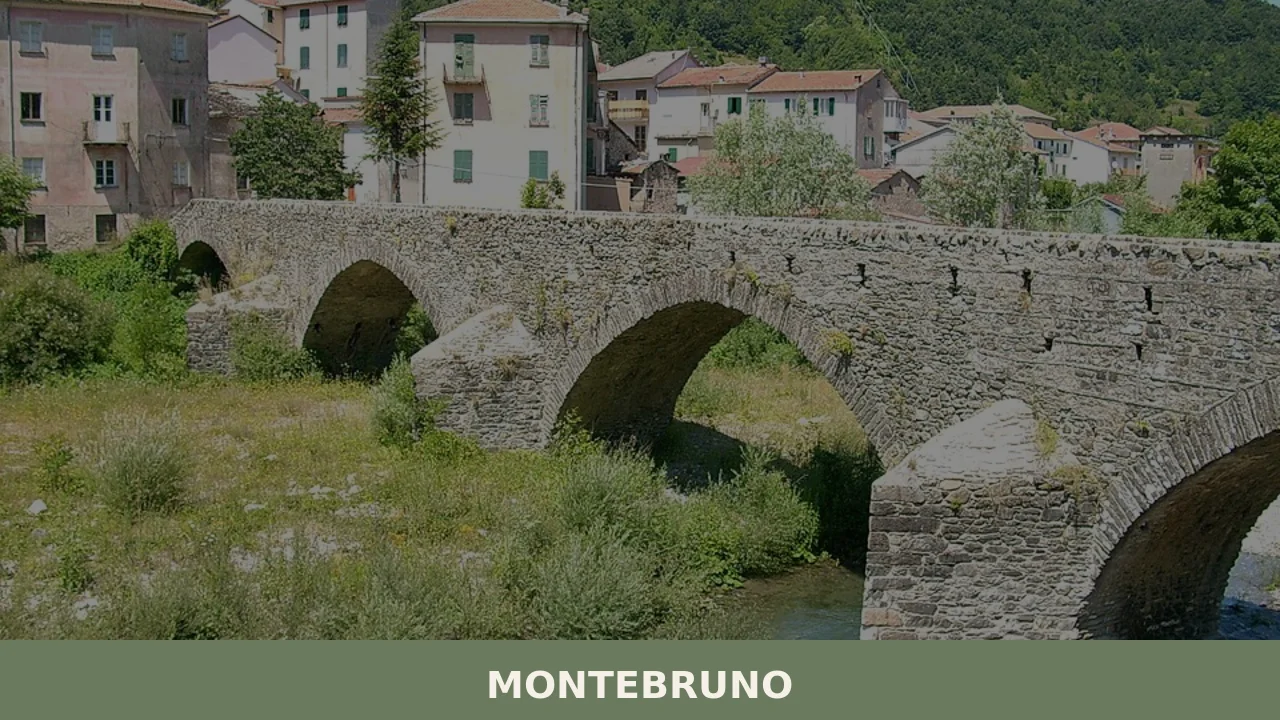
Montebruno
 Mountain
What to see in Montebruno, Italy: a mountain village at 655 m (2,149 ft) near Genoa. Discover the Marian sanctuary, Antola park trails and the 8 September feast.
Discover Montebruno
The Trebbia valley cuts deep into the Ligurian Apennines, and at 655 m (2,149 ft) above sea level the village of Montebruno sits above the tree line on its northern slope. Around 200 people live here today, spread across stone houses that follow the contour of the hillside.
The municipality borders seven neighbours — Fascia, Fontanigorda, Lorsica, Mocònesi, Rezzoaglio, Rondanina and Torriglia — and the Parco Naturale Regionale dell’Antola defines much of the surrounding landscape.
Deciding what to see in Montebruno is easier when you understand the village’s scale: a population of roughly 200 inhabitants, a single main religious monument that draws visitors from Genoa, and a network of Apennine trails that connect it to the wider park territory.
Visitors to Montebruno find a compact mountain settlement located about 30 km (19 mi) northeast of Genoa, where the Sanctuary of the Madonna di Montebruno and the surrounding protected natural area are the two central reasons to make the trip. The feast of the Natività di Maria on 8 September anchors the village calendar and draws pilgrims and curious travellers alike.
History of Montebruno
The toponym Montebruno — rendered Montebrun in the Ligurian language — almost certainly derives from a combination of the Latin mons (mountain) and the adjective brunus (dark brown or dusky), a reference to the dark, densely wooded slopes that cover the Apennine ridgeline at this altitude.
The settlement developed as a waypoint in the network of mule tracks linking the Ligurian coast to the Po Valley, a function that many Apennine villages of this zone shared during the medieval and early modern periods. The surrounding territory was historically administered within the orbit of the Genoese Republic, which exercised authority over the inland valleys as a buffer zone and a source of timber and pastoral resources.
The village’s most significant historical development was the establishment of the Marian sanctuary, which transformed Montebruno from a simple mountain settlement into a destination for religious travel across the region.
Sanctuaries of this kind — often founded around a venerated image or a reported apparition — multiplied across Liguria and the Ligurian Apennines from the late medieval period onward, and Montebruno’s followed a pattern common to the area: a small initial chapel, gradual enlargement as the cult grew, and eventual consolidation into a more permanent architectural complex.
The village’s position within the Metropolitan City of Genoa, which absorbed the former Province of Genoa, reflects administrative reorganisations that occurred across Italian metropolitan areas in the early twenty-first century.
Throughout the modern period, Montebruno’s population contracted steadily, as happened across much of the inland Ligurian Apennines during the twentieth century. The shift away from subsistence agriculture and the draw of coastal urban centres — above all Genoa, 30 km (19 mi) to the southwest — reduced the resident population to its current figure of approximately 200.
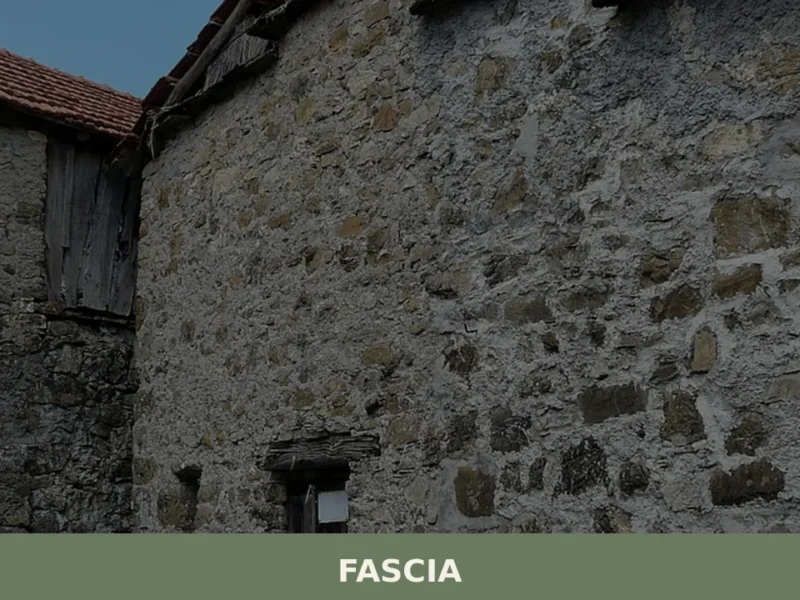
The nearby municipality of Fascia, which borders Montebruno to the northeast, experienced a comparable demographic trajectory, and the two communities share the same broad pattern of mountain settlement and gradual rural depopulation that characterises the Ligurian interior.
What to see in Montebruno, Liguria: top attractions
Sanctuary of the Madonna di Montebruno
The sanctuary is the architectural and devotional focal point of the village, a multi-phase religious complex built at 655 m (2,149 ft) in the Apennine interior.
The building represents successive layers of construction corresponding to the growth of the Marian cult associated with this site. Inside, the venerated image of the Madonna is the object of pilgrimage visits that intensify each year around the feast of the Natività di Maria on 8 September. The sanctuary complex includes a porticoed courtyard typical of Ligurian pilgrimage architecture, and the interior preserves votive offerings accumulated over several centuries of devotional use. For visitors arriving from Genoa, the sanctuary is the primary reason for the trip, and it is accessible directly from the village centre on foot.
Parco Naturale Regionale dell’Antola
Montebruno falls within the boundaries of the , a protected area that extends across the Ligurian Apennines in the Metropolitan City of Genoa.
The park encompasses beech forests, grassland ridges, and river corridors at altitudes ranging from the valley floors to the summits above 1,500 m (4,921 ft). Trails departing from the village connect directly into the park’s marked path network, offering day-length circuits at varying elevations. The park’s management body maintains signage and route information relevant to walkers based in or visiting Montebruno, and the autumn season — when the beech canopy turns — produces some of the most visually distinct conditions for walking these routes.
The Village Core and Stone Architecture
The built fabric of Montebruno follows the compact form typical of Ligurian Apennine settlements: narrow passages between load-bearing stone walls, covered passageways at ground level, and upper storeys that project slightly over the lane below.
The construction material throughout is the local grey-brown stone, cut and stacked in visible courses that record the slow accretion of the village over several centuries.
Walking through the core takes no more than twenty minutes at a leisurely pace, but the quality of detail in doorways, window surrounds, and the occasional carved lintel is consistent throughout. The village sits at 655 m (2,149 ft), and from its upper lanes the terrain drops sharply toward the Trebbia valley, giving views across the forested ridgeline that forms the eastern boundary with Rezzoaglio.
Surrounding Apennine Trails and Natural Landscape
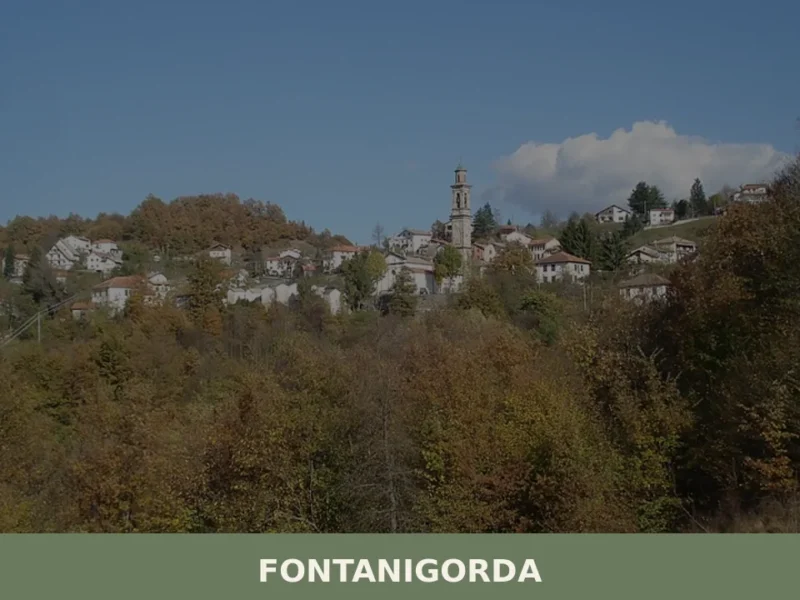
The trail network accessible from Montebruno connects the village to its six neighbouring municipalities across terrain that rises above 1,000 m (3,281 ft) on the main ridge. The paths are well-suited to experienced walkers with appropriate footwear; the gradients between valley floor and ridgeline are significant, and the distance to the nearest neighbouring settlement of Fontanigorda covers approximately 6 km (3.7 mi) of marked path.
Spring and early autumn offer the most manageable walking conditions: snow can persist on the higher sections well into April, and summer temperatures at altitude remain moderate compared to the coast.
The landscape between Montebruno and Isola del Cantone, located in the valley below toward the southwest, illustrates the full altitudinal range of the Ligurian Apennine zone within a single day’s travel.
The Village Belvedere and Valley Views
At the upper margin of the built area, a natural terrace opens toward the north and east, aligned with the direction of the Trebbia valley below. From this point the altitude difference between Montebruno at 655 m (2,149 ft) and the valley floor is immediately legible in the landscape, with the forested slopes falling steeply for several hundred metres before the river becomes visible. The viewpoint requires no special access and is reachable on foot from the sanctuary in under ten minutes.
Early morning in summer produces the clearest atmospheric conditions for observing the full extent of the valley; afternoon haze is common from July onward, particularly when humid air moves inland from the Ligurian coast.
Local food and typical products of Montebruno
The food culture of the Ligurian Apennines developed under the constraints of altitude and relative isolation from the coastal trade routes that shaped the cuisine of Genoa and the Riviera.
At Montebruno’s elevation and in the surrounding municipalities, the kitchen historically drew on what the mountain produced: foraged mushrooms and herbs, chestnuts, preserved meats, dairy from upland pastures, and river fish from the Trebbia and its tributaries. These ingredients did not follow the olive oil and seafood logic of coastal Liguria but developed a parallel tradition that has more in common with the Po Valley side of the Apennines.
Among the dishes rooted in this territory, testaroli — flat discs of pasta cooked on a cast-iron testo and served with pesto or mushroom sauces — appear regularly in the inland Ligurian repertoire. Funghi porcini harvested from the beech and chestnut woods around Montebruno are preserved in oil or dried, and in season they appear in pasta sauces and risotti with a depth of flavour that dried or farmed alternatives cannot replicate.
Castagnaccio, a flat unleavened cake made from chestnut flour, olive oil, rosemary and pine nuts, represents the overlap between the Ligurian and Tuscan-Apennine chestnut traditions; it is baked in a thin layer and has a dense, slightly bitter finish.
Cured meats produced from locally raised pigs — salami, lard worked with herbs, and whole-muscle cuts aged in mountain cellars — complete the cold-plate offering found in the few establishments serving food in and around the village.
The Ligurian interior does not hold the concentration of certified designation products that characterises some other Italian mountain zones, and the sources available for Montebruno do not confirm specific PDO or PGI registrations tied exclusively to this municipality.
The broader Ligurian food system does, however, include the Basilico Genovese DOP and the Riviera Ligure DOP extra-virgin olive oil, the latter produced in defined zones across the region.
For visitors interested in producers and local supply, the municipal website at Comune di Montebruno can provide current information on local food events and producers operating in the area.
The best season to find locally foraged products in circulation — porcini mushrooms, chestnuts, and preserved goods from the summer harvest — runs from September through November. This window aligns with the post-feast period following the 8 September celebration and with the autumn foliage season in the park, making it the period when the village sees its most consistent visitor activity across both culinary and natural interest.
Festivals, events and traditions of Montebruno
The principal event in the village calendar is the feast of the Natività di Maria, celebrated on 8 September each year. This date marks the patron saint’s feast and draws pilgrims and visitors from across the Ligurian Apennines and from Genoa. The celebration centres on the Sanctuary of the Madonna di Montebruno, where a solemn religious function is held and a procession moves through the village streets.
The 8 September feast corresponds to a widespread Marian observance across Catholic Italy, but at Montebruno it carries the additional weight of a locally venerated image, which gives the event a specifically devotional character beyond the standard civic festival format.
The autumn period more broadly — from the feast on 8 September through October — functions as the village’s most active season.
The religious calendar intersects with the natural calendar of mushroom foraging and chestnut harvest, and the cooler temperatures make the surrounding trail network more accessible than in the heat of July and August. Traditional practices tied to the agricultural and pastoral cycle of the Ligurian mountain community historically structured village life at Montebruno, and while the resident population of 200 means that the scale of any local event is necessarily modest, the feast day retains its function as the annual gathering point for former residents, families with roots in the village, and visitors from the surrounding municipalities.
When to visit Montebruno, Italy and how to get there
The best time to visit Montebruno depends on the primary purpose of the trip.
For walkers and those interested in the natural landscape of the Parco Naturale Regionale dell’Antola, late May through June and September through October offer the most reliable conditions: snow has cleared from the upper paths by late spring, summer heat is absent, and the deciduous forest cover is either freshly green or in full autumn colour. The feast of 8 September provides a specific date around which to organise a visit for those interested in the religious and folkloric dimension. Winter visits are possible but the higher trails are not passable without equipment, and several local services may operate reduced hours.
Reaching Montebruno from Genoa — 30 km (19 mi) to the southwest — takes approximately 45 to 60 minutes by car via the SS45 road through the Trebbia valley.
If you arrive by car, the most direct route follows the Trebbia valley north from Genoa, passing through Torriglia before continuing to Montebruno; the road is well-paved but narrow in sections above Torriglia. There is no train station in Montebruno itself; the nearest rail connection is at Genoa, served by the national network via Trenitalia, from which onward travel requires a car or a local bus service on routes that have limited frequency.
Genoa’s Cristoforo Colombo Airport is approximately 45 km (28 mi) from Montebruno, making a same-day arrival and drive feasible for international travellers. From Milan, the drive covers roughly 140 km (87 mi) via the A7 motorway, making Montebruno accessible as a day trip from Liguria’s nearest major city. For international visitors, English is not widely spoken in the smaller local establishments, and carrying cash in euros is advisable since card payment infrastructure in mountain villages of this size is not guaranteed.
Visitors exploring the Ligurian Apennines can use Montebruno as one point on a wider itinerary. The village of , which shares a direct municipal boundary with Montebruno, sits at a higher elevation and offers a different vantage point on the same ridge system. Further afield in Liguria, Calice al Cornoviglio represents a comparable Apennine mountain settlement in the eastern part of the region, and pairing the two gives a sense of the breadth of Liguria’s inland territory beyond the coastal strip.
Frequently asked questions about Montebruno
What is the best time to visit Montebruno?
The ideal time to visit Montebruno depends on your interests. For hikers, spring and early autumn offer the most pleasant conditions, with moderate temperatures and vibrant foliage in autumn. Early autumn, specifically around September 8th, is also perfect for experiencing the traditional Feast of the Natività di Maria, which draws pilgrims and visitors. Summer mornings provide the clearest views of the Trebbia valley, though afternoon haze can occur. While snow can persist into April at higher elevations, the village itself is generally accessible. Avoid mid-winter if you're not equipped for snow.
What are the historical origins of Montebruno?
Montebruno's name likely originates from the Latin 'mons' (mountain) and 'brunus' (dark brown), referring to its densely wooded slopes. The village historically developed as a crucial waypoint along the mule tracks connecting the Ligurian coast to the Po Valley during medieval and early modern periods, administered by the Genoese Republic. Its most significant historical turning point was the establishment of the Marian sanctuary, which transformed it from a simple mountain settlement into an important regional pilgrimage destination, following a common pattern of sanctuary development in the Ligurian Apennines.
What to see in Montebruno? Main monuments and landmarks
The primary attraction in Montebruno is the Sanctuary of the Madonna di Montebruno, a multi-phase religious complex and the village's devotional heart. Visitors can explore its porticoed courtyard and interior, which houses a venerated image and votive offerings. The village is also located within the Parco Naturale Regionale dell'Antola, offering access to beautiful natural landscapes. Don't miss exploring the compact village core with its characteristic stone architecture, narrow passages, and carved details. For panoramic views, head to the Village Belvedere at the upper margin of the built area, overlooking the Trebbia valley.
What are the main natural or scenic attractions of Montebruno?
Montebruno's main natural draw is its location within the Parco Naturale Regionale dell'Antola. This protected area features diverse landscapes including beech forests, grassland ridges, and river corridors, with numerous marked trails for exploration. The surrounding Apennine trail network, accessible directly from the village, connects to neighboring municipalities and offers challenging routes for experienced walkers. Additionally, the Village Belvedere, a natural terrace at the edge of the village, provides stunning panoramic views over the deep Trebbia valley and the forested ridgelines, particularly clear in early summer mornings.
Where to take the best photos in Montebruno?
For breathtaking panoramic shots, the Village Belvedere at the upper end of Montebruno offers spectacular views across the Trebbia valley and the surrounding Apennine landscape. Early summer mornings typically provide the clearest atmospheric conditions for photography there. The Sanctuary of the Madonna di Montebruno, with its distinctive Ligurian pilgrimage architecture and porticoed courtyard, also makes a compelling subject. Furthermore, the compact village core itself, with its ancient stone houses, narrow alleys, and charming architectural details like carved lintels and doorways, provides picturesque opportunities for capturing the authentic mountain settlement character.
Are there museums, churches or historic buildings to visit in Montebruno?
The principal historic and religious building to visit in Montebruno is the Sanctuary of the Madonna di Montebruno. This significant multi-phase complex serves as the architectural and devotional focal point of the village. It features a porticoed courtyard, typical of Ligurian pilgrimage sites, and its interior houses a venerated image of the Madonna, along with votive offerings accumulated over centuries. The sanctuary is a testament to the region's religious history and offers a glimpse into local traditions. There are no documented museums or other major historic palaces mentioned specifically for Montebruno.
What can you do in Montebruno? Activities and experiences
In Montebruno, you can immerse yourself in nature and local culture. Hiking is a primary activity, with trails departing directly from the village into the Parco Naturale Regionale dell'Antola, offering various day-length circuits for experienced walkers. Explore the charming, compact village core on foot, admiring its traditional stone architecture. If visiting around September 8th, experience the vibrant Feast of the Natività di Maria, a significant local event. You can also savor the local food culture, which emphasizes mountain products like porcini mushrooms, chestnuts, and cured meats.
Who is Montebruno suitable for? Families, couples, hikers, solo travelers?
Montebruno is particularly suitable for hikers and nature enthusiasts, thanks to its direct access to the extensive trail network of the Parco Naturale Regionale dell'Antola. It's also an excellent destination for pilgrims and cultural tourists drawn by the historical Sanctuary of the Madonna di Montebruno and the annual Feast of the Natività di Maria. Couples seeking a tranquil, authentic mountain escape will appreciate its quiet atmosphere and picturesque setting. Solo travelers looking for introspection, hiking adventures, or a peaceful retreat will find Montebruno appealing. While not offering extensive child-specific entertainment, families who enjoy nature walks and quiet village life might also find it a rewarding visit.
What to eat in Montebruno? Local products and specialties
Montebruno's cuisine reflects its mountain environment, distinct from coastal Liguria. Specialties include 'testaroli', flat pasta discs often served with pesto or rich mushroom sauces. Locally foraged 'funghi porcini' are highly prized, appearing fresh in season in risotti and pasta, or preserved in oil. 'Castagnaccio', a dense, unleavened cake made from chestnut flour, olive oil, rosemary, and pine nuts, showcases the region's chestnut tradition. You can also find cured meats from locally raised pigs, such as salami and lard, aged in mountain cellars. While specific PDO/PGI products tied solely to Montebruno are not confirmed, the broader Ligurian food system includes Basilico Genovese DOP.
Nearby Villages near Montebruno
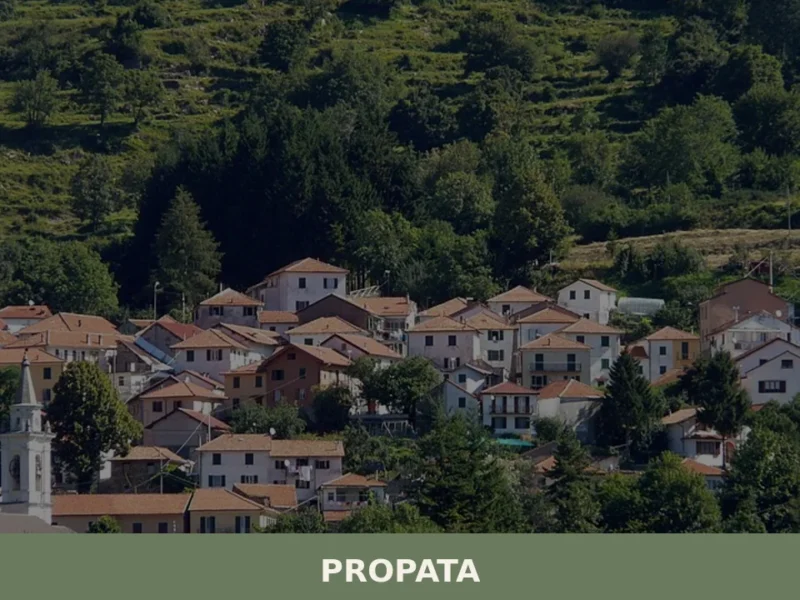
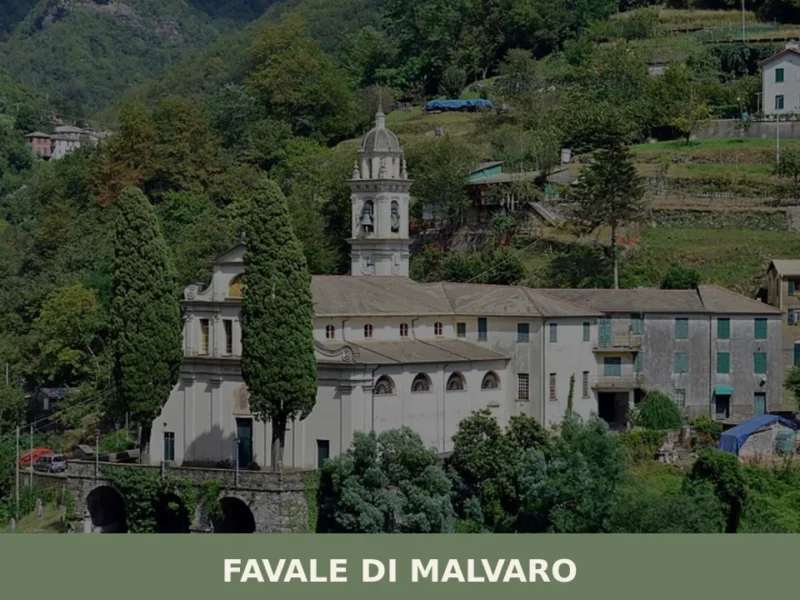
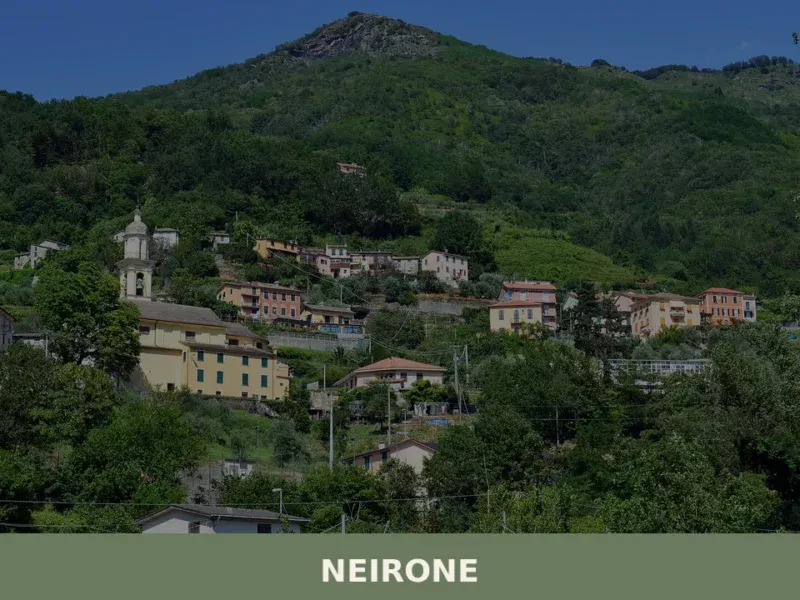
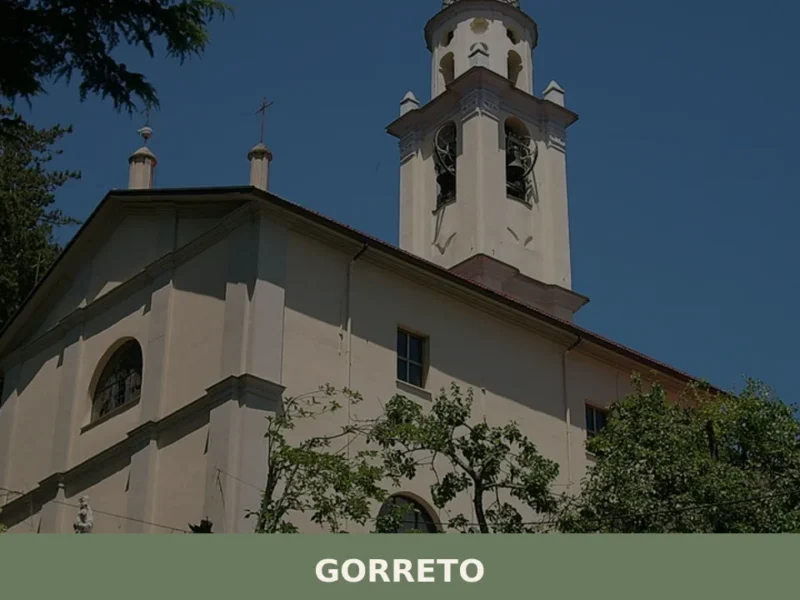
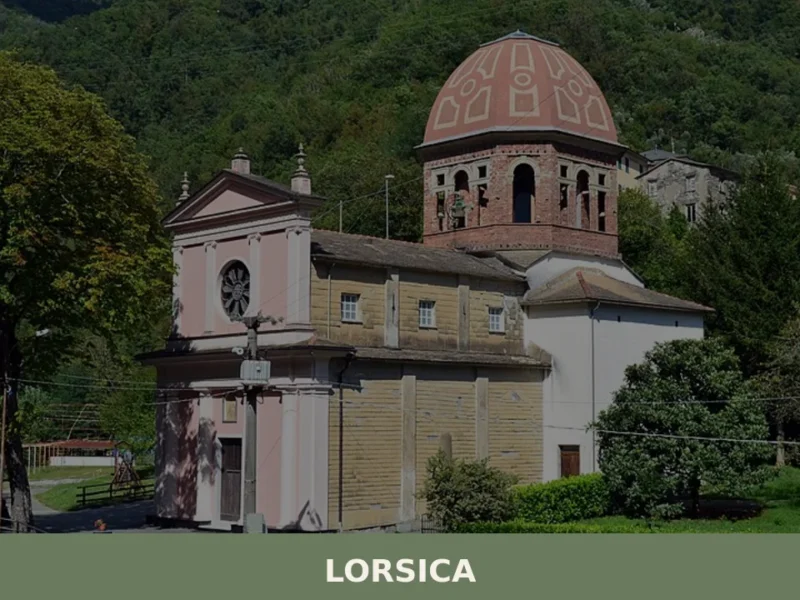
In Liguria More villages to discover
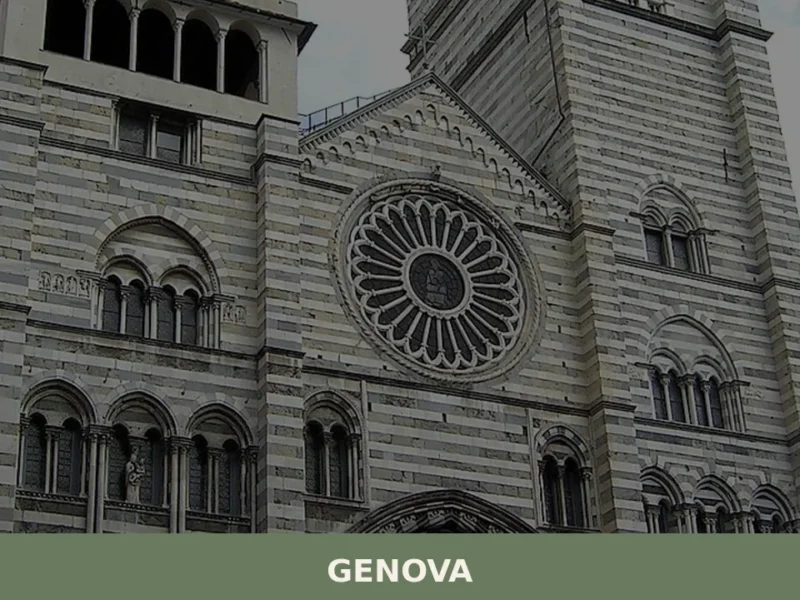
Genova
 Sea
Sea
What to see in Genova: city at 18 m above sea level with UNESCO Rolli palaces and Europe's largest aquarium. Plan your visit with our full guide.
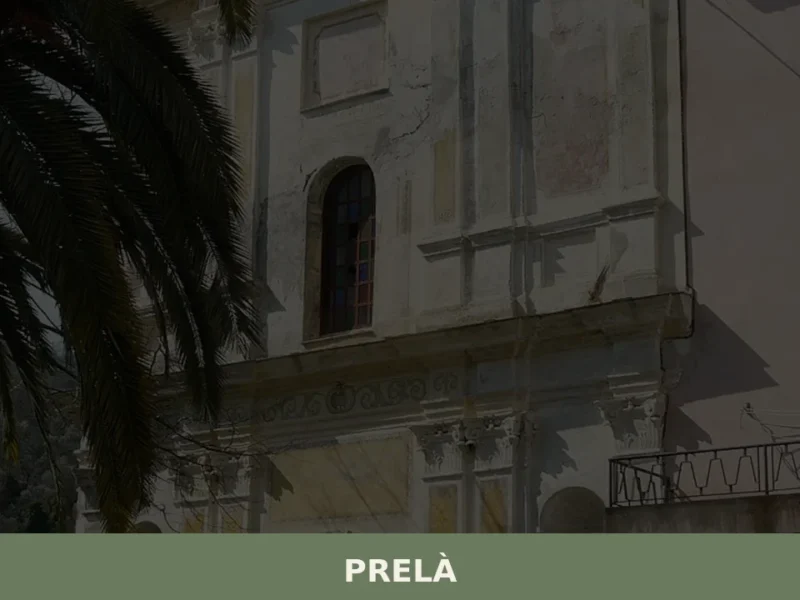
Prelà
 Hills
Hills
What to see in Prelu00e0, Liguria, Italy: explore 5 top attractions, local olive oil traditions, and practical travel tips. Population 485. Discover it now.
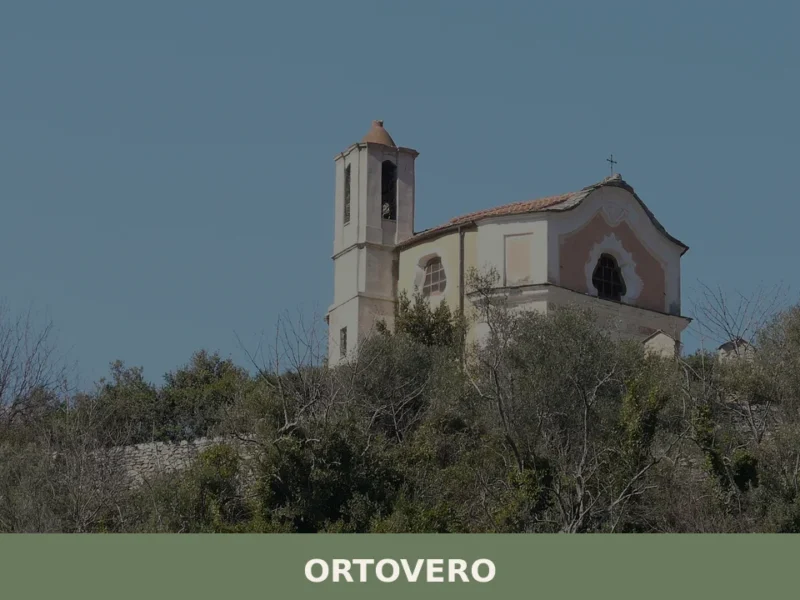
Ortovero
Hills
what to see in ortovero: Explore Italy's Ligurian coast. Located 40 km (25 mi) from Savona, discover historic Ligurian architecture and regional culinary traditions. Read on for travel tips.
Zignago
Mountain
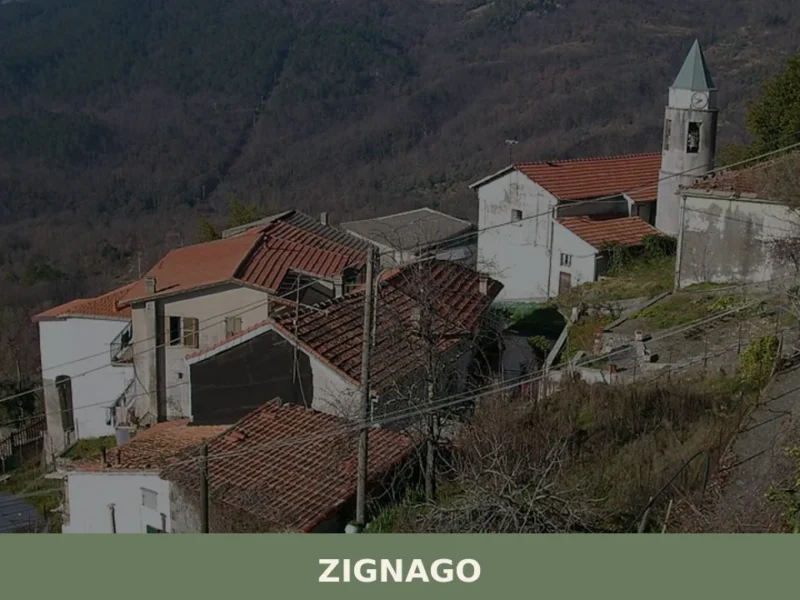
what to see in zignago in Italy. Explore this Ligurian comune of 542 residents, located 20 km (12 mi) from La Spezia, and discover its administrative heart and surrounding valleys.
Calice Ligure
 Plains
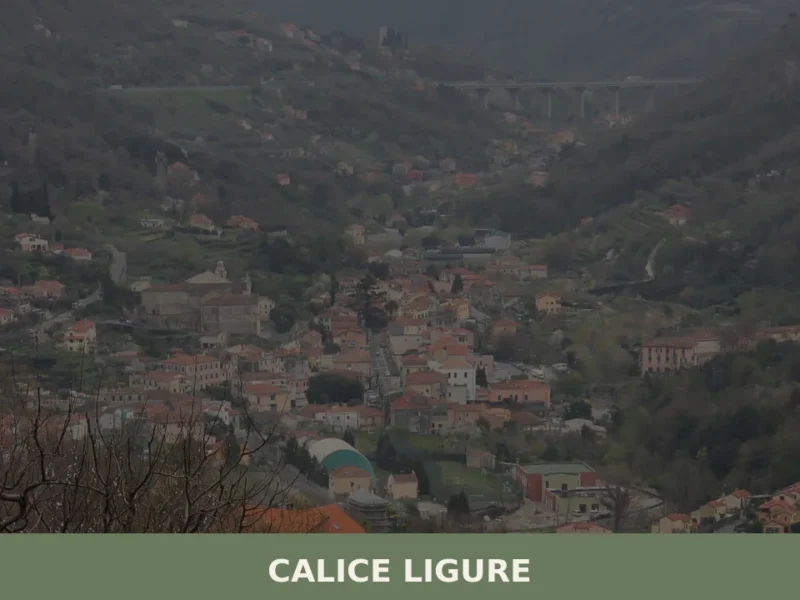
What to see in Calice Ligure, Italy: explore top attractions, local food and how to reach this Savona village of 1,727 people. Discover Liguria's inland.
Chiusavecchia, Liguria: An Ancient Italian Village Guide
Plains
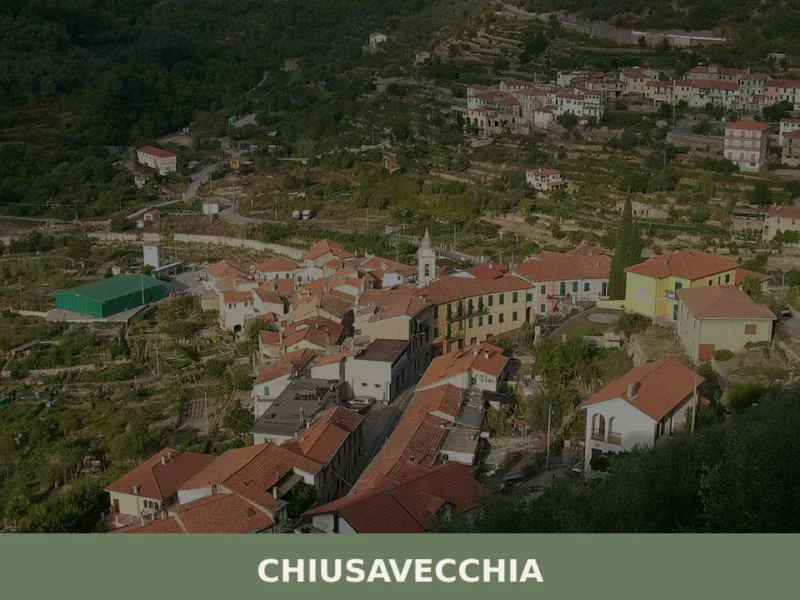
What to see in Chiusavecchia, Italy: Explore this Ligurian village at 140m altitude. Discover its historic core and the feast of San Biagio.
Imperia
Sea
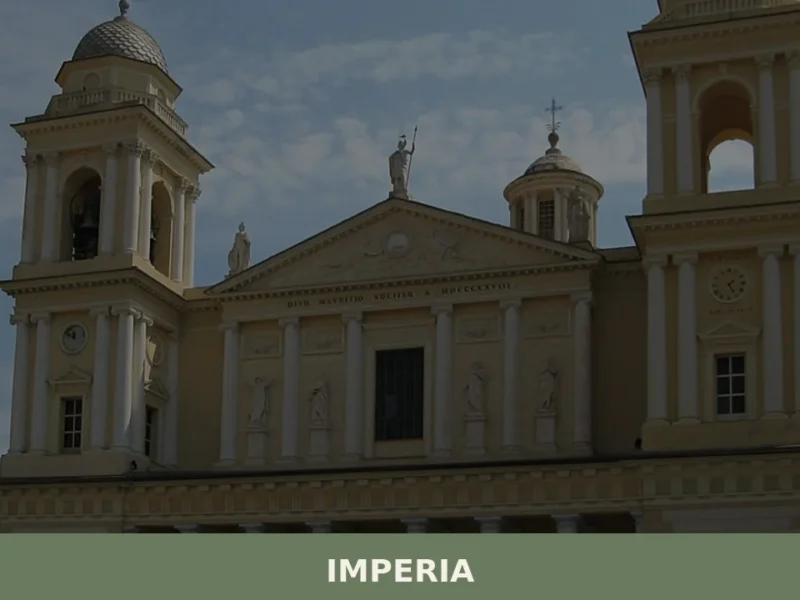
What to see in Imperia: dual city rising to 534 m in Liguria. Explore the Parasio, the free Olive Museum and sardenaira. Plan your visit now.
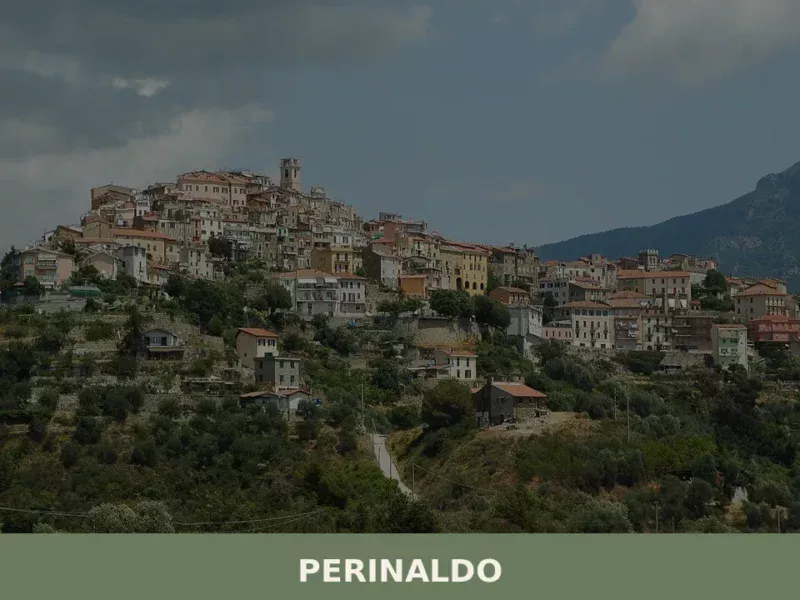
Perinaldo
Mountain
what to see in perinaldo, Italy: Discover the 15th-century church and Cassini Observatory in this Ligurian village of 913 inhabitants. Explore Perinaldo now.
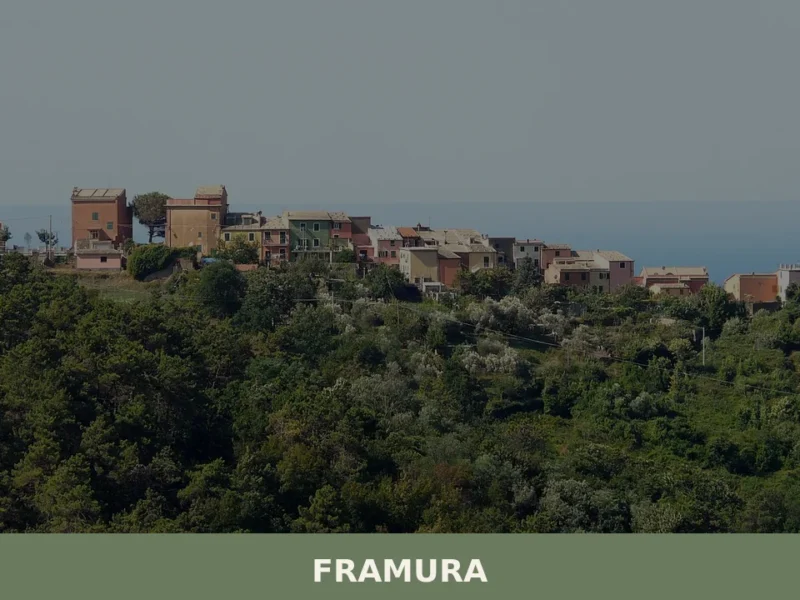
Framura
Sea
What to see in Framura, Liguria, Italy: explore 5 top attractions, WWII history, coastal trails, and local food in a village of 677 inhabitants. Discover it now.
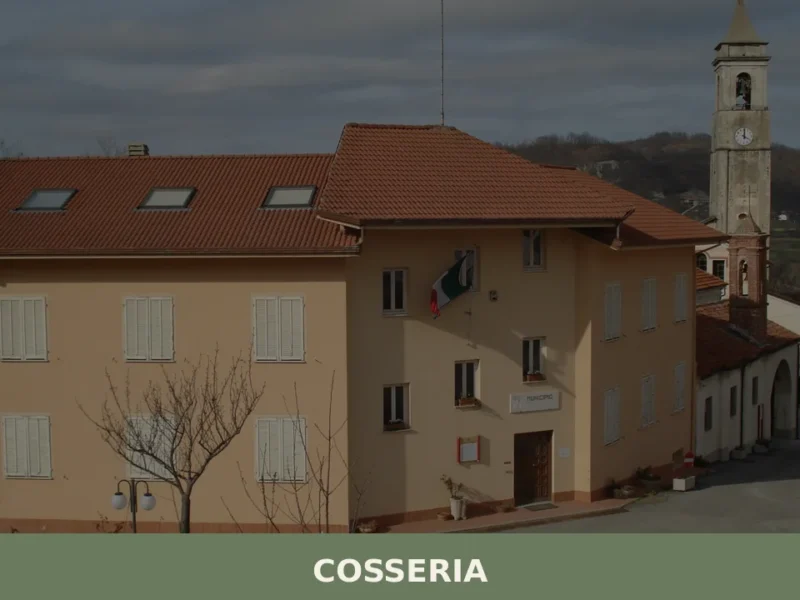
Cosseria
Mountain
What to see in Cosseria, Liguria, Italy: explore a comune of 1,095 inhabitants near Savona. Discover the 5th Infantry Division history, local food and how to get there.




🏡 Know Montebruno better than we do?
If you’re a local or have been there, your knowledge matters: add what’s missing or fix a detail on this page.