


Pomaretto
 Mountain
Discover what to see in Pomaretto, a 937-inhabitant Waldensian village in the Val Chisone near Torino — history, food, travel tips and local culture.
Discover Pomaretto
Pomaretto is a comune of 937 inhabitants in the metropolitan city of Torino, sitting in the Chisone Valley of Piemonte at the foot of the Cottian Alps. Known in Piedmontese as Pomaret and in Occitan as Lou Poumaré, this bilingual identity reflects centuries of Waldensian culture and cross-Alpine exchange that still define daily life here. For anyone researching what to see in Pomaretto, that layered linguistic and religious heritage is the essential starting point.
History of Pomaretto
The Chisone Valley, where Pomaretto stands, was historically one of the core territories of the Waldensians — a Protestant reform movement that predates the Lutheran Reformation and was systematically persecuted by the Duchy of Savoy. The Waldensians maintained a documented presence in these valleys from at least the twelfth century, and by the seventeenth century the villages of the Chisone and Pellice valleys had become the principal geographic refuge of the movement in Italy. Pomaretto, positioned along the valley floor, functioned as a community node within this network of Waldensian settlements, its social and architectural fabric oriented around the Reformed faith rather than Roman Catholic ecclesiastical structures.
A defining moment in the valley’s history came with the Edict of Emancipation issued by King Carlo Alberto of Savoy on 17 February 1848, which granted civil and political rights to the Waldensians of Piemonte. This date — still commemorated annually on the Festa della Libertà — transformed Pomaretto and its neighbouring communities from legally constrained minorities into full citizens of the emerging Italian state. The event accelerated the development of Reformed institutions across the valley, including schools, printing facilities, and social organisations that gave these villages a distinct civic character compared to the surrounding Catholic Piedmontese countryside.
The Occitan linguistic dimension of Pomaretto adds a further layer to its identity. The village sits within the broader zone of Gallo-Italic and Occitan-influenced speech that stretches across the Alpine valleys of southwestern Piemonte, a distribution that reflects medieval patterns of transhumance and trade between present-day France and Italy. The dual Piedmontese and Occitan place names — Pomaret and Lou Poumaré — are not merely archaic curiosities; they survive in active use, supported by regional legislation on linguistic minorities and by cultural associations that continue to publish and teach in Occitan. This makes Pomaretto one of the more linguistically self-aware communities in the Torino metropolitan area.
What to see in Pomaretto: 5 must-visit attractions
The Waldensian Temple
Like all historic Waldensian settlements in the Chisone Valley, Pomaretto is organised around its Reformed temple rather than a Catholic church. The temple functions as the community’s primary place of worship and cultural gathering, built to the plain, unadorned architectural standard characteristic of Waldensian sacred buildings — no lateral chapels, no devotional statuary, the interior focused on the pulpit as the seat of scriptural authority.
The Chisone Valley Landscape and the Via Alpina
The valley floor and surrounding slopes that frame Pomaretto form part of the broader Chisone corridor, a historically significant Alpine transit route. Sections of the Via Alpina, the long-distance hiking network crossing eight Alpine countries, pass through this territory, offering structured walking routes that connect the valley’s Waldensian villages through documented historical paths.
The Ospedale Valdese di Pomaretto
The Waldensian Hospital of Pomaretto is one of the concrete institutional expressions of the 1848 emancipation era. Established by the Waldensian church and community as part of a broader effort to build autonomous social infrastructure, it represents the kind of civic institution that distinguishes Waldensian valley settlements from comparable Alpine villages of similar size.
The Surrounding Hamlets and Borghi
Pomaretto’s municipal territory includes a series of scattered hamlets on the valley slopes, each retaining stone-built rural architecture typical of Alpine Piedmont — dry-stone walls, pitched slate roofs, external staircases in local granite. These fractions offer a precise visual record of how agro-pastoral communities organised space before twentieth-century road construction altered settlement patterns.
The Waldensian Cultural Circuit of the Chisone Valley
Pomaretto sits within a recognised cultural itinerary connecting the principal Waldensian communities of the Chisone and Pellice valleys. The Turismo Valdese network coordinates visits to temples, historical archives, and community museums across this circuit, making Pomaretto a logical stage on a longer valley itinerary rather than an isolated stop.
Local food and typical products
The food culture of the Chisone Valley is rooted in the mountain Piedmontese tradition — substantial, ingredient-led, and directly tied to altitude and season. Polenta concia, enriched with local cheese and butter, is a consistent presence on valley tables, as are preparations based on rye bread, preserved meats, and the cheeses produced in the alpine pastures above the valley floor. The proximity to France has historically introduced elements of Occitan culinary practice, particularly in the use of dried legumes and walnut-based preparations.
The broader Torino metropolitan province is home to several DOP and IGP products that reach valley markets, including Toma Piemontese DOP and Raschera DOP cheeses produced in mountain dairies. For dining, the valley’s agriturismi and small trattorie are the most reliable points of access to genuinely local cooking. The official tourism resources of the Città Metropolitana di Torino maintain updated listings of food producers and eating establishments across the valley municipalities.
Best time to visit Pomaretto
The Chisone Valley experiences a classic Alpine climate: cold winters with reliable snowfall above 1,000 metres, and summers that are warm in the valley floor but significantly cooler on the surrounding slopes. For walking and exploring the village and its hamlets, June through September offers the most consistent conditions, with long daylight hours and accessible mountain paths. The Festa della Libertà on 17 February draws Waldensian communities from across the valleys and beyond — a documented annual event with a specific historical and civic character that makes late February a genuinely interesting time to visit despite the winter temperatures.
Spring, particularly April and May, brings the valley into a distinct transitional state as snowmelt feeds the Chisone torrent and the lower pastures turn rapidly green. Autumn offers cooler temperatures and the harvest context of the wider Piedmontese food calendar. Those interested in the linguistic and cultural heritage of the Occitan communities should check the calendar of the valley’s cultural associations, which organise events and markets tied to Waldensian and Occitan identity throughout the year.
How to get to Pomaretto
Pomaretto is located in the Chisone Valley (Val Chisone), approximately 50 kilometres southwest of Torino city centre. The most direct road access is via the SS23 del Colle di Sestrière, which follows the valley from Pinerolo — the principal town at the valley entrance — toward the higher Alpine passes. From Torino, the A55 motorway connects to Pinerolo, after which the SS23 carries traffic directly into the valley.
- From Torino city centre: approximately 55–60 km by road, around 1 hour driving via Pinerolo
- Nearest railway station: Pinerolo, served by regional trains from Torino Porta Nuova; from Pinerolo, the valley is accessible by local bus services along the SS23
- Nearest airport: Torino Caselle (Turin Airport), approximately 75 km from Pomaretto; rental car is the most practical option for onward travel into the valley
- Motorway reference: A55 Torino–Pinerolo, exit at Pinerolo Nord or Pinerolo Sud, then SS23 into Val Chisone
Where to stay in Pomaretto
Accommodation directly in Pomaretto is limited by the village’s size — the 937-resident comune does not support a large hospitality infrastructure. Visitors will find the most practical base either in Pomaretto itself, where small B&B and holiday apartment options exist, or in Perosa Argentina, a slightly larger valley centre a few kilometres further along the SS23. The valley as a whole has a modest but functional offer of agriturismi, family-run guesthouses, and self-catering apartments, most of which serve both the winter sports season (proximity to Sestrière and the Milky Way ski area) and summer walking visitors.
Booking directly through local accommodation providers or through the Città Metropolitana di Torino’s tourism portal is advisable, particularly for the February Waldensian festival period and for peak summer weeks in July and August when mountain accommodation across the entire Chisone Valley tends to fill. For longer stays oriented around walking or cultural research, a self-catering apartment in Pomaretto or a neighbouring hamlet gives the most direct access to the village rhythm and the surrounding landscape.
More villages to discover in Piemonte
The Torino metropolitan area contains a wide range of village types, from Alpine valley communities to the gentler Canavese and moraine landscapes further north and east. Visitors travelling between the Chisone Valley and the lakeside territory northeast of the city might consider the village of Azeglio, situated on the shores of Lago di Viverone in a landscape shaped by glacial moraine geology — a complete contrast in terrain and character to the enclosed Alpine valley of Pomaretto. Similarly, Busano in the Canavese represents the lower, more agricultural Piedmont that stretches between the Alps and the Po plain.
For those who want to extend their knowledge of smaller Piemontese communities within the broader provincial orbit of Torino, Alpette in the upper Canavese and Banchette, near Ivrea, both offer distinct entry points into the region’s layered geography. Each of these communities sits within a different ecological and historical corridor of the metropolitan province, demonstrating how much variety the Torino hinterland contains within relatively short driving distances.
Frequently asked questions about Pomaretto
What is the best time to visit Pomaretto?
The ideal season is late spring through early autumn (May–September) when mountain weather is mild and hiking trails are fully accessible. Winter can be harsh at 630 metres elevation. December 6th marks the Feast of San Nicolao, the patron saint, offering a culturally rich visiting opportunity. Summer allows full exploration of Waldensian heritage sites and outdoor activities in the Chisone Valley.
How do I reach Pomaretto by car?
Pomaretto is located in the Chisone Valley in the Turin metropolitan area, Piemonte. The village sits at 630 metres altitude in the foothills of the Cottian Alps. Access is via provincial roads from Turin. The nearest major motorway is the A6 Turin–Savona. From Turin city centre, the drive takes approximately 45–60 minutes via Val Chisone route. Parking is available in the village centre.
What outdoor activities are available around Pomaretto?
The Chisone Valley offers excellent hiking and trekking opportunities suited to mountain tourism. Trails connect Waldensian heritage sites across the valley network. The Cottian Alps foothills provide varied terrain for walking and photography. Mountain biking routes utilise valley and ridge paths. Summer is optimal for all outdoor pursuits. Local CAI (Italian Alpine Club) marked routes serve different difficulty levels.
Why is Pomaretto significant historically?
Pomaretto was a core settlement within the Waldensian network from at least the 12th century. The village functioned as a community node in the Chisone Valley, the principal refuge of this pre-Lutheran Protestant reform movement in Italy during the 17th century. Its architecture and social fabric developed around Reformed faith rather than Roman Catholic structures, reflecting centuries of cross-Alpine religious and cultural exchange.
In Piedmont More villages to discover

San Benedetto Belbo
 Hills
Hills
145 residents, one literary trail, one medieval monastery legacy. San Benedetto Belbo rewards slow travellers with Fenoglio's landscape and Langa hilltop views.
Banchette
Hills
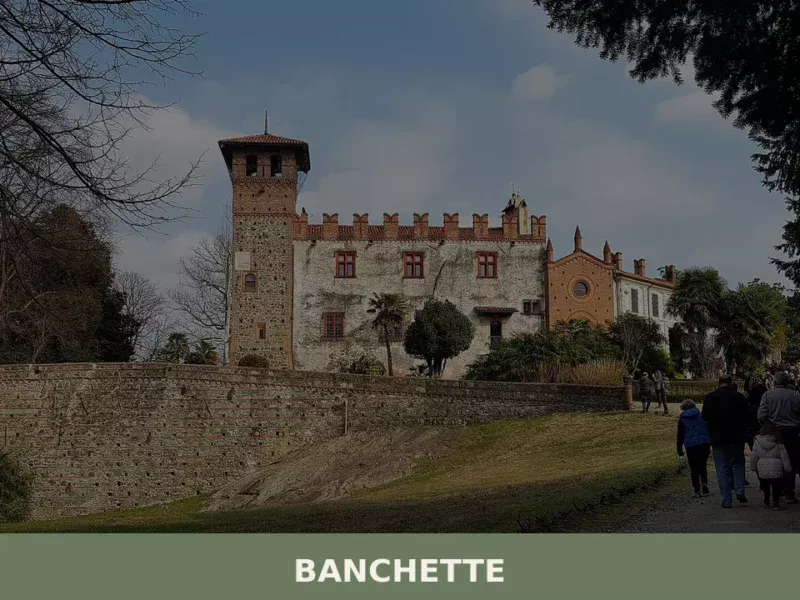
Banchette is a municipality of 3,087 inhabitants in the province of Turin, situated at 266 metres above sea level on the Canavese plain, a few kilometres from Ivrea. Those wondering what to see in Banchette will find a settlement whose modern identity owes more to industry than to the Middle Ages: the area underwent significant […]
Angrogna
Mountain
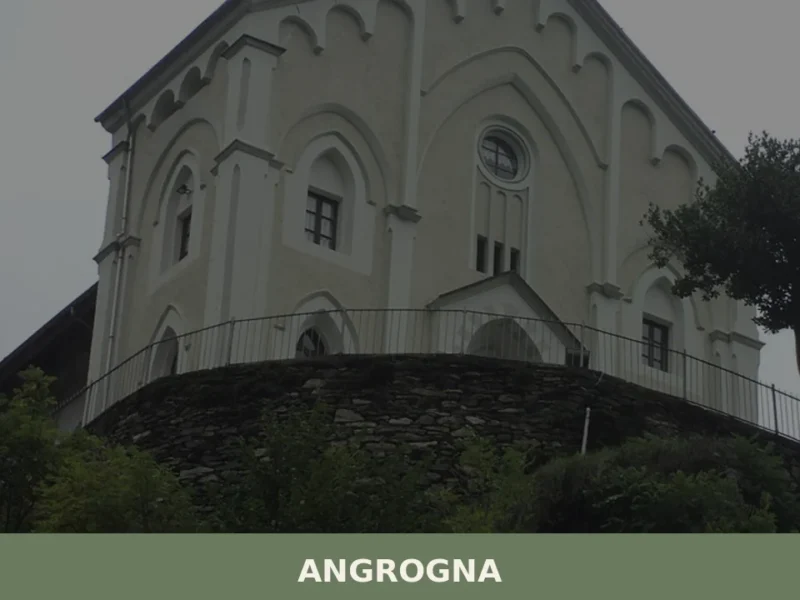
What to see in Angrogna: Chanforan, the Ghieisa d'la Tana, Waldensian trails, historic hamlets and mountain cuisine. A complete guide to the village.
Balme
Mountain
What to see in Balme, a village at 1,432 m in the Valle di Viù (TO): the historic centre, high pastures, the Alpi Cozie Park, local food and practical tips for your visit.
Piobesi Torinese
 Plains
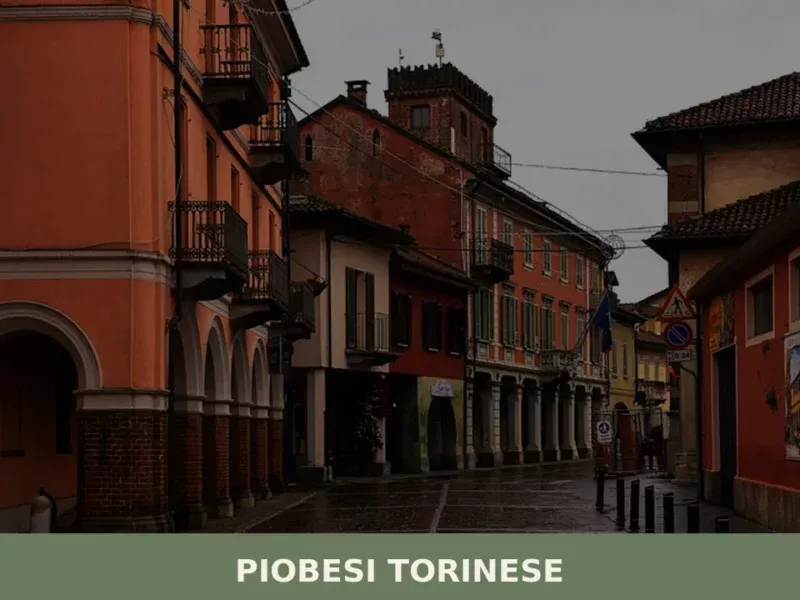
Scopri Piobesi Torinese, affascinante borgo piemontese: storia, attrazioni, tradizioni e consigli pratici per visitarlo al meglio.
Cafasse
Hills
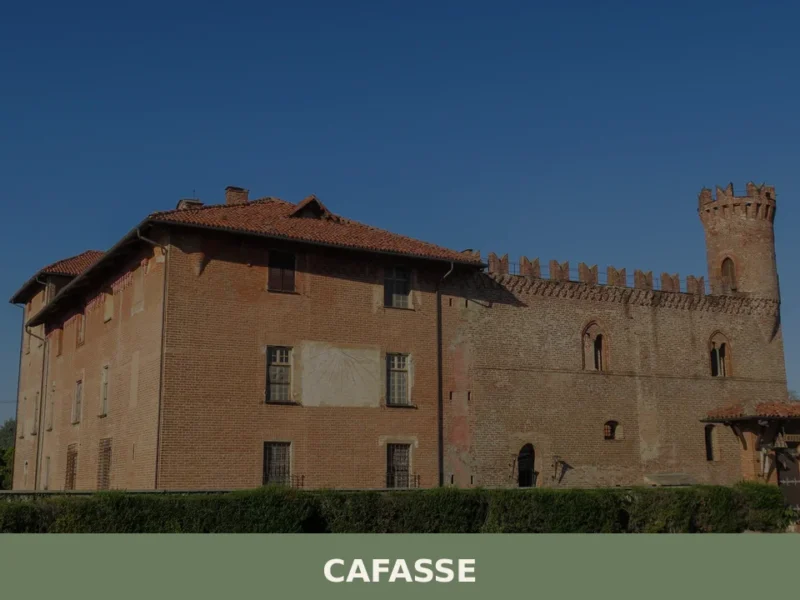
What to see in Cafasse, Italy: 25 km from Turin, explore the Valli di Lanzo gateway, local cuisine and festivals. Discover the best of this Piemonte village.

Prarostino
Mountain
Population 1,230. A foothill comune where partisan memory and valley crossroads define the landscape and village rhythm.
Osasco
Plains
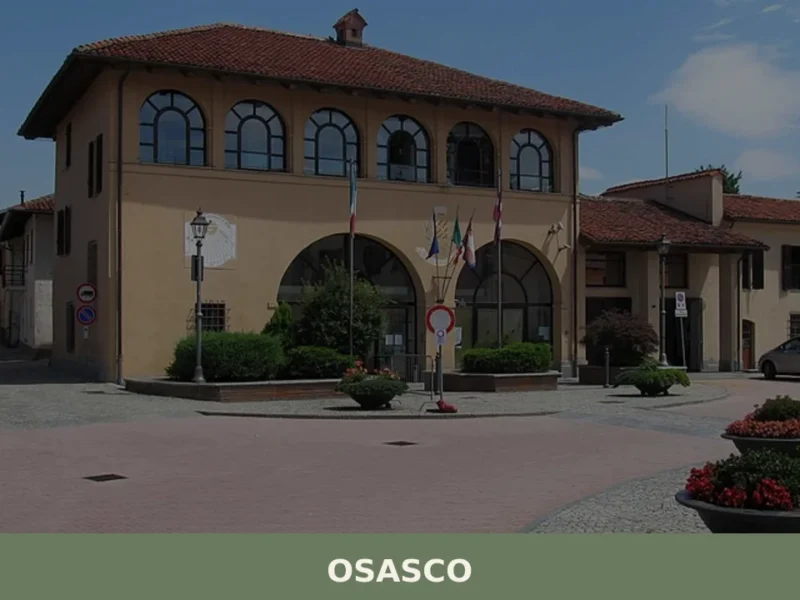
Osasco is a comune of 1,161 inhabitants in the Metropolitan City of Turin, sitting in the Piemonte region of northwestern Italy. Known in the local Piedmontese language as Osasch, the village occupies a modest position in the hills and plains south of Turin, one of dozens of small agricultural and residential communes that form the […]
Vercelli
Plains
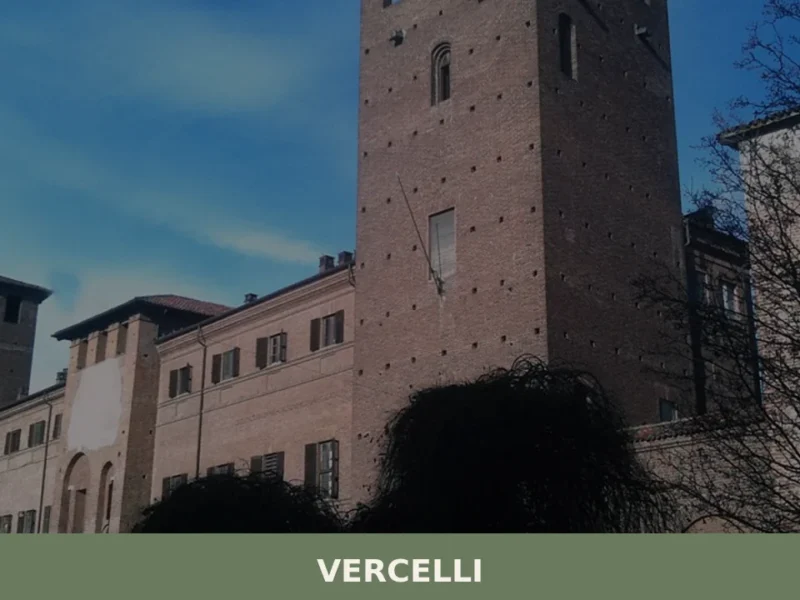
What to see in Vercelli: rice capital at 130 m in Piedmont. Basilica di Sant'Andrea, Museo Borgogna, panissa and flooded paddies. Plan your visit now.

Castelletto Molina
Hills
137 residents, one patron saint and a golden civic banner: Castelletto Molina rewards slow travellers with genuine Monferrato countryside and Piedmontese village life.


🏡 Know Pomaretto better than we do?
If you’re a local or have been there, your knowledge matters: add what’s missing or fix a detail on this page.