The Canavese unfolds in low hills northeast of Turin, where the village of Rivarossa sits at 286 metres above sea level, a quiet comune of 1,556 inhabitants in the metropolitan city of Turin. Stone houses cluster around the memory of a medieval castle now reduced to outline, and the land still holds the imprint of monastic labour that began in the eleventh century. A visitor walking the streets feels the weight of seven centuries during which this borgo passed through the hands of feudal lords, survived invasion and siege, then slowly rebuilt itself in silence.
The village’s identity rests on three pillars: a Cluniac priory that drew settlers to Borgallo hill, the competing claims of Savoy and regional nobility that bloodied the Canavese for generations, and the resilience of a community that endured plague, famine and foreign occupation. Today, Rivarossa offers those seeking regional depth a chance to understand how small agricultural settlements became the backbone of Piedmont’s political and spiritual geography.
From Borgallo Hill to Savoyard Stronghold
Human settlement on the hillock called Borgallo dates to the eighth or ninth century. Around the eleventh century, the Cluniac priory of Santa Maria Maddalena was established nearby, possibly under the initiative of Arduino, a figure whose historical detail remains sparse. The monastery’s presence proved transformative: the religious community attracted colonists and triggered sustained population growth in the area. Beyond the ecclesiastical domain, the imperial crown granted fiefs to two powerful families of the Canavese—the San Martino of Front and the Valperga—whose rivalry would dominate local politics for centuries.
The thirteenth and fourteenth centuries witnessed violent power struggles. In 1313, Filippo I of Savoia-Acaia seized Rivarossa, tightening Savoyard grip on the region. The Valperga, allied with Monferrato, repeatedly sacked the village in an effort to overturn Savoyard authority. During the fourteenth century, the village endured the Tuchini revolt—a popular uprising—until Amedeo VII of Savoia intervened to restore order, aware that the Marquess of Monferrato had sent the condottiero Facino Cane to foment unrest. With the death of Ludovico, Prince of Acaia, in 1418, Rivarossa passed directly under Savoyard control.
The sixteenth century brought fresh calamity. Successive invasions by French and Spanish forces, locked in conflict over Piedmont, dealt a final blow to the castello and city walls. Recovery was slow and incomplete: the seventeenth century saw persistent famine, and the eighteenth brought upheaval tied to the War of Spanish Succession. Population began to grow again only in the modern era—from 1961 onwards, the resident population has doubled.
Sacred and Civic Memory
The Cluniac Priory and Patron Saint
The priory of Santa Maria Maddalena remains the spiritual anchor of Rivarossa’s identity, though today only historical memory marks its original location on Borgallo hill. The monastery’s founding in the eleventh century established the religious and economic foundation for the entire settlement. Santa Maria Maddalena is venerated as the village’s patron saint, a link to the monastic origins that shaped the first waves of sustained habitation. The priory exemplified Cluniac monastic culture—reformed, disciplined, and actively involved in rural development—that characterized much of medieval Piedmont.
Castello di Rivarossa
The castle that once crowned the hilltop has been reduced to fragmentary remains following the destructive raids of the 1500s. Stone foundations and partial walls survive as testimony to the military and administrative importance the structure held during the medieval and early modern periods. The fortress served successive lords—first the feudal families, then the Savoy princes—as a point of control in a territory perpetually crossed by rival ambitions. Its ruins are interwoven with the village’s topography and remain visible in the landscape.
Chiesa di San Rocco
The parish church dedicated to San Rocco stands as a tangible expression of the village’s post-medieval recovery. While precise construction dates remain undocumented, the church embodies the effort to rebuild spiritual and community life after the devastations of the sixteenth and seventeenth centuries. San Rocco, the saint invoked against plague, carries particular resonance in a village that endured multiple waves of epidemic and hardship. The church is the present focal point of religious observance and civic identity in Rivarossa.
Civic Heraldry
The village’s coat of arms and banner were formally granted by presidential decree on 30 January 1956, marking official recognition of Rivarossa’s identity as an independent comune. The gonfalone displays azure blue. This formal heraldic recognition came in the postwar period, as the village entered a phase of demographic and economic renewal.
Agriculture and Local Sustenance
The Canavese landscape around Rivarossa supports mixed farming—cereals, orchards, and small vineyards typical of the Piedmont plain and lower foothills. The soil and climate that sustained monastic communities and feudal peasants remain the foundation of local agricultural identity. Small-scale cultivation, inherited across generations, continues to define the rhythm of rural life and the connection between settlement and territory. The village sits within a broader agricultural zone where traditional crop rotation and seasonal labour have historically organized community time.
Planning Your Visit
Rivarossa is reached most directly by road from Turin. The village is accessible by road from Turin via routes passing through Volpiano and Leinì. The landscape reveals itself gradually—not dramatic, but rich with agricultural detail and the layers of inhabited history. Spring and early autumn offer the clearest skies and most comfortable temperatures for walking the village streets and exploring the surrounding territory.
| Departure Point | Distance | Approximate Travel Time |
|---|---|---|
| Turin (city centre) | ||
| Ivrea | 35–40 km | 35–40 minutes by car |
| Chivasso | 15 km | 20–25 minutes by car |
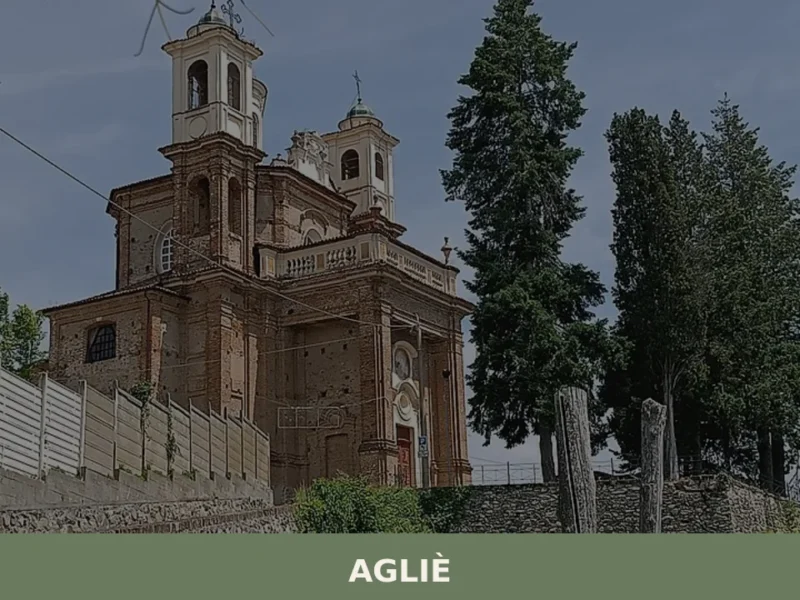
Visitors looking for deeper understanding of the Canavese region will find neighbouring villages equally rewarding. Barbania, Foglizzo, and Agliè each preserve distinct aspects of medieval and early modern Piedmont settlement. The comune maintains its official website at https://www.comune.rivarossa.to.it for current information on local services and cultural events.
The village asks for patience rather than haste. There are no grand monuments demanding a photographic checklist, but rather the accumulated evidence of survival, adaptation, and quiet pride. Walking through Rivarossa, one encounters the texture of a community that has endured cycles of violence and renewal, and whose present stillness is earned rather than inherited.
 Mountain