


Strambino
 Plains
6,000 residents, one castle on a hill, and a church whose floor plan mirrors a frog. Strambino offers a layered Canavese identity few visitors expect.
Strambino: A Canavese Village Shaped by Ice, Stone and Time
A ridge of ancient moraine hills curves through the Canavese plain like a slow wave frozen in stone. At 240 metres above sea level, Strambino stands on that ridge, its medieval centre of narrow streets and solid walls pressed against a hillside that glaciers shaped millions of years before anyone thought to build a castle on top of it. The landscape here is not dramatic in the Alpine sense. It is deliberate, layered, and full of detail that rewards attention rather than speed.
Strambino village in Piedmont draws visitors with two things that rarely appear together: a coherent medieval core still readable in its original geometry, and a church whose architects gave it a floor plan that, seen from above, traces the outline of a frog. These are not footnotes. They are the opening sentences of a place that has been accumulating character since the eleventh century.
From Glacial Debris to Medieval Stronghold: The Formation of Strambino
The ground beneath Strambino tells the oldest part of its story. During the Pleistocene epoch, a vast glacier moved across this region, carrying enormous quantities of rock and sediment. As the ice retreated, it deposited that material in a series of curved ridges now known as the Serra di Ivrea, the moraine amphitheatre that defines the Canavese landscape. Strambino sits within this geological formation, roughly 12 kilometres south-east of Ivrea, on terrain that owes its shape entirely to that glacial legacy. The hills surrounding the village are not natural highlands but accumulated debris, which gives the land a particular quality: rolling, enclosed, richly cultivated.
The human settlement followed the contours the glacier left behind. The medieval centre developed on elevated ground, with the castle occupying the summit of the hill that still dominates the skyline today. The first documented nucleus of that castle dates to the eleventh century, a period when controlling high ground in this part of Piedmont meant controlling the movement of people and goods between the Po plain and the Alpine passes. Over subsequent centuries the structure expanded and was modified, reflecting the architectural styles of each era that added to it. What visitors see today is not a single moment in time but a building that grew incrementally, its walls recording shifts in military need, aristocratic ambition, and local governance.
The village that formed around and below the castle followed the pattern common to Canavese settlements: a dense medieval core with tight streets, followed by expansion into the surrounding agricultural land. The name Strambin, as it is known in piemontese, appears in local records well before the modern Italian form became standard. The broader community Strambino belongs to today, the Comunità Collinare Piccolo Anfiteatro Morenico Canavesano, includes Romano Canavese, Mercenasco, Scarmagno, Perosa Canavese and San Martino Canavese, a grouping that reflects both geographic logic and a shared administrative identity rooted in the moraine landscape itself.
Stone, Fresco and a Floor Plan Like No Other: The Buildings of Strambino
Castello di Strambino
The castle occupies the highest point of the hill above the village and has been a constant presence in the local landscape since the eleventh century. Its current form is the result of construction phases spread across several hundred years, each layer responding to different practical and symbolic needs. From below, the structure reads as a single mass against the sky. Closer up, the differences in masonry and form between its various sections become apparent. The castle does not currently function as a public museum in the conventional sense, but its position above the rooftops makes it the visual anchor of the entire settlement, visible from most points in the village.
Chiesa dei Santi Michele e Solutore
Built between 1764 and 1786 and designed by architect Carlo Andrea Rana, this church carries a detail that goes far beyond architectural convention. Its floor plan, when viewed from above, is said to trace the silhouette of a frog — a local tradition that links the building’s form to the surname of its architect, whose name means ‘frog’ in Italian. The building is dedicated to Saints Michael and Solutor, two dedications common in this part of Piedmont, but it is the geometry of its plan that sets it apart from every other religious building in the Canavese. Visitors with an interest in architectural curiosities will find this one genuinely unusual.
Palazzo del Comune
The municipal palace is a substantial neoclassical building that stands as the civic counterweight to the castle’s feudal mass. Inside, the Council Chamber ceiling carries a fresco painted by Cattaneo, a decorative programme that elevates what might otherwise be a functional administrative space into something worth examining carefully. The palazzo’s scale reflects the ambitions of the community that commissioned it, and the fresco represents one of the few surviving examples of pictorial decoration in the village’s public buildings.
Chiesa di Santa Maria delle Vigne
Near the boundary with Romano Canavese, along Viale Marconi, stands a church whose origins reach back to the early thirteenth century. The first written record of the building dates to 1223, making it the oldest documented religious structure in Strambino’s territory. A restoration carried out around the sixteenth century gave it the baroque elements visible today. Locally it is still called Madonna delle Vigne, a name that connects it directly to the agricultural landscape of vineyards that has long surrounded this part of the Canavese.
Chiesa di San Rocco and Chiesa di Santa Marta
Two smaller churches complete the religious map of the village. San Rocco, positioned at the junction of Corso Torino and Via IV Novembre, was built around the seventeenth century and repurposed as a funerary chapel from 1824 onward. The former oratory of the disciplinants in Via Perrone, dedicated to the confraternity of Saint Francis of Assisi and Saint Martha, was deconsecrated in 1973 and later transferred to municipal ownership, giving it a civic afterlife after its religious one ended.
The moraine amphitheatre around Ivrea is one of the most complete glacial landform sequences in the southern Alps, and Strambino sits directly within it — meaning the village’s hills are not natural elevations but the compacted memory of an ice sheet that vanished roughly ten thousand years ago.
Fields, Vines and the Agricultural Identity of the Canavese Table
Strambino sits inside a landscape given over largely to cultivation. The hills of the moraine amphitheatre support vineyards, orchards and arable land, and the agricultural calendar still shapes the rhythm of the village in ways that are visible if you arrive outside summer. The church traditionally called Madonna delle Vigne — Our Lady of the Vines — signals how deeply the cultivation of grapes has been woven into local identity since at least the medieval period. Wine from the Canavese area carries a distinct character rooted in the mineral-rich moraine soils, and the villages within the Piccolo Anfiteatro Morenico Canavesano community share that productive landscape.
The broader Canavese culinary tradition draws on the same agricultural base: produce from the surrounding fields, local cereals, and the kind of cooking that reflects a community historically tied to its own land rather than to trade routes. Strambino’s food culture is best understood as part of that wider Canavese fabric rather than as something sharply distinct from its neighbours. Exploring the villages nearby, such as Candia Canavese or Romano Canavese, gives a fuller picture of what the moraine hills produce and how they are eaten.
When to Visit Strambino and How to Organise the Journey
Spring and early autumn are the most rewarding seasons to visit. In April and May the surrounding fields and vineyards are in active growth, the light on the moraine hills is clear without the summer haze, and the village moves at a pace that allows genuine observation. October brings the post-harvest colours and a cooler stillness that suits the stone streets of the medieval centre well. Summer works for those combining Strambino with a broader Canavese itinerary, though midday heat on south-facing slopes can be intense. The patron saint’s celebration in honour of the Madonna Incoronata draws local attendance and offers a direct view of the religious and social calendar that organises village life.
If you arrive by car, the A5 motorway connecting Turin to Aosta provides a logical approach route, with exits toward Ivrea and then a short drive south-east to Strambino. Parking is available at the village edges, from which the medieval centre is easily reached on foot. The castle hill requires a short uphill walk from the main streets. Visitors combining Strambino with other Canavese settlements will find natural companions in Barone Canavese, Albiano d’Ivrea, and Parella, all within the same moraine territory. For those approaching from Turin, Banchette is also within easy reach.
| Departure | Distance | Time |
|---|---|---|
| Turin | approximately 40 km | around 40 minutes by car |
| Ivrea | approximately 12 km | around 15 minutes by car |
| Milan | approximately 120 km | around 90 minutes by car |
| Aosta | approximately 80 km | around 60 minutes by car |
Strambino does not require a full day on its own, but it repays the visitor who allows time to walk the medieval streets without a fixed schedule. The castle hill at late afternoon, the frog-shaped church interior, the civic fresco in the Palazzo del Comune: none of these are landmarks that announce themselves loudly. They are details for people who look closely, which is exactly the kind of attention the Canavese has always invited.
Frequently asked questions about Strambino
How do you reach Strambino by car or public transportation?
By car, Strambino is reached from the A5 Turin-Aosta motorway, Ivrea exit, continuing south on the SP 228 for about 10 km. From Turin, the distance is approximately 40 km. The nearest railway station is Strambino-Romano, served by the Turin-Aosta line: from Turin Porta Nuova the journey takes about 40 minutes. Bus connections are also available to Ivrea via GTT lines.
When is the feast of the patron saint Madonna Incoronata celebrated in Strambino?
The feast of the patron saint Madonna Incoronata is the main religious and folkloric event in Strambino's calendar. The celebrations traditionally take place in summer, with a solemn mass, procession and popular events in the historic center. For the exact date of the current year it is advisable to consult the website of the Municipality of Strambino or the local parish, as the celebration may vary slightly from year to year.
Are there cycling or hiking routes in the vicinity of Strambino?
Strambino is located in the Canavese area, crossed by cycling routes connecting the towns of the Turin plain. The Serra d'Ivrea, the moraine ridge on which the village stands, offers naturalistic trails documented also by CAI Ivrea. The Canavese Cycle Route and the paths along the moraine hills are frequented by cycle tourists and hikers, with the possibility of connecting towards Ivrea, about 10 km away.
How much time is needed to visit Strambino?
A visit to Strambino's medieval historic center, including the church with its famous layout and the main historic buildings, requires on average two or three hours. Adding a walk along the moraine ridge and a stop for a meal with typical Canavese products, half a day is sufficient. For a more in-depth exploration of the surrounding area, a full day is recommended.
Are there parking spaces available in Strambino for visitors?
Strambino has public parking areas near the historic center, along the main access roads to the village. Given the layout of the village on a moraine ridge, it is advisable to leave your vehicle in the flat areas and continue on foot towards the medieval core. For updated information on roads and parking, it is useful to consult the official website of the Municipality of Strambino.
📷 Photo Gallery — Strambino


In Piedmont More villages to discover
Cascinette d’Ivrea
 Hills
Hills
Scopri Cascinette d'Ivrea, un incantevole borgo piemontese ricco di storia e paesaggi mozzafiato. Tutto quello che devi sapere su questo gioiello d'Italia.
Rondissone
Plains
Discover what to see in Rondissone, a Po plain comune near Turin inside the Parco Fluviale del Po torinese. History, food, travel tips and more.

Prarostino
 Mountain
Population 1,230. A foothill comune where partisan memory and valley crossroads define the landscape and village rhythm.
Ronco Canavese
Mountain
Ronco Canavese is home to approximately 380 inhabitants and serves as the principal reference point for the Valle Soana, a lateral valley that extends northward from the Gran Paradiso massif within the metropolitan area of Turin. Knowing what to see in Ronco Canavese requires understanding its role not as a transit point but as the […]
Arignano
Hills
What to see in Arignano in Piedmont: castle, church, hill trails, traditional cuisine, and practical information for visiting the village at 321 m a.s.l.

Pralormo
Hills
Population 1,852. A hilltop comune marked by its 13th-century castle, a 1930s parish church sheltering Renaissance art, and a medieval tower that once guarded Asti's trade routes.
Biella
Hills
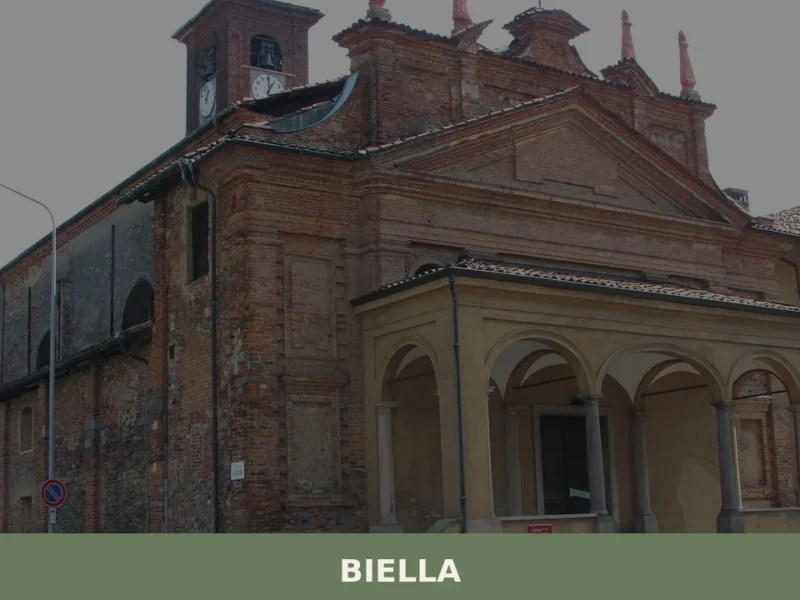
what to see in biella, Italy? Explore the UNESCO Sanctuary of Oropa and Biella's historic 420m altitude Piazzo quarter. Read our guide for top attractions.
Vercelli
Plains
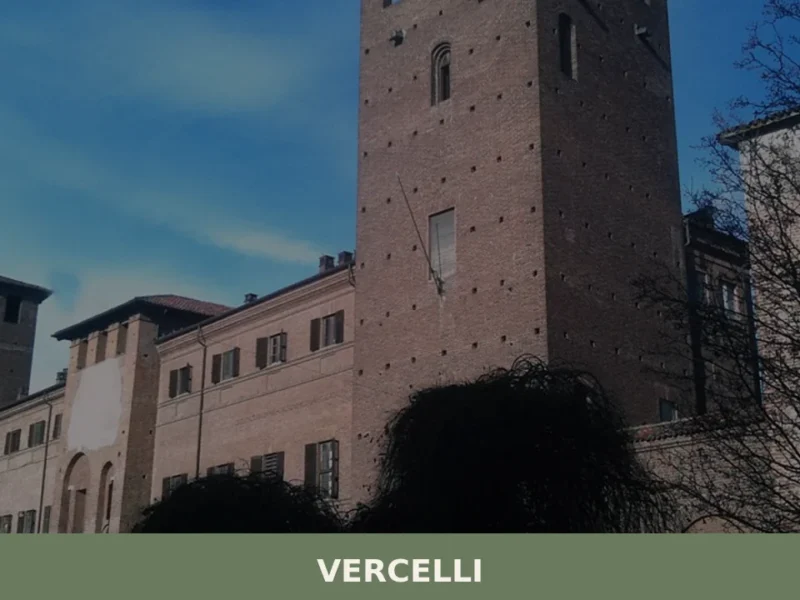
What to see in Vercelli: rice capital at 130 m in Piedmont. Basilica di Sant'Andrea, Museo Borgogna, panissa and flooded paddies. Plan your visit now.
Castagnole Piemonte
Plains
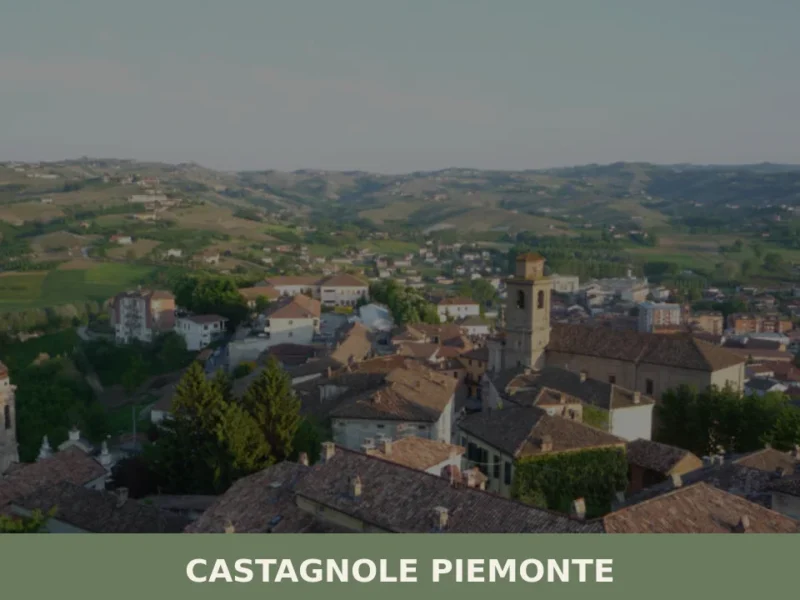
What to see in Castagnole Piemonte, Italy — 20 km from Turin. Explore 5 top attractions, local food traditions and practical travel tips. Discover Piemonte.
Candia Canavese
Hills
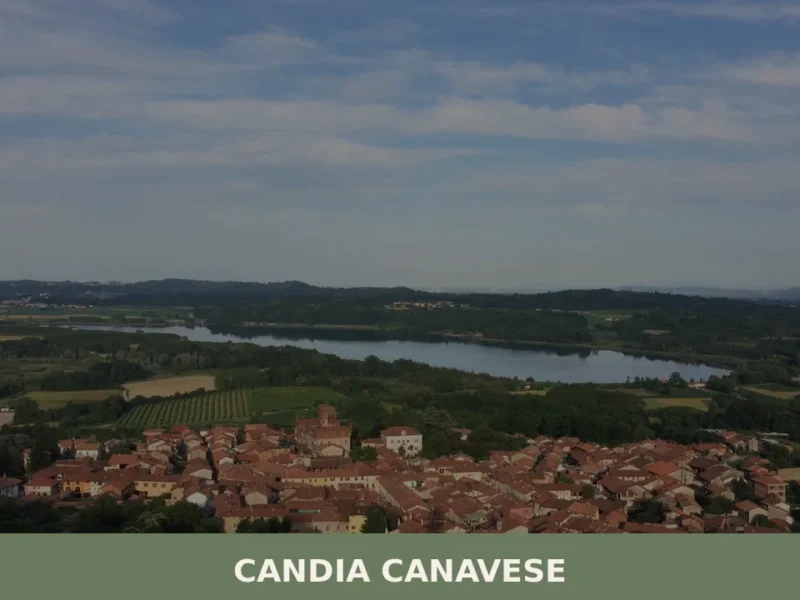
Scopri Candia Canavese, il gioiello del Piemonte affacciato sul lago. Storia, natura e tradizioni ti aspettano in questo borgo incantevole del Canavese.
🏡 Know Strambino better than we do?
If you’re a local or have been there, your knowledge matters: add what’s missing or fix a detail on this page.