


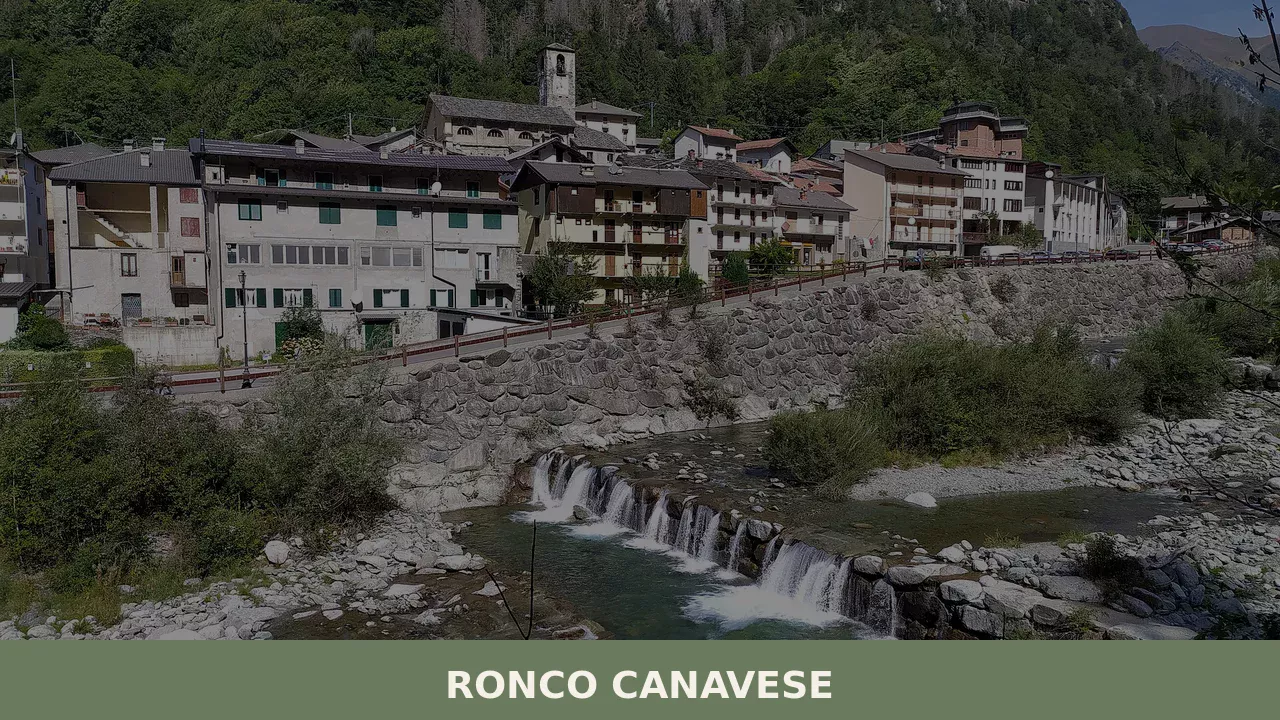
Ronco Canavese
 Mountain
Ronco Canavese is home to approximately 380 inhabitants and serves as the principal reference point for the Valle Soana, a lateral valley that extends northward from the Gran Paradiso massif within the metropolitan area of Turin. Knowing what to see in Ronco Canavese requires understanding its role not as a transit point but as the […]
Discover Ronco Canavese
Ronco Canavese is home to approximately 380 inhabitants and serves as the principal reference point for the Valle Soana, a lateral valley that extends northward from the Gran Paradiso massif within the metropolitan area of Turin. Knowing what to see in Ronco Canavese requires understanding its role not as a transit point but as the valley’s most significant settlement — a compact mountain community where stone architecture, alpine pasture economy and Franco-Provençal linguistic heritage converge in a single, coherent place.
History of Ronco Canavese
The village belongs to the Canavese, the broad piedmont territory between the Po plain and the alpine foothills that corresponds historically to the ancient diocese of Ivrea. The name itself reflects a layered linguistic inheritance: Ronc in Piedmontese and Rounc in Franco-Provençal, both derived from the Latin runcare, meaning to clear land of undergrowth — a term that appears frequently in medieval documents across the alpine arc to indicate settlements carved out of forested slopes. This etymology places Ronco Canavese within a wave of high-altitude land clearances that transformed much of the western Alps between the tenth and thirteenth centuries, when population pressure pushed communities progressively higher into mountain terrain.
The Canavese region, and with it the Valle Soana, passed through a succession of feudal authorities whose administrative geography was defined largely by the bishops of Ivrea and, later, by the expanding dominion of the House of Savoy. By the late medieval period, the Savoy had consolidated control over this sector of Piedmont, incorporating the valley communities into the administrative structures that would eventually form the Duchy of Savoy and, much later, the Kingdom of Sardinia. The Valle Soana itself remained marginal to major political events, its economy structured around transhumance, small-scale agriculture on terraced slopes, and the extraction of local stone — activities that left their mark in the built fabric of villages like Ronco Canavese, where dry-stone walls and slate-roofed buildings remain the dominant vernacular.
In the nineteenth century, the administrative reorganisation that accompanied Italian unification placed Ronco Canavese within the Province of Turin, a designation that persisted through the twentieth century. Today the village falls under the jurisdiction of the Città Metropolitana di Torino, the broader metropolitan authority that replaced the traditional province in 2015 as part of a national reform of local government. The proximity to the Gran Paradiso massif, which became Italy’s first national park in 1922, has given the upper Valle Soana a degree of institutional visibility it would not otherwise command, connecting Ronco Canavese administratively and practically to one of the most significant protected natural areas in the country.
What to see in Ronco Canavese: 5 must-visit attractions
The Parish Church of Sant’Orso
The parish church dedicated to Sant’Orso — a saint particularly venerated across the Aosta Valley and upper Piedmont — stands at the core of the village’s religious and spatial organisation. Its fabric reflects successive phases of construction typical of alpine parishes: a Romanesque or early medieval core progressively enlarged and redecorated in the baroque period, with a bell tower that functions as the visual anchor of the village roofline.
Traditional Stone Village Architecture
Ronco Canavese preserves a coherent streetscape of dry-stone and mortar construction using locally quarried grey stone, with slate or dark stone roofing. The narrow interconnecting passages between residential blocks — known in local parlance as rui or similar dialect terms — reflect a building logic designed for protection against mountain winters, with shared walls conserving heat and minimising exposure to prevailing winds.
The Valle Soana Landscape and River Corridor
The Soana torrent, which gives the valley its name, runs below the village and has historically determined settlement patterns, mill locations and small-scale irrigation systems on the valley floor. The river corridor offers walking access to the broader valley, with visible remnants of dry-stone terracing on the surrounding slopes that document centuries of agricultural adaptation to steep gradient terrain.
Hamlets and Fraction Communities of the Commune
Like many alpine communes, Ronco Canavese administers a series of smaller hamlets — frazioni — distributed across the valley floor and intermediate slopes. These satellite settlements, each with its own chapel or wayside shrine, illustrate the dispersed settlement pattern that characterised alpine land use before twentieth-century depopulation consolidated populations into main village centres.
Gateway to the Gran Paradiso National Park
The Valle Soana constitutes one of the southern approaches to the Gran Paradiso National Park, Italy’s oldest national park established in 1922. From Ronco Canavese, walkers and naturalists access trails leading into park territory where ibex (Capra ibex) were reintroduced and protected from the nineteenth century onward, initially as a royal hunting reserve under Vittorio Emanuele II.
Local food and typical products
The food culture of Ronco Canavese and the Valle Soana belongs to the broader Canavese culinary tradition, which sits at the intersection of piedmont lowland cooking and alpine mountain practice. Polenta — made from local maize flour and served with game, aged cheese or braised meats — remains a staple, reflecting the historical dependence on maize cultivation in valley-floor fields. Freshwater fish from the Soana torrent, particularly trout, has historically featured in local diets, prepared simply with butter and herbs. Dairy products, particularly aged sheep and cow’s milk cheeses produced on summer alpine pastures, represent another constant of the local table, with some varieties connected to the broader Piedmontese toma tradition, which carries recognised status within the regional food heritage.
The Canavese is also known for its production of erbaluce, a white wine grape variety native to this specific zone north of Turin, which has achieved DOCG status as Erbaluce di Caluso. While vineyards do not extend to the altitudes of Ronco Canavese itself, the wine appears on tables throughout the valley and represents a direct connection to the wider territorial food identity. Visitors looking to eat locally should seek out the small family-run restaurants and agriturismi operating in the valley, where menus follow seasonal availability rather than standardised tourist formats.
Best time to visit Ronco Canavese
The Valle Soana follows a classic alpine seasonal rhythm. Summer — June through September — offers the most accessible conditions for walking, with trails into Gran Paradiso National Park fully open and mountain pastures in active use. July and August bring the highest visitor numbers, primarily Italian families from Turin and the surrounding plain seeking cooler temperatures. September is particularly practical: trails remain open, crowding diminishes, and the light on the valley slopes carries the quality that comes with lower sun angles and cleaner post-summer air. Spring arrivals in April and May should expect variable conditions, with snowmelt on higher paths and the Soana torrent running at its most forceful.
Winter in Ronco Canavese is quiet. Snow is reliable at village altitude and above, but the valley does not have developed downhill ski infrastructure, making it primarily of interest to snowshoers and cross-country walkers comfortable with self-guided routes. Local religious festivals, including celebrations tied to Sant’Orso and the calendar of Corpus Christi and summer patron saints’ days, provide occasional concentrations of community activity, though visitors should verify dates locally rather than assuming fixed annual schedules.
How to get to Ronco Canavese
Ronco Canavese sits in the Valle Soana, accessible by road from the Canavese plain. The practical approach from Turin follows a route northeast through Ivrea, the historic capital of the Canavese, before turning north into the valley corridor. The municipality of Ronco Canavese is approximately 70–80 kilometres from central Turin by road, with journey times of roughly 1.5 hours depending on traffic through the Canavese lowland section.
- By car: From Turin, take the A5 motorway toward Aosta, exit at Ivrea, then follow provincial roads north through Pont Canavese and up the Valle Soana. No motorway access exists within the valley itself.
- By train: The nearest railway station with regular service is Pont Canavese, reachable from Turin Porta Nuova via the Canavese line. Onward travel into the Valle Soana requires a local bus connection or private vehicle.
- By air: Turin Airport (Caselle Torinese) is the nearest international airport, approximately 80–90 kilometres by road. Milan Malpensa is a realistic alternative for travellers from outside Italy, with Turin accessible by road or rail in under two hours.
- Local bus: Regional bus services connect the Valle Soana to Ivrea and the broader Canavese network, though frequency is limited and timetables are structured around commuter rather than visitor needs.
Where to stay in Ronco Canavese
Accommodation in Ronco Canavese and the Valle Soana is small-scale and oriented toward mountain visitors rather than resort tourism. The available options centre on agriturismi, small B&Bs and self-catering holiday apartments in the village and surrounding hamlets — property types that reflect the scale of the community and the character of its visitor economy. Staying in the village centre places guests within walking distance of the church, local services and the main valley trailheads, while hamlets higher on the valley sides offer greater isolation and more direct access to upland paths.
Given the limited stock of beds in the valley, advance booking is advisable for any visit between late June and late August, particularly on weekends. Visitors planning to use Ronco Canavese as a base for extended walking in the Gran Paradiso sector should confirm trail access and accommodation dates simultaneously, as the combination of national park visitor numbers and limited valley lodging creates genuine capacity constraints during peak weeks. Checking availability through regional tourism platforms or contacting the municipal office directly is the most reliable approach.
More villages to discover in Piemonte
Piemonte’s variety extends well beyond its alpine valleys. For a different scale entirely, the regional capital Alessandria offers a substantial urban centre in the southern plain, where baroque civic architecture and a history tied to Napoleonic and medieval fortifications give visitors a contrasting perspective on the region’s breadth. To the west, Bardonecchia sits at the French border in the Susa Valley — an alpine resort town with a longer documented history than its modern ski-season identity suggests, and a useful point of comparison for understanding how different mountain communities in Piedmont have responded to tourism development.
In the lower Canavese and Po plain, smaller communities offer a quieter register. Arignano, a compact village in the hills southeast of Turin, preserves the measured rural scale that characterises much of this transitional zone between city and countryside. Further north in the Canavese proper, Azeglio — a village connected to the family name of one of Italy’s founding political figures, Massimo d’Azeglio — sits near Lake Viverone and represents the flat, lake-edged geography that marks the eastern margin of the Canavese, a striking contrast to the valley topography of Ronco Canavese itself.
Frequently asked questions about Ronco Canavese
Chi è il patrono di Ronco Canavese e quando si festeggia?
Il patrono di Ronco Canavese è Giusto di Novalesa, figura venerata nel Piemonte alpino e legata al monastero di Novalesa in Val di Susa. La festa patronale si celebra l’ultima domenica di luglio, coincidendo con il periodo di maggior presenza di visitatori estivi nella Valle Soana, quando le temperature favorevoli animano il borgo e le comunità delle frazioni circostanti.
Esistono percorsi CAI documentati che partono da Ronco Canavese verso il Gran Paradiso?
La Valle Soana è una delle valli di accesso meridionale al Parco Nazionale Gran Paradiso, e il Club Alpino Italiano ha segnato diversi percorsi che risalgono la valle verso le quote del parco. I sentieri transitano per le frazioni e gli alpeggi del comune di Ronco Canavese, consentendo di raggiungere ambienti dove vive lo stambecco (Capra ibex), reintrodotto e tutelato a partire dall’Ottocento come riserva reale sabauda.
È fattibile visitare Ronco Canavese come gita giornaliera da Torino?
Sì. Ronco Canavese dista circa 70–80 chilometri da Torino centro, con un tempo di percorrenza stradale di circa 1,5 ore. L’itinerario più diretto passa per Ivrea e Pont Canavese prima di risalire la Valle Soana. La distanza e la qualità della rete stradale lo rendono adatto a una giornata, soprattutto tra giugno e settembre, con tempo sufficiente per esplorare il borgo e un tratto di sentiero verso il parco.
Frequently asked questions about Ronco Canavese
Who is the patron saint of Ronco Canavese and when is he celebrated?
The patron saint of Ronco Canavese is Justus of Novalesa, a venerated figure in the Alpine Piedmont region and connected to the Novalesa monastery in the Susa Valley. The patron saint's feast is celebrated on the last Sunday of July, coinciding with the peak season of summer visitors in the Soana Valley, when favorable temperatures enliven the village and the communities of the surrounding hamlets.
Are there documented CAI trails departing from Ronco Canavese toward Gran Paradiso?
The Soana Valley is one of the southern access valleys to the Gran Paradiso National Park, and the Italian Alpine Club has marked several trails that climb the valley toward the park's elevations. The paths pass through the hamlets and alpine pastures of Ronco Canavese municipality, allowing visitors to reach environments where the alpine ibex (Capra ibex) lives, reintroduced and protected since the nineteenth century as a Savoyard royal reserve.
Is it feasible to visit Ronco Canavese as a day trip from Turin?
Yes. Ronco Canavese is approximately 70–80 kilometers from Turin city center, with a driving time of about 1.5 hours. The most direct route passes through Ivrea and Pont Canavese before ascending the Soana Valley. The distance and quality of the road network make it suitable for a day trip, especially between June and September, with enough time to explore the village and a section of trail toward the park.
Getting there
Piazza del Municipio, 10080 Ronco Canavese
Nearby Villages near Ronco Canavese
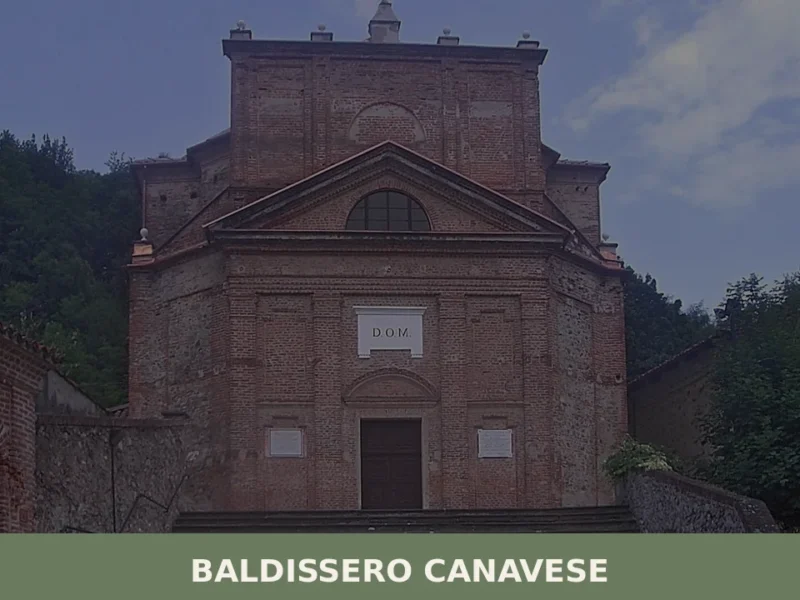
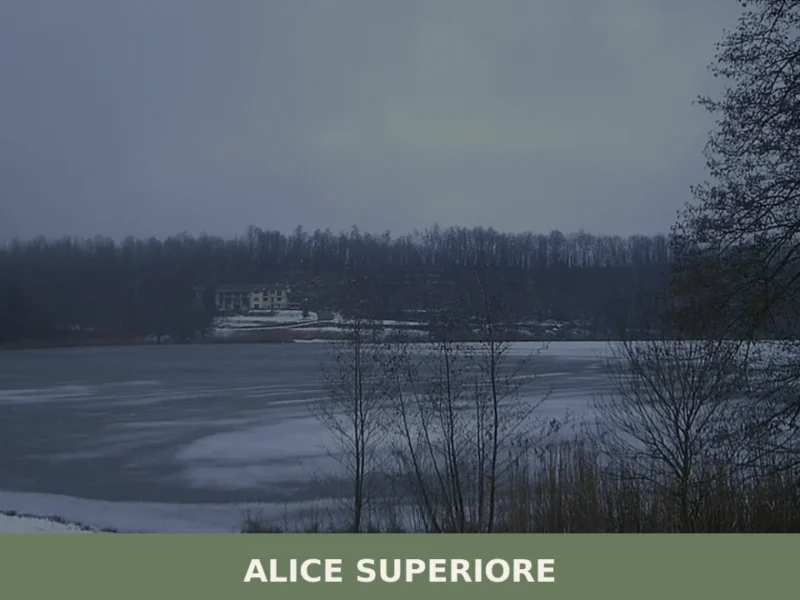
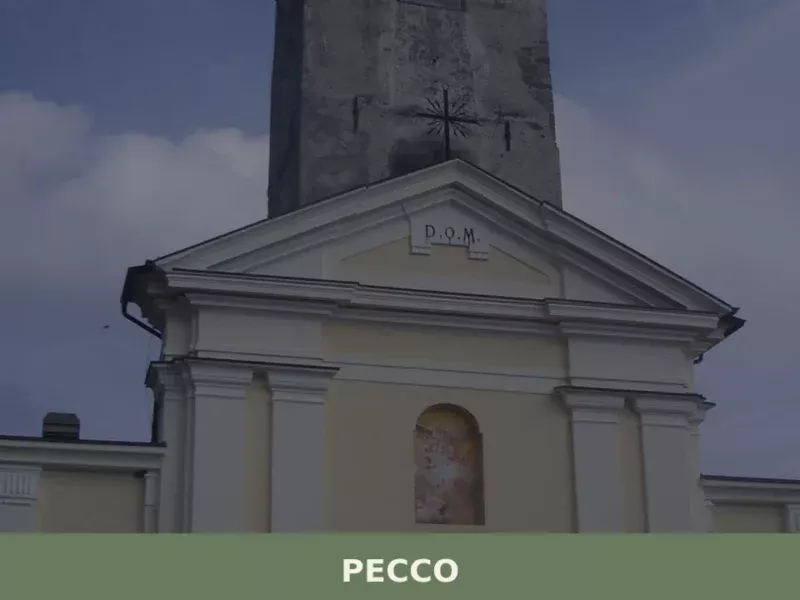
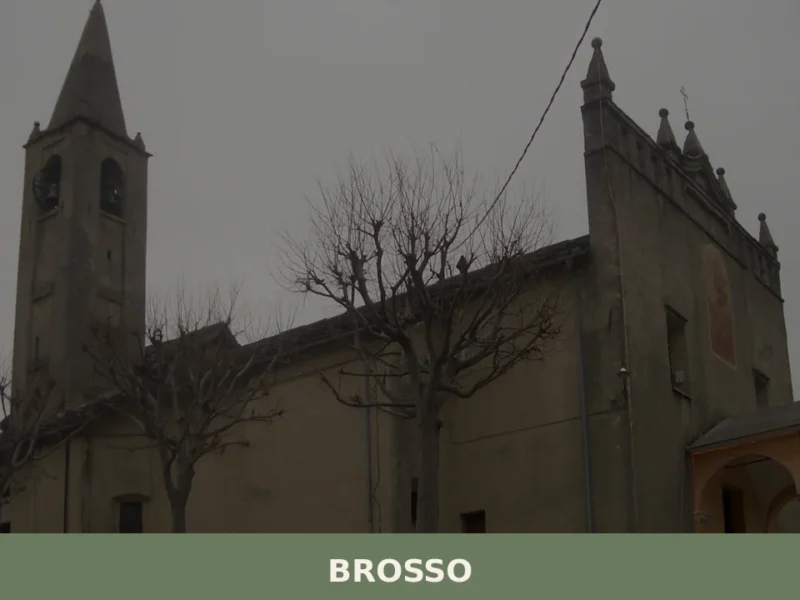
In Piedmont More villages to discover
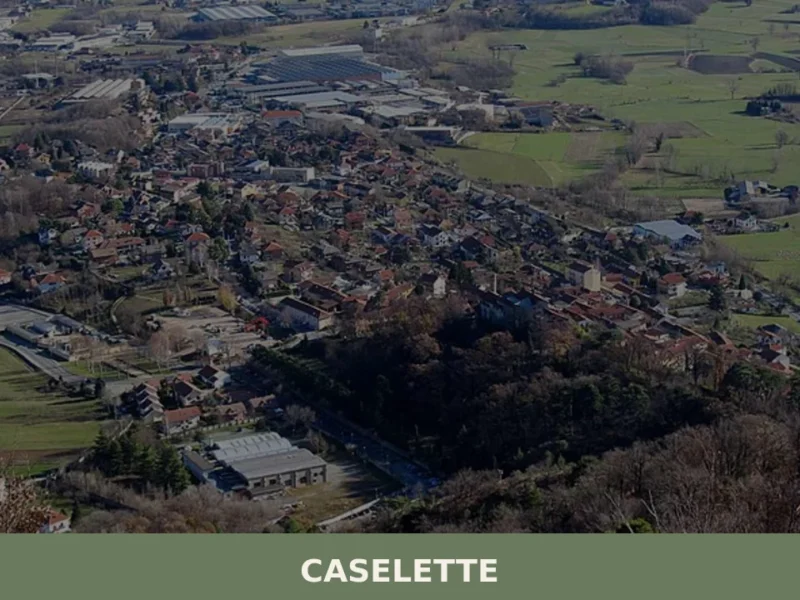
Caselette
 Hills
Hills
At the foot of Monte Musinè, where the plain of Turin gives way to the first folds of the Val di Susa, a mass of rock the size of a house sits in open ground. The Pietra Alta, one of the largest glacial erratics in the whole of Piedmont, was deposited here by glacial movement […]
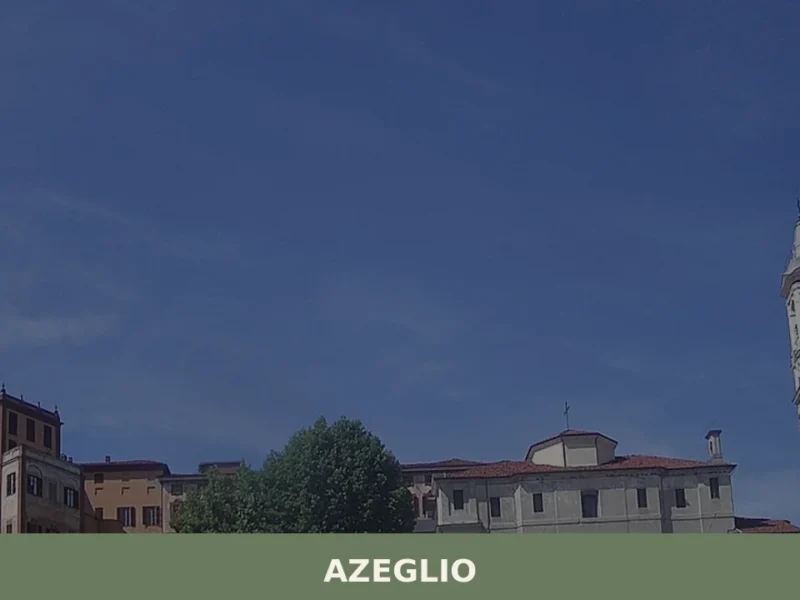
Azeglio
Hills
Azeglio, a small Piedmontese village on Lake Viverone: history, what to see and how to get there. Discover everything to plan your visit.
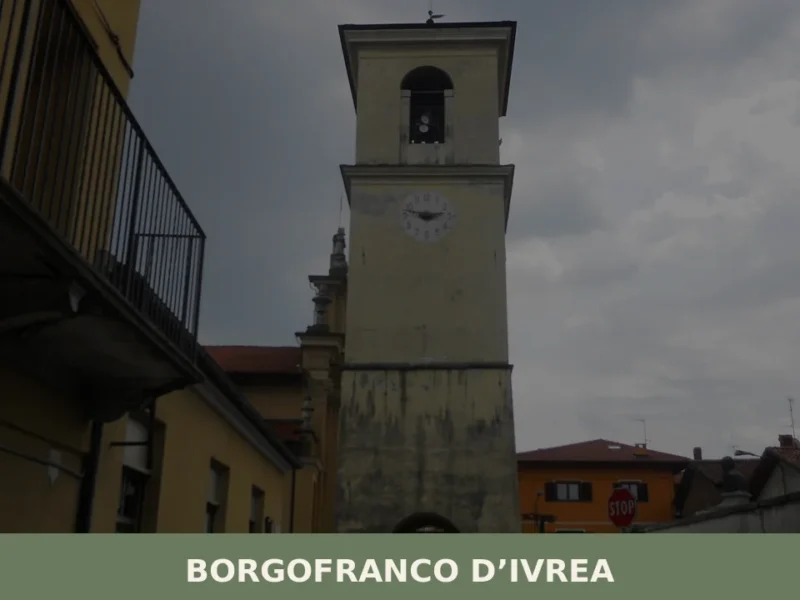
Borgofranco d’Ivrea
Hills
Discover what to see in Borgofranco d'Ivrea: medieval street grid, Serra d'Ivrea moraine, Canavese food and practical travel tips for this Piedmont village.
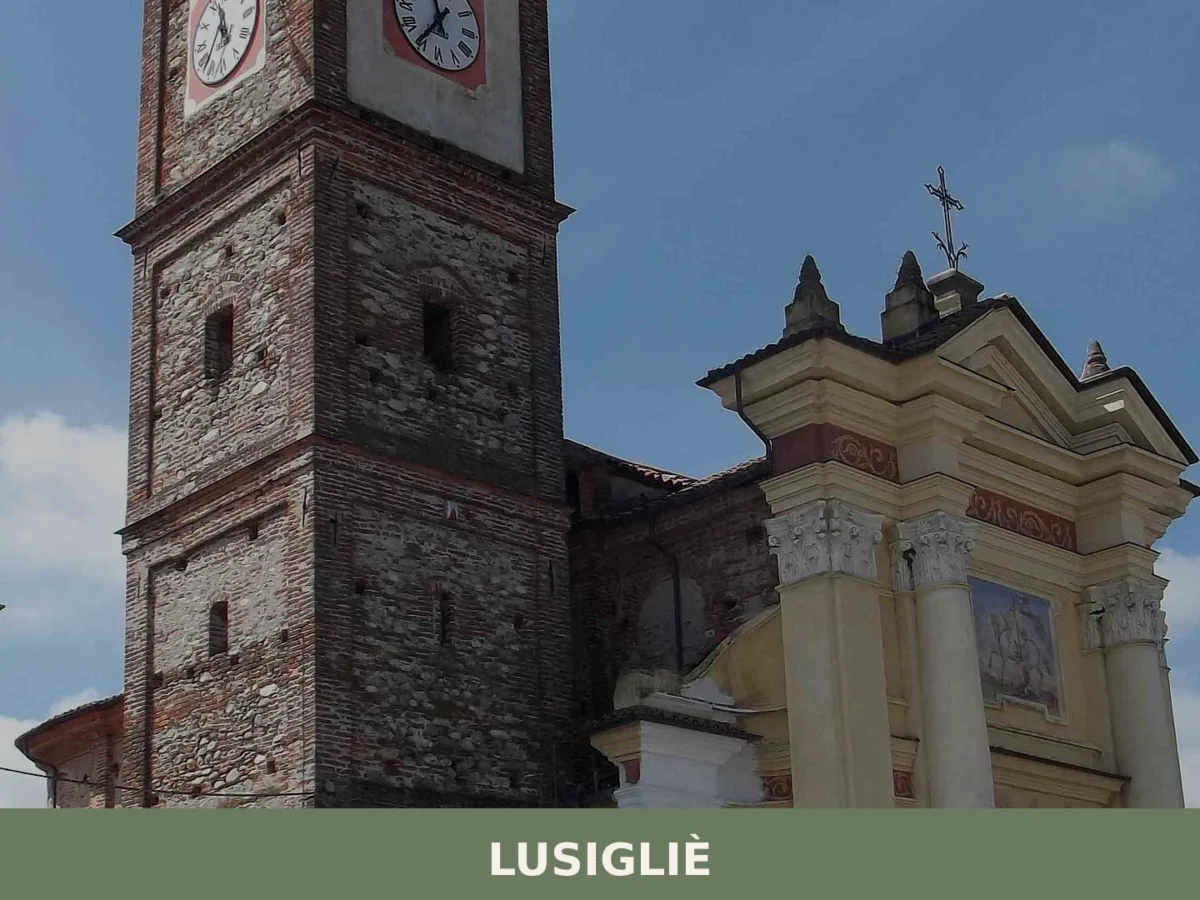
Lusigliè
 Plains
554 residents, a medieval parish and two millennia of layered history make Lusigliè a compelling stop in the Alto Canavese, 30 km north of Turin.
Alpette
Mountain
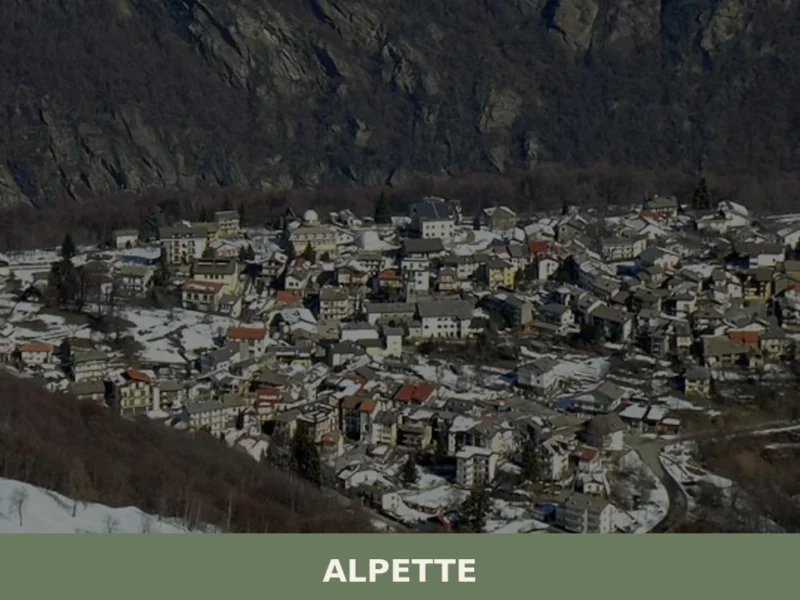
At 957 metres above sea level, on the eastern slope of Gran Paradiso, Alpette has 251 inhabitants spread between the central settlement and a handful of hamlets scattered along the pastures that climb towards Cima Quinzeina. Those looking into what to see in Alpette will find a village built almost entirely from local stone and […]
Moriondo Torinese
Hills
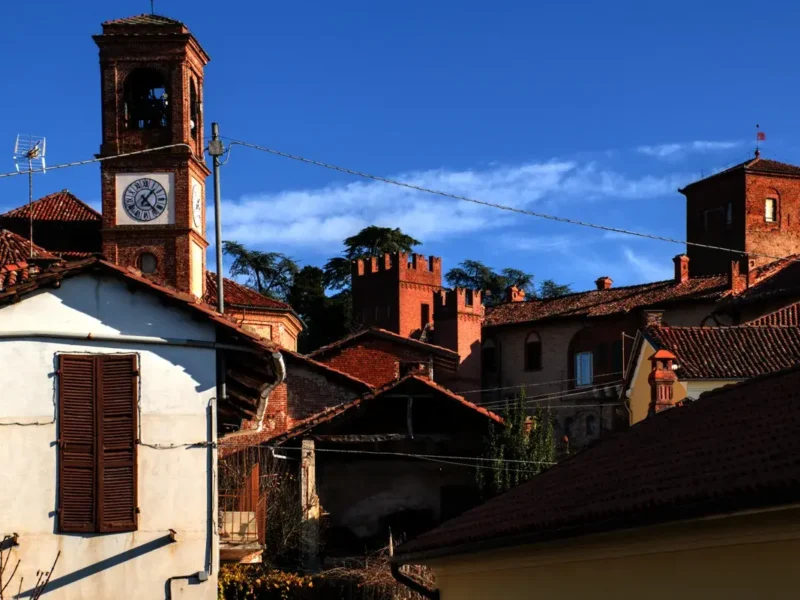
Scopri Moriondo Torinese, un affascinante borgo del Piemonte ricco di storia, natura e tradizioni. Lasciati conquistare dalla sua bellezza autentica!
Piscina
Plains
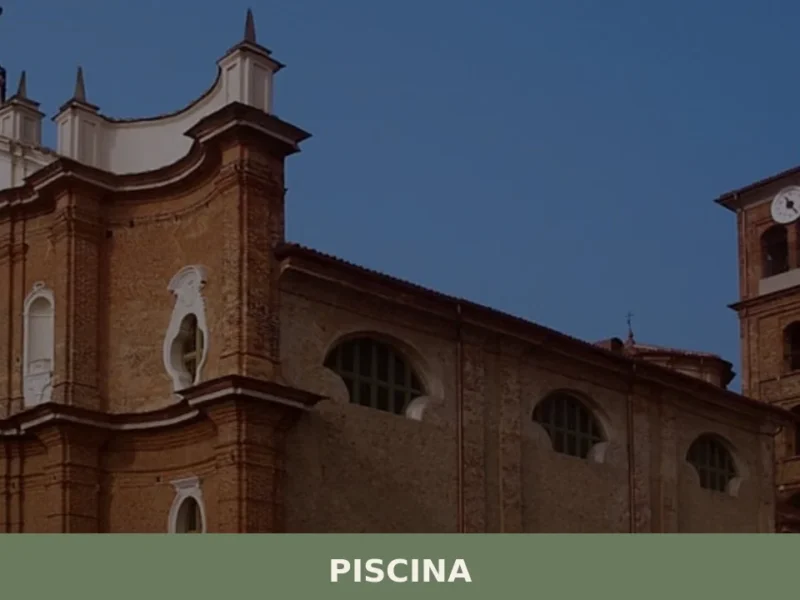
Scopri Piscina borgo Piemonte: storia, tradizioni e attrazioni di questo affascinante comune piemontese tutto da esplorare.

Salza di Pinerolo
Mountain
Population 61. A high-altitude Piedmont village where stone fractions cluster around alpine pasture and white fir woods; patron feast on 8 September.
Mathi
Hills
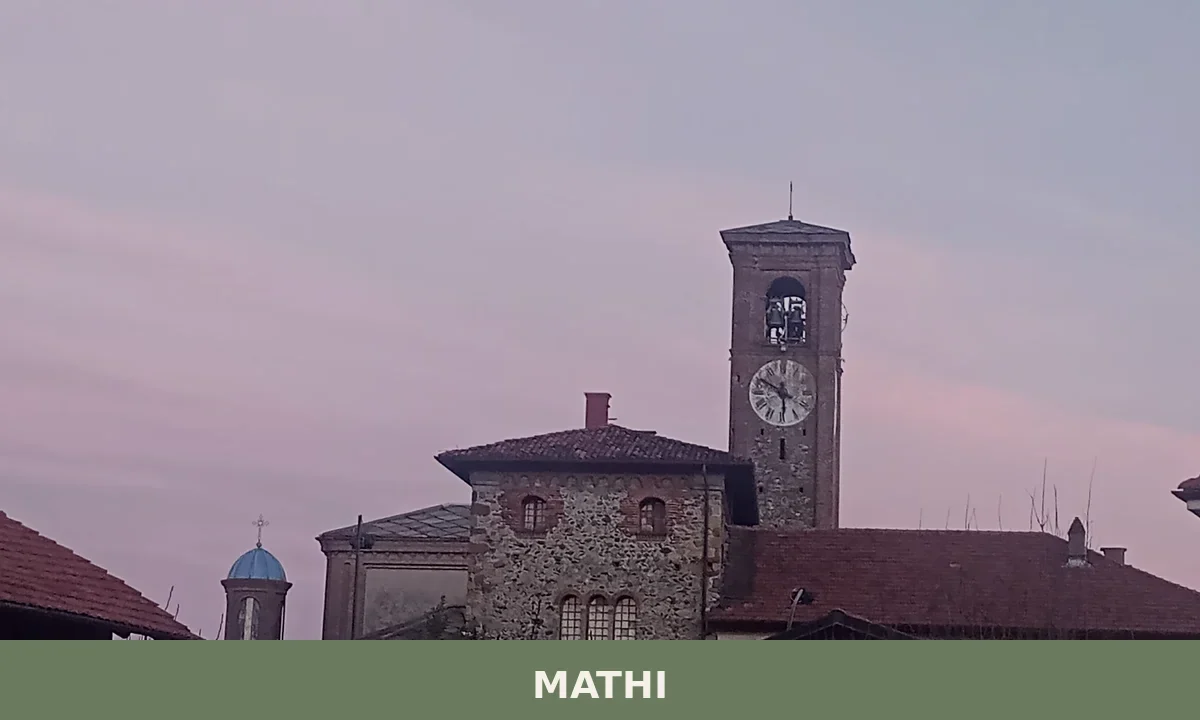
3,729 residents, a Benedictine tower still standing behind the parish church, and an industrial paper mill story linked to Don Giovanni Bosco. Mathi rewards those who look closely.
Cascinette d’Ivrea
Hills
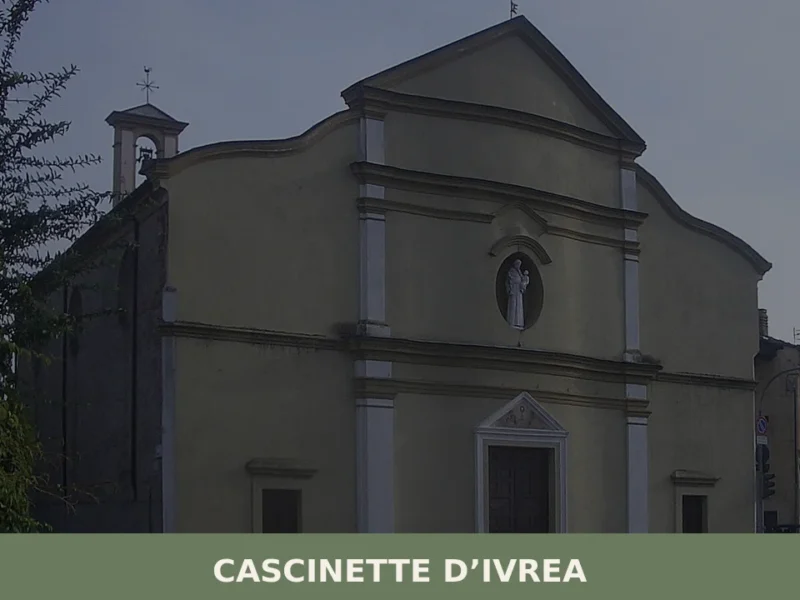
Scopri Cascinette d'Ivrea, un incantevole borgo piemontese ricco di storia e paesaggi mozzafiato. Tutto quello che devi sapere su questo gioiello d'Italia.
🏡 Know Ronco Canavese better than we do?
If you’re a local or have been there, your knowledge matters: add what’s missing or fix a detail on this page.