



What to see in Trapani: salt pans, Pepoli Museum, Procession of the Misteri and Trapanese pesto. City of 68,967 inhabitants. Plan your visit now.
Discover Trapani
Trapani stands at the western tip of Sicily, on a sickle-shaped peninsula stretching into the Mediterranean at just 3 metres above sea level. The city currently has 68,967 inhabitants and is the capital of its province.
Anyone wondering about what to see in Trapani will find a remarkable layering of urban history: Phoenicians, Romans, Arabs, Normans and Spaniards have all left architectural marks that remain legible in the city’s fabric today.
The Municipality of Trapani oversees a historical and natural heritage that includes salt pans, Baroque churches, museums and a seafront promenade facing the Egadi Islands.
History and Origins of Trapani
The name Trapani derives from the Greek Drepanon, meaning sickle — a direct reference to the shape of the peninsula on which the city is built.
The earliest traces of permanent settlement date back to the Phoenicians, who immediately recognised the strategic value of this natural promontory, capable of offering safe anchorage on both sides.
The city later came within the orbit of Carthage, becoming one of the most important staging posts for the Punic presence in western Sicily.
The entire area was closely linked to Erice, the religious centre on the mountain above, and the two places formed an integrated defensive and commercial system.
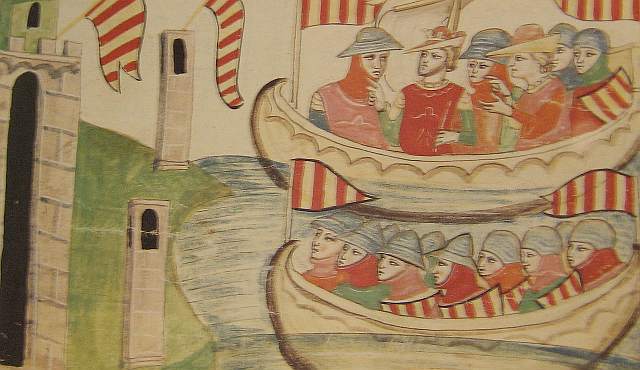
During the First Punic War, in 241 BC, the waters off Trapani were the site of the Battle of the Egadi Islands, the naval engagement in which Rome definitively defeated Carthage and secured control of Sicily. It was a decisive turning point in the history of the ancient Mediterranean, and Trapani witnessed it directly. Under Roman rule the city retained its port function; then, with the arrival of the Arabs in the ninth century, it underwent a period of intense urban and cultural transformation.
The Norman period, from the eleventh century onwards, left religious and architectural legacies still visible today, consolidating a complex urban profile.
In the fourteenth century Trapani reached a moment of particular political prominence when Beatrice of Swabia died there in 1272, and the city became the venue for important dynastic negotiations involving the Angevins and the Aragonese.
During Spanish rule, between the sixteenth and seventeenth centuries, many of the Baroque churches that still define the historic centre were built.
The trade in coral and sea salt made Trapani one of the most active commercial hubs in the western Mediterranean, attracting Genoese, Venetian and Catalan merchants. This commercial energy shaped an urban architecture in which noble palaces stand alongside the churches of religious orders in a continuity still perceptible when walking through the historic centre.
What to See in Trapani: Main Attractions
Sanctuary of the Annunziata and Pepoli Museum
The Sanctuary of the Madonna of Trapani, built by the Carmelites in 1315 and enlarged several times over the following centuries, is the city’s principal place of worship and houses the venerated marble statue of the Virgin, attributed to Nino Pisano.
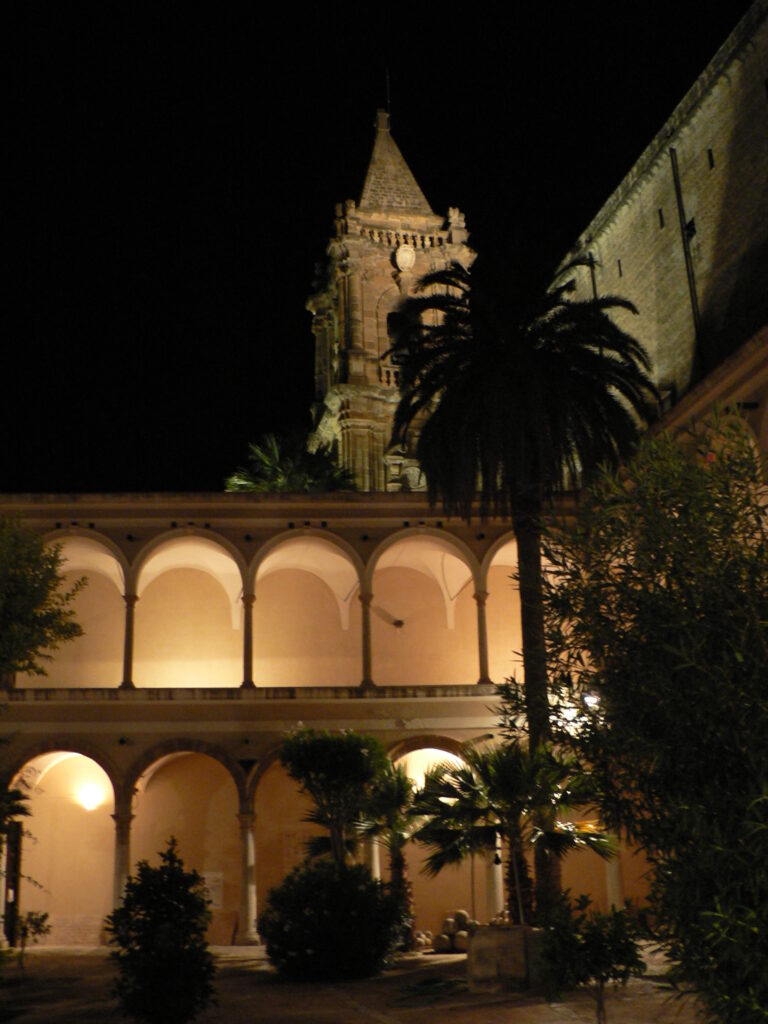
Adjacent to the sanctuary stands the Pepoli Regional Museum, housed in the former Carmelite convent, which holds one of the most significant collections in western Sicily: worked coral, medieval sculptures, paintings from the fifteenth to the eighteenth century, ceramics and precious artefacts.
Anyone wishing to explore what to see in Trapani in depth cannot overlook this complex, which brings together centuries of local artistic production.
Torre di Ligny
The Torre di Ligny stands at the tip of the peninsula, at the furthest point of the promontory.
It was built in 1671 at the behest of the Prince of Ligny, Spanish governor of Sicily, as a defensive structure to protect the port. Today it houses the Museum of Prehistory, which holds artefacts from the surrounding provincial territory, including remains dating to the Bronze Age. The tower overlooks the sea on three sides and offers an unobstructed view of the Sicilian Channel and the Egadi Islands.
It is well worth reaching on foot along the western seafront promenade.
Church of Purgatory
The Church of Purgatory, built in the seventeenth century in Sicilian Baroque style, houses the Misteri di Trapani — a group of twenty sculptural groups in wood, canvas and glue dating from the seventeenth and eighteenth centuries, depicting scenes from the Passion of Christ. Every year during Holy Week, these figures are carried in procession through the streets of the historic centre in one of the best-known religious events in Sicily.
The works, created by Trapanese artists including Gioacchino Vitta and other local masters, represent a high point of Sicilian devotional craftsmanship.
Trapani Salt Pans and Salt Museum
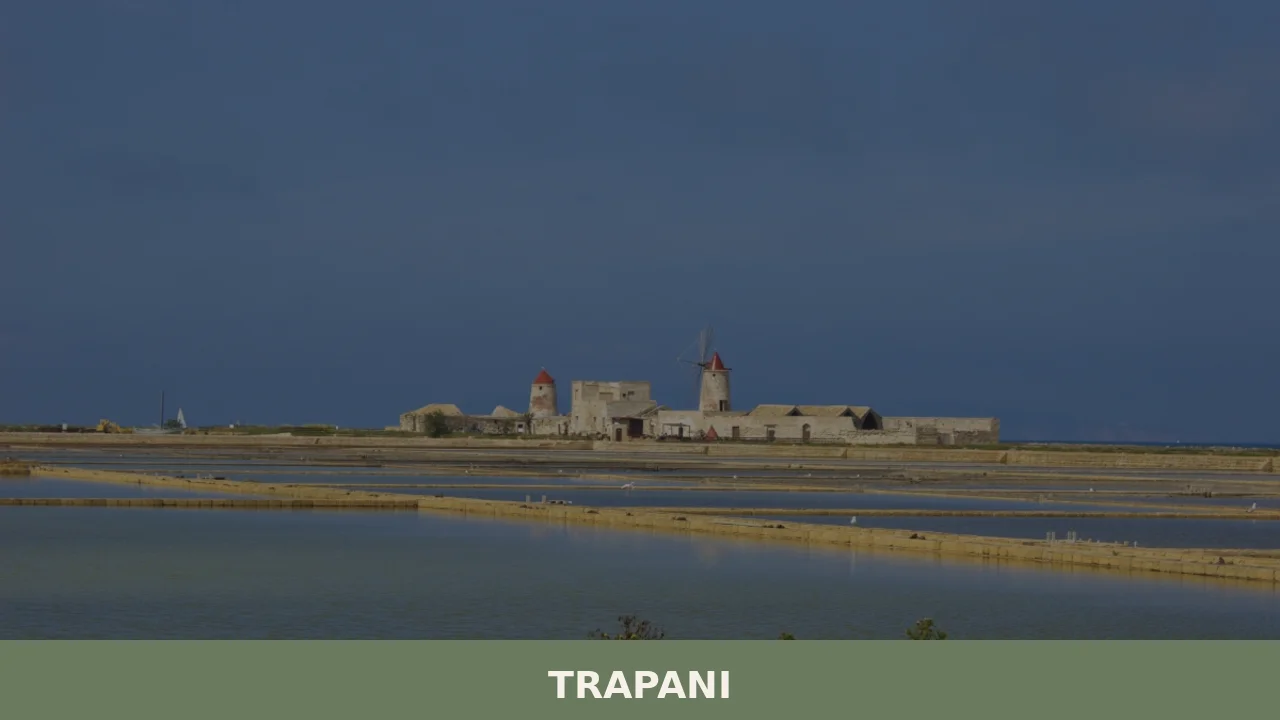
The Trapani and Paceco Salt Pans, managed as a nature reserve, extend along the southern coast of the peninsula and are among the oldest in Europe, with a documented productive history going back to the Arab period.
The windmills that dot the evaporation basins have become the most recognisable visual symbol of the Trapanese landscape.
The Salt Museum, set up in an old salt warehouse near Nubia, illustrates traditional extraction techniques through original tools and historical reconstructions. The production of natural sea salt is protected as a traditional Italian agri-food product.
Historic Centre and Via Garibaldi
Trapani’s historic centre develops along the main axis of Corso Vittorio Emanuele and its side streets, where the majority of Baroque palaces and historic churches are concentrated. The Cathedral of San Lorenzo, rebuilt in the eighteenth century on an older foundation, preserves a Crucifixion attributed to Van Dyck.
The Church of Sant’Agostino, of medieval origin, features a fourteenth-century Gothic portal among the best preserved in the city.
Those wondering what to see in Trapani in a single day will find this area offers the most concentrated route through historic architecture.
Traditional Food and Products of Trapani
Trapanese cuisine reflects the city’s geographical position and the layering of its historical dominions.
The Arab influence is the most evident and lasting: the use of spices, dried fruit, couscous and aromatic herbs characterises many local preparations in a way that sets them clearly apart from the rest of Sicily.
Proximity to the sea guarantees a constant supply of blue fish, tuna, octopus and shellfish, while the salt pans produce a high-quality sea salt that features in many recipes as a far from incidental ingredient.
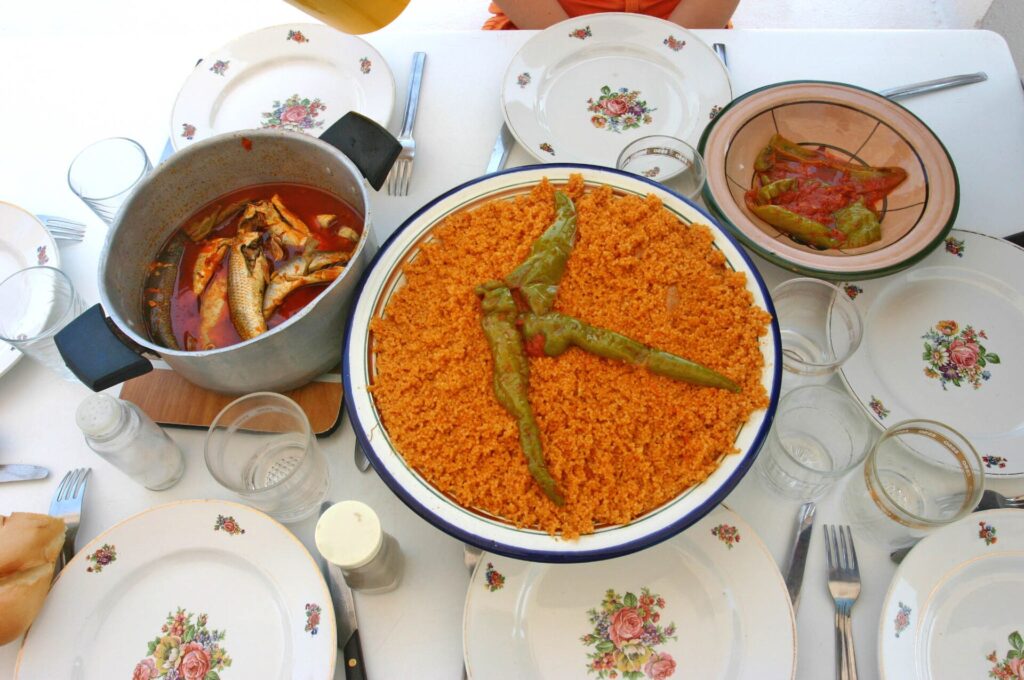
The most representative dish of the local tradition is Trapanese couscous, prepared with durum wheat semolina and dressed with a fish broth called ghiotta, in which scorpionfish, conger eel, octopus and other reef fish are cooked.
The preparation technique is done by hand and requires working the semolina over steam in a specific terracotta vessel called a cuscusiera.
Equally rooted in local culture is Trapanese pesto, a raw sauce made from almonds, fresh tomatoes, basil, garlic and extra-virgin olive oil, which differs markedly from Ligurian pesto in both consistency and ingredients. Among main courses, tonno alla stemperata — tuna with olives, capers and vinegar — is one of the oldest preparations in Sicilian seafood cooking.
Among the certified traditional agri-food products from the Trapani area, two are recognised at national level.
Natural sea salt (PAT) — municipalities: Trapani, Paceco — is produced through solar evaporation in the coastal salt pan basins, using a technique unchanged over the centuries that relies on wind, sun and the flat morphology of the land. Cotognata (PAT) — municipality: Trapani — is a firm preserve made by slow-cooking quinces with sugar, traditionally shaped into geometric or decorative forms and left to dry.
Both products are listed in the official register of Traditional Agri-Food Products of the Ministry of Agriculture.
Spring and summer are the best periods for finding fresh produce and taking part in events linked to local gastronomy.
The Cous Cous Fest, an international event dedicated to the city’s signature dish, takes place every year in San Vito Lo Capo, a few kilometres from Trapani, in September, and draws delegations from across the Mediterranean.
In the neighbourhood markets of the historic centre — particularly at the fish market in Piazza Mercato del Pesce — it is possible to find the day’s fresh catch alongside products from the local salt pans.
Festivals, Events and Traditions of Trapani
The patron saint of Trapani is Sant’Alberto degli Abati, whose feast is celebrated on 7 August with religious events in the historic centre. The most anticipated and nationally known celebration remains the Procession of the Misteri, which takes place during Holy Week on Good Friday. The twenty sculptural groups kept in the Church of Purgatory are carried on the shoulders of bearers through the city’s streets in a procession that runs continuously for approximately twenty-four hours, accompanied by brass bands performing funeral marches written specifically for the occasion.
The procession is considered one of the longest and most attended in Italy and draws tens of thousands of people every year.
Among other documented traditions is the devotion to the Madonna of Trapani, whose statue in the Sanctuary of the Annunziata draws pilgrims throughout the year, with particular intensity around the Feast of the Assumption in August.
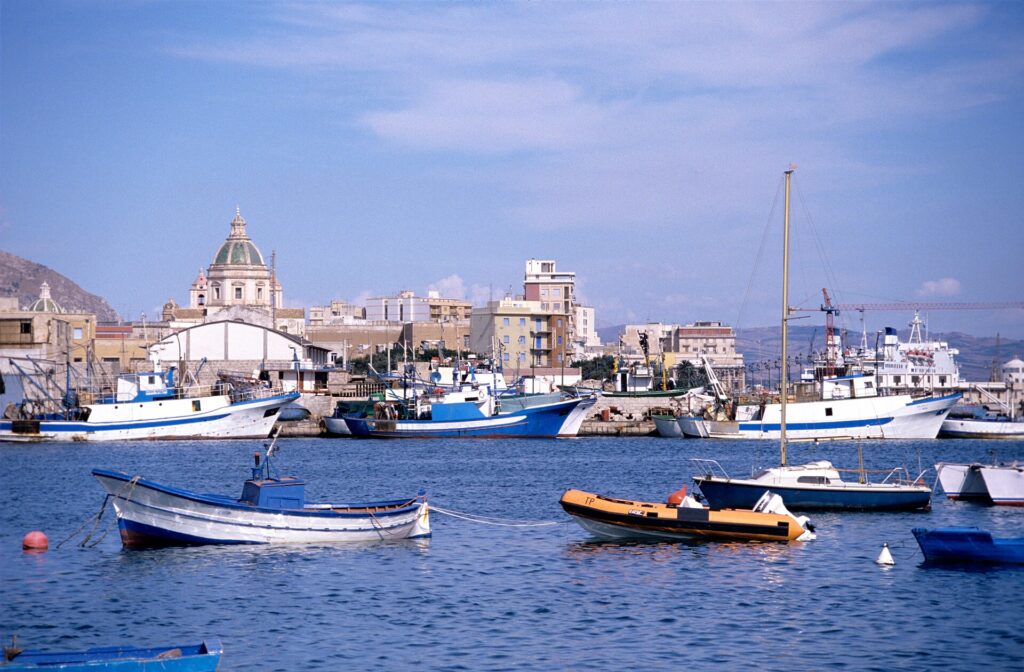
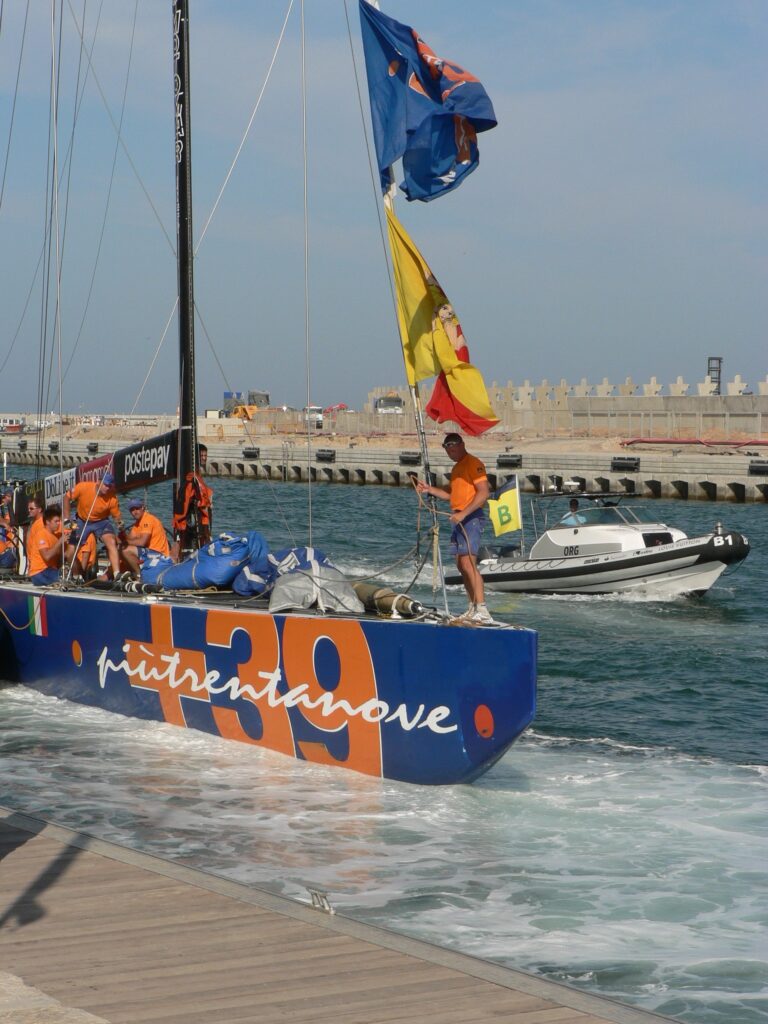
The city also hosts events connected to the sea, including historical regattas and seafaring festivals, which reflect Trapani’s deep structural ties to fishing and navigation.
The summer calendar includes cultural events held in the historic centre, with concerts and theatre seasons using the courtyards of historic palaces as their stage.
When to Visit Trapani and How to Get There
The most suitable period to visit Trapani is spring, between April and June, when temperatures are mild, the sea is already bright and the salt pans are in full operation. Holy Week, with the Procession of the Misteri, draws an exceptional influx of visitors and requires booking accommodation well in advance. Summer, between July and August, is the peak season for coastal tourism thanks to the proximity of San Vito Lo Capo and the beaches of the northern coast, but the historic centre remains easy to explore even during the hottest hours, as the peninsula’s urban layout ensures a constant breeze.
Autumn is a solid choice for those who prefer fewer crowds and want to focus on the museum collections and local food.
Travellers arriving by car will find that the A29 Palermo–Mazara del Vallo motorway connects Trapani with the regional capital in around one hour and thirty minutes; the recommended exit is Trapani, less than five kilometres from the centre.
Trapani Centrale railway station has connections to Palermo via Alcamo and via Castelvetrano, with journey times ranging between two and three hours.
Trapani Birgi Airport — Vincenzo Florio Airport Trapani Birgi — is around fifteen kilometres from the city centre and operates flights to several Italian and European cities, particularly with low-cost carriers. From Trapani’s port, ferries depart for the Egadi Islands and for Pantelleria.
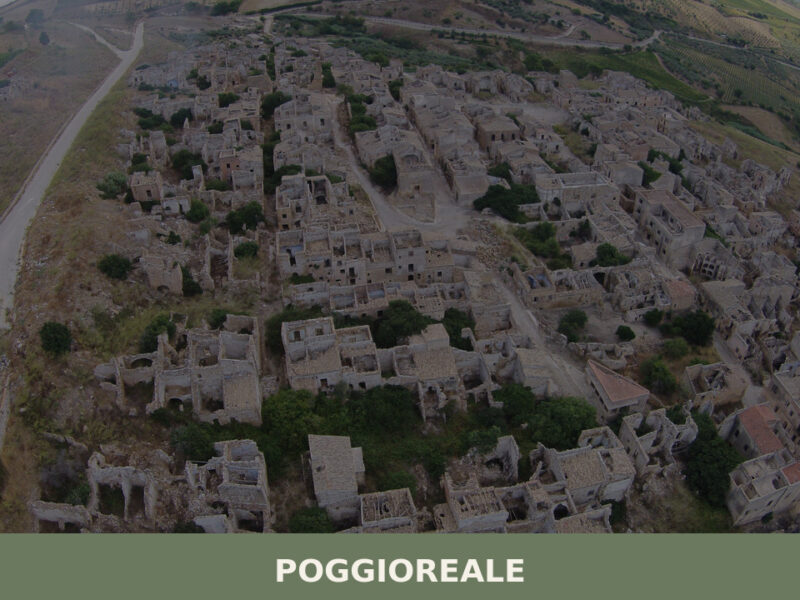
Those planning a broader itinerary through western Sicily may want to consider Poggioreale as an intermediate stop — a village in the Trapanese hinterland that shares with this area a common history tied to Arab and Norman rule, and offers a landscape of considerable interest a short distance from the coast.
Where to Stay in Trapani
Trapani’s accommodation offer is varied and covers a wide range of budgets.
Throughout the historic centre there are numerous bed and breakfasts and holiday apartments set within historic palaces, often with views over the peninsula’s rooftops or the port.
For those who prefer more structured accommodation, the city has mid-range and upper-category hotels both in the centre and along the seafront.
In the outlying areas, towards the salt pans and Paceco, there are several agritourism properties offering hospitality in rural surroundings with produce from the farm.
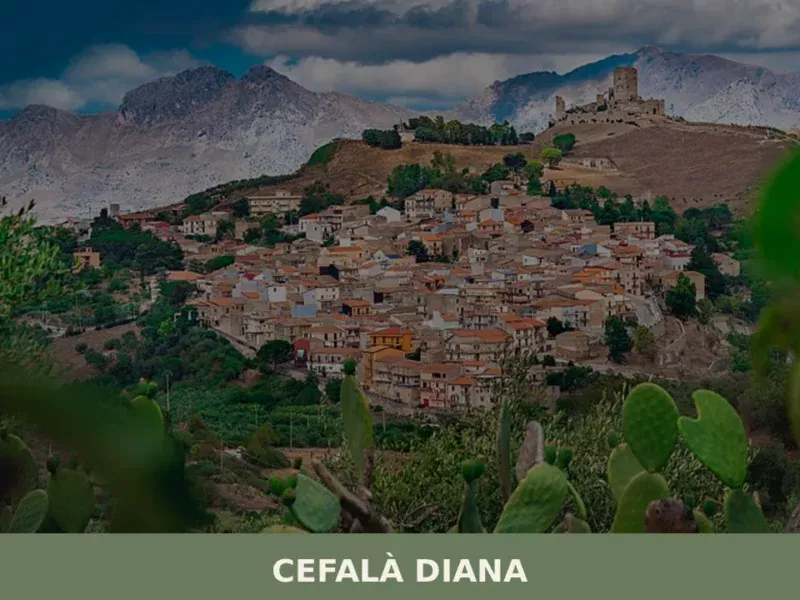
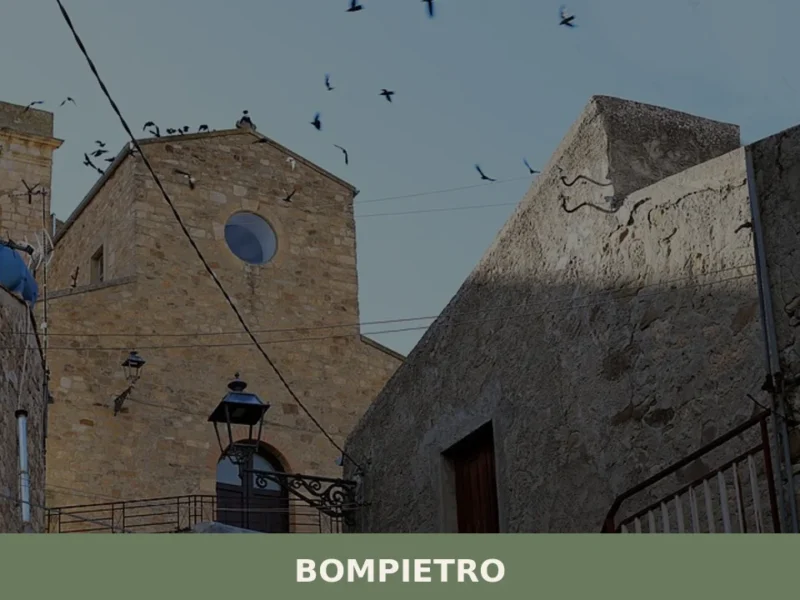
Those wishing to extend their exploration of western Sicily will find further points of interest in the inland villages: Campofiorito, in the Palermo area, shares with this region a history of rural settlements dating to the medieval period, while Bompietro and Cefalà Diana are further examples of Sicilian villages that preserve traces of Arab-Norman architecture — a heritage that appears in different forms throughout Trapani’s historic centre as well.
Frequently asked questions about Trapani
What is the best time to visit Trapani?
Spring (April–June) and early autumn (September–October) offer the most pleasant conditions, with warm temperatures and smaller crowds. Holy Week — culminating in the Good Friday Procession of the Misteri, one of Italy's longest religious processions — is the most atmospheric time to visit. August brings peak summer heat and the feast of patron saint Sant'Alberto degli Abati on 7 August, with religious events in the historic centre. September is ideal for combining a beach visit with the nearby Cous Cous Fest in San Vito Lo Capo.
What are the historical origins of Trapani?
Trapani takes its name from the Greek Drepanon, meaning sickle, reflecting the curved shape of its peninsula. Founded by the Phoenicians for its strategic double anchorage, it became a key Carthaginian outpost in western Sicily. In 241 BC the waters off Trapani were the site of the Battle of the Egadi Islands, where Rome decisively defeated Carthage. Arab rule from the 9th century transformed the city's urban fabric, followed by Norman, Angevin, Aragonese and Spanish periods, each leaving architectural and cultural traces still visible today.
What to see in Trapani? Main monuments and landmarks
Key sites include: the Sanctuary of the Annunziata (1315), housing the venerated marble Virgin attributed to Nino Pisano; the adjacent Pepoli Regional Museum with coral, medieval sculptures and paintings; the Torre di Ligny (1671) at the peninsula's tip, now home to the Museum of Prehistory; the Church of Purgatory, which holds the 17th–18th-century Misteri sculptural groups; the Cathedral of San Lorenzo with a Crucifixion attributed to Van Dyck; and the Church of Sant'Agostino, featuring a well-preserved 14th-century Gothic portal. The salt pans south of the city, with their iconic windmills, are also unmissable.
What are the main natural or scenic attractions of Trapani?
The Trapani and Paceco Salt Pans form a protected nature reserve stretching along the southern coast of the peninsula. Among the oldest salt pans in Europe, they are characterised by shallow evaporation basins, traditional windmills and rich birdlife, including flamingos during migration. The Salt Museum near Nubia illustrates centuries-old extraction techniques. The western seafront promenade offers unobstructed views of the Sicilian Channel and the Egadi Islands, making it a scenic walking route leading to the Torre di Ligny at the tip of the promontory.
Where to take the best photos in Trapani?
The most photogenic locations are the salt pans south of the city, where windmills reflected in the evaporation basins create the defining image of the Trapanese landscape — especially striking at sunset with the Egadi Islands in the background. The Torre di Ligny, surrounded by sea on three sides, offers sweeping views of the Sicilian Channel. The western seafront promenade and the Baroque facades along Corso Vittorio Emanuele in the historic centre also provide excellent urban photography opportunities, particularly in the golden light of early morning.
Are there museums, churches or historic buildings to visit in Trapani?
Trapani has several significant cultural venues. The Pepoli Regional Museum, housed in the former Carmelite convent beside the Sanctuary of the Annunziata, displays worked coral, medieval sculptures and paintings from the 15th to 18th centuries. The Torre di Ligny hosts the Museum of Prehistory, with Bronze Age artefacts from the province. The Church of Purgatory contains the celebrated Misteri, twenty sculptural groups from the 17th and 18th centuries. The Cathedral of San Lorenzo and the Church of Sant'Agostino round out the main ecclesiastical heritage of the historic centre.
What can you do in Trapani? Activities and experiences
Trapani offers a wide range of experiences: walking the historic centre along Corso Vittorio Emanuele to discover Baroque churches and noble palaces; visiting the salt pans and Salt Museum near Nubia; browsing the fish market in Piazza Mercato del Pesce for the fresh daily catch; attending the Good Friday Procession of the Misteri during Holy Week; taking ferries from the port to the Egadi Islands for day trips; and exploring local food markets to find certified sea salt, Trapanese couscous ingredients and traditional cotognata preserve.
Who is Trapani suitable for? Families, couples, hikers, solo travelers?
Trapani suits a broad range of visitors. Couples will appreciate the atmospheric Baroque historic centre, salt pan sunsets and seafront promenades. Families benefit from the city's flat peninsula, accessible museums and proximity to beaches and the Egadi Islands. History and culture enthusiasts will find a layered urban heritage spanning Phoenician, Arab, Norman and Spanish periods. Food lovers have much to explore, from fresh fish markets to artisan sea salt and couscous. The city also serves as an ideal base for day trips to Erice, the Egadi Islands and San Vito Lo Capo.
What to eat in Trapani? Local products and specialties
Trapani's cuisine is strongly influenced by Arab culinary traditions. The signature dish is Trapanese couscous, hand-worked semolina steamed in a cuscusiera and served with a fish broth called ghiotta containing scorpionfish, conger eel and octopus. Trapanese pesto — made from almonds, fresh tomatoes, basil, garlic and olive oil — differs markedly from the Ligurian version. Tonno alla stemperata (tuna with olives, capers and vinegar) is a classic main course. Two certified PAT products originate here: natural sea salt from the Trapani–Paceco salt pans and cotognata, a firm quince preserve shaped into decorative forms.
📷 Photo Gallery — Trapani

Nearby Villages near Trapani
In Sicily More villages to discover
Salaparuta
 Plains
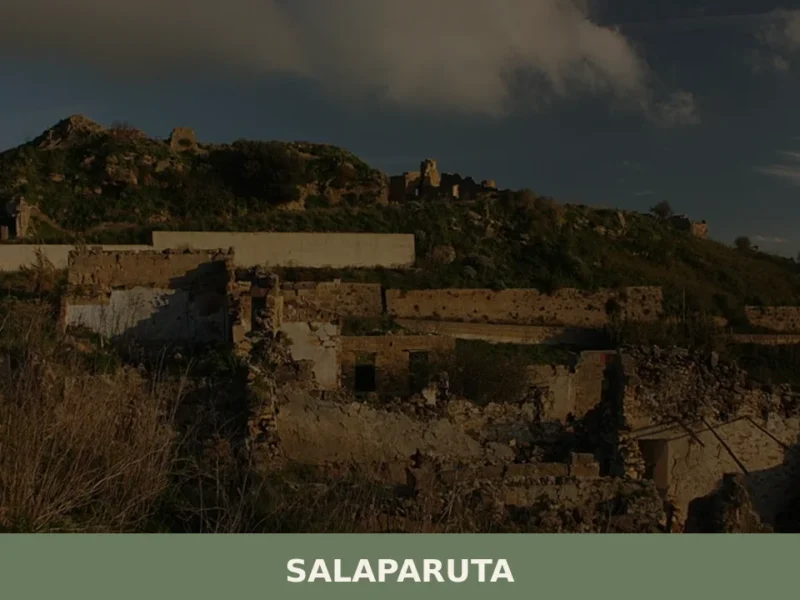
what to see in salaparuta, Italy: Explore this Belice Valley village, 171 meters above sea level, known for its DOC wine and the San Giuseppe feast on March 19. Discover local history and attractions.

Licata
 Mountain
34,000 residents, Greek foundations and a coastline of alternating cliffs and sandy coves make Licata one of the most layered towns on Sicily's southern shore.
Acquaviva Platani
 Hills
Hills
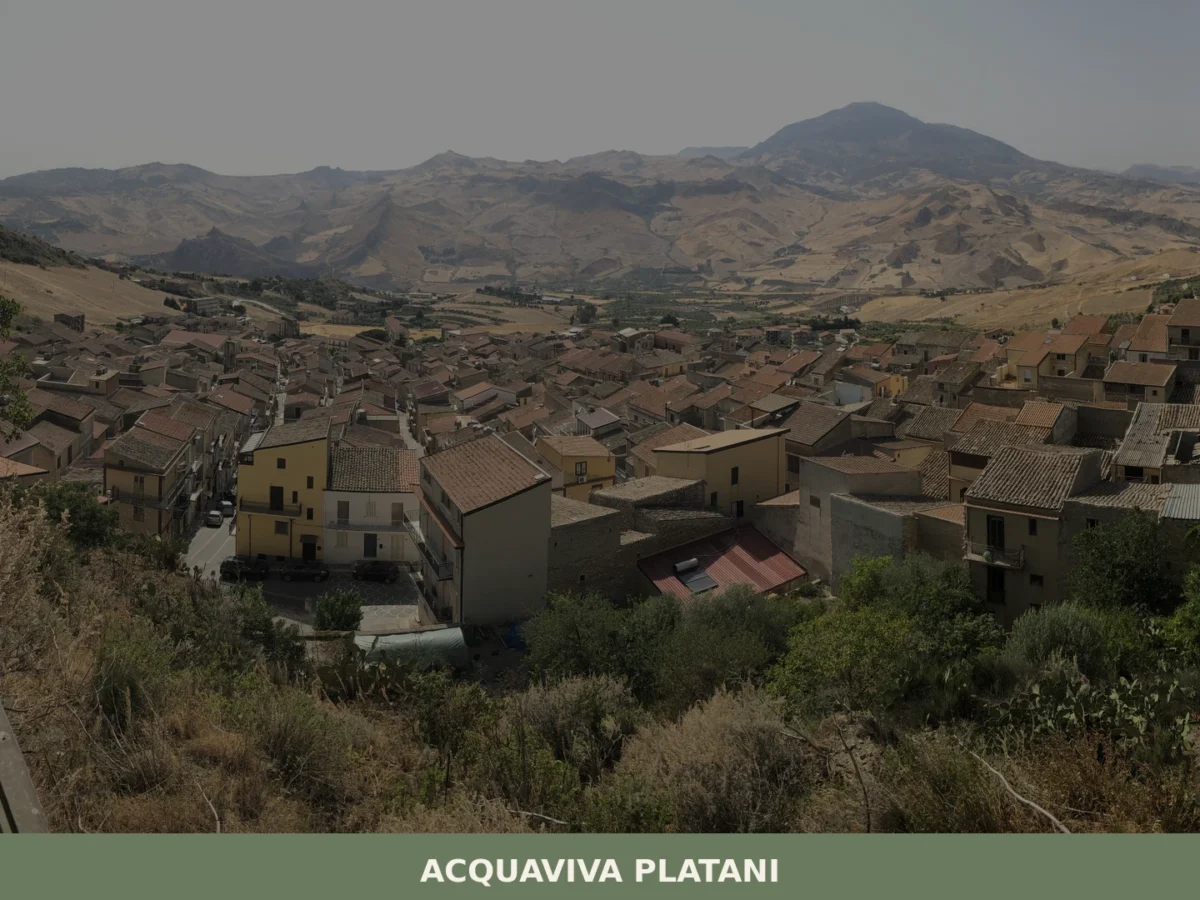
A clock tower built in 1894 rises above the roofline of a compact hill town in the province of Caltanissetta, its stone face marking hours in a landscape where the Platani river moves through the valley below. The name of the place translates directly from Italian as “Living Water,” a reference to the natural springs […]
Agrigento
 Sea
Sea
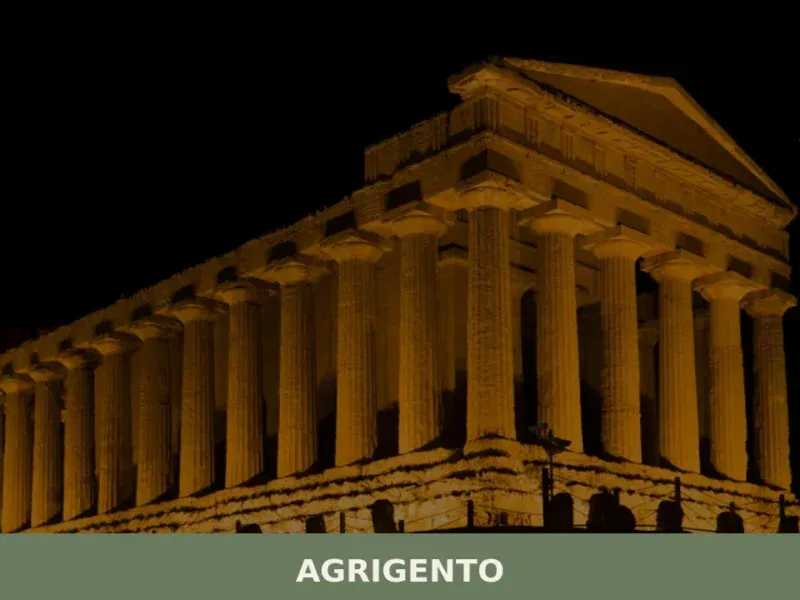
What to see in Agrigento, a city of 58,063 at 230m: UNESCO Valley of the Temples, Norman Cathedral, certified Cotognata. Plan your visit with our complete guide.
Basicò
Hills
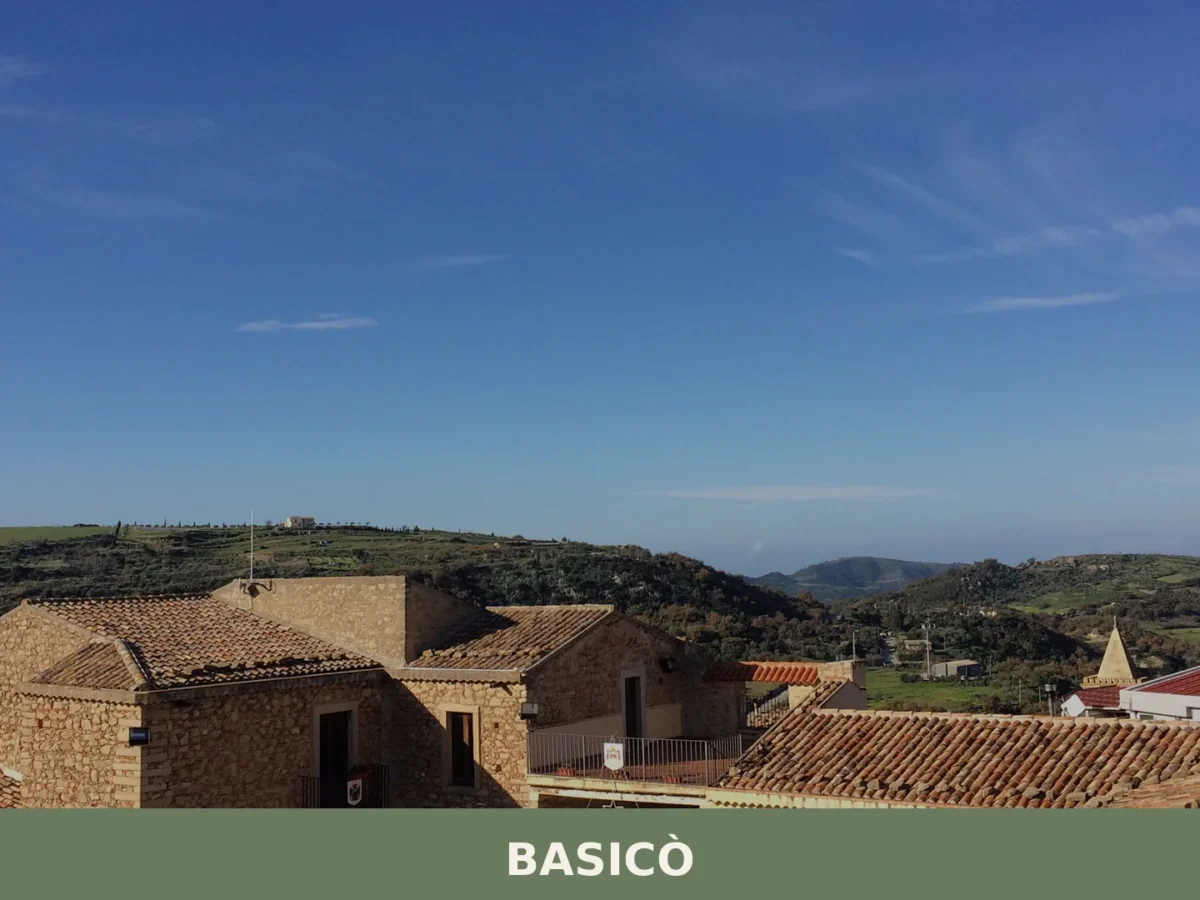
Basicò is a hilltop comune in the province of Messina, Sicily, with a documented history stretching back to 1262 and a living tradition of provola cheese, feudal architecture and prehistoric archaeolo

San Cataldo
Hills
With over 400 years of documented history and a remarkable archaeological zone, San Cataldo offers cultural depth that rewards curious visitors.

Rodì Milici
Hills
Two urban nuclei, one Knights of Malta palazzo and the ruins of ancient Longane: Rodì Milici rewards visitors who look beyond the Sicilian coast.
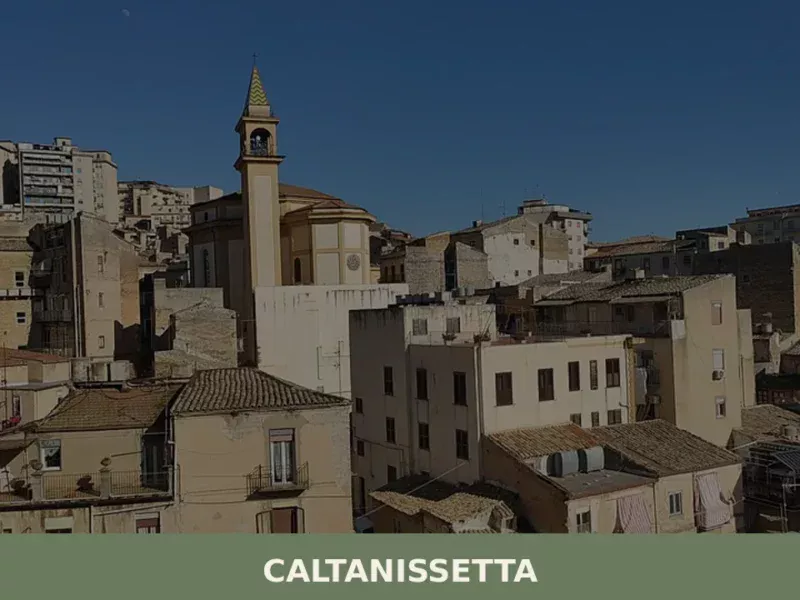
Caltanissetta
Hills
What to see in Caltanissetta: 61,000 residents at 568m, from Castello di Pietrarossa to Baroque churches and Holy Week. Plan your visit with this complete guide.
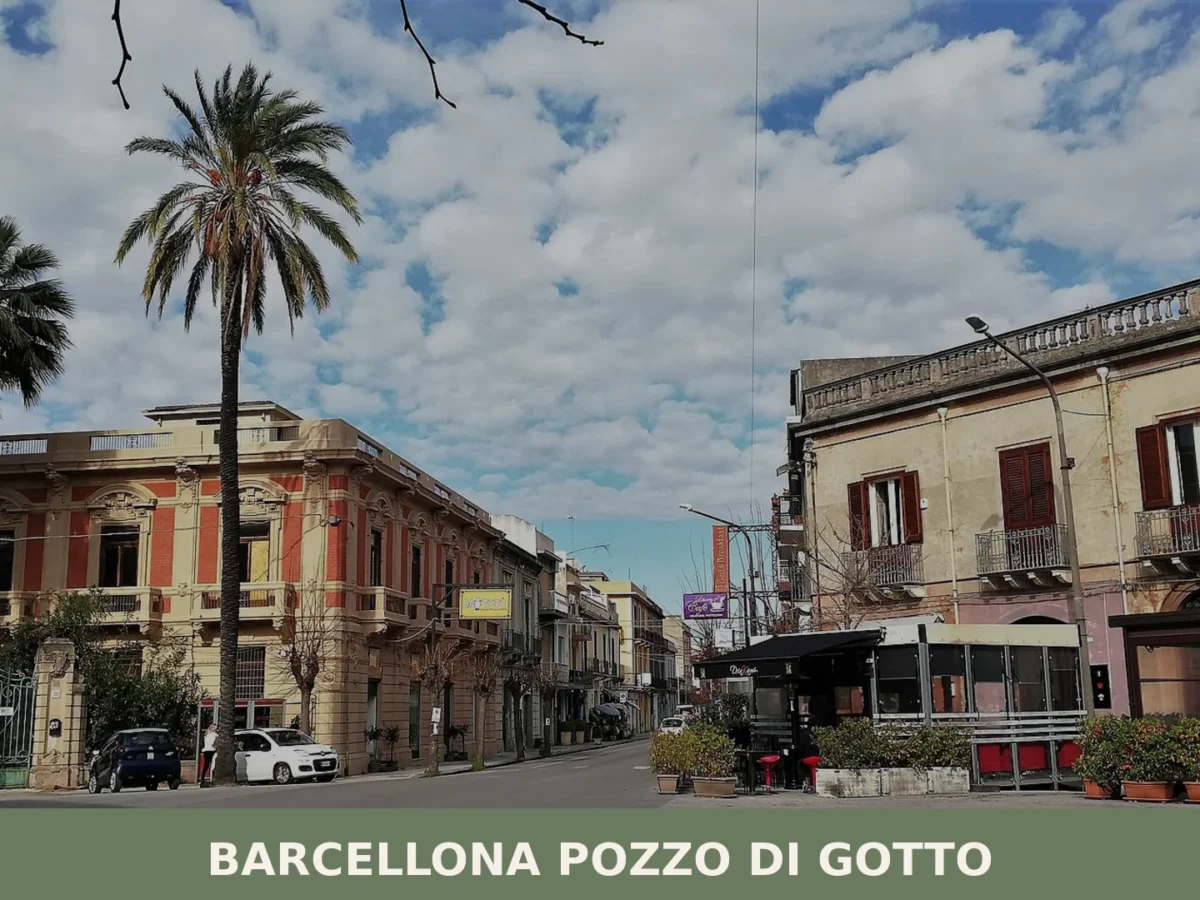
Barcellona Pozzo di Gotto
Sea
Barcellona Pozzo di Gotto is a town of nearly forty thousand inhabitants in the province of Messina, Sicily, where the plain of the torrente Longano meets the Tyrrhenian shore.

Belpasso
Hills
A town rebuilt three times from volcanic catastrophe. Belpasso village in Sicily embodies resilience through its geometric urban grid and living festival traditions.


🏡 Know Trapani better than we do?
If you’re a local or have been there, your knowledge matters: add what’s missing or fix a detail on this page.