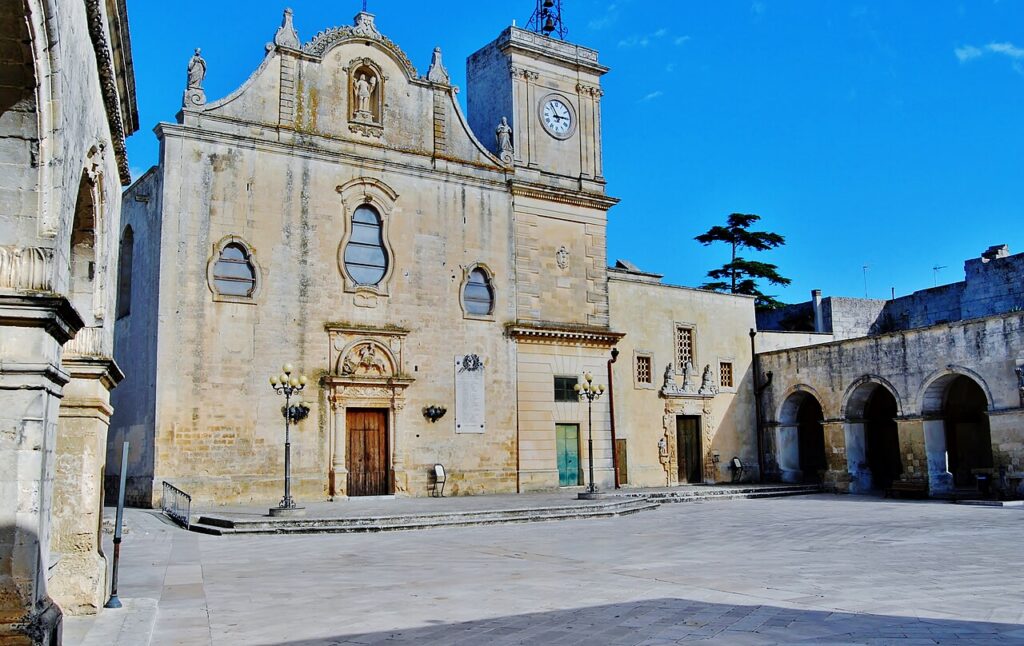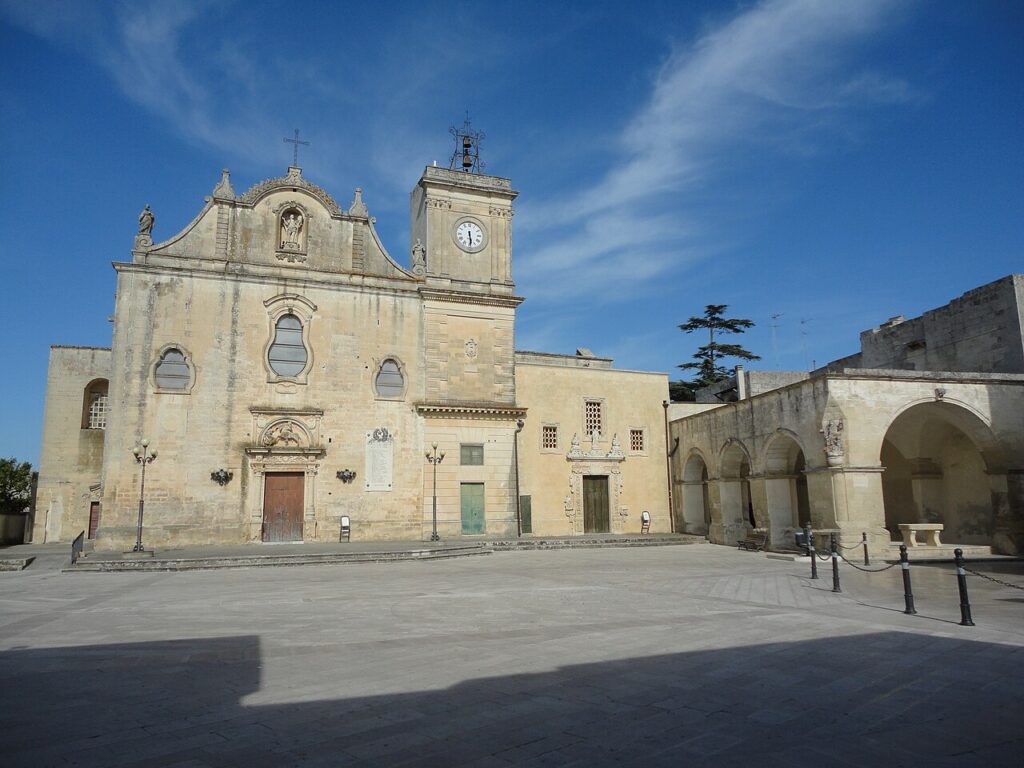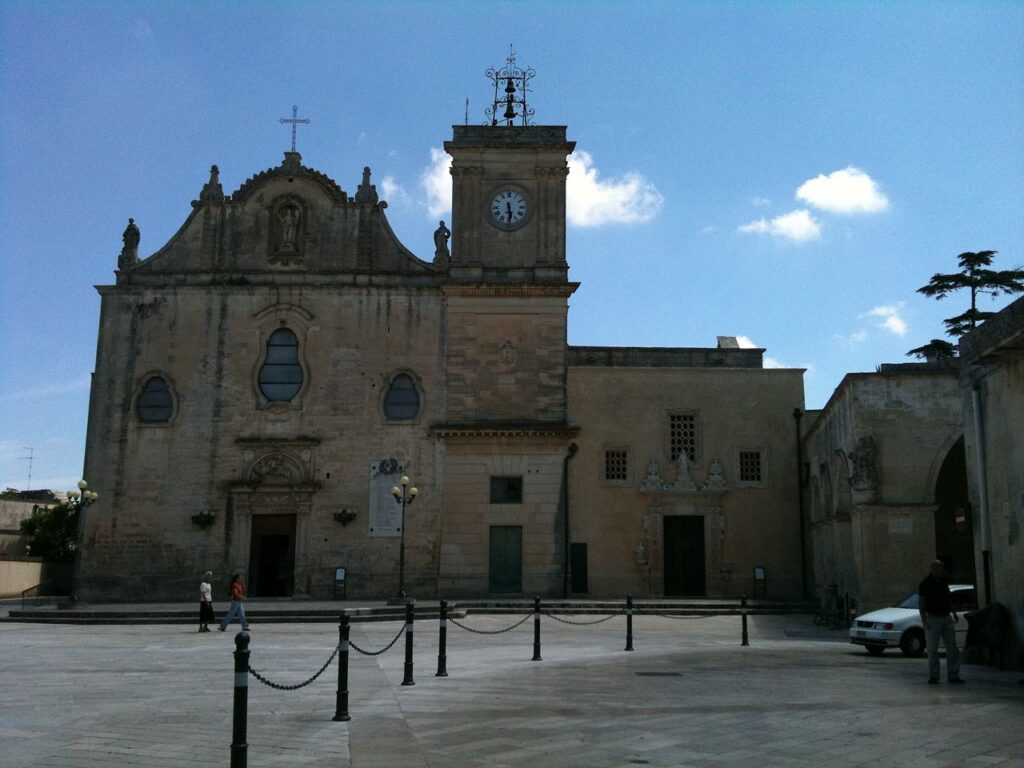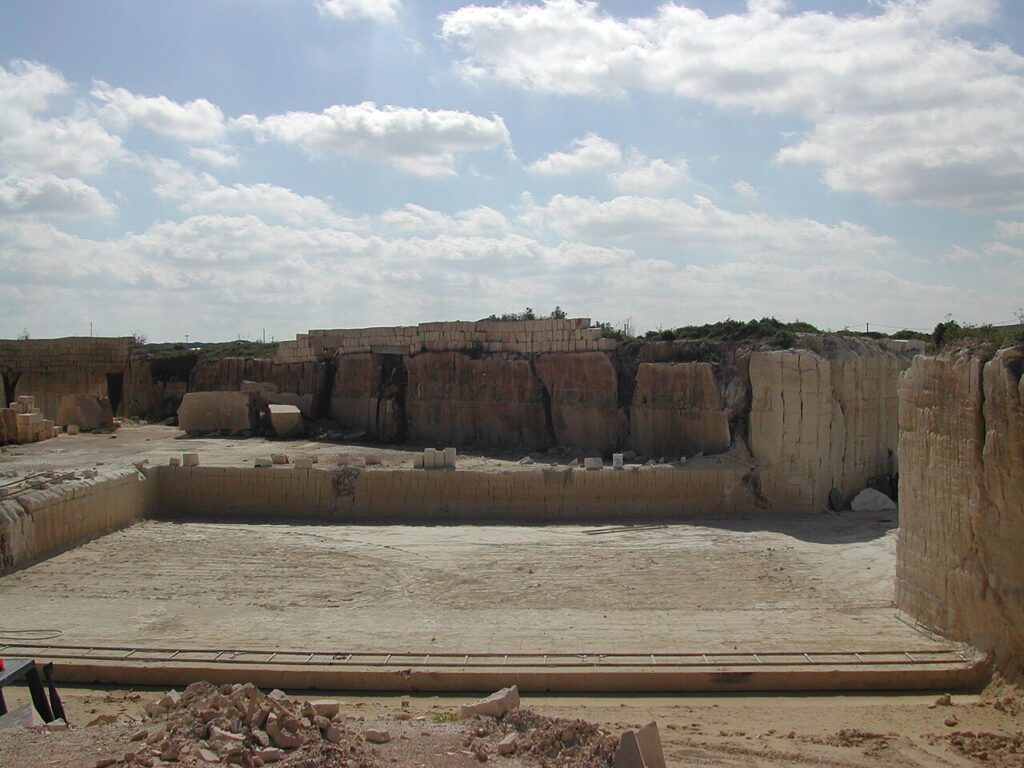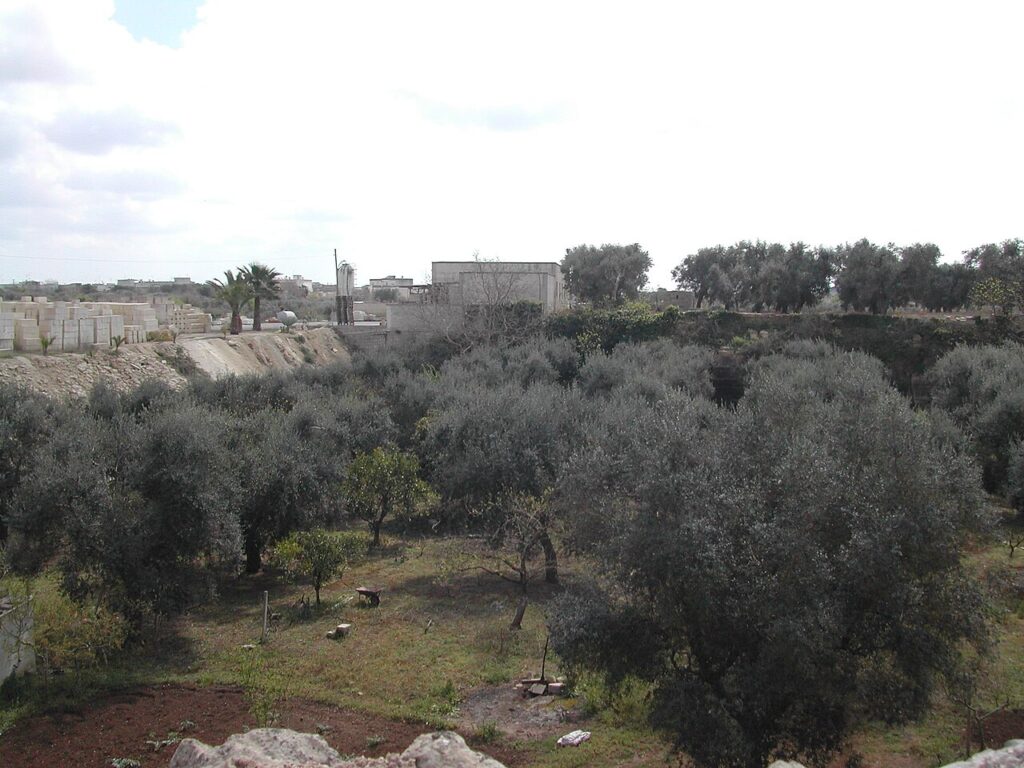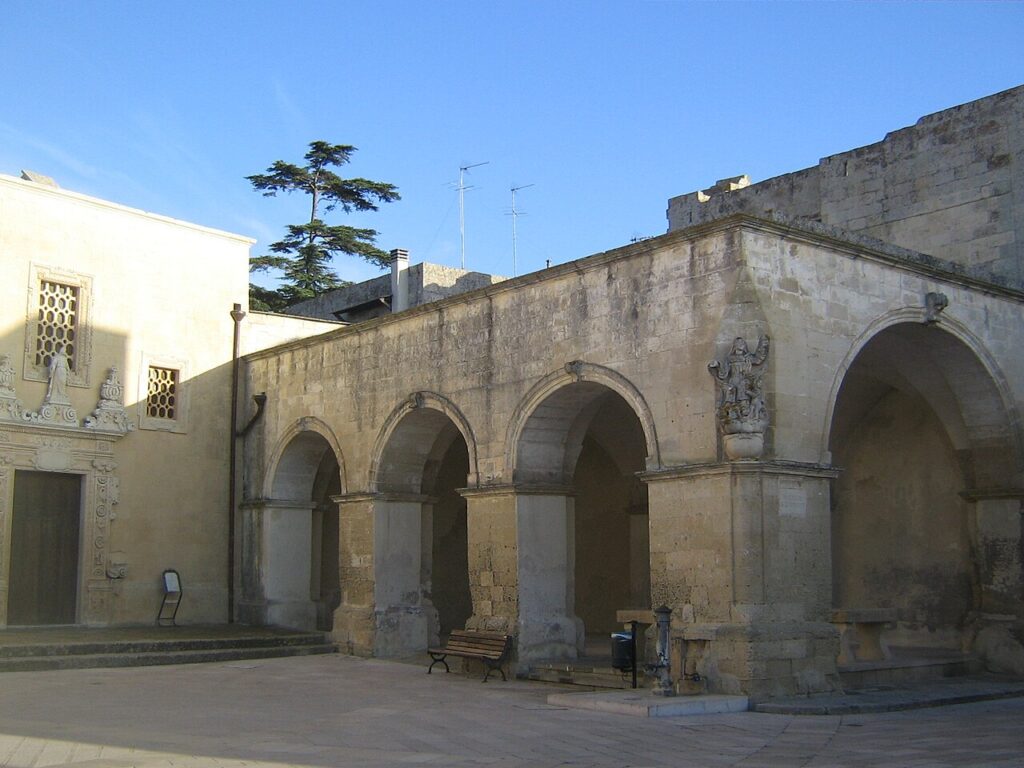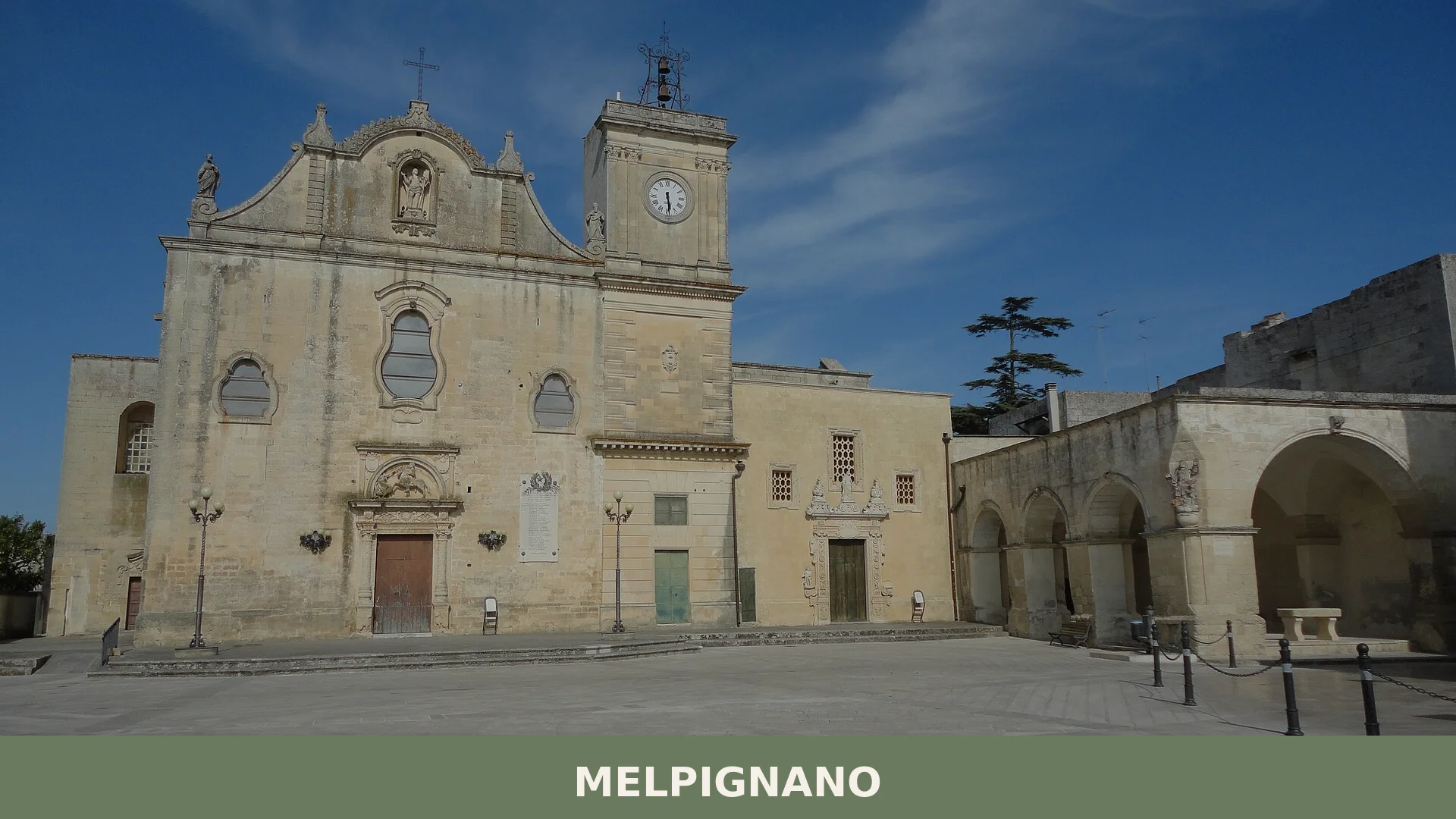
In the flat, sun-bleached landscape of southern Lecce province, Melpignano rises in the flat landscape of southern Lecce province, its pale limestone buildings clustered around a central square ringed by Renaissance arcades. The village reveals itself slowly—first the bell tower, then the soft geometric rhythm of the porticoes, then the stone portals carved with religious imagery that speak of centuries of devotion and craftsmanship.
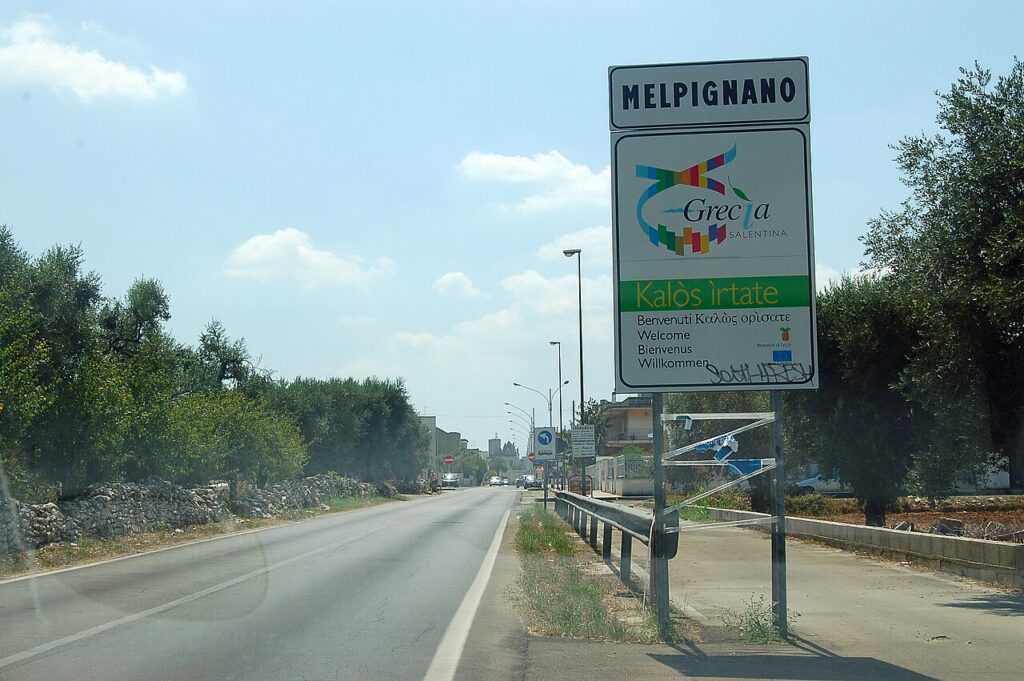
Melpignano, in Apulia, lies within the Grecìa Salentina, a nine-municipality linguistic island where an ancient Greek dialect still persists in daily speech. Two major draws frame the year: the extraordinary Notte della Taranta festival each August—Italy’s largest celebration of pizzica music and Salento’s folk heritage—and the careful preservation of medieval and Renaissance religious architecture that maps the village’s feudal past onto its present streets.
Foundation Myths and Medieval Transitions
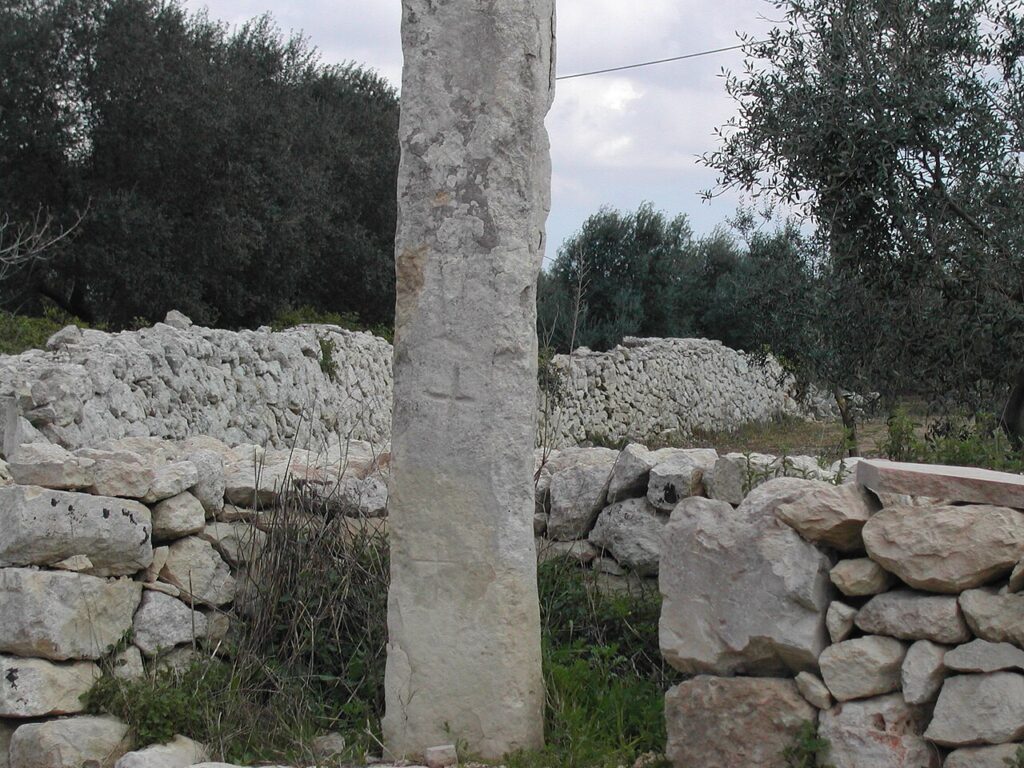
The origins of Melpignano remain layered in competing traditions. Bronze Age settlements in the surrounding area are marked by menhirs and dolmen, suggesting human presence in deep prehistory. Later accounts variously attribute the village to Greek colonists from the Peloponnese, to a Roman centurion named Melpinius who received lands after the occupation of the region in 267 a.C., or to the muse Melpomene herself—though this last is legend. The name itself may derive from the Latin personal name Melpinius with the suffix -anus (denoting a landed estate), or it may reference honey, whose production once sustained local wealth.
Certainly Roman, then Byzantine for over five centuries, Melpignano entered the Norman orbit when Tancredi d’Altavilla granted the fief to Giambattista Lettere in 1190. A succession of feudal families followed—the Orsini del Balzo from 1396, the Aiello Tarantini, the Branai Castriota, and finally the marchesi de Luca, whose tenure lasted until the abolition of feudalism in 1806. For three decades the village was administered jointly with neighbouring Castrignano de’ Greci, until independence came on 1 January 1837.
The Greek language and customs that Byzantine rule implanted persisted in folklore and daily rhythm for centuries, creating a cultural continuity rare in southern Italy—a thread connecting classical antiquity to the living present.
Sacred Architecture: Portals, Altars and Stone Testament
Church of San Giorgio
The mother church dominates Piazza San Giorgio, substantially rebuilt between 1785 and 1794 from an earlier sixteenth-century structure. The most striking element is the Renaissance portal, framed with an altorilievo of the saint slaying the dragon; The carving is attributed to Gabriele Riccardi based on stylistic resemblance to works in Lecce. The interior comprises three naves and a Latin cross plan, populated by Baroque altars dedicated to the Crucified Christ, Saint Anne, the Sacred Heart, Saint Anthony of Padua, and the Sorrowful Madonna in the side aisles, with further altars to Saint George, the Madonna of the Rosary, and the Immaculate in the transept. The presbytery, retaining its original sixteenth-century structure, holds early Baroque decoration and frescoes depicting Saint Leonard, Saint George, a Madonna and Child, and musical angels.
Church of the Assumption
Built around the early sixteenth century under the original dedication to Saints Rocco and Sebastian, this church preserves its original star-vaulted ceiling with ribs—an elegant structural feature. The portal features carved stone work. Within, a single nave contains a mosaic floor, a grand altar, and canvas paintings from the late eighteenth century illustrating the mysteries of Mary.
Church and Convent of the Augustinians
This ensemble was constructed under the direction of Francesco Manuli. The façade displays an elaborate Baroque portal with two pairs of columns supporting an entablature, crowned by a stone statue. The upper register features an arched window with lateral volutes and cherub busts. Inside, a single nave contains six chapels along the walls and sculptured altars throughout that incorporate lions as emblems of strength. The convent, damaged by long abandonment, preserves fragments of the 1644 cloister and a well carved with a two-headed eagle, symbol of the Branai Castriota family.
Palazzo Marchesale Castriota
Completed in 1636 for Giorgio Branai Castriota, this noble residence represents the power and taste of the local feudal elite, with restrained architectural solutions and subtle decoration leaning toward Renaissance rather than ostentatious Baroque sensibility. The building evolved from a fortified structure—evident in corner towers and defensive walls enclosing a rear garden—into a residential palazzo. A central portal with two supporting columns and a balcony above marks the façade; windows alternate between triangular and arched pediments and cluster more densely toward the central axis. The interior garden features Renaissance-style window arcades, a central fountain, pergolas, and stone benches arranged on geometric pathways.
Underground Oil Press
Beneath the palazzo lies a hypogeal frantoio carved entirely from the limestone bedrock, a precious testimony to local agricultural life in the seventeenth century. The chamber retains large vats for olive grinding, stone wheels, and wooden presses. This underground location solved a technical problem: the natural coolness of the chamber prevented the oil from thickening prematurely around the pressing cloths, while the weight of the stone vault above assisted the compression of olives.
The Flavours of Salento
Melpignano participates in the broader Salento food culture, where olive oil, honey, vegetables, and legumes form the foundation of sustenance and trade. Historically, honey production ranked as a significant source of wealth; medieval and Renaissance records mention apiary holdings as valuable assets. Today the village sits within an agricultural landscape that yields products recognized across Puglia’s protected-designation framework—though the immediate local economy centers on fruit, olives, and grains typical of the limestone Salento plain. The village’s positioning within Grecìa Salentina also means that Greek-influenced preparations appear in family kitchens.
Summer Festival and Visiting Melpignano
Each August, the village becomes the focal point of the Notte della Taranta, a vast open-air concert celebrating pizzica and the musical heritage of Salento. The main stage is set in a large open field designated for the event, drawing tens of thousands of visitors to hear traditional and contemporary interpreters of this ecstatic, fast-paced dance music. If you plan to attend, book accommodation in advance; the surrounding villages fill quickly. Outside festival season, Melpignano is quieter, favoring visitors interested in Renaissance architecture, church interiors, and the slower pace of inland Salento life.
Arrival by car remains the most practical approach; the roads are well-maintained, though narrow streets in the old centre require careful driving. From Lecce, the provincial capital, the drive takes roughly 30 minutes via the provincial network. The village occupies a fully flat terrain with no elevation challenges, making it suitable for visitors of varying mobility.
| Departure | Distance | Time |
|---|---|---|
| Lecce | 26.3 km | 30 min |
| Brindisi Airport | 60 km | 50 min |
| Otranto (coast) | 18 km | 25 min |
The climate is Mediterranean: winter temperatures average 9 °C, summer highs around 24.7 °C. Rainfall concentrates in autumn and winter; spring and summer are dry. Spring (April–May) and autumn (September–October) offer the most comfortable weather for walking and exploring churches. The Salento is accessible year-round, but August—despite crowds during the festival—captures the full sensory landscape of Grecìa Salentina culture. Patron feast of San Giorgio falls on 23 April, marking the village’s religious calendar.
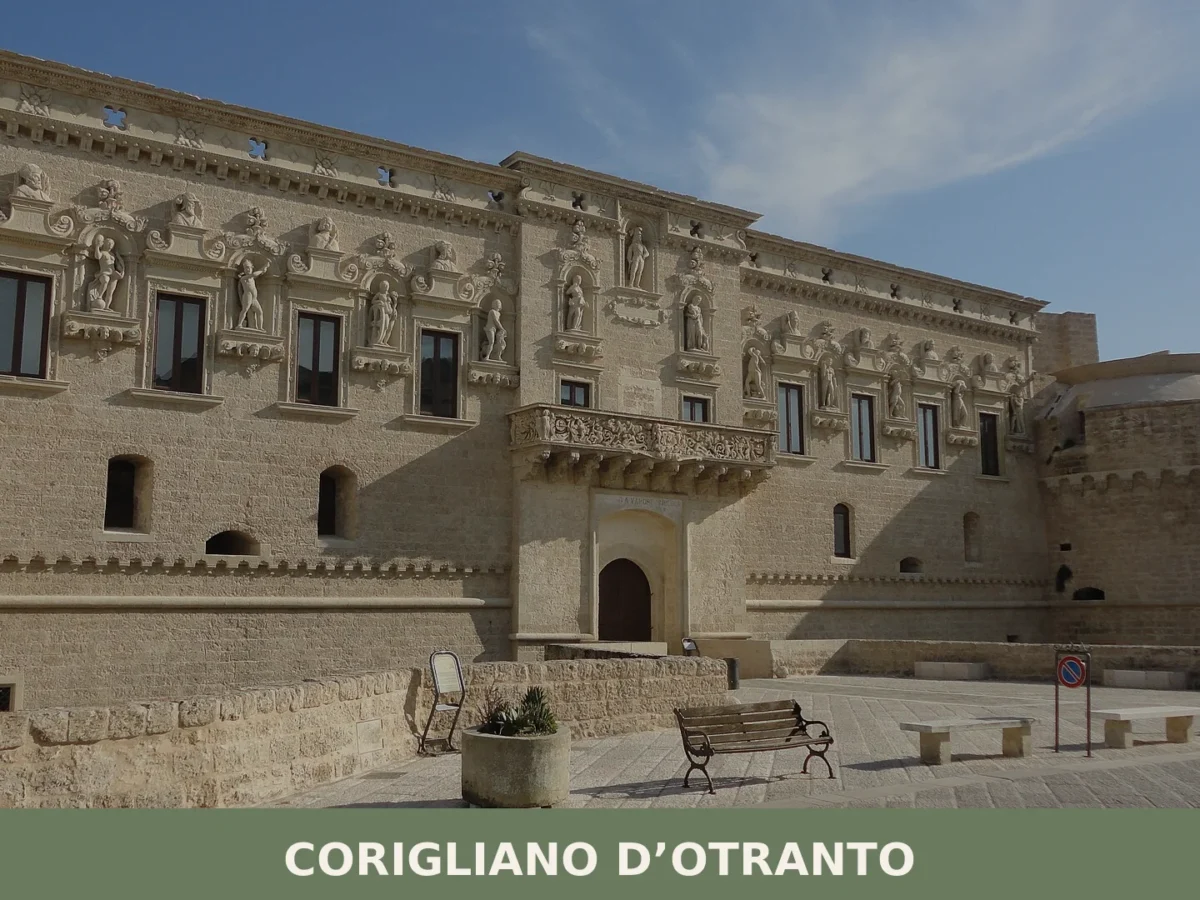
Nearby villages like Castrignano de’ Greci, Corigliano d’Otranto, and Bagnolo del Salento share the linguistic and cultural landscape of Grecìa Salentina, inviting longer exploration of the region’s layered heritage.