


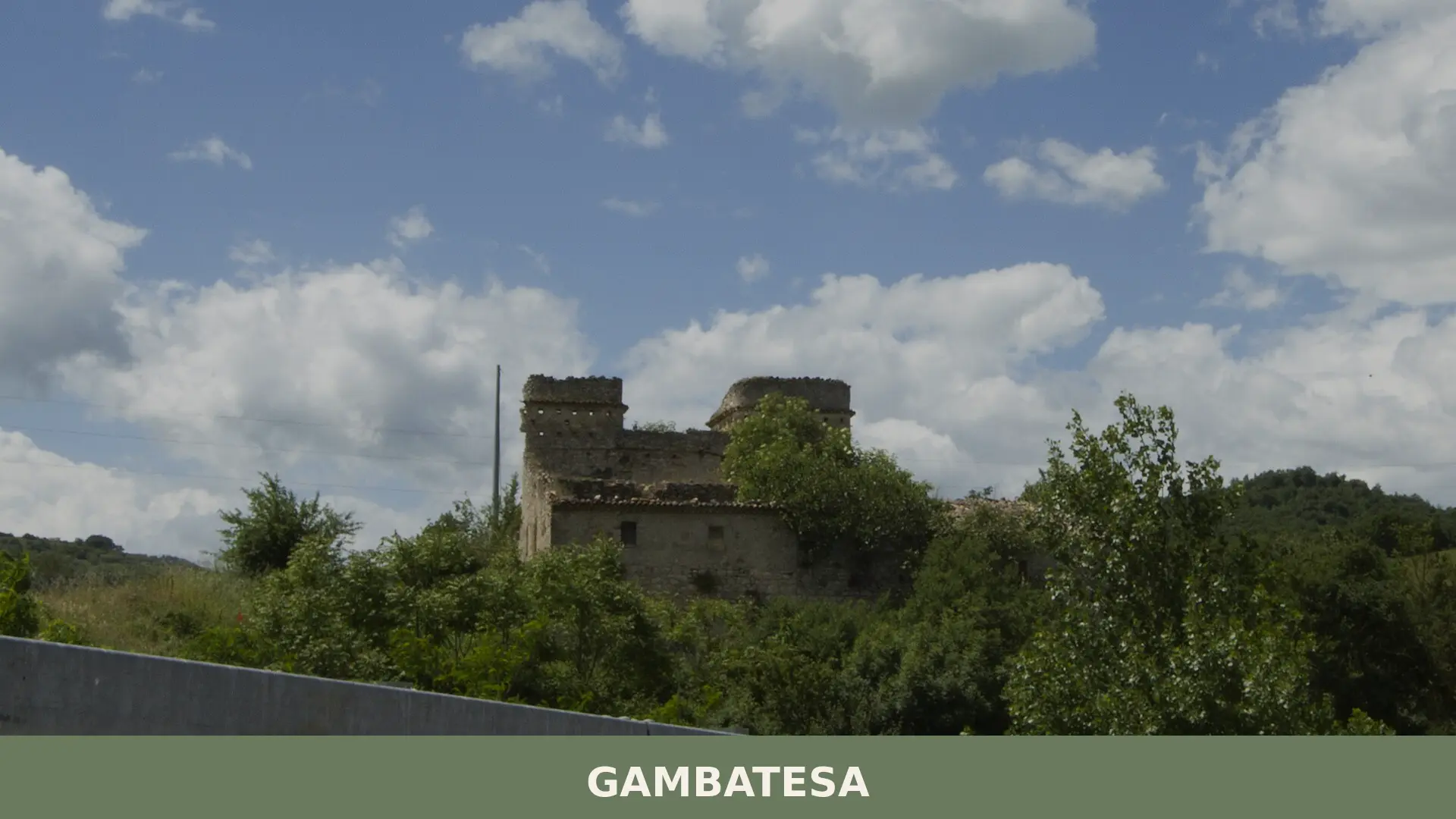

Gambatesa is a hilltop commune in the province of Campobasso, Molise, built around a medieval castle that was transformed into a Renaissance residence by the Di Capua family and remains the centrepiec
Discover Gambatesa
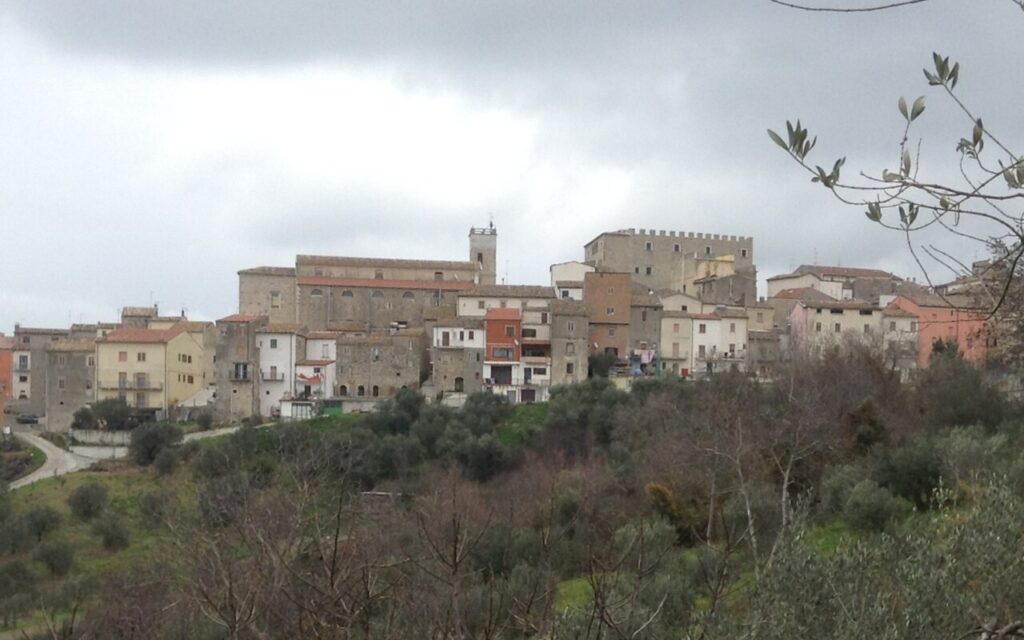
Gambatesa is a hilltop commune in the province of Campobasso, Molise, standing at 468 metres above sea level with around 1,244 residents spread across roughly 42.9 square kilometres of inland hill country. Its medieval core developed around a castle that passed through several powerful dynasties before becoming state property, and that structure — now known as the Castello di Capua — remains the clearest reason to make the journey here.
Gambatesa village in Molise rewards the kind of unhurried attention that smaller Italian places tend to demand. The patron saint is San Bartolomeo Apostolo, celebrated on 24 August, and the local community still identifies strongly with traditions rooted in the transhumance routes that once linked Puglia and Abruzzo through this stretch of the Apennine foothills. A long-distance trail, Di qui passò Francesco… con le ali ai piedi, passes through the territory, offering walkers a tangible connection to the landscapes that shaped the village over centuries.
Gambatesa village in Molise: history and origins
Gambatesa is a hilltop commune in the province of Campobasso whose documented history stretches from a probable Roman-era settlement through Lombard, Norman, Angevin, Spanish and finally private ownership, with its medieval castle serving as the thread connecting each successive phase. The settlement is thought to have existed in Roman times, then grew as a Lombard stronghold around the eighth century. In the Norman period the territory was held by a family that took the name Gambatesa — one of its members recorded as Alferius Gambatesus — and the castle expanded significantly during the Angevin era, between the late thirteenth and fourteenth centuries, while that same family retained the feud.
Around the close of the fourteenth century Ladislao di Durazzo granted the feud to the Galluccio family of Naples, and in the fifteenth century it passed to Andrea di Capua, whose name the castle still carries. The Di Capua transformed the fortress into a Renaissance palace, and in the mid-sixteenth century commissioned an extensive cycle of frescoes for its interior. In 1586 the Di Capua sold the feud to Ferrante Lombardo, who became the first Count of Gambatesa by privilege of Philip II of Spain in August 1592.
Subsequent centuries brought further changes of ownership: the feud passed by marriage from the Lombardo to the de Alarcón y Mendoza, who sold it to the Ceva Grimaldi at the beginning of the eighteenth century. The Ceva Grimaldi were the last feudal lords, holding the castle until the late nineteenth century, when they sold it to Count Guglielmo de la Feld. The castle is now state property.
Castle, Churches and Frescoes: Gambatesa’s Monuments
Gambatesa’s principal monuments are three: the Castello di Capua, the parish church of San Bartolomeo Apostolo, and the church of San Nicola — each standing within or close to the historic centre on the hill of Colle Serrone.
Castello di Capua
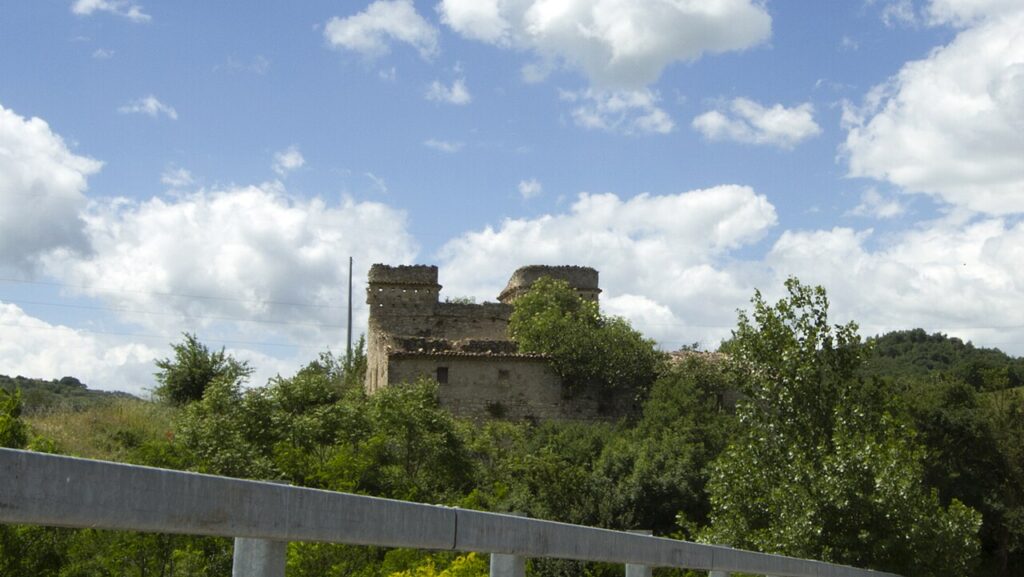
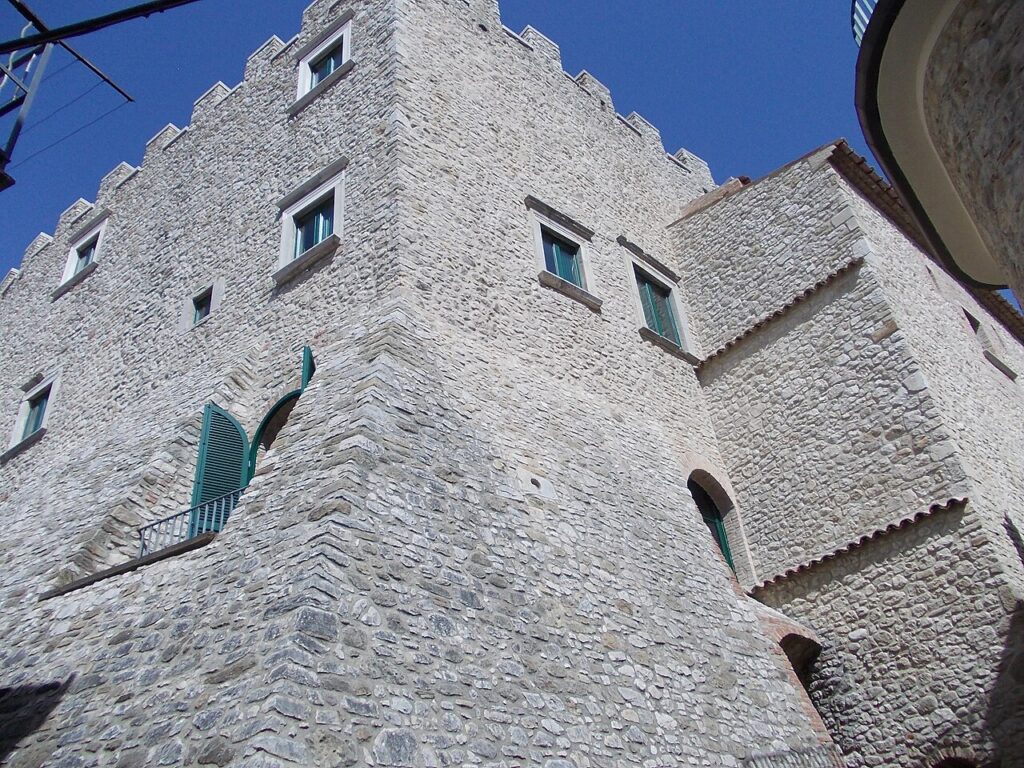
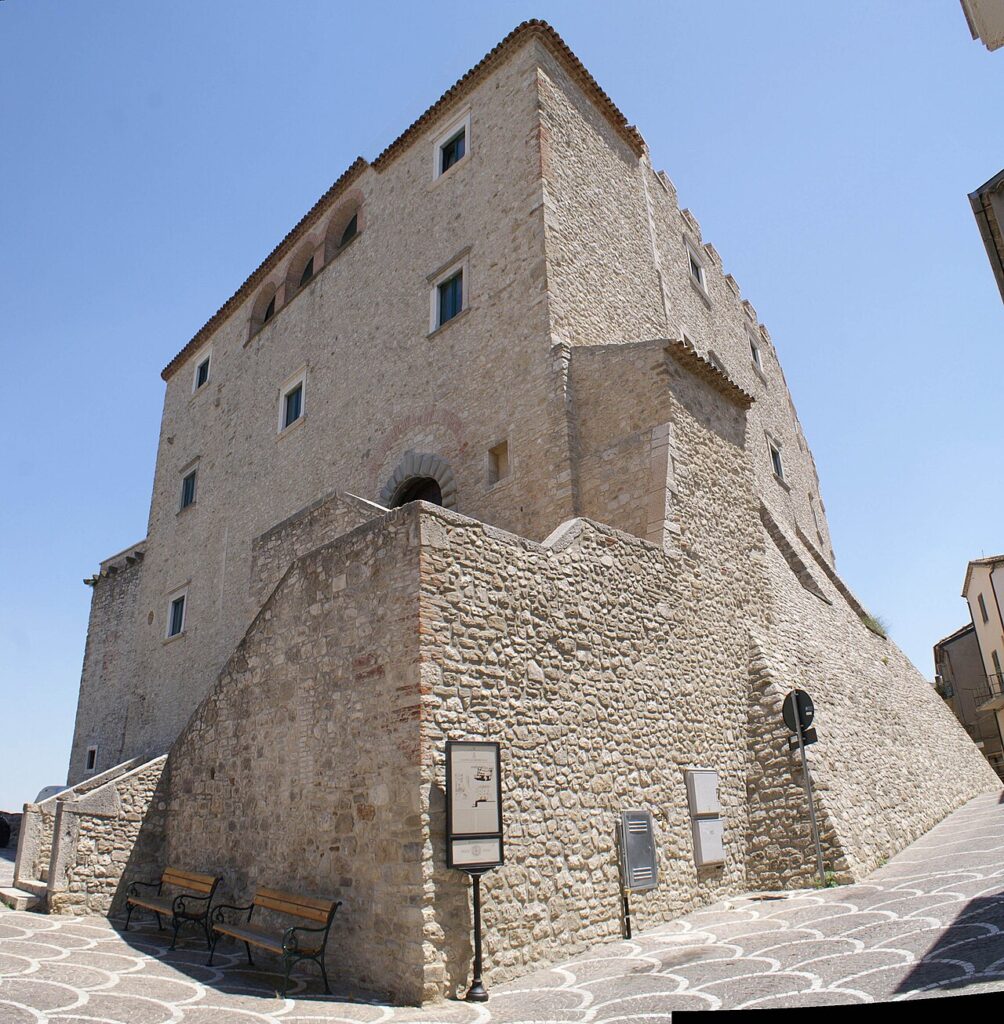
The castle occupies the high ground of Colle Serrone and has passed through several distinct phases. Its original structure is a massive, square medieval fortress, still visible on the south-western side in its Guelph battlements and in the corner towers oriented to the north-east. From the fifteenth and sixteenth centuries, the Di Capua family remodelled the building into a Renaissance palace: the rusticated portal, the windows, and a small loggia with three round arches on the north-western façade all date from this later campaign. The castle subsequently changed hands through various noble families and is now state property.
The interior, following restoration, functions as a picture gallery of frescoes. The cycle was executed in 1550 by Donato da Copertino and his workshop, on commission from Vincenzo I di Capua. The paintings — classified as Mannerist — depict landscapes, grotesques, draperies, pergolas, mythological and allegorical scenes. Among the most notable elements are the allegorical figures of the cardinal virtues. The Castello di Capua is also a staging point on the long-distance walking route Di qui passò Francesco… con le ali ai piedi.
Parish Church of San Bartolomeo Apostolo
Adjacent to the castle, the church of San Bartolomeo — patron saint of the village, celebrated on 24 August — was consecrated on 16 July 1696 by Cardinal Orsini, Archbishop of Benevento, who later became Pope Benedict XIII. The building measures approximately 468 metres in length, 16 in width and 10 in height, with three naves divided by twelve pillars joined by round arches. Its architectural character reflects successive modifications over the centuries rather than a single coherent style, though a broadly Renaissance reading has been noted. The stone portal is surmounted by a triangular pediment resting on corbels, and a date of 1523 on the baptismal font in the presbytery suggests an early sixteenth-century origin for at least part of the fabric. The baptismal font itself is an ample basin on a cylindrical base, decorated with two coats of arms — the municipal arms and those of the De Capua family — with the date 1523 between them. The presbytery also retains a wooden choir of local craftsmanship. On the bell-tower façade, a triptych of three panels depicts the Virgin at centre, flanked by Saint Bartholomew the Apostle and the Agnus Dei.
Church of San Nicola
The church of San Nicola stands outside the historic core and dates in its origins to the fourteenth or fifteenth century, when it was founded under the dedication of San Sebastiano. After a period of Franciscan use and subsequent abandonment, it was restored in the late seventeenth century; on that occasion, Archbishop Orsini arranged for furnishings from an earlier abandoned church of San Nicola al Serrone to be transferred here. The building has a single nave and a façade with a tympanum. It contains several paintings described in the sources as works of considerable quality, though no specific attributions are recorded here.
Food and Wine Around Gambatesa and the Campobasso Hills
Gambatesa sits within a productive agricultural area of the Campobasso province where the most recognised products carry DOP and IGP certification: Caciocavallo Silano DOP, Molise DOP cheese, Salamini italiani alla cacciatora DOP, and Vitellone bianco dell’Appennino Centrale IGP are the benchmarks of the local food economy. None of these is exclusive to the village, but all are firmly rooted in the pastoral and livestock traditions of inland Molise that have shaped this territory for centuries.
The hills around Gambatesa have long been crossed by transhumance routes linking Puglia and Abruzzo, a geography that favoured cattle and sheep rearing and, in turn, the production of aged cheeses and cured meats. Among the regional preparations worth seeking out at local markets and agriturismi are capocollo and a handful of traditional liqueurs — including nocino, amaro molisano and liquore al latte — though these belong to the broader regional repertoire rather than to Gambatesa specifically.
For wine, the reference appellations are Biferno DOC, Tintilia del Molise DOC, and the IGT Osco / Terre degli Osci. Tintilia, an indigenous red grape variety, is increasingly the signature wine of Molise and a reliable choice when dining anywhere in this part of the region.
Getting to Gambatesa and Choosing the Right Season to Visit
Gambatesa is most easily reached by car from Campobasso, roughly 40 km away and approximately 45 minutes by road; from Foggia, in Puglia, the distance is around 70 km, covered in approximately one hour. The village stands at 468 metres above sea level in the inner hill zone of the Campobasso province, a setting that rewards visitors who arrive in late spring or early autumn, when temperatures are mild, the countryside is at its most vivid, and the hilltop castle is seen to best advantage against clear skies.
Summer is dominated locally by the feast of San Bartolomeo Apostolo on 24 August, the village’s patron-saint day and the most animated moment in the annual calendar — a good reason to time a visit to this part of Molise in the third week of August. Winter visits are quieter but perfectly viable for those interested in the castle and the historic centre without the seasonal bustle.
There is no railway station in Gambatesa itself; the nearest rail connections are at Campobasso. Driving remains the most practical option, and the winding provincial roads through the Molise interior are themselves part of the experience. The surrounding area offers further stops worth planning into an itinerary: Riccia, set on a ridge to the south-west, Cercemaggiore to the west, and Campodipietra closer to the provincial capital, all make natural companions on a circuit through the Campobasso hills.
| Departure | Distance | Time |
|---|---|---|
| Campobasso | approx. 35 km | approx. 40 min |
| Cercemaggiore | approx. 20 km | approx. 25 min |
| Riccia | approx. 25 km | approx. 30 min |
| Foggia (accesso autostradale A14) | approx. 90 km | approx. 1 h 15 min |
These practical references help organise the journey clearly, while the village itself is best understood slowly and on foot once you arrive.
Frequently asked questions about Gambatesa
When is the best time to visit Gambatesa?
The most rewarding time to visit Gambatesa is late August, when the village celebrates its patron saint San Bartolomeo Apostolo on 24 August with traditional festivities. Spring and early autumn are ideal for hiking the surrounding hills, as temperatures are mild and the Apennine landscape is at its most scenic. Summer in general keeps the village lively, while winter can be cold and some local services may operate on reduced hours.
How do you get to Gambatesa by car?
By car, Gambatesa is best reached via the A14 Adriatic motorway, exiting at Foggia or San Severo and then heading north-west on state roads through the Molise foothills, or via the SS17 connecting the broader Campobasso area. From Campobasso, the provincial capital, the drive takes roughly 40 to 50 minutes along winding inland roads. There is no direct motorway exit serving the village itself, so a car or motorcycle is strongly recommended for visiting this part of Molise.
Is there a hiking trail passing through Gambatesa?
Yes. The long-distance trail called Di qui passò Francesco… con le ali ai piedi passes through Gambatesa's territory. This pilgrimage-inspired route traces ancient transhumance tracks that historically linked Puglia and Abruzzo through the Apennine foothills of Molise. The trail offers walkers a direct encounter with the pastoral landscapes that shaped the village's identity over centuries. Walkers should carry detailed maps and check local conditions before setting out, as waymarking can vary along lesser-frequented segments.
How long does a visit to Gambatesa typically take?
A focused visit to Gambatesa can be completed comfortably in a half-day, allowing time to explore the medieval village centre and the exterior of the Castello di Capua. If you plan to visit the castle's interior, which houses notable sixteenth-century frescoes, adding a full day is advisable to avoid rushing. Combining the visit with a walk along the local trail network or a meal sampling Molise hill-country cuisine can easily extend the stay to a full day or a relaxed overnight trip.
Are there any curious historical facts about Gambatesa not widely known?
Gambatesa's Castello di Capua contains a remarkable cycle of Renaissance frescoes attributed to the painter Giovanni da Rainaldo, dating from the late fifteenth and early sixteenth century. These works, depicting courtly and allegorical scenes, are considered among the most significant examples of secular fresco painting surviving in Molise. The castle passed through several powerful dynasties — including the Di Capua family, from whom it takes its current name — before eventually becoming state property, preserving these frescoes for public heritage.
📷 Photo Gallery — Gambatesa
In Molise More villages to discover
Vinchiaturo
 Mountain
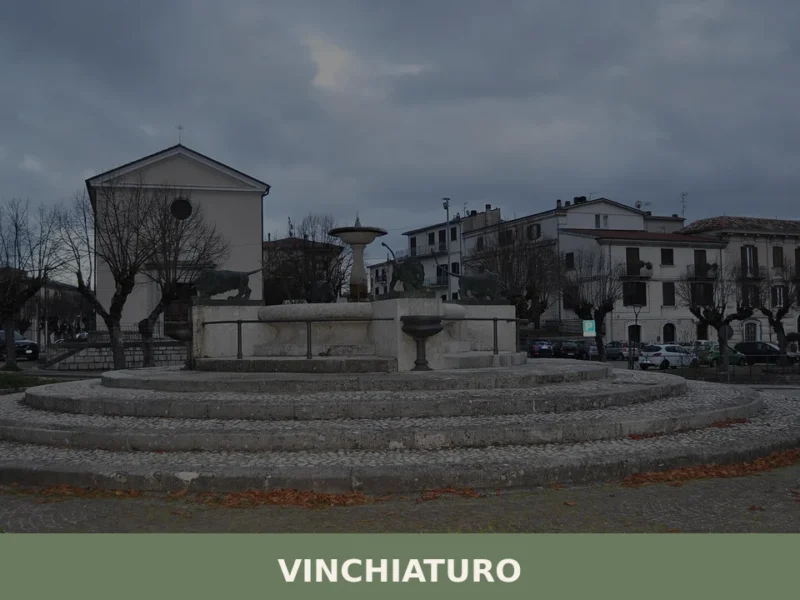
Morning mist settles into the valley below as church bells mark the hour from somewhere above the rooftops. At 620 metres above sea level, the air in Vinchiaturo carries a sharpness that cuts through the warmth of Molise’s interior hills. With just over 3,300 inhabitants, this is a village where the rhythm of daily life […]
Campobasso
Mountain
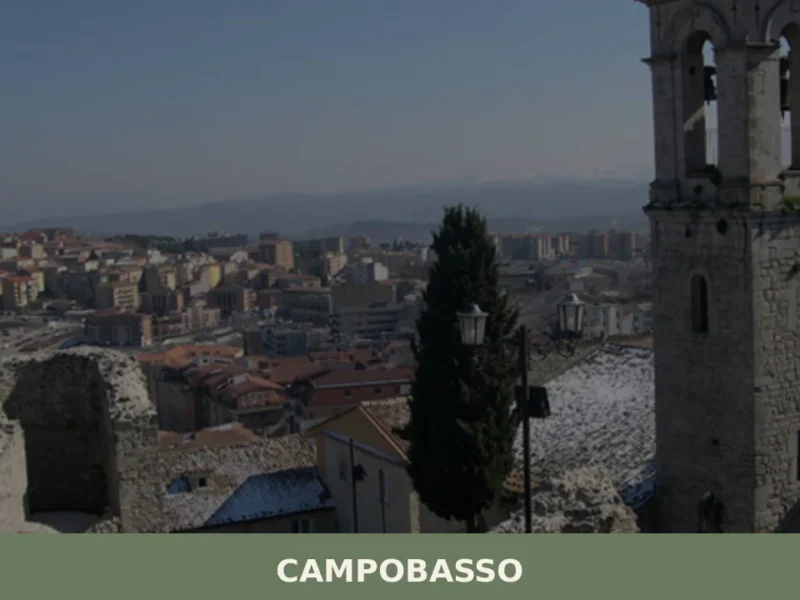
Campobasso is the regional capital of Molise, a city of around 47,547 residents at roughly 708 metres above sea level, where a medieval hilltop castle, Samnite archaeological collections and a vivid c
Bagnoli del Trigno
Mountain
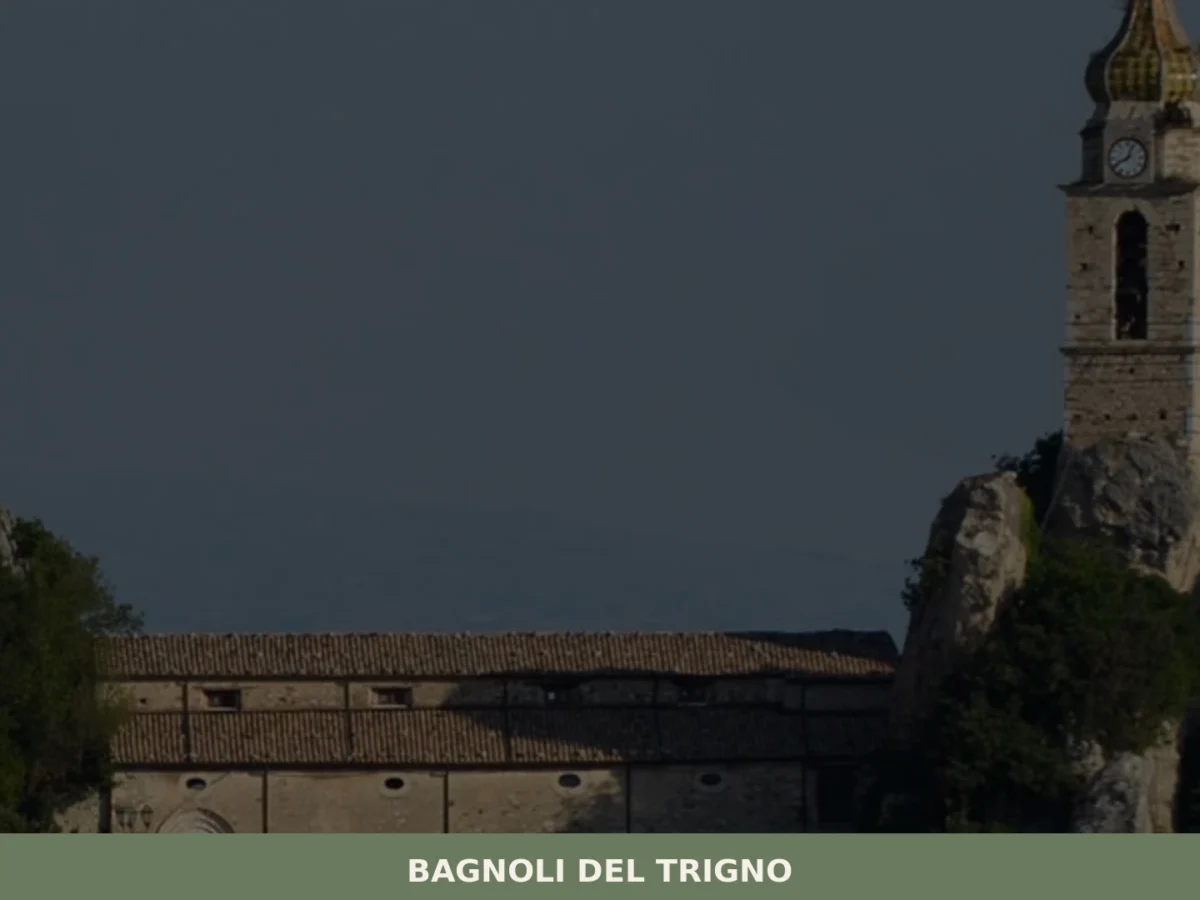
Discover what to see in Bagnoli del Trigno: medieval streets, parish churches, Trigno valley landscapes and upland food traditions in the Province of Isernia, Molise.
Molise
Mountain
Molise is Italy's youngest and least-visited region. From Samnite theatres to Adriatic fishing towns, here is what to see in Molise.
Civitanova del Sannio
Mountain
Civitanova del Sannio is a mountain commune of 874 inhabitants in the province of Isernia, Molise, with a documented history spanning from the tenth century through a rich succession of feudal lordshi
Colletorto
 Hills
Hills
Colletorto is a hilltop comune of 1,629 inhabitants in the province of Campobasso, Molise, first recorded in 1241 and centred on the 25-metre Torre Angioina with panoramic views stretching to the Adri
Civitacampomarano
Mountain
Civitacampomarano is a hilltop comune in the province of Campobasso, Molise, whose sandstone ridge, medieval castle and twelve centuries of recorded history make it one of the region's most quietly co
Casacalenda
Mountain
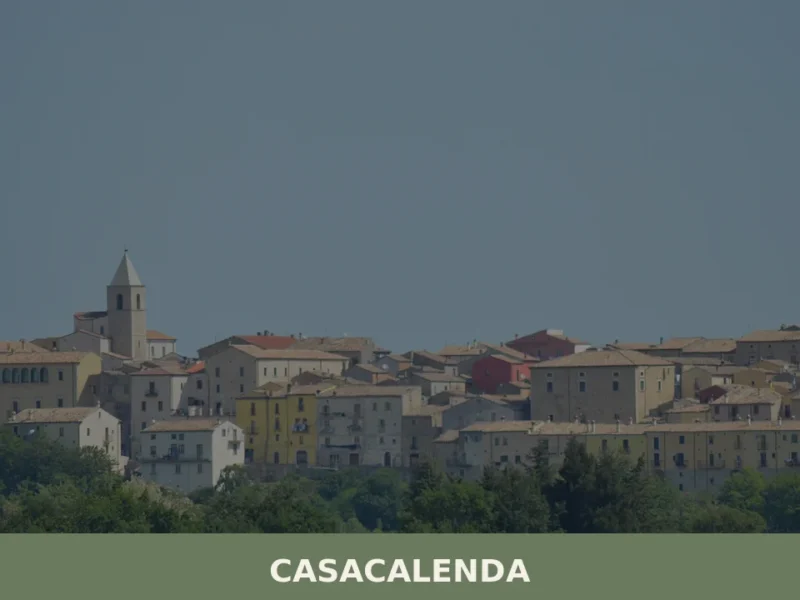
Morning light hits the limestone facades along Corso Roma and the sound is not silence but something close — a dog barking two streets away, the clatter of a shutter being folded back, the low idle of a Fiat Panda parked outside the only bar open before eight. Casacalenda sits at 631 metres above sea […]
Campomarino
 Sea
Sea
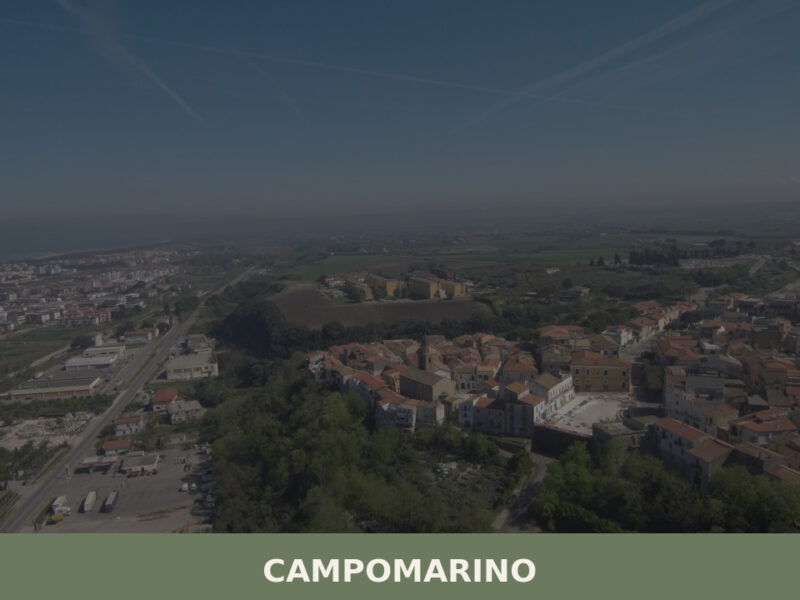
Campomarino straddles a Molise hilltop and the Adriatic shore. Explore its Arbëreshë heritage, three historic churches, and the unspoiled coast of Campomarino Lido.
Busso
Mountain
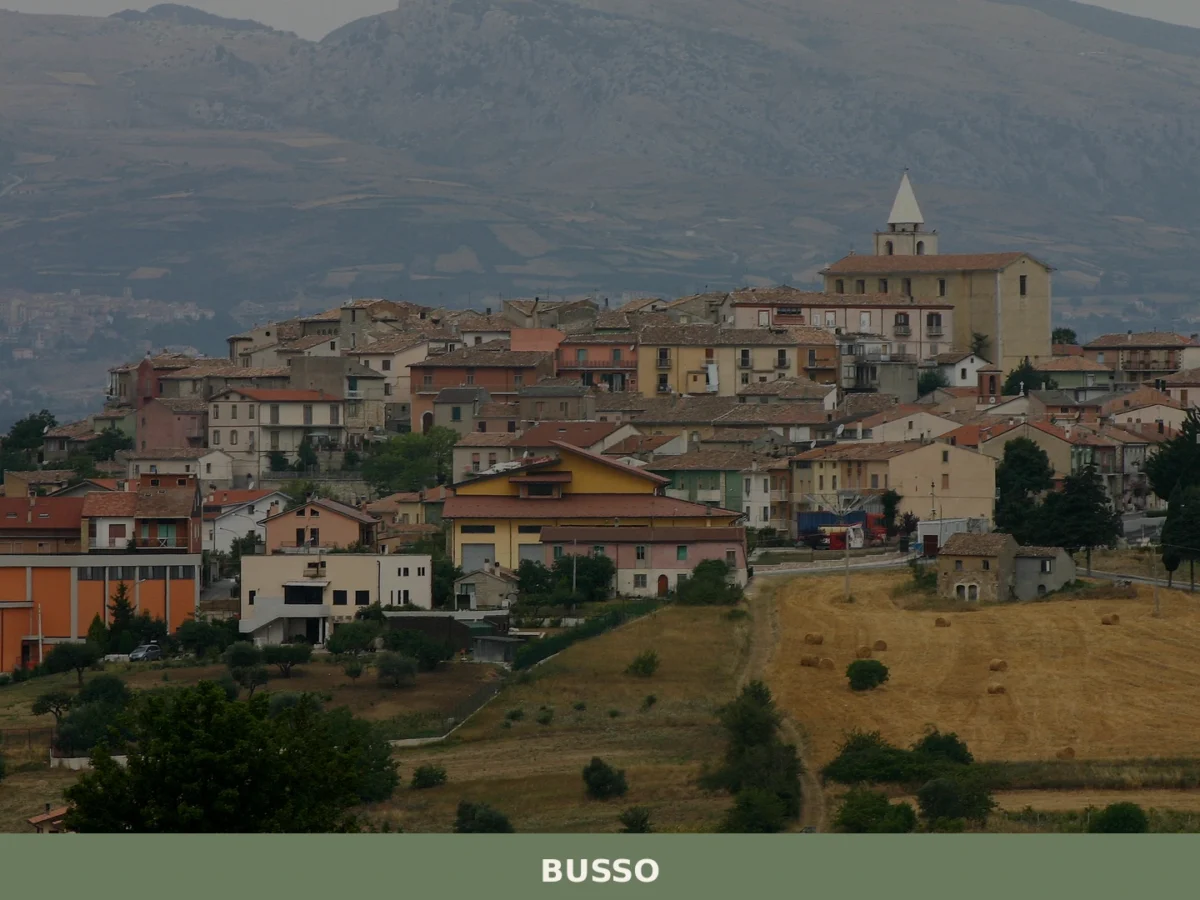
What to see in Busso, Molise, Italy: explore 5 top attractions 10 km from Campobasso. Discover local food, festivals and how to get there. Complete travel guide.

🏡 Know Gambatesa better than we do?
If you’re a local or have been there, your knowledge matters: add what’s missing or fix a detail on this page.