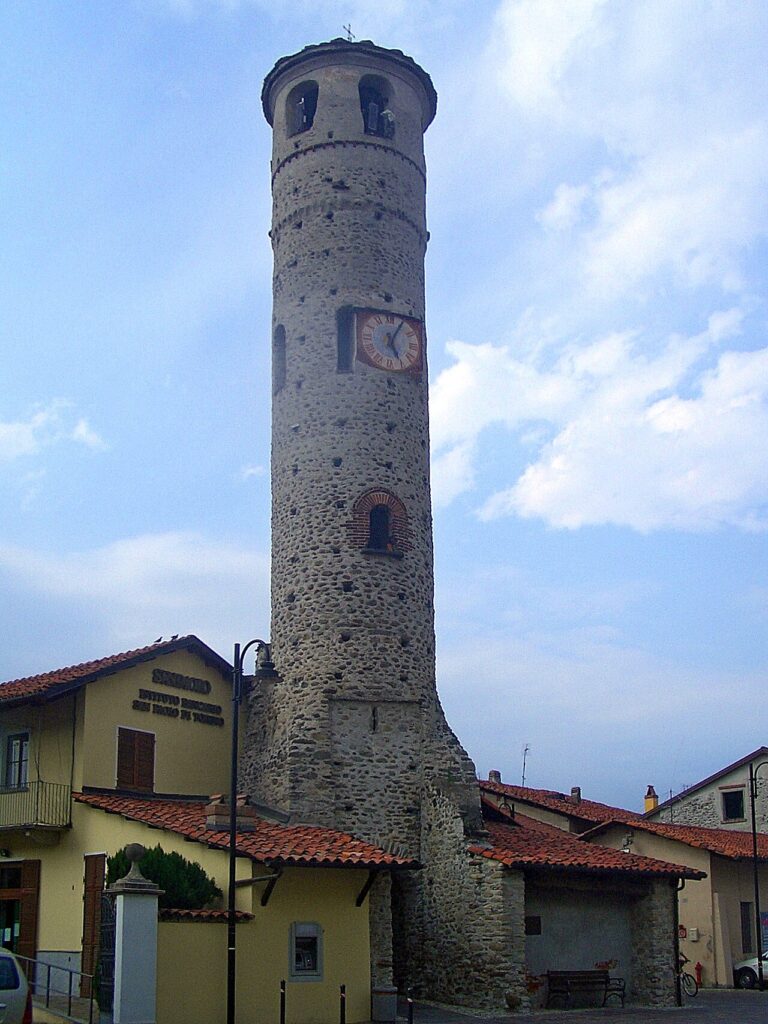
The cylindrical shaft of the torre-porta rises 24 metres above the modest rooflines of Salassa, its body knitted from rounded river stones that catch afternoon light. This is not a grand keep or a noble fortress: it is the architectural signature of a working village in the Canavese, a region where defensive towers took different forms than their Tuscan or Alpine cousins. When you enter the comune, you arrive not at a monument but at a genuine inhabited place where the medieval core still anchors daily life.
Salassa village in Piedmont sits at 349 metres above sea level in the Turin metropolitan area, a comune in the Turin metropolitan area. Two concrete reasons draw visitors: the tower-gate and the adjoining ricetto (fortified enclosure) both surviving from the 13th century, and a working rail connection to Turin that transforms the village into a real node in the metropolitan rhythm rather than a postcard destination.
Medieval Foundations and the River-Stone Tower
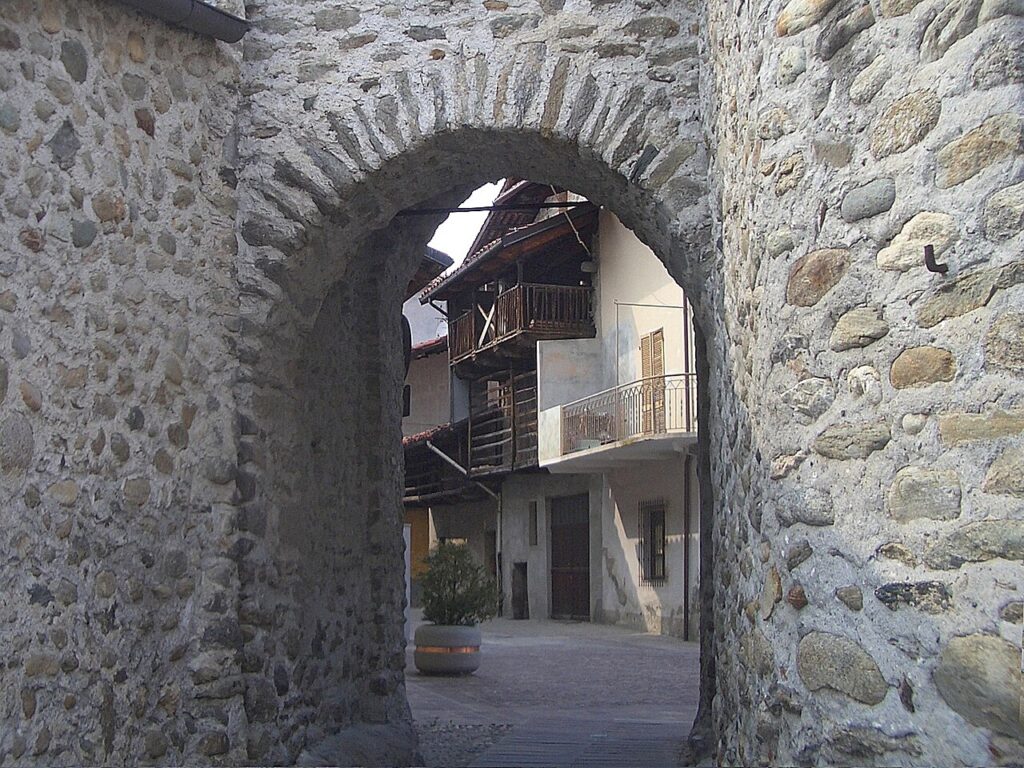
The tower and ricetto belong to the 13th century, when small communes in the Canavese valley began to consolidate their defences. The torre-porta stands as a structural statement: cylindrical on a rectangular base, built entirely from river cobbles quarried and shaped locally. This geometric choice—a round tower on a squared foundation—distinguishes the building within the region. The 24-metre height allowed defenders to command the approach roads while the cylindrical form distributed pressure and made the structure harder to undermine. No architect is documented, no patron named in available sources; the tower speaks for itself through its materials and proportions.
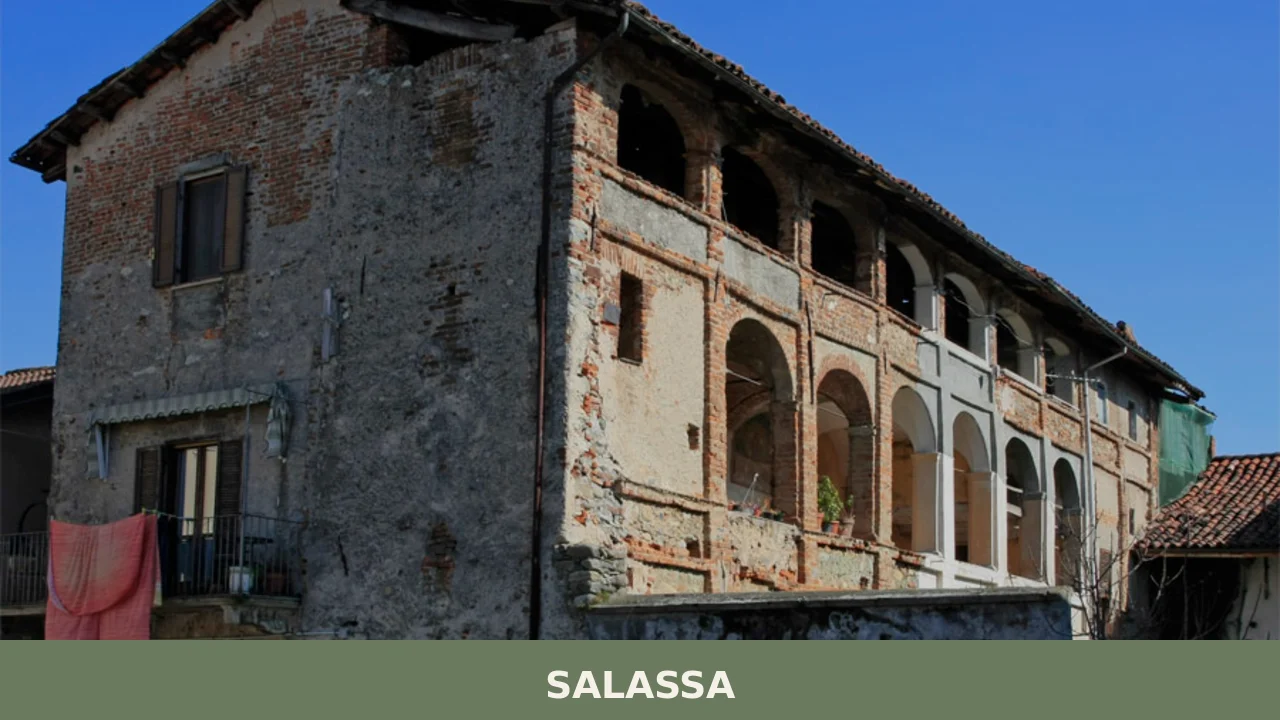
The ricetto, or fortified commons ground, occupies the space immediately adjacent. These enclosures typically sheltered livestock, grain stores and the civilian population during raids. The walls remain visible, their construction and repair layers recording centuries of maintenance rather than a single building campaign. The ricetto and tower formed an integrated defensive system, practical rather than luxurious—a comune’s defence against the changing conditions of the Canavese valley.
Sacred and Civic Life
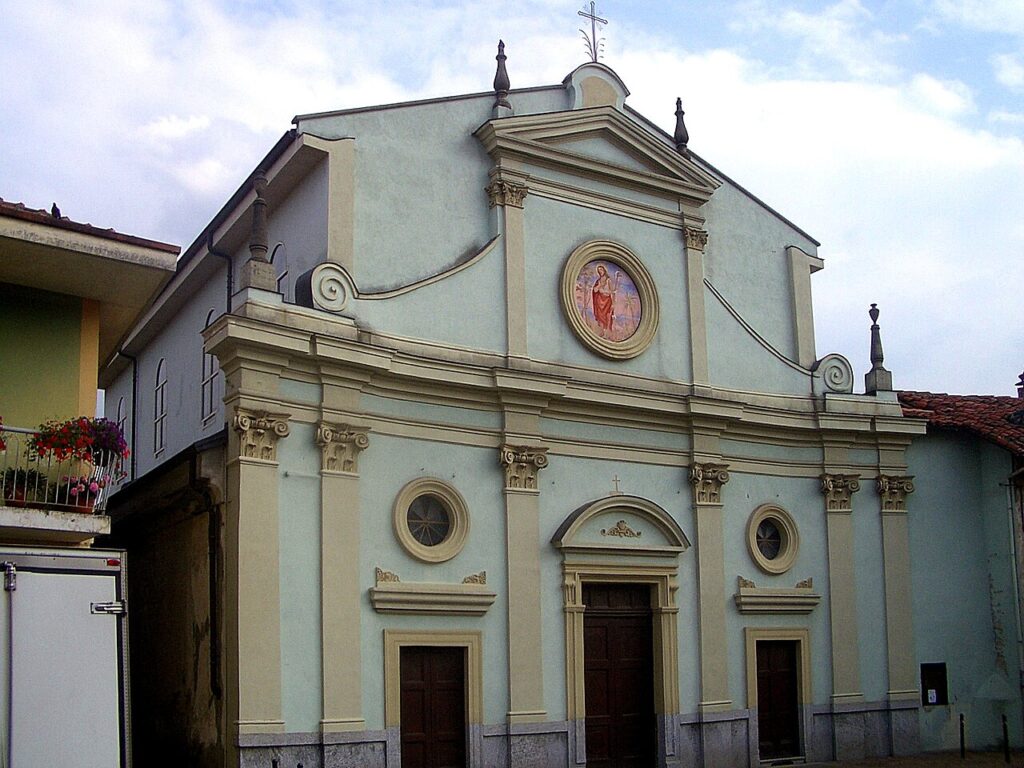
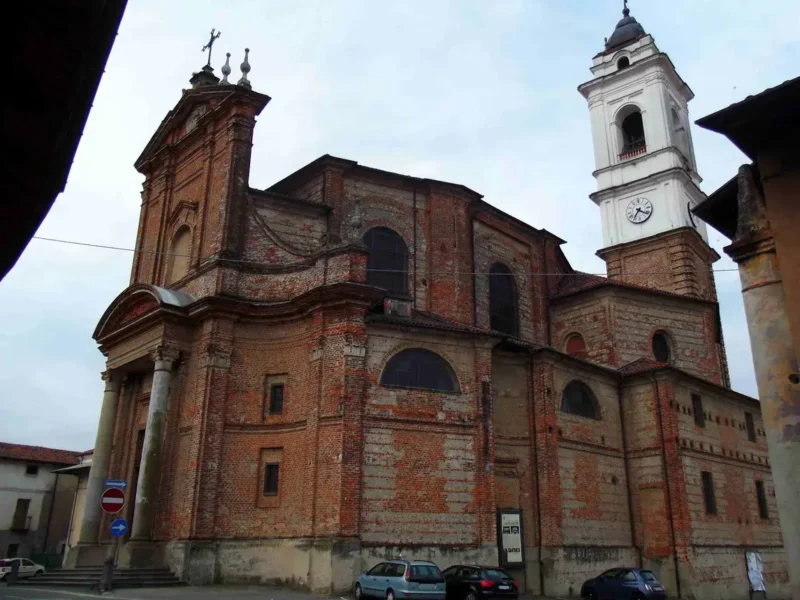
Parrocchiale di San Giovanni Battista
The parish church of San Giovanni Battista, the patron saint honoured each 24 June, combines late-Baroque and Neoclassical elements across its fabric. This architectural blending reflects the 18th and 19th centuries, when Piedmontese religious buildings often integrated older foundations with newer stylistic vocabulary. The church remains the spiritual centre of the village, its interior proportions and decoration marking it as a place of active parish use rather than a pilgrimage destination.
Station of Salassa and Modern Connectivity
The Stazione di Salassa sits along the Canavesana railway line, part of Turin’s metropolitan rail system. Operated by GTT under a service contract with the Piedmont Region, it runs as Line 1 of the metropolitan network, linking Salassa directly to the city. Between 1883 and 1906, a tramway from Rivarolo to Cuorgnè also served the village, making it a minor hub in Piedmontese transport. Today the station remains functional, allowing residents and visitors to move fluidly between village and urban centre without a car.
Canavese Flavours and Local Products
The Canavese region and Turin province shelter a broad range of protected food products: Nocciola Piemonte (Piedmont hazelnut, IGP), Toma Piemontese (a versatile cheese, DOP), and Salame Piemonte (cured meat with protected status). While Salassa itself has no named speciality in the official registers, its location within this productive zone means local tables draw from these regional staples. The village sits at the confluence of valley agriculture, from grain and meadow to fruit orchards—the agricultural foundation of the region’s food identity.
Visitors exploring Salassa often venture into neighbouring comuni for dedicated food experiences, but the village itself anchors you in the everyday rhythm of Canavese eating: bread from local bakers, cheese and cured meats from provincial suppliers, and seasonal produce from the valley markets.
Season, Access and Planning Your Visit
Salassa is accessible year-round. Spring (April–May) brings mild weather and blooming meadows in the surrounding valley; autumn (September–October) offers clear skies and reduced summer crowds. Winter can be grey but rarely harsh at 349 metres altitude. Summer heat is moderate, making walking pleasant even in July.
| Departure Point | Distance | Approximate Travel Time |
|---|---|---|
| Turin city centre (Porta Nuova) | Approximately 35–40 km | Approximately 45 minutes by the Turin metropolitan railway |
| Turin Caselle Airport | Distance to Turin Caselle Airport | Approximately 1–1.5 hours by bus or car, then local transport |
| Ivrea town centre | Distance varies | Approximately 20–30 minutes by car |
By train, board Line 1 of the Turin metropolitan railway at any station in the city; the journey is simple and frequent. By car, you can reach Salassa via the valley roads that connect Turin to Ivrea, though the train removes parking concerns and integrates you into the regional transport culture. Allow 2–3 hours to walk through the old core, view the tower from multiple angles, and visit the church. If you explore neighbouring comuni in the Canavese—such as Busano or Agliè—plan a half-day or full day regionally.
The village has modest accommodation options; many visitors stay in Turin or larger Canavese centres and day-trip to Salassa. There are no car parks dedicated to tourists, but street parking near the core is usually available. Bring comfortable walking shoes: the old streets are uneven, and exploring the surrounding meadows and minor hamlets rewards a slower pace.
Visit the official Salassa municipal website for current opening hours of the church and any seasonal events. The patronal feast of San Giovanni Battista on 24 June often draws larger crowds and may include local traditions worth timing your visit around.

 Mountain