


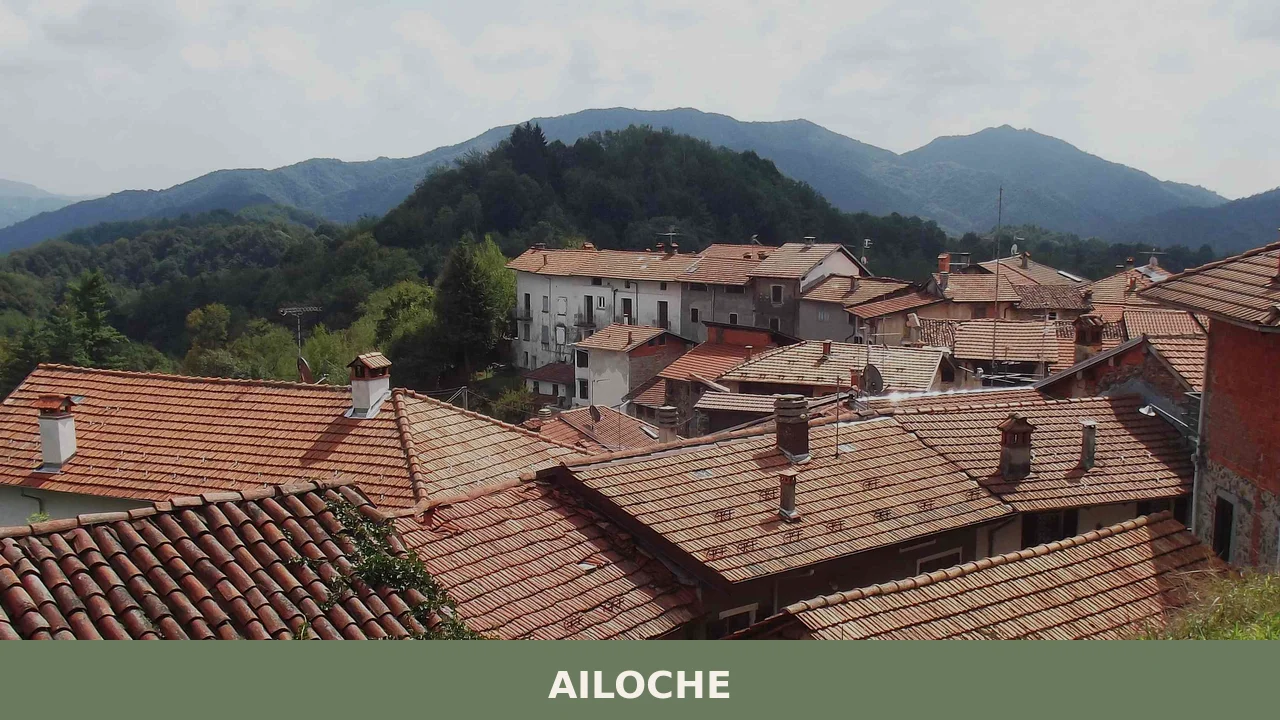
Ailoche
 Mountain
What to see in Ailoche, Italy: discover the Santuario della Brugarola, local food traditions, and a village 70 km from Turin. Explore the full guide.
Discover Ailoche
The hills of the Biella area carry a particular quality of silence in the early morning — the kind that settles between beech forest and valley floor, broken only by the bells of a small sanctuary whose stone walls have absorbed decades of rain and frost. Ailoche occupies a patch of upland Piedmont where the land between Caprile, Coggiola, and Crevacuore folds into a series of ridges, each one slightly higher than the last, channelling meltwater down toward the Sessera valley below.
For anyone researching what to see in Ailoche, the answer begins with its hilltop sanctuary and extends to the surrounding landscape that defines this corner of the Province of Biella.
The village sits about 70 km (43 mi) northeast of Turin and approximately 14 km (9 mi) northwest of Biella itself. Visitors to Ailoche find a compact comune where the Santuario della Brugarola draws the most consistent attention, while the network of bordering municipalities — Caprile, Coggiola, Crevacuore, Guardabosone, and Postua — provides a broader itinerary for those spending more than a single afternoon in the area.
History of Ailoche
Ailoche belongs to a cluster of small comuni in the upper Biella province whose formation follows the pattern common to much of rural Piedmont: gradual consolidation around a defensible position, a parish church at the centre, and agriculture — primarily small-scale livestock and cereal farming — as the economic foundation. The municipality sits within the Italian region of Piedmont, administratively part of the Province of Biella, a territory that was carved out of the larger Province of Vercelli only in 1992, giving Ailoche a relatively recent formal provincial identity even as the settlement itself is considerably older.
The village’s position — flanked by Coggiola to the east and Crevacuore to the south — placed it within a zone historically subject to the influence of the local feudal powers that controlled the broader Valsessera area during the medieval and early modern periods.
The Biella territory as a whole passed through the hands of various northern Italian ruling dynasties before consolidating under the House of Savoy, a trajectory shared by all the comuni of this part of Piedmont. Communities like Ailoche served as small agricultural nodes within that broader political geography, their identity shaped by parish boundaries and the rhythms of the agricultural calendar rather than by any single dramatic event. Nearby villages in the Piemonte region followed comparable paths; Ala di Stura, another mountain comune of Piedmont, developed along similar lines of upland settlement tied to Savoy administrative structures.
The most durable historical mark on Ailoche’s landscape is the Santuario della Brugarola, whose construction reflects a widespread practice across the Piedmontese hills of siting Marian sanctuaries at elevated or marginal positions — places that were already associated with local devotion before receiving a formal ecclesiastical structure. Sanctuaries of this type in the Biella area frequently predate their current architectural form by several centuries, with popular cult preceding official church recognition. The comune itself, as an administrative unit, acquired its present boundaries through the same processes of post-unification rationalization that affected all of northern Italy after 1861, when the new Italian state reorganized local government across the peninsula.
What to see in Ailoche, Piemonte: top attractions
Santuario della Brugarola
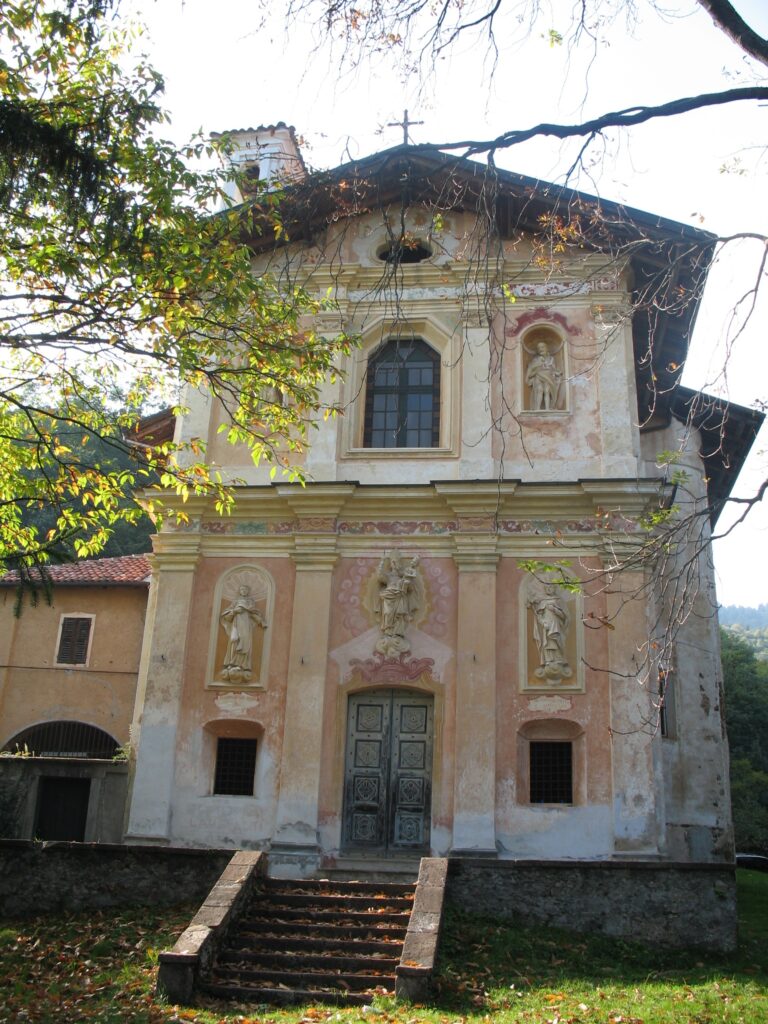
The Santuario della Brugarola stands as the principal documented sight in Ailoche, a religious structure set within the forested upland terrain that characterises the area between the Sessera and Strona valleys.
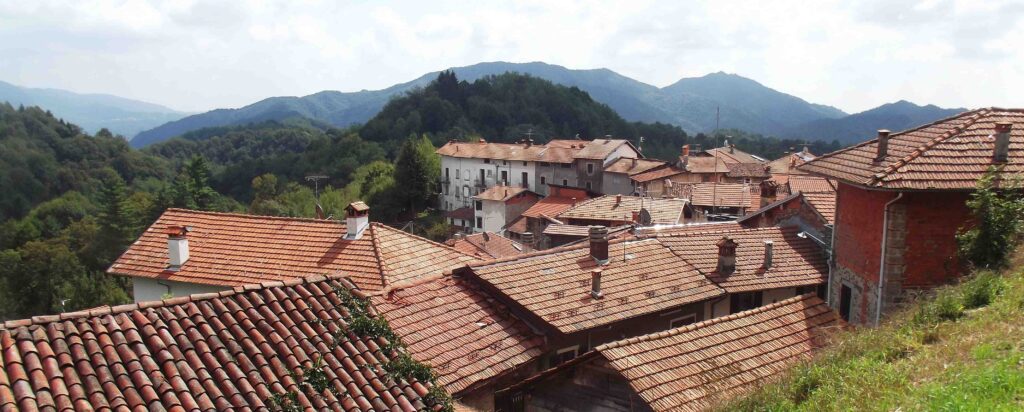
Stone-built and positioned at an elevated point relative to the village centre, the sanctuary follows the Piedmontese tradition of placing Marian devotional buildings at sites removed from the main settlement — a spatial logic that combined landscape symbolism with practical separation from daily village life. The building draws pilgrims and visitors from the surrounding comuni, particularly during the periods of religious observance that mark the local calendar. Those approaching on foot from the village gain a clear sense of the topography that makes Ailoche’s position legible: forested slopes, open pasture at the ridge, and long views across the Biella hills.
The Municipal Territory and Boundary Villages
Ailoche borders five neighbouring municipalities — Caprile, Coggiola, Crevacuore, Guardabosone, and Postua — and the territory itself constitutes an attraction for visitors interested in the upland Biella landscape rather than a single monument. The comune lies roughly 14 km (9 mi) northwest of Biella city, a distance that places it within a genuine hill-country zone where road gradients increase noticeably and the vegetation shifts from the planted lines of the valley floor to denser mixed woodland.
Walking the boundary between Ailoche and Coggiola, for instance, involves crossing terrain that retains the character of working agricultural and forestry land, with open clearings alternating with beech and chestnut cover. This is not an organised trail network in the Alpine sense, but a landscape that rewards methodical exploration on foot or by bicycle.
The Village Core and Parish Church
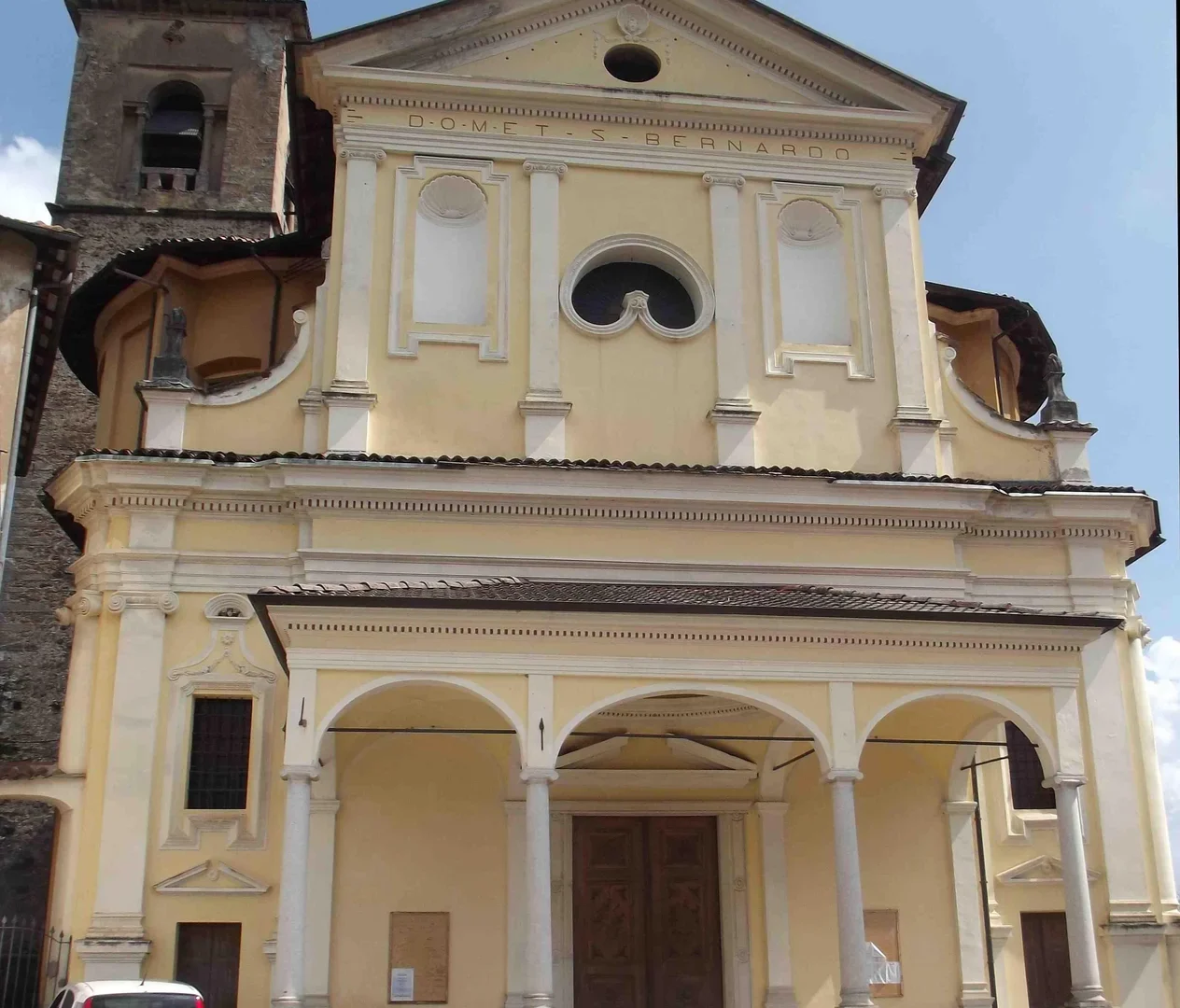
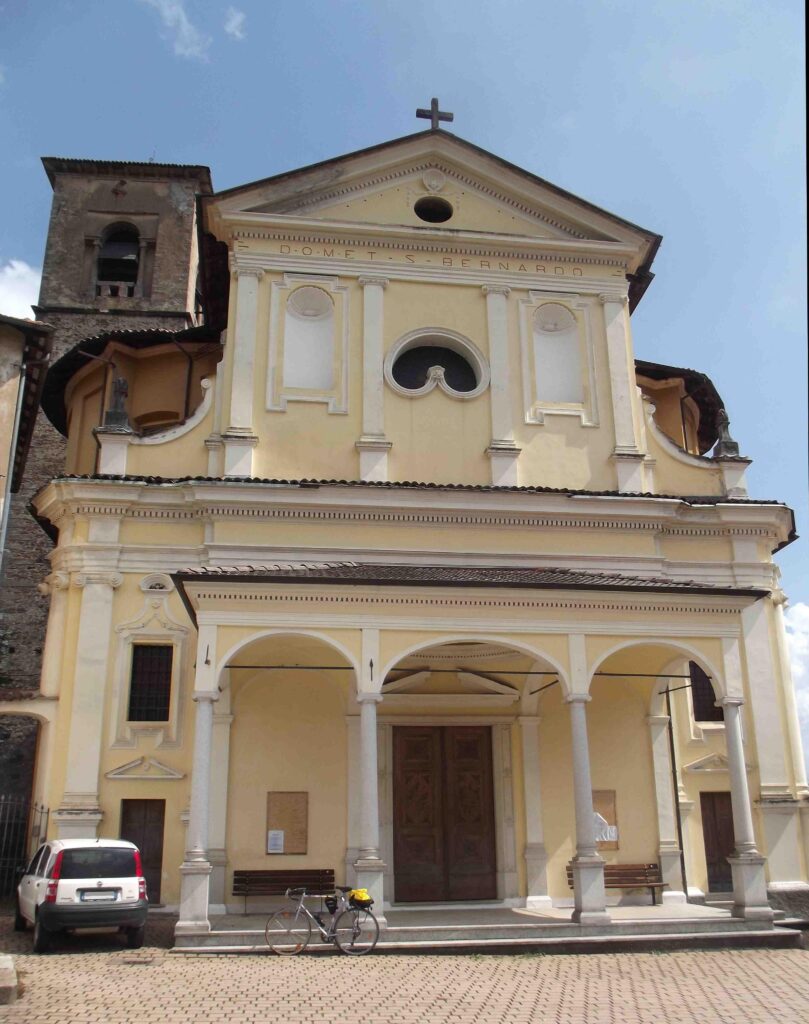
Like most Piedmontese hill comuni, Ailoche organises itself around a parish church at the highest navigable point of the settlement, with houses descending along the access roads. The built fabric is modest in scale — stone construction typical of the Biella hills, with rendered facades in ochre and pale grey that absorb rather than reflect the low winter light. The parish church, as the functional centre of the comune for centuries, holds the records and material culture of the community’s religious life. Visiting during a weekday morning offers the clearest view of the architecture without the movement of vehicles on the narrow access lanes.
The surrounding streets, though short, give a reliable cross-section of vernacular domestic building in this part of Piedmont.
The Surrounding Valsessera Landscape
The Sessera river valley, which defines the broader geographic context for Ailoche and its neighbours, runs roughly northeast to southwest through the Biella uplands. From elevated points within Ailoche’s territory, the descent toward the valley floor covers a significant change in elevation — the hills in this area rise well above 600 m (1,969 ft) before dropping toward the valley bottom. The landscape supported mixed farming and textile-related activities historically, given that the Biella province is Italy’s most documented wool and textile production zone, with the river systems of the area once powering small mills. Evidence of that industrial history is still readable in the valley below Ailoche, where older mill structures survive along the watercourses between Coggiola and Crevacuore.
Day Excursions from Ailoche into the Biella Hills
Ailoche sits at a point in the Biella hill system that makes it a practical base for reaching several neighbouring comuni within a short drive. The 14 km (9 mi) to Biella city can be covered in under 30 minutes by car, and the road southwest toward Crevacuore takes no more than 10 minutes. For visitors who want to understand what to see in Ailoche in relation to its neighbours, the route through Guardabosone — a small comune of documented medieval character — adds a second stop to a half-day circuit.
The total driving loop from Biella through Ailoche, Coggiola, and back covers approximately 40 km (25 mi) on provincial roads, giving a representative sample of the upper Biella hill country.
Local food and typical products of Ailoche
The food culture of the Ailoche area belongs to the broader gastronomic tradition of upland Biella and the Valsessera, a zone where the cuisine reflects the practical constraints of hill farming: preserved meats, polenta made from locally grown maize, and dairy products from cattle and sheep kept on the higher pastures. The Biella province as a whole sits within Piedmont, a region whose food culture is extensively documented and regionally distinct — characterized by the use of butter rather than olive oil, by rice and polenta as primary starches, and by a strong tradition of cured pork products. At the village level in comuni like Ailoche, these traditions are reproduced in domestic kitchens and in the occasional sagra, a traditional local food festival, rather than in a commercial restaurant offer.
Among the dishes associated with this part of Biella, polenta concia — polenta worked with local butter and cheese until it becomes dense and cohesive — represents the most direct expression of upland hill cooking. The technique requires slow stirring over an open fire or heavy-based pot, with the fat content determining the final texture: properly made, it holds a spoon upright. Toma piemontese, a semi-hard cow’s milk cheese produced across the Piedmont hill and mountain areas, appears in this dish and is also eaten on its own, aged to varying degrees of sharpness.
Local cured meats, including salumi made from pork reared in the valley farms, accompany these dishes in the traditional meal structure, where antipasto precedes a single substantial primo.
No certified products with a designated origin label (DOP or IGP) are recorded specifically for the comune of Ailoche in the available sources. The broader Piedmont region holds numerous designations — for wines, cheeses, and truffles — but their production zones do not extend into this specific part of the Biella uplands as documented here. Visitors seeking certified Piedmontese products will find them most reliably in the markets and specialist shops of Biella city, 14 km (9 mi) to the southeast, where producers from across the province supply the weekly market.
The most reliable opportunity to encounter local food production in a village context is during the summer and early autumn period, when the comuni of the Valsessera area organise outdoor food events tied to the harvest calendar. These are informal by national standards — a single square, communal tables, and dishes prepared by local associations — but they represent the most direct access to the food practices of the area for visitors who time their trip accordingly.
Festivals, events and traditions of Ailoche
The Santuario della Brugarola is the focal point of Ailoche’s most significant recurring religious observance.
Marian sanctuaries in Piedmont traditionally draw their largest attendance on the feast days associated with the Virgin Mary — particularly the Assumption on 15 August and the Nativity of Mary on 8 September — and the Brugarola sanctuary follows this pattern. The pilgrimage on these dates involves residents of Ailoche and visitors from the bordering comuni of Caprile, Coggiola, Crevacuore, Guardabosone, and Postua, creating a gathering that reinforces the social bonds between the clustered hill settlements. The walk to the sanctuary on foot, rather than by vehicle, remains part of the observance for a portion of participants.
Beyond the Marian feast days, Ailoche shares in the broader calendar of the Biella uplands, where the period from late June through September concentrates most outdoor communal activity. The cooler temperatures at altitude make the summer months the natural season for outdoor gatherings. Local associations, as in most Piedmontese comuni of this size, organise food events and civic celebrations that are announced locally and do not yet have the structured tourism infrastructure of larger centres. International visitors planning specifically around a festival should confirm event dates with the comune directly or through the Biella tourism office before travelling.
When to visit Ailoche, Italy and how to get there
The best time to visit Ailoche, Italy falls between late May and early October.
During this window, the roads through the Biella hills are clear of winter hazards, the forested slopes around the sanctuary are fully leafed, and the daylight hours are long enough for a comfortable half-day or full-day excursion. August brings the largest number of Piedmontese residents into the hill areas as part of the regional summer migration away from the plains, which means the Brugarola sanctuary sees its highest attendance in mid-August. For those who prefer quieter conditions, late May, June, and the first two weeks of September offer comparable weather with considerably less traffic on the provincial roads. Winter visits are feasible for those accustomed to hill driving — the roads can ice between November and March — but the sanctuary may be inaccessible by vehicle in heavy snowfall.
Ailoche lies approximately 70 km (43 mi) northeast of Turin, making it a realistic day trip from that city by car. The most direct route from Turin runs via the A4 or A26 motorways in the direction of Biella, with the final approach on provincial roads through the Biella hill system. From Biella city, the drive to Ailoche covers approximately 14 km (9 mi) on road SP100 and connecting provincial roads, taking around 25 to 30 minutes depending on road conditions.
The nearest railway station with regular services from Turin is Biella San Paolo, served by regional trains on the Turin–Biella line; from the station, the onward journey to Ailoche requires a private vehicle or taxi, as no direct public bus service to the comune is documented. The nearest international airport is Turin Caselle Airport (TRN), approximately 80 km (50 mi) from Ailoche by road. International visitors should be aware that English is not widely spoken in shops and smaller establishments in this part of Piedmont, and carrying euro cash is advisable, as card payment infrastructure in small hill comuni is not guaranteed.
Those arriving from Milan can reach Biella in approximately 1 hour 20 minutes by regional train via Santhià, with the same onward car transfer to Ailoche applying. The village itself does not have a dedicated car park but the roads through the settlement are wide enough for parking along the verges in most conditions. If you arrive by car from the Biella direction, the road climbs steadily for the final 5 km (3 mi), and the approach gives a clear view of the forested ridge above the village before the settlement comes into view.
Visitors exploring what to see in Ailoche as part of a broader Biella hill circuit may also want to consider stopping at Azeglio, another Piedmontese comune with a comparable rural character, as part of a multi-stop itinerary through the region.
Those who prefer to combine their trip with visits to other Piedmontese villages can extend their route to include Casalborgone, a village in the Chieri area that illustrates a different facet of Piedmontese hill settlement, or Castagnole Piemonte, set in the lower Po plain south of Turin and offering a contrast in landscape and food tradition to the upland Biella zone explored on a visit to Ailoche.
Frequently asked questions about Ailoche
How far is Ailoche from Turin and how do I get there by car?
Ailoche is approximately 70 kilometres (43 miles) northeast of Turin. The journey typically takes 60–90 minutes by car depending on traffic and exact starting point. From Turin, head toward the Province of Biella via the A4 or regional roads. The village sits about 14 kilometres northwest of Biella town itself. GPS coordinates and local signage from Biella make final navigation straightforward for drivers unfamiliar with the area.
What is the patron saint of Ailoche and when is the feast celebrated?
San Bernardo di Mentone (Saint Bernard of Menthon) is the patron saint of Ailoche. His feast day is celebrated on August 15th. Saint Bernard is traditionally venerated in Alpine communities as a protector of mountaineers and travelers. The celebration in Ailoche typically includes local religious observances and community gatherings that reflect the village's mountain heritage and spiritual traditions.
What are the best months to visit Ailoche?
Late spring through early autumn (May–September) offers the most pleasant conditions for exploring Ailoche and surrounding hills. Summer months provide stable weather for outdoor activities and hiking in the Sessera valley region. August coincides with the patron saint's feast, attracting visitors to local celebrations. Autumn brings cooler temperatures and dramatic beech forest colours, though afternoon fog can settle in valleys during shoulder seasons.
Is there public transport to Ailoche from Biella?
Biella is the nearest significant town, approximately 14 kilometres away, with a railway station on regional lines. Local bus services connect Biella to smaller comuni in the upper province, though schedules and routes require verification with local transit authorities or the Province of Biella. Direct daily service to Ailoche itself is limited; many visitors travel by private car or arrange local transport from Biella town.
How long should I plan to spend visiting Ailoche?
A focused visit to Ailoche's main attraction—the Santuario della Brugarola and immediate surroundings—typically requires 2–3 hours. For deeper exploration of the landscape, hiking nearby ridges, and visiting neighbouring comuni (Caprile, Coggiola, Crevacuore, Guardabosone, Postua), plan a full day or overnight stay. The village's compact size suits day trips from Biella as part of a broader Piedmont itinerary.
📷 Photo Gallery — Ailoche
In Piedmont More villages to discover
San Sebastiano da Po
 Hills
Hills
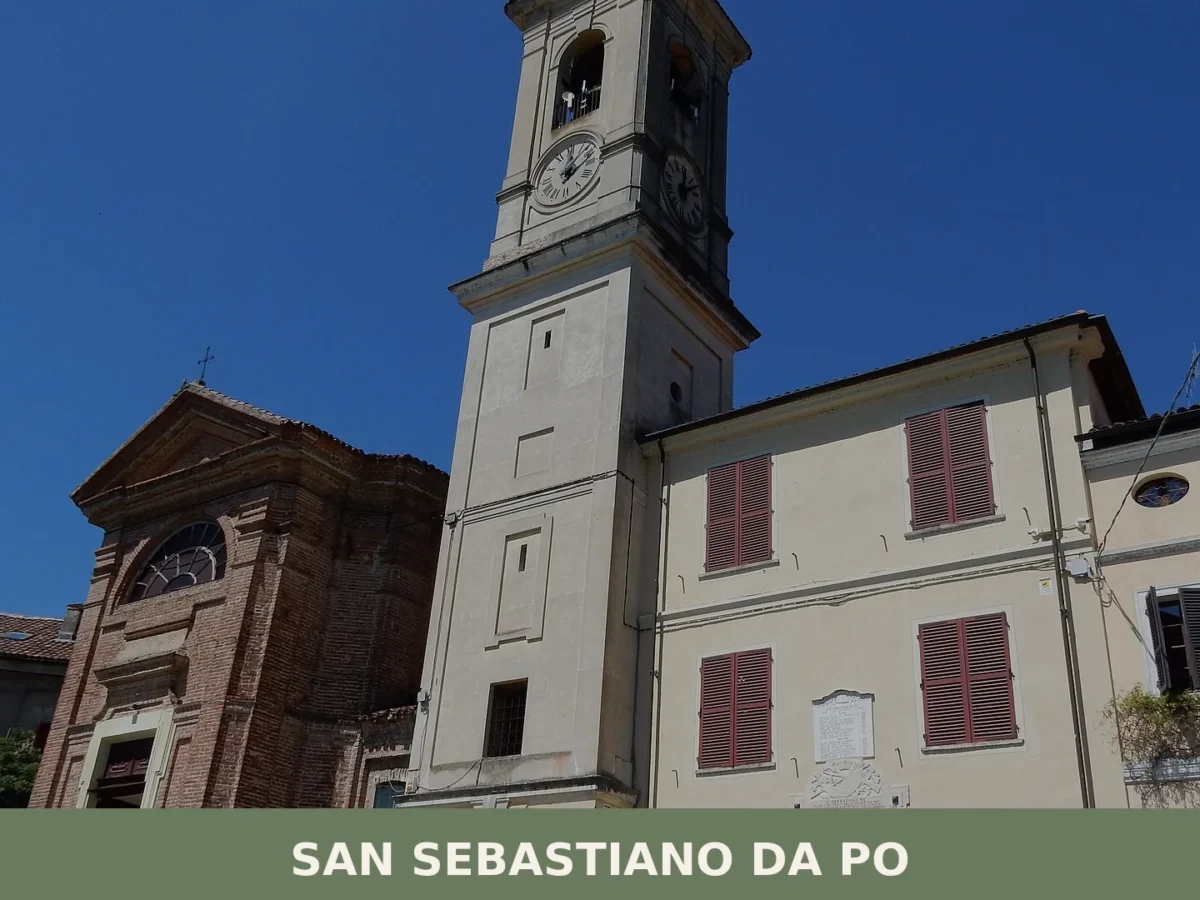
1,883 residents, 175 metres altitude. A small commons caught between two dynasties, where medieval councils gathered in parish chapels and barges crossed the Po.
Monteu da Po
Hills
Scopri Monteu da Po, affascinante borgo piemontese sulle rive del Po. Storia, natura e tradizioni in un angolo autentico del Piemonte da non perdere.

Acceglio
Mountain
Discover what to see in Acceglio, a 170-resident mountain village at the head of Valle Maira in Cuneo, Piemonte — trails, churches, alpine pastures and local food.

Salerano Canavese
 Plains
Population 462. A rural comune in Turin province with two documented religious landmarks and a civic identity affirmed through its heraldic symbols.
Brosso
Mountain
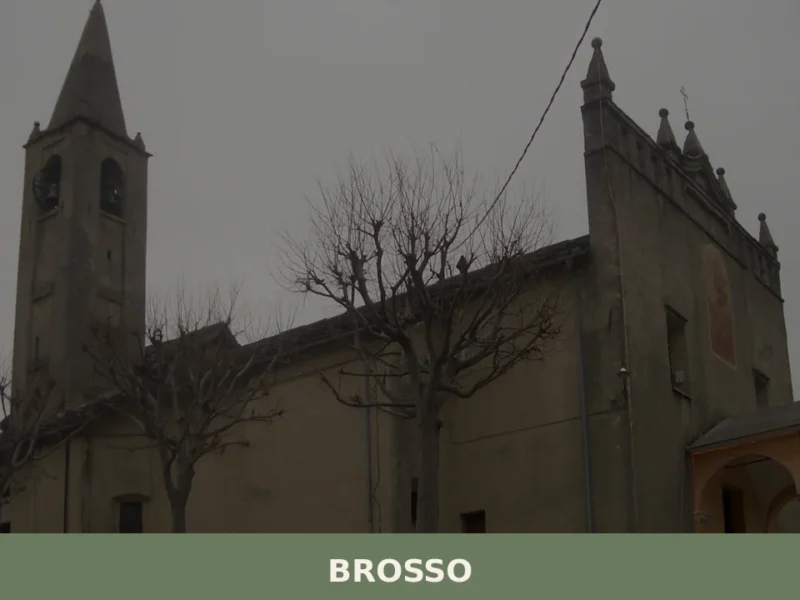
Brosso has a population of 391 and sits at 797 metres above sea level in the Valli del Canavese, in the province of Turin, on the south-eastern slopes of the Serra di Ivrea. The area was historically defined by mining activity — particularly iron and copper extraction — a practice that left lasting physical marks […]
Cintano
Mountain
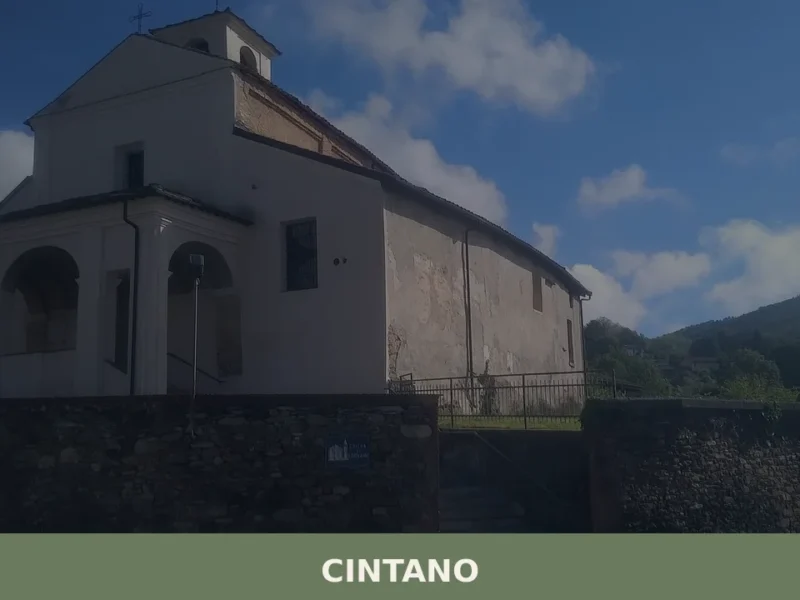
Scopri Cintano, un affascinante borgo del Piemonte ricco di storia, natura e tradizioni. Lasciati conquistare dalla sua bellezza autentica!

Rivara
Hills
A comune of 2,456 inhabitants north of Turin, Rivara preserves two castle complexes and Villa Ogliani, birthplace of the Scuola di Rivara artistic movement.
Ala di Stura
Mountain
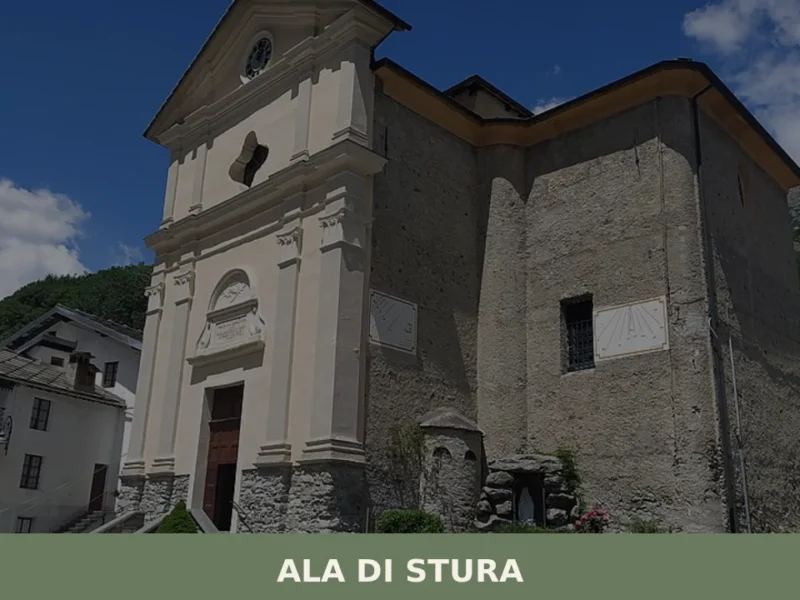
Every year on 4 September, in Ala di Stura, the bells of the Parish Church of San Grato ring out with special fervour, announcing the patron saint’s feast day. This annual ritual, rooted in centuries of mountain history, is more than a simple religious celebration: it is a call to a community that, at 1,080 […]
Asti
Plains
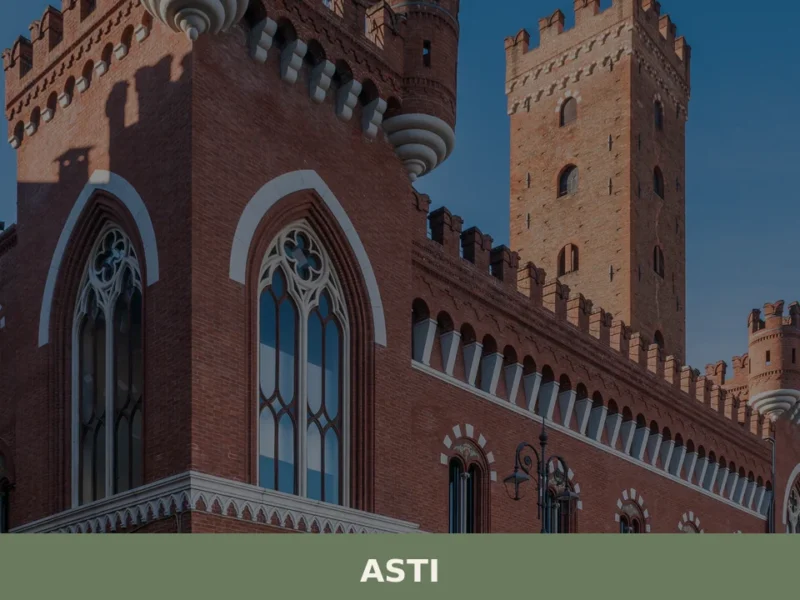
What to see in Asti: a city of 73,421 residents at 123m. Explore the Gothic Cathedral, Torre Rossa, Palazzo Alfieri and Barbera d'Asti DOCG. Plan your visit now.

Pramollo
Mountain
212 residents spread across mountain hamlets at 1,071 metres. Protestant heritage and Alpine pasture define this Turin comune in Piemonte.



🏡 Know Ailoche better than we do?
If you’re a local or have been there, your knowledge matters: add what’s missing or fix a detail on this page.