


Anagni
 Hills
Hills
What to see in Anagni: from the Cathedral of Santa Maria to the medieval Crypt. Complete guide with 5 attractions, practical tips and a one-day itinerary.
Discover Anagni
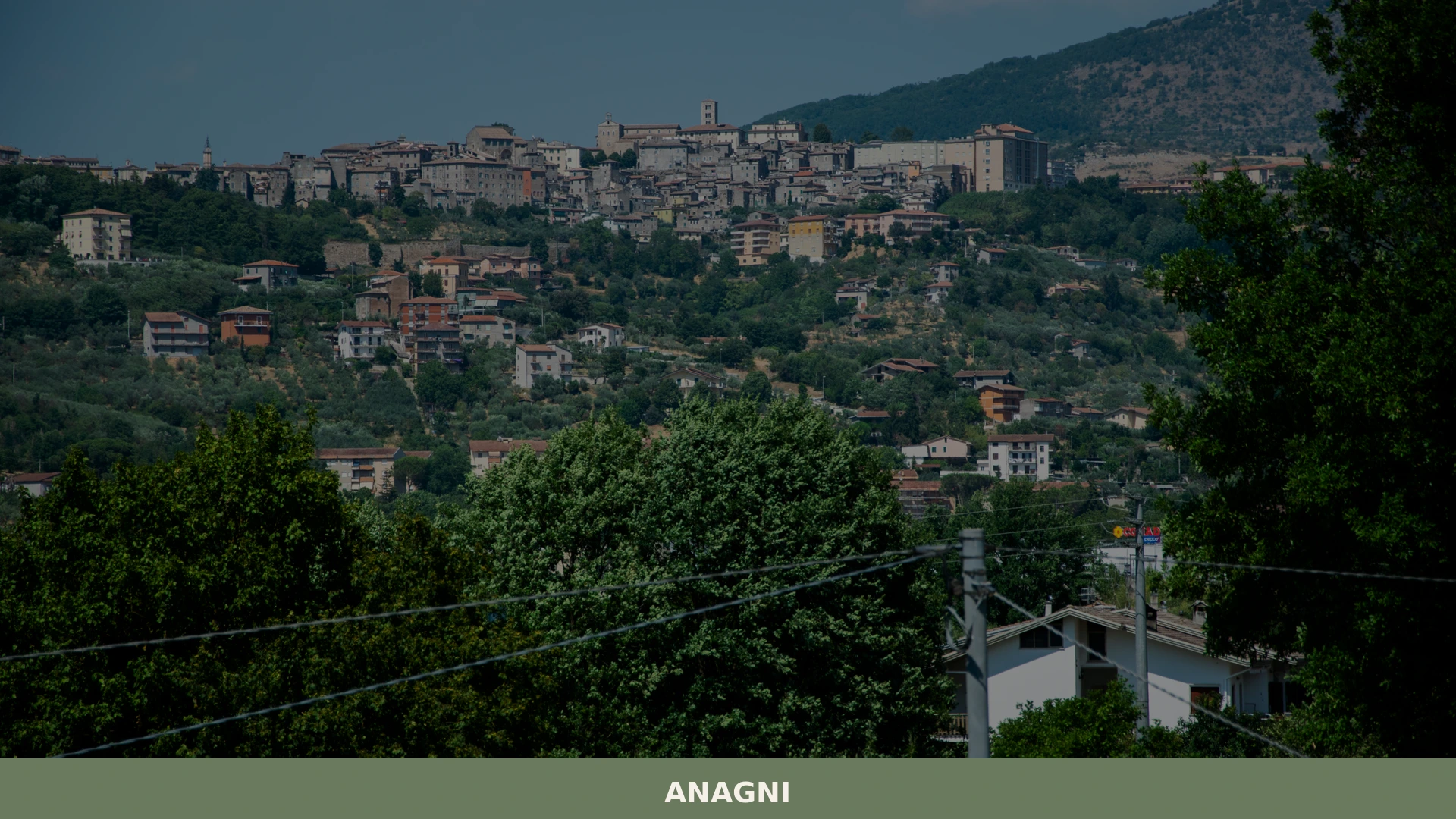
Stone streets no wider than a cart cut through a hill town built inside Roman boundary walls. At 424 m (1,391 ft) above sea level, the rooflines of Anagni trace a compact silhouette against the Lazio sky, and the cathedral’s Romanesque bell tower rises above an acropolis that was already a sacred site when the Hernici settled it more than two millennia ago.
In September 1303, the gates of this same hill received two thousand mercenaries sent by the King of France, and for three days a pope was held prisoner inside his own palace.
Deciding what to see in Anagni becomes easier once you understand the scale: the entire historic centre is walkable, concentrated on a ridge 60 km (37 mi) east-southeast of Rome.
Visitors to Anagni find a cathedral crypt covered floor to ceiling in 13th-century frescoes, a sequence of medieval papal palaces, and Roman boundary walls that have been continuously inhabited for over two thousand years.
The town sits in the province of Frosinone, Lazio, Italy, and its documented history stretches from Palaeolithic hand-tool fragments to a functioning modern comune.
History of Anagni
The earliest confirmed human presence in the area dates back more than 700,000 years, established through the dating of Palaeolithic hand-made fragments recovered locally.
At the site of Fontana Ranuccio, archaeologists have retrieved objects made of bone and flint, along with two human molars and incisors belonging to fossil Homo erectus. The first people known by name were the Hernici, who migrated from the Aniene valley and are thought to descend from the Marsi or the Sabines.
Their name derives from the Marsian word herna, meaning stone, identifying them as those who live on the stony hills. Only two words survive from their language: samentum, a strip of sacrificial skin, and bututti, a form of funeral lament.
Recent archaeological work has confirmed cultural and economic exchange between the Hernici and the Etruscans around the 7th century BC.
Roman domination began in earnest after 306 BC, when Anagni surrendered following a failed war against Rome.
The town was admitted to Roman citizenship without voting rights, prohibited from holding councils or intermarrying, though it retained religious autonomy. Under the empire, the town attracted summer residence: Marcus Aurelius, Septimius Severus, Commodus, and Caracalla all spent time here, escaping the heat of Rome.
Marcus Aurelius owned a large imperial villa at nearby Villa Magna. The cathedral was eventually built on the site of a temple dedicated to the goddess Ceres, and in the 2nd century AD, linen codices containing Etruscan sacred texts were still preserved in the city, according to Marcus Aurelius himself. The sole surviving example of those texts is the Liber Linteus. By the end of the Roman Empire, a population collapse caused the lower parts of the city to be abandoned.
The 12th and 13th centuries mark the period of greatest political influence.
Popes retreated to Anagni from epidemic-prone Rome, making it one of the favoured papal residences.
In 1122, Callistus II issued the foundational bull of the Concordat of Worms here. In 1160, Alexander III excommunicated Emperor Frederick Barbarossa in the cathedral; sixteen years later, after the Battle of Legnano, the same pope elaborated the Pactum Anagninum in the city, a diplomatic text that preceded the Peace of Venice in 1177. The 13th century saw four popes born in Anagni: Innocent III, Gregory IX, Alexander IV, and Boniface VIII — three of the first four were members of the Conti family.
The episode that closed this era, the Outrage of Anagni in 1303, when Guillaume de Nogaret and Sciarra Colonna imprisoned Boniface VIII for three days, effectively ended Anagni’s role as a papal capital. The transfer of the papal court to Avignon inaugurated a long decline lasting through the entire 15th century.
The town was sacked by the troops of Duke Werner von Urslingen in 1348 and depopulated.
Recovery began slowly in the late 16th century under Cardinal Benedetto Lomellino and accelerated from 1633 onward with large-scale architectural reconstruction.
What to see in Anagni, Lazio: top attractions
Anagni Cathedral and its Crypt
The Anagni Cathedral, dedicated to Saint Mary, was built in Romanesque style between 1071 and 1105, with Gothic additions completed in the mid-13th century. The crypt beneath the main floor holds the tombs of Saint Magnus of Anagni, the city’s patron, and Saint Secundina of Anagni.
Every wall and the entire ceiling of the crypt are covered in frescoes forming a single iconographic programme that spans natural philosophy, saints, apocalyptic scenes, and medical illustration — considered among the best-preserved examples of Romanesque and Byzantine pictorial art in Italy. The frescoes date to the 13th century and were executed without interruption across vaulted bays and columns.
Visiting the crypt requires descending a staircase from the nave; the low light preserves the colour intensity of the mineral pigments, and the spatial compression of the decorated surfaces makes the iconographic density immediately apparent.
The Caetani Palace and the Outrage of Anagni Site
The palace complex associated with Pope Boniface VIII and his family, the Caetani, occupies a position on the medieval acropolis directly linked to the events of September 1303.
It was inside these walls that Guillaume de Nogaret and Sciarra Colonna imprisoned the pope for three days after leading a force of two thousand mercenaries into the town. The palace was plundered, and according to legend, Sciarra Colonna struck the pope with his gauntlet — an episode that entered history as the Schiaffo di Anagni, the Slap of Anagni.
Dante Alighieri referenced the imprisonment directly in the Purgatorio, Canto XX, verses 85 to 93, comparing Philip the Fair to Pontius Pilate.
Standing in the palace rooms, visitors can identify the architectural fabric of a 13th-century episcopal residence and understand the physical layout of an event that accelerated the transfer of the papacy to Avignon.
The Roman Boundary Walls
Anagni’s perimeter walls incorporate construction phases spanning more than a thousand years.
The original Hernici fortifications used opus quasi-quadratum, a technique of roughly squared stone blocks, visible in sections of the north-east zone around the cathedral and the Tufoli gate. Roman modifications at the start of the 3rd century BC expanded the circuit, and further rebuilding occurred across the first millennium AD.
The most significant structural reorganisation took place in the 16th century, with damage from the Spanish bombardment of 15 September 1556 accelerating repair works formalised in 1564 under Pope Pius IV. Walking the perimeter clockwise from Piazza Dante allows a direct comparison between the Hernici masonry, the Roman alterations, and the Renaissance-era consolidation work.
The walls also define the natural edges of the hill town, where the terrain drops steeply toward the Latin Valley below.
Piazza Dante and the Medieval Civic Centre
Piazza Dante forms the civic core of the historic acropolis, corresponding geographically to the north-east zone that the Hernici designated as their sacred high ground.
The square is flanked by medieval noble mansions with carved stone portals, many of which were restructured from 1633 onward during the period of architectural reconstruction documented in the town’s administrative records.
The Civic Palace, whose construction was assigned to the Ambassador of Brescia, architect Jacopo da Iseo, dates to the 12th century and reflects the period when Anagni hosted the legates of Milan, Brescia, and Piacenza in 1159 during the pontificate of Adrian IV. The square functions as the meeting point of the town’s principal medieval streets and provides the clearest unobstructed view of the cathedral facade.
Early morning, before coach groups arrive from Rome, the square holds almost no tourist traffic.
Fontana Ranuccio Archaeological Site
The site of Fontana Ranuccio, located within the Anagni territory, yielded the physical evidence that places human activity in this area at more than 700,000 years ago.
Excavations produced bone and flint tools alongside two human molars and incisors belonging to fossil Homo erectus, making this one of the earliest confirmed hominid presence sites in central Italy. The finds place Anagni within a much longer arc of human occupation than its medieval fame suggests.
The archaeological material recovered here is of direct scientific relevance to the study of Lower Palaeolithic occupation of the Apennine foothills.
For visitors with an interest in prehistory, the site adds a dimension to Anagni, Lazio, Italy that extends well beyond the papal centuries; combining a visit here with the cathedral crypt gives a span of roughly 700,000 years of documented human activity within a few kilometres.
Local food and typical products of Anagni
The gastronomic tradition of Anagni reflects its position in the Latin Valley, a corridor between the Apennine highlands and the Roman Campagna that has supported mixed agriculture — grain, legumes, livestock, and viticulture — since at least the Roman period.
The town’s role as a papal residence during the 12th and 13th centuries brought ecclesiastical provisioning networks into the area, reinforcing a culture of preserved meats, dried legumes, and cured cheeses suited to long periods of court residence away from Rome.
The surrounding province of Frosinone maintains a culinary identity distinct from coastal Lazio, shaped by altitude, cooler temperatures, and proximity to the Apennine sheep-farming economy.
The table in this part of Lazio centres on preparations that require long cooking and few processed ingredients.
Pasta e fagioli, a thick soup of pasta cooked directly with dried borlotti beans, olive oil, garlic, and rosemary, appears in domestic kitchens throughout the Frosinone uplands and is treated as a complete meal rather than a first course.
Agnello alla cacciatora — lamb browned in lard and finished with white wine, vinegar, rosemary, and garlic — follows the shepherd’s technique of using acidity to tenderise older animals. Polenta con salsicce, a coarse-ground cornmeal cooked slowly in a copper pot and served with pork sausage fried in its own fat, reflects the colder-season diet of the Apennine hill towns. Local sheep’s milk cheese, produced from flocks that graze the rocky terrain the Hernici named themselves after, is pressed and dry-salted in the tradition common across the Ciociaria sub-region.
No PDO or PGI certification specific to Anagni is recorded in the available sources for this guide.
The broader province of Frosinone participates in the production zones of several Lazio-wide designations, but specific municipal certifications for Anagni itself cannot be confirmed here. What the market in Piazza Dante does reliably offer on weekly market days are loose dried legumes, local olive oil pressed in the surrounding valley, and aged pecorino sold directly by producers from the Frosinone hill zone.
Carrying cash is practical for these transactions, as smaller producers and market stalls rarely accept card payments.
Festivals, events and traditions of Anagni
The most historically grounded commemorative event in Anagni is the annual re-enactment of the Schiaffo di Anagni, the 1303 imprisonment of Pope Boniface VIII.
Held each year in September, the event involves costumed participants representing the Caetani household, the French envoys, and the citizens who eventually rose against the mercenaries and freed the pope.
The re-enactment takes place in and around the cathedral square and the Caetani palace, using the actual medieval streets as the stage. The September timing corresponds to the historical date of the event and draws visitors specifically interested in medieval Italian history.
The cathedral also anchors the liturgical calendar. Saint Magnus of Anagni, the city’s patron whose tomb lies in the cathedral crypt, is honoured with a formal religious observance that includes a procession through the historic centre.
The cathedral itself has been the site of major ecclesiastical events for over nine centuries, and the continuity of its liturgical use — from Alexander III’s excommunication of Barbarossa in 1160 to present-day parish ceremonies — means that religious calendar dates carry particular resonance inside the building.
Visitors arriving during active liturgical periods will find the crypt occasionally closed for services; checking the cathedral’s schedule in advance avoids the frustration of a closed visit.
When to visit Anagni, Italy and how to get there
The best time to visit Anagni, Italy is late spring (April to June) and early autumn (September to October).
Spring brings mild temperatures at 424 m (1,391 ft) elevation and lower visitor numbers than summer. September is particularly useful because it coincides with the Schiaffo di Anagni re-enactment and the beginning of the harvest season in the surrounding agricultural belt.
July and August bring heat and larger day-trip crowds from Rome; the medieval streets retain warmth well into the evening. Winter is cold and quiet, and the crypt frescoes are best viewed in low-season when natural light through the nave is unobstructed by tour groups.
For those planning a day trip from Rome, Anagni sits 60 km (37 mi) east-southeast of the capital, making it a realistic half-day or full-day excursion without an overnight stay.
Reaching Anagni by car from Rome, take the A1 motorway (Autostrada del Sole) and exit at Anagni-Fiuggi, then follow the provincial road for approximately 10 km (6.2 mi) into the historic centre. By train, Trenitalia operates services from Roma Termini to Anagni station on the Rome–Cassino line; journey time is approximately 50 to 60 minutes.
The station sits below the hill town, and a short uphill walk or local taxi is needed to reach the historic centre.
The nearest international airport is Rome Fiumicino (Leonardo da Vinci Airport), approximately 100 km (62 mi) to the west; from there, the most direct route combines the A91 motorway into Rome and the A1 east toward Anagni. International visitors should note that English is spoken in the main tourist sites but may not be available in smaller shops and trattorias; carrying euro cash remains practical throughout the historic centre.
Parking is available at the base of the hill, from where the walls and gates of the old town are reached on foot within ten minutes.
Visitors extending their trip through the Lazio hill towns can include Cantalupo in Sabina, another Lazio comune that shares the region’s pattern of medieval hilltop settlement and agricultural continuity, or travel south through the Frosinone province toward Campoli Appennino, which sits deeper into the Apennine range at higher elevation and offers a different profile of the same mountain landscape that shaped the Hernici territory around Anagni.
Nearby Villages near Anagni
In Lazio More villages to discover
Agosta
Hills
A block of tuff rock rises above the Aniene valley in the Monti Simbruini area, and on its crown sits a tight cluster of stone buildings at 382 m (1,253 ft) above sea level. The Arch of the Cardinal still stands near the point where a bridge once crossed the Aniene river, its masonry dated […]
Barbarano Romano
Hills
Morning light catches the volcanic tufa in shades of ochre and rust, and the only sound rising from the gorge below is the intermittent call of a jay echoing off ancient rock. Barbarano Romano sits on a plateau in the province of Viterbo, a settlement of barely a thousand souls whose streets still follow the […]
Arce
 Plains
What to see in Arce: discover the 5 unmissable aspects of this Lazio village. From medieval fortresses to scenic views, your complete guide. Plan your visit!
Antrodoco
Hills
What to see in Antrodoco: discover the 5 main attractions, the history of this Lazio village and how to plan your visit. A complete guide for your itinerary.
Affile
 Mountain
What to see in Affile, Lazio, Italy: discover 5 key attractions at 684 m altitude, from Roman cisterns to medieval churches. Explore history, food and how to get there.
Amatrice
Mountain
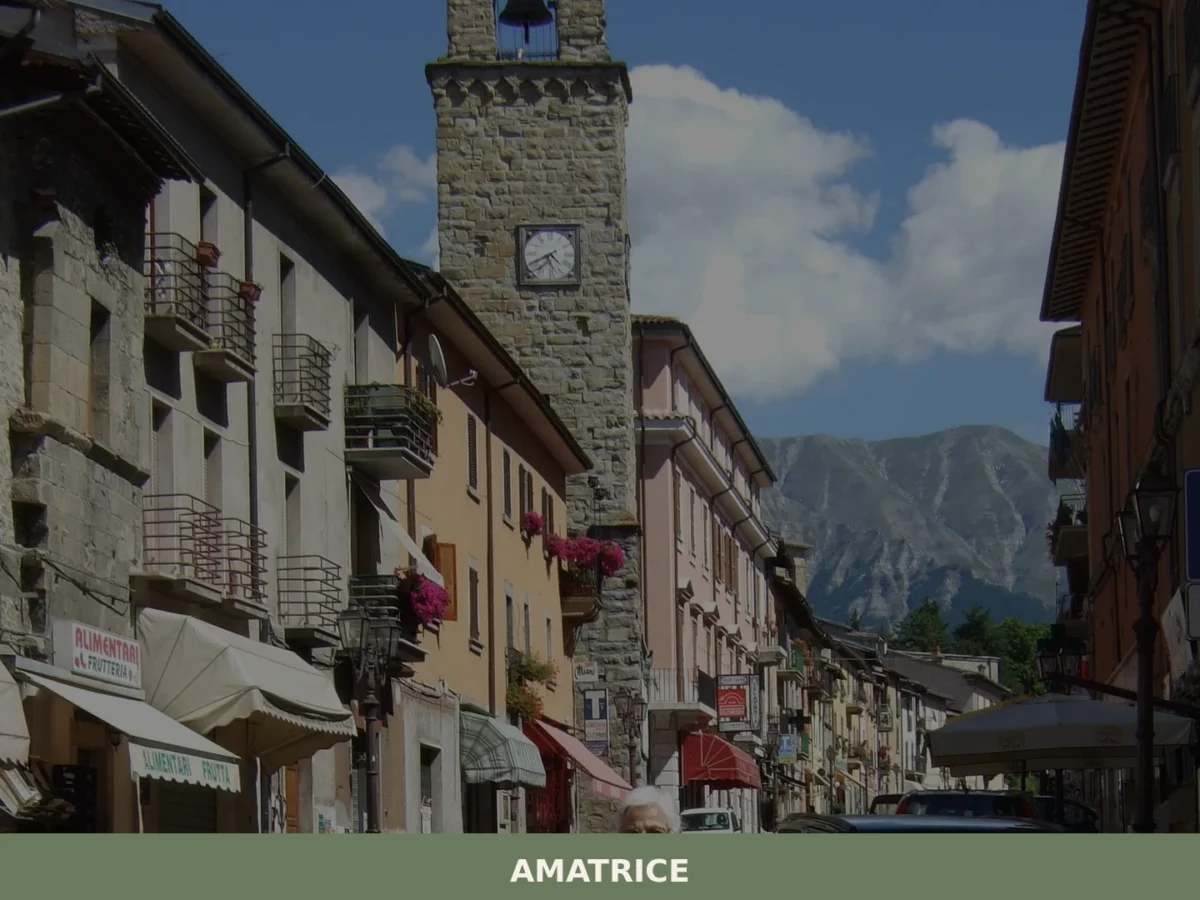
What to see in Amatrice? Explore the 5 main attractions of this village in Lazio. The complete guide awaits you with useful tips. Plan your visit!
Bomarzo
Hills
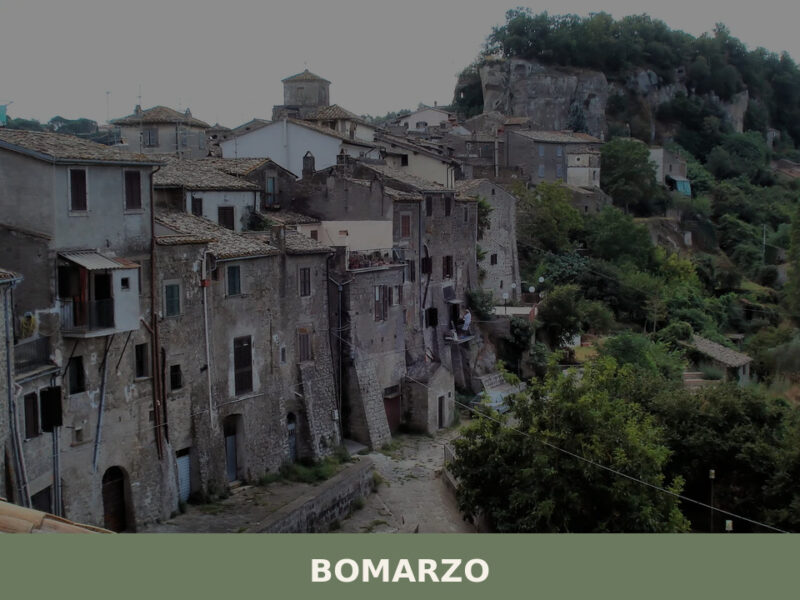
Population 1,679. Visit for the Parco dei Mostri and the village's unadorned religious and domestic architecture rooted in the Cimini landscape.
Arnara
Hills
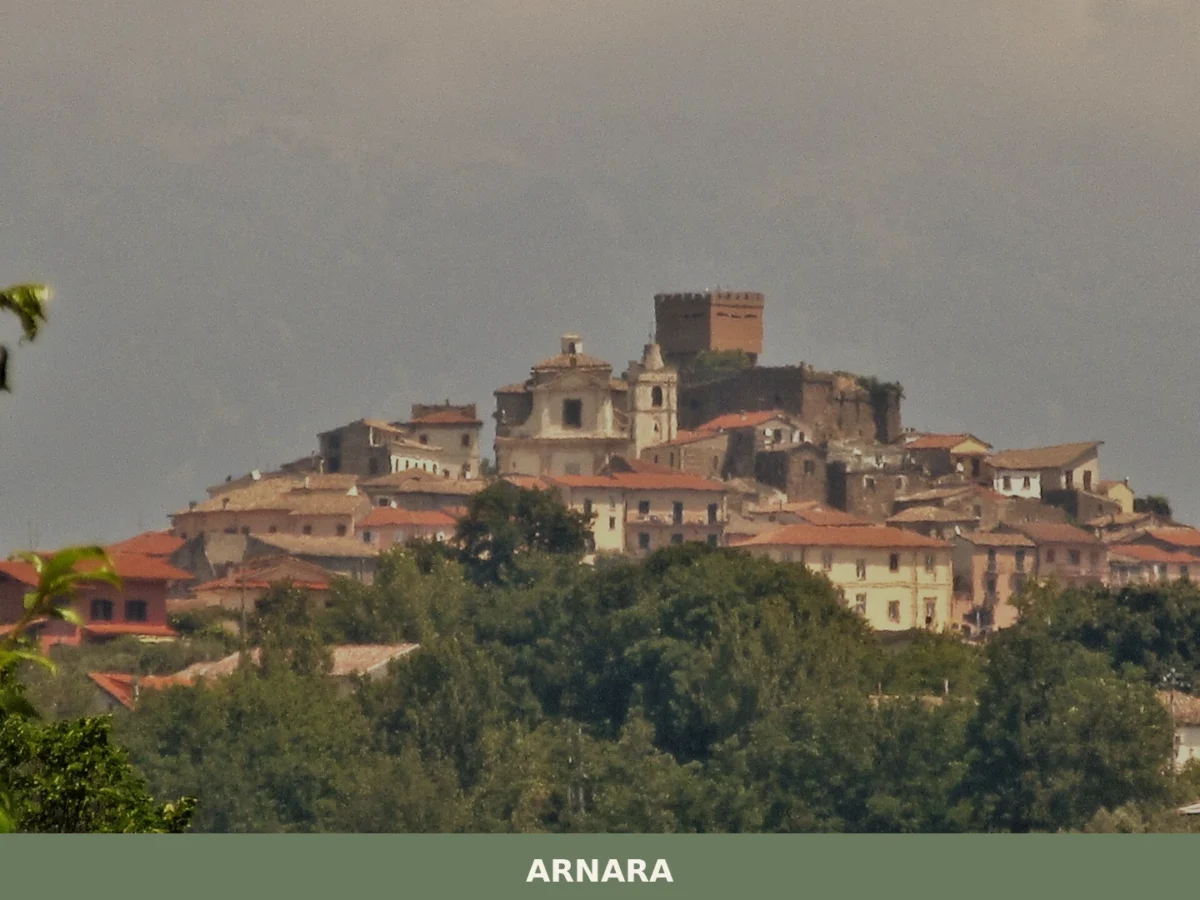
What to see in Arnara, Lazio, Italy: medieval castle, Sacco Valley views at 250 m altitude, local food traditions. Discover top attractions and how to get there.
Cantalupo in Sabina
Hills
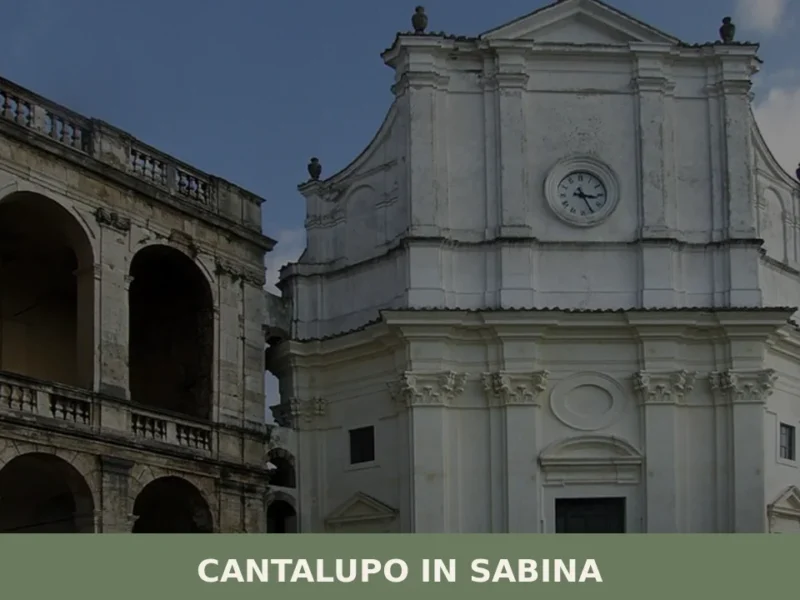
What to see in Cantalupo in Sabina: a hill village at 297 m in Rieti with 1,738 residents. Explore the medieval centre, the San Biagio feast and PAT-certified guanciale. Plan your visit now.
Broccostella
Hills
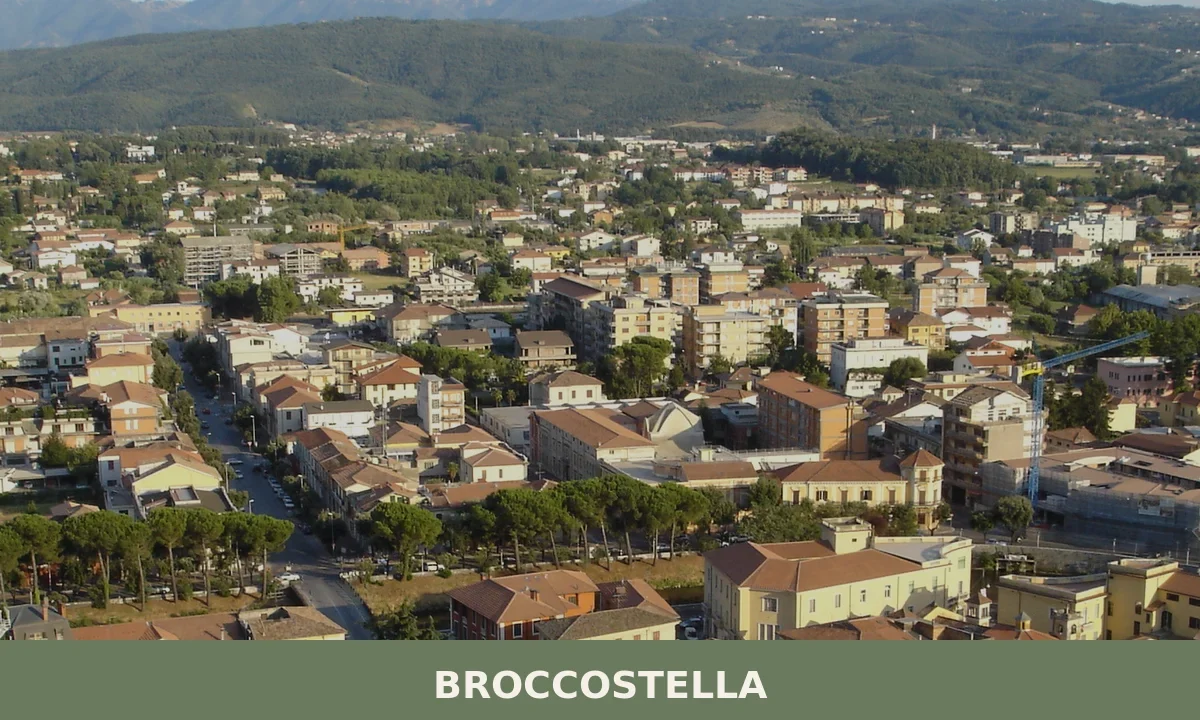
What to see in Broccostella, Lazio, Italy: 100 km from Rome, Lady Gaga connections, Apennine landscapes. Discover top attractions, food and travel tips.



🏡 Know Anagni better than we do?
If you’re a local or have been there, your knowledge matters: add what’s missing or fix a detail on this page.