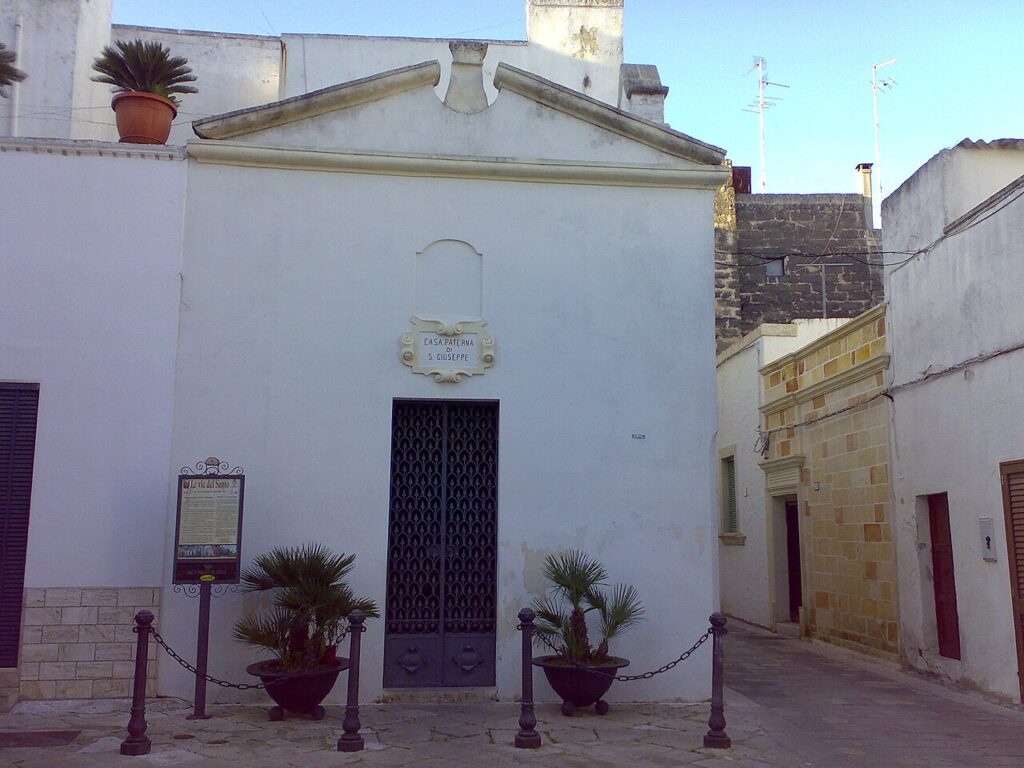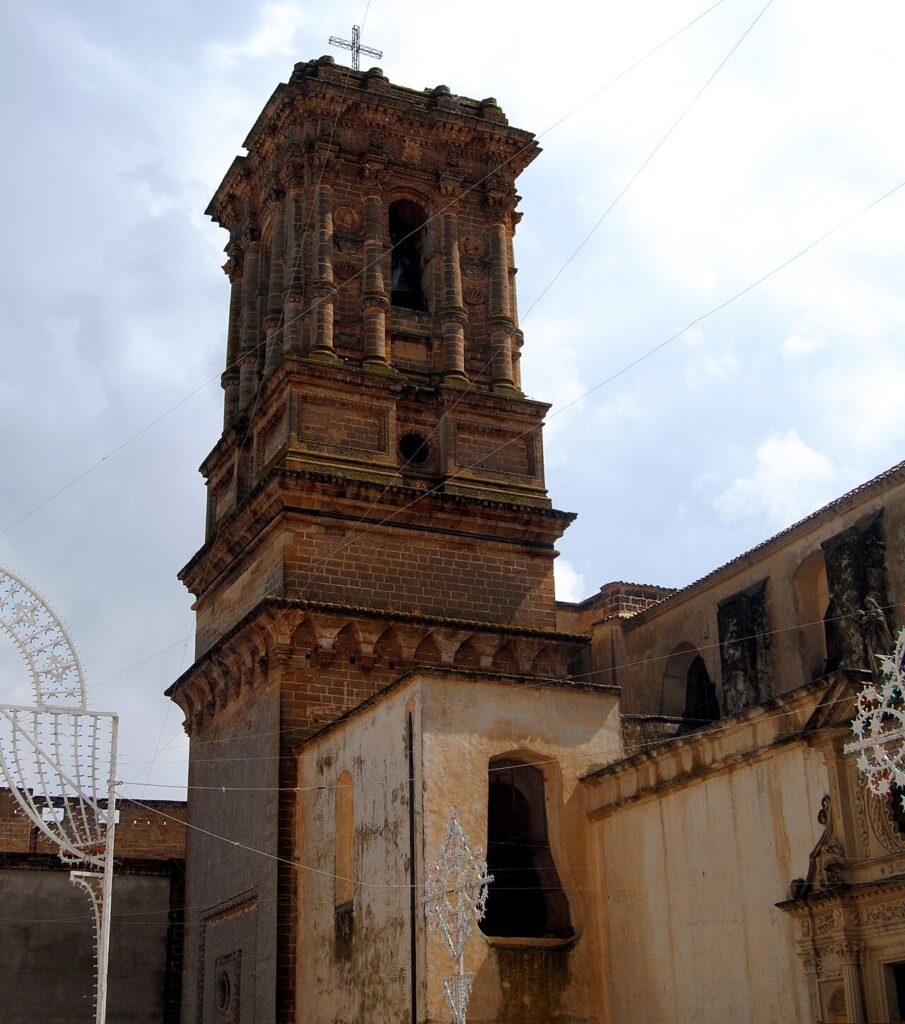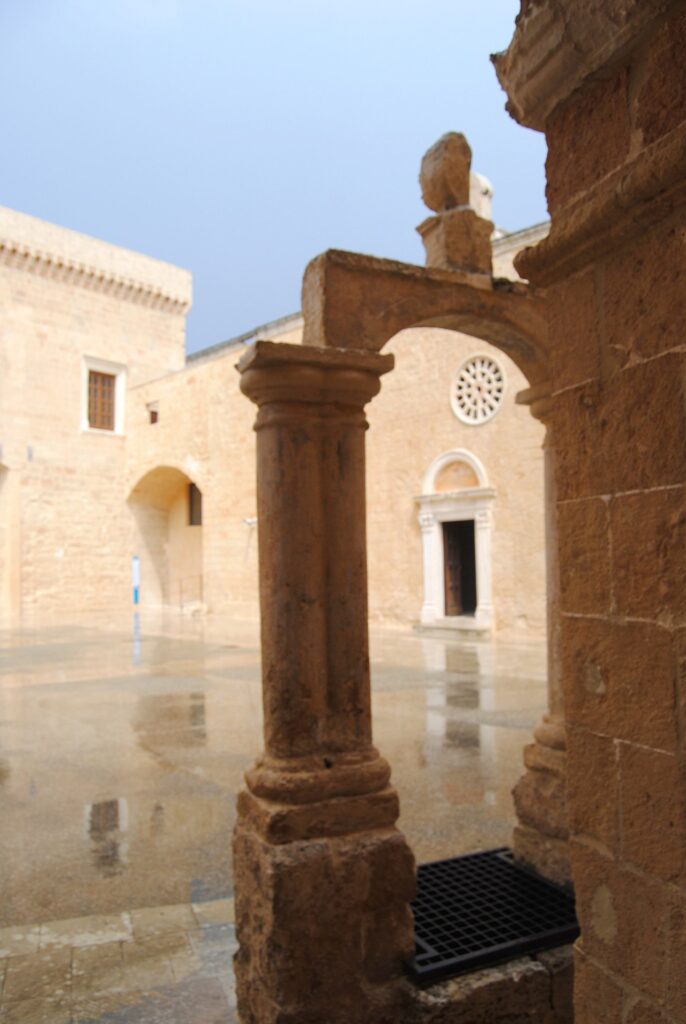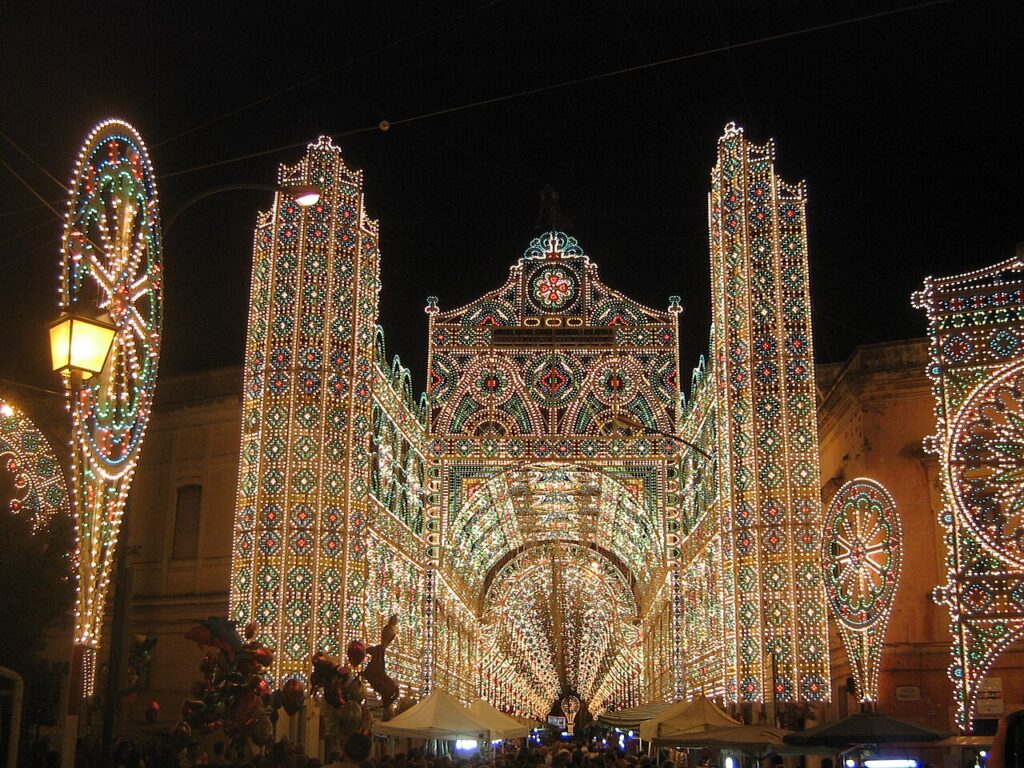
Copertino rises from the flat limestone landscape of western Salento with pale stone walls enclosing a compact medieval core. The town’s narrow streets converge on a castle and a cathedral dedicated to the Vergine delle Nevi, their silhouettes marking the horizon across the olive plains. Around this ancient centre, Renaissance palaces with Latin inscriptions carved into their stone frames speak of merchant prosperity, while convents and churches anchor every quarter—a physical record of the religious intensity that shaped daily life for centuries.
Copertino village in Apulia sits in Lecce province. The town is best known as the birthplace of San Giuseppe da Copertino, a 17th-century Franciscan friar whose reported mystical phenomena drew pilgrims and earned him canonization as a saint, and for its fortified medieval architecture, which reveals layers of Norman, Aragonese and feudal rule spanning nearly a thousand years.
From Byzantine Settlement to Feudal Stronghold
Copertino’s origins lie in the dispersed rural hamlets of the early medieval Salento. According to local tradition, the town arose nel 560 o nel 615 d. C. when inhabitants of the casali of Mollone, Casole, Cigliano and Cambrò gathered into a single fortified community. Saracen raids devastated the surrounding countryside and destroyed nearby Nardò. Survivors retreated into a preexisting Byzantine settlement, creating what they first called “Cittadella” and later renamed, progressively, Conventino, then Cupertino, before arriving at Copertino. The civic coat of arms—a pine tree with exposed roots flanked by the letters C and P—encoded the founding principle: Conventio Populorum, a union of peoples.
The Norman conquest brought institutional weight. In 1088, Count Goffredo ordered the construction of a Latin-rite church to counter Greek Orthodox influence, a structure that survives today as the Church of the Vergine delle Nevi. The castle, too, rose during this phase, with its nucleus built under Swabian rule and later expanded by Gualtieri di Brienne, Duke of Athens and Count of Lecce, who completed its main tower and enlarged its defensive walls. By the late 13th century, Copertino had become the capital of a small county encompassing Leverano, Galatone and Veglie, held first by the d’Enghien family and then, through marriage, by Raimondo Orsini del Balzo, who incorporated it into the Principality of Taranto.
In 1430, Count Tristano di Chiaramonte ordered the first proper enclosure of the old town centre with a defensive wall. The same count strengthened his territorial claim by marrying his daughter Isabella to Ferrante of Aragon, tying Copertino to the rising power of the Kingdom of Naples. What emerged during the 15th and 16th centuries was not primarily a fortress town but a merchant settlement, its prosperity built on oil commerce. Between the late 1400s and mid-1500s, extensive olive groves in the surrounding territory were pressed in underground oil mills, and barrels of oil were transported to the nearby port of Gallipoli for shipment to northern European markets. This economic momentum encouraged population growth and urban densification.
The settlement’s earliest civic identity was encoded in its name—not a ruler’s title or geographical marker, but Conventio Populorum, a deliberate assertion that the town was built by the agreement of its constituent peoples, a rare declaration of communal origin in a feudal landscape.
The Age of Castriota Rule and Renaissance Building
In 1498, the Aragonese crown granted the county of Copertino to the Castriota Granai family, Albanian nobles whose military service in the conquest of southern Italy earned them the reward. Their rule, lasting through much of the 16th century, coincided with Copertino’s most visible flourishing. The Castriota family renovated the monastic complex at Casole and placed it under Franciscan (Observant) stewardship, expanded and reinforced the town walls, and commissioned the redesign of the castle, transforming it into a more formidable military structure. Alfonso also founded the Convent of Santa Chiara, adjoining the Cathedral, whose abbacy remained in Castriota hands until the 18th century.
With Antonio Castriota’s death—the last male heir—the county reverted to Spanish royal control. The crown then sold it to Vittoria D’Oria. By inheritance and marriage, it passed to the Squarciafico and Pinelli families, eventually acquiring the status of a marchesate. Yet this administrative instability did not arrest urban development. By the late 1500s, Copertino had acquired a distinctive Renaissance character. Wealthy merchants built palatial residences decorated with Latin mottoes carved into stone lintels, a humanist fashion that reflected their learning and aspiration. The town spread beyond its medieval walls into a new quarter called the Borgo, anchored by Dominican convents and the elegant Palazzo Capozza.
The religious intensity of the age was architectural as well. Between the late 15th and early 17th centuries, Copertino accumulated at least six major convents and monasteries. The Franciscans held two—one in the old centre, another at the Grottella, a hermitage in the nearby feudo of Cigliano. The Dominicans, Capuchins and Clarisse nuns each occupied substantial complexes. A printing workshop was established in the late 16th century, linking the provincial town to the cultural networks of Renaissance Italy.
The Seventeenth Century: Mysticism and Baroque Refinement
Copertino’s religious reputation reached its peak in the 1600s, centred on one figure: Fra Giuseppe Desa da Copertino, a Franciscan friar whose reported mystical ecstasies—including alleged levitations during prayer—became known across Catholic Europe. He was beatified and canonized, making him Copertino’s most celebrated native and its patron. The 17th century also witnessed other recorded spiritual figures in the town, including the reformed friar Silvestro Calia and the Dominican priest Michele Marzano, both noted for miraculous healings. This concentration of mystical authority drew pilgrims and reinforced Copertino’s identity as a sacred landscape.
Alongside mysticism, the Baroque arts flourished. The Capuchin friar Angelo da Copertino earned recognition as a counter-reformist painter. The sculptor Giovanni Donato Chiarello and architect Ambrogio Martinelli shaped the town’s visual character, while master builders—Adriano Preite, Evangelio Profilo and members of the Verdesca family of craftsmen—executed the substantial domestic and religious architecture that still defines the town’s skyline. Churches were embellished, convents expanded, and private palaces grew more elaborate, all within a unified aesthetic of pale stone and careful proportions suited to the Salento landscape.
Principal Places
The Cathedral of the Vergine delle Nevi
The Cathedral stands at the symbolic centre of Copertino’s old town. Originally built as a Norman Latin-rite church, it is dedicated to the Virgin of the Snows. The structure has been rebuilt and enlarged multiple times, with later Baroque additions, but its foundational walls and plan retain medieval proportions. Inside, it houses artworks from the Seicento and retains the atmospheric gravity of a church that has anchored communal prayer for nearly a millennium. The adjacent Convent of Santa Chiara, founded by Alfonso Castriota in the 16th century, forms an architectural unit with the cathedral and exemplifies the integration of religious and civic space typical of Renaissance Salento towns.
The Castle
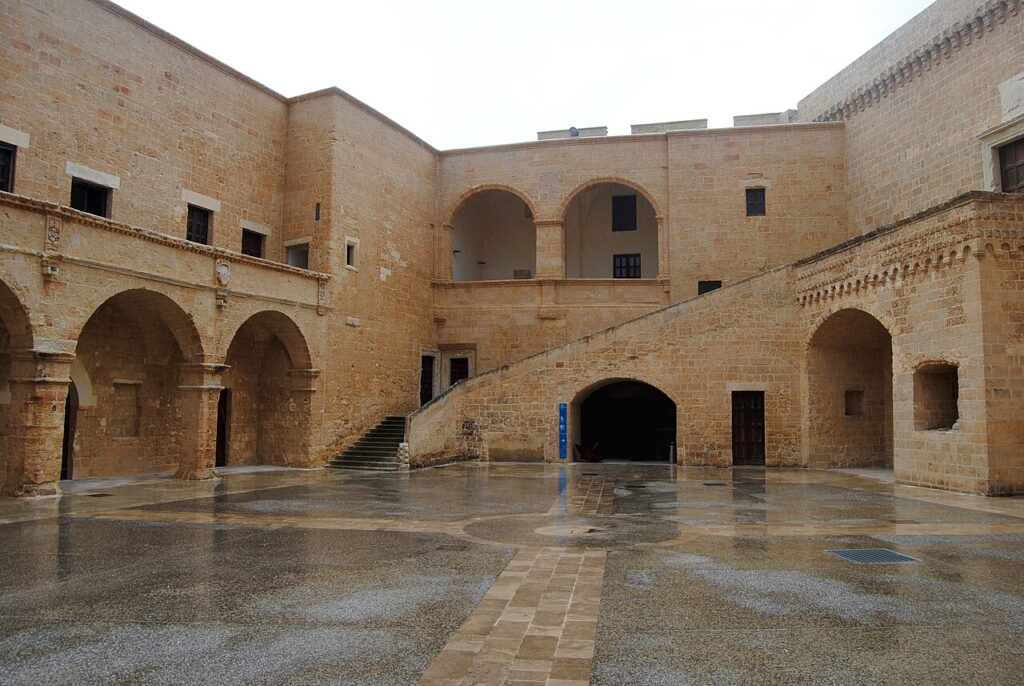
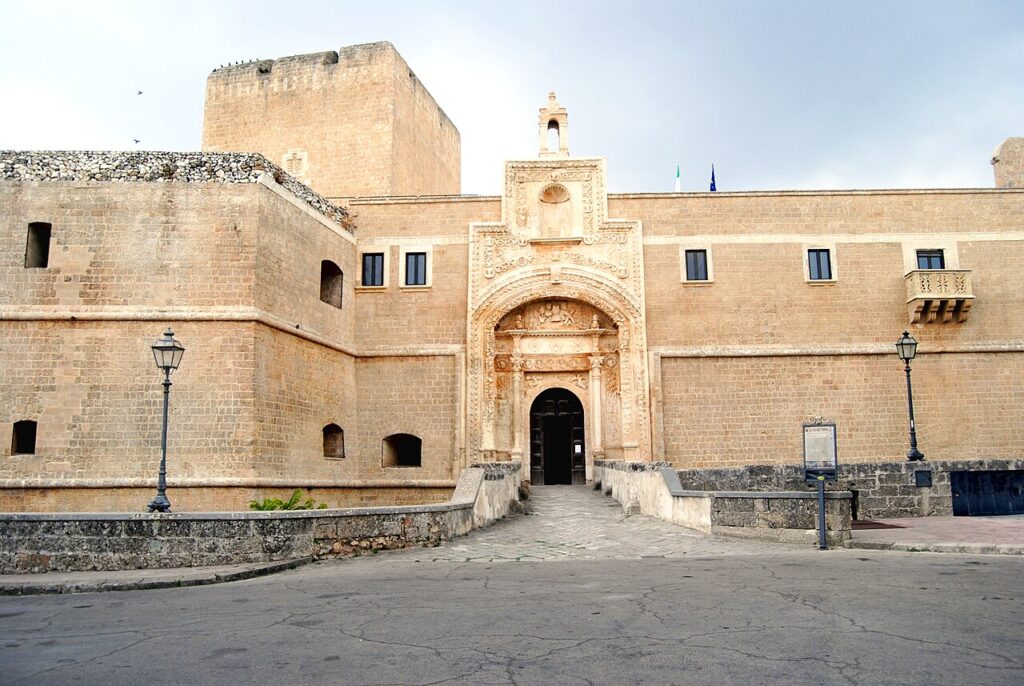
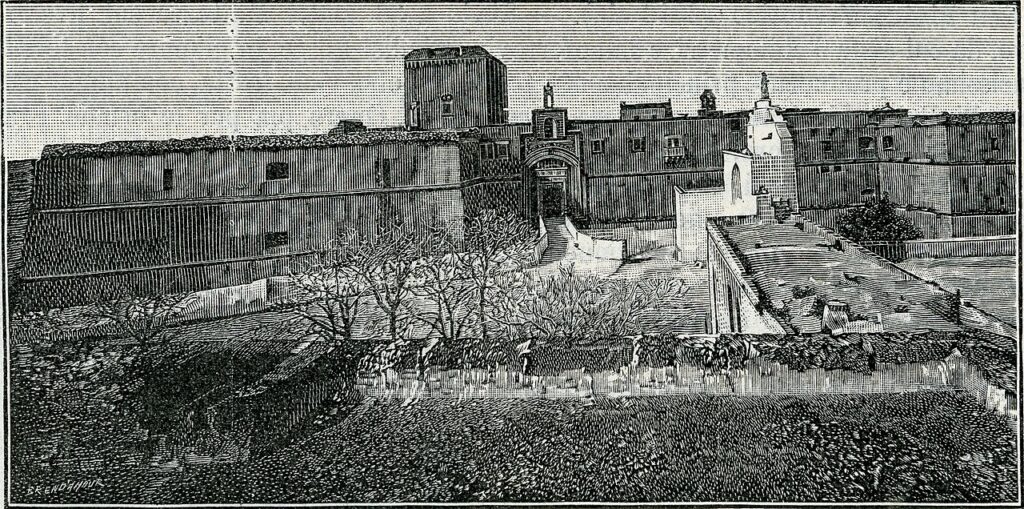
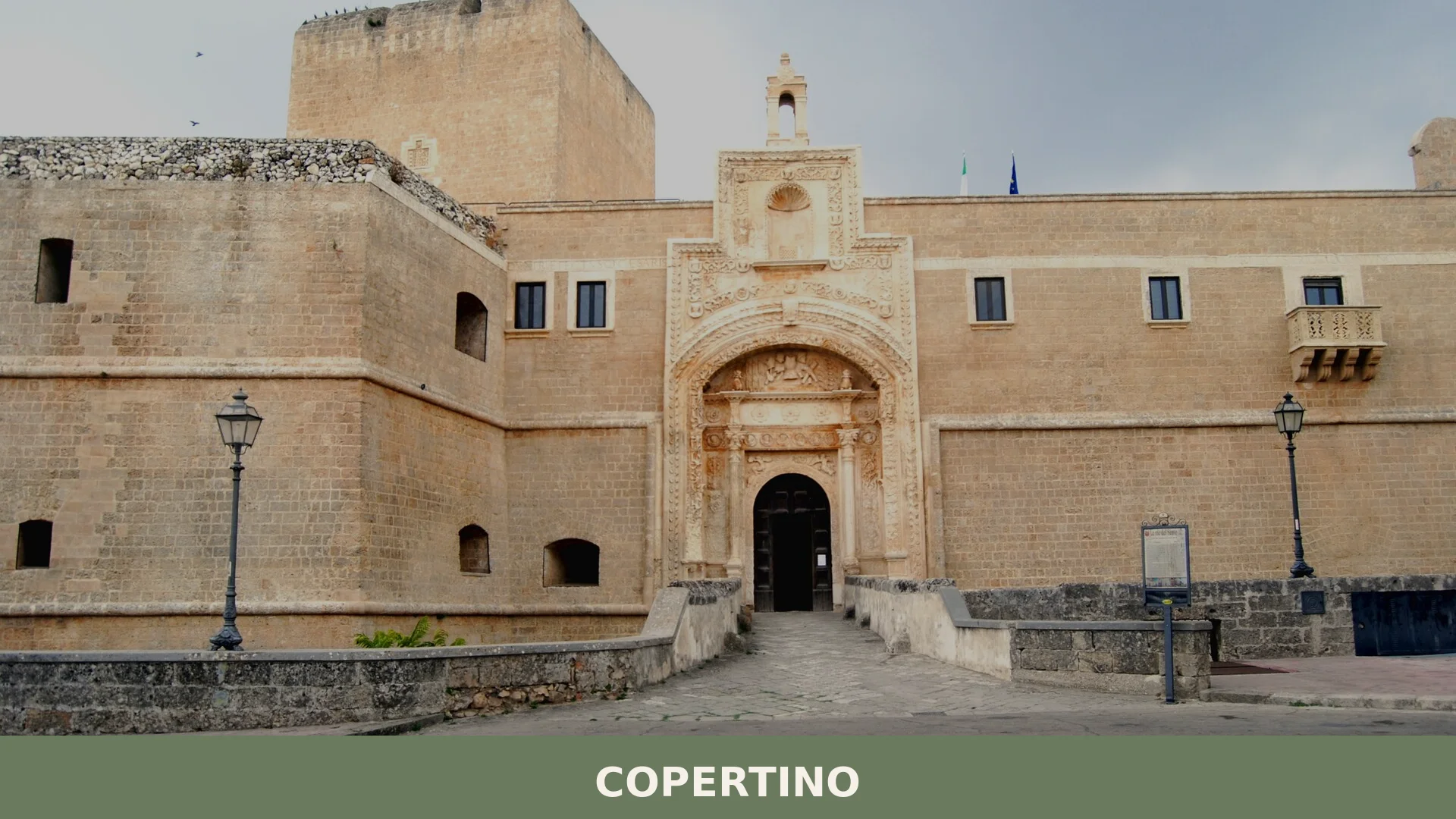
Copertino’s castle dominates the skyline from the north-east corner of the old walls. The first structures date to Swabian rule in the 13th century, but its most recognizable form—the tall central tower and extended bastions—took shape under Gualtieri di Brienne and later underwent significant reinforcement and expansion under Alfonso Castriota to modernize its defences. The castle never served as a grand palatial residence; it remained a military strongpoint, its thick walls and crenellations reflecting centuries of concern with coastal raids and feudal conflict. Visitors today can glimpse its profile from the surrounding streets and appreciate how it structured the town’s medieval street plan.
The Historic Town Walls and Gateways
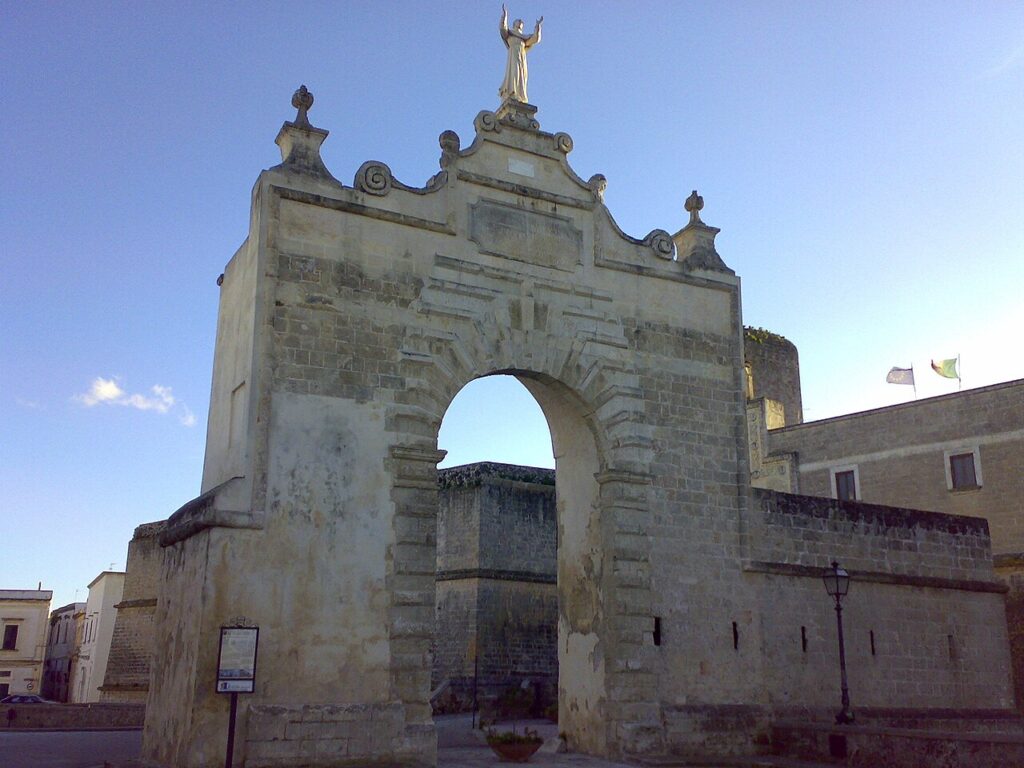
The medieval perimeter of Copertino, completed under Tristano di Chiaramonte in 1430, consists of a roughly elliptical circuit studded with twenty-three defensive towers. Two main gateways controlled access: the Porta del Castello to the north-east and the Porta del Malassiso to the south-east. These walls, though partially damaged or obscured by later building, remain the primary skeleton of the town’s spatial identity. Walking the perimeter or tracing the line of the old gates allows visitors to understand how closely the population was contained within a fortified space, and how the later expansion into the Borgo beyond the walls represented a genuine shift in urban life and economic confidence.
The Convent Complexes
Copertino’s six major religious houses—including the convents of San Francesco, the Grottella (Franciscan), Santa Chiara (Poor Clare nuns), and the Dominican and Capuchin establishments—dot the town and its immediate surroundings. Several remain active or are open to pilgrims; others serve cultural or civic functions. These buildings showcase the range of late-Renaissance and Baroque design, from severe Franciscan simplicity to more elaborate Dominican baroque detail. The presence of so many convents in one small town reflects both the intense religious culture of the Counter-Reformation and the economic capacity of successive feudal lords to endow religious institutions as expressions of piety and power.
Local Food and Agricultural Rhythm
Copertino’s landscape is dominated by olive groves, a dominance that reaches back to medieval times. The oil trade built the town’s Renaissance wealth, and olives remain fundamental to local life and diet. Traditional oil is still pressed, though modern mills have largely replaced the underground frantoi ipogei where oil production occurred for centuries. The surrounding region produces other Protected Designation of Origin foods—including the Olio di Puglia (IGP), which encompasses the oils of Lecce province—and seasonal vegetables including artichokes and fava beans cultivated in the flat terrain.
Regional Pugliese traditions shape the local table: fresh pasta, seafood brought inland from Gallipoli and other ports, and the rich dairy culture of the heel of Italy. Specific dishes rooted in the town’s culinary memory are not extensively documented, but the agricultural base—wheat, legumes, olives and the seasonal market—sustains a Mediterranean diet that visitors will encounter in the town’s modest restaurants and family tables.
How to Visit
Copertino lies in the flat, accessible landscape of western Salento, with good road connections to other villages and larger towns. The surrounding terrain is dotted with olive groves and offers little variation in elevation; the climate is Mediterranean, with mild winters averaging around 9°C in January and warm summers around 25°C in August. Spring and autumn are ideal seasons for visiting, offering comfortable temperatures and lower humidity than summer. The winter months bring occasional rainfall but rarely make travel difficult. The town itself is walkable on foot once you arrive; the medieval core and Renaissance quarter can be explored in a few hours, though a longer stay allows for visits to surrounding communities and a slower engagement with local rhythms.
The nearest significant city is Lecce, the provincial capital, renowned for its baroque architecture. Nearby villages within Lecce province include Arnesano, Carmiano, Caprarica di Lecce, and Galatina, each offering distinct histories and architectural character. The port town of Gallipoli, historically linked to Copertino’s oil trade, lies to the south-west and merits a separate visit for its seaside setting and maritime heritage.
| Departure Point | Distance | Approximate Travel Time |
|---|---|---|
| Lecce | 20 km | 25 minutes by car |
| Brindisi airport | 50 km | 50 minutes by car |
| Gallipoli | 25 km | 30 minutes by car |
| Bari | 150 km | 2 hours by car |
The town offers modest accommodation within the village itself, though Lecce and larger nearby centres provide more extensive lodging options. Public transport connects Copertino to Lecce and other towns via regional bus services. If arriving by private vehicle, parking is available near the town centre, though the old quarter’s narrow lanes are pedestrian-only. For information on events, seasonal closures of monuments and practical arrangements, contact the municipal office at https://www.comune.copertino.le.it.