


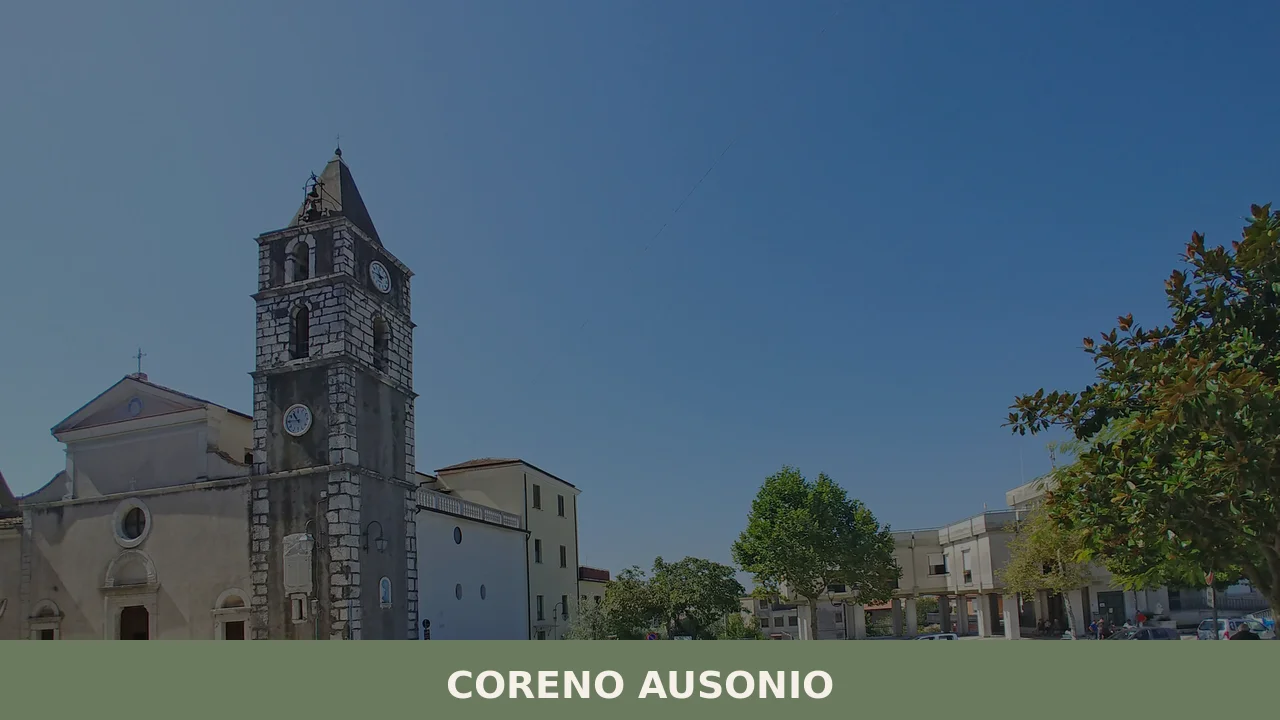
Coreno Ausonio
 Hills
Hills
What to see in Coreno Ausonio, Italy: explore a village at 318 m with an 8th-century BC grotto, local festivals and hill scenery. Discover the complete guide.
Discover Coreno Ausonio
At the foot of Monte Maio, where the Monti Aurunci begin to flatten toward the Lazio lowlands, a carved grotto opens into limestone that was already old when Rome was young.
The Grotta delle Fate — cut into the rock somewhere around the 8th century BC — sits within the boundaries of a municipality of 1,656 inhabitants, at 318 m (1,043 ft) above sea level, roughly 120 km (75 mi) southeast of Rome and 50 km (31 mi) southeast of Frosinone.
The stone records a presence far older than any written record of the place.
Knowing what to see in Coreno Ausonio means looking past a modest population count to a site with a documented pre-Roman past.
Visitors to Coreno Ausonio find two distinct layers of interest: the Grotta delle Fate, a rock-cut chamber linked to the Osco-Sabellian tribes of the first millennium BC, and the annual festival of Santa Margherita di Antiochia, held each year on 20 July. The village sits in the Province of Frosinone, in the Italian region of Lazio, and functions well as a day trip from Rome or as a stopping point along the Monti Aurunci.
History of Coreno Ausonio
The name Coreno Ausonio carries two distinct historical layers.
The first element, Coreno, derives from the ancient settlement that occupied this portion of the Monti Aurunci in the pre-Roman period. The second, Ausonio, refers to the Ausones — one of the Osco-Sabellian peoples who inhabited the coastal and inland territories of central-southern Italy during the first millennium BC. These tribal groups left their most tangible mark in the carved limestone grotto now known as the Grotta delle Fate, which dates to approximately the 8th century BC and is believed to have served a funerary function within their culture.
The Monti Aurunci were a contested zone between the expanding Roman state and the Osco-Sabellian confederacies during the fourth and third centuries BC.
Communities across this mountain range were gradually absorbed into the Roman administrative structure, and Coreno would have followed that trajectory.
The landscape itself — a rocky hillside terrain at the junction of mountain and coastal plain — made it a site of strategic value for controlling movement between Latium and Campania.
Much later, during the medieval period, the village developed the compact hilltop form that it still presents today, a pattern common to settlements in the Province of Frosinone that were organised around defensive needs and proximity to agricultural land below.
In more recent centuries, Coreno Ausonio has maintained its identity as a borgo di collina, a hill village, within the broader administrative territory of the Province of Frosinone.
Its twin-town relationship with Błonie, in Poland, was established at an unspecified date and stands as the sole recorded formal international partnership.
The official municipality of Coreno Ausonio continues to administer the comune, which retains a population of 1,656.
For those exploring the hill villages of northern and central Lazio, Coreno Ausonio occupies a distinct position: smaller and less documented than many comparable centres, but with an archaeological presence that stretches back nearly three thousand years.
What to see in Coreno Ausonio, Lazio: top attractions
Grotta delle Fate (Fairies’ Grotto)
The grotto is cut directly into the limestone bedrock of the Monte Maio foothills, and its carved walls show the deliberate workmanship of people who shaped rock with tools rather than by natural erosion. Dated to the 8th century BC, it is classified as an ancient carved grotto and is associated with the Osco-Sabellian tribes who occupied this zone of the Monti Aurunci in the early first millennium BC.
The function attributed to it is funerary: a tomb rather than a dwelling, which places it in a category of pre-Roman rock-cut burial sites found across central-southern Italy.
Standing inside, visitors can observe the relationship between the carved chamber and the surrounding natural rock face — a space that is both constructed and geological at the same time.
The grotto is located within the municipal territory of Coreno Ausonio; visiting in spring or early autumn makes the approach on foot more manageable, as summer temperatures at this altitude can be intense by midday.
Monte Maio and the Monti Aurunci
Coreno Ausonio sits at the foot of Monte Maio, a summit within the Monti Aurunci range that defines the physical character of this part of southern Lazio.
The village itself stands at 318 m (1,043 ft), while the surrounding ridgeline rises considerably higher, creating a landscape of sharp gradients and limestone outcrops above the agricultural plain.
The Monti Aurunci are recognised as a protected natural area, and the terrain above the village offers walking routes that allow for a direct reading of the geology: bare rock, scrub vegetation, and views that extend toward the Tyrrhenian coast on clear days.
For those interested in what to see in Coreno Ausonio beyond its built fabric, the mountain provides context — the same ridges that the Osco-Sabellian communities used as territorial markers are still visible as physical features. Walkers should arrive early in summer, as the exposed paths above 600 m (1,969 ft) offer little shade.
The historic village centre
The built fabric of Coreno Ausonio concentrates on a hillside at 318 m (1,043 ft) and follows the compact, defensive logic of medieval hill settlement in the Province of Frosinone.
Streets are narrow, some barely wide enough for two people to pass, and the stone construction — local limestone cut and stacked without elaborate facing — gives the buildings a uniform grey-brown tone that shifts with the angle of the light.
The church dedicated to Santa Margherita di Antiochia, patron saint of the village, anchors the religious centre of the settlement and is the focal point of the 20 July festival each year.
The layout, typical of the borgo di collina category, places residential buildings close together with shared walls, a form that developed over centuries in response to both climate and the need for mutual defence. Visitors arriving on foot from below get the clearest sense of the settlement’s relationship to its terrain.
Views toward the Liri Valley and the coastal plain
From the upper part of the village, the terrain drops away sharply toward the lowlands that separate the Monti Aurunci from the Monti Lepini to the north.
On a clear day, the line of sight extends across agricultural land that has been cultivated since at least the Roman period, when the Via Latina — one of the main roads south from Rome — passed through the valleys below.
The elevation of 318 m (1,043 ft) is sufficient to frame the contrast between the mountain zone and the flat agricultural plain, a distinction that would have shaped the economy and movement patterns of people living here across multiple historical periods.
This is not a managed viewpoint with signage, but a natural consequence of the village’s position on a spur of the Monti Aurunci. The light is most useful in the late afternoon, when the angle reduces haze over the lowland.
The patron church of Santa Margherita di Antiochia
The church carrying the name of the village’s patron saint, Santa Margherita di Antiochia, is the primary religious building within the historic centre of Coreno Ausonio. Its feast day falls on 20 July, which is also the date of the main public celebration in the village calendar.
The building itself is constructed in local stone and occupies a central position within the hillside settlement, as is typical for parish churches across this part of Lazio.
The interior proportions and fittings reflect the scale of a rural comune with a population of 1,656 — functional rather than monumental, but intact as a working religious space.
Visitors who arrive around the 20 July feast can observe the church in its fullest social context: the piazza in front fills for the procession that marks the feast, and the building becomes the axis of the day’s events. Outside the feast period, access follows standard Italian church visiting hours, generally morning and late afternoon.
Local food and typical products of Coreno Ausonio
The food culture of Coreno Ausonio belongs to the broader gastronomic tradition of southern Lazio, a territory where the cooking has historically been shaped by what the land and the mountain can produce: pulses, leafy greens, cured pork, sheep’s milk cheeses, and dried pasta made without egg.
The Province of Frosinone sits at the junction of Lazio, Campania, and Abruzzo, and the kitchen of this zone reflects that crossover — dishes common in the Monti Aurunci area share techniques and ingredients with neighbouring regions, particularly the use of dried hot pepper, aged cheese, and slow-cooked legumes.
Among the dishes that characterise this part of the Frosinone province, pasta e fagioli (pasta with borlotti or cannellini beans, cooked down to a dense, near-solid consistency with olive oil, garlic, and rosemary) is the most fundamental.
Cicoria ripassata — wild chicory blanched and then fried in olive oil with garlic and dried chilli — appears on local tables as a side dish that requires no more than what grows on the hillside. Agnello alla cacciatora, lamb pieces browned in lard and finished in white wine with rosemary and sage, is the standard preparation for feast-day meat in the village and across the surrounding area.
These are not restaurant inventions; they are home preparations that have moved from domestic kitchens to the few local establishments serving food in the area.
Sheep’s milk cheese is produced in the broader Monti Aurunci zone, and the aged varieties — hard, dry, with a sharp flavour that intensifies over months — are grated over pasta or eaten in thin slices with local cured meats.
No certified designation of origin (DOP or IGP) product has been formally documented for Coreno Ausonio itself in the available sources, but the village sits within a zone where olive oil production is traditional and the olives grown on the lower slopes of the Monti Aurunci contribute to oils common across the Province of Frosinone.
The most reliable opportunity to encounter local food products in context is the period around the 20 July feast of Santa Margherita di Antiochia, when outdoor food stalls and informal gatherings bring local producers and their goods into the village.
Those visiting in other periods will find that small alimentari shops in the centre stock the core local products — aged cheese, cured meats, dried pulses, and bottled olive oil — that define the cooking of this part of Lazio.
Festivals, events and traditions of Coreno Ausonio
The central event in the annual calendar of Coreno Ausonio is the feast of Santa Margherita di Antiochia, celebrated on 20 July each year.
Margherita di Antiochia is the patron saint of the village, and her feast day organises the most significant public gathering of the year. The celebration follows the pattern common to patron saint festivals across rural Lazio: a religious procession through the village streets, a solemn Mass in the parish church, and communal activity in the piazza that extends into the evening.
Music, outdoor stalls, and fireworks are standard elements of comparable festivals in the Province of Frosinone, and the 20 July celebration at Coreno Ausonio follows this established format.
Beyond the patron feast, the village participates in the calendar of hill-village traditions that mark the agricultural and liturgical year in this part of southern Lazio.
The summer period — from late June through August — is the most active for outdoor events at this altitude, when the cooler evening temperatures make extended outdoor gatherings practical. Visitors planning a trip specifically to attend the 20 July feast should expect the village to be more animated than on a standard weekday, with the historic centre serving as the primary space for the procession and communal activities.
The feast remains the single documented annual event of confirmed significance within the sources available for Coreno Ausonio.
When to visit Coreno Ausonio, Italy and how to get there
The best time to visit Coreno Ausonio depends on what draws you there.
For those interested in the Grotta delle Fate and outdoor walking on the Monte Maio slopes, late April through June and September through October offer the most practical conditions: moderate temperatures, lower humidity than August, and vegetation that is either in spring growth or early autumn colour.
July visitors can align their trip with the 20 July feast of Santa Margherita, though midday heat at this part of the Monti Aurunci makes morning visits to outdoor sites advisable. Winter travel is possible — the altitude of 318 m (1,043 ft) is not high enough to guarantee snow — but many local services will operate on reduced hours. For international travellers asking about the best time to visit Lazio more broadly, the spring and early autumn windows apply across most of the region’s hill villages.
Coreno Ausonio, Lazio, Italy, sits approximately 120 km (75 mi) southeast of Rome, making it a realistic day trip from the capital by car.
The most direct route from Rome follows the A1 motorway south and then connects to the SS630 toward Ausonia and the Monti Aurunci zone.
The nearest major rail hub is Cassino, served by Trenitalia on the Rome–Naples line, approximately 30 km (19 mi) from Coreno Ausonio; from Cassino, a car or local taxi connection is necessary to reach the village, as no direct bus service is documented in the available sources.
The nearest international airport is Rome Fiumicino (Leonardo da Vinci), approximately 145 km (90 mi) to the northwest by road; Naples Capodichino is a comparable distance to the southeast. If you arrive by car, note that the final approach to the village on the provincial road involves narrow stretches and gradient changes typical of hill-village access roads in this part of Lazio.
International visitors should carry some euro cash, as smaller shops and local services in villages of this size do not always accept card payments, and English is not widely spoken outside the main tourist circuits of the province.
Travellers with time to extend their itinerary beyond Coreno Ausonio can consider combining the visit with a stop at Bomarzo, the Lazio village known for its 16th-century Parco dei Mostri (Park of the Monsters), which lies further north in the Viterbo province and represents a contrasting but equally specific example of Lazio’s non-urban heritage.
Alternatively, those moving along the Lazio hill-village circuit can also factor in Castel di Tora, which sits above Lago del Turano in a different zone of the region but shares the hill-village form and compact historic centre characteristic of the borghi di collina category.
Frequently asked questions about Coreno Ausonio
What is the best time to visit Coreno Ausonio?
Spring (April to June) and early autumn (September to October) offer the most comfortable conditions for exploring Coreno Ausonio. Temperatures are mild, the hillside paths toward Monte Maio are walkable without midday heat, and the village is at its quietest. The single unmissable date in the calendar is 20 July, the feast of Santa Margherita di Antiochia: the piazza fills for a procession, and the church becomes the focal point of the village's main public celebration. Summer visits are possible but arrive early on foot trails, as the exposed limestone terrain above 600 m offers little shade by midday.
What are the historical origins of Coreno Ausonio?
The village name combines two documented layers: Coreno, from a pre-Roman settlement in the Monti Aurunci, and Ausonio, referring to the Ausones, an Osco-Sabellian people of the first millennium BC. Their most tangible legacy is the Grotta delle Fate, a rock-cut chamber dated to approximately the 8th century BC and interpreted as a funerary site. During the 4th and 3rd centuries BC the area was gradually absorbed into the Roman administrative system. The compact hilltop form of the present village developed in the medieval period, following the defensive settlement logic common across the Province of Frosinone.
What to see in Coreno Ausonio? Main monuments and landmarks
The Grotta delle Fate is the principal site: a carved limestone grotto dated to the 8th century BC, attributed to Osco-Sabellian tribes and interpreted as a pre-Roman funerary chamber, located within the municipal territory at the foot of Monte Maio. In the historic centre, the church of Santa Margherita di Antiochia anchors the settlement and is most active around its 20 July feast. The narrow stone streets of the medieval borgo, built in local limestone, reward a slow walk on foot. From the upper village, an unmanaged viewpoint looks out over the Liri Valley and the coastal plain toward the Tyrrhenian.
What are the main natural or scenic attractions of Coreno Ausonio?
Coreno Ausonio sits at the foot of Monte Maio within the Monti Aurunci, a recognised protected natural area in southern Lazio. The ridgeline above the village rises well beyond the settlement's 318 m elevation, offering limestone terrain with views extending toward the Tyrrhenian coast on clear days. Walking routes above the village allow direct contact with the geology — bare rock, scrub vegetation, and the same physical features that served as territorial markers for pre-Roman communities. Walkers should start early in summer; paths above 600 m are exposed and largely shadeless by mid-morning.
Where to take the best photos in Coreno Ausonio?
The upper part of the village provides the most rewarding vantage point: the terrain drops sharply toward the lowlands, framing the contrast between the Monti Aurunci and the agricultural plain below. Late afternoon light reduces haze over the valley and gives the local limestone buildings their warmest tone. The Grotta delle Fate offers an unusual subject — the interface between carved human workmanship and natural rock face is visually striking. For the village itself, narrow stone alleys photographed from below looking upward capture the compact, layered character of the medieval hillside settlement.
Are there museums, churches or historic buildings to visit in Coreno Ausonio?
The church of Santa Margherita di Antiochia is the primary religious building in the historic centre, built in local stone and functioning as an active parish church. Access follows standard Italian church hours: generally morning and late afternoon, with the building at its fullest during and around the 20 July feast. The Grotta delle Fate, cut into limestone around the 8th century BC, is the main archaeological structure; it is located within the municipal territory though specific opening hours and any admission arrangements should be confirmed locally before visiting, as formal visitor infrastructure at such rural sites varies.
What can you do in Coreno Ausonio? Activities and experiences
The principal activities in Coreno Ausonio are hiking in the Monti Aurunci protected area above the village, visiting the pre-Roman Grotta delle Fate, and attending the 20 July feast of Santa Margherita di Antiochia. The surrounding terrain is suited to walking at a moderate level, with routes along the limestone ridgeline offering geological interest and open views. The village also functions well as a base or stopping point for exploring the broader Province of Frosinone hill country, and the local food culture — pasta e fagioli, wild chicory, lamb, aged pecorino — gives any visit a grounded gastronomic dimension.
Who is Coreno Ausonio suitable for? Families, couples, hikers, solo travelers?
Coreno Ausonio suits hikers and walkers drawn to the Monti Aurunci and interested in accessible limestone terrain with archaeological context. History enthusiasts with an interest in pre-Roman Italy will find the Grotta delle Fate a genuinely rare site. Couples and slow-travel visitors who prefer quiet, uncommercialized hill villages over busier destinations will find the compact medieval borgo and its views rewarding. It is less suited to families seeking structured entertainment or visitors expecting tourist infrastructure. Those attending the 20 July feast of Santa Margherita di Antiochia will experience the village at its most socially animated.
What to eat in Coreno Ausonio? Local products and specialties
The food culture of Coreno Ausonio belongs to the southern Lazio hill tradition of the Province of Frosinone, shaped by mountain agriculture and proximity to Campania and Abruzzo. Core dishes documented for this zone include pasta e fagioli — borlotti or cannellini beans cooked to a dense consistency with olive oil, garlic, and rosemary — and cicoria ripassata, wild chicory blanched then fried with garlic and dried chilli. Agnello alla cacciatora, slow-cooked lamb, is a local staple. Aged sheep's milk cheeses and cured pork products are characteristic of the wider Monti Aurunci area. Dried hot pepper features across many preparations.
Nearby Villages near Coreno Ausonio

In Lazio More villages to discover
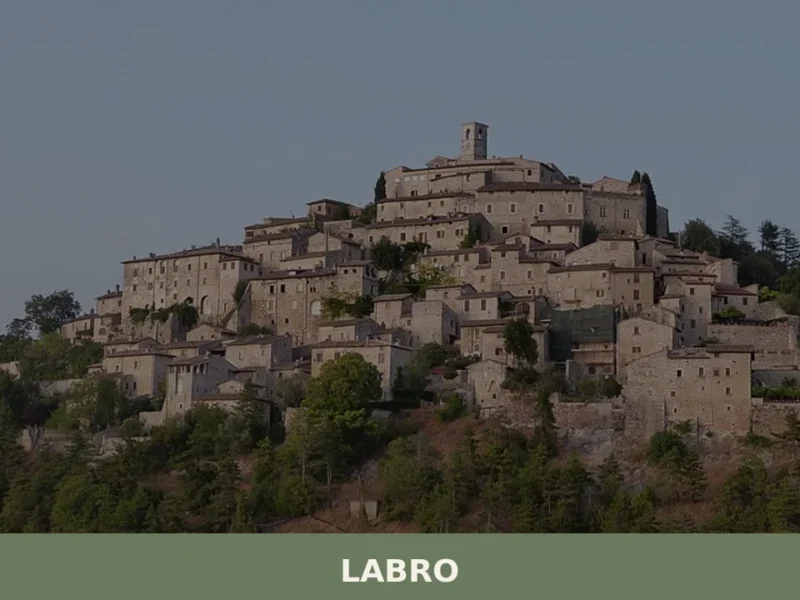
Labro
 Lake
Lake
 Mountain
What to see in Labro: medieval castle, Lake Piediluco views and PAT-certified guanciale in a 360-person village at 628 m. Plan your visit to this Rieti province gem.
Arlena di Castro
Hills
With its 839 registered inhabitants and an elevation of 260 metres above sea level, Arlena di Castro occupies a tuff plateau in the Tuscia area of the Viterbo province, just a few kilometres from the border with the Lazio Maremma. The municipal territory preserves traces of Etruscan presence documented by necropolises and ceramic materials found […]
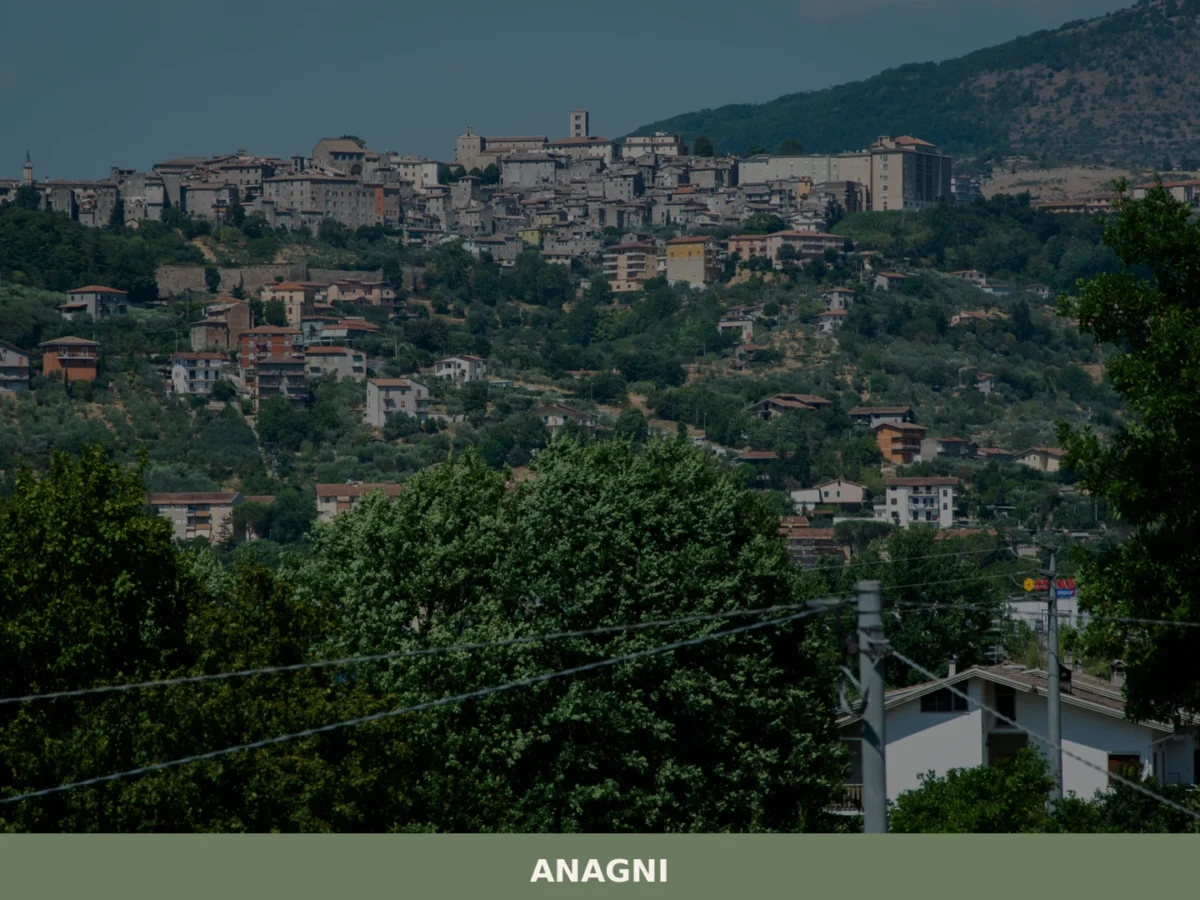
Anagni
Hills
What to see in Anagni: from the Cathedral of Santa Maria to the medieval Crypt. Complete guide with 5 attractions, practical tips and a one-day itinerary.
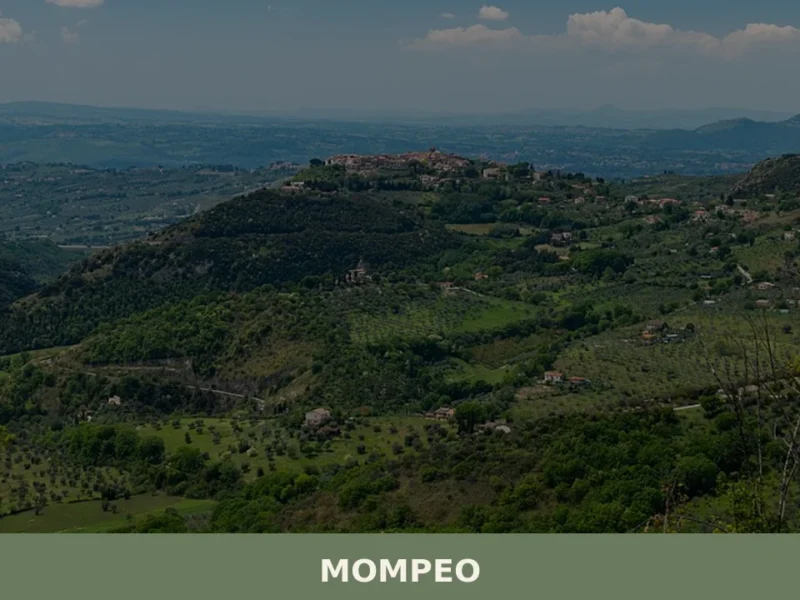
Mompeo
Hills
Discover Mompeo, a charming village in Lazio, Italy. Explore its rich history, stunning landscapes, and authentic Italian culture off the beaten path.
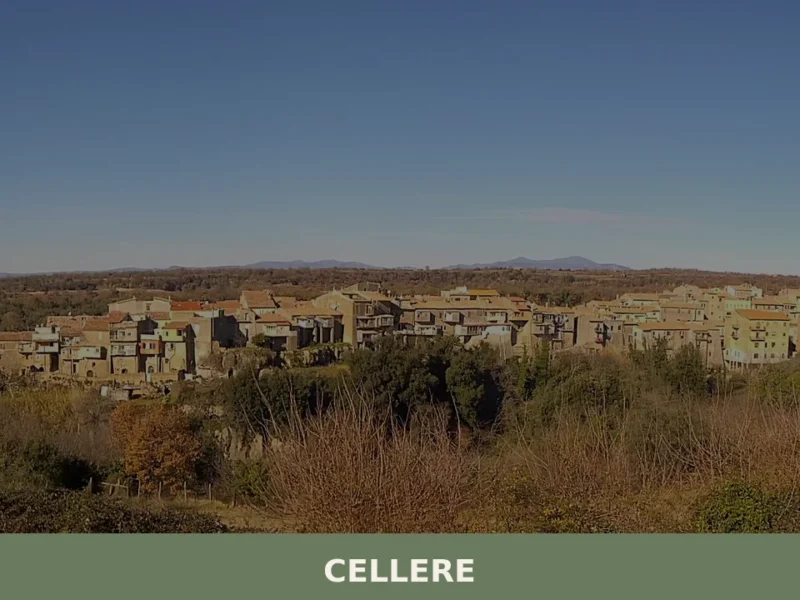
Cellere
Hills
what to see in cellere, Italy. Explore this Viterbo province village, 344 m high. Discover the Church of Sant'Egidio and local traditions. Read our guide!
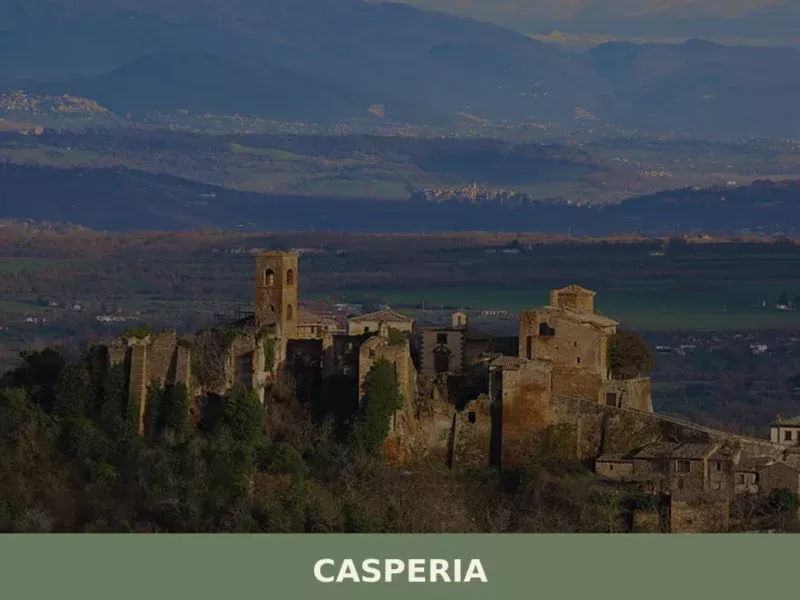
Casperia
Hills
What to see in Casperia, a hilltop village at 397 m in Rieti province: medieval centre, 3 PAT-certified products including guanciale. Plan your visit and where to stay.
Bracciano
Hills
Lake
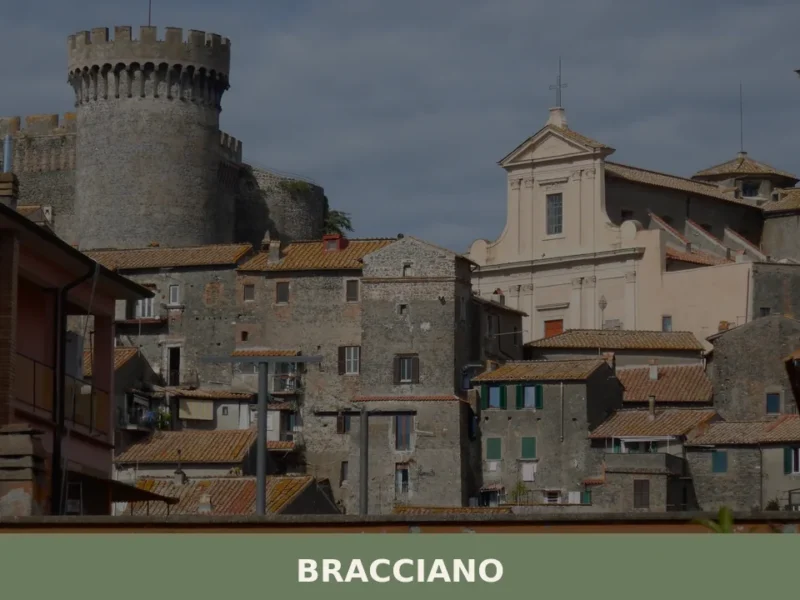
What to see in Bracciano, Italy: Discover its medieval castle and volcanic lake. Located 30 km (19 mi) from Rome, explore this Lazio village for a memorable day trip.
Ariccia
Hills
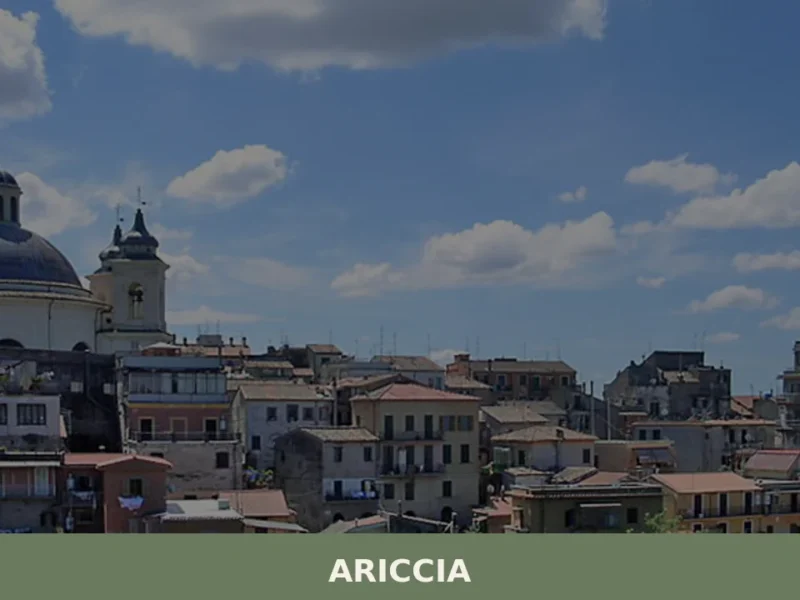
What to see in Ariccia: from Palazzo Chigi to the monumental bridge, discover the 5 top attractions. Plan your visit with this complete travel guide.
Arsoli
Mountain
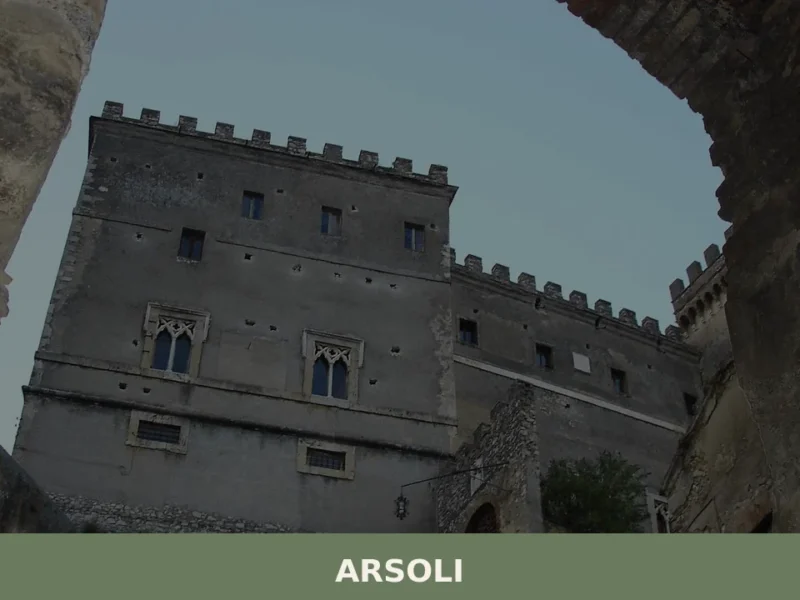
What to see in Arsoli, Lazio, Italy: a castle from the 11th century, medieval streets at 666 m altitude, and a Roman aqueduct. Discover the complete guide.
Arcinazzo Romano
Mountain
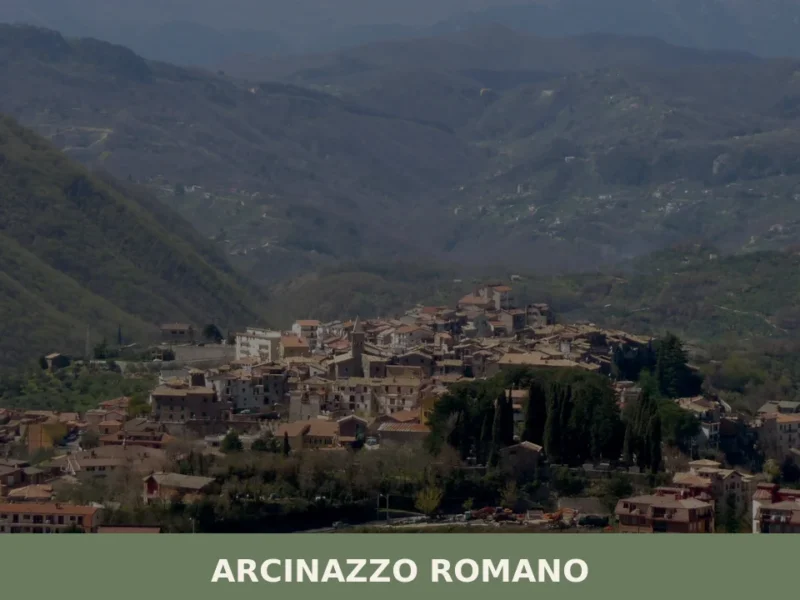
What to see in Arcinazzo Romano, Lazio, Italy: explore Trajan's Villa ruins at 831 m altitude, the plateau landscape and local traditions. Discover the complete guide.



🏡 Know Coreno Ausonio better than we do?
If you’re a local or have been there, your knowledge matters: add what’s missing or fix a detail on this page.