


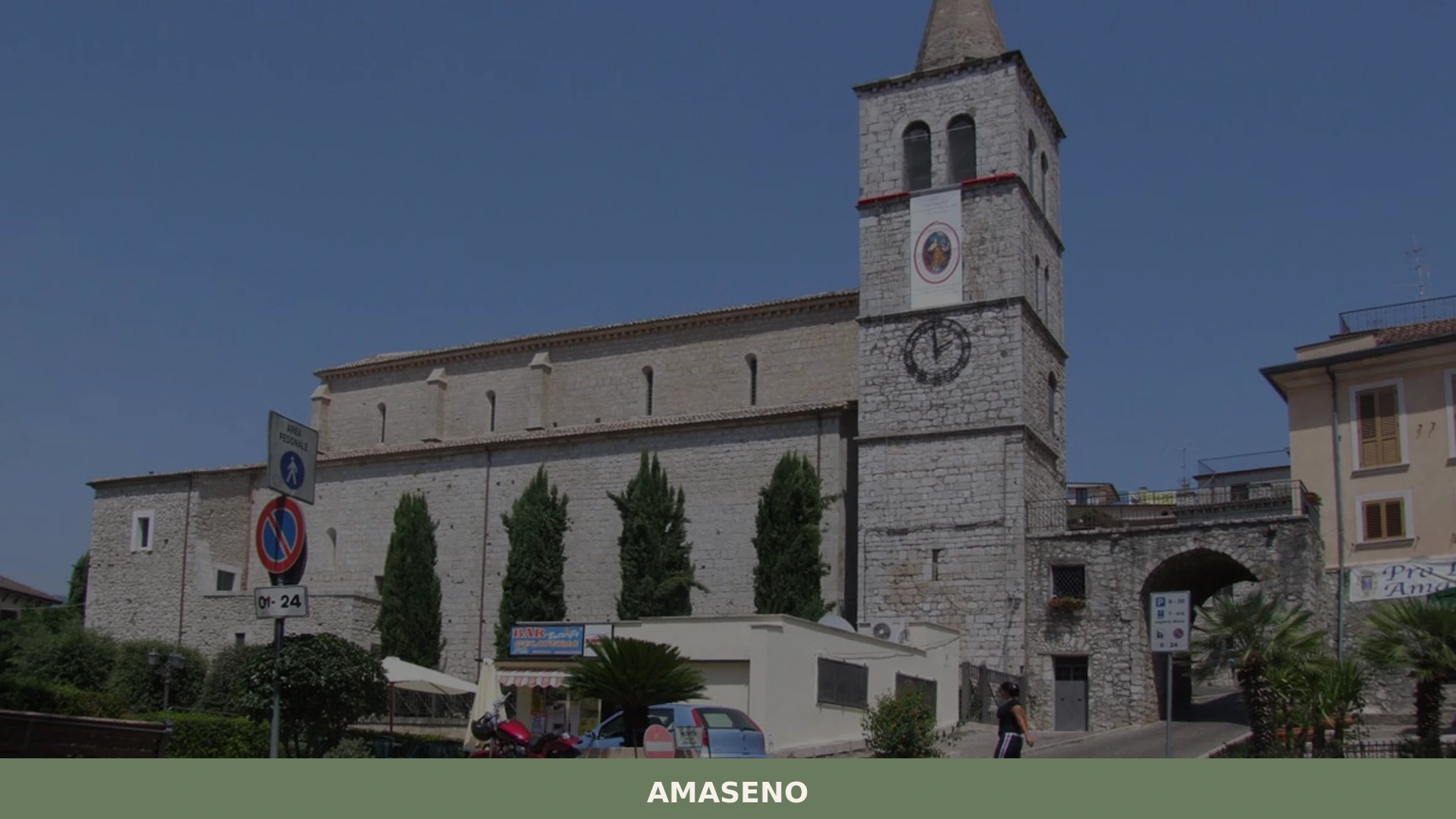
Amaseno
 Hills
Hills
What to see in Amaseno: visit the 5 top attractions in this Lazio village, from the Madonna Sanctuary to Palazzo Caetani. Discover the complete guide.
Discover Amaseno
Every 10 August, a sealed glass vial stored inside a cathedral consecrated in 1165 draws visitors and residents into the same stone nave. The vial contains blood — verified as such by scientific analysis — along with a fragment of skin and traces of ash and fat, all attributed to St. Lawrence, the Roman deacon martyred in the 3rd century.
The valley below the village absorbs the sound of bells the way limestone absorbs rain: completely, without echo.
Amaseno sits in an amphitheatre-like depression in the Monti Lepini mountain area, and the shape of the land is the first thing you notice when you arrive.
Deciding what to see in Amaseno begins with that cathedral and the liquefaction ritual — but the village, located about 100 kilometres (62 mi) southeast of Rome in the Province of Frosinone, Lazio, Italy, offers more than a single event. Visitors to Amaseno find a working agricultural community, a food economy built on water buffalo mozzarella and mountain goat’s cheese, and a landscape that has carried its name since Virgil mentioned it in the Aeneid.
The following guide covers the main attractions, local food, seasonal timing and practical travel information.
History of Amaseno
The name Amaseno appears in Virgil’s Aeneid, the Latin epic composed in the 1st century BC, which places it among the ancient settlements of the region later known as Lazio. In the local dialect the village is called Masé. The settlement developed within the Monti Lepini range, a limestone formation running roughly parallel to the Tyrrhenian coast south of Rome. The geography — a concave valley enclosed on several sides by hillsides — gave the community both natural shelter and agricultural land fed by water sources descending from the mountains.
The cathedral of St.
Mary of Amaseno was consecrated in 1165, a date that places its construction firmly in the Norman-influenced Romanesque period that shaped much of central Italy’s ecclesiastical architecture. From the moment the relic of St. Lawrence was installed, the village acquired a new identity: it became popularly known as the “Valley of St. Lawrence,” a designation that endured through the medieval period and into modern times. The relic — a vial of the martyr’s blood — gave Amaseno a significance that extended well beyond its administrative boundaries.
Pilgrimage traffic along the routes connecting Rome to the southern regions of the peninsula would have brought the village into regular contact with a wider world.
Over the following centuries, Amaseno remained primarily an agricultural settlement, its economy shaped by the resources the Monti Lepini landscape provided: grazing for water buffalo and goats, olive cultivation on the lower slopes, and subsistence farming on the valley floor. In the 19th and 20th centuries, emigration reshaped the community significantly.
Large numbers of Amaseno’s residents left for the United States, Canada and South America, particularly Brazil, following patterns common across the rural communities of central and southern Lazio. That diaspora created lasting connections between the village and overseas communities, some of which maintain ties to the St. Lawrence feast-day tradition to the present day. The village’s twin town is San Lorenzello, in the Campania region of Italy, a pairing that reflects shared historical and cultural ties across the southern Apennine area.
What to see in Amaseno, Lazio: top attractions
Cathedral of St.
Mary of Amaseno
The cathedral’s facade faces the central piazza, and the interior stonework dates the building’s consecration to 1165 — making it one of the older surviving religious structures in the Province of Frosinone. The nave houses the reliquary of St. Lawrence, a glass vial scientifically confirmed to contain blood, skin tissue, fat and ash belonging to the Roman deacon martyred in the year 258 AD. Standing inside, the most immediate detail is the reliquary case itself, positioned to receive visitors on feast day. The cathedral is accessible year-round, though the 10 August liquefaction event draws significantly larger crowds and warrants arriving early in the day.
The Liquefaction of the Blood of St. Lawrence
On 10 August each year, the vial of St.
Lawrence’s blood — stored permanently inside the cathedral — undergoes a documented physical change: the preserved blood liquifies in front of those present. Scientists have examined the reliquary and confirmed the biological composition of its contents: blood, a fragment of skin, fat and ash.
This event has been recorded and repeated annually since the cathedral’s consecration in 1165, giving it a continuous documented history of over 850 years. The phenomenon places Amaseno alongside a small number of Italian sites where similar relic liquefactions occur, the most widely known being that of San Gennaro in Naples. For those planning a visit specifically around this event, 10 August falls in high summer — temperatures in the valley regularly exceed 30°C (86°F).
The Valley of St. Lawrence
The amphitheatre-like shape of the valley surrounding the village is not a metaphor — the hillsides genuinely curve around the settlement on multiple sides, creating a contained basin that channels both air and sound inward. The valley floor sits within the Monti Lepini area, a limestone range that extends roughly 40 kilometres (25 mi) along the boundary between the provinces of Frosinone, Latina and Rome. The designation “Valley of St. Lawrence” dates to the popular renaming of the area following the installation of the relic in 1165.
Walking the perimeter of the village in the late afternoon, when the shadows of the surrounding ridges reach the valley floor, gives the clearest sense of why the topography defined the settlement’s character and its name.
The Monti Lepini Landscape
The Monti Lepini range forms the immediate physical context for everything in Amaseno.
The mountains reach elevations above 1,000 m (3,281 ft) in their higher sections, and the slopes descending toward the village carry the olive groves and grazing areas that have sustained the local economy for generations. The limestone geology produces a specific quality of spring water that feeds the lower valley, and it is this water — along with the pasture conditions — that defines the flavour profile of the area’s dairy products.
For visitors, the landscape is best understood by taking one of the roads that climbs out of the valley toward the higher ground, where the full extent of the basin and its relationship to the surrounding ridges becomes clear.
Agricultural and Dairy Traditions of the Valley
Amaseno’s identity as a farming community is not incidental — the Wikipedia record describes its inhabitants as primarily farmers, and the evidence is visible in the land use surrounding the village. Water buffalo graze on the valley floor, supplying the milk for the area’s principal food product. Goat herding on the steeper slopes supports the production of marzolina, a local goat’s milk cheese whose name derives from marzo, March, indicating a traditional spring production cycle.
Olive cultivation occupies the mid-slope terrain. For visitors interested in the food economy, the fields and herds visible from the village roads offer a direct reading of what will appear on the table. Those arriving by car from the direction of Frosinone, approximately 30 kilometres (19 mi) to the north, pass through this agricultural landscape before reaching the village centre.
Local food and typical products of Amaseno
The food produced in and around Amaseno reflects the specific conditions of a mountain valley in the southern Monti Lepini: water sources capable of sustaining large livestock, sloped terrain suitable for olive trees and goat pasture, and a seasonal rhythm that has historically governed both production and consumption.
The village sits in a zone where the agricultural traditions of Lazio’s interior provinces — Frosinone in particular — intersect with the dairy heritage of the plains to the west. Farming, not tourism, has driven the local food economy, which means what you find in Amaseno is produced for local consumption first and sale second.
The primary product is water buffalo mozzarella, made from the full-fat milk of the bufala herds that graze the valley floor.
The cheese is produced by hand-stretching heated curd — a process called pasta filata — into smooth, elastic balls that retain a thin membrane of surface milk. Fresh mozzarella of this type has a slightly sour, milky interior and a surface that resists gentle pressure before yielding.
It deteriorates quickly and is best eaten within 24 hours of production. The other significant dairy product is marzolina, a goat’s milk cheese whose name signals its traditional spring production window. The cheese is firm, with a compact texture and a pronounced lactic flavour that sharpens with age. Both cheeses are best sourced directly from local producers rather than from retail distributors, where the product will already be older.
The third staple product is olive oil, pressed from olives cultivated on the slopes surrounding the valley. The Monti Lepini area produces oils with a low acidity and a grassy, slightly bitter finish typical of central Italian cultivars. No EU certification data for Amaseno-specific products is available from the sources consulted for this guide; the water buffalo mozzarella produced in this zone is associated with the broader Mozzarella di Bufala Campana DOP area, which covers parts of Lazio including the Frosinone province.
Visitors looking to purchase directly should ask at local farms or at the village market for produce labelled with the producer’s name and municipality.
The best period for purchasing fresh marzolina is spring, when production peaks and the cheese is available at its freshest.
Water buffalo mozzarella is produced year-round, with supply most consistent between March and October when the herds are at full grazing weight. Olive oil is typically pressed in late October and November, and producers in the area occasionally sell directly from the farm during and immediately after the harvest period.
Festivals, events and traditions of Amaseno
The central fixed event in Amaseno’s calendar is the feast of St. Lawrence on 10 August, the date on which the Roman Church commemorates the martyrdom of the deacon Lawrence in 258 AD. On this day, the reliquary vial inside the Cathedral of St. Mary of Amaseno is observed to undergo the liquefaction of its contents.
The event draws residents, members of the diaspora community returning from abroad, and visitors from the surrounding region.
The ritual takes place inside the cathedral and is presided over by the local clergy. Given the documented scientific verification of the reliquary’s contents, the event occupies a position that is simultaneously religious observance and verified physical phenomenon — a combination that sets it apart from purely devotional festivals elsewhere in Lazio.
Beyond the 10 August feast, the village’s religious and community life follows the pattern common to agricultural settlements in the Province of Frosinone: local saints’ days marked by processions through the village streets, seasonal gatherings tied to the harvest and dairy cycles, and the informal food traditions associated with spring goat’s cheese production and the autumn olive pressing. The popular designation of the surrounding area as the “Valley of St.
Lawrence” means that the August feast functions as something closer to a civic identity event than a purely liturgical one — the name of the valley and the name of the feast are inseparable, and have been since 1165.
When to visit Amaseno, Italy and how to get there
The most practical window for a first visit to Amaseno, Lazio, Italy falls between late April and late June, or in September and early October.
Spring brings the valley’s agricultural landscape to full production — goat herds are active, the olive groves have leafed out, and the temperatures in the Monti Lepini basin are consistently between 15°C and 24°C (59°F and 75°F), which makes walking the village and surrounding roads comfortable. Autumn is the olive harvest season, with October pressing activity giving visitors a reason to visit farms directly. The 10 August feast is the single strongest reason to visit in summer, but the valley in August can be hot, and accommodation in the area books up earlier than usual around that date.
Winter is quiet and cold, with the higher elevations of the Monti Lepini occasionally receiving snow above 600 m (1,969 ft).
Amaseno sits approximately 100 kilometres (62 mi) southeast of Rome, making it a feasible day trip from the capital by car in under 90 minutes depending on traffic. The most direct route from Rome follows the A1 motorway (Autostrada del Sole) south to the Frosinone exit, then continues southeast via the SS156 dei Monti Lepini road toward the valley. From Frosinone, the village is about 30 kilometres (19 mi) south. By public transport, the nearest mainline train station is at Frosinone, served by Trenitalia regional and intercity services from Roma Termini; journey time is approximately 50-70 minutes.
From Frosinone station, onward travel to Amaseno requires a local bus or hired vehicle, as direct rail connections to the village do not exist. The nearest international airport is Rome Fiumicino (Leonardo da Vinci), approximately 130 kilometres (81 mi) from Amaseno by road. Visitors driving from the airport should allow around 90 minutes. International visitors should be aware that English is not widely spoken in smaller shops and at local farms; carrying cash in Euros is advisable, as card payment infrastructure is limited outside the larger centres.
Travellers with time beyond a single day can use Frosinone as a base and combine Amaseno with other villages in the Monti Lepini and southern Lazio area.
For instance, Campoli Appennino, a small comune in the Frosinone province set in the Apennine foothills, shares a similar landscape character and agricultural economy, and extends the territory covered without requiring a long detour.
Where to stay near Amaseno
Accommodation directly in Amaseno is limited, reflecting the village’s size and its primarily agricultural economy.
The surrounding area offers agriturismo options — farm-stay establishments that combine accommodation with access to local food production — which are the most common lodging format in the Monti Lepini interior. Frosinone, 30 kilometres (19 mi) north, provides a wider range of hotels and is a practical base for visitors planning to cover multiple villages in the province.
Visitors planning a stay around the 10 August feast should book well in advance, as local capacity is small relative to the number of people the event attracts.
Those approaching from the direction of Rome who want a brief stop en route might also consider that Bassano Romano, in northern Lazio, and Capodimonte, on the shores of Lake Bolsena, represent other rural Lazio destinations worth combining into a longer regional itinerary, each with its own distinct landscape and accommodation offer for travellers exploring what to see in Amaseno and the surrounding province.
📷 Photo Gallery — Amaseno
Nearby Villages near Amaseno
In Lazio More villages to discover
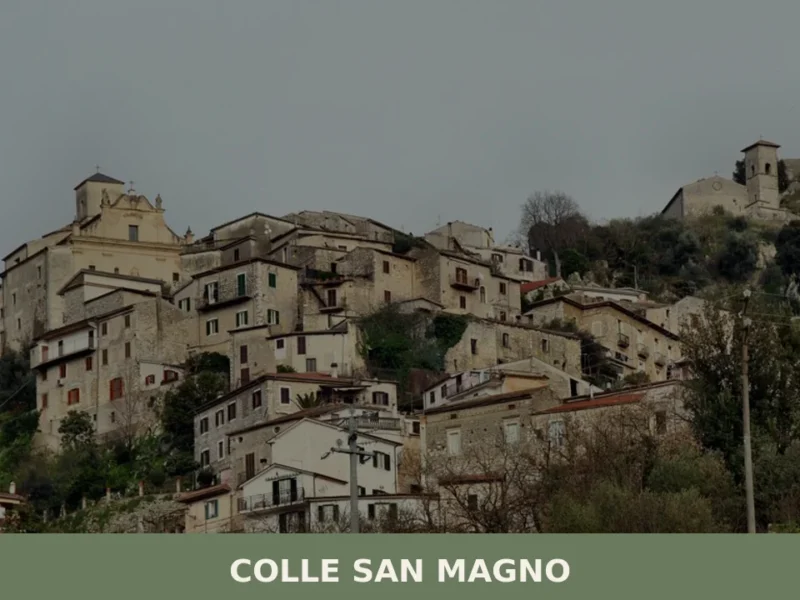
Colle San Magno
Hills
What to see in Colle San Magno, Lazio, Italy: discover a medieval castle, asphalt mines and a hilltop church at 540 m. Read the complete travel guide.
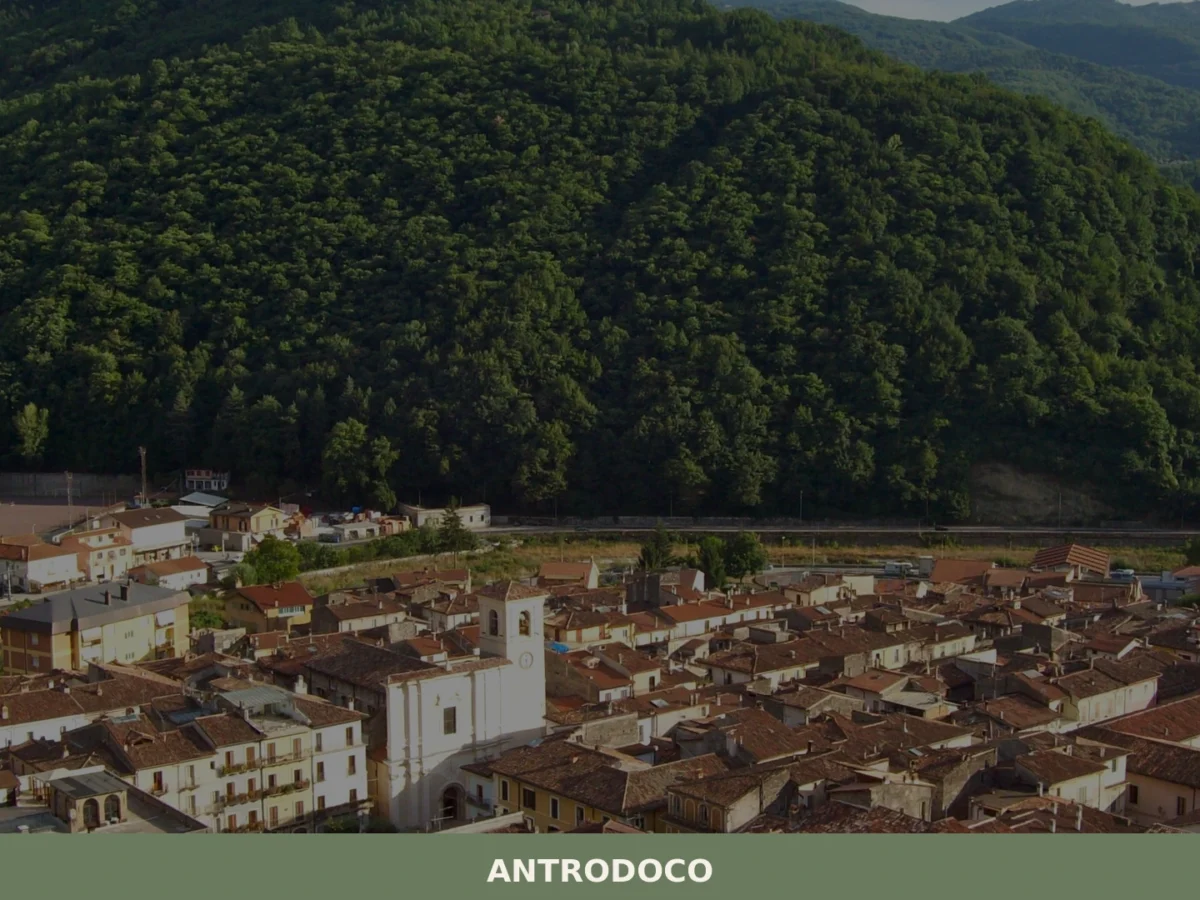
Antrodoco
Hills
What to see in Antrodoco: discover the 5 main attractions, the history of this Lazio village and how to plan your visit. A complete guide for your itinerary.
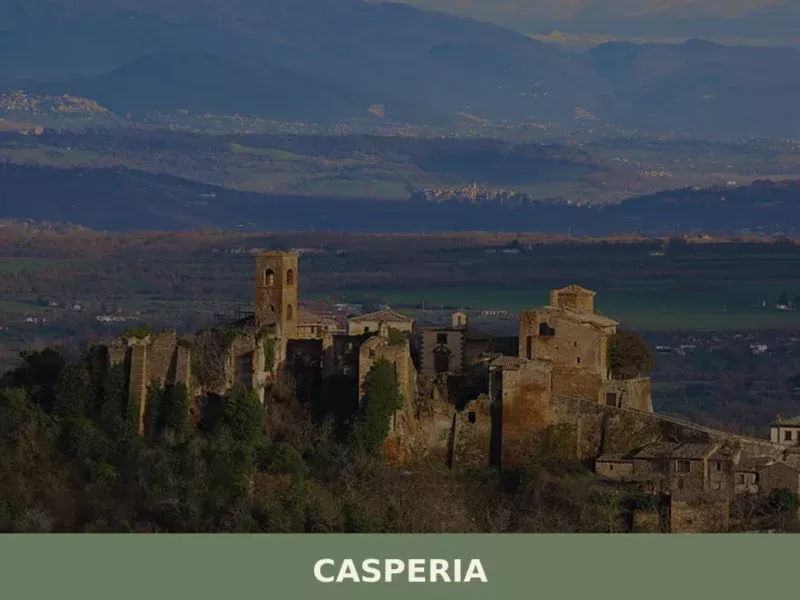
Casperia
Hills
What to see in Casperia, a hilltop village at 397 m in Rieti province: medieval centre, 3 PAT-certified products including guanciale. Plan your visit and where to stay.
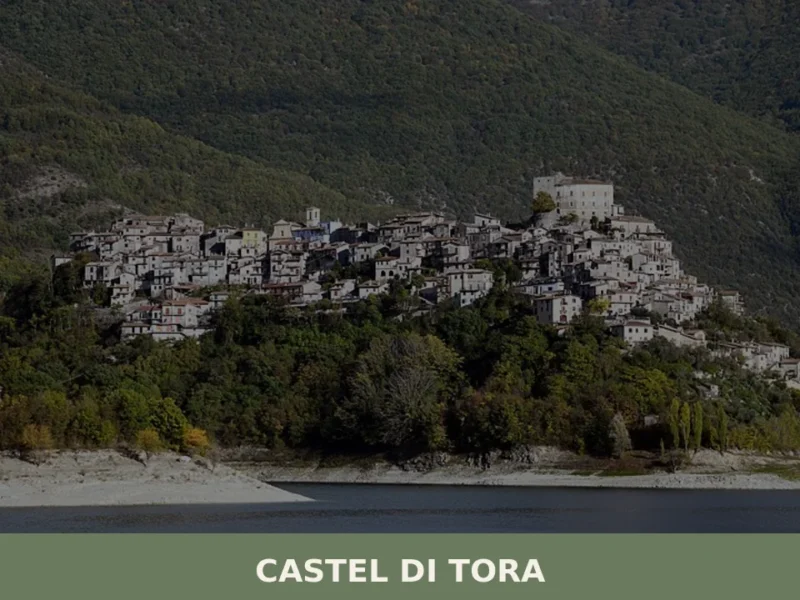
Castel di Tora
 Lake
Lake
 Mountain
What to see in Castel di Tora: medieval village at 607 m above Lago del Salto, 292 residents, 3 PAT-certified products. Plan your visit with our complete guide.
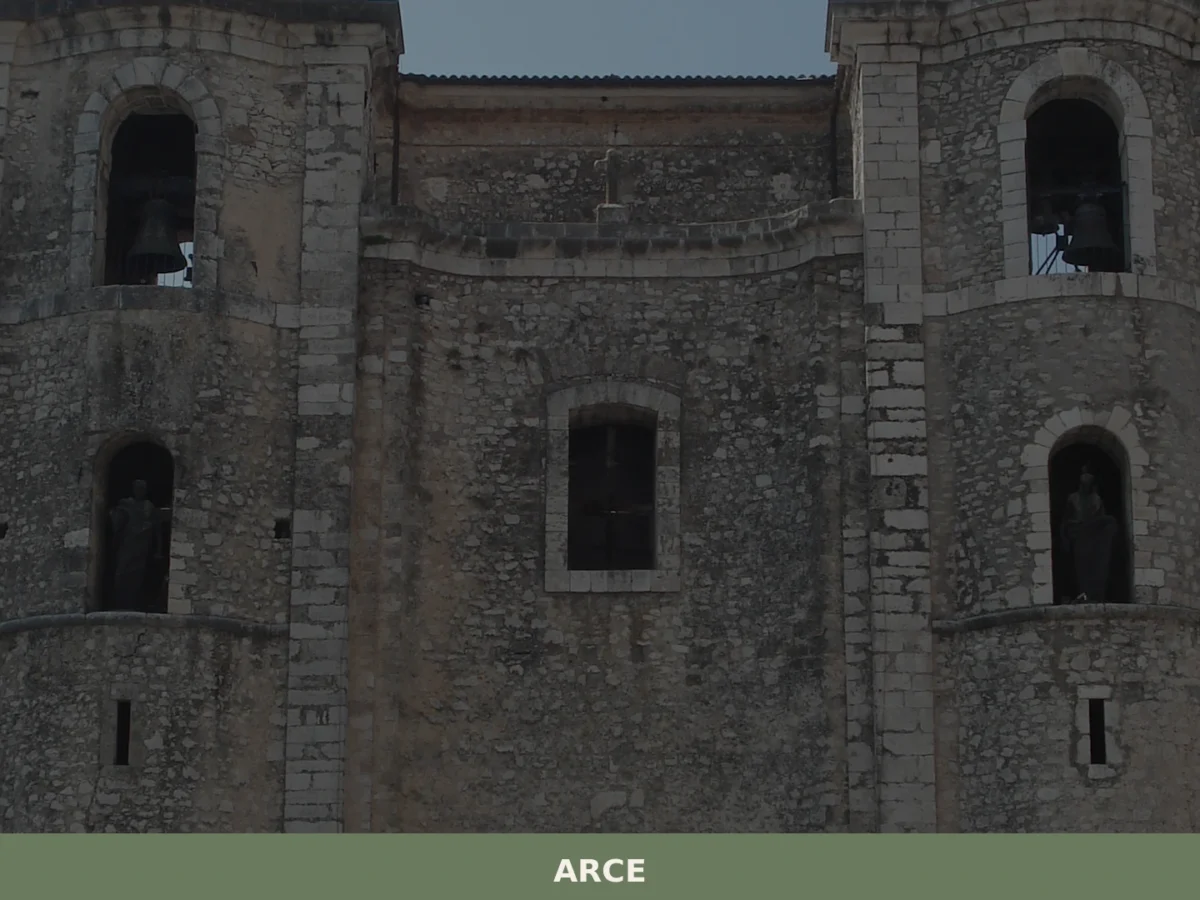
Arce
 Plains
What to see in Arce: discover the 5 unmissable aspects of this Lazio village. From medieval fortresses to scenic views, your complete guide. Plan your visit!
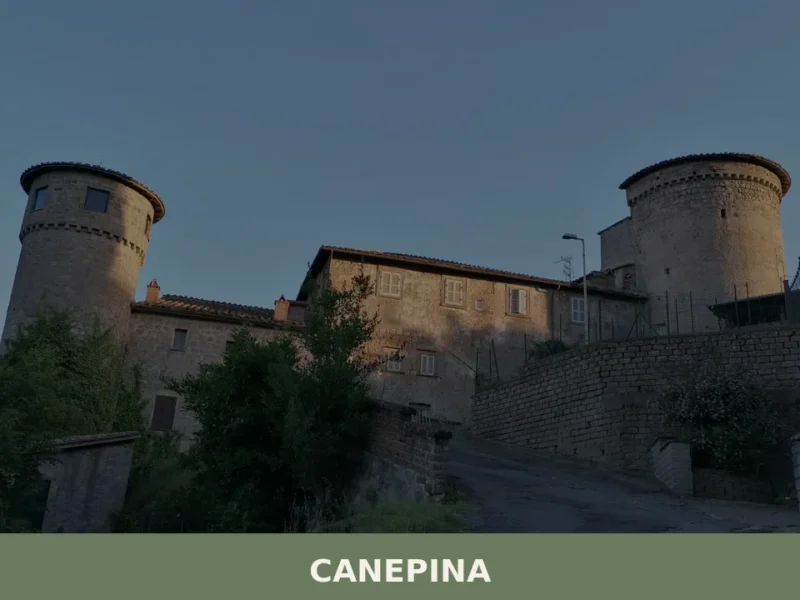
Canepina
Hills
What to see in Canepina, Lazio, Italy: explore this 3,127-inhabitant hill village 60 km from Rome. Discover its hemp heritage, patron saint feast and local cuisine.
Arlena di Castro
Hills
With its 839 registered inhabitants and an elevation of 260 metres above sea level, Arlena di Castro occupies a tuff plateau in the Tuscia area of the Viterbo province, just a few kilometres from the border with the Lazio Maremma. The municipal territory preserves traces of Etruscan presence documented by necropolises and ceramic materials found […]
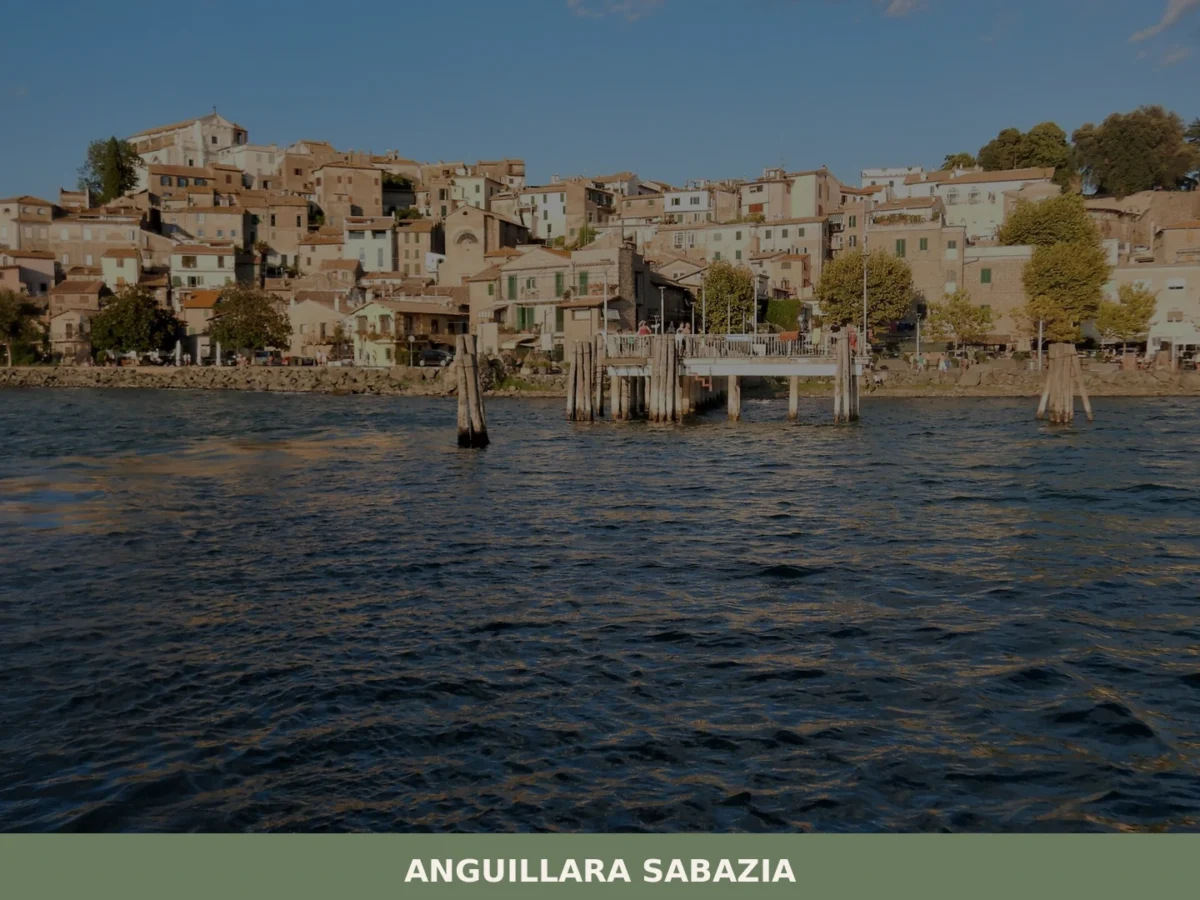
Anguillara Sabazia
Lake
Plains
What to see in Anguillara Sabazia, Lazio, Italy: lake beaches, a Roman villa 18 m tall, and 18,816 residents. Discover top things to do and how to get there.
Anticoli Corrado
Hills
Stone walls rise in tight formation above the Aniene valley, 40 kilometres (25 mi) northeast of Rome, where a cluster of houses at 508 metres (1,667 ft) altitude holds the ruins of a medieval castle and an 11th-century church. The fountain in Piazza delle Ville was cast by Arturo Martini, a sculptor whose work now […]
Canino
Hills
What to see in Canino: from historic monuments to traditional cuisine. Discover the main attractions and how to get to this village in Lazio.




🏡 Know Amaseno better than we do?
If you’re a local or have been there, your knowledge matters: add what’s missing or fix a detail on this page.