


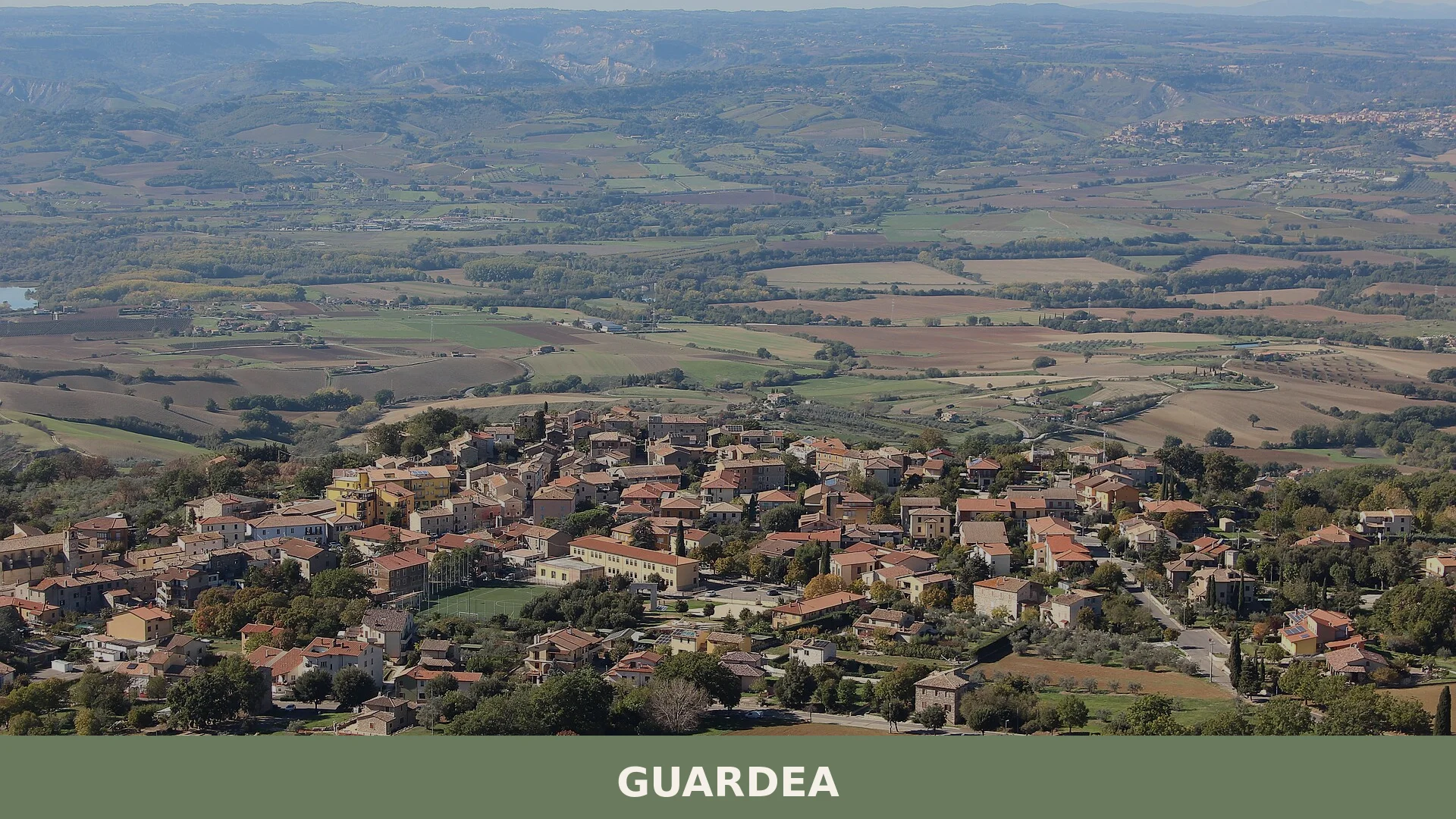

Guardea is a hilltop comune in the province of Terni, Umbria, where pre-Roman enclosures, a Norman castle and a storied landscape combine to create one of the region’s most layered small-town destinat
Discover Guardea
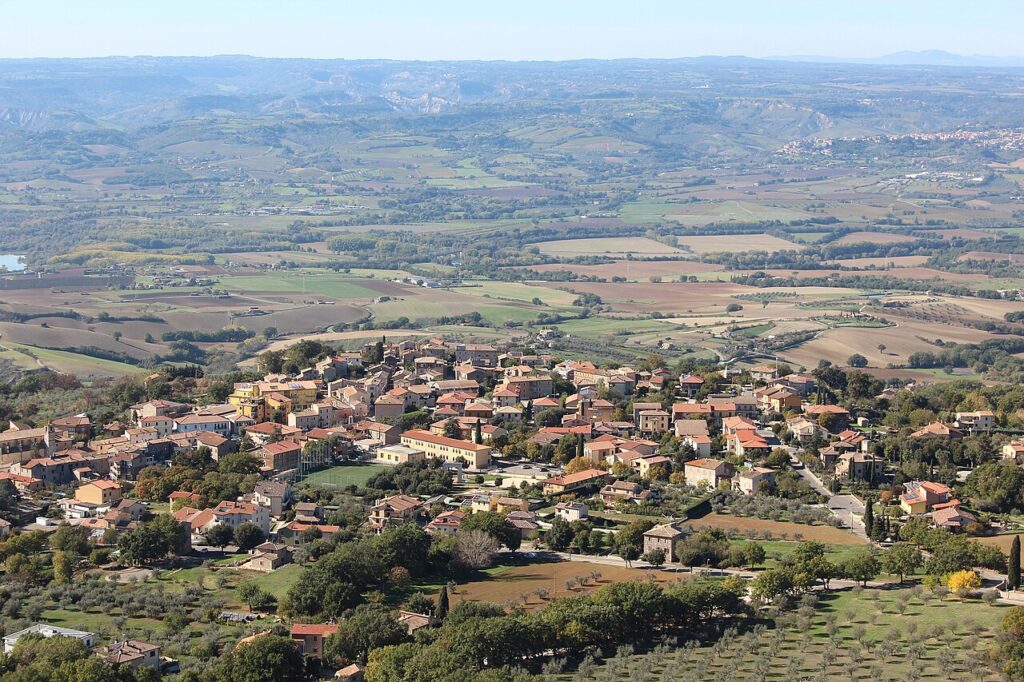
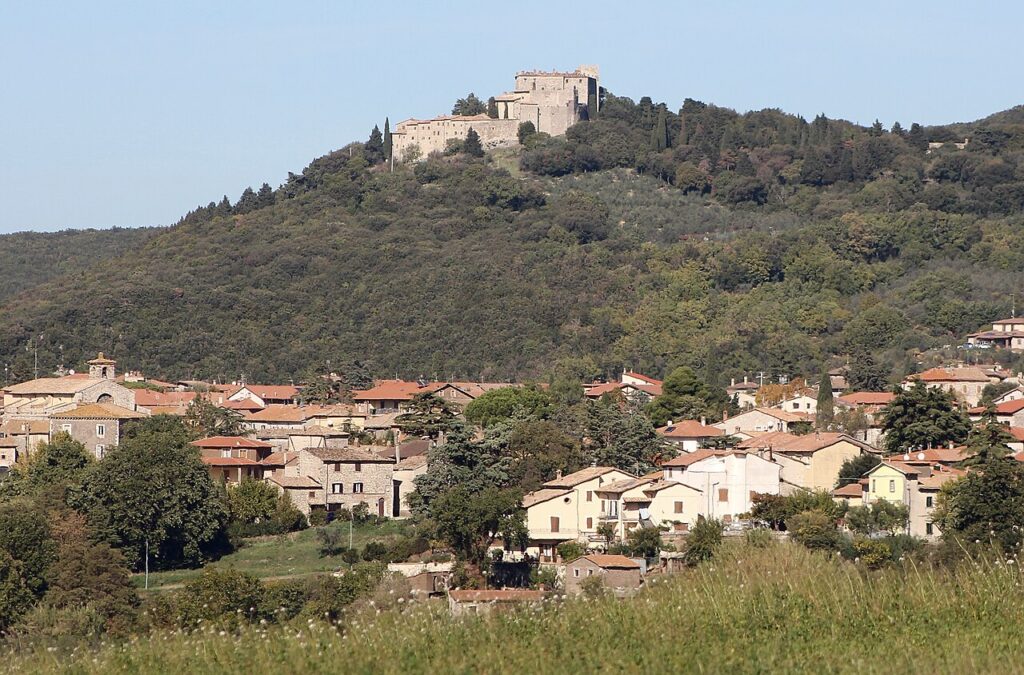
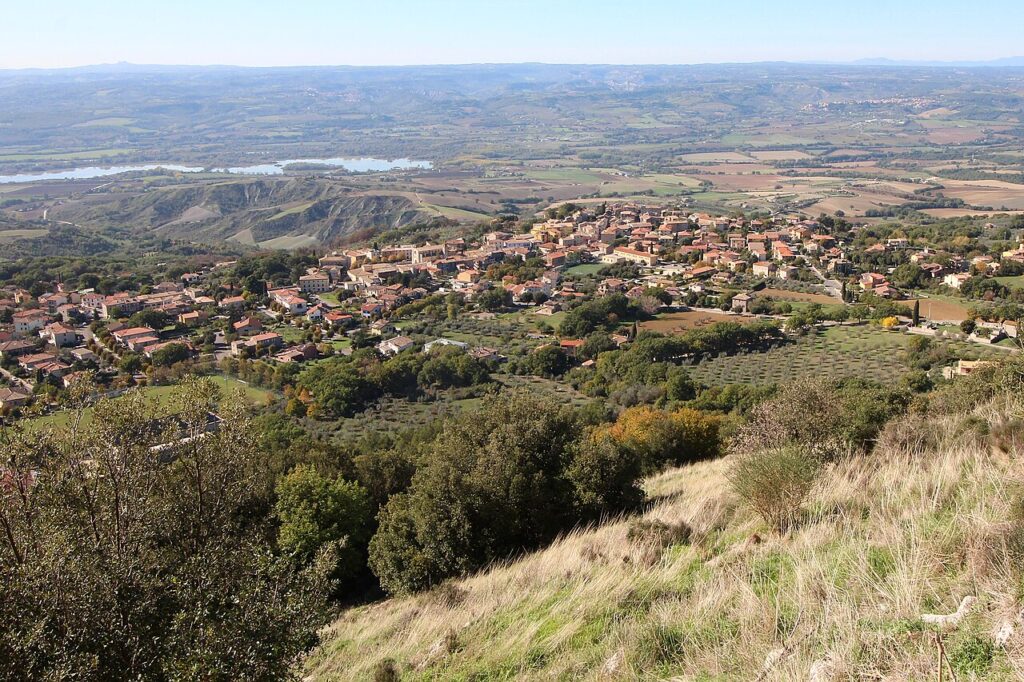
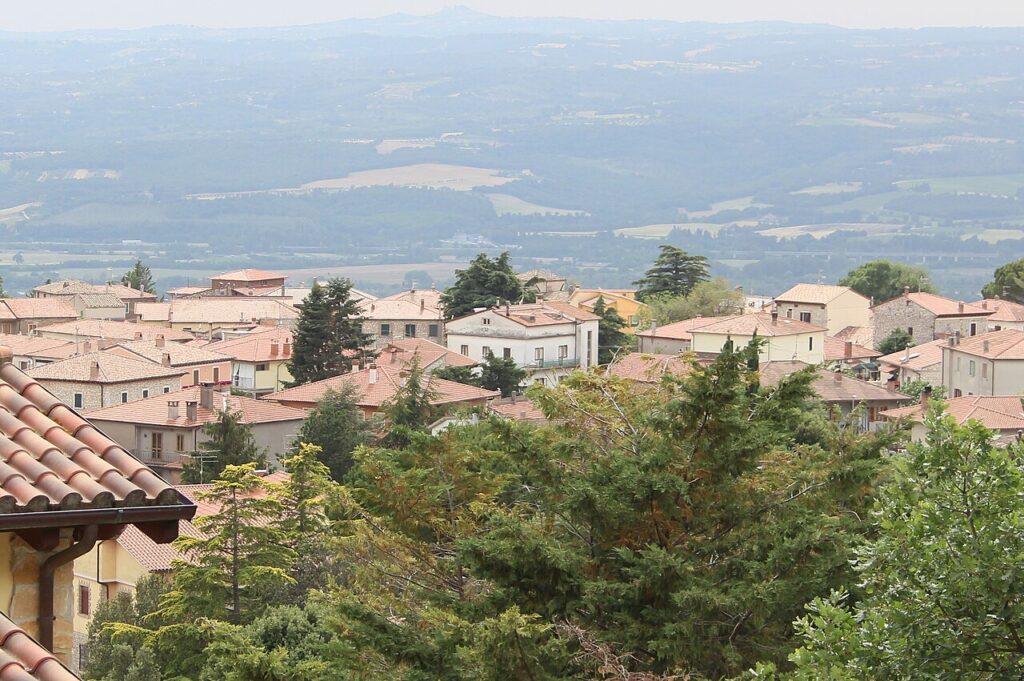
Guardea is a hilltop comune in the province of Terni, Umbria, sitting at 387 metres above sea level with a surface area of about 39.3 square kilometres and a population of roughly 1,735 residents. Positioned in the Valle del Tevere and bordering municipalities in the neighbouring region of Lazio, it occupies two distinct ridges — Guardea Vecchia, rising to 387 metres, and Il Poggio — whose commanding silhouettes have shaped the settlement’s layout and defensive history across many centuries.
Guardea village in Umbria rewards visitors with an unusually layered past: pre-Roman earthworks on Monte Pianicel Grande and Monte Castellari, a medieval castle that passed through the hands of Cesare Borgia, Carlo V, and Olimpia Maidalchini before becoming an art centre, and a parish church preserving a canvas by the eighteenth-century Roman School painter Giacomo Zoboli. More recently, its Napoleonic-era cemetery served as the principal location for Michele Soavi’s 1994 film Dellamorte Dellamore, while the Valle dei Calanchi and the naturalistic oasis of Lago di Alviano — whose entrance lies within the frazione of Madonna del Porto — give the surrounding landscape a dramatic, almost otherworldly quality.
Guardea village in Umbria: history and origins
Guardea is a hilltop settlement in Umbria whose recorded history stretches from pre-Roman times through a medieval founding in the late fourteenth century, a feudal passage to the Marsciano family in the sixteenth century, and a sequence of contested castle lordships involving some of the most powerful figures of Italian and European history. Archaeological remains of non-urbanised pre-Roman settlements, together with place-name evidence suggesting an ancient river landing on the Tiber, confirm that the territory has been continuously inhabited since remote antiquity. Two pre-Roman defensive enclosures, mirroring each other and maintaining visual contact, are still visible on the summits of Monte Pianicel Grande and Monte Castellari.
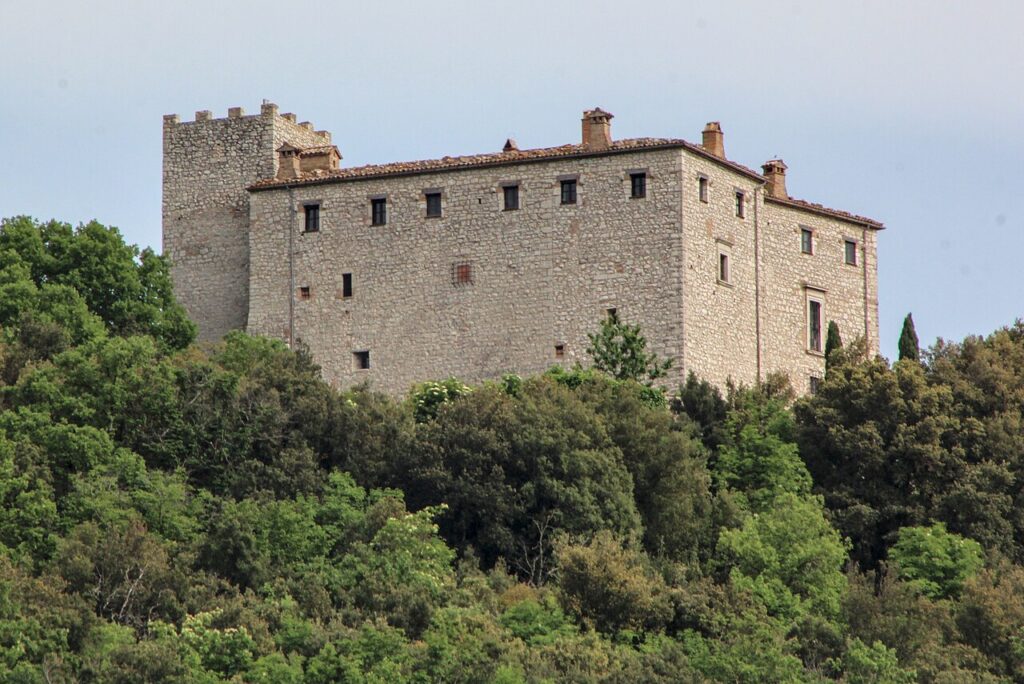
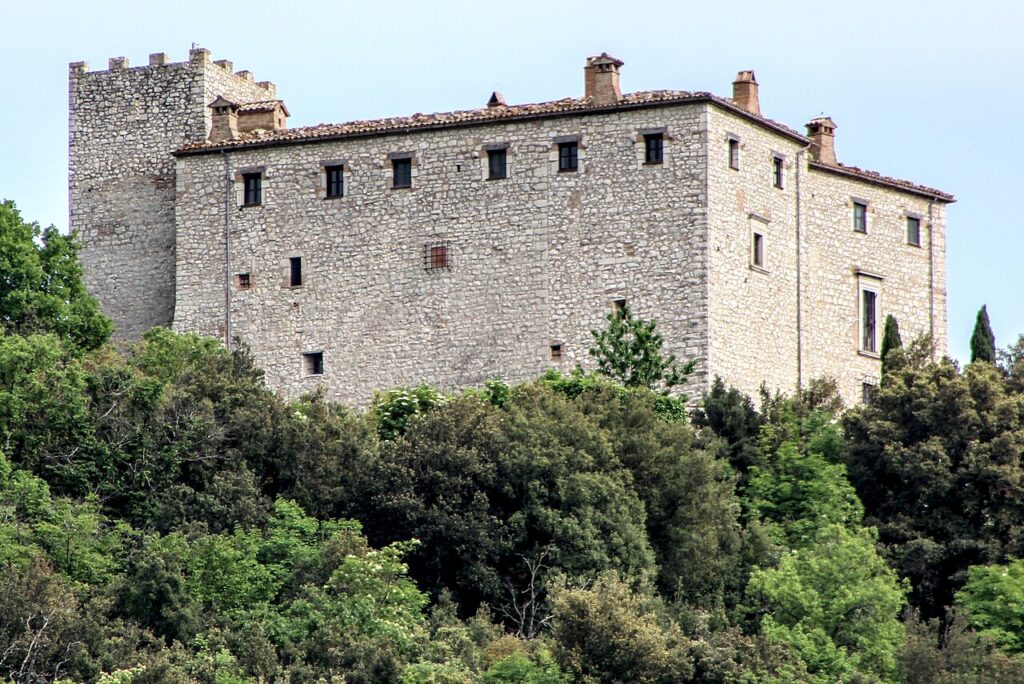
The Castello del Poggio concentrates much of Guardea’s turbulent past. Founded in 1034 as an imperial fief on the site of an earlier Byzantine tower dating to the seventh century, it was built by the Normans and underwent a significant restoration by Antonio da Sangallo the Younger in the sixteenth century. Control of the castle shifted repeatedly among Todi, Orvieto, and the Apostolic Camera. Among those who seized it at various times were Frederick II of Swabia, Charles V of Habsburg, Cesare Borgia and Filippo di Savoia-Nemours, and finally Princess Olimpia Maidalchini Doria Pamphili. The property briefly functioned as an art centre, hosting among its guests the Nobel laureate John Steinbeck. After decades of neglect, private buyers acquired and restored it in 1981; the Ministry of Cultural Heritage subsequently recognised it as a national monument.
Castles, Churches and the Landscape Between Two Hills
Guardea’s principal sites include a medieval castle, a fortified hilltop borgo, several churches spanning the seventeenth to nineteenth centuries, and a natural oasis along the Tiber valley — all within a compact territory of roughly 39.3 square kilometres.
Castello del Poggio
Founded in 1034 as an imperial fief on the site of an earlier Byzantine tower dating to the seventh century, the Castello del Poggio was built by the Normans and later underwent a significant restoration by Antonio da Sangallo the Younger in the sixteenth century. Its history reflects the contested nature of the territory: ownership passed among Todi, Orvieto and the Apostolic Chamber, and the castle was seized at various times by Frederick II of Swabia, Charles V of Habsburg, Cesare Borgia and Filippo di Savoia-Nemours, and finally Princess Olimpia Maidalchini Doria Pamphili. It served as an art centre and hosted the Nobel laureate John Steinbeck. After decades of abandonment it was purchased and restored from 1981 onward; the reconstruction was carried out by architect Franco Della Rosa on commission from Aleandro Tommasi. The Ministry of Cultural Heritage has recognised it as a national monument. The castle currently houses the Club of Budapest and a local branch of Legambiente.
Guardea Vecchia
On a hill rising to 387 metres above sea level, the ruins of the original fortified settlement cover approximately 8,000 square metres. About one third of the enclosure wall survives in elevation. The site dates to at least the ninth century and was progressively abandoned after the late fourteenth century, when a peace treaty between Todi and Amelia required the dismantling of the old castle of Guardege.
Chiesa dei Santi Pietro e Cesareo
The parish church was built in the early decades of the eighteenth century on a site previously occupied by a rural church dedicated to Saint Cecilia. It preserves an eighteenth-century silver reliquary ostensory containing a bone fragment of Saint Caesarius, deacon and martyr, with a cartouche inscribed “S. Cesareo D. M.” — the piece is worked in repoussé silver and gilded carved wood, decorated with volutes, leaves and an oval-framed reliquary case. In the second left-hand chapel hangs a painting, Mary Receives the Angel’s Announcement, by Giacomo Zoboli, an eighteenth-century painter of the Roman School.
Chiesa di Santa Lucia
Completed towards the end of the nineteenth century, the church contains a fresco by the Perugian painter Domenico Bruschi.
Convento di Sant’Illuminata
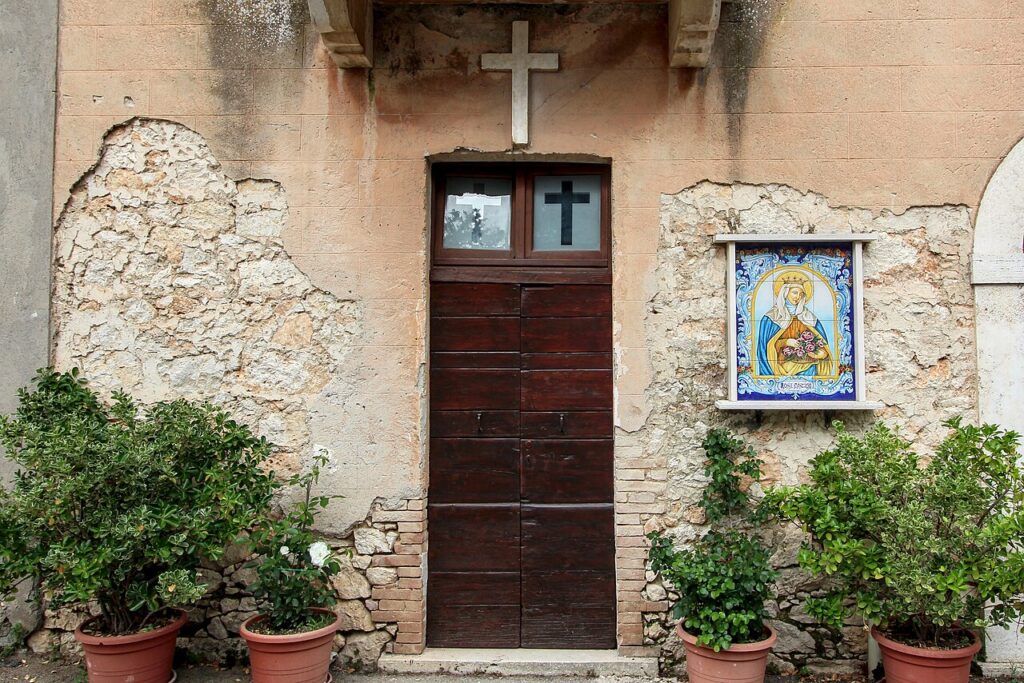
Also known as the Grotto of Saint Francis, this convent was largely reconstructed — around eighty per cent of the structure — by architect Franco Della Rosa between 2018 and 2024.
Oasi Naturalistica Lago di Alviano
The entrance to this nature reserve and a substantial portion of the lake itself lie within the frazione of Madonna del Porto, part of the municipal territory of Guardea. The lake extends further into the neighbouring municipalities of Alviano and Civitella d’Agliano.
Valle dei Calanchi and the Pre-Roman Hilltops
Part of the badlands landscape known as the Valle dei Calanchi runs through the municipality, continuing into the area of Bagnoregio. On the summits of Monte Pianicel Grande and Monte Castellari, two pre-Roman enclosure walls — symmetrically positioned and intervisible — remain standing and are among the more unusual archaeological features of the area.
Cimitero Vecchio
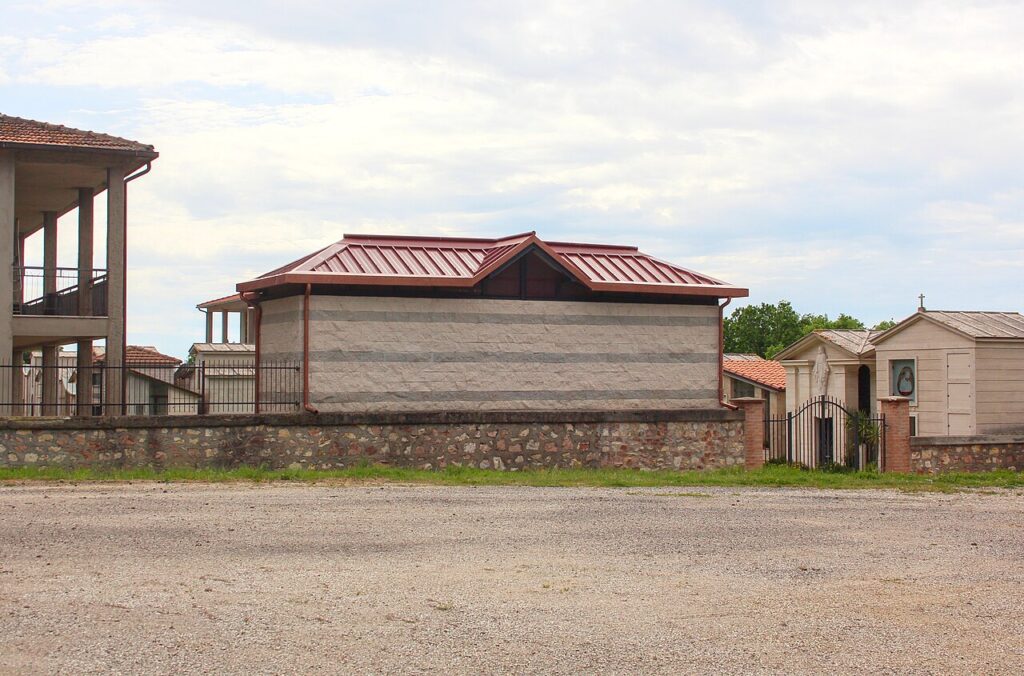
The old cemetery dates to the Napoleonic period. It served as the filming location for Michele Soavi’s 1994 film Dellamorte Dellamore.
Flavours of Guardea and the Terni Territory
Guardea is a member of the Città dell’Olio and Città del Pane associations, signalling a local food culture rooted in olive oil and bread, while the wider Terni province contributes a rich roster of certified products that visitors will find across the area’s markets and restaurants.
Among the protected designations linked to this territory, the Pampepato di Terni IGP stands out as a genuinely regional speciality — a spiced, pepper-laced cake historically tied to the Terni area. For meat lovers, the zone produces Agnello del Centro Italia IGP and Vitellone bianco dell’Appennino Centrale IGP, while Pecorino Toscano DOP, Umbria DOP olive oil, and Salamini italiani alla cacciatora DOP round out the table. These are provincial and regional products rather than exclusives of Guardea itself, but they define the flavour of any meal in this corner of Umbria.
The Umbrian charcuterie tradition is equally present: cured cuts such as capocollo, guanciale, lombetto, corallina salame, and the distinctive mazzafegati (a seasoned liver sausage) are all part of the broader local food heritage, prepared according to recipes handed down across the region.
On the wine side, Guardea sits within reach of several notable denominations. The Lago di Corbara DOC and Amelia DOC are the closest appellations, alongside the Allerona IGT and Narni IGT. Further afield but still within the Umbrian frame, the Montefalco Sagrantino DOCG and Torgiano Rosso Riserva DOCG represent the region’s finest reds.
Getting to Guardea and Planning Your Visit to the Tiber Valley
Guardea is best reached by car along the roads of the Tiber Valley, sitting at around 387 metres above sea level in the hilly interior of Terni province, near Orvieto to the south-west; spring and early autumn offer the most comfortable conditions for exploring its hilltop ruins, medieval castle, and surrounding natural landscape.
The village lies close to the border with Lazio, and its geography — positioned between two flanking hills — makes it a naturally scenic base for day trips. The Oasi naturalistica Lago di Alviano, whose main entrance sits in the Guardea fraction of Madonna del Porto, is an outstanding natural stop, while the Valle dei Calanchi extends south-west toward Bagnoregio. Nearby Attigliano lies in the same stretch of the Tiber Valley and makes for an easy companion visit. To the south-west, the great hill-city of Orvieto is a logical day excursion, reachable in well under an hour by car. Heading north-east into Umbria, Acquasparta adds another layer to a multi-village itinerary through the Terni hills.
| Departure | Distance | Time |
|---|---|---|
| Orvieto | approx. 30 km | approx. 35 min |
| Attigliano | approx. 18 km | approx. 20 min |
| Terni | approx. 45 km | approx. 50 min |
| Roma | approx. 115 km | approx. 1 h 20 min |
The local feast day of San Pietro on 29 June gives visitors an authentic glimpse into village life if the date aligns. The institutional website www.comune.guardea.tr.it is the most reliable source for current opening times and local event information.
Frequently asked questions about Guardea
When is the best time to visit Guardea?
June is ideal for visiting Guardea, particularly the third Sunday when the Feast of Beato Pascuccio, the village's patron saint, is celebrated. Summer offers warm weather perfect for exploring the hilltop settlement and surrounding natural landscapes like Valle dei Calanchi and Lago di Alviano. Spring and early autumn also provide pleasant conditions with fewer crowds, ideal for hiking and photography.
What is the patron saint of Guardea and when is the celebration?
Beato Pascuccio is the patron saint of Guardea. The feast day is celebrated on the third Sunday of June annually. This traditional religious festival brings the community together and offers visitors an authentic glimpse into local customs, celebrations, and cultural heritage of this Umbrian hilltop village.
Are there hiking trails around Guardea?
Guardea sits within the Valle del Tevere and offers access to dramatic natural features including Valle dei Calanchi and the naturalistic oasis of Lago di Alviano near the frazione of Madonna del Porto. These landscapes provide excellent opportunities for walking and outdoor exploration. For documented CAI (Italian Alpine Club) trails and specific route information, consult local tourist offices or hiking resources before visiting.
How long should I plan to spend in Guardea village?
A day visit allows time to explore the historic hilltop settlement, including the medieval castle and parish church with its eighteenth-century artwork. However, to fully appreciate the surrounding landscapes—Valle dei Calanchi, Lago di Alviano, and the two distinct ridges of Guardea Vecchia and Il Poggio—plan for a full day or overnight stay to include hiking and nature exploration.
📷 Photo Gallery — Guardea
In Umbria More villages to discover
Scheggino
 Hills
Hills
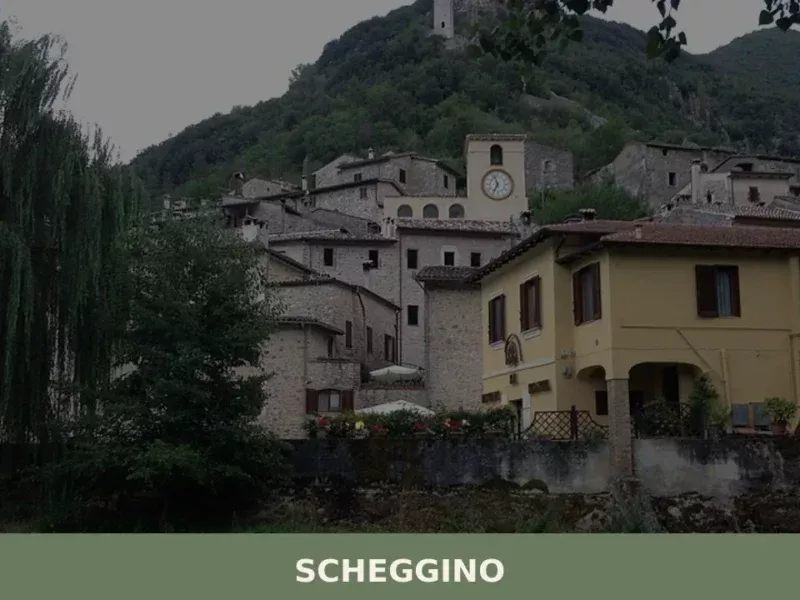
Situated at an altitude of 282 meters above sea level, Scheggino is a compact village in the Umbrian Apennines, home to 446 inhabitants in the province of Perugia. Its development has been shaped by its proximity to the Nera River, a constant presence that influenced both its economy and defensive structures over centuries. Understanding what […]
Castiglione del Lago
Hills
 Lake
Lake
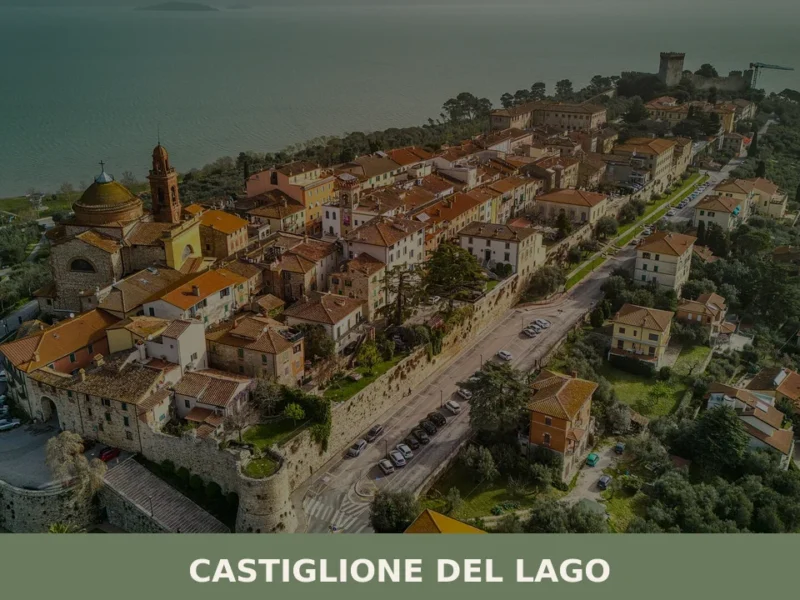
A medieval ridge town on a calcareous spur above Lake Trasimeno, Castiglione del Lago combines a pentagonal fortress, a frescoed Renaissance palace, and open water on three sides.
Perugia
Hills
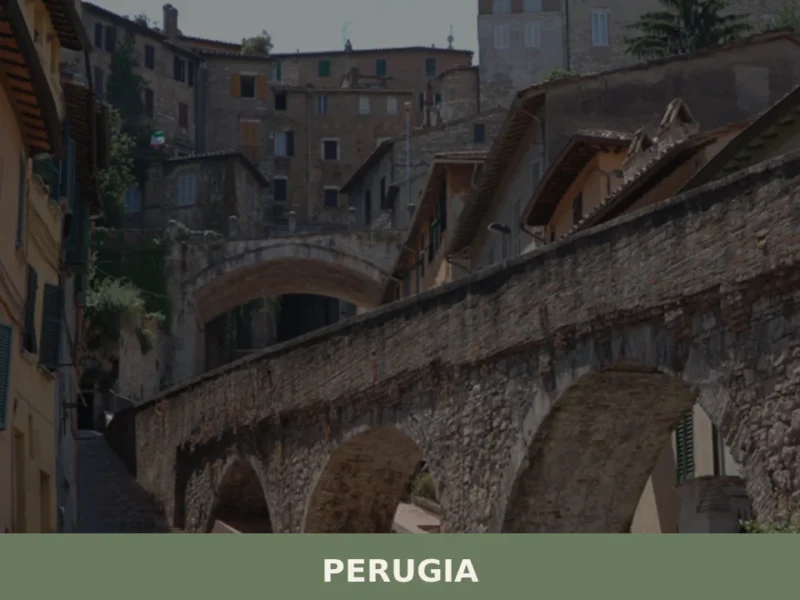
Perugia, the hilltop regional capital of Umbria at 484 metres above sea level, offers visitors more than three thousand years of continuous history, from Etruscan walls to Renaissance frescoes.
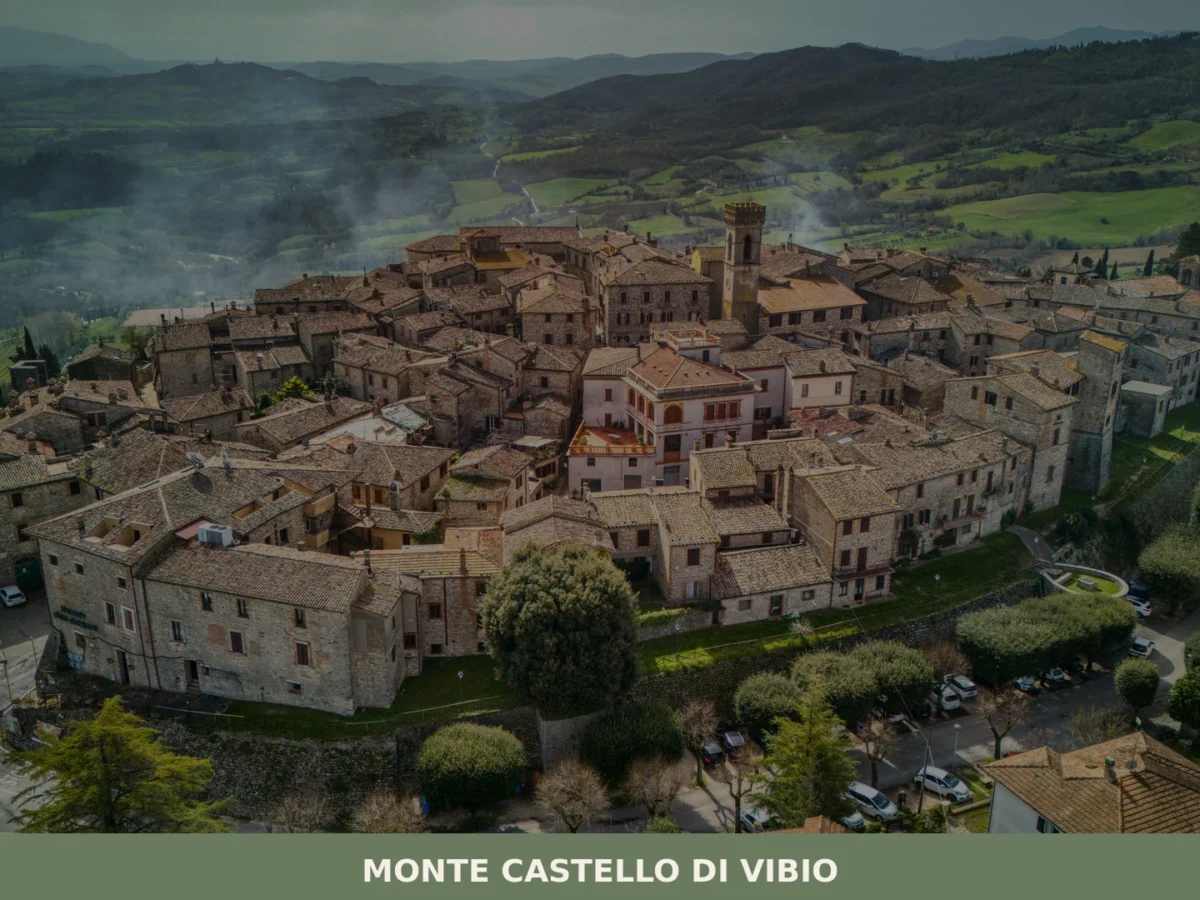
Monte Castello di Vibio
Hills
Monte Castello di Vibio holds the world's smallest theatre and an intact medieval centre above the Tiber valley. A complete guide to its history, attractions, and local food.
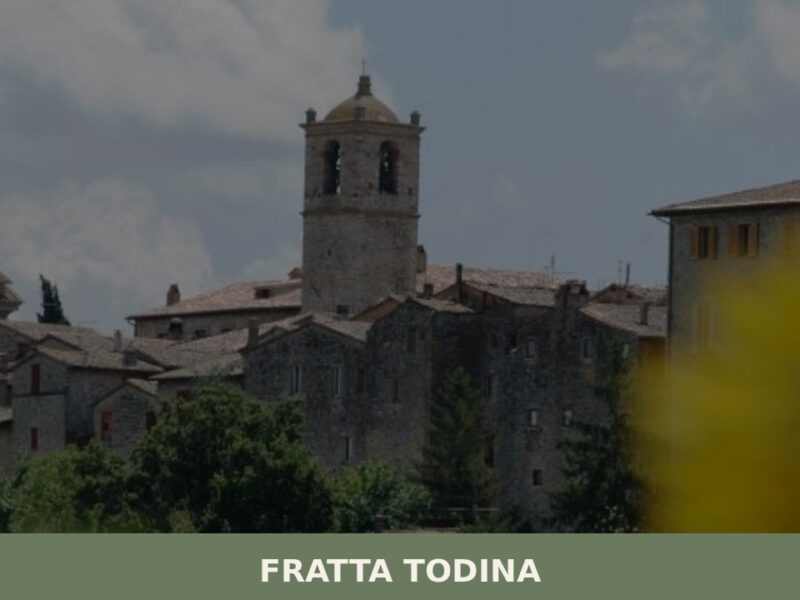
Fratta Todina
Hills
Morning light falls across a line of stone façades, turning the tufa walls the colour of raw honey. A church bell marks the hour from somewhere above the rooftops, its sound carrying across the Tiber valley below. Fratta Todina sits on a low hill in the province of Perugia, home to just 1,817 residents — […]
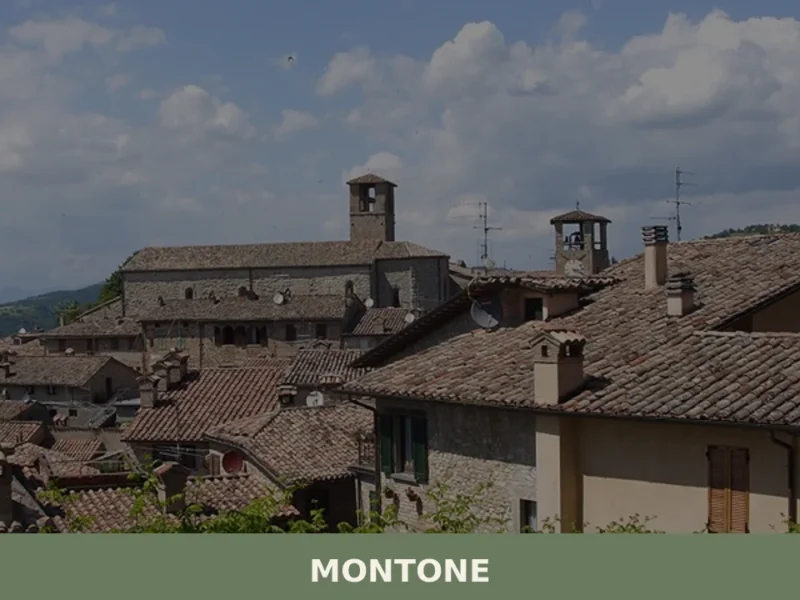
Montone
Hills
What to see in Montone, Italy: Explore this Umbrian village, 482 m high, with its medieval walls and historic Rocca d'Aries. Discover churches and heritage.
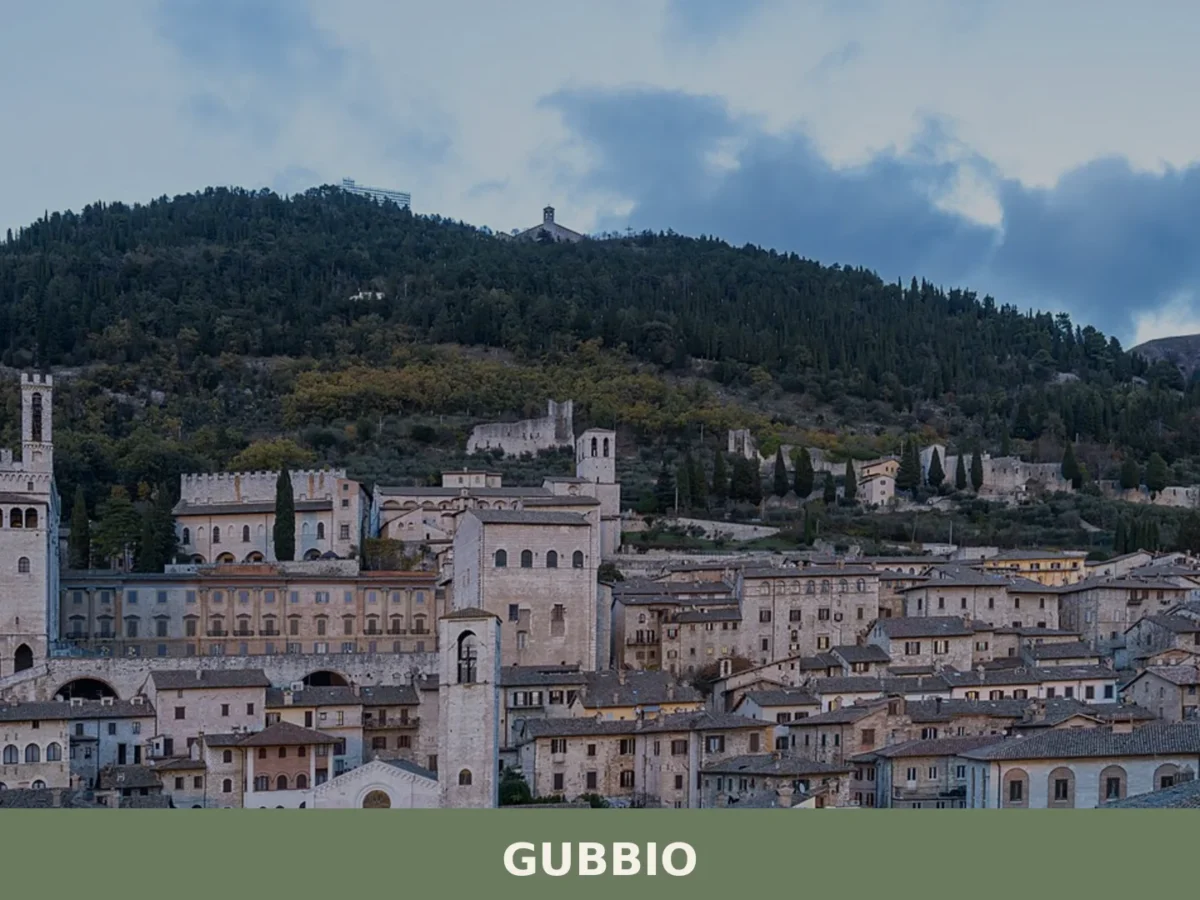
Gubbio
 Mountain
Gubbio is a historic Umbrian town of around 30,000 people in the province of Perugia, celebrated for its Roman and medieval heritage and the remarkable bronze Tavole eugubine.
Terni
Lake
 Plains
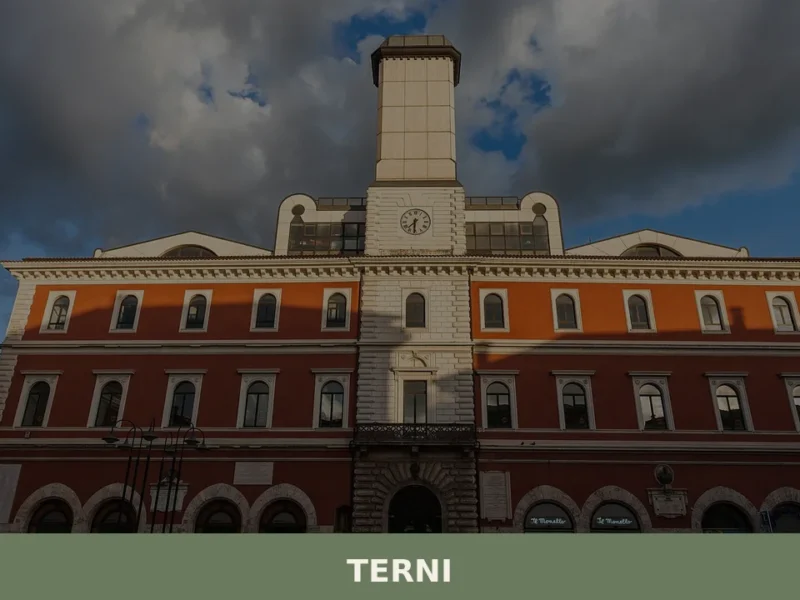
Terni is a historically rich Umbrian city of about 106,310 inhabitants, known as the birthplace of San Valentino and home to Roman, medieval and Renaissance heritage along the river Nera.
Bevagna
Hills
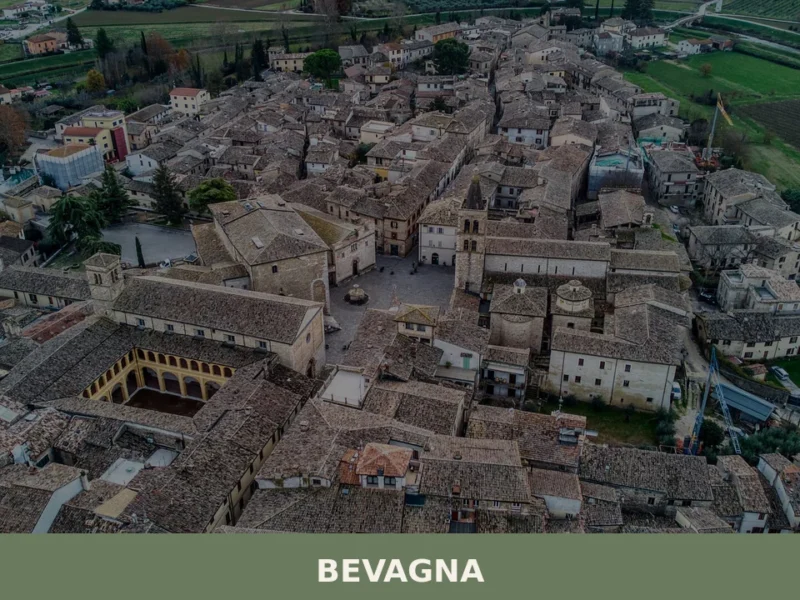
Bevagna, a historic village in Umbria, offers a rich tapestry of Roman and medieval heritage.
Costacciaro
Hills
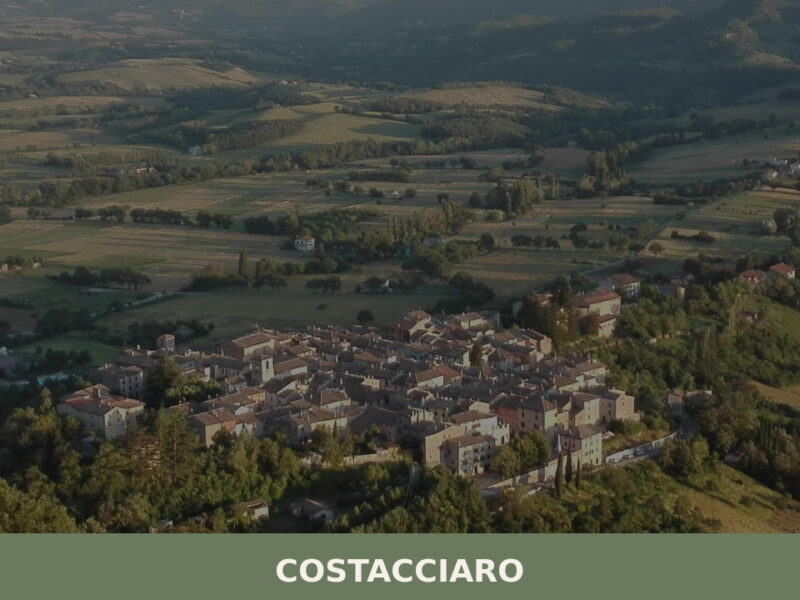
Morning light reaches Costacciaro slowly, filtered through the mass of Monte Cucco before it spills across stone facades and narrow lanes still damp from overnight mountain air. At 1,280 inhabitants, this is a village measured not in monuments but in texture — the grain of limestone walls, the sound of water channelled from karst springs, […]





🏡 Know Guardea better than we do?
If you’re a local or have been there, your knowledge matters: add what’s missing or fix a detail on this page.